
Reviewed · SAMURAI & KENDO EXPERIENCES
Kyoto Samurai Experience
The most memorable part of this Kyoto experience is the setting: a traditional samurai house where you learn about the warrior code, change into a kimono, and handle a martial arts sword under careful instruction. This is not just a photo stop. You get a short lesson in samurai life, basic sword movements, and Zen practice.
I like the hands-on sword training and the calm meditation that follows it. I also like the small-group format, capped at 14 people, which gives the instructor room to guide beginners instead of sending everyone through a rushed photo line.
The main caution is value. At $119.38 per person, this is not a cheap Kyoto activity, and one disappointed participant felt the session did not match the promotional images when the group was large. Your enjoyment will depend on how much you value personal instruction, the historic setting, and the cultural background.
In This Review
- Key points at a glance
- Entering Kyoto’s samurai house
- Kimono, Bushido, and the warrior code
- Learning the first sword movements
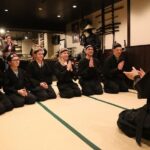
- Demonstrations and the atmosphere of the lesson
- Zen meditation after the sword work
- How the $119.38 price measures up
- Who will enjoy this most
- Scheduling the session in a Kyoto itinerary
- What the overall experience gets right
- Should you book the Kyoto Samurai Experience?
- FAQ
- How long does the Kyoto Samurai Experience last?
- Where does the experience start and finish?
- Can I choose a morning or afternoon session?
- Is the experience suitable for children?
- What should I wear?
- What is the cancellation policy?
Key points at a glance
- Practice with a real martial arts sword: Learn basic handling and sword movements under an expert instructor rather than simply posing with a prop.
- Change into traditional clothing: Wearing a kimono helps turn a short lesson into a more complete cultural experience.
- Study Bushido and Zen: The session connects swordsmanship with the samurai code and a quiet meditation period.
- Meet at a historic samurai house: Waraku111, at Inabacho in Kyoto’s Nakagyo Ward, provides the backdrop for the lesson.
- Choose morning or afternoon: You can fit the 1 hour 45 minute session around temples, markets, and other Kyoto plans.
- Expect a maximum of 14 people: The group is small enough for a personal feel, though the experience may feel less intimate at full capacity.
Entering Kyoto’s samurai house
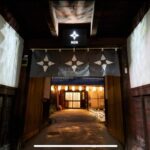
The experience begins at Kyoto Samurai Experience, also identified as Waraku111, in Inabacho, Nakagyo Ward. The activity starts and ends at this same meeting point, so you do not need to arrange a separate return transfer or wonder where the final demonstration will leave you.
The location is near public transportation, but it is not necessarily the easiest stop to fold into a sightseeing route. One participant considered it a little out of the way, yet still felt the trip was worth making. I would allow extra time to find the building and arrive settled, particularly if you are coming from a major station or a temple district.
The house itself matters. You are not practicing in a generic studio with a few Japanese decorations on the wall. The preserved building gives the introduction to samurai life a physical setting, and part of the session explains the house and its place in older Japanese culture. That context makes the clothing and sword work feel less like costume play.
Do keep your expectations sensible. This is a compact cultural lesson, not a full-day examination of samurai society. You will receive an accessible introduction to the subject, then spend much of the time taking part yourself.
A few more Kyoto tours and experiences worth a look

Kimono, Bushido, and the warrior code
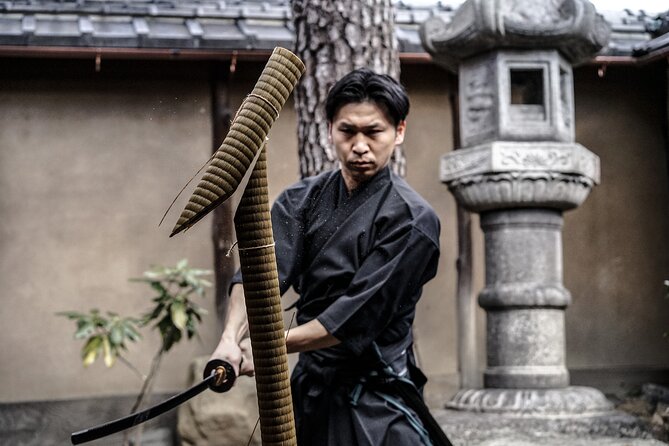
After meeting the instructor and group, you change into traditional clothing. The provided information describes a kimono, while some participants refer to the clothing more generally as samurai dress. Either way, changing clothes is an important part of the experience because it creates a clear break from ordinary sightseeing.
The instructor then explains samurai customs and Bushido, often translated as the Way of the Warrior. The useful point here is that the class does not present the samurai only as sword fighters. Bushido gives the lesson a framework, connecting physical technique with discipline, conduct, and focus.
I appreciate that approach. If you only want to swing a sword for a photograph, there are quicker and cheaper options in Kyoto. Here, the sword is placed inside a wider story about how the warrior class understood training and behavior.
The historical portion is brief enough to hold a family’s attention, but it still gives you something to think about before the physical practice begins. Adults interested in Japanese history will likely want more detail than the session can provide. For a first introduction, though, the balance works well.
English support is available through staff and translators, according to the experience details. That is useful for a technical activity, since small instructions about stance, grip, and movement are easier to follow when the language is clear.
Learning the first sword movements
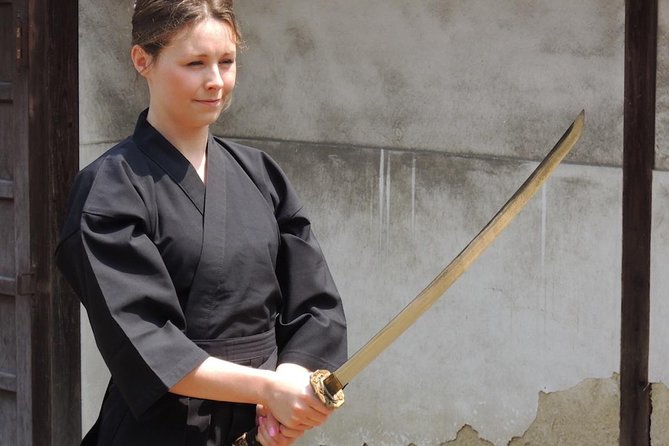
The central part of the visit is basic swordsmanship. You learn how to handle a martial arts training sword and practice the movements shown by the instructor. The purpose is not to turn you into a swordsman in one afternoon. It is to give you a safe, physical sense of the discipline.
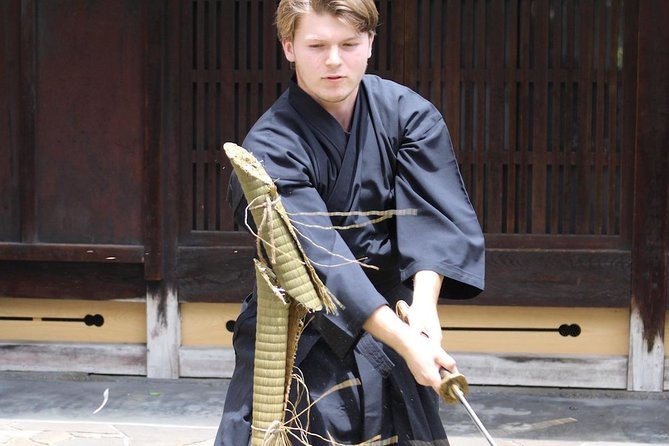
Several participants especially valued the chance to hold a katana and perform a proper strike. The experience may also include supervised cutting or a cutting exercise, as some accounts describe cutting things during the session. The exact level of practice can vary, so you should not book this expecting an elaborate combat performance or an extended weapons class.
The instructor demonstrates technique and guides participants through the motions. That direct teaching is where the price earns some of its value. You are not left to copy a video while staff members watch from a distance.
The small-group limit of 14 helps, but the feel of the class will depend on the number booked that day. At a quieter session, you may get more attention and a more relaxed pace. At a full session, you may spend some time watching other people take their turns. One participant felt the experience looked less like the promotional material when the group was large, so this is worth keeping in mind.
Wear comfortable clothes and suitable athletic footwear. You will be changing into traditional clothing and taking part in physical movements, so stiff shoes, tight clothes, or a heavy sightseeing outfit would be poor choices. A moderate level of fitness is recommended, but this is not presented as a strenuous workout.
Demonstrations and the atmosphere of the lesson
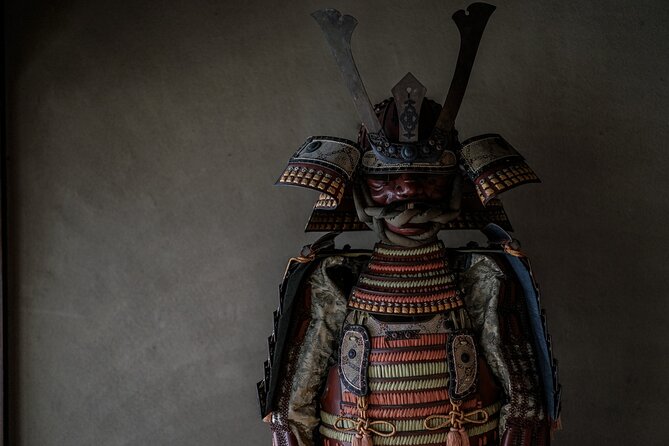
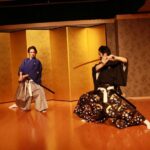
The sword instructor is described as a master swordsman with serious martial arts training. The teaching combines explanation with demonstration, and participants particularly value the sense of seeing a practiced hand at work before attempting the movements themselves.
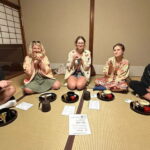
Some sessions also feature additional cultural touches. Accounts describe a traditional Japanese string instrument, an old drum, tea and a sweet, and short demonstrations of sword skill. These details may not all be guaranteed in every session, so I would treat them as possible additions rather than the core promise.
The staff’s care during hot or cold weather is another practical strength. On a very hot day, water, wet cloths, and electrolyte candies were provided. During a cold outdoor portion, hand warmers and hot tea helped people stay comfortable. Kyoto weather can be demanding, especially if you are already spending the day on foot, so this attention is welcome.
The outdoor reference also suggests that at least some activity may take place outside depending on the format or conditions. Dress for the season, and do not assume the entire 1 hour 45 minutes will happen in a heated or air-conditioned room.
Photos are another benefit. Staff members take pictures during the activity and share them quickly, giving you a record of the kimono, sword practice, and historic house. The photographs are a nice extra, but I would not choose this experience for photos alone. The instruction and setting are the real reasons to book.
Zen meditation after the sword work
The session finishes with Zen meditation. This is a smart change of pace after the concentration and movement of sword practice. Instead of ending with a noisy group photograph, the experience gives you a quiet period to settle down and consider what you have learned.
Several participants found the meditation especially rewarding. It also helps explain why the activity is not simply an action-themed performance. Samurai training is presented as a matter of composure and attention, not only force.
The meditation is likely to appeal most to people who enjoy cultural experiences that slow down for a moment. If you want constant movement and spectacle, this part may feel less exciting. I would see it as an advantage, especially if the rest of your Kyoto schedule is packed with temples, shopping streets, and crowded transport.
Some accounts also describe a sound bath or music, but those elements should not be treated as guaranteed. The dependable structure is the house, clothing, Bushido explanation, sword instruction, and Zen meditation.

How the $119.38 price measures up
At $119.38 per person, this sits in the premium range for a short Kyoto activity. The session lasts about 1 hour 45 minutes, so you are paying roughly for a carefully prepared cultural encounter rather than a long tour covering many sights.
The price makes more sense if you value several parts together:
- A traditional house rather than a standard classroom
- Instruction from an experienced sword practitioner
- Use of a martial arts sword
- Traditional clothing
- Historical explanation
- Zen meditation
- Staff support and, in some cases, photographs and refreshments
If you compare it with a simple kimono rental or a brief photo session, this will look expensive. If you compare it with a private martial arts lesson, the small-group instruction and cultural setting may feel more reasonable.
I would book it for a special occasion, a family activity, or a trip where you want one structured cultural experience beyond temple visits. Families have found it enjoyable for adults and children, though minors must be accompanied by an adult. Couples and parent-child pairs can also get a lot from the shared experience.
I would skip it if your budget is tight, you dislike dressing up, or you want a detailed academic lecture on samurai history. I would also think twice if you expect every participant to receive long one-to-one sword coaching. The maximum group size is 14, not two or four.
Who will enjoy this most
This is a good match for you if you want to take part rather than simply look at an exhibit. The experience works particularly well for:
- Families with children old enough to follow instructions
- Couples looking for an unusual shared activity
- First-time visitors who want a practical introduction to Bushido
- People interested in Japanese martial arts
- Photographers who also want a cultural activity
- Anyone who enjoys a calm meditation session after an active lesson
The activity is less suited to anyone seeking a full historical tour of Kyoto’s samurai districts. It also may not suit people with mobility or physical concerns unless the provider confirms that the format can be adapted. The company asks people with accessibility questions to send a message before booking, which is the sensible approach.
The moderate fitness requirement should not alarm most reasonably active people, but you will be standing and moving a sword through basic exercises. Comfortable clothes and proper footwear are important.
Scheduling the session in a Kyoto itinerary
You can choose a morning or afternoon departure. That flexibility is useful because the activity takes less than two hours and returns you to the same meeting point.
A morning session can leave the rest of the day open for temples, gardens, or a food district. An afternoon session may work better after a relaxed morning, though you should allow time to reach the house and avoid booking another activity with a strict start immediately afterward.
Because the location is not directly attached to Kyoto’s best-known sights, I would avoid treating it as a five-minute add-on to another attraction. Build in transport time and confirm the route before leaving. Near public transportation is helpful, but near does not mean directly beside Kyoto Station or a major temple.
The mobile ticket makes entry simple. Booking confirmation is supplied at the time of purchase, and you should keep the booking details easy to access on your phone.
Cancellation is flexible up to 24 hours before the scheduled start, when you can receive a full refund. Changes or cancellations inside that 24-hour window are not accepted or refunded, and all cut-off times use Kyoto local time. Rescheduling may be possible earlier than that, depending on availability.
What the overall experience gets right
The strongest part of this activity is the way its pieces fit together. You begin with the house and its story, put on traditional clothing, hear about Bushido, handle a sword, and finish with meditation. Each step gives the next one more meaning.
The staff also appear to take the practical side seriously. Clear explanations, friendly assistance, language support, weather care, and quick photo delivery all matter when you are doing something unfamiliar.
The experience is not perfect for every budget or every group size. The price is high for the duration, and the session may feel less personal when all 14 places are filled. Promotional photographs can also create expectations that the actual class does not always meet.
Still, the activity offers more substance than a costume photograph and more participation than a museum visit. You leave with a basic physical understanding of sword technique, a clearer idea of Bushido, and a quiet meditation that rounds out the lesson.
Should you book the Kyoto Samurai Experience?
I would book this if you want a polished, hands-on introduction to samurai culture and can accept the premium price. The historic house, traditional clothing, sword practice, expert demonstration, and Zen meditation create a well-shaped experience rather than a single novelty.
Book a morning or afternoon session that leaves room around it, wear comfortable clothing and athletic shoes, and arrive prepared for a small group rather than a private lesson. If personal attention matters most, a less crowded departure may be preferable when the schedule allows.
Skip it if you are mainly looking for the lowest-cost sword activity in Kyoto. But if you want one memorable cultural stop that adults and older children can share, this is a strong choice.
FAQ
How long does the Kyoto Samurai Experience last?
The activity lasts approximately 1 hour and 45 minutes.
Where does the experience start and finish?
It starts at Kyoto Samurai Experience, also called Waraku111, at Inabacho in Nakagyo Ward, Kyoto. It ends back at the same meeting point.
Can I choose a morning or afternoon session?
Yes. Morning and afternoon departure times are available, allowing you to fit the activity around your Kyoto plans.
Is the experience suitable for children?
Minors may take part but must be accompanied by an adult. The activity recommends a moderate level of physical fitness.
What should I wear?
Wear comfortable clothes and appropriate footwear for an athletic activity. You will change into traditional clothing during the session.
What is the cancellation policy?
You can cancel at least 24 hours before the scheduled start for a full refund. Cancellations or changes made less than 24 hours before the start are not accepted or refunded.
More Samurai & Kendo Experiences in Kyoto
More tours in Kyoto we've reviewed




Samurai & Kendo Experiences, compared.
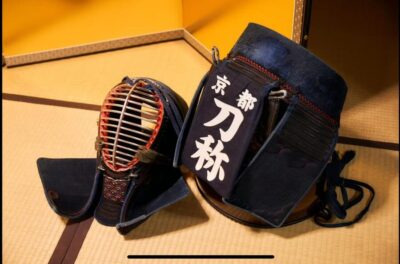 ★ 4.9Kyoto: Kendo and Samurai Experience with Uniform and GearFrom $1032 hours
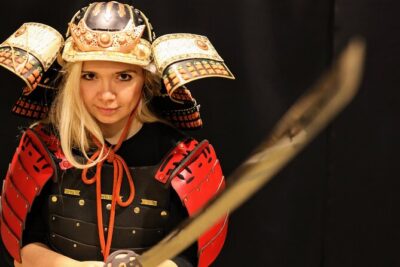 ★ 4.5Skip the lines Basic Ticket at SAMURAI NINJA MUSEUM KYOTOFrom $28
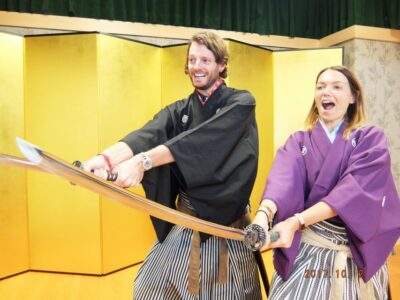 ★ 4.9Kyoto: Samurai Class, Become a Samurai WarriorFrom $70
 ★ 5.0Ninja 1-hour Hands-on Lesson by Japanese master in Kyoto -EntryFrom $80
 ★ 4.8Kyoto: Ninja Weapon Forging ExperienceFrom $1482h 30m
 ★ 4.5Kyoto: Samurai Kenbu Traditional Sword Dancing ShowFrom $321 hour