
Reviewed · MORNING
Kyoto Morning Tour from Kyoto or Osaka
Kyoto packs centuries of power, art, and ceremony into a surprisingly small area, and this morning tour gives you a quick look at three of its best-known places: Nijo Castle, Kinkakuji, and Kyoto Imperial Palace. You move by air-conditioned bus, so you spend your limited time seeing Kyoto rather than working out its bus routes.
I like the mix of sites. Nijo Castle shows the shogun’s world, Kinkakuji delivers the famous golden view, and the Imperial Palace explains the emperor’s role. I also like the efficient format for a short stay, especially since entrance fees and transport are included.
The tradeoff is pace. You have about 50 minutes at Nijo Castle, 45 minutes at Kinkakuji, and 40 minutes at the palace, with traffic and crowds always in play. The Golden Pavilion also involves uneven, rocky steps, and a large group can make it hard to hear the guide.
In This Review
- Key points to know before booking
- Why this half-day route works well
- Meeting at Kyoto Avanti near Kyoto Station
- Nijo Castle shows the shogun’s private world
- Kinkakuji delivers Kyoto’s famous photograph
- Kyoto Imperial Palace adds ceremony and restraint
- The guide can turn a fast visit into a useful lesson
- A realistic look at the price and pace
- Who should choose this Kyoto morning tour?
- Should you book it?
- FAQ
- How long does the Kyoto Morning Tour last?
- What attractions are included?
- Are admission fees and transport included?
- Where does the tour start and finish?
- What happens if Kyoto Imperial Palace is closed?
- Does the tour include transportation back to Osaka?
Key points to know before booking
- Three major Kyoto sights in one morning: You see a shogun’s castle, Japan’s most famous golden temple, and the emperor’s former residence.
- The bus saves time and energy: Air-conditioned transport connects the sites, a real help in a city where public transport can eat into a short visit.
- The Imperial Palace is not guaranteed: It closes on Mondays, certain holidays, and during Imperial Household Agency events. A shrine or temple replaces it, with no refund.
- The tour starts and ends by Kyoto Station: The meeting point is Kyoto Avanti, across from the station’s Hachijo Exit.
- Guides make a big difference: Past guides such as KC, also called Casey, Jun, Jessie, and Mr. Harada were praised for clear history, humor, and group care.
- Expect a group of up to 40: Seats may not be assigned, and hearing the guide can be difficult in crowded areas.
Why this half-day route works well
This is a practical introduction to Kyoto, not a slow temple walk. In less than five hours, you get three very different views of the city: military authority at Nijo Castle, refined Buddhist design at Kinkakuji, and imperial ceremony at the palace.
That contrast gives the tour its value. You are not simply ticking off three attractive buildings. You are seeing how Japan’s political and cultural center changed over time. The shogun ruled from one site, Buddhist tradition shaped another, and the emperor lived at the third.
I would consider this tour if you have only one morning in Kyoto, are making a day trip from Osaka, or want an organized first look before exploring on your own. It also suits you if you prefer a guide to explain what you are seeing rather than walking through famous places with only a few photographs to take home.
The schedule is tight, though. Traffic can change the order or shorten your time at a stop. This is a sampling tour, not an unhurried study of Kyoto. You will see the main features, hear the key stories, and move on.
A few more Kyoto tours and experiences worth a look

Meeting at Kyoto Avanti near Kyoto Station
The tour begins at Kyoto Avanti, at 31 Higashikujō Nishisannōchō in Minami Ward. The tour ends in front of the same building, across from Kyoto Station’s Hachijo Exit.
This location is convenient once you find it, but allow extra time to get oriented. Some booking instructions have caused confusion because the correct meeting details can be buried in the ticket information. Do not rely only on a general map pin. Check the full confirmation and look for the Kyoto Avanti meeting point.
If you are coming from Osaka, read the ending details carefully. The sightseeing portion finishes near Kyoto Station, but the tour does not include your return transportation from Kyoto to Osaka. The outbound trip from Hotel Granvia Osaka to the Sunrise Tours Desk in Kyoto Avanti’s basement is accompanied by an English-speaking assistant, not the licensed guide who leads the main sightseeing portion.
The vehicle is air-conditioned, and transport between the attractions is included. That matters in Kyoto, where a short route can still involve crowded trains, transfers, and a fair amount of walking from stations to entrances.
Nijo Castle shows the shogun’s private world
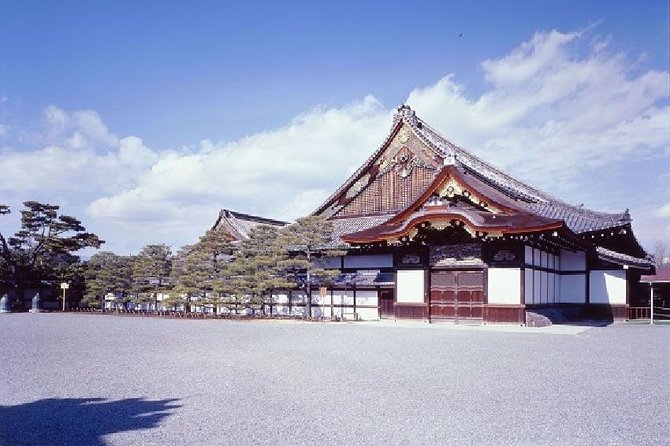
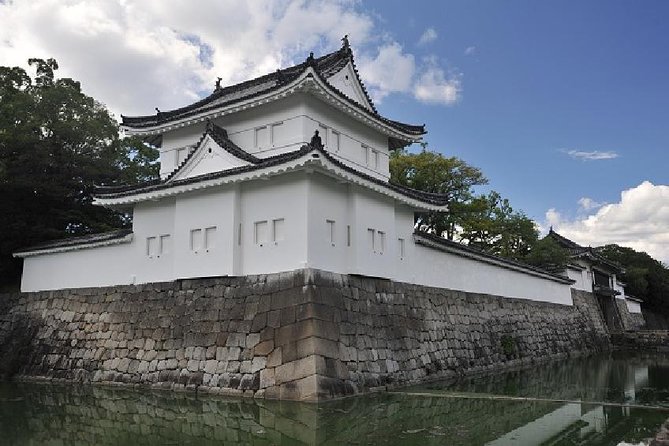
Nijo Castle is a strong first stop because it immediately gives you a sense of political power. Tokugawa Ieyasu ordered its construction in 1603, and it served as a residence for the shogun when he was in Kyoto.
You enter the Ninomaru Palace, a series of five connected cypress-wood buildings. The interiors are known for elaborate carvings, gold leaf, painted rooms, and carefully designed spaces that separated public business from private life. The castle also includes a kitchen, guardhouse, and several gardens, so you get more than a single grand hall.
The guided explanation is especially useful here. Without context, the rooms can look like a sequence of beautiful empty spaces. With a guide, you can better understand how the layout reflected rank, authority, and ceremony. The building itself becomes a lesson in how the shogun managed encounters with visitors.
You have about 50 minutes, and admission is included. This stop is mostly level compared with Kinkakuji, which makes it the easier part of the morning for anyone who is managing tired feet. Still, you should expect walking through the palace and grounds, so comfortable shoes remain sensible.
Nijo Castle can also be affected by the calendar. It closes on Tuesdays in January, July, August, and December, as well as from December 26 through January 3. If a Tuesday closure falls on a holiday, the following day is used instead. In those cases, the route changes to Ryoanji Temple, and the price is not reduced.
Kinkakuji delivers Kyoto’s famous photograph
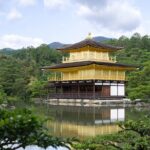
Kinkakuji, or the Golden Pavilion, is the visual star of the morning. The wooden pavilion is covered in thin layers of pure gold and sits beside a pond, surrounded by Japanese gardens.
You get time to admire the pavilion and walk through the grounds, but this is not a long garden visit. Kinkakuji is one of Kyoto’s most popular sights, and the path follows a one-way system. Expect a steady flow of people and limited freedom to stop wherever you like.
The route includes uneven, rocky steps and a climb, so this is the point where footwear and mobility matter most. The walk is manageable for most people, but do not treat the stop as a flat stroll. If you are traveling with young children, keep them close on the uneven sections.
The Golden Pavilion is beautiful, but it can also be the least peaceful stop. Crowds gather for the same view, and several tour groups may be nearby. Some people have found it hard to hear explanations when another guide is speaking close by. Stay near your guide when possible, especially if you want the historical details rather than just a photograph.
I like this stop because it gives you a clear example of how Japanese architecture uses a building, water, and garden together. The pavilion is the focus, but the pond and surrounding design make the view work. You will have roughly 45 minutes, enough to see the main path and take photographs, but not enough for a slow garden meditation.
Kyoto Imperial Palace adds ceremony and restraint
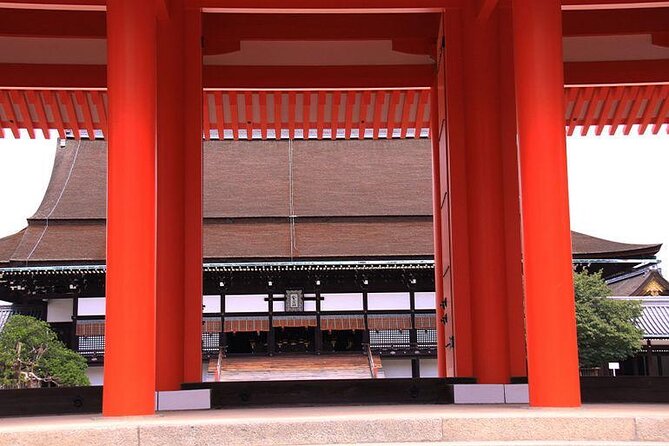
The Kyoto Imperial Palace was the emperor’s residence until the capital moved to Tokyo in 1868. Compared with the glitter of Kinkakuji and the decorated rooms of Nijo Castle, the palace offers a more restrained style.
You can see the former setting for imperial enthronement ceremonies and observe the simple lines of the buildings and grounds. This stop gives the morning a useful change of mood. Instead of focusing on a military leader or a famous temple image, you get a look at the formal world of the imperial household.
The scheduled visit lasts about 40 minutes, and there is no separate admission charge. The shorter time means you should listen closely to the guide’s explanation, since the value of the stop comes partly from understanding what the buildings represented.
The palace is not open on Mondays, or on the following day when Monday is a holiday. It can also close during Imperial Household Agency events. When that happens, the tour visits Kitano Tenmangu Shrine instead. If the closure falls on the 25th, the replacement is Nishi Honganji Temple.
This point deserves careful attention. The tour can still operate when the palace is closed, but the palace visit is not postponed or refunded. If the Imperial Palace is the main reason you are booking, check the date before paying. A holiday, official event, or closure can change the experience.

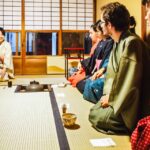
The guide can turn a fast visit into a useful lesson
The English-speaking guide is one of the tour’s most important parts. Guide assignments vary, but past guides named KC or Casey, Jun, Jessie, Caisy, and Mr. Harada have been singled out for warmth, humor, organization, and clear explanations.
The strongest guiding seems to combine history with practical help. You can expect information about the emperor, the shogun, Japanese customs, and the sites themselves. One especially thoughtful guide was praised for taking group photographs and sharing extra pictures afterward, though this is not a promised feature of every departure.
Group size can reach 40 people. That is large enough to affect the experience. In open areas, you may hear well, but at busy entrances or beside other tour groups, the guide’s voice can be harder to follow. Some departures have not used wireless listening equipment, so staying close matters.
A few people have found the spoken English too fast or difficult to understand. This is not a reason to reject the tour outright, since guide quality varies, but it is a fair consideration if you want long, detailed commentary at every stop. You will get the most from the morning by positioning yourself near the guide and asking questions during transitions.
A realistic look at the price and pace
At about $87.19 per person, this is not the cheapest way to see Kyoto’s attractions. You could use local trains and buses for less, especially if you already know the city and do not need explanations.
The price becomes easier to justify if you value time. You receive admission to Nijo Castle and Kinkakuji, a guided visit, and transport between three sites. You also avoid planning a route that crosses several parts of Kyoto. For a first visit or a day trip from Osaka, that convenience can be worth more than the difference in transport cost.
You should not book it expecting unlimited time at each sight. The tour lasts about 4 hours and 40 minutes, but only part of that is spent inside the attractions. The rest covers boarding, driving, traffic, and moving a group through large sites.
The format works best when your goal is see the essential places and keep the afternoon free. It works less well if you want to sit in a garden, study palace architecture, or take photographs without a schedule pressing you onward.
After the Imperial Palace portion, the bus may stop at the lunch venue used by the one-day tour before dropping everyone at Kyoto Station. Food and drinks are not included, so plan your own meal. Since the morning ends near the station, you can continue into central Kyoto, board a train, or make your way back toward Osaka.
Who should choose this Kyoto morning tour?
I would recommend it most strongly to you if:
- You have limited time in Kyoto.
- You are visiting from Osaka and want a structured introduction.
- You want the main sights explained in English.
- You prefer an air-conditioned vehicle to several public transport connections.
- You are comfortable with a group format and a fixed schedule.
- You want to keep the afternoon free for your own plans.
Families can join, and most people can participate. Children up to age five may ride free, but they do not receive a bus seat unless booked at the child rate. Anyone under 18 needs written parental permission, and anyone under 15 or not yet in middle school must be accompanied by a parent or guardian.
You should think twice if your main purpose is the Imperial Palace and your date is close to a closure. The same applies if you dislike group tours, need a quiet pace, or want to spend a long time at one temple. A self-guided day would give you more control, but it would require more planning.
Free cancellation is available up to 24 hours before the start time. Changes or cancellations inside that window are not accepted for a refund, so check your plans before the deadline.
Should you book it?
Book this tour if you want a well-organized morning that covers three important Kyoto sites without spending your first day on route planning. The mix of castle, temple, and palace is excellent, and a strong guide can connect the buildings to Japan’s political story.
Before booking, check the Imperial Palace and Nijo Castle closure rules, confirm the Kyoto Avanti meeting point, and remember that the return to Osaka is your responsibility. If you accept the crowds and quick pace, this is a useful, good-value introduction. If you want quiet gardens and long visits, choose a slower independent plan instead.
FAQ
How long does the Kyoto Morning Tour last?
The tour lasts approximately 4 hours and 40 minutes.
What attractions are included?
The planned stops are Nijo Castle, Kinkakuji Temple, also called the Golden Pavilion, and Kyoto Imperial Palace.
Are admission fees and transport included?
Yes. Admission fees for the included attractions, transportation between sites, and the fee for the National Government Licensed English Guide Interpreter are included.
Where does the tour start and finish?
It starts at Kyoto Avanti, 31 Higashikujō Nishisannōchō, across from Kyoto Station’s Hachijo Exit. It ends in front of Kyoto Avanti.
What happens if Kyoto Imperial Palace is closed?
The tour visits Kitano Tenmangu Shrine instead. If the closure falls on the 25th, the replacement is Nishi Honganji Temple. No refund is provided for the alternative destination.
Does the tour include transportation back to Osaka?
No. The tour ends near Kyoto Station and does not include the return trip from Kyoto to Osaka or assistant service for that journey.
More Morning in Kyoto

More tours in Kyoto we've reviewed


Morning, compared.
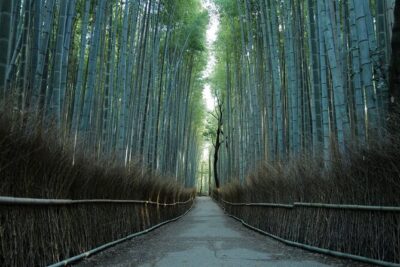 ★ 5.0Kyoto Early Morning Tour with English-Speaking GuideFrom $68
★ 4.9Kyoto: Early Morning Tour with English-Speaking GuideFrom $1015h 30m
★ 5.0Kyoto Early Morning Tour with English-Speaking GuideFrom $68
★ 4.9Kyoto: Early Morning Tour with English-Speaking GuideFrom $1015h 30m
 ★ 5.0Nara Early Morning Tour (Kyoto or Osaka Departure Available)From $61
 ★ 4.6From Kyoto: Nara Guided Morning TourFrom $774 hours
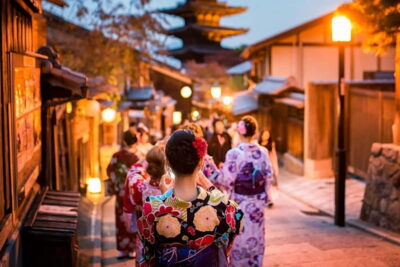 ★ 4.6Kyoto: Gion Night or Morning Walking Tour with Local SnacksFrom $46
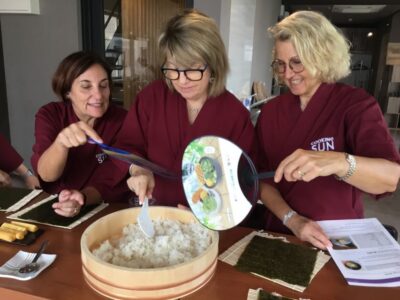 ★ 5.0Kyoto: Morning Japanese Bento Cooking ClassFrom $673 hours