
Reviewed · GION & GEISHA WALKS
Kioto: Gion Tour, recorrido a pie (Español/Castellano)
Kyoto’s Gion is far more than a pretty street lined with wooden houses. This two-hour Spanish walking tour takes you through three hanamachi, or traditional geisha districts, and points out places that are easy to miss when you explore alone. You’ll hear about maiko and geiko life, Kyoto’s past, and the everyday details that give the district its character.
I like the small group size, limited to six people, and the chance to ask about almost anything you see. I also like the route itself, which includes Pontocho, Gion Kobu, Gion Higashi, small bridges, shrines, and preserved streets rather than focusing only on the most photographed part of Gion.
The main thing to know is that Hanamikoji-dori is not included, and seeing a maiko or geiko is never promised. The walk covers about 3.3 kilometers, so comfortable shoes matter. At $35 per person, the tour is good value if you want context and conversation, but less so if you only want a quick photo stop in Gion.
In This Review
- What makes this Gion walk different
- Start at Disney Kyoto and head toward Pontocho
- Kamo River bridges and the stories around them
- Yamato-dori leads into Gion Kobu
- Gion Shirakawa and the Tatsumi area
- Gion Higashi and the difference between districts
- Yasaka Shrine and the origin of Gion
- How the guide shapes the experience
- Price, pace, and what $35 buys you
- What this tour does not include
- Who should book this Spanish Gion tour
- FAQ
- What language is the tour conducted in?
- How long is the Gion walking tour?
- How many people can join the group?
- Which districts are included?
- Is Hanamikoji-dori included?
- Can I expect to see a maiko or geiko?
- Should you book it?
What makes this Gion walk different
- Three hanamachi in two hours: Visit Pontocho, Gion Kobu, and Gion Higashi instead of seeing only one famous lane.
- Spanish explanations: The guide leads the walk in Spanish and can discuss Kyoto, Japan, local customs, and personal experiences.
- A group of up to six: The small format gives you room to ask questions and keep the pace conversational.
- 3.3 kilometers on foot: Expect a real neighborhood walk with bridges, alleys, shrines, and preserved streets.
- Yasaka Shrine connection: Learn why the district was once called Gion and how the Gion Festival began more than 1,100 years ago.
- Optional Gion Gallery visit: The 9:45 and 12:30 departures can include a free visit if you choose to extend the tour.
Start at Disney Kyoto and head toward Pontocho
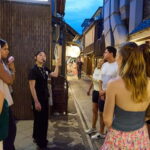
The meeting point is easy to identify: the guide waits in front of the Disney store at Kyoto Shijo-Kawaramachi. Kyoto has only one Disney store, and the guide holds an iPad displaying the Spanish tour title and the tour time. That detail should save you from wandering around the busy downtown area looking for a person you have never met.
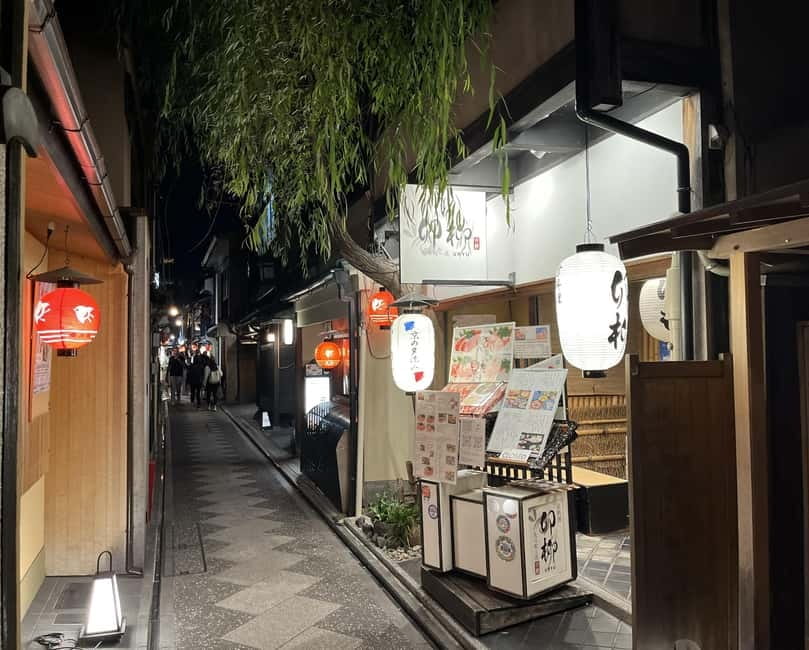
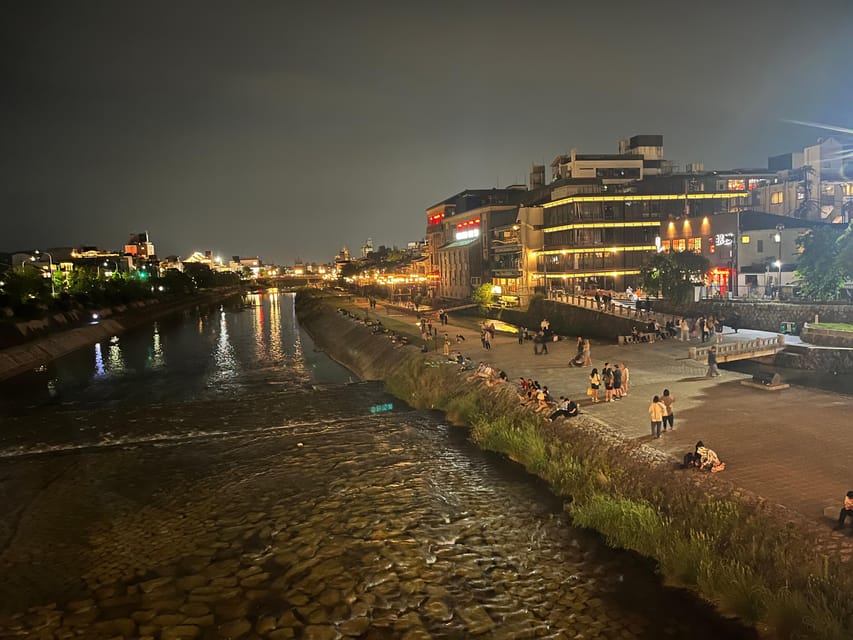
From there, the walk moves toward Pontocho Alley, one of central Kyoto’s best-known traditional entertainment streets. The narrow lane runs near the Kamo River and is known for its old-style buildings, restaurants, and evening atmosphere. The tour does not treat Pontocho as a simple backdrop. Your guide explains how the area fits into Kyoto’s broader entertainment culture and how the city changed over time.
You’ll also pass Pontocho Kaburenjo. This building is tied to the artistic world of the geisha districts, where traditional dance and musical performances are practiced and presented. It gives useful context before you reach Gion, since the tour is about the institutions and customs behind the buildings, not only the buildings themselves.
Pontocho can feel tight and crowded, especially later in the day. That is part of its charm, but it also means you should listen carefully and stay close to the group. The guide’s iPad makes the meeting point simple, though the narrow streets later in the route require attention.
A few more Kyoto tours and experiences worth a look

Kamo River bridges and the stories around them
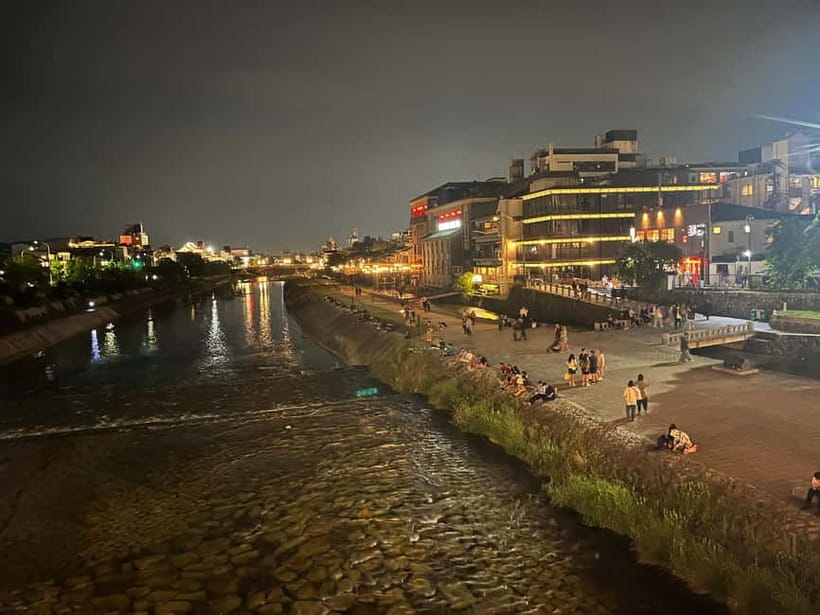
The route includes the Kamo River, Yagi-san and Kita-san statues, and Sanjo Ohashi Bridge. These stops add a different layer to the walk. You are not only moving between tourist districts. You are following old routes through the center of Kyoto, where bridges and river crossings have long linked neighborhoods.
Sanjo Ohashi is especially useful for understanding Kyoto’s layout. The bridge connects the downtown side of the city with the traditional districts farther east. You can look across the river, see how quickly the urban setting changes, and understand why this part of Kyoto has been such an important meeting point.
The statues and bridge stops may not be the reason you first booked a Gion tour, but they help turn a string of pleasant streets into a connected story. Your guide can also respond to questions as they arise. If you want to ask about Japanese daily life, local etiquette, history, or something you have noticed elsewhere in Kyoto, this is the sort of small group where you can do so without waiting for a formal question period.
Yamato-dori leads into Gion Kobu
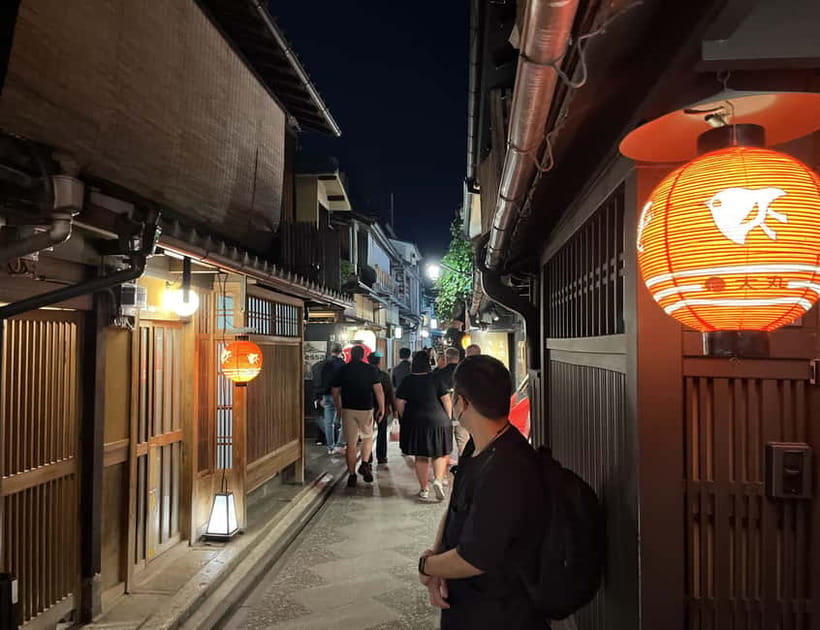
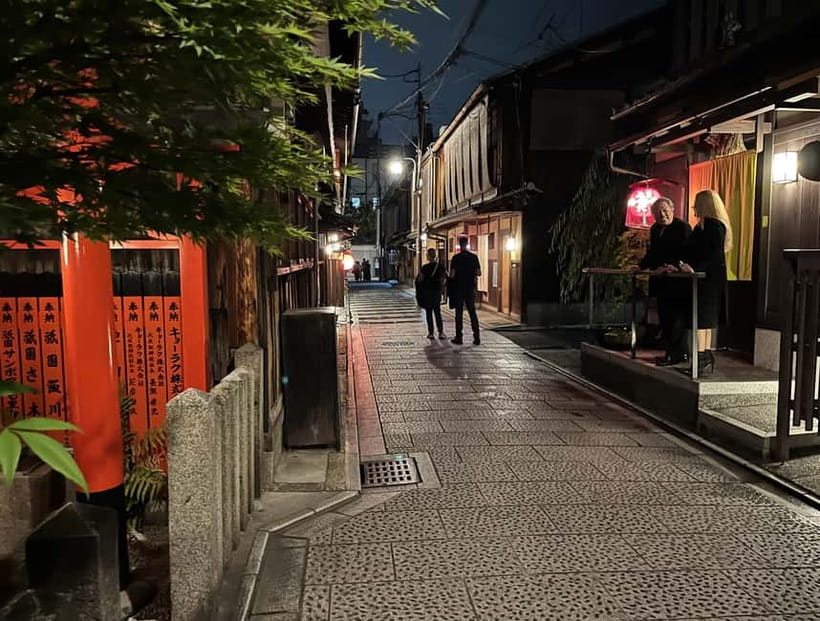
After the river and bridges, the walk continues along Yamato-dori toward Gion Kobu. This is one of Kyoto’s established hanamachi, with streets associated with teahouses, traditional performance, maiko, and geiko.
The most appealing part of this section is the shift in mood. The wide downtown setting gives way to quieter lanes and wooden machiya houses. These traditional townhouses are not museum pieces. They are part of a living neighborhood, so you should keep voices low, avoid blocking entrances, and follow the guide’s direction about photography.
Gion Kobu is often the part of the walk where the guide’s explanations become especially useful. Without context, a closed door can look like just another old doorway. With an explanation of the district’s customs and working life, you begin to understand why these streets are carefully protected and why casual sightseeing can cause problems.
The tour discusses the lifestyle, routines, and practices connected with maiko and geiko. That matters because popular images of geisha culture often reduce it to costumes and makeup. A good explanation helps you see the training, performance traditions, and daily discipline behind the public image.
Gion Shirakawa and the Tatsumi area
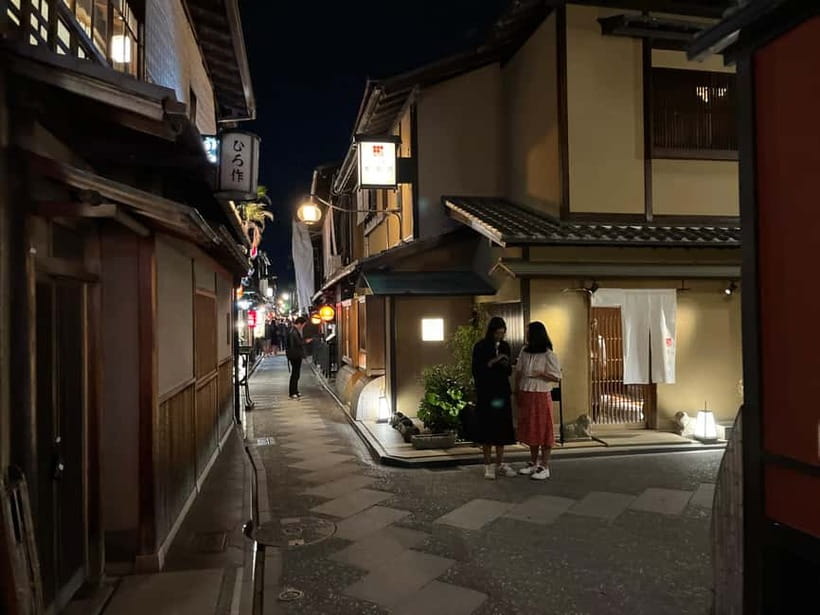
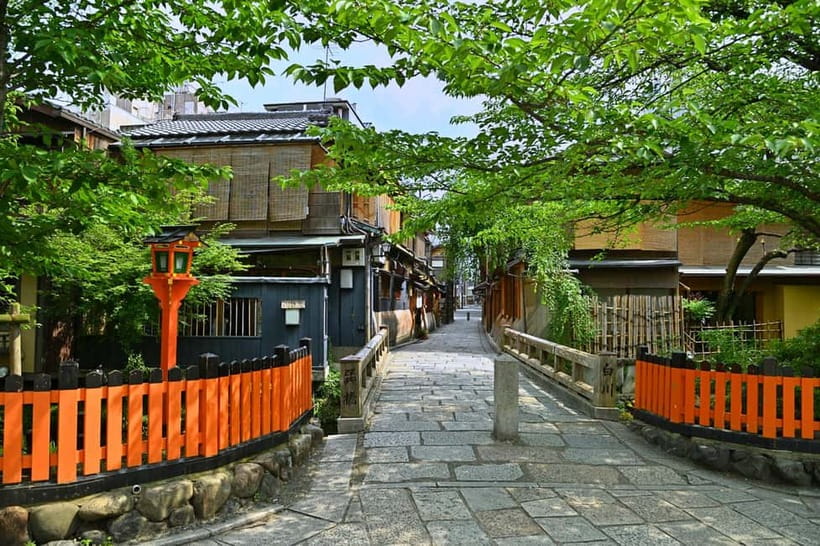
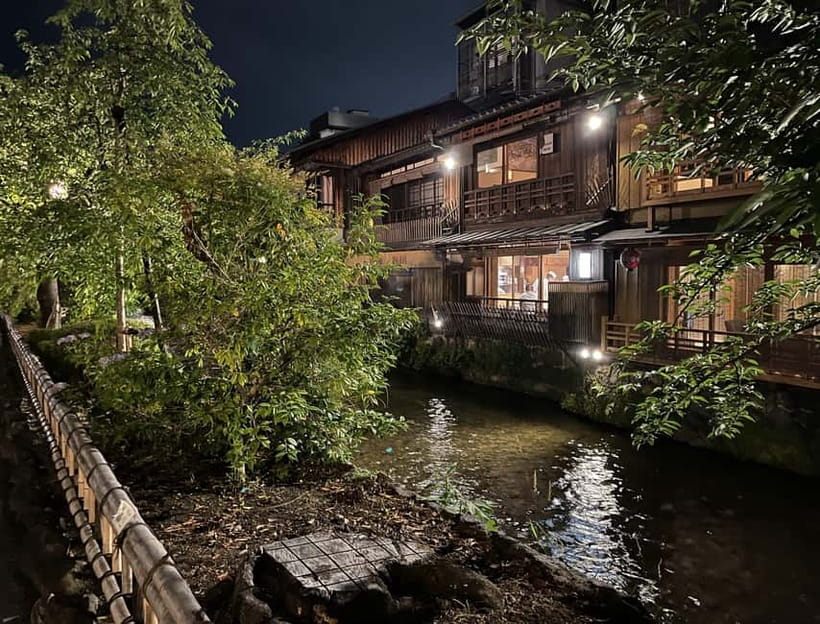
The route continues through Gion Shirakawa, one of the most scenic preserved parts of the district. Here, wooden buildings, narrow streets, and the Shirakawa waterway create the classic Kyoto scene many people picture before arriving.
You will also visit Tatsumi Jinja and cross Tatsumi Bridge. These are compact stops, but they add variety to the walk. The shrine offers a chance to discuss local religious practice, while the bridge provides a natural pause between parts of the neighborhood.
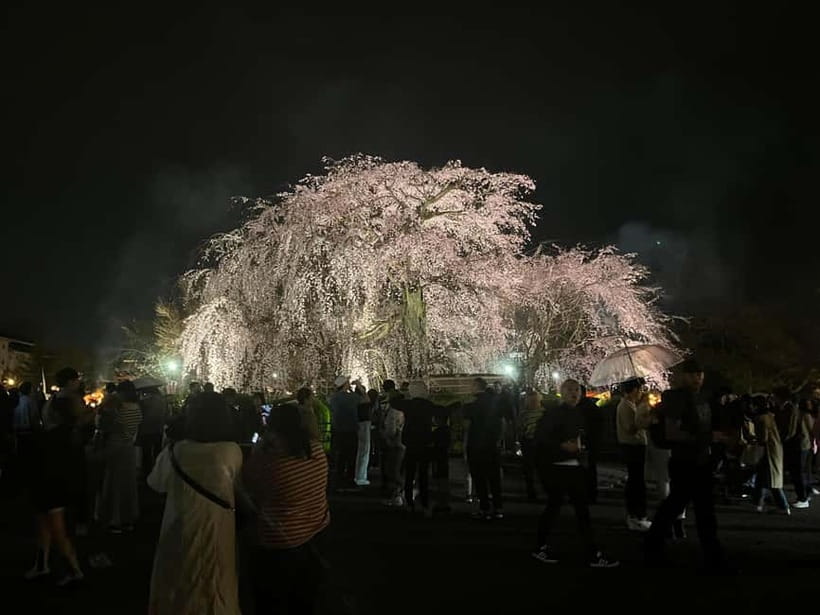
This is likely to be one of the prettiest sections, particularly during cherry blossom season. In late March or early April, the route may change slightly to include better blossom views around Gion. Exact bloom timing is never fixed, so you should treat this as a seasonal adjustment rather than a guarantee of flowers.
Gion Shirakawa is also a place where the tour’s rules matter. It is tempting to stop in the middle of the lane for pictures, but the area is still used by residents and local businesses. The guide can help you enjoy the setting without treating it like a stage set.
Gion Higashi and the difference between districts
The walk then reaches Gion Higashi, another of Kyoto’s five hanamachi. Seeing it after Gion Kobu gives you a chance to notice that traditional districts are not all identical. Their streets, buildings, and atmosphere can vary, even though they share links to dance, music, teahouse culture, and geiko traditions.
The guide explains how each district fits into Kyoto’s cultural life. You will also hear more about maiko and geiko training, activities, routines, and public performances. The Spanish-language format is helpful here because you can ask for clarification instead of trying to piece together short English captions or guidebook paragraphs.
The route is not designed around chasing a geisha sighting. A maiko or geiko may appear, but it cannot be guaranteed. That is a fair limitation, and it is worth keeping in mind before booking. The value of this walk should come from understanding the neighborhood, not from treating a working person as a photo opportunity.
Yasaka Shrine and the origin of Gion

The final major stop is Yasaka Shrine, formerly known as Gion Shrine. The district takes its name from this connection, and the shrine provides an important link between the neighborhood and Kyoto’s religious life.
If time allows, the guide explains the Gion Festival, one of Japan’s three most important and famous festivals. Its origins reach back more than 1,100 years, which gives you a sense of how far the district’s story extends beyond modern tourism.
Yasaka Shrine also helps tie the walk together. You have seen entertainment districts, bridges, machiya houses, preserved lanes, and small shrines. At the shrine, those pieces connect to religious tradition and the yearly calendar of Kyoto. If you are interested in how temples, shrines, festivals, and city neighborhoods overlap in Japan, this part may be especially rewarding.
Because the tour lasts only two hours, the amount of time at Yasaka Shrine depends on the walking pace and the questions from the group. The guide may not be able to offer a long, detailed shrine visit. Think of it as the cultural closing chapter of the Gion walk rather than a separate shrine tour.
How the guide shapes the experience
The guide is the main reason to choose this tour over walking the same streets with a map. José receives especially strong praise for his friendly, flexible approach and for explaining small details that change how you see Gion. Juan is also described as offering clear explanations, lesser-known passages, and a high level of subject knowledge.
The guiding style is conversational. You are encouraged to ask about whatever catches your eye, from a building or statue to Japanese customs and daily life. José has also been described as able to explain clearly in English when a Spanish beginner needs help, though the official tour language is Spanish.
That makes the tour a good fit for Spanish speakers who want more than a memorized speech. It also may work for a mixed-language group if one person is still learning Spanish, but you should not book it expecting a full bilingual tour. Spanish is the advertised language.
The personal angle is another useful feature. The guide shares information about life in Japan from personal experience, giving you a chance to compare what you see in Gion with ordinary life elsewhere. That kind of conversation is hard to get from a self-guided walk.
Price, pace, and what $35 buys you
At $35 per person, this is reasonably priced for a two-hour guided walk in one of Kyoto’s most important districts. You are paying for a Spanish-speaking guide, a small group capped at six, and a route covering about 3.3 kilometers.
The value is strongest if you care about explanation. The guide fills in the story behind the hanamachi, geiko and maiko traditions, Kyoto’s development, the Gion Festival, and the local details you might otherwise miss. If you only want to stroll through Gion and take pictures, you can do that without paying for a tour.
The walk is active but not extreme. You should bring comfortable shoes, water, sunscreen, a sun hat, and an umbrella. Kyoto weather can change, and much of the experience takes place outdoors. The route includes bridges and narrow streets, so your attention belongs on the group and the surroundings rather than on checking your phone at every stop.
The 9:45 and 12:30 departures have an extra option: a free visit to the Gion Gallery if you want to extend the experience. This is optional, not part of every departure, so ask about it when you meet the guide.
You can cancel up to 24 hours before the tour for a full refund, and you can reserve now while paying later. Those terms are useful if your Kyoto schedule is still shifting.
What this tour does not include
The most important omission is Hanamikoji-dori. Many people associate Gion with this famous street, so check the route before booking. You will visit other historic parts of Gion, including Gion Shirakawa, Gion Kobu, and Gion Higashi, but Hanamikoji is specifically excluded.
The tour also does not guarantee a maiko or geiko sighting. That is not a flaw in the guide’s control. These are working people, and their movements depend on private schedules. A responsible tour should teach you how to behave respectfully in the district rather than promise an encounter.
No additional services are included. The price covers the guided walking experience, not meals, transport, or other add-ons. You should plan your own way to the meeting point in front of the Disney store.
Who should book this Spanish Gion tour
I would choose this experience if you want a clear introduction to Kyoto’s traditional districts and prefer to ask questions as you walk. It suits couples, families, and small groups of friends who want a personal pace and do not want to trail behind a large crowd.
It is also a strong choice for Spanish-speaking visitors who find English tours tiring or who want to discuss Japanese culture in their first language. The small group gives the guide space to adjust explanations and check that everyone understands.
You may prefer a different activity if you want a long stop at Yasaka Shrine, a dedicated visit to Hanamikoji-dori, or a guaranteed geisha performance. This is a neighborhood history walk, not a show or a photography outing.
FAQ
What language is the tour conducted in?
The tour is conducted in Spanish, with a live Spanish-speaking guide.
How long is the Gion walking tour?
The tour lasts two hours and covers about 3.3 kilometers, or roughly two miles.
How many people can join the group?
The group is limited to six participants, creating a small-group experience with time for questions.
Which districts are included?
The route visits Pontocho, Gion Kobu, and Gion Higashi. It also passes through Gion Shirakawa and other historic streets.
Is Hanamikoji-dori included?
No. Hanamikoji-dori is not part of the itinerary.
Can I expect to see a maiko or geiko?
A sighting cannot be guaranteed. The tour focuses on the history, culture, routines, and practices connected with the hanamachi.
Should you book it?
Book this tour if you want context, conversation, and a Spanish-speaking guide rather than a quick walk through the postcard views. The route covers more than one hanamachi, includes Yasaka Shrine, and gives you room to ask about the details that make Kyoto easier to understand.
Skip it if Hanamikoji-dori is your main goal or if you are hoping for a guaranteed maiko or geiko encounter. For everyone else, the combination of a six-person group, a 3.3-kilometer route, and a $35 price makes this a sensible way to meet Gion on foot and see the district with better eyes.
More Gion & Geisha Walks in Kyoto

More tours in Kyoto we've reviewed




Gion & Geisha Walks, compared.
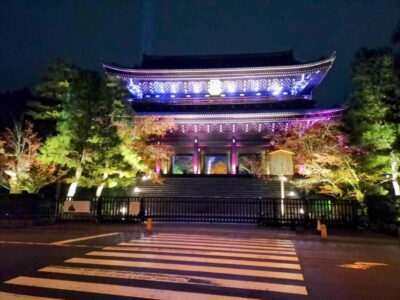 ★ 4.7Kyoto Geisha Walking Tour: Gion District & Hidden GemsFrom $252 hours
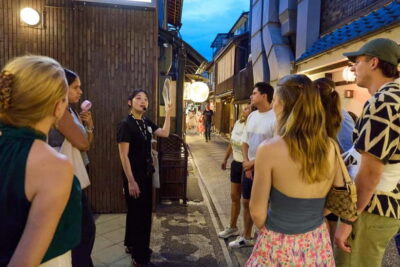 ★ 4.7Kyoto: Gion Geisha District Walking Tour – Stories of GeishaFrom $202 hours
 ★ 4.9Best of Kyoto: Gion, Geisha, Pagodas & CobblestonesFrom $242 hours
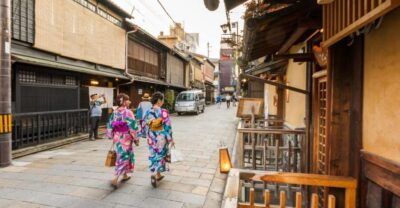 ★ 4.5Night Walk in Gion: Kyoto’s Geisha DistrictFrom $211h 40m
 ★ 5.0Kyoto Night Foodie Tour in Gion (9+ dishes + 6 Sake tastings)From $163
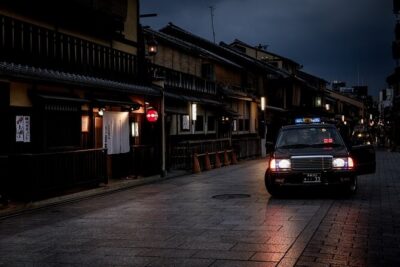 ★ 5.0Kyoto Gion Geisha District Walking Tour – The Stories of GeishaFrom $25