
Reviewed · GION & GEISHA WALKS
Kiyomizu Temple and Backstreets of Gion, Half Day Group Tour
Kiyoto’s old eastern districts unfold best on foot, and this four-hour tour links the big sights with small lanes you could easily miss alone. You’ll climb toward Kiyomizu-dera, wind down the historic slopes of Sannenzaka and Ninenzaka, then finish among Gion’s wooden machiya houses.
I like two things here. First, the route gives you a clear introduction to Kyoto’s temples, shrines, Buddhism, and Shinto traditions without wasting time finding the way. Second, the group is capped at eight people, small enough for questions and a flexible pace. Guides including Mika, Takuma, Mitsuhiko, and Kiyoto have been praised for warmth, organization, and personal attention.
The main tradeoff is the walking. The route begins with an uphill stretch, includes steep historic lanes, and takes place rain or shine. Crowds can also be heavy around Kiyomizu-dera and Gion, so this is not a quiet stroll through empty streets.
In This Review
- At a glance
- Why this Kyoto route works so well
- Starting at the Kyoto Ceramic Center
- Kiyomizu-dera, Kyoto’s famous hillside temple
- Sannenzaka and Ninenzaka, Kyoto’s old slopes
- A Japanese garden and the view of Yasaka Pagoda
- Yasaka Koshin-do and its colorful charms
- Yasui-Konpiragu and Kyoto’s personal side
- Kennin-ji, a calm Zen pause
- Walking into Gion and Hanamikoji
- Guides who shape the experience
- Is $59.45 a fair price?
- Who should book this four-hour walk?
- Should you book the Kiyomizu and Gion tour?
- FAQ
- How long does the tour last?
- Where does the tour begin?
- Where does the tour end?
- How many people can join the tour?
- Are entrance fees included?
- Is the tour suitable for people who do not want much walking?
- What happens if I need to cancel?
At a glance
- Kiyomizu-dera is the grand opening act: Spend about an hour at Kyoto’s famous hillside temple, with admission included.
- Sannenzaka and Ninenzaka make the connection memorable: These steep old streets are lined with shops, snacks, and traditional buildings.
- The route mixes major sights with smaller stops: Yasaka Koshin-do and Yasui-Konpiragu add local religious color beyond the standard temple circuit.
- Kennin-ji offers a calmer finish: Kyoto’s oldest Zen temple provides about 50 minutes for art, gardens, and quiet reflection.
- Gion comes at the end: The walk finishes near Hanamikoji, the district’s best-known street of wooden townhouses and teahouses.
- The small-group format matters: With a maximum of eight people, you can ask questions and tell the guide what interests you.
Why this Kyoto route works so well
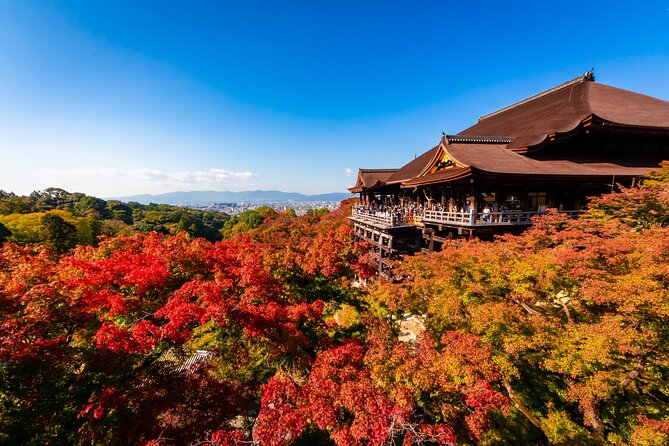
Many first visits to Kyoto suffer from the same problem: too many famous places, too little sense of how they fit together. This tour solves that neatly. You start near the Kyoto Ceramic Center, walk uphill through Higashiyama, visit Kiyomizu-dera, follow the old slopes downhill, pause at several religious sites, and end in Gion.
That direction is useful. The uphill section comes early, when your legs are fresh. After Kiyomizu-dera, the route generally works its way down toward Gion, though you should still expect a fair amount of walking. One guide even shared ramen afterward with a participant, but lunch is not part of the stated tour, so treat that as an optional extra rather than a planned feature.
The four-hour length is also sensible. You will see several of Kyoto’s essential sights, but you will not spend an entire day touring temples. If you have only one day in Kyoto, or you are taking a day trip from Tokyo, this route helps you get your bearings fast.
A few more Kyoto tours and experiences worth a look

Starting at the Kyoto Ceramic Center
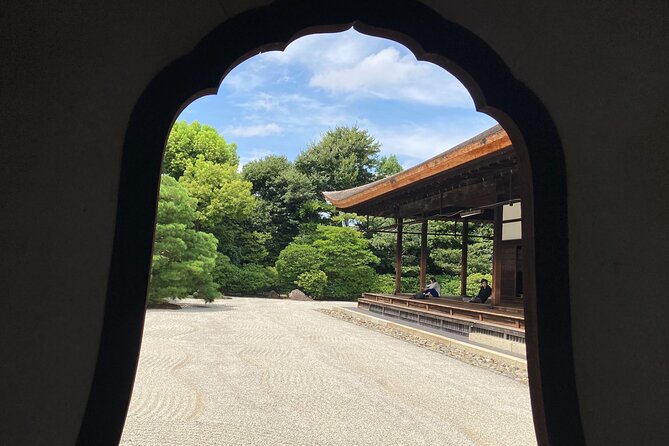
The meeting point is in front of the Kyoto Ceramic Center, officially the Kyoto Ceramic Art Association Official Shop and Gallery, at 583-1 Yūgyōmaechō in Higashiyama Ward. The opening stop lasts about 10 minutes and has no admission fee.
This is a practical starting place rather than a major sightseeing stop. You should use the meeting time to find your guide and get ready for the walk. The center also sets the tone for Higashiyama, a district where craft traditions, religion, old streets, and tourism overlap.
The exact end point is at 571 Gionmachi Minamigawa, near Gion’s main sights. That makes the tour convenient if you plan to continue exploring Gion afterward. It is less convenient if you have a fixed appointment immediately after the walk, since the ending time can be delayed.
Kiyomizu-dera, Kyoto’s famous hillside temple
The first major stop is Kiyomizu-dera, with about one hour inside and admission included. This is the tour’s headline sight, and rightly so. The temple is both a major religious site and a UNESCO World Heritage Site, with a long connection to Kyoto’s spiritual and cultural life.
A guide adds real value here. Kiyomizu-dera is busy and visually overwhelming, with temple buildings, walkways, views, and religious customs competing for your attention. A good guide helps you understand what you are looking at rather than reducing the visit to a quick photo stop.
Mika has been singled out for calmly leading people through heavily trafficked areas. Toshi was also praised for using local knowledge to navigate the crowds and keep the visit on track. Those qualities matter at Kiyomizu-dera, where a first-time visit can easily become a slow shuffle through packed paths.
The one-hour stop is long enough for an introduction, but not enough for every corner of the temple grounds. That is part of the bargain. You get a useful overview and cultural explanation, then move on to the surrounding streets instead of spending half your day at one site.
Sannenzaka and Ninenzaka, Kyoto’s old slopes
After Kiyomizu-dera, you walk through Sannenzaka and Ninenzaka. The official timing allows about 30 minutes, but the route may feel longer if you pause for shops, snacks, photographs, or the wooden townhouses that line the streets.
Sannenzaka, or Three-Year Slope, is the longer and steeper lane. Ninenzaka, or Two-Year Slope, is somewhat gentler. Both are historic approaches to Kiyomizu-dera, and their appeal lies in the way they connect daily shopping with old Kyoto architecture.
This is one of the tour’s most enjoyable sections, but also one of the busiest. The lanes can be crowded, and the stone surfaces and slopes call for comfortable shoes. You may find yourself stopping often, so do not expect a brisk straight-line walk.
The benefit of having a guide here is not simply avoiding a wrong turn. Guides can point out the difference between a souvenir street and a functioning neighborhood, explain the role of the old machiya houses, and help you keep moving when the crowds make the route confusing.
One participant especially enjoyed sampling Japanese snacks along the way. Food is not listed as an included feature, so you should budget separately if you want to buy something. Still, the shops make this a good place to ask your guide what local treats are worth trying.
A Japanese garden and the view of Yasaka Pagoda
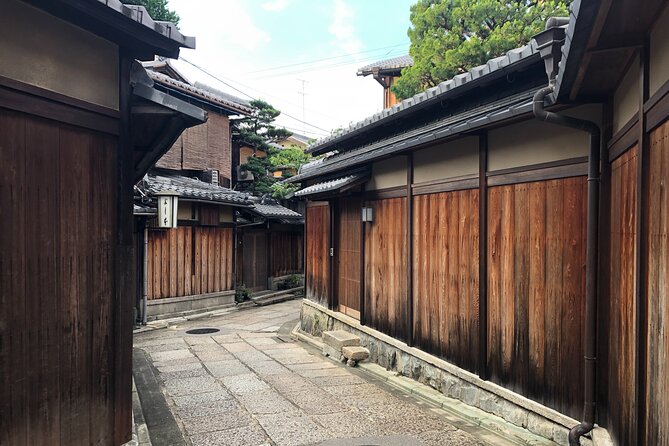
The route also includes a Japanese garden near Kiyomizu-dera, with ponds, traditional wooden bridges, and carefully arranged plants. The supplied schedule does not give this stop a separate title or exact duration, so you should think of it as a short scenic pause rather than a full garden visit.
That pause can be welcome after the crowded temple and shopping streets. Kyoto’s gardens are designed to slow your eye down, and even a brief look at a pond, bridge, or carefully placed plant can change the pace of the morning.
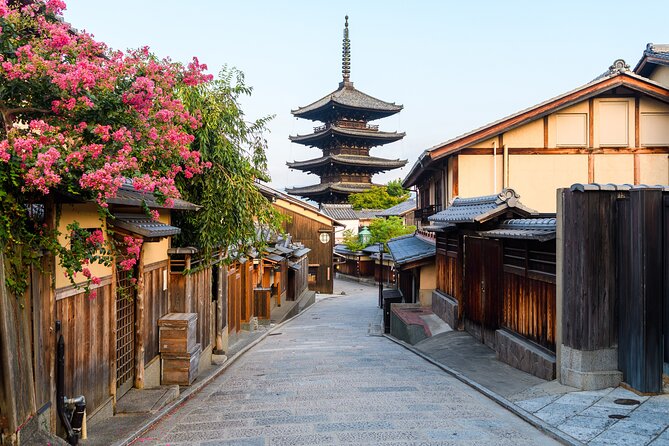
You also get a view of Yasaka Pagoda, a historic five-story pagoda and one of Higashiyama’s most recognizable landmarks. It is closely tied to the surrounding streets, so the view makes sense as part of the walk rather than as an isolated attraction.
Do not expect a separate long interior visit unless your guide confirms it. The information provided identifies Yasaka Pagoda as a view along the route, not a scheduled admission stop.
A few more Kyoto tours and experiences worth a look

Yasaka Koshin-do and its colorful charms
Yasaka Koshin-do is a small traditional temple near Yasaka Shrine. The stop lasts about 10 minutes and is free.
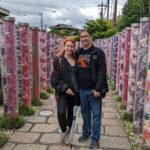
The temple is dedicated to Koshin, a guardian deity associated with protection from illness and misfortune. It is especially known for colorful kukurizaru charms, which give the small site a distinctive look and offer a glimpse of a living religious practice that is easy to miss when you focus only on Kyoto’s grand temples.
This is exactly the kind of short stop that improves the route. You are not spending another hour inside a monumental complex. Instead, you get a compact place with a strong visual identity and a chance to ask your guide how its customs differ from those at the larger Buddhist temples.
Ten minutes will pass quickly. If the site interests you, tell your guide. The tour is described as customizable, and several guides have adjusted the route or conversation to match personal interests and pace.
Yasui-Konpiragu and Kyoto’s personal side
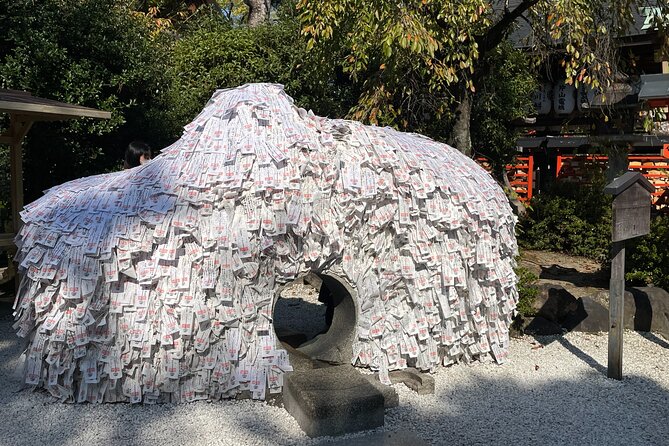
Next comes Yasui-Konpiragu, a Shinto shrine in Higashiyama. The planned visit is about 10 minutes and free.
The shrine is known for helping people cut negative relationships and form positive ones. Its unusual ritual draws people who want to leave behind an unhealthy connection or seek a better one. That gives the stop a more personal tone than a simple architecture lesson.
This is a useful reminder that Kyoto’s religious sites are not only about old buildings. They remain places where people bring worries, hopes, family concerns, and private wishes. Your guide can explain the meaning of the ritual and place it within the broader difference between Shinto shrine customs and Buddhist temple practice.
The stop is brief, and lines may form for the ritual. The tour schedule gives only 10 minutes, so you may not have time to participate if the shrine is busy. You can still see the site and hear the explanation, but let your guide know if this stop is especially important to you.
Kennin-ji, a calm Zen pause
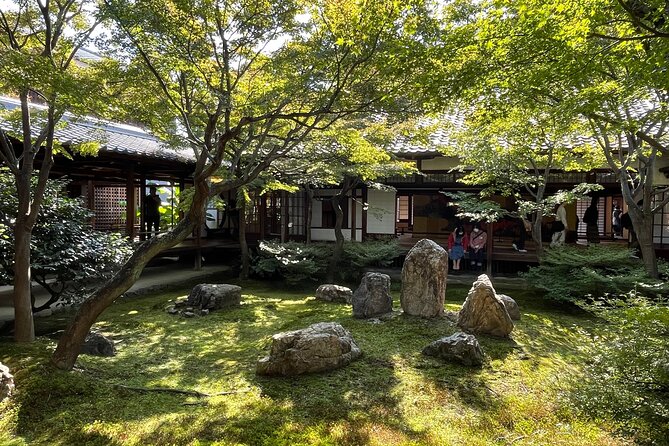
Kennin-ji receives about 50 minutes, with admission included. Founded in 1202, it is Kyoto’s oldest Zen temple. Despite its central location, the grounds offer a more restful change after the slopes, shops, and crowds of Higashiyama.
This may be the tour’s best counterpoint to Kiyomizu-dera. Kiyomizu is grand and heavily visited. Kennin-ji gives you more room to slow down and think about Zen Buddhist practice, temple design, and the role of quiet spaces in Japanese culture.
Takuma has been praised for explaining temple history and religious meaning in an engaging way. That kind of guide is particularly useful at Kennin-ji, where the value is not only in seeing a building but in understanding why Zen temples are arranged as they are.
The 50-minute visit is a generous allocation. You should have time to look around without feeling pushed through every room. Still, this is a group walk, not a private meditation appointment. The tour’s purpose is to introduce you to the temple, not provide a long silent retreat.
Walking into Gion and Hanamikoji
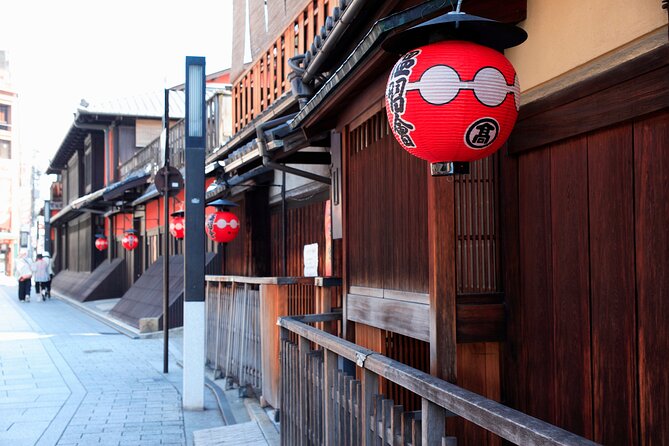
The final stretch takes you through Gion, Japan’s largest geisha district, and along Hanamikoji. The street is lined with traditional wooden machiya houses, teahouses, shops, and restaurants.
Gion is beautiful, but it is also a working district rather than an outdoor theme park. You should keep your voice down, avoid blocking doorways, and never photograph people entering or leaving private establishments. The guide can help you understand the difference between public streets and places where privacy matters.
Ending in Gion gives the tour a satisfying visual finish. You move from temple grounds and steep lanes into a district where old wooden architecture remains part of the street scene. The end point near Gionmachi Minamigawa also leaves you well placed to continue with dinner, shopping, or further independent walking.
The exact end time can vary. If you have a train, reservation, or show soon afterward, leave a buffer and tell the operator in advance.
Guides who shape the experience
The route is only half the product. The guide makes the difference between a sequence of famous stops and a useful introduction to Kyoto.
Mitsuhiko has been praised for good organization, clear information, and a comfortable pace. Mika has been described as informative, fun, and calm in crowded places. Takuma Goda brings an engaging manner and explains temple history, culture, and religious practice in a way that keeps the walk moving.
Kiyoto is a strong fit if you like a more personal exchange. He has tailored the outing to individual interests, answered wider questions about Japan, and offered recommendations beyond the formal route.
The guide roster can change, so you cannot necessarily request one of those specific people. What you can expect from the format is a small group, a local escort, and room to ask questions. The tour is described as customizable, though the degree of change depends on timing, crowds, and your guide.
Is $59.45 a fair price?
At $59.45 per person, this is not the cheapest way to walk through Higashiyama. You could visit several free streets and shrines on your own. Kiyomizu-dera and Kennin-ji admission would still cost extra, and you would need to plan the route yourself.
The price makes more sense if you value interpretation and efficient movement. You are paying for about four hours with a guide, admission to two major temples, help with navigation, and a route that joins Kiyomizu-dera to Gion without backtracking.
The small group also improves the value. A maximum of eight people is far more manageable than a large coach group, especially on narrow streets. You can ask why a shrine matters, pause for clarification, or mention an interest in Zen, food, architecture, or Japanese history.
I would not book this tour mainly for free time or shopping. The schedule is fairly full, and the guide’s explanations are a central part of the experience. I would book it if you want a strong first look at Kyoto’s eastern districts and prefer not to spend your limited time sorting out the route.
Who should book this four-hour walk?
This tour suits first-time Kyoto visitors, solo visitors with limited time, families who want help keeping children engaged, and anyone interested in religion and traditional culture. A guide has accommodated children’s pace and interests, which is a good sign for families who do not want a rigid march.
It also works well for people arriving from Tokyo for a day trip. One solo participant used it to cover Kyoto’s main sights in a single day, which is exactly the kind of situation where guided routing earns its keep.
You should think twice if steep streets are difficult for you, if you dislike crowds, or if you want long, quiet visits at each temple. Wear comfortable walking shoes. The tour operates in rain or sun, so check the forecast and dress accordingly.
Free cancellation is available up to 24 hours before the start time. Changes or cancellations made within 24 hours are not accepted for a refund.
Should you book the Kiyomizu and Gion tour?
Book it if you want Kyoto explained as you walk, not simply photographed as you pass. The route covers Kiyomizu-dera, Sannenzaka and Ninenzaka, small religious sites, Kennin-ji, and Gion in a logical half-day outing.
Its best features are the small group, the balance of major and lesser-known stops, and guides who can adjust the conversation to your interests. The main costs are your legs and your tolerance for crowds.
For a first visit, I think the value is strong. You will still have time afterward to explore Gion on your own, eat nearby, or visit another Kyoto sight. If you already know Higashiyama well and prefer to wander without a schedule, save the money and walk independently. For everyone else, this is a practical and culture-focused way to meet Kyoto.
FAQ
How long does the tour last?
The tour lasts approximately four hours.
Where does the tour begin?
It begins in front of the Kyoto Ceramic Center, also called the Kyoto Ceramic Art Association Official Shop and Gallery, at 583-1 Yūgyōmaechō in Kyoto’s Higashiyama Ward.
Where does the tour end?
It ends at 571 Gionmachi Minamigawa in Kyoto’s Higashiyama Ward, near the Gion area.
How many people can join the tour?
The group has a maximum of eight travelers.
Are entrance fees included?
Admission to Kiyomizu-dera and Kennin-ji Temple is included. The listed stops at the Kyoto Ceramic Center, Sannenzaka and Ninenzaka, Yasaka Koshin-do, and Yasui-Konpiragu have no admission charge.
Is the tour suitable for people who do not want much walking?
This is a walking tour with an uphill section and steep historic streets. Comfortable walking shoes are recommended, so it may not suit anyone who has difficulty with slopes or extended walking.
What happens if I need to cancel?
You can cancel up to 24 hours before the experience starts for a full refund. Cancellations or changes made less than 24 hours before the start time are not accepted for a refund.
More Golden Pavilion & Temple Tours in Kyoto
More Gion & Geisha Walks in Kyoto

More tours in Kyoto we've reviewed




Gion & Geisha Walks, compared.
 ★ 4.7Kyoto Geisha Walking Tour: Gion District & Hidden GemsFrom $252 hours
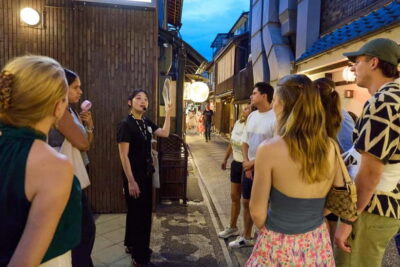 ★ 4.7Kyoto: Gion Geisha District Walking Tour – Stories of GeishaFrom $202 hours
 ★ 4.9Best of Kyoto: Gion, Geisha, Pagodas & CobblestonesFrom $242 hours
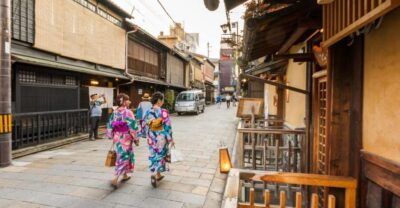 ★ 4.5Night Walk in Gion: Kyoto’s Geisha DistrictFrom $211h 40m
 ★ 5.0Kyoto Night Foodie Tour in Gion (9+ dishes + 6 Sake tastings)From $163
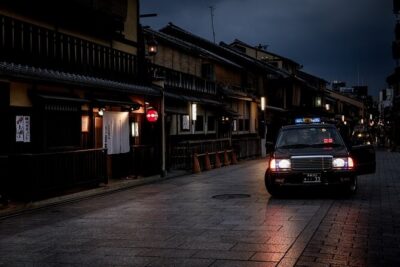 ★ 5.0Kyoto Gion Geisha District Walking Tour – The Stories of GeishaFrom $25