
Reviewed · ARASHIYAMA & BAMBOO TOURS
Kyoto Arashiyama & Golden Pavilion One-Day Walking Tour
Kyoto’s most famous sights come together in one long day here: wild macaques above Arashiyama, the quiet bamboo grove, Tenryu-ji’s garden, and the glittering Kinkakuji. The private format lets you ask questions and set a pace that works for your group.
I like the personal attention and the smart mix of natural scenery, temples, and cultural history. I also like that guides such as Barbara have been praised for clear English, warmth, and strong historical explanations. The main catch is simple: this is a serious walking day, with a steep path to Monkey Park and extra charges for admission and transport.
In This Review
- Key points at a glance
- Why this route works for a first day in Kyoto
- 8:00 at Kyoto Station, then west to Arashiyama
- Monkey Park Iwatayama and the first climb
- Togetsukyo Bridge and Arashiyama’s old resort character
- Kameyama Park’s river and valley views
- Walking through the Bamboo Forest Street
- Tenryu-ji and its famous garden
- Kinkakuji, Kyoto’s golden finish
- What the $128.35 price really covers
- Walking demands, comfort, and practical planning
- Who will get the most from this day
- Should you book the Arashiyama and Kinkakuji day?
- FAQ
- How long is the Kyoto Arashiyama and Golden Pavilion tour?
- What time and where does the tour begin?
- Where does the tour end?
- Is this a private tour?
- Are admission fees included?
- Is public transportation included?
- How much walking is involved?
- Is the tour suitable for wheelchair users or people with limited mobility?
- Can I cancel for a full refund?
Key points at a glance
- Private guiding: Only your group takes part, so you can ask questions freely and adjust the pace within the fixed schedule.
- Monkey Park climb: Reaching the Japanese macaques requires about 15 minutes of walking from Saga Arashiyama Station, followed by a slightly steep mountain path.
- Classic Arashiyama route: You see Togetsukyo Bridge, Kameyama Park, the Bamboo Forest Street, and Tenryu-ji in one morning.
- Kinkakuji finale: The Golden Pavilion provides a striking contrast to Arashiyama’s wooded paths and river views.
- Extra costs: The listed price is $128.35 per person, but admission fees of ¥2,100 and public transport of about ¥1,200 per person are not included.
- Best for active first-time visitors: Plan on good walking shoes, sun protection, and a moderate level of fitness.
Why this route works for a first day in Kyoto
Kyoto can feel scattered on a map. Arashiyama lies in the west, while Kinkakuji is in the northwest, and each area has enough temples, paths, and side streets to fill a day on its own. This tour removes much of the navigation work and gives you a guide to explain what you are seeing as you move between major sights.
The route also has a pleasing rhythm. You begin with a climb and mountain views, then walk beside the river, pass through a shaded park and bamboo grove, visit a major Zen temple, and finish at one of Japan’s most recognizable buildings. It is not a slow, single-site visit. It is a brisk sampler of Kyoto’s nature, religious art, architecture, and old resort culture.
The private setup is especially useful for families or mixed-age groups. One review describes a party ranging from 17 to 70, with the guide accommodating everyone. That does not make the route easy, but it suggests that the day can work well when your party has different walking speeds.
Guides Barbara and another guide praised for excellent English, historical explanations, and a good personality are named in the available feedback. Since guide assignments can vary, you should not assume a particular person will lead your tour. Still, the strongest theme is clear: the guide’s communication and personal manner are central to the experience.
A few more Kyoto tours and experiences worth a look
8:00 at Kyoto Station, then west to Arashiyama
The meeting point is in the Kyoto Station Building, a practical place to begin because it is easy to recognize and close to public transport. The tour starts at 8:00 am and ends back at the same meeting point after about seven and a half hours.
That early start matters. Arashiyama is one of Kyoto’s best-known areas, and its main paths can become much less peaceful as the day goes on. An 8:00 meeting gives you a better shot at enjoying the bamboo area before the heaviest flow of people, although no schedule can guarantee solitude.
Your public transport fares are extra, estimated at ¥1,200 per person. The exact route and tickets can depend on the day, so keep that cost separate from the tour price. The private guide fare is included, but the transport budget is not.
Monkey Park Iwatayama and the first climb
Monkey Park Iwatayama is the most physically demanding stop. From Saga Arashiyama Station, you walk about 15 minutes before reaching the start of the slightly steep mountain path. The climb continues for roughly 1 hour as part of the stop.
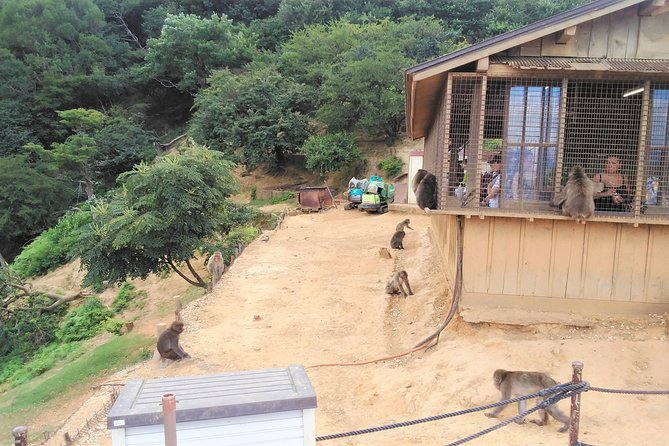
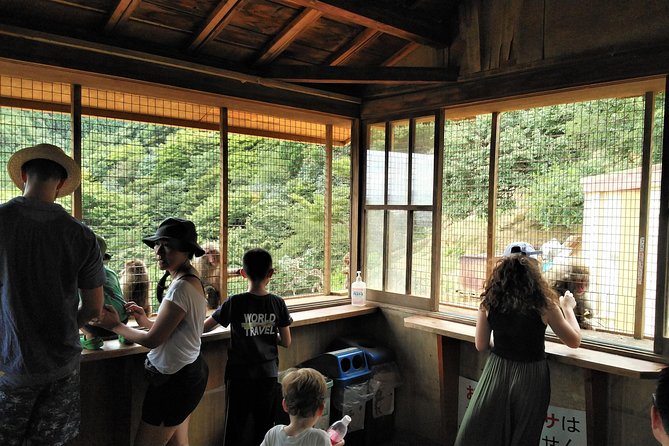
The reward is a setting where about 120 Japanese macaques live in the wild. They are described as wild but friendly, which means you should treat them as animals rather than tame pets. Follow the guide’s instructions and keep your attention on the path and the monkeys around you.
This opening stop gives the day a strong sense of place. You are not just checking off a temple from a coach. You are climbing into the hills above the river and seeing one of Japan’s best-known animals in its natural setting.
The climb is also the clearest warning about the tour’s fitness level. The activity information calls for moderate physical fitness, and that is fair. Limited mobility is listed as supported, but the steep path and lack of stroller access mean you should discuss your needs before booking. If one member of your group struggles with inclines, this is the stop to think about most carefully.
Togetsukyo Bridge and Arashiyama’s old resort character
After Monkey Park, the route moves to Togetsukyo Bridge for about 20 minutes. The bridge crosses the river at the center of Arashiyama and provides the area’s classic broad view toward the wooded hills.
Arashiyama was once reserved for aristocrats, who came here to boat, admire the scenery, watch moonlight on the river, and compose Japanese poetry. That background helps explain why the district feels different from central Kyoto. It was built as an escape from the city, not simply as a cluster of religious buildings.
The bridge stop is short, so expect a view and a historical explanation rather than a long riverside pause. If you want many photographs or a quiet drink beside the water, you may wish the schedule allowed more time. On the other hand, the brief stop helps keep the full route possible.
Kameyama Park’s river and valley views
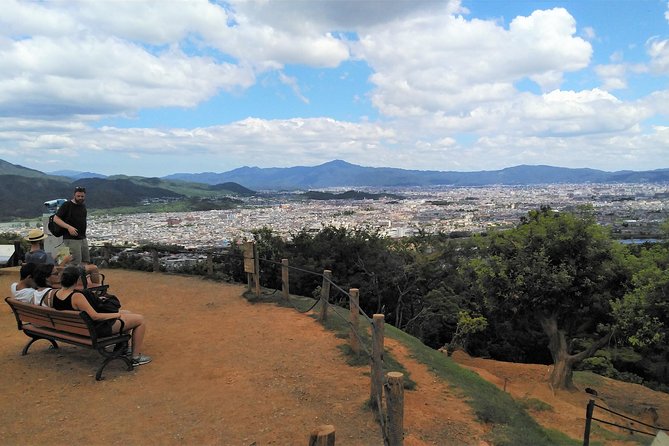
Kameyama Park takes about 30 minutes and brings you to a more natural section of Arashiyama. From the park’s observatory, you can look toward steep cliffs and the river running below the valley.
This is a useful counterpoint to the famous bamboo path. The park gives you open views and a chance to breathe after the Monkey Park climb, while the surrounding greenery keeps the morning from becoming a march between tourist sights.
The word observatory should not lead you to expect a large built viewpoint or a long stop. The appeal is the open view from the park itself. Wear shoes with a good grip, since the day includes hills, paths, and plenty of time on your feet.
Other walking tours we've reviewed in Kyoto
Walking through the Bamboo Forest Street
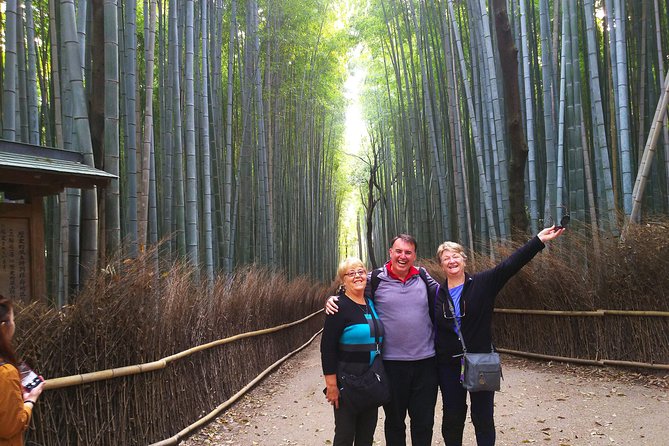
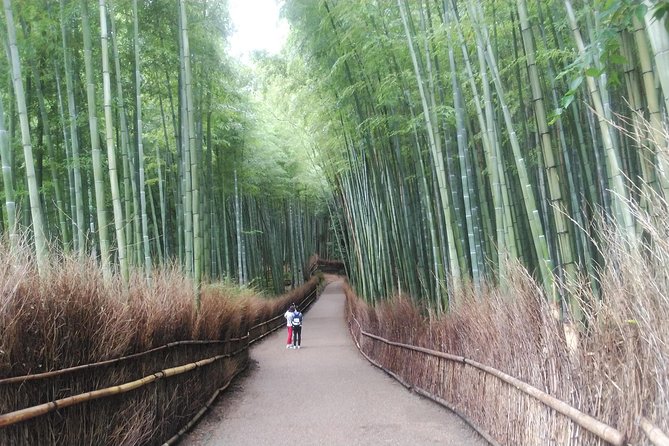
The Bamboo Forest Street stop lasts about 20 minutes. Tall bamboo stalks rise on both sides of the path, creating one of Kyoto’s most recognizable scenes. When the wind moves through the stems, the sound and filtered light are part of the experience.
This is a short walk, not an extended forest hike. That distinction matters. You will see the famous section, take photographs, and move on to the next sight rather than spending an entire morning among the bamboo.
The grove can feel serene, but it is also one of Arashiyama’s most popular places. Your guide adds value here by giving the scene context instead of leaving you to walk through, take a picture, and wonder what comes next. Still, keep expectations realistic if you are hoping for a completely empty path.
Tenryu-ji and its famous garden
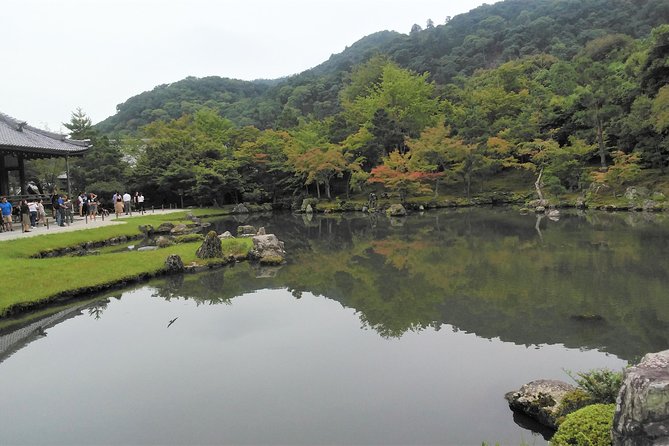
Tenryu-ji receives about 30 minutes. The temple was built in 1339 by the shogun to appease the spirit of the late Emperor, and it is recognized as a UNESCO World Cultural Heritage Site.
The temple’s garden is the main reason to pay attention here. Japanese gardens often ask you to look slowly at the relationship between water, stone, plants, hills, and borrowed scenery. A guide can point out how the garden is arranged and why it matters, details that are easy to miss if you only walk past the pond and buildings.
Admission to Tenryu-ji is not included. It is part of a separate total of ¥2,100 per person for admission fees, which also covers the other paid sights on the route according to the supplied cost information. Confirm the current breakdown when booking, since individual entry prices can change.
Thirty minutes is enough for an introduction, but not for every corner of the temple grounds. If Tenryu-ji is your main interest, a private visit with more time would suit you better than this broad highlights tour.
Kinkakuji, Kyoto’s golden finish
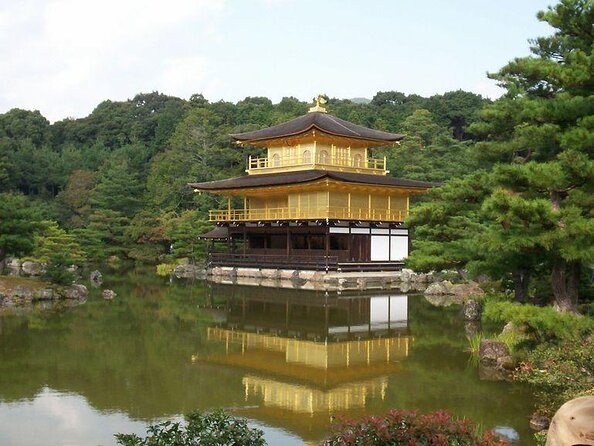
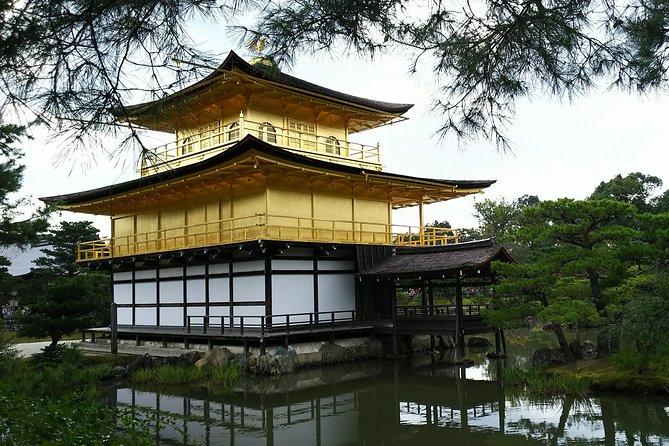
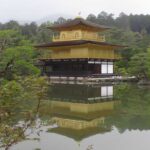
The afternoon visit to Kinkakuji, also called the Golden Pavilion, lasts about 50 minutes. The upper levels are covered in gold leaf, and the building is particularly striking when reflected in the pond.
Kinkakuji is one of Kyoto’s essential sights, but it is also a place where a guide can help you look beyond the famous photograph. The pavilion’s setting, its position beside the water, and its role as a major cultural symbol give the stop more weight than a quick picture suggests.
The grounds follow a set visitor route, so this is not a flexible wander through every part of the temple complex. Fifty minutes gives you time to see the pavilion, enjoy the pond view, and hear the key background before returning to Kyoto Station.
Admission is extra here, as it is at Tenryu-ji and Monkey Park. Kinkakuji is the final major stop, which makes sense visually: the bright gold building offers a sharp finish after the quieter greens and river scenery of Arashiyama.
What the $128.35 price really covers
At $128.35 per person, this is not a budget sightseeing walk. The price pays for a private guide and the convenience of combining two parts of Kyoto that are awkward to organize in one day.
You still need to add about ¥2,100 per person for admission and ¥1,200 for public transport, plus any food and drinks. That makes the true day cost higher than the headline price. You should also allow time and money for lunch, though lunch is not specified as part of the schedule or included fare.
The value improves when several people share the private format and want personal explanations. Group discounts are available, so larger parties should check the final price rather than assuming the per-person figure tells the whole story.
I would not choose this tour solely to save money. I would choose it to save planning time, reduce the chance of getting lost, and gain a guide who can connect the sights. If you already know Kyoto well or enjoy arranging trains and temples yourself, buying individual admissions and using public transport may cost less.
Walking demands, comfort, and practical planning
Wear good shoes. One full-day assessment specifically stresses the amount of walking, along with sun protection, and the itinerary supports that warning. The Monkey Park climb is the hardest section, but the rest of the day includes standing, paved walks, park paths, and movement between separate areas.
Bring water and keep your morning light. Food and drinks are not included, and the schedule is full enough that a long restaurant stop should not be assumed. Ask the guide at the start how the meal break will work for your group.
The activity is listed as accessible for people with limited eyesight and limited mobility, but it is not stroller accessible. The steep path to Monkey Park remains a serious consideration. Animals and pets are allowed according to the provided conditions, though you should still confirm how that applies to your specific animal before setting out.
The tour requires good weather. If poor weather causes cancellation, you can choose another date or receive a full refund. You can cancel for a full refund up to 24 hours before the 8:00 am start time. Changes or cancellations made inside that window are not accepted for a refund.
Who will get the most from this day
I would recommend this tour to a first-time Kyoto visitor who wants the major Arashiyama sights without spending hours studying route maps. It also fits families and private groups that value a guide’s flexibility and explanations.
It works best for people who want variety. You get wildlife, a river, a park, bamboo, a historic temple garden, and Kinkakuji in one outing. That range is the tour’s greatest strength.
I would be more cautious if you want a slow temple day, long photography stops, or a relaxed lunch. The schedule is efficient rather than leisurely. I would also avoid booking it without further questions if your group includes someone who cannot manage a steep incline.
Should you book the Arashiyama and Kinkakuji day?
Book it if you are visiting Kyoto for the first time, have one full day for western Kyoto, and want a private guide to handle the flow between major sights. The strongest value comes from the personal guiding, the clear historical explanations, and the chance to tailor the pace for a family or small group.
Skip it if your priority is the lowest possible cost or unhurried time at each temple. Also think twice if Monkey Park’s climb would make the day uncomfortable.
For most active first-time visitors, this is a well-planned introduction to two very different sides of Kyoto. Just budget for the extra ¥3,300 per person in admissions and transport, start with proper shoes, and treat the seven-and-a-half-hour schedule as a full day on your feet.
FAQ
How long is the Kyoto Arashiyama and Golden Pavilion tour?
The tour lasts approximately 7 hours and 30 minutes.
What time and where does the tour begin?
It begins at 8:00 am at the Kyoto Station Building, 901 Higashishiokojicho, Shimogyo Ward, Kyoto.
Where does the tour end?
The activity ends back at the Kyoto Station meeting point.
Is this a private tour?
Yes. Only your group participates in the activity.
Are admission fees included?
No. Admission fees are listed separately at ¥2,100 per person.
Is public transportation included?
No. Public transportation costs are listed separately at approximately ¥1,200 per person.
How much walking is involved?
The tour requires a moderate level of physical fitness. Monkey Park includes about a 15-minute walk from Saga Arashiyama Station and a slightly steep mountain path, followed by substantial walking at several sights.
Is the tour suitable for wheelchair users or people with limited mobility?
The activity is listed as accessible for people with limited mobility, but it is not stroller accessible and includes a steep path at Monkey Park. Confirm your specific needs before booking.
Can I cancel for a full refund?
Yes. You can cancel at least 24 hours before the local start time for a full refund. Cancellations or changes made less than 24 hours before the start are not accepted for a refund.
More Walking Tours in Kyoto
More Arashiyama & Bamboo Tours in Kyoto
More tours in Kyoto we've reviewed
Arashiyama & Bamboo Tours, compared.
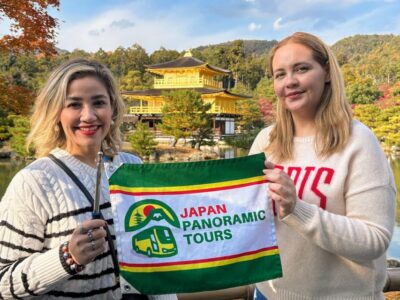 ★ 4.8Kyoto: Fushimi Inari, Kinkakuji, Bamboo Grove 1 Day Bus TourFrom $122510 minutes - 9 hours
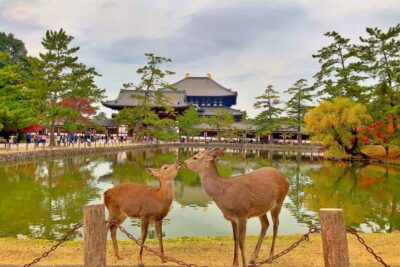 ★ 4.1Osaka/Kyoto:Kinkakuji,Arashiyama,FushimiInariShrine,NaraParkFrom $66
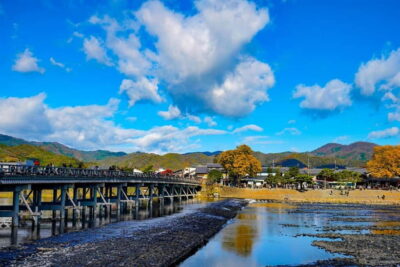 ★ 4.7Kyoto/Osaka: Nara, Fushimi Inari Taisha, Arashiyama Bus TourFrom $529 - 10 hours
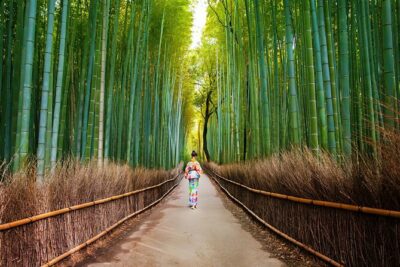 ★ 5.0Kyoto Arashiyama Walking Tour: Bamboo, Monkeys, Gardens & SecretsFrom $65
 ★ 4.8Arashiyama Bamboo, Temple, Monkeys, or Secret Sake BreweryFrom $875 hours - 330 minutes
 ★ 4.4Osaka/Kyoto: Arashiyama, Nara & Fushimi Inari Shrine w/LunchFrom $61