
Reviewed · GION & GEISHA WALKS
Kyoto: Maiko Happy Hour at a Historic Machiya
Kyoto’s maiko culture is usually kept at arm’s length. This two-hour visit at Tondaya gives you a rare close encounter inside a 140-year-old machiya, with tea, dance, music, games, and photographs in one carefully arranged afternoon.
I like the setting best: Tondaya is a nationally registered cultural landmark, not a modern event room dressed up for tourists. I also like the format, which moves beyond simply watching a performance and lets you play traditional party games and ask questions. The main concern is the price, currently listed at $709 per person, and the quality of interpretation may vary.
- A 140-year-old machiya: Tour Tondaya, a preserved Kyoto townhouse filled with traditional objects and stories.
- A rare maiko meeting: Enjoy close interaction, questions, party games, and commemorative photographs.
- Tea with Uji matcha: A maiko hosts a tea ceremony with Japanese sweets.
- Buyō in an intimate room: Watch refined Japanese dance accompanied by classical music.
- Language support varies: Japanese, English, and Chinese are offered, but an interpreter or translation device may be needed.
- Plan around strict rules: Bring socks, arrive promptly, and note that the activity is non-refundable within ten days of the appointment.
In This Review
- Entering Tondaya, Kyoto’s Preserved Machiya
- Tea, Matcha, and the First Close Look at Maiko Tradition
- Buyō and Classical Music in a Wooden Townhouse
- Traditional Party Games and Time for Questions
- Why the Photographs Matter
- Is $709 Per Person a Fair Price?
- Who Will Get the Most From This Visit?
- Timing, Language, and Seasonal Restrictions
- My Practical Take on Tondaya’s Maiko Happy Hour
- Should You Book It?
- FAQ
- Where does the Maiko Happy Hour take place?
- How long is the activity?
- What is included?
- Is alcohol included?
- Is tea included?
- Which languages are available?
- Can I take photographs with the maiko?
- What should I wear or bring?
- Is the activity wheelchair accessible?
- Can I book during the New Year period?
- Can I cancel for a refund?
Entering Tondaya, Kyoto’s Preserved Machiya
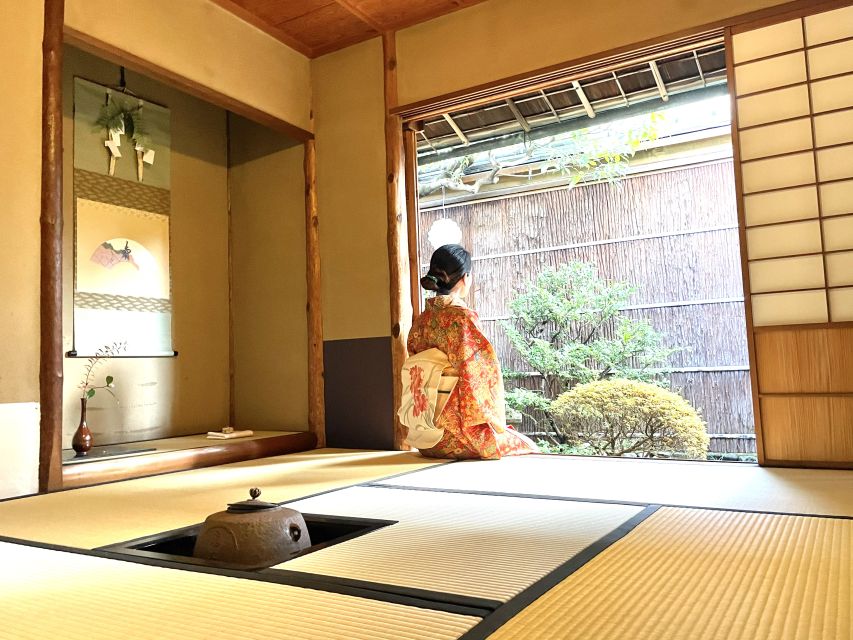
The visit begins at Tondaya-Nishijin Japanese Cultural Experience Museum in Kyoto. Tondaya is a machiya, the narrow wooden townhouse style once common in the city. Its age matters. You are not simply sitting in a venue decorated with old-looking beams and screens. You are walking through a building designated as a culturally significant landmark by the Kyoto City Government.
The first part is a guided tour of the house. Staff share stories about Tondaya and point out historically valuable objects. The exact route and depth of explanation can depend on the staff member and language support available, but the house itself provides much of the atmosphere.
I would pay attention to the transition from the street into the townhouse. Traditional Japanese houses often reveal their character through thresholds, wooden rooms, and the careful use of space. Here, the building is part of the program, not just a backdrop for the maiko.
Staff members also work in fields such as kimono, tea ceremony, calligraphy, and ikebana. That gives the visit a wider frame. You are not only watching a performer. You are being introduced to several pieces of Kyoto’s old artistic culture, even though the main focus remains the maiko.
Tea, Matcha, and the First Close Look at Maiko Tradition
After the house tour, you meet an authentic maiko. A maiko is a young woman in training within Kyoto’s geiko tradition. Her elaborate appearance is familiar from photographs, but the setting here allows you to learn about the person and the customs behind it.
The maiko hosts a tea ceremony, serving Uji matcha and Japanese sweets. This is presented as part of the experience, with the ceremony offering a quiet introduction before the dance. Uji, near Kyoto, is closely associated with Japanese tea, so the matcha is a fitting choice for a Kyoto cultural program.
Do not expect a long, formal tea-school lesson unless the staff specifically explain that one is included. The supplied details promise a tea ceremony, not a certification-style class or an extended workshop. Think of it as a guided look at the movements, manners, and care involved in serving tea.
One important practical point: alcohol is not included. The title uses the words happy hour, but the included drinks are the matcha and the non-alcoholic elements of the program. If you expect sake, beer, or a cocktail, you will need to adjust your expectations. One account also described a visit without tea or food and lasting less than an hour, so I would confirm the full serving and performance schedule when booking.
A few more Kyoto tours and experiences worth a look

Buyō and Classical Music in a Wooden Townhouse
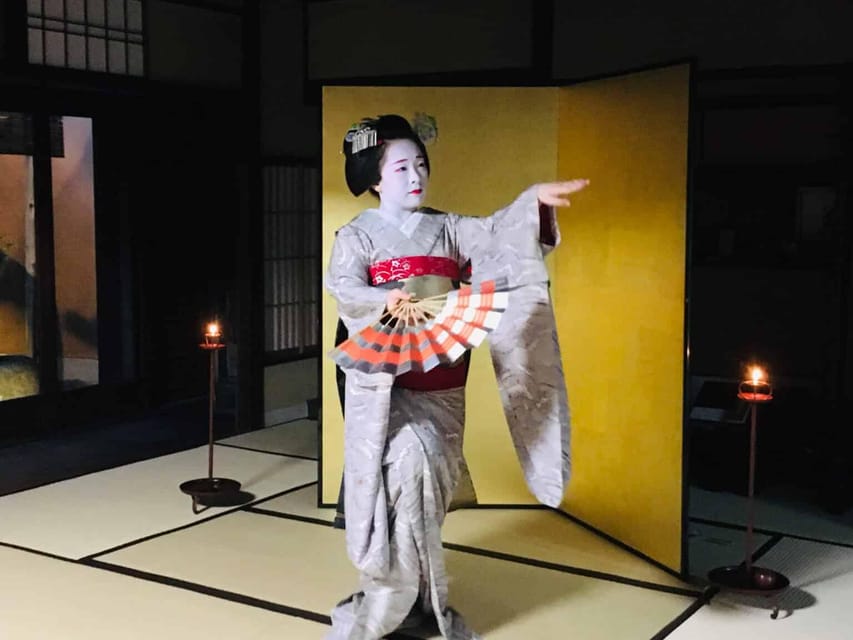
The next centerpiece is a buyō performance. Buyō is a refined form of traditional Japanese dance, with controlled movement, formal gestures, and close attention to costume and posture. It is not a high-energy stage show. The appeal comes from restraint, detail, and the way small movements carry meaning.
The machiya setting should make this more personal than watching a performance in a large theater. A wooden townhouse recalls the type of private entertainment associated with Kyoto’s older social world. The program aims to evoke the atmosphere of watching such a performance during the late Edo period.
I would treat the dance as a short cultural presentation rather than a full evening of theater. The stated duration for the complete visit is two hours, but the performance itself is only one part of the schedule. You also have the house tour, tea, games, conversation, and photos.
Language affects this section too. Staff can provide service in Japanese, English, and Chinese, but not every staff member speaks English. An interpreter may be arranged, and a translation device may be used when needed. That can work well for basic explanations, though it may feel less natural during a delicate artistic performance.
One English-speaking booking account found the maiko and translator effective but felt the overall visit was too short for the price. Another reported that the person assigned to translate could not properly convey what the maiko was saying. These are not minor details. Much of the value lies in understanding what you are seeing, so I would ask in advance how English interpretation will be handled.
Traditional Party Games and Time for Questions
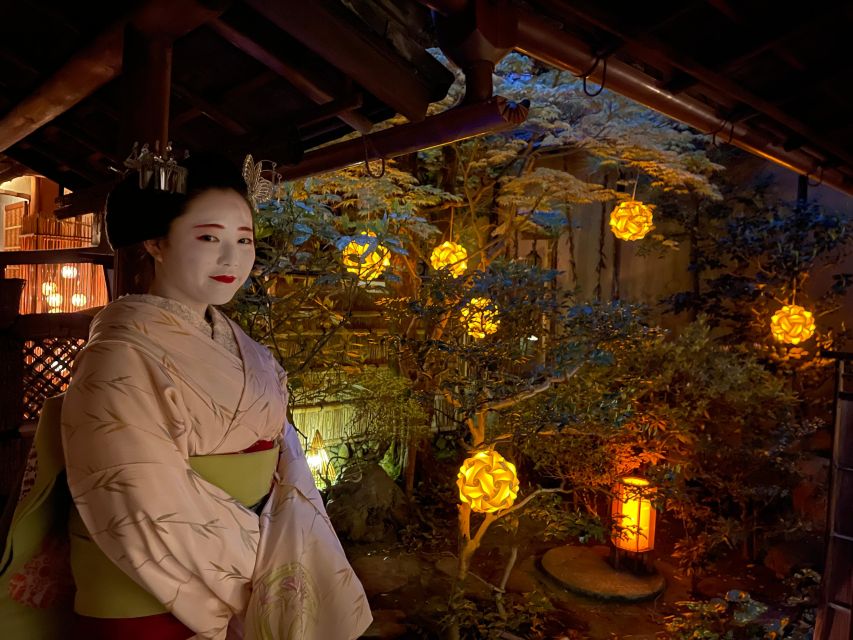
After the dance, the pace becomes more relaxed. The maiko explains traditional party games and plays them with you. This is likely to be the most interactive part of the visit, especially if you prefer participation to quiet observation.
The games also give you a natural way to ask about maiko life and customs. You can raise questions about the training process, clothing, performance traditions, or the role of the maiko within Kyoto’s entertainment culture. The supplied details do not promise a lecture or a fixed list of topics, so come prepared with your own questions.
This portion can make the difference between a pleasant show and a meaningful cultural meeting. A dance performance can be watched on a stage or screen. Sitting close enough to play a game and speak with the performer is much less common.
Still, expectations need to stay realistic. A maiko’s public interaction is unusual, but this is a scheduled cultural program, not an unplanned glimpse into private life. The conversation will be shaped by the time available, translation, and the questions you bring.
Why the Photographs Matter
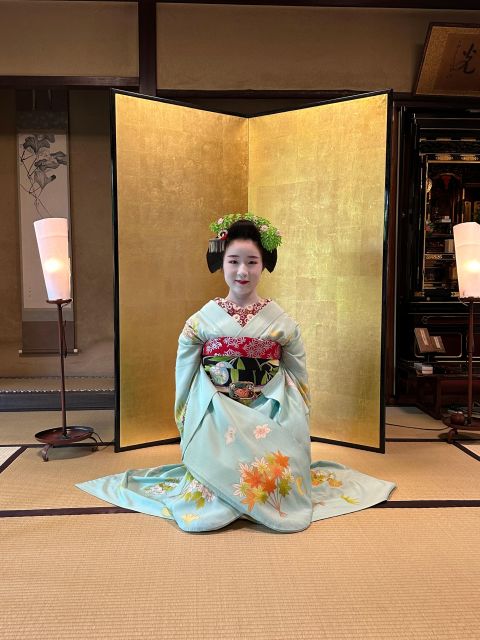
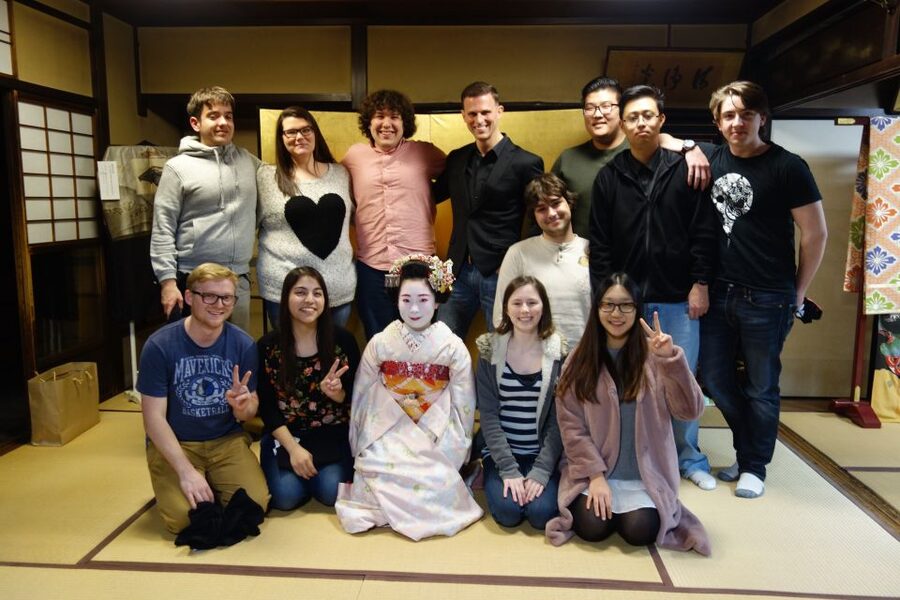
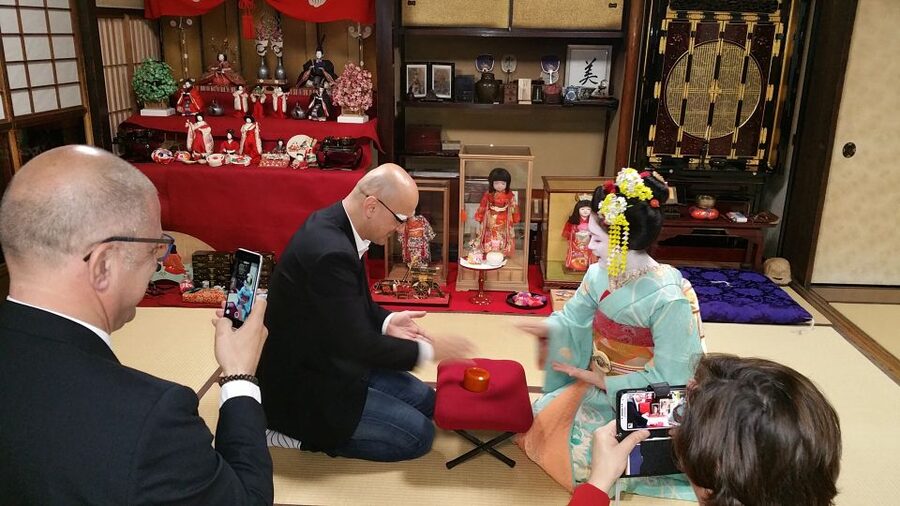
The visit ends with time for commemorative photographs with the maiko. The organizers describe this as a rare opportunity because maiko are not normally permitted to take photographs with the public.
That makes the photo session more than a quick tourist snapshot. You can use it to remember the setting, costume, and occasion, and the stated information says you may take as many photos as you like during this portion. Bring a phone or camera with enough battery and storage.
The photography rules are worth clarifying on arrival. The information promises photo opportunities but does not specify whether staff take the photos, whether group poses are allowed, or how much time each booking receives. Do not assume that every possible pose or private photo arrangement is included.
Even so, this is one of the strongest parts of the package for many people. Meeting a maiko in a historic Kyoto house is unusual. Having a photograph to mark the occasion gives the visit a lasting personal record.
Is $709 Per Person a Fair Price?
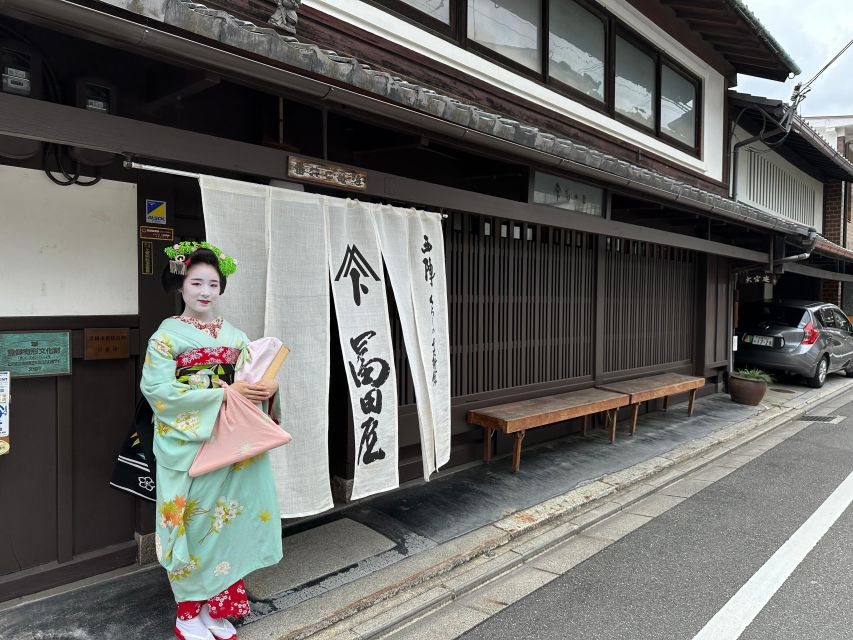
At the listed price of $709 per person, this is an expensive two-hour activity. You are paying for access to a protected historic building, a reserved maiko appearance, traditional arts, staff assistance, tea, games, and photography. That is a very different product from a low-cost stage performance or a casual tea demonstration.
The price may make sense for a special trip, a private celebration, or someone with a strong interest in Kyoto’s performing arts. The setting and direct contact are the main value. If you care most about architecture, etiquette, and a rare personal meeting, you may find the cost easier to justify.
I would not book it simply because the words happy hour sound casual or because you expect a meal. Alcohol is not included, and the stated program centers on matcha and sweets rather than dinner. One account described a dinner of good quality, but dinner is not part of the current included list, so you should not count on a meal.
There is also a gap between the advertised two-hour length and one account describing a visit of barely an hour. That may reflect a particular booking, a shortened schedule, or missing parts of the program. At this price, I would contact Tondaya before paying and confirm four things: the expected start and finish time, the tea service, the interpreter, and the exact performance schedule.
The booking is non-refundable, with a strict rule tied to the maiko reservation. Cancellation is generally possible only if made at least ten days before the appointment. That restriction exists because the maiko must be reserved at least ten days ahead and late cancellation costs are charged to Tondaya.
Other historical tours in Kyoto
Who Will Get the Most From This Visit?
I would recommend this to someone who wants a focused introduction to Kyoto’s traditional arts and is willing to pay for access rather than quantity. It suits a couple marking a special occasion, a Japan enthusiast, or a visitor who values an old building as much as the performer.
It also works well for someone who enjoys asking questions and joining activities. The games and conversation reward curiosity. If you only want to sit quietly and watch a dance, you may not get full value from the interactive parts.
Families should consider the format carefully. The program includes formal tea, dance, and cultural explanation, followed by games. The information does not state a minimum age, so ask Tondaya if you are considering bringing children.
This is not suitable for wheelchair users. You also need to wear socks. Stockings are specifically discouraged, so bring ordinary socks and expect to remove your shoes if instructed at the townhouse.
Timing, Language, and Seasonal Restrictions
The activity lasts two hours, but starting times depend on availability. Arrive on time. A reserved maiko appearance is not the kind of appointment that can easily absorb a late arrival.
Japanese, English, and Chinese are listed as available languages. That does not mean every staff member speaks all three. English support may involve an interpreter or a translation device, and the quality of the explanations can affect how much you take from the dance and discussion.
The seasonal dates are important. Tondaya closes from December 31 through January 1. You cannot reserve a maiko appointment from December 29 through January 10. The maiko also needs to be reserved at least ten days in advance, so last-minute planning is a poor fit for this experience.
The provider is Tondaya, Co., Ltd. The meeting point is Tondaya-Nishijin Japanese Cultural Experience Museum, so check the exact address and route before setting out. No transportation is included in the stated package.
My Practical Take on Tondaya’s Maiko Happy Hour
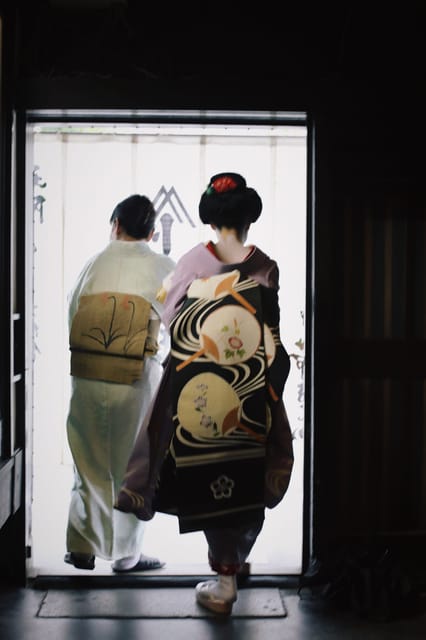
I like the idea of this program because it brings together parts of Kyoto that are often separated: the townhouse, tea, dance, music, games, and direct conversation. The strongest moments should come from the combination of place and access. A maiko performance inside a 140-year-old machiya has a sense of connection that a hotel ballroom cannot easily copy.
The weak point is value control. At $709 per person, the schedule needs to be clear and the interpretation needs to work. If tea is missed, the visit runs much shorter than two hours, or translation breaks down, the experience becomes hard to defend financially.
Should You Book It?
Book this if meeting a maiko is a top priority, you value historic architecture, and the price fits your budget without strain. Confirm the interpreter, tea service, length, and photo arrangements before committing.
Skip it if you want a low-cost cultural activity, a full meal, or a guaranteed long English-language explanation. Kyoto offers many less expensive ways to encounter tea, dance, and traditional buildings. This particular visit is for the rare personal meeting and the setting, not for the amount of food or stage time.
FAQ
Where does the Maiko Happy Hour take place?
The meeting point is Tondaya-Nishijin Japanese Cultural Experience Museum in Kyoto.
How long is the activity?
The stated duration is two hours. Starting times depend on availability.
What is included?
The program includes a guided machiya tour, a maiko dance performance, traditional party games, a tea ceremony, photography opportunities, and a lesson about Kyoto and maiko culture.
Is alcohol included?
No. Alcoholic drinks are not included.
Is tea included?
The program describes a tea ceremony featuring Uji matcha and Japanese sweets. One account described not receiving tea, so confirm the serving when booking.
Which languages are available?
Japanese, English, and Chinese are listed. An interpreter may be arranged, and a translation device may be used when necessary.
Can I take photographs with the maiko?
Yes. Photography time with the maiko is included at the end of the activity.
What should I wear or bring?
Bring socks. You should wear socks rather than stockings.
Is the activity wheelchair accessible?
No. The activity is not suitable for wheelchair users.
Can I book during the New Year period?
Tondaya is closed from December 31 through January 1, and maiko appointments cannot be reserved from December 29 through January 10.
Can I cancel for a refund?
The activity is non-refundable unless cancellation is made at least ten days before the scheduled appointment. Maiko reservations require advance payment arrangements, so late cancellations are not accepted.
More Historical Tours in Kyoto
More Gion & Geisha Walks in Kyoto

More tours in Kyoto we've reviewed

Gion & Geisha Walks, compared.
 ★ 4.7Kyoto Geisha Walking Tour: Gion District & Hidden GemsFrom $252 hours
 ★ 4.7Kyoto: Gion Geisha District Walking Tour – Stories of GeishaFrom $202 hours
 ★ 4.9Best of Kyoto: Gion, Geisha, Pagodas & CobblestonesFrom $242 hours
 ★ 4.5Night Walk in Gion: Kyoto’s Geisha DistrictFrom $211h 40m
 ★ 5.0Kyoto Night Foodie Tour in Gion (9+ dishes + 6 Sake tastings)From $163
 ★ 5.0Kyoto Gion Geisha District Walking Tour – The Stories of GeishaFrom $25