
Reviewed · WALKING TOURS
Kyoto Early Bird Walking Tour
Kyoto rewards early risers. This private morning tour gets you to Fushimi Inari’s torii gates, Kinkaku-ji, and Arashiyama’s bamboo grove before the day’s crowds gather, then returns you to Kyoto Station by noon. The quiet is not a small perk here. It changes the whole feel of these famous places.
I like two things in particular: your guide handles the public transport between sites, and the private format lets the morning feel personal rather than scripted. Guides such as Akiko, Sumiko, Kaz, and Miho have been praised for clear explanations, photo help, and thoughtful pacing. The drawback is simple: five hours of walking and transfers make this an active morning, and the $105.45 price excludes transport and Kinkaku-ji admission.
In This Review
- Key points at a glance
- Why the early start matters in Kyoto
- Fushimi Inari: red gates and a strong first impression
- Kinkaku-ji in the first hour of opening
- Arashiyama bamboo forest before the heat
- A private guide makes the transfers easier
- Guides who add more than directions
- Walking demands, weather, and comfort
- Is $105.45 a fair price?
- Who should book this morning tour?
- My call on the Kyoto Early Bird Walking Tour
- FAQ
- Where does the Kyoto Early Bird Walking Tour start and end?
- How long does the tour last?
- Which attractions are included?
- Is Kinkaku-ji admission included?
- Are transportation costs included?
- Can I cancel for a full refund?
Key points at a glance
- Start before the crowds: Fushimi Inari and Arashiyama are far more pleasant before midmorning.
- Three major sights in one morning: You see Kyoto’s best-known Shinto, Buddhist, and cultural sites.
- Private attention: Only your own group participates, so the guide can adjust the pace and answer questions.
- Public transport is part of the experience: The guide leads you through the trains, buses, and subway connections between distant areas.
- Ends around noon: You keep the afternoon free for Gion, Nishiki Market, a tea ceremony, or a slower meal.
- Budget for extras: Add ¥1,220 per person for public transport and ¥500 for Kinkaku-ji admission.
Why the early start matters in Kyoto
Kyoto’s most famous sights are not hard to find. The challenge is seeing them without a wall of people between you and the view. Fushimi Inari, the Golden Pavilion, and Arashiyama are spread across different parts of the city, and each can become crowded quickly.
This tour uses the morning well. You meet at the Kyoto Station Building, set out early, and visit all three places before noon. That timing gives you cooler air, softer light, and a better chance to walk a few steps without stopping for a photo line.
You should still expect other people. This is Kyoto, not an empty mountain temple. But an early departure gives you a real advantage, especially at the torii gates and bamboo forest. By late morning, the same paths can feel much tighter.
I also like the way the schedule leaves the rest of your day open. A five-hour tour is enough for a first look at three major sights, without taking over your entire Kyoto visit.
Other walking tours we've reviewed in Kyoto
Fushimi Inari: red gates and a strong first impression
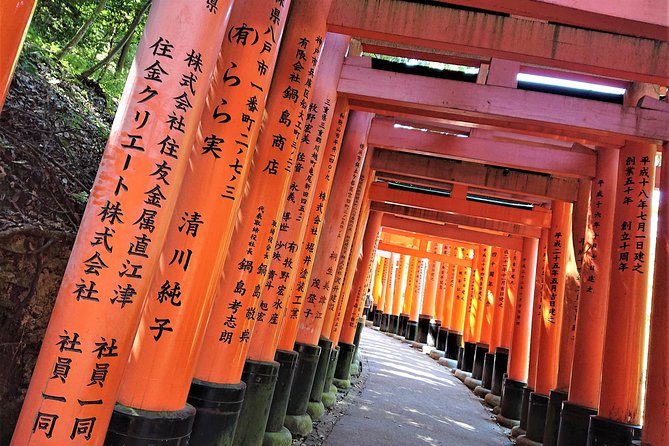
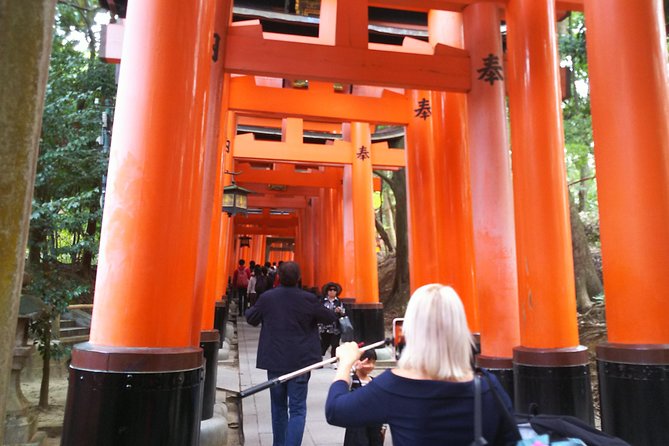
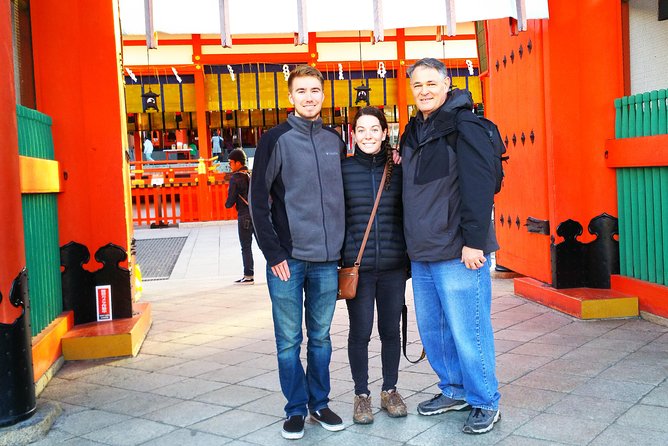
The first stop is Fushimi Inari-taisha Shrine, known for its long tunnel of vermilion torii gates. These gates were donated by worshippers in thanks for good fortune, and each one carries a connection to a person or business that supported the shrine.
The color and repetition make this one of Kyoto’s most recognizable sights. Early in the morning, the gates feel more atmospheric. The air is cooler, the paths are quieter, and the bright red-orange columns catch the morning light in a way that photographs well.
Your guide can explain the difference between Shinto shrine customs and the visual details around you. That context matters. Without it, Fushimi Inari can seem like a beautiful corridor of gates. With some background, you begin to understand why the gates are there and how the shrine’s worship works.
The included visit lasts about an hour, and admission is free. That hour will give you a useful taste of the site, but not a full hike through every section of the mountain. Fushimi Inari extends much farther than the famous lower gates, so you should not expect to cover the entire complex at this pace.
Wear shoes with good grip. Even if the walking remains near the main route, this is not a flat, indoor attraction. Steps and slopes are part of the setting, and the morning’s total distance adds up quickly.
Kinkaku-ji in the first hour of opening
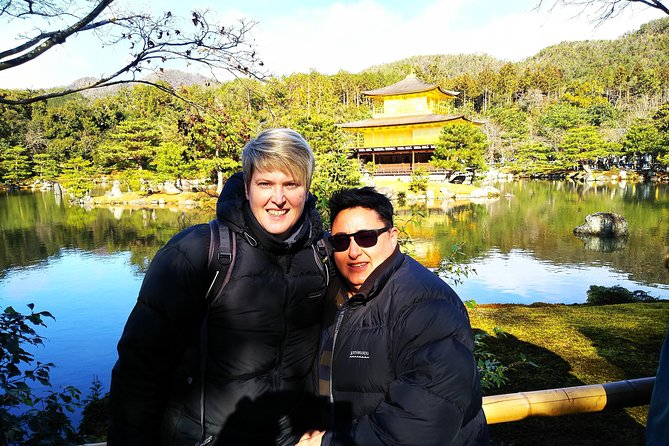
Next comes Kinkaku-ji, the Golden Pavilion. The gilded building sits beside a pond, creating the classic reflection view that appears in nearly every Kyoto guidebook.
The timing is the main reason to include it on an early tour. You enter shortly after opening, when the paths are generally less crowded than later in the day. The pavilion is not a place where you wander inside or linger in a series of rooms. The experience centers on the exterior view, the pond, the surrounding garden, and the chance to pause at several viewing points.
Your guide adds value here by explaining the temple’s place in Kyoto and its connection with Zen and samurai culture. That makes the stop more than a quick photograph. You get a clearer sense of why this particular building has become such a lasting symbol of Kyoto.
Admission is not included. The listed fee is ¥500 per person, so keep cash or a convenient payment method ready. The tour does not include food or drinks either, and this stop may be your best chance to think about water before the final portion of the morning.
Kinkaku-ji can feel busy even early, especially during peak seasons. Still, arriving near opening is a practical choice. If you visit independently later, you may spend more time waiting and less time looking.
Arashiyama bamboo forest before the heat
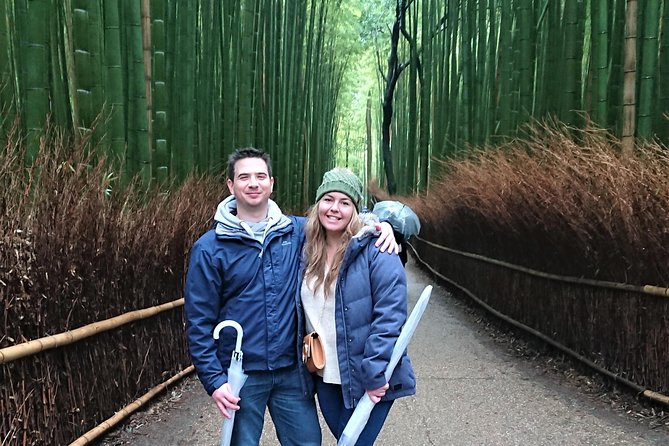
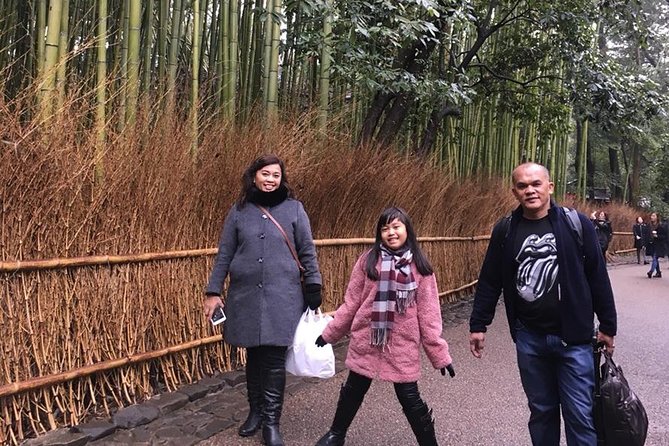
The final major stop is Arashiyama, with its famous bamboo forest. Tall bamboo rises on both sides of the path, and the sound of the breeze moving through the stalks is often as memorable as the view itself.
Morning is the right time for this walk. The grove is cooler before midday, and the green bamboo looks especially striking when the sun reaches through the upper leaves. The path is relatively short as a featured stop, but its popularity means the atmosphere can change fast as more people arrive.
A guide can help you find the most appealing viewpoints and explain what makes the grove different from an ordinary stand of bamboo. You may also get help taking photographs. Several guides, including Akiko and Makoto, have been praised for knowing useful photo spots and helping with personal pictures.
The bamboo forest is one of the tour’s most photogenic moments, but it is also the stop where expectations need managing. You will not have the grove entirely to yourself, and this itinerary focuses on the well-known forest rather than every Arashiyama attraction. If you want Tenryu-ji, the monkey park, or a full day in the district, plan to return later.
The tour finishes back at the Kyoto Station meeting point around noon. That ending is useful if you want to continue by train, find lunch near the station, or head into another part of the city.
A private guide makes the transfers easier
The three sights are not next door to one another. Getting between them requires public transportation, and the tour information lists ¥1,220 per person for that fare. The guide leads you through the necessary trains, buses, and subway connections, rather than leaving you to work out each transfer on your own.
That help is especially valuable on a first Kyoto morning. You can spend your attention on the city instead of checking platforms, routes, and departure times. Several guides have also helped with practical needs along the way, including restroom breaks, pharmacy directions, and finding the right station entrance.
The private format is another strong point. Only your group participates, so you can ask questions without holding up a large party. One family had the route adjusted slightly, and guides have worked well with children and young adults. You should not assume every request can be accommodated, but a private booking gives you more room to speak up.
The pace is purposeful. You need to keep moving to fit three distant sights into one morning. One family described the pace as fast but suitable, while another appreciated seeing so much in limited time. If you prefer long pauses, quiet café stops, or detailed exploration of one temple, this will feel too compressed.
An IC card such as a Suica can make the transport simpler, but the provided tour details do not require one. You still need to pay your own fare, and you should have comfortable shoes and water.


Guides who add more than directions
The strongest part of this experience is the guide’s role. The guide is not only there to point toward the next train. You get explanations of Japanese history, Shinto and Buddhist customs, local practices, and the meaning behind what you are seeing.
Akiko has been especially praised for being friendly, attentive to families, and willing to take photos. Sumiko is known for arriving with a printed agenda, giving detailed explanations, and helping with good photo positions. Kaz has connected well with both adults and children, even working Studio Ghibli into the conversation when appropriate.
Other guides named in the tour feedback include Megumi, Hiro, Emiko, Kazuo, Toshi, Naoko, Makoto, Makiko, Miho, and Miko. Their styles may differ, and you cannot count on receiving a particular guide unless the operator confirms it. The consistent point is that the guide-led format reduces the stress of crossing Kyoto while giving you more cultural context than a self-guided visit.
Makoto’s approach is a good example of the practical care you might receive. He contacted the group before a rainy tour, shared photographs of the Kyoto Station meeting point, asked about interests, and checked for water and restroom needs during the morning. That sort of preparation can matter when you are tired, jet-lagged, or dealing with uncertain weather.
Walking demands, weather, and comfort
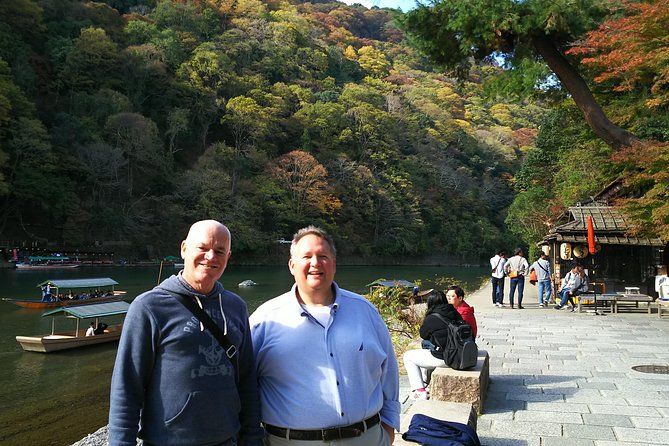
This is a walking tour in a real city, not a sightseeing ride. The three featured stops involve paths, temple grounds, station corridors, and transfers. The description calls for a moderate fitness level and warns that quite a bit of walking is required.
Bring comfortable walking shoes. In summer, add water and sun protection. One useful tip from the tour details is a sun umbrella, particularly for hot weather. The bamboo forest offers some shade, but much of the morning’s walking is outdoors.
The tour requires good weather. If poor weather causes cancellation, you are offered another date or a full refund. Rain does not automatically make the experience impossible, but wet paths and extra walking may make the morning less comfortable.
The activity is listed as accessible for people with limited eyesight and limited mobility. At the same time, the operator recommends moderate physical fitness and says there is substantial walking. If you have a heart condition, this tour is not recommended. Animals and pets are allowed according to the activity information.
For families, the private setup is helpful. The guide can check in more often and adjust the pace within reason. Still, young children need to manage a long morning with walking and public transport, so consider your family’s energy level before booking.
Is $105.45 a fair price?
The listed price is $105.45 per person, and group discounts are available. That covers the guide fee, not the transport or Kinkaku-ji entrance. You should add ¥1,220 per person for public transportation and ¥500 for the Golden Pavilion, plus any food or drinks you buy.
The value depends on what you want from Kyoto. If you are comfortable navigating trains and buses, reading shrine customs on your own, and visiting one site at a time, you can spend less independently. You also have more control over how long you stay.
I think the price makes more sense for a first day in Kyoto, a short stay, or a family that wants the logistics handled. You are paying for a private guide, a carefully timed route, and cultural explanations at three widely separated attractions. The early start also helps you make better use of your morning, which is valuable during a brief visit.
For a couple or small group, the private format can feel worthwhile because you get direct attention. For a larger group, check the group discount before deciding. The tour is not the best bargain if you already know Kyoto well and prefer slow, independent wandering.
Who should book this morning tour?
I would choose this experience if you are visiting Kyoto for the first time, have only a few days, or want a clear orientation before exploring on your own. It is also a good fit if public transport in a new city makes you uneasy.
Jet lag can work in your favor. An early start gives you something useful to do when you are awake before sunrise, and you finish early enough to rest or continue at a gentler pace.
Families may appreciate the private setting, guide assistance, and photo help. Couples who want strong photographs at the major sights may also find the early timing useful.
I would hesitate if you dislike early mornings, have limited stamina, or want to spend a full day in Arashiyama alone. You should also avoid booking it if you need a relaxed schedule with long breaks. This is an efficient introduction to Kyoto, not a leisurely temple retreat.
The cancellation terms are straightforward: cancel at least 24 hours before the local start time for a full refund. Changes or cancellations inside that window are not accepted for a refund.
My call on the Kyoto Early Bird Walking Tour
Book it if your priority is seeing Kyoto’s three headline sights with fewer crowds and less transport stress. The early timing is the tour’s real strength, while the private guide adds history, local context, route help, and practical care.
Just arrive ready to walk, budget for the ¥1,220 transport fare and ¥500 temple admission, and accept that each stop is an introduction rather than a complete exploration. If that tradeoff suits you, you will finish the morning with a strong first look at Kyoto and the whole afternoon still ahead.
FAQ
Where does the Kyoto Early Bird Walking Tour start and end?
The tour starts at the Kyoto Station Building at 901 Higashishiokōjichō, Shimogyo Ward, Kyoto. It ends back at the same meeting point.
How long does the tour last?
The experience lasts approximately 5 hours and 15 minutes. It finishes around noon, leaving your afternoon free.
Which attractions are included?
The tour visits Fushimi Inari-taisha Shrine, Kinkaku-ji Temple, and Arashiyama’s bamboo forest.
Is Kinkaku-ji admission included?
No. The Kinkaku-ji admission fee is ¥500 per person and is paid separately.
Are transportation costs included?
No. Public transportation costs ¥1,220 per person and are not included in the tour price.
Can I cancel for a full refund?
Yes. You can cancel at least 24 hours before the experience start time for a full refund. Cancellations or changes made less than 24 hours before the start are not refunded or accepted.
More Walking Tours in Kyoto
More tours in Kyoto we've reviewed


Walking Tours, compared.
 ★ 4.7Kyoto Geisha Walking Tour: Gion District & Hidden GemsFrom $252 hours
 ★ 4.7Kyoto: Gion Geisha District Walking Tour – Stories of GeishaFrom $202 hours
 ★ 4.5Night Walk in Gion: Kyoto’s Geisha DistrictFrom $211h 40m
 ★ 5.0Kyoto Gion Geisha District Walking Tour – The Stories of GeishaFrom $25
 ★ 5.0Nishiki Market Brunch Walking Tour (7 Tastings + Brunch)From $68
 ★ 4.9Kyoto: Gion Magical Night Walking Tour with Geisha InsightsFrom $34