
Reviewed · KYOTO FOOD TOURS
Kyoto: Nishiki Market and Depachika Food Tour with a Local
Kyoto’s best food lesson may happen in two very different places: Nishiki Market, an old covered arcade of specialty stalls, and Daimaru’s polished basement food hall, known as a Depachika. This compact tour connects both, then adds Nishiki Tenmangu Shrine for a quiet cultural pause.
I like the set tasting list, which includes yuba sashimi, a soy milk doughnut, Nishiki gyoza, and hamo fish tempura. I also like the small groups, limited to nine people, and the choice of several starting times. The main consideration is pace: two hours is short, and one visitor found the tasting plan unclear, so ask your guide early what you will sample.
In This Review
- Key points at a glance
- Two Kyoto food worlds in one short walk
- Daimaru Kyoto and the Depachika experience
- Nishiki Market, Kyoto’s Kitchen
- Nishiki Tenmangu Shrine after the food stalls
- What the guides add
- Price, pace, and practical value
- Who should book this food walk?
- FAQ
- How long does the Kyoto food tour last?
- What food is included?
- Where does the tour begin?
- Where does the tour finish?
- Is the tour offered in English?
- How large is the group?
- Should you book it?
Key points at a glance
- Four named tasting stops: Try yuba sashimi, a soy milk doughnut, Nishiki gyoza, and hamo tempura.
- Two sides of Kyoto food: Compare Daimaru’s orderly Depachika with Nishiki Market’s narrow arcade of family-run stalls.
- A shrine visit included: See Nishiki Tenmangu and learn how to use its hand-washing fountain.
- Small-group format: The group is limited to nine, making it easier to ask questions and stay close to the guide.
- Useful for food beginners: Guides explain unfamiliar ingredients, customs, and ways to eat the food.
- Short but active: Expect walking, standing, crowds, and a finish near Kyoto-Kawaramachi Station.
Two Kyoto food worlds in one short walk
This is not a sit-down meal. Think of it as a guided introduction to Kyoto’s food culture, with several small samples along the way.
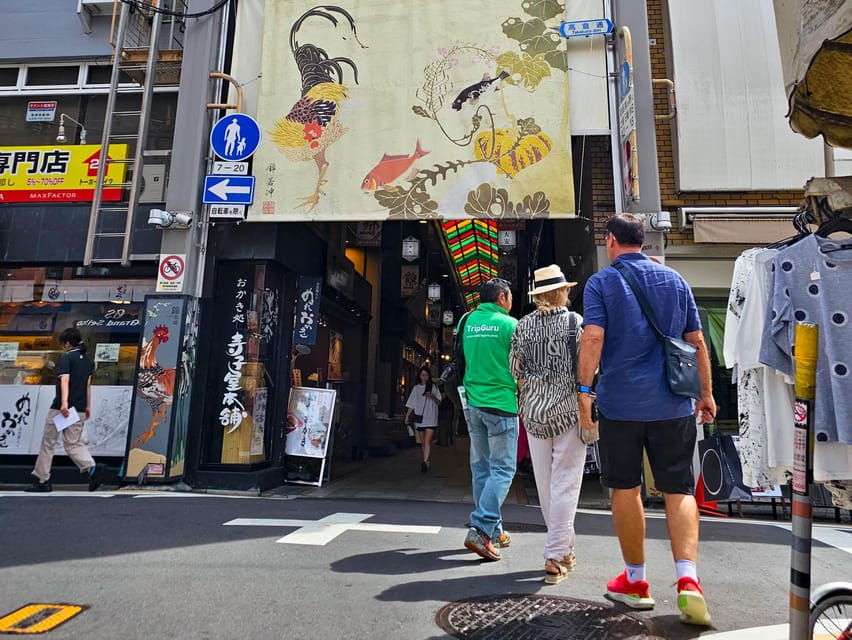
You meet at Apple Kyoto, where your TripGuru guide wears a TripGuru shirt or holds a TripGuru sign. From there, the route moves to Daimaru Kyoto, then Nishiki Market, Nishiki Tenmangu Shrine, and finally Kyoto-Kawaramachi Station.
The timing supplied for the individual stops adds up to longer than the advertised two-hour duration. That means you should treat the schedule as an outline rather than a promise of 90 minutes at Daimaru, an hour at Nishiki Market, and 30 minutes at the shrine. Confirm the day’s pace with your guide at the start.
The tour works best early in your Kyoto visit. You get a working vocabulary for Japanese food, learn which stalls deserve attention, and pick up ideas for returning on your own. Guides including Mao, Jasmine, Boris, Ai, Richard, and Kats have been praised for explaining food, local customs, and the area around the market.
A few more Kyoto tours and experiences worth a look

Daimaru Kyoto and the Depachika experience
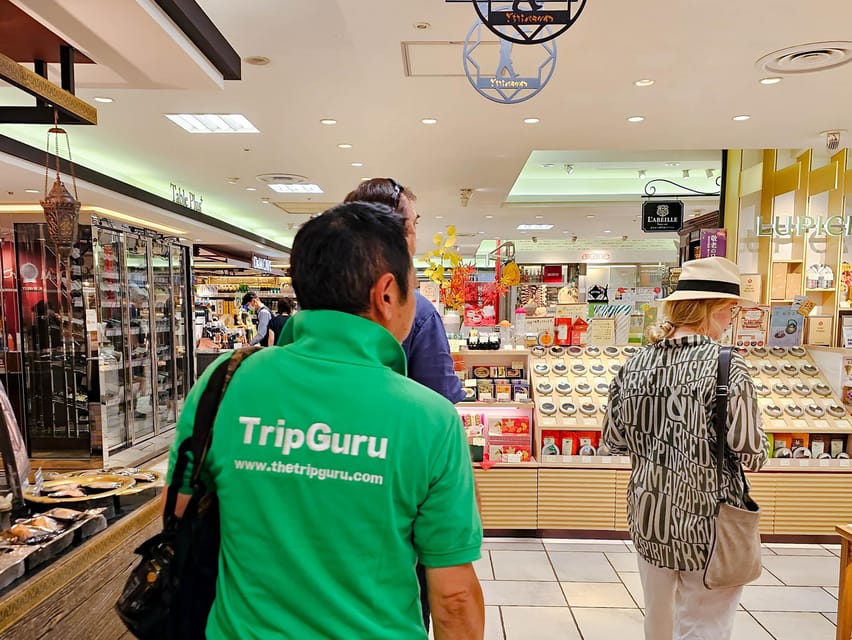
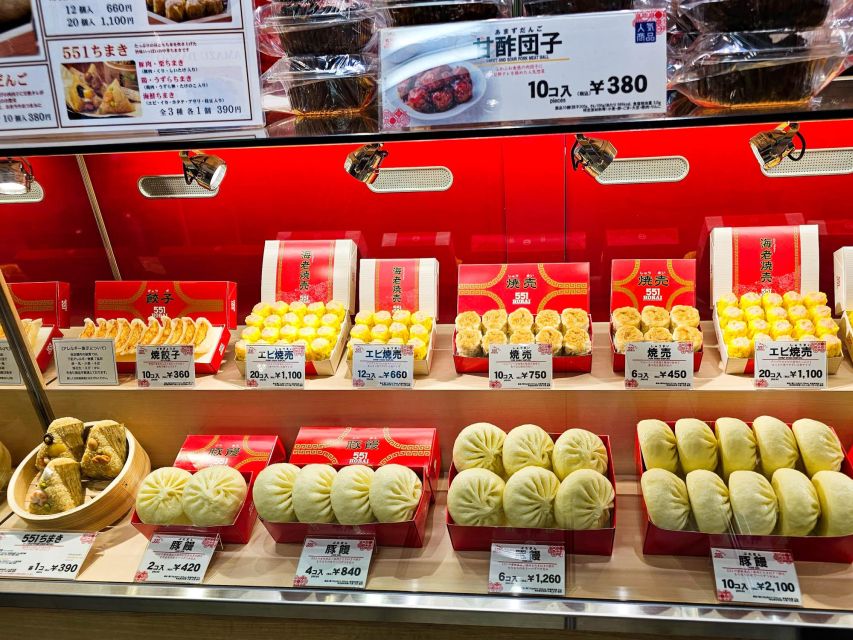
The first major stop is Daimaru Kyoto, a department store with a basement food hall. In Japan, these underground food halls are called Depachika. They are a practical window into the country’s food culture, from carefully packed sweets and boxed meals to seafood, produce, and international items.
A Depachika can feel less intimidating than a market because the displays are tidy and the products are clearly presented. At the same time, it may be harder to know what to buy when you cannot read the labels or judge unfamiliar foods. This is where a local guide earns the fee.
You can expect an explanation of what you are seeing, along with recommendations about what is worth trying. One guide, Ai, was especially appreciated for explaining what to buy for bento boxes and what to skip when prices seemed excessive. That kind of advice matters in a department store, where an attractive presentation does not always mean good value.
The listed tastings include yuba sashimi and a soy milk doughnut. Yuba is the delicate skin that forms on the surface of heated soy milk. It has a soft texture and mild flavor, and it is closely associated with Kyoto’s refined vegetarian cooking. Calling it sashimi refers to the thin, fresh presentation, not raw fish.
The soy milk doughnut offers a sweeter, easier entry point. Having both samples together gives you a useful contrast: one is subtle and traditional, the other is familiar in form but tied to soy-based Japanese cooking.
Daimaru can also be a good place to observe how food is packaged and presented in Japan. You might see small portions prepared with care, seasonal products, and gift-ready sweets. You will not need to make every purchase, and the tour does not require you to buy food beyond the included tastings.
Nishiki Market, Kyoto’s Kitchen
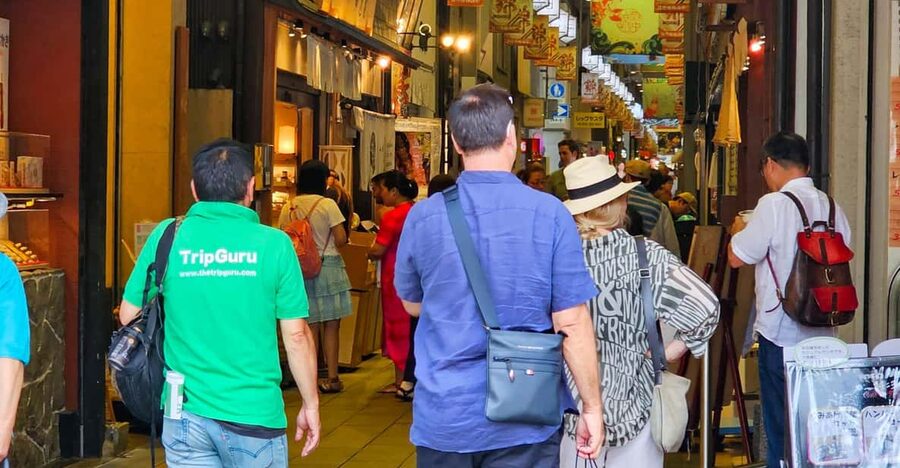
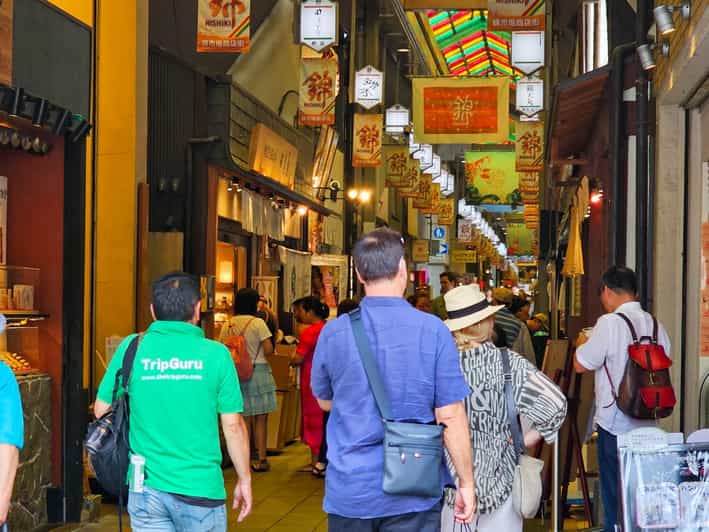
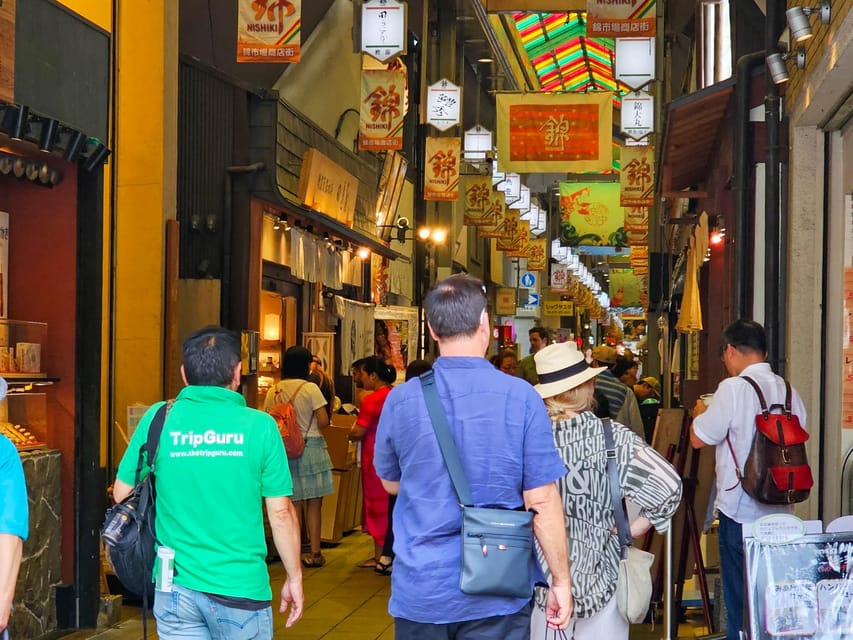
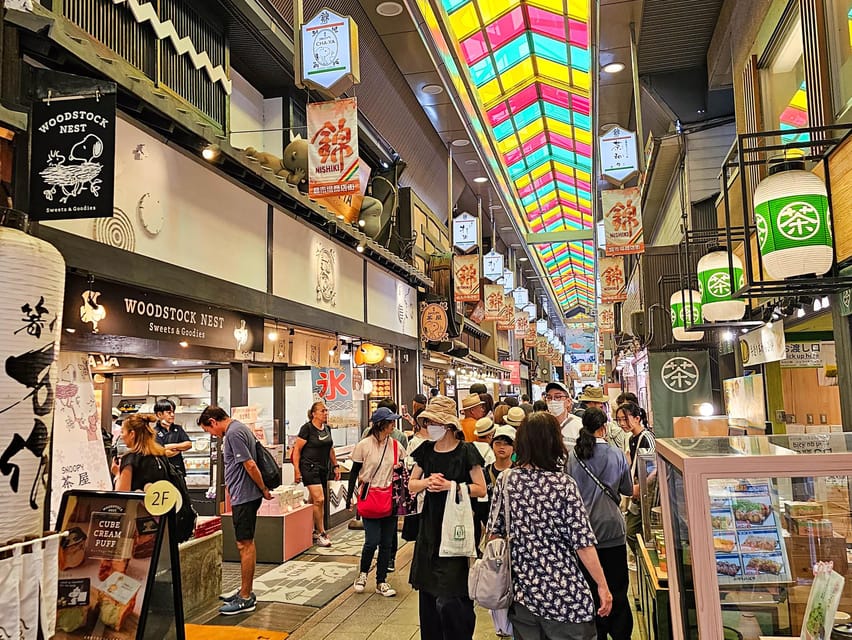
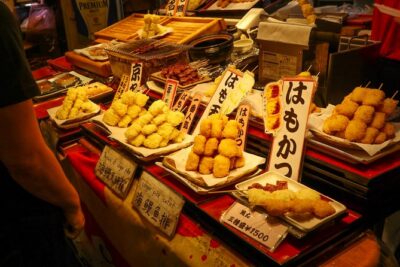
From Daimaru, the tour continues to Nishiki Market, often called Kyoto’s Kitchen. The covered market runs through a narrow shopping street lined with food stalls and specialty shops.
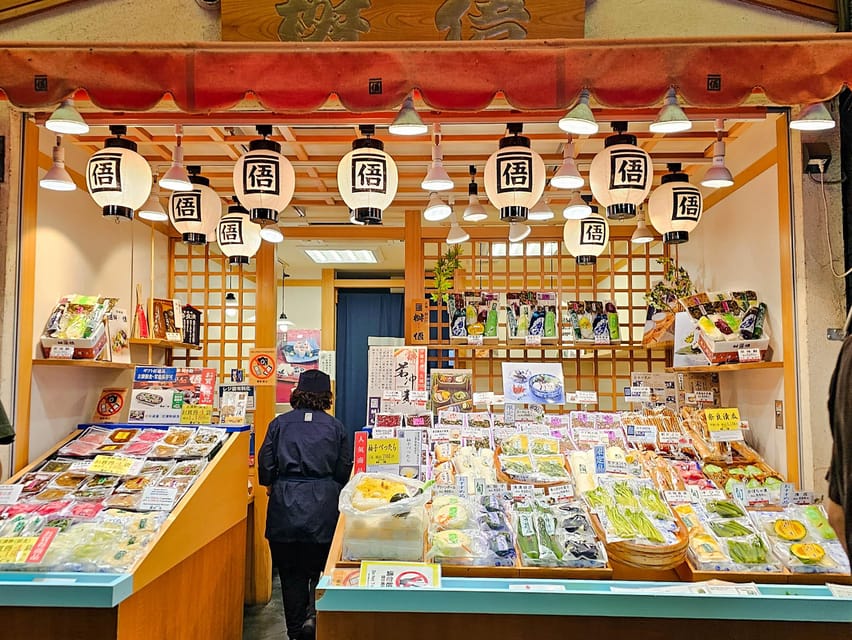
The range is broader than snacks. You might find seasonal foods, pickles, seafood, vegetables, Japanese sweets, knives, cookware, and ingredients used in Kyoto cooking. Some shops have been operated by the same families for generations, giving the market a sense of continuity that a modern food hall cannot copy.
This is the part of the tour where a guide can save you time and uncertainty. Nishiki Market can be crowded, and many stalls are designed for quick browsing rather than leisurely meals. Your guide points out foods worth tasting, explains ingredients, and helps you understand local customs.
The listed market samples are Nishiki gyoza and tempura made with hamo, a long, delicate fish often associated with Kyoto cuisine. Gyoza is an approachable choice, while hamo may be less familiar. The fish has fine bones, so it is traditionally prepared with careful scoring before cooking. You can ask your guide about the preparation and why it appears in Kyoto food traditions.
The tasting format is useful for first-time visitors because you can sample several items without committing to a full meal. It also leaves room for a later lunch or dinner. I would avoid arriving stuffed, but do not arrive expecting this to replace a full meal. The portions are intended as tastings.
The market is also a shopping stop. You may want to buy seasonings, sweets, cookware, or a food item to take back to your hotel. Still, bring cash. The instructions specifically recommend it, and small stalls may be less convenient for card payments.
One point needs attention: the food plan may not always feel fully structured. A visitor reported confusion about whether the guide would announce each tasting or wait for the visitor to ask. To avoid missing something, ask at the start: What are the included samples today, and when will we stop for each one? That simple question should make the experience clearer.
Nishiki Tenmangu Shrine after the food stalls
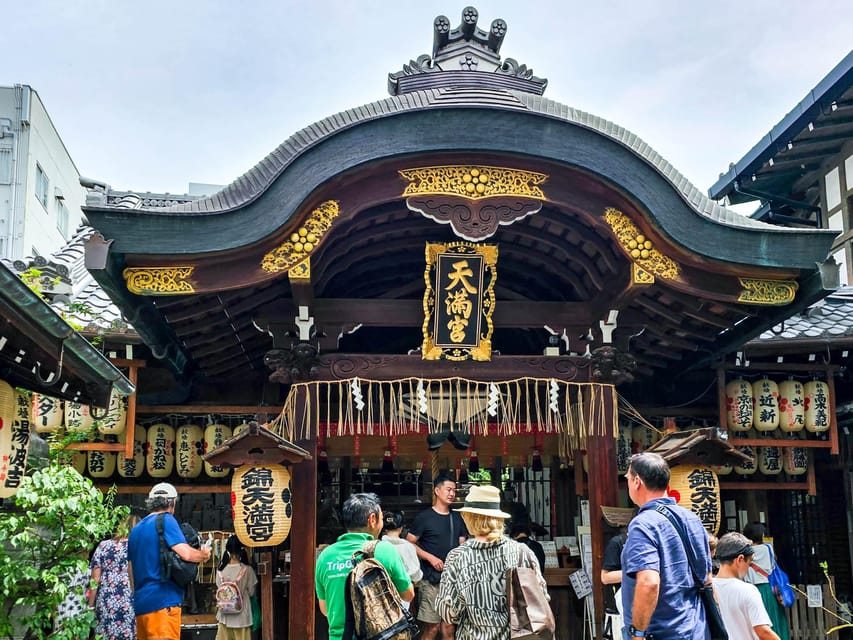
The final sightseeing stop is Nishiki Tenmangu Shrine, close to the market. Its location makes a sharp change of mood possible. After the noise and close quarters of the shopping arcade, you get a short pause around a Shinto shrine dedicated to the deity of learning.
Your guide explains the basic features of the shrine and the meaning behind them. You can admire the architecture, then cleanse your hands at the sacred water fountain before continuing. The ritual is simple, but having someone explain it helps you take part respectfully rather than copy others without knowing why.
This is not a long temple or shrine tour. It is a short cultural stop added to a food walk. That balance suits anyone who wants more context than a list of snacks but does not want to spend half a day on religious sites.
The shrine also gives the tour a better ending. You are not left with only a series of purchases and tastings. You get a moment to consider how food, custom, and daily life fit together in Kyoto.
What the guides add
The guide is the heart of this experience. The provider assigns different English-speaking guides, so the exact personality and approach will vary.
The strongest pattern in the feedback is the guides’ ability to explain food in plain language. Mao was praised for describing Japanese cuisine and shrine details. Jasmine was appreciated for explaining the market’s background and giving people time to shop. Boris was noted for answering many questions about food, culture, and history, while also adapting to a child with selective tastes.
Kats, who was described as being from Kyoto, received praise for strong English, local suggestions, and taking the group through smaller side streets. Richard was valued for food and drink recommendations, along with ideas for places to visit after the tour. Ai was repeatedly appreciated for making visitors comfortable in the food hall and market.
These details tell you what to expect from a good guide on this tour: not just translation, but interpretation. You can ask what an ingredient is, how it is eaten, what is seasonal, and which items make sense to buy.
The small group helps. With no more than nine participants, you have a better chance of hearing explanations in a narrow market aisle and getting an answer without holding up a large crowd. Families can also ask for milder choices, as one guide did for a child.
A few more Kyoto tours and experiences worth a look
Price, pace, and practical value
At $42 per person, the tour is reasonably priced if you value guidance and included tastings. You are paying for an English-speaking local, a planned route through two very different food settings, four listed samples, and a shrine visit.
The value is less clear if you already know Nishiki Market well or mainly want a large meal. You can browse the market independently, and additional food and drinks cost extra. Personal shopping is also on your own tab.
For a first Kyoto visit, I think the price makes sense because the guide reduces guesswork. You can learn what yuba is, understand hamo, see how a Depachika works, and get recommendations for later meals in a short period. The tour also helps you avoid spending your limited time wandering past foods you cannot identify.
Plan on comfortable shoes. You will walk and stand, and the market may feel tight when busy. Be at Apple Kyoto at least 10 minutes early. Guides wait only up to 10 minutes before moving on, and traffic can take longer than navigation apps suggest.
The activity is not suitable for pregnant women or people with mobility, heart, or respiratory problems. No hotel pickup or drop-off is included. The tour is in English.
You can cancel up to 24 hours before the start for a full refund, and the reserve-now, pay-later option keeps your plans flexible.
Who should book this food walk?
I would choose this tour if you are new to Japanese food, nervous about ordering from market stalls, or short on time. It is also a good fit if you want a local guide to explain ingredients rather than simply point at them.
Families may find it useful because guides can adjust suggestions for less adventurous eaters. Couples and solo visitors benefit from the small group and the chance to ask questions. Food-focused visitors who enjoy shopping will also get more from the route than someone seeking only a formal tasting menu.
I would think twice if you need a fully scheduled meal, dislike crowds, or have mobility concerns. I would also ask about the tasting order at the beginning, since the experience can be more free-flowing than some people expect.
FAQ
How long does the Kyoto food tour last?
The advertised duration is two hours. The route includes Daimaru Kyoto, Nishiki Market, Nishiki Tenmangu Shrine, and ends at Kyoto-Kawaramachi Station.
What food is included?
The listed tasting items are yuba sashimi, a soy milk doughnut, Nishiki gyoza, and hamo fish tempura. Additional food and drinks are not included.
Where does the tour begin?
The meeting point is Apple Kyoto. Your guide will wear a TripGuru shirt or hold a TripGuru sign.
Where does the tour finish?
The tour finishes at Kyoto-Kawaramachi Station.
Is the tour offered in English?
Yes. The tour includes an English-speaking live guide.
How large is the group?
It is a small-group tour limited to nine participants.
Should you book it?
Book this tour if you want a compact, guided introduction to Kyoto food rather than a full meal or a long culinary class. The combination of Depachika displays, Nishiki Market tastings, and Nishiki Tenmangu gives you food, shopping, and a little local culture in one outing.
The best reason to go is the guide’s interpretation. With someone like Mao, Jasmine, Boris, Ai, Richard, or Kats leading the way, unfamiliar dishes become easier to understand and try. Just arrive early, bring cash, wear good shoes, and ask for a clear tasting plan before you start.
More Food Experiences in Kyoto
More Nishiki Market Tours in Kyoto
More Kyoto Food Tours in Kyoto
More tours in Kyoto we've reviewed


Kyoto Food Tours, compared.
 ★ 5.0Kyoto Night Foodie Tour in Gion (9+ dishes + 6 Sake tastings)From $163
 ★ 5.0Nishiki Market Brunch Walking Tour (7 Tastings + Brunch)From $68
 ★ 5.03-Hour Kyoto Insider Sake Brewery Tour with Tastings & PairingsFrom $84
 ★ 4.6Kyoto Night All-Inclusive Eats and Streets, Gion and BeyondFrom $101
 ★ 4.5Kyoto Nighttime All-Inclusive Eats and Streets, Gion and BeyondFrom $119
 ★ 5.0Kyoto Foodie Night TourFrom $102