
Reviewed · KYOTO FOOD TOURS
Kyoto: Nishiki Market Tour with a Local Foodie & 3 Tastings
Kyoto’s Nishiki Market is easiest to enjoy with someone who knows what to eat and why it matters. This tour begins at Nishiki Tenmangū Shrine, then leads you through Teramachi and the 400-meter food market for at least three local tastings.
I like the way the experience combines food with local culture, rather than sending you straight from stall to stall. I also like the personal touch: guides such as Kaito, Hiro, Teppei, and others have helped guests understand unfamiliar dishes, ask questions, and try foods they might skip on their own. The main drawback is important: the tour cannot accommodate food restrictions, including allergies or religious requirements, and drinks cost extra.
In This Review
- Key points at a glance
- Meeting beneath the red torii at Nishiki Tenmangū
- Teramachi arcade before the main food street
- Entering Nishiki Market and its 400 meters of food
- Why a local foodie changes the experience
- The tastings: three included, with room for surprises
- Cultural stories between the stalls
- What the $53 price gets you
- Who should book this market walk
- Practical tips for a better visit
- Should you book the Nishiki Market foodie tour?
- FAQ
- Where does the Nishiki Market tour start?
- Where does the activity end?
- Which languages are available?
- How many food tastings are included?
- Are beverages included?
- Can the tour accommodate allergies or religious food restrictions?
- How much does the tour cost?
- Can I cancel the booking?
Key points at a glance
- Start at Nishiki Tenmangū: Meet beneath the torii gate at a shrine linked with learning and scholarship.
- Two connected shopping areas: Walk through Teramachi arcade before reaching Nishiki Market and its food stalls.
- At least three tastings: Try local specialties with help from a guide who can explain what you are eating.
- Personal guide interaction: Kaito, Hiro, Teppei, and other guides are praised for clear English, humor, and patient answers.
- A useful first look at Kyoto food: The tour helps you return to the market later with better ideas about what to buy.
- Plan around the restrictions: Beverages are not included, and the operator cannot adjust tastings for allergies or religious diets.
Meeting beneath the red torii at Nishiki Tenmangū
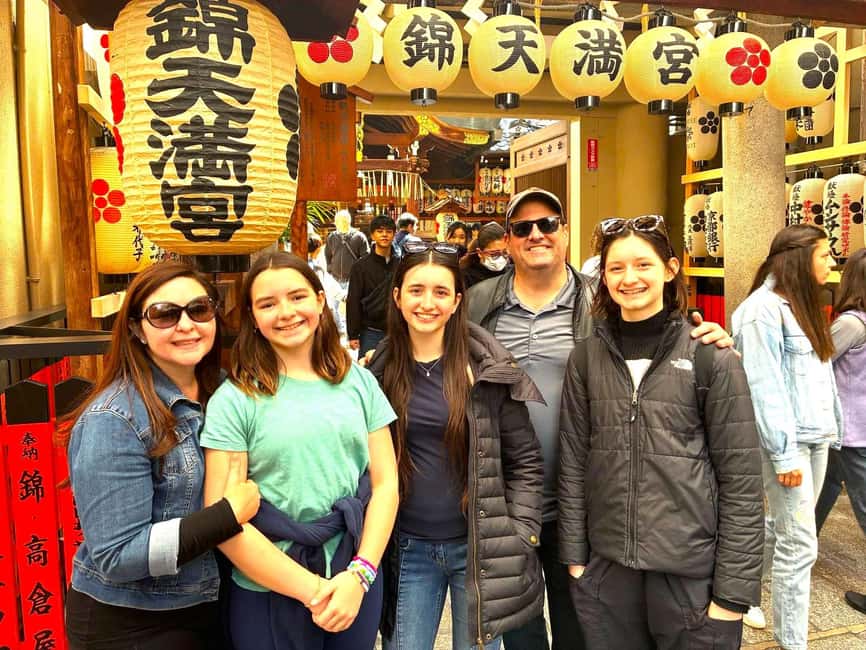
Your tour begins in front of the torii gate at Nishiki Tenmangū Shrine. Look for a guide holding a yellow DeepExperience sign. This is a sensible meeting point because the shrine sits right beside the shopping streets, giving you a clear landmark in a crowded part of central Kyoto.
The shrine is dedicated to the deity of learning and scholarship. That makes it more than a convenient place to meet. Your guide can give you a short introduction to the setting before the food begins, helping you notice how religious sites and everyday shopping streets sit close together in Kyoto.
I like this opening because it gives the walk a sense of place. You do not simply arrive at a market with no context. You begin at a small cultural site, then move into the commercial streets that have long served daily life.
The meeting point also deserves a practical note. Nishiki Market can feel confusing when you first arrive, especially if you are trying to locate one person among shoppers, signs, and narrow entrances. The yellow sign should make the guide easier to spot, but arrive with the meeting location clearly saved on your phone.
A few more Kyoto tours and experiences worth a look

Teramachi arcade before the main food street
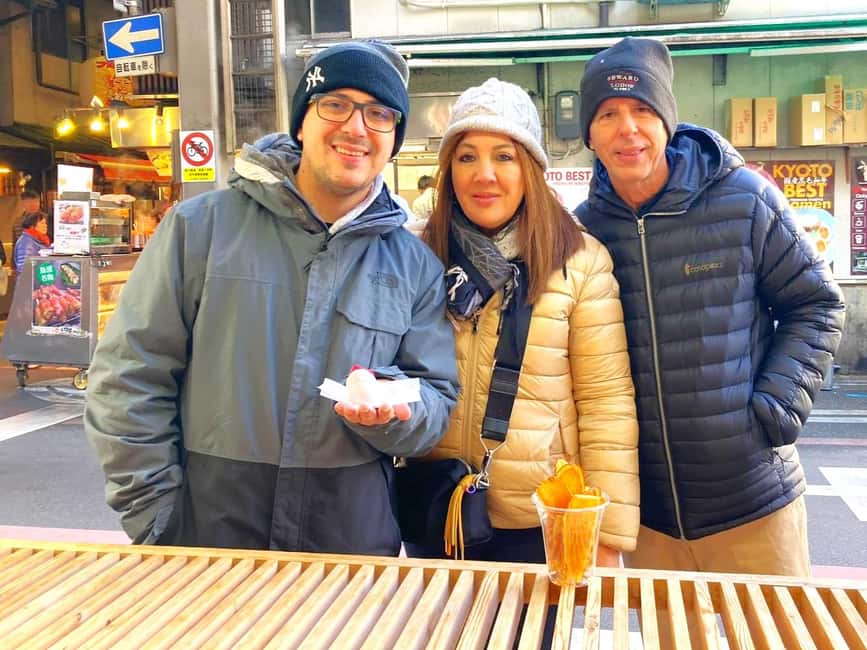
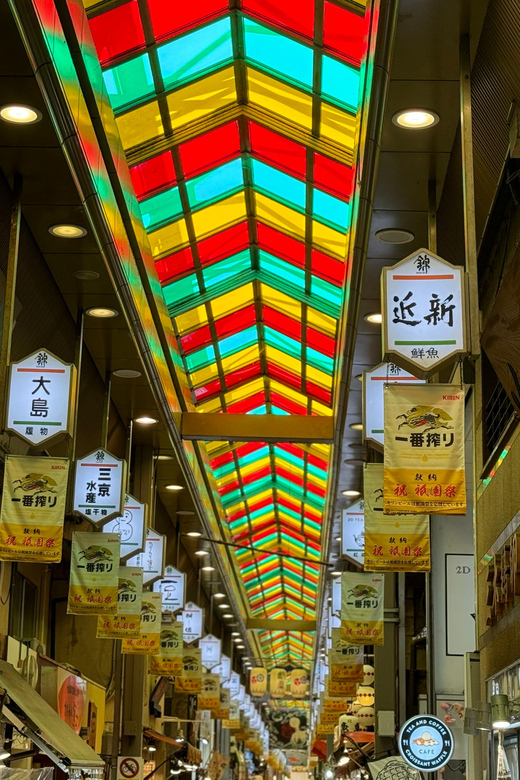
Before entering Nishiki Market, the route takes you through Teramachi Market, a covered shopping arcade next to the food market. This part of the walk gives you a broader look at local goods instead of focusing only on edible samples.
You might find shops selling everyday items, specialty products, and other goods associated with Kyoto shopping. The supplied information does not promise particular stores or purchases, so I would treat this section as an introduction to the area rather than a fixed shopping list.
The covered arcade is useful for getting your bearings. It shows how Nishiki fits into a larger network of shopping streets. You can compare the feel of general retail shops with the food-centered stalls that follow.
This is also a good moment to tell your guide what interests you. If you are curious about sweets, seafood, pickles, sake, or unusual snacks, ask early. The strongest part of this tour is the conversation with the guide, and guides such as Kaito have been praised for welcoming questions and adapting the discussion to personal interests.
Entering Nishiki Market and its 400 meters of food
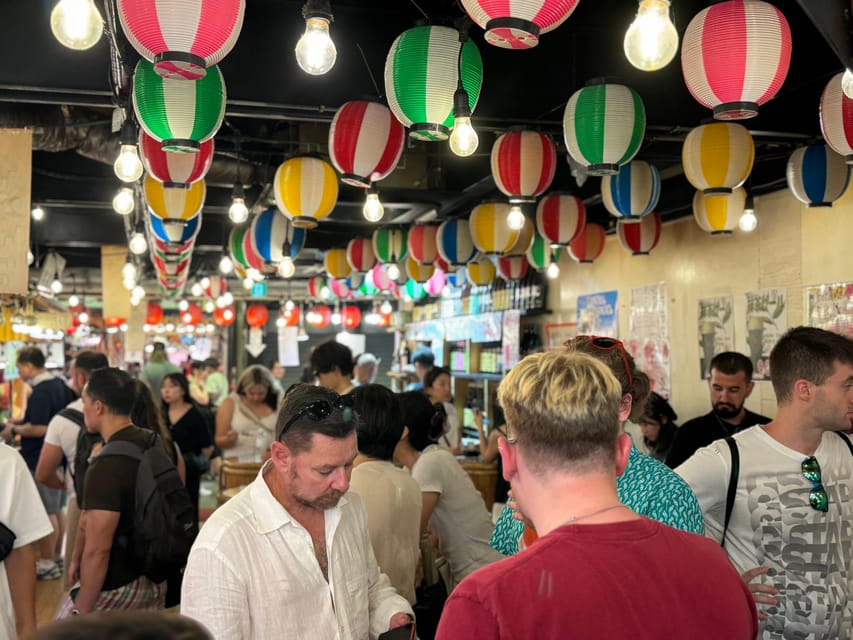
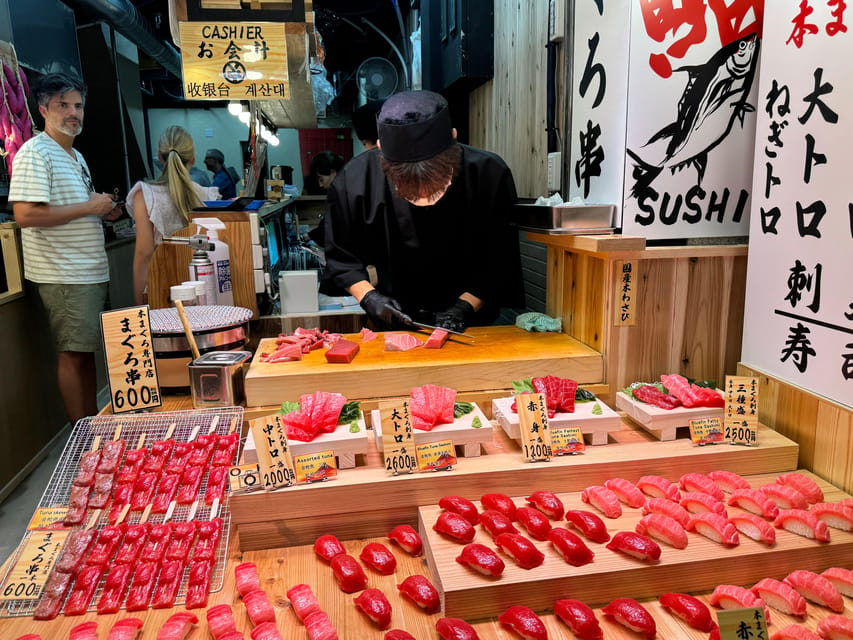
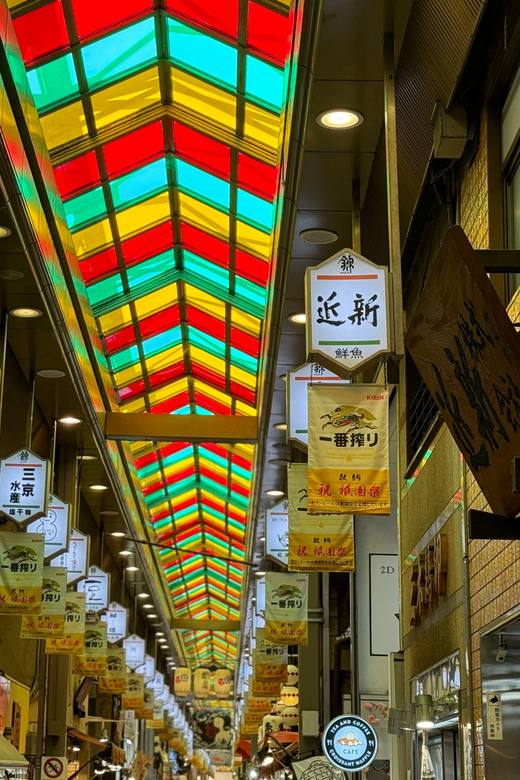
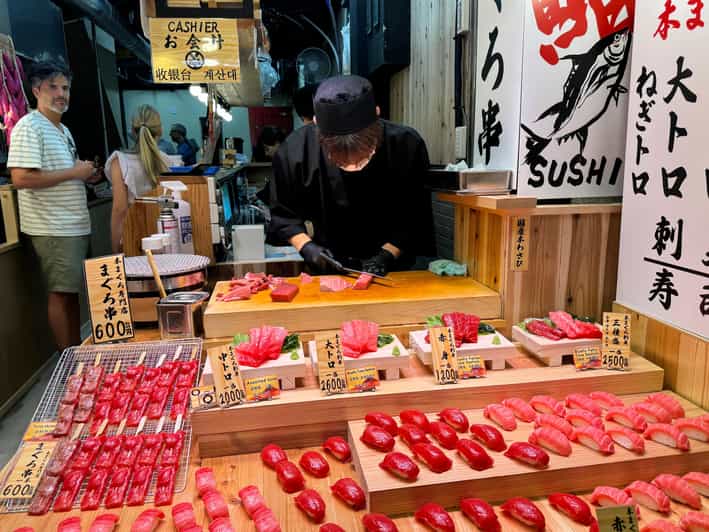
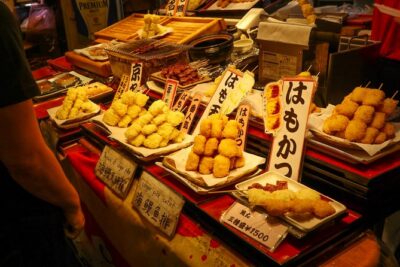
Nishiki Food Market stretches for roughly 400 meters and is known for fresh seafood, produce, traditional snacks, sweets, and other Kyoto foods. The passage is lively and tightly packed with shops, so this is not a quiet tasting session. You are walking through an active market where food is displayed, sold, and eaten in close quarters.
That setting is the point. Nishiki lets you see how Kyoto’s food culture works at street level. You can look at ingredients, notice unfamiliar preparations, and watch how local specialties are presented. A guide turns those quick glimpses into something more useful by explaining what deserves your attention.
At least three local delicacies are included. The exact dishes are not fixed in the information provided, so you should not book expecting one specific menu. That flexibility can work in your favor because the guide can introduce foods available during your visit.
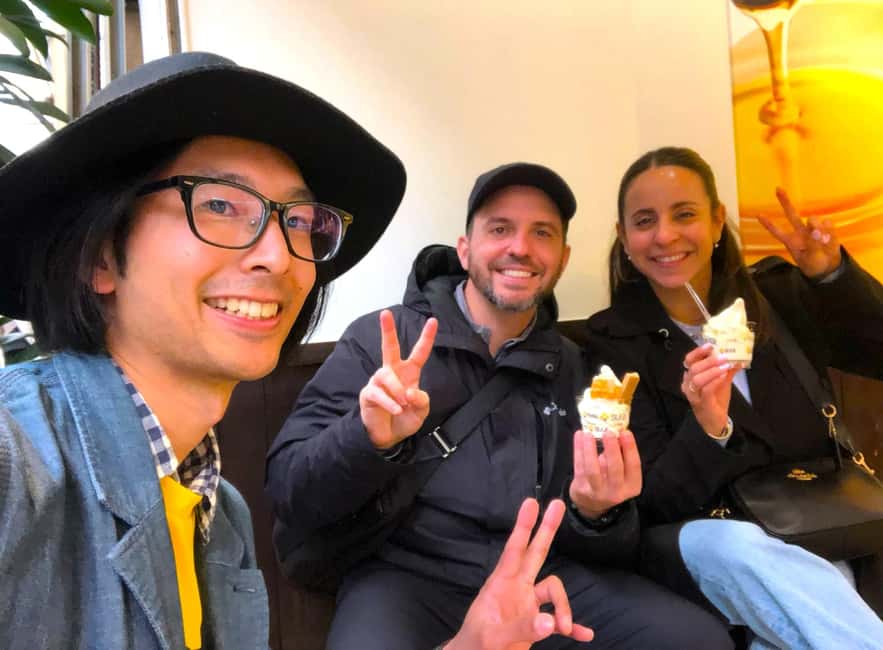
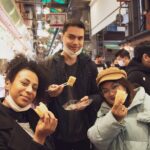
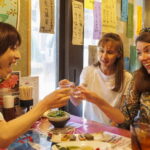
Past tastings have included surprising combinations and less familiar flavors. One guest described trying fish pancakes with bean paste, sesame croquettes filled with cheese and curry, smoky tea, plum wine, and sake with Kaito. Those items should not be treated as guaranteed selections, but they show the kind of range you might encounter: sweet, savory, smoky, fermented, and distinctly different from standard restaurant fare.
Why a local foodie changes the experience
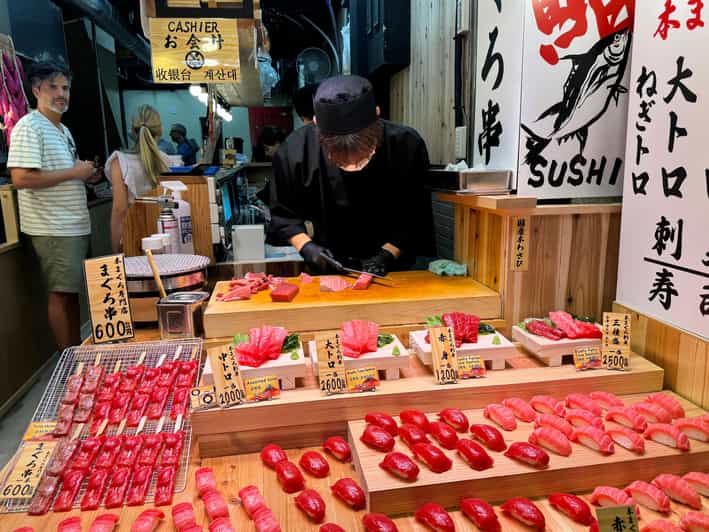
Nishiki Market is possible to visit on your own, but the hard part is knowing what to choose. Some stalls display foods without much explanation in English, and a dish that looks unusual may be the thing you remember most. A local guide helps you make those calls.
The guides praised most highly are not simply there to point at food. Kaito is described as friendly, easy to talk with, and able to explain food, culture, and daily life in Japan. Hiro is praised for humor and for teaching useful Japanese manners, including how to thank your hosts. Teppei is noted for answering questions and explaining cultural points clearly.
Those details matter because the tour is not just a sequence of samples. You can ask why a food is prepared in a certain way, how it fits into Japanese customs, or how to show respect when buying and eating. The answers help you understand the market as part of local life rather than as a collection of photo opportunities.
The personal element can be especially useful if you are cautious with unfamiliar food. Your guide can describe a sample before you try it. At the same time, you should be willing to taste outside your normal routine, since the pleasure of this tour comes from discovering items you may not pick without assistance.
The tastings: three included, with room for surprises
The price includes at least three local delicacies. That wording is worth noting. You receive a minimum number of tastings, but the experience may include more food discussion or additional stops depending on the route and the available stalls.
I like that the tour includes food rather than charging you only for an explanation. At $53 per person, three tastings provide a clear part of the value. You are also paying for the guide’s time, translation help, local recommendations, and the chance to avoid buying several unappealing items on guesswork.
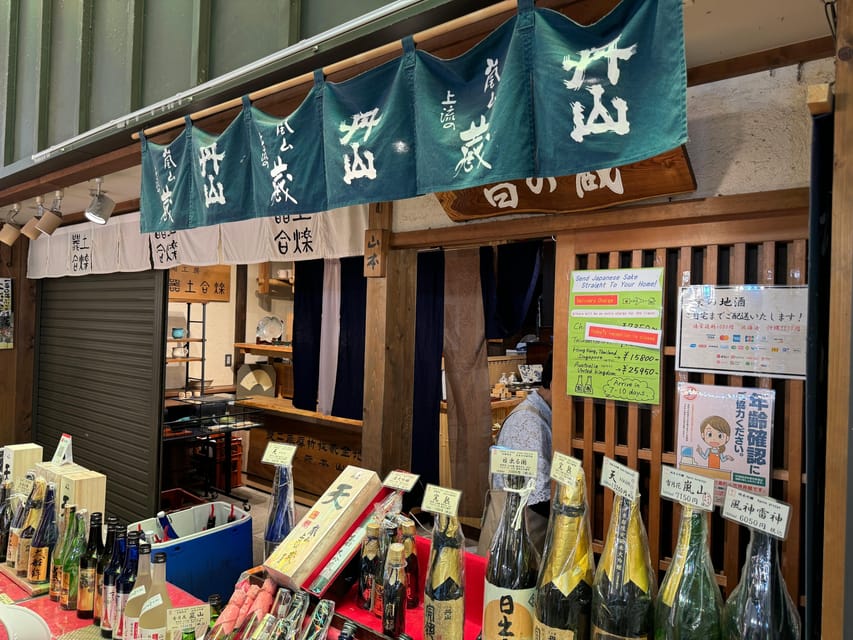
Drinks are not included. If you want tea, sake, plum wine, or another beverage, budget separately. One guest enjoyed smoky tea, plum wine, and sake during a tour, but those particular drinks are not guaranteed and should not be assumed to form part of the included package.
The best approach is to treat the tastings as an introduction, not a full meal. The information does not state that lunch or dinner is included, and three samples may not satisfy a large appetite. Plan another meal if you need something substantial.
You should also expect food to be served in market portions rather than as a formal seated meal. That makes the tour flexible and keeps you moving, but it also means the experience is better for sampling than for lingering over each dish.
A few more Kyoto tours and experiences worth a look
Cultural stories between the stalls
The food is the hook, but the guide’s stories give the walk its lasting value. Kyoto’s culinary traditions are tied to seasonal ingredients, local habits, religious customs, and careful presentation. You may not remember every name, but a good explanation can help you recognize why a simple snack matters.
Several guides have been praised for their English and their willingness to discuss both Japanese and foreign cultures. That two-way conversation is a welcome feature. Instead of listening to a memorized speech, you can ask about customs that confuse you or compare Japanese foods with those from home.
Hiro’s use of humor and his lesson on thanking hosts show the practical side of this cultural exchange. Kaito’s conversations about life in Japan and different cultures point to another benefit: you can learn about ordinary experiences, not only formal traditions.
The language options are English and Japanese. If you book in English, the quality of the conversation will depend partly on your assigned guide, but the named guides praised in the supplied material are described as clear and comfortable to talk with.
What the $53 price gets you
At $53 per person, this is not the cheapest way to walk through Nishiki Market. You can enter the market without paying an admission fee and buy small foods on your own. The value comes from turning an unstructured visit into a guided tasting with context.
I would consider the price fair for three reasons. First, you receive at least three local delicacies. Second, you get an English- or Japanese-speaking guide who can explain foods and customs. Third, you gain recommendations that may improve the rest of your Kyoto stay, especially if you plan to return to Nishiki or shop for edible gifts.
The value is strongest for first-time visitors who do not know Japanese food well. It is also strong for curious eaters who want to try unusual combinations but prefer a guide to explain them first.
The value is weaker if you already know Nishiki Market, speak Japanese comfortably, and are happy choosing food by yourself. It is also weaker if you are looking for a full meal, a private dining event, or a beverage-focused tasting. Those are not what this experience promises.
Reserve and pay later is available, and cancellation is allowed up to 24 hours before the activity for a full refund. Those terms give you some flexibility when planning a Kyoto schedule, though you should still check the current booking conditions before payment.
Who should book this market walk
I would recommend this tour to you if you want a friendly introduction to Kyoto food and enjoy asking questions as you walk. It suits solo visitors, couples, and small groups who want more direction than a guidebook can provide.
It is also a good fit if you are nervous about ordering unfamiliar dishes. The guide can explain the food before you taste it, and the experience can encourage you to try something outside your usual choices. One guest specifically valued trying foods that would not have been chosen alone.
Families and groups should think about the food restriction rule before booking. The operator says it cannot accommodate allergies, religious restrictions, or other dietary requirements. If anyone in your party must avoid certain ingredients, this is not a safe choice unless you have independently confirmed that the experience works for them.
You should also be comfortable walking through a busy market environment and eating small samples along the way. The supplied information does not state the tour duration, group size, or accessibility arrangements, so ask the provider directly if those details affect your plans.
Practical tips for a better visit
Meet at the torii gate, not simply somewhere inside Nishiki Market. The guide will be holding a yellow DeepExperience sign, which should help you identify the correct person.
Wear comfortable shoes. You will move through Teramachi and Nishiki rather than remain seated in one location. Keep your belongings close in narrow sections and avoid blocking shop entrances while listening.
Bring an appetite, but do not skip a planned meal if you need more than tasting portions. At least three delicacies are included, while drinks are extra.
Ask questions. The strongest reports about Kaito, Hiro, Teppei, and other guides focus on their explanations and conversation. If you want food recommendations, Japanese phrases, or background on local customs, say so.
Finally, keep your expectations open about the menu. Specific tastings are not listed, and market availability can shape the route. That uncertainty is part of a real market visit, but it also means you should book for discovery rather than for one promised dish.
Should you book the Nishiki Market foodie tour?
Book it if you want a guided introduction to Kyoto food, three or more tastings, and a chance to ask a local guide about customs and ingredients. The $53 price makes the most sense when you value explanation and confidence at the stalls, not just the food itself.
Skip it if you have serious food restrictions, want a complete meal, or prefer to explore Nishiki independently. For everyone else, this is a practical first visit to one of Kyoto’s best-known food streets, with enough personal guidance to turn browsing into a more meaningful meal-time experience.
FAQ
Where does the Nishiki Market tour start?
Meet your guide in front of the torii gate at Nishiki Tenmangū Shrine. The guide will hold a yellow sign with the DeepExperience logo.
Where does the activity end?
The tour ends back at the meeting point at Nishiki Tenmangū Shrine.
Which languages are available?
The activity is offered in English and Japanese.
How many food tastings are included?
At least three local delicacies are included in the price. The exact foods are not specified in advance.
Are beverages included?
No. Beverages are not included and must be paid for separately if you choose to have them.
Can the tour accommodate allergies or religious food restrictions?
No. The operator states that it cannot accommodate food restrictions due to allergies, religion, or similar dietary requirements.
How much does the tour cost?
The listed price is $53 per person.
Can I cancel the booking?
You can cancel up to 24 hours in advance for a full refund. Reserve and pay later is also available.
More Food Experiences in Kyoto
More Nishiki Market Tours in Kyoto
More Kyoto Food Tours in Kyoto
More tours in Kyoto we've reviewed



Kyoto Food Tours, compared.
 ★ 5.0Kyoto Night Foodie Tour in Gion (9+ dishes + 6 Sake tastings)From $163
 ★ 5.0Nishiki Market Brunch Walking Tour (7 Tastings + Brunch)From $68
 ★ 5.03-Hour Kyoto Insider Sake Brewery Tour with Tastings & PairingsFrom $84
 ★ 4.6Kyoto Night All-Inclusive Eats and Streets, Gion and BeyondFrom $101
 ★ 4.5Kyoto Nighttime All-Inclusive Eats and Streets, Gion and BeyondFrom $119
 ★ 5.0Kyoto Foodie Night TourFrom $102