
Reviewed · TOURS
Kyoto Full Course Tour: Explore 10 Must-See Sights & Hidden Gems
Kyoto’s biggest challenge is not finding beautiful sights. It is fitting them together. This 9.5-hour small-group tour tackles the city’s far-flung highlights in one long day, moving by public transport and on foot from Arashiyama in the west to Fushimi Inari and Gion in the east.
I like two things right away: you get a practical lesson in Kyoto’s bus and train system, and local guides such as Masako, Megumi, and Masa bring the city to life with cultural context and useful advice. The catch is serious: this is a fast, physical day that can mean more than 20,000 steps, plus several transport changes.
In This Review
- Key points to know before booking
- Why this tour works as a Kyoto first look
- Arashiyama bamboo and the Randen tram
- Ryoan-ji and Kinkakuji, two very different temples
- Lunch at a sushi-go-round
- Fushimi Inari and its endless red gates
- Kiyomizu-zaka, Sanneizaka, and Yasaka Pagoda
- Kiyomizu-dera, Kyoto’s great wooden stage
- Gion at the end of the route
- What the $98.83 price really buys
- The physical demands are not a footnote
- Group size, guide style, and language
- Who should book this Kyoto day tour?
- FAQ
- How long does the Kyoto Full Course Tour last?
- Where does the tour begin?
- Where does the tour finish?
- What time should I arrive?
- Are transportation, lunch, and entrance fees included?
- How many people can join the tour?
- Is the tour suitable for children or people with limited mobility?
- Should you book it?
Key points to know before booking
- Ten Kyoto sights in one day: Arashiyama, Ryoan-ji, Kinkakuji, Fushimi Inari, Kiyomizu-dera, Gion, and nearby streets all fit into the schedule.
- A real local-transport workout: You pay your own fares, roughly $10 total, and use buses, trains, and the Randen tram.
- More than 20,000 steps: Comfortable shoes are essential, and the pace will not suit anyone wanting a slow temple visit.
- Small group size: The maximum is 10 people, which gives the guide a better chance to help with navigation and questions.
- Sushi-go-round lunch: Food is not included, with typical spending listed at about $6.80 to $14. Options include sushi, vegetable sushi, ramen, fried chicken, beer, and mochi.
- Best for a first Kyoto visit: You see the city’s famous places quickly, then return on later days to the ones you want to explore properly.
Why this tour works as a Kyoto first look
Kyoto is spread across several districts, and its public transport can feel harder to use than Tokyo’s. The tour’s main value is not simply admission to temples. It is the planning, timing, and local navigation required to connect places that are awkward to combine on your own.
You begin at Saga-Arashiyama Station and finish in Gion, crossing much of the city during the day. That route gives you a useful first map of Kyoto. By the end, you should understand how the main sightseeing zones relate to one another and how to use local transport with more confidence.
The guides are especially important here. Masako is repeatedly singled out for her humor, care, and strong command of Kyoto’s history and customs. Megumi is described as attentive, clear, and helpful to first-time visitors. Masa is praised for keeping groups together and helping people navigate. The experience can vary by guide, but the tour clearly depends on local leadership rather than a guidebook recitation.
This is not the right choice if you want long periods of quiet at each temple. Thirty minutes at a major sight usually means enough time to enter, see the key view, take photographs, and hear an explanation, but not enough time for a detailed visit.
If you're still narrowing it down, here are other tours in Kyoto we've reviewed.

Arashiyama bamboo and the Randen tram
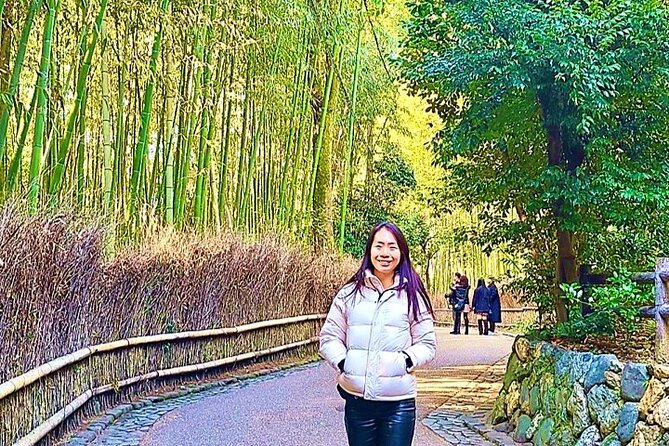
Arashiyama opens the day with one of Kyoto’s most recognizable scenes: the bamboo forest backed by wooded hills. The allotted 30 minutes is short, but it lets you walk through the central section and get the classic photographs without spending the whole morning in one district.
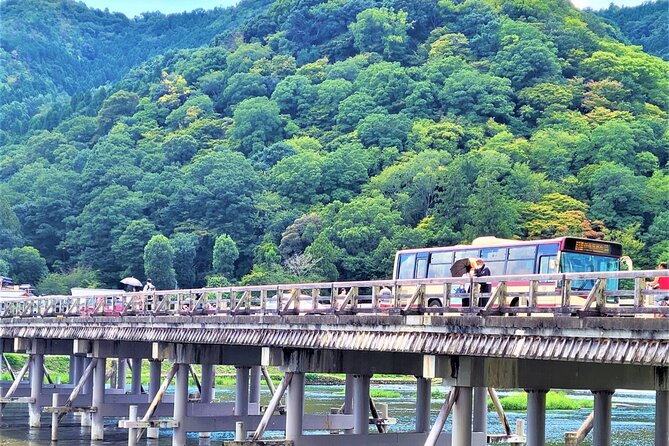
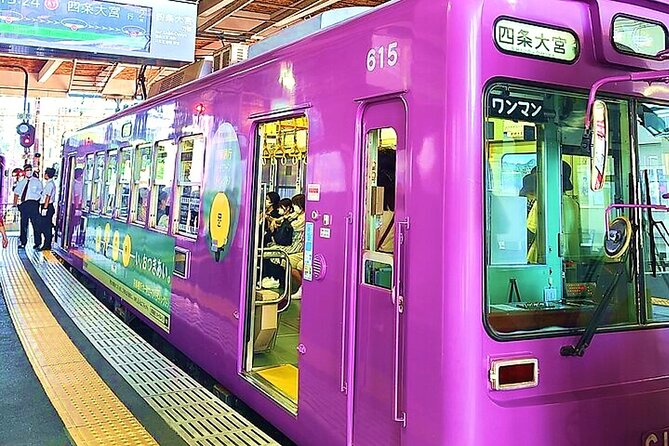
The area is also your introduction to the day’s rhythm. You will walk, regroup, and move on rather than linger. The Randen tram line is part of the journey, adding a distinctly local form of transport to the day and showing you how Kyoto connects its western sightseeing area with the rest of the route.
Arashiyama can be crowded, so an early start matters. Arrive well before the stated meeting time. The information supplied for this tour gives both 8:30 and 8:50 as start references, while the instructions stress that the meeting is at 8:50, not 9:00. Confirm the exact time on your booking and treat it as firm. Late arrivals are not admitted and do not receive a refund.
Ryoan-ji and Kinkakuji, two very different temples
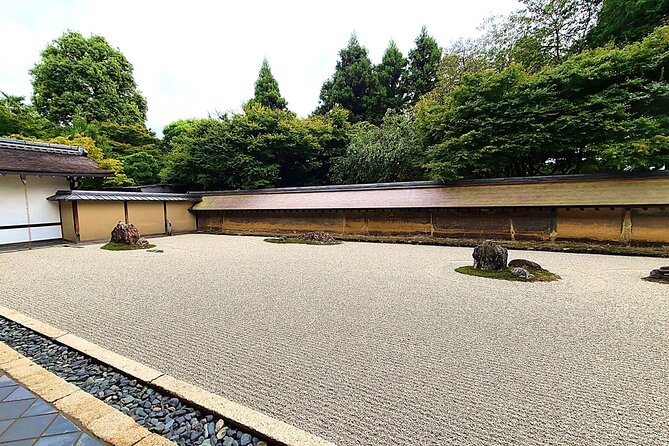
Ryoan-ji gives you a calmer visual contrast to the bamboo grove. Its famous rock garden is spare, deliberate, and easy to misunderstand if you rush through it. The guide can explain how the garden fits Japanese design and religious thought, though 30 minutes leaves little room to sit and study every detail.
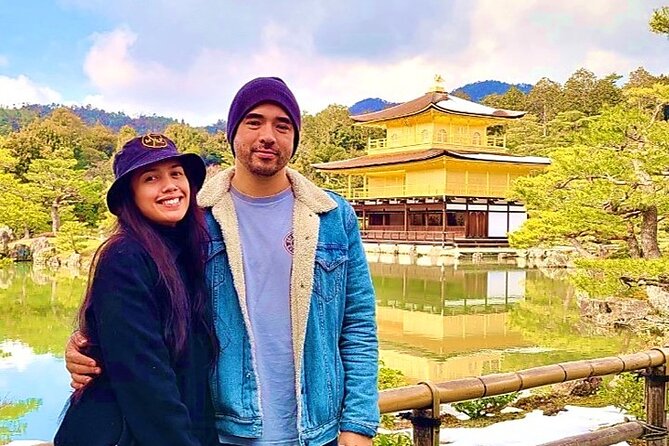
The next stop is Kinkakuji, Kyoto’s Golden Pavilion. The building’s gold exterior reflected in the pond is one of Japan’s most familiar views, and it is easy to see why it remains a must-see. You follow the prescribed route, take in the pavilion from the viewing area, and continue through the grounds.
Entrance fees are not included. The total for temple admissions is listed at roughly $11, or ¥1,600, per person. Carry cash, since the tour specifically recommends having it ready for transport, food, and admissions.
A practical warning: these two temple stops are highlights, but they are not full visits. If you have a special interest in Zen gardens, Buddhist architecture, or temple art, save extra time to return independently.
Lunch at a sushi-go-round
Lunch takes place at a conveyor-belt sushi restaurant, where plates move past your table and you choose what you want. The meal is purchased separately, and the expected cost is about $6.80 to $14, depending on your order.
The menu is broader than the name suggests. You may find sushi, vegetable sushi, ramen, fried chicken, beer, and mochi. That range is useful for a mixed group, but vegetarians should plan carefully. The tour’s own guidance says only some menu items may suit vegetarians, and one person reported that the lunch arrangement did not meet their needs.
This is not a formal Japanese lunch, but it fits the day. A quick, flexible meal keeps the route moving and lets you control your spending. If you need strict dietary accommodation, contact the provider before booking rather than assuming the restaurant will handle it.
Fushimi Inari and its endless red gates
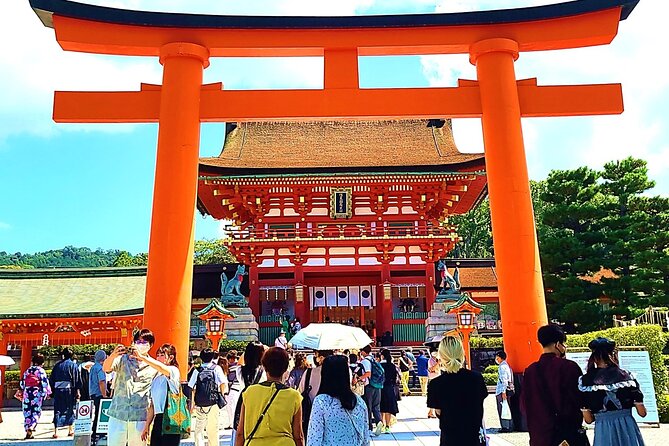
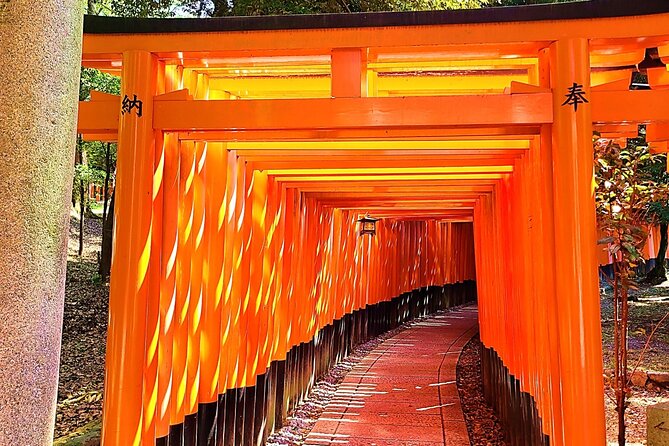
Fushimi Inari-taisha is one of Kyoto’s most memorable stops. The shrine path rises through thousands of orange-red torii gates, donated over many years by individuals and businesses. Even a short visit gives you the visual effect of the gates forming a tunnel through the wooded hillside.
Thirty minutes is enough to enter the shrine area and walk through an initial section. It is not enough to climb the full mountain route. That distinction matters. If your main reason for visiting Fushimi Inari is the complete hike, you will need to return on your own.
The shrine is also a place where the group pace becomes clear. You need to stay with the guide and follow the route. The instructions say that if you separate from the host, the host cannot search for you and no refund is given. Keep your group in sight, especially at busy crossings and narrow paths.

Kiyomizu-zaka, Sanneizaka, and Yasaka Pagoda
The eastern Kyoto portion is handled on foot, and it is one of the prettiest stretches of the day. Kiyomizu-zaka is a sloping pedestrian street lined with souvenir shops and local eateries. It is an excellent place to see the tourist side of old Kyoto, with traditional-looking storefronts and plenty of chances to browse.
Sanneizaka continues the walk through another attractive slope of shops. The streets are photogenic, but they can be crowded and uneven. You will be walking uphill and downhill, often among other pedestrians, so shoes with good support matter more than fashion.
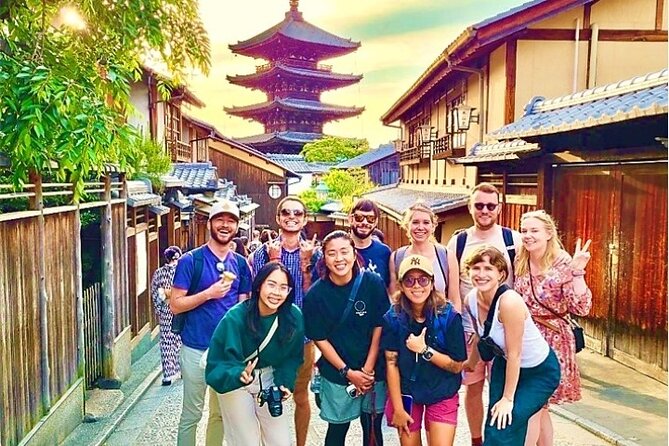
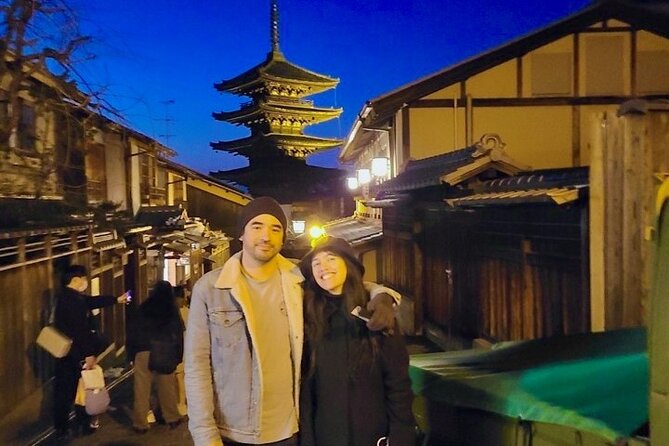
Hokan-ji Temple, better known as Yasaka Pagoda, gives you one of Kyoto’s signature views. The pagoda rises above the surrounding streets and has become a symbol of the Higashiyama district. The stop is free according to the itinerary, and the main pleasure is seeing the building in its neighborhood setting rather than spending a long time inside.
This section is where the tour feels most like a walking tour of old Kyoto. You are not just checking off temples. You are moving through streets where shops, slopes, shrines, and wooden architecture form one connected district.
Kiyomizu-dera, Kyoto’s great wooden stage
Kiyomizu-dera is one of Kyoto’s most popular sights, and for good reason. Its large wooden stage projects from the hillside and gives you broad views across the city. The structure is traditionally noted for using no nails, a detail that makes the engineering as interesting as the view.
You have around 30 minutes here, which is enough to see the principal areas and hear the guide’s explanation. It is not a leisurely temple visit. Crowds, slopes, and the sheer number of things to notice can make this stop feel compressed.
The temple entrance is extra, part of the roughly ¥1,600 total admission cost for the day. Budget for it in advance so you are not fumbling for money while the group is ready to move.
For many people, Kiyomizu-dera is the day’s emotional high point. It combines architecture, city views, pilgrimage tradition, and a lively approach street. If you want time for personal prayers, detailed photography, or the surrounding lanes, plan a separate return visit.
Gion at the end of the route
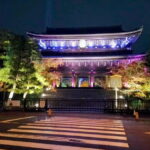
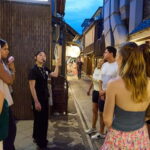
The tour finishes around Gion Shopping Street, an appropriate place to end a first Kyoto orientation. Gion is known for its historic streets, traditional buildings, and connection to geisha culture. The guide may also help you understand local etiquette and the difference between seeing a working neighborhood and treating it like a stage set.
The end point is listed as the Gion Shopping Street Promotion Associates area at 567-6 Gionmachi Minamigawa. That is useful because Gion is large and easy to confuse with nearby Higashiyama streets.
A guide may help you spot a geisha or maiko, as one participant did, but that should never be treated as a guarantee. If you do see one, give her space and avoid blocking the street. The tour’s wider lesson about manners, public transport, and daily life is just as useful as the sightseeing.
What the $98.83 price really buys
The advertised price is $98.83 per person. It covers the tour fee and consumption tax, but not transport, lunch, or temple admissions.
The listed extras come to about $10 for transport, $6.80 to $14 for food, and $11 for entrance fees. In practical terms, expect the day to cost around $126 to $129 per person before any additional purchases.
That is fair value if you have only one free day in Kyoto and would otherwise spend hours planning routes between distant districts. You are paying for a carefully ordered day, a local guide, group coordination, and help with a transport system that can be confusing at first.
It is less attractive if you have three or more days in Kyoto. With extra time, you can visit fewer places each day, pay only the admissions you want, and spend longer at the temples that interest you most. This tour is best understood as a fast orientation, not a complete study of Kyoto.
The physical demands are not a footnote
The biggest issue is the walking. One participant counted more than 20,000 steps, and that figure fits the route: bamboo paths, temple grounds, sloping shopping streets, shrine approaches, stairs, and transport connections all add up.
The tour requires moderate physical fitness. The listing does not promise wheelchair access, and several of the major sights are difficult or unsuitable for wheelchairs because of slopes, steps, and uneven approaches. If accessibility is important for you, ask the provider specific questions before paying. Do not assume that a guide can change the route on the day.
The schedule also requires punctuality and stamina. You cannot casually stop for a long coffee, wander away for photographs, or skip ahead without risking the group connection. Bring water, carry only what you need, and use a transit IC card such as Suica or PASMO if you have one. Cash is still recommended for the day’s costs.
Group size, guide style, and language
The maximum group size is 10. That is small enough for a guide to monitor the group and answer questions, though it is still a shared tour with a fixed pace.
The strongest part of the experience is the human guidance. Masako is described as funny, caring, and full of useful detail. Megumi is noted for helping families and first-time visitors feel comfortable. Masa is praised for clear explanations and steady assistance with Kyoto’s transport system.
Communication can vary. One person found the guide’s accent difficult to understand, so you should be prepared to ask for repetition if needed. The guides are there to explain history, culture, etiquette, society, and everyday life, but the schedule gives them limited time at each site. Do not expect a long lecture at every temple.
Under-18s must travel with a guardian. Children under 13 require a request for a private tour, so families with younger children should not book the standard format without checking first.
Who should book this Kyoto day tour?
I would choose this tour if you are visiting Kyoto for the first time, have only one full day, or feel uneasy about connecting distant sights by bus and train. It is also useful at the start of a longer stay because it shows you which districts deserve a slower return visit.
You will probably enjoy it if you like active sightseeing, want a broad overview, and prefer a guide to handle route planning. It suits people who would rather see nine major areas quickly than spend a whole morning at one temple.
I would skip it if you dislike strict schedules, need accessible routes, want quiet temple time, or have enough days to explore independently. Vegetarians should confirm lunch arrangements, and anyone with limited mobility should ask detailed access questions before booking.
FAQ
How long does the Kyoto Full Course Tour last?
The tour lasts approximately 9 hours and 30 minutes.
Where does the tour begin?
It begins at Saga-Arashiyama Station, at 11-1 Sagatenryuji Kurumamichicho, Ukyo Ward, Kyoto.
Where does the tour finish?
The end point is in the Gion area, at the Gion Shopping Street Promotion Associates location, 567-6 Gionmachi Minamigawa, Higashiyama Ward.
What time should I arrive?
The supplied information states that the meeting time is 8:50 am and specifically warns that the tour starts at 8:50, not 9:00. Another booking detail shows 8:30 am, so check your confirmation and arrive early.
Are transportation, lunch, and entrance fees included?
No. Transport costs about $10 per person, lunch about $6.80 to $14, and temple admissions about $11. The tour recommends carrying cash and preparing a Suica or PASMO IC card.
How many people can join the tour?
The maximum group size is 10 travelers.
Is the tour suitable for children or people with limited mobility?
Participants under 18 must be accompanied by a guardian. Children under 13 require a request for a private tour. The route requires moderate fitness and may exceed 20,000 steps, while several sights are not easily accessible, so confirm suitability before booking.
Should you book it?
Book this tour if your Kyoto schedule is tight and your priority is seeing the city’s headline sights in one organized sweep. The guides, especially Masako, Megumi, and Masa, add the most value by helping you move through Kyoto’s complicated transport network while explaining local customs along the way.
Just accept the bargain you are making: breadth instead of depth. You will see bamboo, golden temples, stone gardens, red torii gates, wooden temple stages, old slopes, Yasaka Pagoda, and Gion in one demanding day. If you can handle the pace and the 20,000-plus steps, it is an efficient first look. If you have time to spare, use it as an orientation and return later to your favorite places at a slower speed.
More tours in Kyoto we've reviewed










Tours, compared.
 ★ 5.0PERFECT KYOTO 1-Day Bus TourFrom $129
 ★ 4.8Kyoto: Fushimi Inari, Kinkakuji, Bamboo Grove 1 Day Bus TourFrom $122510 minutes - 9 hours
 ★ 4.7Kyoto Geisha Walking Tour: Gion District & Hidden GemsFrom $252 hours
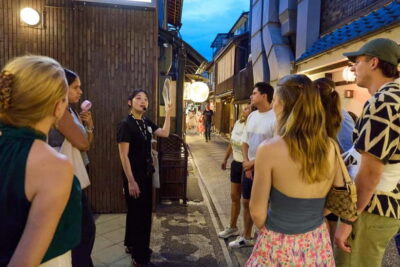 ★ 4.7Kyoto: Gion Geisha District Walking Tour – Stories of GeishaFrom $202 hours
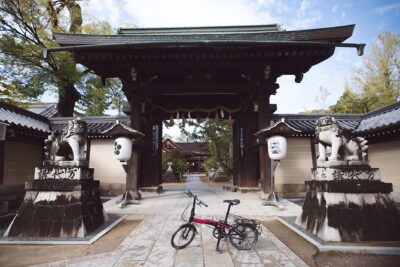 ★ 5.0Hidden Kyoto E-Biking tourFrom $116
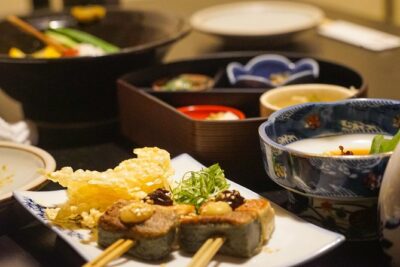 ★ 5.0Kyoto Night Foodie Tour in Gion (9+ dishes + 6 Sake tastings)From $163