
Reviewed · GION & GEISHA WALKS
Kyoto: Gion Geisha District Walking Tour and Hidden Gems
Kyoto’s Gion district is much more than lanterns, teahouses, and the hope of spotting a geisha. This three-hour walk connects Gion with northern Higashiyama, taking you from Tatsumi Bridge through shrines, parks, temple streets, and finally to Kiyomizu-dera.
I like the tour’s two-part character: you get clear cultural context about maiko and geisha, then see how that world fits beside ordinary Kyoto streets. I also like the route’s finish at Kiyomizu-dera, which gives you a useful way to continue exploring after the guide leaves.
The main drawback is physical. There are many steps, and the tour covers a lot of ground in three hours. If your fitness is limited, this is not the gentle stroll its title may suggest.
In This Review
- Key points to know before you book
- Why this Kyoto walk works so well
- From Ben’s Cookies to Gion Tatsumi Bridge
- Chion-in brings the religious side of Kyoto forward
- Maruyama Park offers a breathing space
- Hōkan-ji and the famous Higashiyama lanes
- Finishing at Kiyomizu-dera Niomon Gate
- What the geisha discussion adds
- How much walking is three hours?
- Is $25 a fair price?
- Who should book this experience?
- Should you book the Gion and hidden-lane walk?
- FAQ
- How long is the Gion and hidden-lane walking tour?
- Where does the tour begin?
- Where does the tour finish?
- What language is the tour conducted in?
- What is included in the price?
- Do I need to bring anything?
- Can I cancel the booking?
Key points to know before you book
- Gion is only the beginning: The walk continues through northern Higashiyama and ends near Kiyomizu-dera.
- Guides bring the history to life: Ben, J, and Jay are named in tour feedback, with special praise for their stories, patience, and answers to questions.
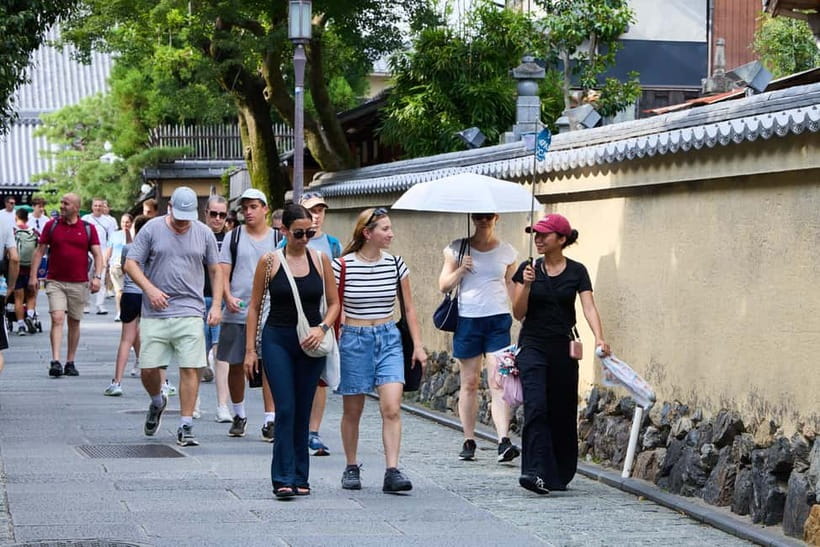
- You see more than the headline sights: Quiet lanes, small shrines, preserved wooden houses, and less-obvious corners fill the spaces between major stops.
- The route suits curious families: An 11-year-old, a 15-year-old, a mother, and a 79-year-old all enjoyed the experience, although the steps still matter.
- The price is modest: At $25 per person, the tour offers a useful introduction to a large section of Kyoto.
- Plan for walking: Bring water, wear comfortable shoes, and save your energy for the uphill streets near Kiyomizu-dera.
Why this Kyoto walk works so well

The best walking tours give you a way to read a city. This one helps you understand why Kyoto looks the way it does, why Gion developed around entertainment and tea culture, and how temples and everyday neighborhoods sit side by side.
You begin near Ben’s Cookies Kyoto Shijo, where the guide holds a sign. From there, the route moves toward Gion and then across the northern Higashiyama area. The path is not just a succession of famous photo stops. Your guide explains the customs, buildings, religious practices, and historical changes that give each place meaning.
The guides named in the tour feedback include Ben, J, and Jay. J is described as having a university degree in history, while Ben is praised for explaining Kyoto, samurai, the Shinkansen, and tanuki folklore. The names suggest that the guide may vary by departure, so you should expect the personality and emphasis to depend on who leads your group.
That variety can be a good thing. The strongest part of the experience is the chance to ask questions. You can ask about geisha traditions, Japanese daily life, the city’s past, or subjects such as transportation and folklore. The guide’s answers help connect old Kyoto to the Japan you see today.
A few more Kyoto tours and experiences worth a look

From Ben’s Cookies to Gion Tatsumi Bridge
The meeting point is in front of Ben’s Cookies Kyoto Shijo. Look for a guide holding a sign, and arrive ready to walk soon after the group gathers.
The first guided portion is brief, about 10 minutes, so think of this as a starting point rather than a full stop. Your guide begins setting the scene for the walk and helps orient you toward Gion.
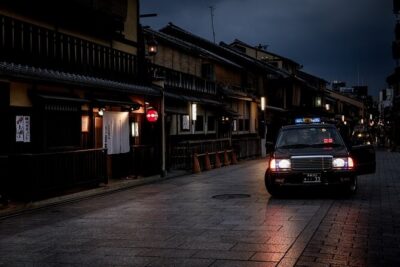
Gion Tatsumi Bridge is the first major stop, with about 20 minutes for a visit and explanation. This is one of the places where Kyoto’s polished image and working city meet. The bridge and nearby lanes are associated with traditional architecture, lantern-lit streets, and teahouses.
Here, the explanation about geisha culture becomes especially useful. You learn how maiko and geisha train and work, rather than treating them as costumes or photographic subjects. That distinction matters. Geisha culture is a profession with demanding training, artistic skills, and formal customs, not a stage set created for sightseeing.
The guide also helps you understand proper behavior in Gion. You can enjoy the architecture and atmosphere without turning the neighborhood into a hunt for photographs. The walk is best approached with patience and respect for residents and businesses.
Chion-in brings the religious side of Kyoto forward
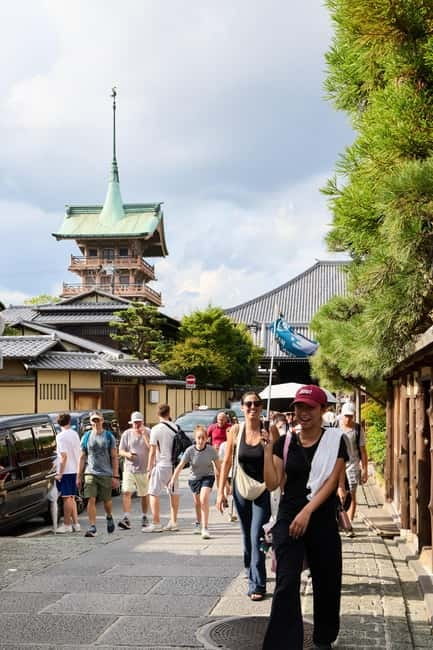
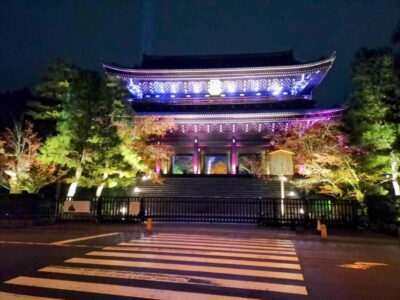
The tour then reaches Chion-in, with roughly 30 minutes devoted to the site. This is the longest scheduled stop, and it gives the guide room to explain Kyoto’s Buddhist traditions and the role of religious places in city life.
Chion-in is a useful counterpoint to Gion. Gion is often introduced through entertainment, refined dining, and geisha arts. Chion-in shifts the mood toward worship, architecture, ritual, and the long religious story of Kyoto.
Expect steps here and elsewhere on the route. The tour’s warning about many stairs is important, not a minor footnote. You may be walking on uneven surfaces, climbing temple approaches, and later tackling sloping streets toward Kiyomizu-dera.
The 30-minute stop should also help you pace yourself. Use pauses to drink water and look around instead of trying to hurry from one place to the next. The guide may stop to explain a detail that would be easy to miss on your own, such as a religious custom or an architectural feature.
Maruyama Park offers a breathing space
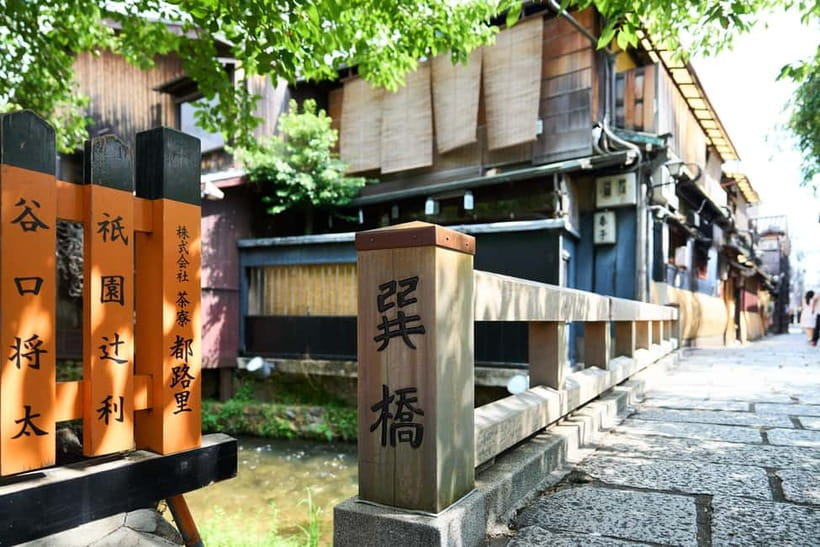
Maruyama Park receives about 20 minutes. After the enclosed lanes and temple approaches, the park gives you room to slow down and take in a more open part of Kyoto.
The value here is not simply a change of scenery. A park helps you see how religious sites, public space, and neighborhood life connect. Your guide can place the nearby temples and historic districts into a larger picture of the city.
This is also a sensible point for a short rest. The route covers considerable territory, and the tour continues after the park. If you are traveling with children or an older family member, use this pause to check shoes, water, and energy levels.
The family feedback is encouraging. The walk remained understandable and interesting for children aged 11 and 15, and a 79-year-old also enjoyed it. Still, that does not remove the physical challenge. A family group should be comfortable with three hours of walking and steps.
Hōkan-ji and the famous Higashiyama lanes
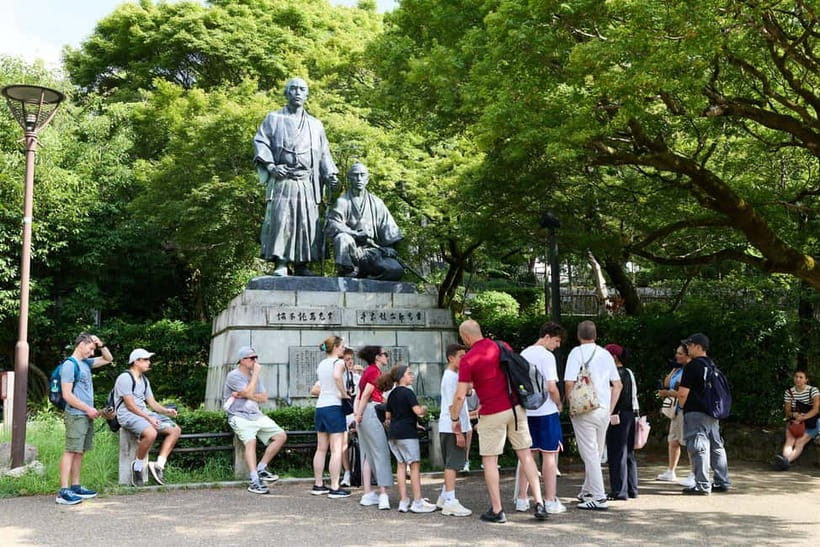
Hōkan-ji is a shorter visit, around 10 minutes. The stop gives you a chance to see one of the area’s recognizable temple settings without spending the entire afternoon at a single monument.
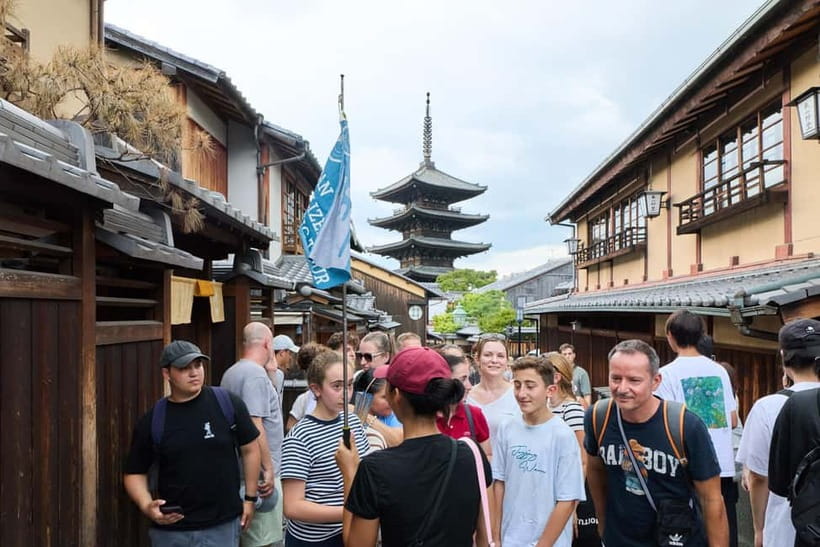
After that come the Ninen Zaka Path and Sannenzaka, with about five minutes at each. These are short scheduled stops, but the streets themselves are part of the experience. Their preserved appearance, wooden buildings, shops, and slopes show why this section of Kyoto is so popular.
The short time listed for each stop means you should not expect a long shopping break or an extended independent visit. You are moving through the district with the guide, listening to explanations and taking in the architecture along the way.
These lanes can also be busy, especially at popular times. The tour’s quieter backstreets help balance the more crowded sections, but the route still passes through one of Kyoto’s best-known sightseeing areas. Keep your group together and leave room for other pedestrians.
The setting is ideal for photographs, but do not let the camera turn the walk into a race. The real value is understanding how these lanes link the temples, businesses, homes, and visitor routes of Higashiyama.
Other walking tours we've reviewed in Kyoto




Finishing at Kiyomizu-dera Niomon Gate
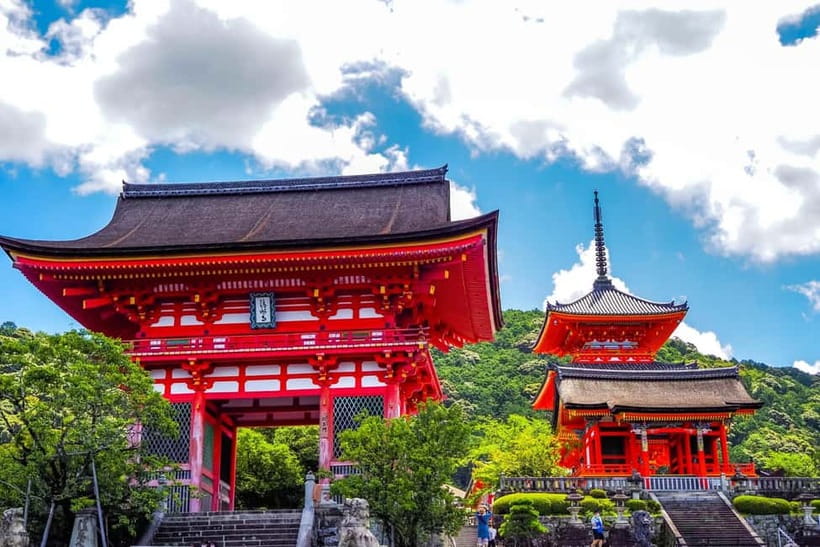
The walk ends at Kiyomizu-dera Niomon Gate rather than returning to the starting point. This is a practical advantage if you want to keep sightseeing in eastern Kyoto afterward.
Kiyomizu-dera is one of the city’s major attractions, and arriving at the Niomon Gate gives you a clear next step. You can continue into the temple area if your plans and ticket arrangements allow, or explore the surrounding streets and return later.
The separate start and finish also make the tour useful for building a day plan. You could begin near central Kyoto, follow the route through Gion and Higashiyama, then continue around Kiyomizu-dera after the guided portion.
The final approach may be tiring. By this stage you have already walked through Gion, Chion-in, Maruyama Park, Hōkan-ji, Ninen Zaka, and Sannenzaka. The special finish is worth planning for, but do not schedule an important reservation immediately afterward unless you know you can walk at this pace.
What the geisha discussion adds
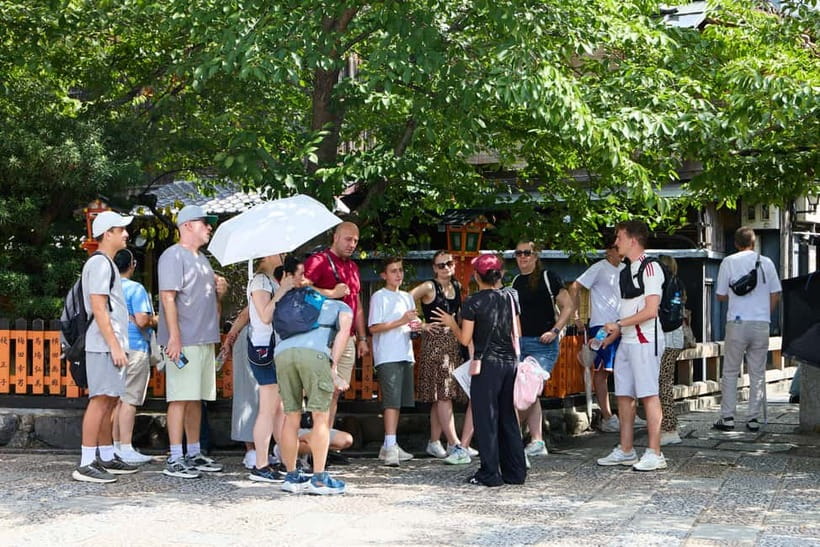
Many Gion walks focus on pretty streets and traditional buildings. This one promises more explanation of geisha and maiko life, including training and work.
That subject can be handled badly when it becomes a search for people in costume. A good guide gives you a clearer picture of the discipline behind the performances and the customs surrounding teahouse culture. The supplied tour information also points to stories about Kyoto’s past and present, so the discussion is not limited to one narrow theme.
You should come with questions. Ask about the difference between maiko and geisha, how training fits into daily life, or how traditional arts continue in a modern city. The guide’s ability to handle questions is one of the strongest reasons to choose this walk over simply following a map.
The tour also includes broader subjects. The guides have discussed Japanese history, samurai, the Shinkansen, tanuki, and daily life in Japan. That makes the experience useful if you want more than a standard explanation of buildings.
How much walking is three hours?
Three hours gives the tour enough time to cover a large part of northern Higashiyama, but it also creates a demanding pace. The route includes several major locations and many connecting streets.
You should bring water, as requested in the practical information, and wear shoes suited to steps and uneven ground. Alcohol and drugs are not allowed, and the activity is specifically unsuitable for people with a low level of fitness.
The tour is not described as wheelchair accessible, and the many steps make it a poor choice if stairs are difficult for you. The information does not provide a detailed accessibility plan, so contact the provider before booking if you have mobility concerns.
The guide does allow time to rest when possible. That helps, but you should still treat this as an active sightseeing experience. I would avoid pairing it with another long walking tour on the same day.
Is $25 a fair price?
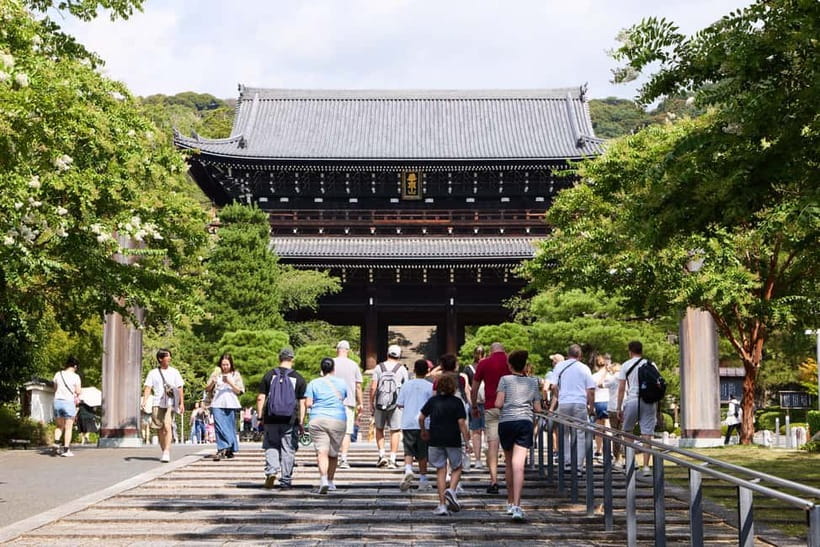
At $25 per person, the price is reasonable for a three-hour guided walk covering several major Kyoto areas. You are paying for local explanation, route planning, and the chance to connect places that can feel disconnected when visited alone.
The value is strongest if you are new to Kyoto or want help understanding what you see. A map can take you to Gion, Chion-in, Maruyama Park, and Kiyomizu-dera, but it cannot easily explain the relationship between geisha culture, religious life, preserved streets, and modern Japan.
The price does not include meals, drinks, entrance fees, or transport. The only stated inclusion is the guided tour, so budget separately for anything you choose to purchase or enter along the way.
Reserve now and pay later is available, and you can cancel up to 24 hours in advance for a full refund. Those terms are useful when your Kyoto schedule is still changing.
Who should book this experience?
I would recommend this tour to first-time Kyoto visitors who want an efficient introduction to Gion and Higashiyama. It is also a good fit if you prefer stories and conversation to silent sightseeing.
Families can enjoy it, provided everyone is ready for the walking. The age range that has worked well is broad, but fitness remains more important than age. A curious teenager may enjoy the history and folklore, while an older relative may appreciate the pauses and the guide’s patient explanations.
This is also a good choice for visitors with only a short stay. In three hours, you cover a substantial section of the city and finish near one of Kyoto’s key sights.
You may want another option if you need a slow, flat route, dislike group walking, or want long periods for shopping and photography. You should also choose a different experience if your main aim is to enter many temples rather than hear about the places while moving between them.
Should you book the Gion and hidden-lane walk?
Book it if you want a broad cultural introduction to Kyoto for a modest price, and if you are comfortable with steps. The route covers Gion, Chion-in, Maruyama Park, Hōkan-ji, Ninen Zaka, Sannenzaka, and the approach to Kiyomizu-dera, with a guide adding context along the way.
I especially like the separate finish at Kiyomizu-dera. It turns the walk into a useful part of a full sightseeing day rather than a circular activity that leaves you where you started.
Skip it if three hours on your feet sounds tiring or if you need a highly accessible route. For everyone else, this is a practical way to see a large part of Kyoto while learning how the city’s temples, old streets, geisha traditions, and daily life fit together.
FAQ
How long is the Gion and hidden-lane walking tour?
The tour lasts three hours.
Where does the tour begin?
It begins in front of Ben’s Cookies Kyoto Shijo. The guide will be holding a sign.
Where does the tour finish?
The tour finishes at Kiyomizu-dera Niomon Gate.
What language is the tour conducted in?
The live tour guide speaks English.
What is included in the price?
The guided walking tour is included. Other costs are not specified as included.
Do I need to bring anything?
Bring water. Comfortable shoes are also sensible because the route includes many steps.
Can I cancel the booking?
Yes. You can cancel up to 24 hours in advance for a full refund. Reserve now and pay later is also available.
More Walking Tours in Kyoto
More Gion & Geisha Walks in Kyoto

More tours in Kyoto we've reviewed






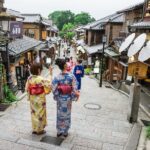

Gion & Geisha Walks, compared.
 ★ 4.7Kyoto Geisha Walking Tour: Gion District & Hidden GemsFrom $252 hours
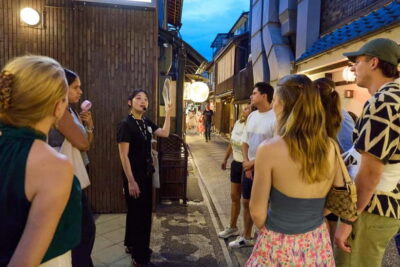 ★ 4.7Kyoto: Gion Geisha District Walking Tour – Stories of GeishaFrom $202 hours
 ★ 4.9Best of Kyoto: Gion, Geisha, Pagodas & CobblestonesFrom $242 hours
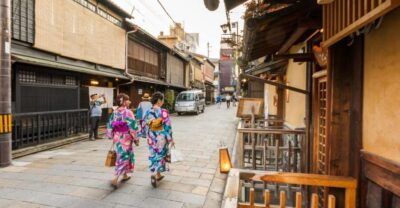 ★ 4.5Night Walk in Gion: Kyoto’s Geisha DistrictFrom $211h 40m
 ★ 5.0Kyoto Night Foodie Tour in Gion (9+ dishes + 6 Sake tastings)From $163
 ★ 5.0Kyoto Gion Geisha District Walking Tour – The Stories of GeishaFrom $25