
Reviewed · WALKING TOURS
Kyoto Lazy Bird Walking Tour
Kyoto’s most famous sights are spread across the city, yet this private afternoon tour links three of them in one long outing. You begin at 12:45 pm, when jet lag may have eased, then visit Arashiyama Bamboo Grove, Kinkaku-ji, and Fushimi Inari with a guide handling the route.
I like the late start and the personal attention. Guides including Mitsue, Noriko, Keiko, Saori, and Michiko have helped with photo spots, transport, food advice, and family needs. The tradeoff is a busy schedule: about an hour at each sight, plus public transit, leaves little room for wandering.
In This Review
- Key points to know
- Why the 12:45 pm start makes sense
- Starting at Kyoto Station with a private guide
- Arashiyama Bamboo Grove in one focused hour
- Kinkaku-ji and the Golden Pavilion
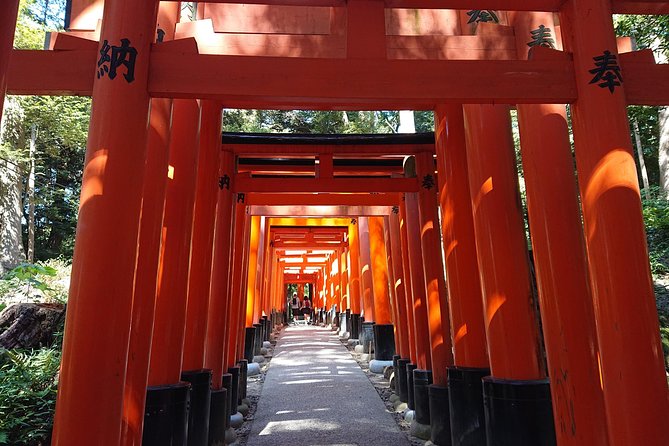
- Fushimi Inari and the tunnel of red torii
- What the private format adds
- The real cost and the value you receive
- Who should book this Kyoto afternoon tour
- Weather, cancellation, and practical planning
- Should you book the Kyoto Lazy Bird Walking Tour?
- FAQ
- What time does the tour start?
- Where does the tour meet?
- Where does the tour end?
- How long does the tour last?
- Which sights are included?
- Are transportation and admission fees included?
- Can I cancel for a refund?
Key points to know
- A rare afternoon start: Meet at Kyoto Station at 12:45 pm instead of forcing yourself out before breakfast.
- Three major sights in one outing: See Arashiyama, the Golden Pavilion, and Fushimi Inari in roughly 5 hours and 45 minutes.
- Private guide, private group: Only your party takes part, so the pace can be more personal than a large group tour.
- Transport costs extra: Budget ¥1,220 per person for public transportation, plus ¥500 for Kinkaku-ji admission.
- Strong guide support: Mitsue, Noriko, Keiko, Saori, and Michiko are praised for warmth, local advice, organization, and flexibility.
- A highlight-heavy route: You get Kyoto’s best-known photo spots, but not much unscheduled time in the neighborhoods around them.
Why the 12:45 pm start makes sense
Many Kyoto sightseeing outings begin early. That can be rough after a long flight, especially if you are adjusting to Japan time or have spent the morning arriving from another city.
This tour takes a more forgiving approach. You meet at Kyoto Station at 12:45 pm, giving you time for breakfast, a slow start, or a morning visit close to your hotel. I like that the schedule recognizes a simple truth: a good tour is not only about what you see, but also about how humanely the day begins.
The afternoon start does bring one cost. You are visiting three heavily visited sights during the main part of the day rather than at the quietest possible hours. The experience is designed for coverage and ease, not solitude.
The tour lasts about 5 hours and 45 minutes. Since the three stops each allow about an hour, the remaining time is used for trains, buses, walking, meeting your guide, and moving between Kyoto’s widely separated areas. That makes the route efficient, but you should arrive ready to keep moving.
Other walking tours we've reviewed in Kyoto
Starting at Kyoto Station with a private guide
The meeting point is Kyoto Station, one of the city’s main transport hubs. This is a sensible place to begin because the tour relies on public transportation, and the activity ends back at the same meeting point.
Your guide fare is included. Public transportation is not, and the stated transport cost is ¥1,220 per person. Kinkaku-ji admission is also separate at ¥500 per person. Food and drinks are not included.
The private format is important here. You are not joining a large bus group, and only your own party participates. That gives the guide room to answer questions, help with photographs, and adjust the pace when needed. Michiko, for example, adapted well to the challenges of a young child, while Saori went out of her way to find attractive photo locations.
There was one report of initial confusion about a train station meeting point before the guide and party connected. Since the official meeting point is Kyoto Station, check your booking details carefully and make sure you know exactly where within or around the station to meet. Keiko’s use of messaging before the tour and Satoshi Nonake, who used the name Nick, kept his timetable organized through WhatsApp, showing how useful advance communication can be.
Arashiyama Bamboo Grove in one focused hour
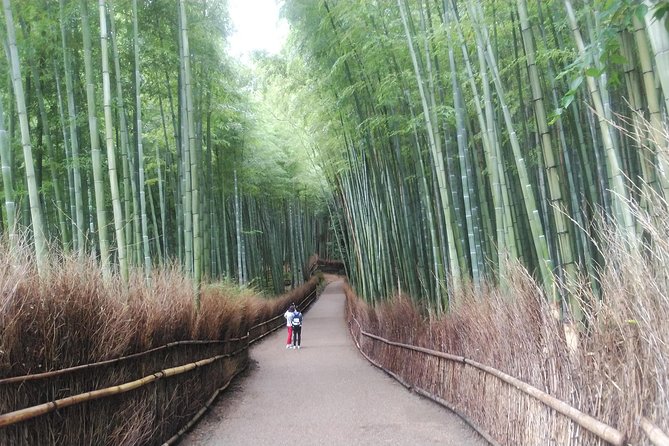
Arashiyama is the first major stop. Its bamboo forest is famous for tall green stalks, filtered light, and the soft sound of leaves moving overhead. The forest has a quiet visual appeal even when other people are present, and it gives you one of Kyoto’s most recognizable scenes right away.
You have about one hour here, with no admission fee listed. That is enough to walk through the main bamboo area, take photographs, and hear some context from your guide. It is not enough for a long exploration of all that Arashiyama has to offer.
That limitation matters. Arashiyama is more than bamboo, but this tour treats it as a concentrated stop rather than a full neighborhood visit. You should not expect extended time for every temple, garden, river view, or side street in the area. If Arashiyama is your main reason for coming to Kyoto, plan a separate visit.
The guide adds value by helping you use the short window well. Saori was specifically praised for finding good photo spots, and a guide can also keep you from losing time on the approach or on route decisions. You get the signature scene without spending part of the afternoon working out where to go next.
Wear comfortable shoes. The tour description recommends comfortable clothing and footwear for walking, and that advice applies from the first stop onward.
Kinkaku-ji and the Golden Pavilion
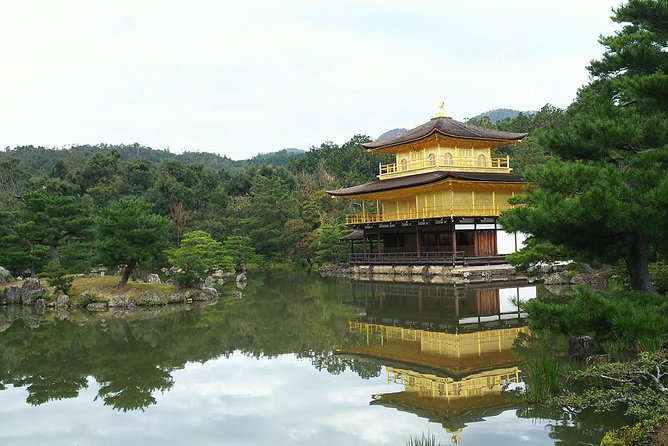
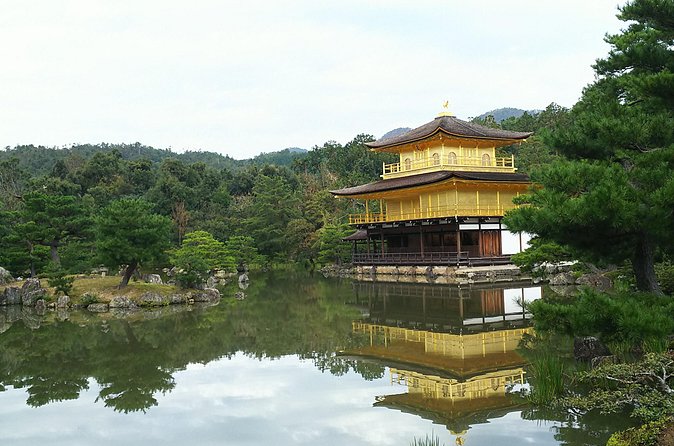
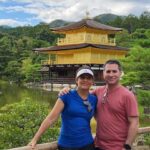
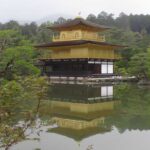
The route continues to Kinkaku-ji, the Zen temple known as the Golden Pavilion. Its gilded exterior reflected in the surrounding water is one of Kyoto’s great set pieces, and the sight is worth seeing even if you have encountered it in photographs many times.
You have about one hour here. Admission is not included, so allow ¥500 per person. The tour includes the guide’s explanations, but the entrance fee remains your responsibility.
Kinkaku-ji is a place where expectations can work against you. It is one of Kyoto’s most popular attractions, and the visit follows a set path rather than inviting you to roam freely through every part of the temple grounds. Still, the pavilion itself is striking, and the compact visit works well for a first-time introduction.
I would pay close attention to the guide here. The value is not only the photograph of the building. A good explanation can help you understand why the pavilion carries such weight in Kyoto’s image and how it relates to Zen and samurai-era culture. Guides such as Mitsue and Noriko have been praised for explaining history and local customs in a calm, approachable way.
You will want your camera ready, but do not let the photo stop take over the entire hour. The pavilion is the focal point, yet the grounds give the visit its setting. Your guide can point out the best angles and help you keep moving so the final stop does not feel rushed.
Fushimi Inari and the tunnel of red torii
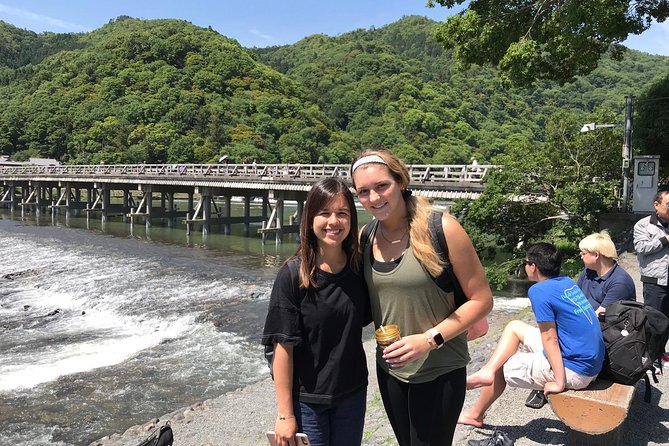
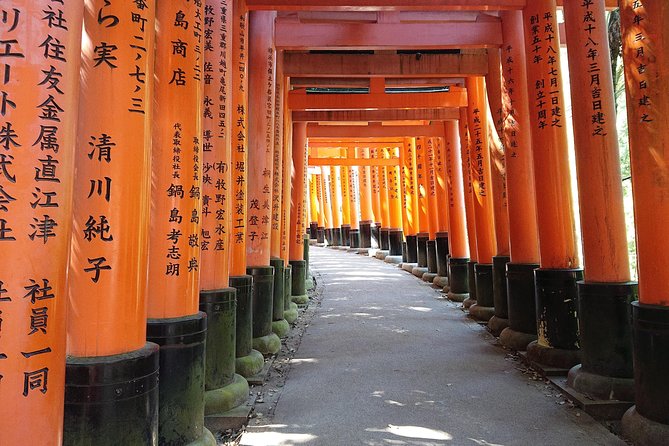
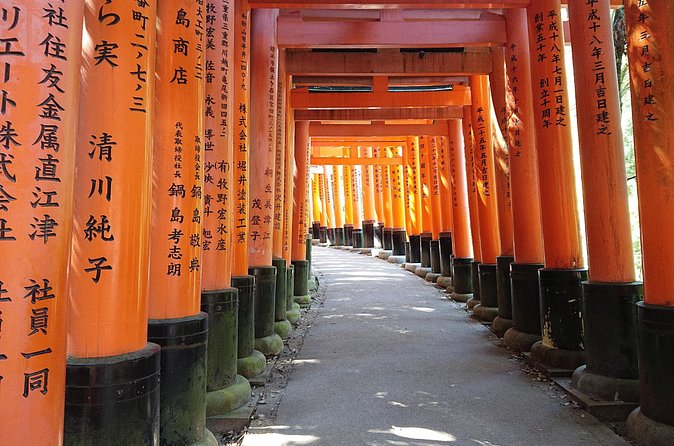
The final sight is Fushimi Inari-taisha Shrine, famous for its long rows of vermilion torii gates. These gates were donated by worshippers in thanks for good fortune, and together they create one of Kyoto’s most memorable walks.
Like Arashiyama, Fushimi Inari is free to enter. You have about an hour, which is enough to experience the lower shrine area and walk through part of the torii route. It is not enough to climb the entire mountain path at a leisurely pace.
That distinction is worth keeping in mind. The gates continue far beyond the first striking section, so a one-hour visit gives you a taste rather than the full pilgrimage route. If you want a long uphill walk, quiet upper sections, and more time among the forested paths, reserve a separate morning or afternoon for Fushimi Inari.
Ending here makes visual sense. The torii gates offer a strong final impression after the bamboo and the Golden Pavilion, and the shrine gives you a different kind of Kyoto experience. The day moves from a natural corridor, to a formal temple setting, to a major Shinto shrine.
Your guide can also help explain the difference between the sites. That matters because this is not simply a checklist of three attractive places. You are seeing several parts of Kyoto’s religious and cultural identity in a single afternoon, even if the schedule only allows a short stay at each.


What the private format adds
A private tour is most useful when you have specific needs. With only your own group, you can ask questions without competing with a busload of people, and your guide can respond to your pace.
The guide team has received especially strong praise for personal care. Mitsue was described as warm, calm, and helpful with advice about sights, food, and transport. Noriko kept a cold, rainy day enjoyable through friendly explanations. Keiko offered a personalized, informative visit after the meeting issue was resolved.
Satoshi Nonake, known as Nick, kept in touch through WhatsApp and organized the train connections and timing. That is useful on a day with three far-apart stops. Michiko worked patiently with a family traveling with a young child, while Saori helped with photographs and was described as responsible and attentive.
These details point to the tour’s main strength: human guidance through a tight route. You are paying not only to see the sights, but to reduce the small decisions that can drain time in Kyoto. Which train? Which entrance? How long should you stay? Where is a good photograph? A private guide can take much of that work off your hands.
The experience does not promise a single named guide. Your guide is assigned, so you cannot assume you will get Mitsue, Noriko, Keiko, Saori, Michiko, or Nick. Still, the range of positive comments suggests that the operator has several guides who bring warmth and practical help to the day.
The real cost and the value you receive
The listed price is $111.05 per person. Add ¥1,220 per person for public transportation and ¥500 per person for Kinkaku-ji, while food and drinks remain extra.
That is not the cheapest way to see these sights. You can visit Kyoto’s temples and shrines independently for less, especially if you are comfortable reading transit directions and planning the route yourself.
The price becomes easier to justify if you value time and support. Arashiyama, Kinkaku-ji, and Fushimi Inari are not next door to one another. Linking them in one afternoon requires route planning, transport changes, and close attention to the clock. The guide fare pays for that organization and for a private experience rather than a large shared group.
Group discounts are offered, though the available details do not state the discount amount. If you are traveling with several people, check the final booking price carefully. A larger private group may improve the per-person value, while a solo booking will naturally feel more expensive.
I would compare this tour with your own confidence. If you enjoy planning Kyoto’s trains and want long visits at each stop, independent sightseeing may suit you better. If you have limited time, prefer personal explanations, or want someone else to manage the route, the cost can be reasonable.
Who should book this Kyoto afternoon tour
This outing suits first-time visitors who want a fast look at Kyoto’s best-known sights. It also works well for people recovering from jet lag, families who want a guide to handle transport, and couples who prefer a private schedule.
It is a good fit if you have one free afternoon and do not want to spend hours deciding which temples and shrines to combine. The guide can also help if you need support with photographs, local food suggestions, or transport questions.
The pace may be less comfortable for anyone who wants long periods of quiet or detailed sightseeing. You get roughly an hour at each stop, and the transit between them uses a meaningful portion of the day. For a deeper visit to Arashiyama or Fushimi Inari, book separate time.
The activity states that most people can participate and that it is accessible for people with limited eyesight or limited mobility. Animals and pets are allowed. Even so, the walking and public transit involved mean you should consider your own comfort and discuss any needs with the provider before booking.
Weather, cancellation, and practical planning
The tour requires good weather. If poor weather causes cancellation, you are offered another date or a full refund. You can also cancel for a full refund up to 24 hours before the start time.
After that cutoff, the amount paid is not refunded, and changes made less than 24 hours before departure are not accepted. The cutoff follows local Kyoto time.
Bring comfortable clothes and shoes, and keep some flexibility in your afternoon. Food and drinks are not included, so plan around your own needs. Since the outing ends back at Kyoto Station, you can arrange dinner or an evening train from there after the tour.
The operator recommends booking well ahead, with reservations averaging 106 days in advance. That is useful information if your Kyoto dates are fixed, especially during a busy season.
Should you book the Kyoto Lazy Bird Walking Tour?
Book it if you want three iconic Kyoto sights with a late start and a private guide. The combination is practical: you avoid an early morning, skip much of the route planning, and get personal help from guides who have shown warmth, organization, photo skill, and flexibility.
Skip it if you want to linger. One hour per stop gives you a well-planned introduction, not a full study of each place. You will also pay extra for transport and Kinkaku-ji admission.
For a first Kyoto visit with limited time, I find the tour’s strongest point to be its sensible structure. It gives you the bamboo, the Golden Pavilion, and the torii gates in one afternoon without asking you to become a transit expert first. Just arrive ready for a full walking day, accept the brisk pace, and treat the experience as an overview that helps you decide where to return on your own.
FAQ
What time does the tour start?
The tour starts at 12:45 pm.
Where does the tour meet?
The meeting point is Kyoto Station in Kyoto, Japan.
Where does the tour end?
The activity ends back at the meeting point.
How long does the tour last?
The tour lasts approximately 5 hours and 45 minutes.
Which sights are included?
The route visits Arashiyama Bamboo Grove, Kinkaku-ji Temple, and Fushimi Inari-taisha Shrine.
Are transportation and admission fees included?
No. Public transportation costs ¥1,220 per person, and Kinkaku-ji admission costs ¥500 per person. Food and drinks are also not included.
Can I cancel for a refund?
Yes. You can cancel at least 24 hours before the start time for a full refund. If poor weather causes the tour to be canceled, you are offered another date or a full refund.
More Walking Tours in Kyoto

More tours in Kyoto we've reviewed


Walking Tours, compared.
 ★ 4.7Kyoto Geisha Walking Tour: Gion District & Hidden GemsFrom $252 hours
 ★ 4.7Kyoto: Gion Geisha District Walking Tour – Stories of GeishaFrom $202 hours
 ★ 4.5Night Walk in Gion: Kyoto’s Geisha DistrictFrom $211h 40m
 ★ 5.0Kyoto Gion Geisha District Walking Tour – The Stories of GeishaFrom $25
 ★ 5.0Nishiki Market Brunch Walking Tour (7 Tastings + Brunch)From $68
 ★ 4.9Kyoto: Gion Magical Night Walking Tour with Geisha InsightsFrom $34