
Reviewed · GOLDEN PAVILION & TEMPLE TOURS
Kyoto Hidden Treasures: Special Temple & Garden Access Tour
Kyoto’s best temple visits are not just about seeing another wooden gate or pagoda. They are about learning what you are looking at. This private tour puts a guide beside you as you move among Zen gardens, Buddhist halls, imperial temples, and cherry trees, with possible stops including Tenryu-ji, To-ji, and Kiyomizu-dera.
I like two things here. First, the private format lets your guide adjust the pace and explain the details that are easy to miss, from Buddhist imagery to garden design. Second, you learn to use Kyoto’s buses and trains, which can be more useful than riding in a private vehicle. The main catch is that the itinerary varies by date, so you may not receive every stop listed.
- A private morning start: Meet at the Kyoto Brighton Hotel at 6:45 am, before the day gets crowded.
- Seasonal temple choices: Cherry blossoms, autumn leaves, and late-blooming Omuro-zakura may shape the route.
- Strong cultural context: Guides explain Buddhism, Shinto, Japanese history, and local customs.
- Public transit practice: Your guide can show you how to move around Kyoto by train or bus.
- Quiet garden possibilities: Haradanien and Taizō-in offer a calmer counterpoint to Kyoto’s famous sights.
- A date-dependent plan: The route is not fixed, and the full list of temples is not necessarily covered.
In This Review
- What This Kyoto Tour Really Offers
- Starting Early at Kyoto Brighton Hotel
- Tenryu-ji and the Arashiyama Setting
- To-ji and Kyoto’s Tallest Wooden Pagoda
- Kiyomizu-dera’s Wooden Stage
- Haradanien and the Cherry Blossom Tunnel
- Ninna-ji and Late-Blooming Omuro-zakura
- Taizō-in for Zen and Japanese Art
- How the Guides Add Value
- Public Transit Is Part of the Lesson
- Walking, Weather, and Seasonal Crowds
- Who Gets the Most from the $140 Price
- Should You Book Kyoto Hidden Treasures?
- FAQ
- Where does the tour start?
- Where does the tour end?
- How long does the tour last?
- Is transportation included?
- Will the tour visit every temple and garden listed?
- Can I cancel for a full refund?
What This Kyoto Tour Really Offers
At $140, this is not a cheap sightseeing walk. It is a private guiding service for your group, with admission to the listed temple sites included and transportation handled by public transit or local taxis at your own expense.
The value depends heavily on your group size. For one or two people, the price buys personal attention and help with Kyoto’s sometimes confusing routes. For a family or small group, the cost can make more sense because you are not paying separately for several people to join a large tour.
The tour lasts about two to four hours. That is enough time for a focused look at a few places, but not enough to properly explore all seven sites described in the route. Treat the names as possible destinations rather than a promise that you will visit every one.
The tour has a current rating of 4.7 from 25 ratings, with 92 percent recommending it. The strongest pattern is clear: people value the guides’ explanations, friendly manner, and help with local transit. One useful warning also appears in the feedback: transfers can take up a noticeable part of a short tour, especially during April’s busy cherry blossom period.
Starting Early at Kyoto Brighton Hotel
Your guide meets you in the lobby of Kyoto Brighton Hotel at 6:45 am. That is an early start, but it can work well in Kyoto, especially during cherry blossom season when major temples fill quickly.
The meeting point is in the Kamigyo Ward, and the tour ends back there. Since this is a walking experience without a private vehicle, you should arrive ready to walk, wait for transit, and move at the pace of Kyoto’s streets and station platforms.
The early hour also gives you a practical advantage. You may reach popular temple grounds before the heaviest crowds, though the exact benefit depends on the day’s route and opening arrangements. Ask your guide at the start which stops are planned and how much time you will spend in transit.
A few more Kyoto tours and experiences worth a look

Tenryu-ji and the Arashiyama Setting
Tenryu-ji was founded in 1339 and is one of Kyoto’s best places to connect a Zen temple with a carefully composed garden. Its grounds are especially appealing because the garden is not simply decoration. It uses water, rocks, trees, and borrowed mountain views to create a calm visual order.
The temple is in Arashiyama, where you can also find the Bamboo Grove and Togetsukyo Bridge. If Tenryu-ji is part of your route, ask your guide how much time is available for the surrounding area. Arashiyama contains enough sights for a full morning, so a short stop can feel brisk.
Spring cherry blossoms and autumn foliage give Tenryu-ji extra appeal, but the temple is not dependent on one season. The garden is the main reason to visit, and a guide can help you notice the design rather than reducing the stop to a few photographs.
To-ji and Kyoto’s Tallest Wooden Pagoda
To-ji gives you a different side of Kyoto’s Buddhist tradition. Its five-story pagoda rises 55 meters and is described as Japan’s tallest wooden pagoda. Even from a distance, it gives the temple grounds a strong focal point.
Inside the Kodo, a three-dimensional mandala uses 21 Buddhist statues to represent the world of Shingon Esoteric Buddhism. The figures include Dainichi Nyorai, Fudo Myo-o, and the Four Heavenly Kings. Without context, this can be a room full of imposing statues. With a guide, you have a better chance of understanding how the arrangement works and why each figure matters.
To-ji also includes the Kondo, or Main Hall, and the National Treasure Fudo Myo-o statue. The combination of pagoda, halls, and seasonal flowers makes this a rewarding stop for visitors interested in both architecture and religious art.
The practical issue is distance. To-ji is not beside Tenryu-ji or Kiyomizu-dera, so a route connecting several of these places can involve considerable transit. That is one reason the date-specific planning matters.
Kiyomizu-dera’s Wooden Stage
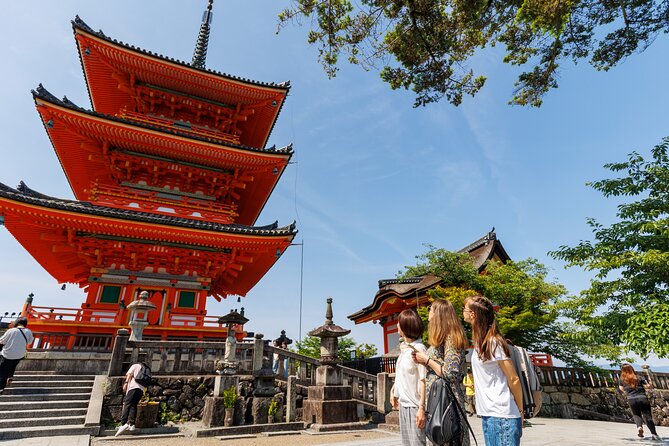
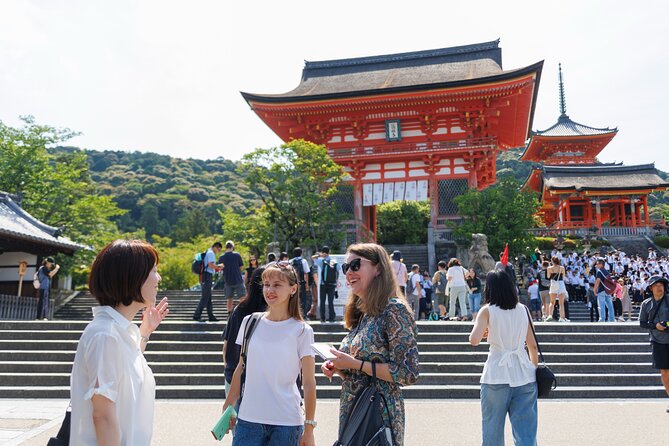
Kiyomizu-dera is one of Kyoto’s essential views. Its broad wooden stage projects from the hillside and looks across the city. The structure was built without using a single nail, a detail that makes the engineering as interesting as the view.
The temple has more than 1,200 years of history, and the setting gives you a strong sense of how Kyoto’s religious sites use hillsides, trees, and open views. In spring, blossoms add color around the temple. In autumn, the wooded slopes turn the view into one of the city’s most memorable seasonal scenes.
Kiyomizu-dera can be crowded, and the approach includes walking through busy streets. That makes a guide particularly useful for keeping the visit moving and explaining the site without forcing you to puzzle through every detail alone.
If this is your first Kyoto visit, Kiyomizu-dera is a sensible priority. If you have already seen it, the guide may help you notice details you missed, as happened for one returning visitor who found a second visit more rewarding with a guide explaining the site.
Haradanien and the Cherry Blossom Tunnel
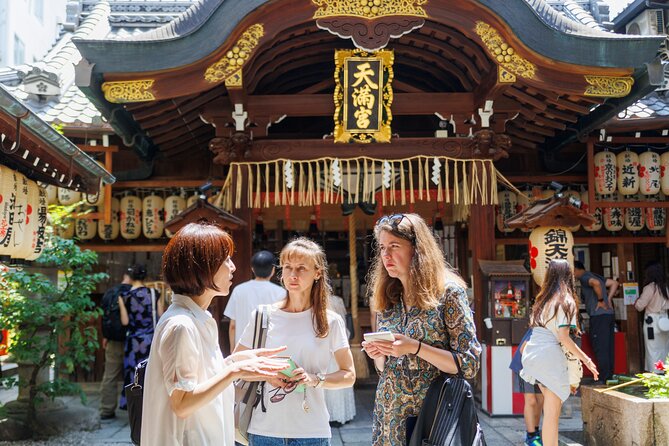
Haradanien is the most unusual option on the route. This privately owned garden is less familiar than Kyoto’s headline temples, yet it is known for dense seasonal planting and more than 400 cherry trees in spring.
The appeal is not one grand building. It is the concentration of flowers and the feeling of moving through a garden shaped for plants rather than monuments. In cherry blossom season, the trees can form a tunnel of blossoms, making this a strong choice if your main goal is seasonal beauty.
There is an important qualification: garden conditions and opening details can depend on the date. Since the tour’s contents change by day, confirm in advance if Haradanien is the stop you most want. Do not assume it is included simply because it appears in the suggested route.

Ninna-ji and Late-Blooming Omuro-zakura
Ninna-ji carries an imperial connection that sets it apart from many Kyoto temples. Emperor Uda founded it in 888, and the temple later became a monzeki institution, where members of the imperial family served as head priests.
That background shows in the refined architecture and gardens. Ninna-ji is also famous for Omuro-zakura, a late-blooming cherry tree variety. If your visit falls after some of Kyoto’s better-known cherry trees have faded, this may be one of the best places to find spring blossoms.
Ninna-ji works well for travelers who want more than a famous photo stop. The imperial links, temple buildings, gardens, and late blossoms give your guide several threads to explain. Still, the timing matters. Ask how the day’s schedule matches the blossom season before booking specifically for Omuro-zakura.
Taizō-in for Zen and Japanese Art
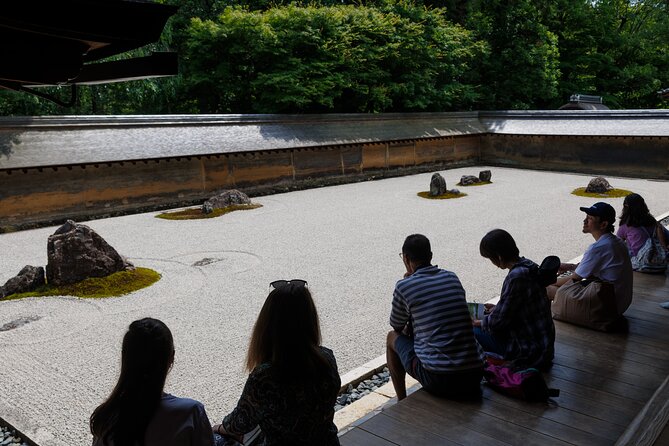
Taizō-in is a smaller, quieter stop than Kiyomizu-dera or Tenryu-ji. It offers a historic Zen temple, a national treasure ink painting, and a garden designed for stillness rather than spectacle.
This is the sort of place where a guide can make a real difference. A visitor may walk through the grounds, admire the garden, and leave without understanding the connection between Zen practice, ink painting, and the temple setting. A good explanation gives the visit shape.
Taizō-in is also a useful counterpoint to Kyoto’s famous sights. If the day includes several major temples, a quiet garden stop can keep the experience from becoming a blur of similar roofs and courtyards.
How the Guides Add Value
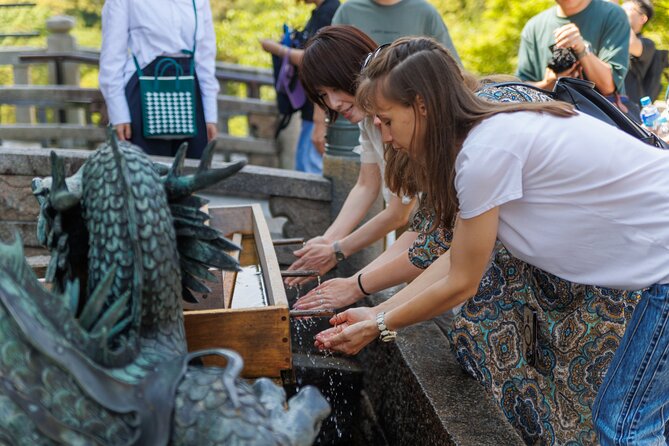
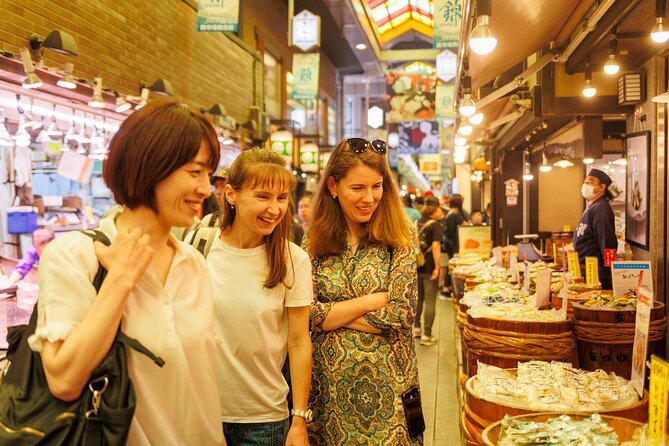
The clearest strength of this experience is the guiding. Past participants have described guides including Sayuri, Naomi, Haru, Takuma Goda, Makiko, Osamu, and Chika. The exact guide for your booking is not specified, so you should not expect one particular person.
The best guide moments described in the feedback are practical and specific. Sayuri helped explain Buddhism and Shinto while also showing how to use local transit. Takuma took a small group to three selected sights and made the visit interactive. Makiko was praised for patience and for teaching transit skills.
Other guiding strengths include explaining the thousand-plus statues at Sanjusangen-do, discussing Fushimi Inari’s folklore, and answering questions about Japanese history and religion. Those examples also show that the company runs several private Kyoto routes, so your actual tour may include different sites from the temple and garden options listed here.
The guiding quality may vary. One person found a guide friendly and energetic but still developing his subject knowledge. That is a fair reminder that a private tour is not automatically a scholarly tour. If religious art or temple history is your main reason for booking, tell the operator what level of explanation you want when you ask for the exact date-specific route.
Public Transit Is Part of the Lesson
No private vehicle is included. You may use buses, trains, or local taxis between sites, with taxi and transit costs handled separately unless your booking states otherwise.
I see this as a useful feature, not merely a compromise. Kyoto’s public transportation system is practical, and learning the basics with a guide can help you for the rest of your trip. Several people specifically valued having someone show them how to navigate local transit.
The tradeoff is time. Kyoto’s temples are spread across the city, and a two to four-hour tour can lose part of its schedule to stations, bus stops, walking routes, and traffic. A note from one experience specifically points to long transfers, with April identified as a difficult period.
For that reason, fewer stops may produce a better day. Three places visited with care can be more satisfying than a rushed attempt at six. Ask for the planned sequence before you pay, especially if you have a hard departure time afterward.
Walking, Weather, and Seasonal Crowds
You need moderate physical fitness for this tour. The route includes a moderate amount of walking, and comfortable walking shoes are essential. Temple grounds can involve uneven surfaces, steps, slopes, and long approaches, though the supplied details do not give a specific accessibility assessment.
The tour runs rain or shine. Bring suitable clothing and be prepared for wet paths or reduced views if the weather turns. Cherry blossom and autumn foliage seasons can make the scenery beautiful, but they also bring more people and slower transportation.
Because the tour starts at 6:45 am, plan breakfast ahead. The tour information does not promise a meal stop, and a short itinerary leaves little room for a leisurely café break.
Who Gets the Most from the $140 Price
This experience suits you if you want a private guide, have a short Kyoto schedule, and care about understanding temples rather than simply collecting photographs. It is also a good fit for couples, families, and small groups who want to ask questions without keeping up with strangers.
It works especially well for first-time visitors who are unsure how Buddhism and Shinto differ, or who feel nervous about Kyoto’s transit system. Returning visitors can also benefit if the date offers a garden or temple they have not yet seen.
You may want another option if you need a fixed itinerary, want a full vehicle-based tour, or hope to visit every listed temple. The private format gives your group space, but the tour is not fully customizable according to the additional information. The daily content varies, and that uncertainty is the biggest booking concern.
Free cancellation is available up to 24 hours before the start time. Within 24 hours, the payment is not refunded, and changes are not accepted.
Should You Book Kyoto Hidden Treasures?
Book this tour if you value personal explanation and practical help more than a guaranteed checklist of sights. The strongest parts are the guide’s cultural context, the chance to see less familiar gardens such as Haradanien or Taizō-in, and the lesson in using Kyoto’s public transit.
Before booking, ask for the exact itinerary for your date. If the answer includes the temples you most want and allows enough time for each, $140 can be a fair price for a private half-day experience. If the route strings together distant places with long transfers, choose a shorter, more focused plan if that option is available.
I would recommend it most for a small group visiting Kyoto during blossom or foliage season, provided you accept the early start and changing route. It is less suitable for someone who wants a leisurely garden visit or a fully fixed schedule.
FAQ
Where does the tour start?
The tour starts in the lobby of Kyoto Brighton Hotel at 330 Shiteichō, Kamigyo Ward, Kyoto. The listed start time is 6:45 am.
Where does the tour end?
The activity ends back at the Kyoto Brighton Hotel meeting point.
How long does the tour last?
The tour lasts approximately two to four hours.
Is transportation included?
A private vehicle is not included. Public transportation or local taxis may be used between sites, and the experience is described as a walking tour.
Will the tour visit every temple and garden listed?
No specific promise is made that every listed stop will be included. The tour content varies by date, so you should request the precise itinerary before booking.
Can I cancel for a full refund?
You can cancel at least 24 hours before the local start time for a full refund. Cancellations or changes made within 24 hours are not accepted for a refund.
More Golden Pavilion & Temple Tours in Kyoto

More tours in Kyoto we've reviewed




Golden Pavilion & Temple Tours, compared.
 ★ 4.8Kyoto: Fushimi Inari, Kinkakuji, Bamboo Grove 1 Day Bus TourFrom $122510 minutes - 9 hours
 ★ 4.9Kyoto: Tea Ceremony in a Traditional Tea House in KiyomizuFrom $4945 min
 ★ 4.9Kyoto: Tea Ceremony Ju-An at Jotokuji TempleFrom $291h 10m
 ★ 4.1Osaka/Kyoto:Kinkakuji,Arashiyama,FushimiInariShrine,NaraParkFrom $66
 ★ 4.8Arashiyama Bamboo, Temple, Monkeys, or Secret Sake BreweryFrom $875 hours - 330 minutes
 ★ 5.0Kyoto: Nijo, Kinkaku-ji, Arashiyama, Kiyomizu & Fushimi InariFrom $51