
Reviewed · GOLDEN PAVILION & TEMPLE TOURS
Kyoto: Zen Meditation at a Private Temple with a Monk
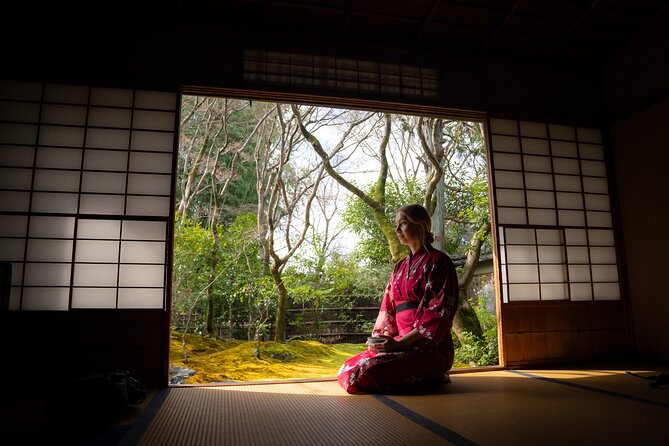
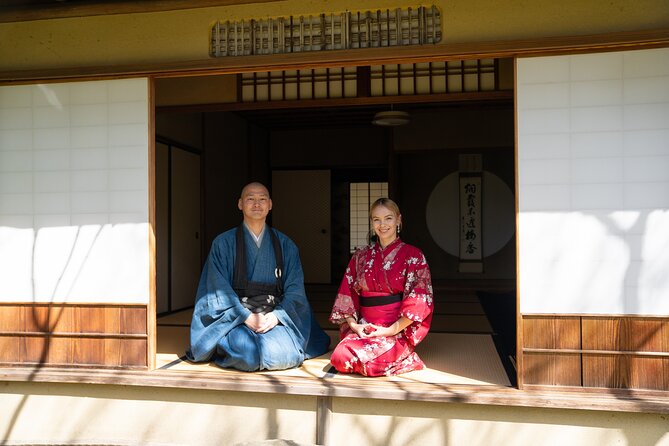
Kyoto has plenty of famous temples, but this experience takes you somewhere most visitors cannot simply walk into: a private temple near Kodaiji Park. A monk explains the basic ideas behind Zen, shows you how to sit, and guides a quiet meditation session in an atmospheric setting.
I like the small maximum of nine people, which gives the session a personal feel. I also like the simple finish: matcha tea and traditional snacks give you time to reflect instead of rushing straight back into Kyoto’s busy streets.
The main consideration is the price, $98.83 per person for about 90 minutes. That is a serious spend for a short activity, so it makes the most sense if you want cultural context and a guided introduction to meditation, not just a quick temple visit.
In This Review
- Key points to know before booking
- Entering a private temple near Kodaiji Park
- What the monk explains about Zen meditation
- A guided meditation in a quiet setting
- Matcha and traditional snacks after meditation
- Why the nine-person limit matters
- The route from Kodaiji Park to Nene-no-michi
- Is $98.83 a fair price?
- What the praise tells you about the experience
- Who should book this Kyoto meditation session?
- Booking, cancellation, and practical details
- Should you book it?
- FAQ
- Where does the Kyoto Zen meditation experience begin?
- Where does the experience finish?
- How long does the meditation experience last?
- How many people can join the session?
- Is the temple open to the general public?
- What is included after the meditation?
- How much does the experience cost?
- Can I cancel for a full refund?
Key points to know before booking
- Private temple access: You visit a temple that is typically closed to the public.
- A monk leads the session: Expect explanations of Zen, Japanese culture, and meditation technique.
- Small group size: The experience is limited to nine people.
- Useful beginner guidance: The session covers practical points such as sitting upright correctly.
- A calm 90-minute format: Meditation, discussion, matcha, and snacks fit into one compact activity.
- Convenient Higashiyama setting: Meet at Kodaiji Park and finish along Nene-no-michi.
Entering a private temple near Kodaiji Park
The meeting point is Kodaiji Park at 463-28 Shimokawara-cho in Kyoto’s Higashiyama Ward. From there, you are taken to a nearby temple that is usually not open to the public.
That private access is the heart of the experience. You are not simply looking at a temple from a public path. You are entering a quieter place for a purpose, with a monk explaining what you are doing and why it matters.
The setting near Kodaiji Park also makes practical sense. Higashiyama is one of Kyoto’s most visited areas, filled with lanes, temples, and traditional streets. A meditation session here gives you a change of pace from sightseeing. You can place it before or after other stops in the district, though the exact walking time from your own plans is not provided.
The temple itself is described as small but beautiful. That matters because this is not a grand sightseeing production. The appeal comes from the intimate scale, the quiet surroundings, and the chance to spend time in a place that normally has limited public access.
A few more Kyoto tours and experiences worth a look
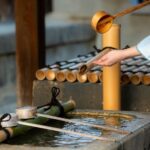
What the monk explains about Zen meditation
The session begins with an introduction to Zen meditation and Japanese culture. The monk does more than tell you to sit quietly. You receive practical meditation tips and an explanation of the central ideas behind the practice.
This is useful if you have never meditated before. It is also worthwhile if you already have a meditation habit but want to understand how it connects with Japanese Buddhist tradition. The teaching is designed to be accessible rather than demanding. You are not expected to arrive with prior knowledge.
One particularly useful lesson concerns posture. The session gives attention to sitting upright correctly, a small physical detail that can make meditation feel very different. Good posture is easy to overlook, especially when you are concentrating on breathing or trying to quiet your thoughts.
The monk also uses a clear metaphor to explain meditation practice. The exact metaphor is not specified, but the point is helpful: a good teacher can make an abstract idea easier to grasp by linking it to something ordinary and familiar.
You should expect a mixture of explanation and practice, rather than a long lecture. The format lets you hear an idea, try it, and then understand it through direct experience. That balance is one reason this works well for beginners.
A guided meditation in a quiet setting
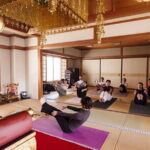
After the introduction, you have time to meditate in the temple. The room and surroundings provide the kind of atmosphere people often seek when they visit Kyoto, but here the quiet has a clear purpose.
A guided session can remove some of the uncertainty that comes with trying meditation alone. You do not need to guess how to sit or what to focus on. The monk gives you a framework, then allows you to practice within it.
Keep your expectations realistic. This is about 90 minutes in total, not a full retreat or an intensive Zen training course. You will get an introduction, a period of practice, cultural explanation, and refreshments. The short length makes it easy to fit into a sightseeing day, but it also limits how far the teaching can go.
The experience may suit you especially well if you have been curious about meditation but have not known where to start. It can also serve as a quiet reset during a packed Kyoto itinerary. If you want a large temple tour, a detailed art history talk, or a full day of spiritual practice, this is not that kind of activity.
Matcha and traditional snacks after meditation
The experience ends with matcha tea and traditional snacks. This is more than a polite extra. It gives the session a natural closing point and adds a small taste of Japanese food culture.
Matcha has a strong place in Japanese cultural life, and serving it after meditation fits the mood of the visit. You can slow down, absorb what you have learned, and enjoy a simple refreshment in the temple setting.
The food portion should be viewed as a light treat, not a meal. No detailed menu is provided, so do not book this expecting a full tea ceremony or substantial food. The information describes matcha and traditional snacks, but not a formal tea ceremony with an extended demonstration.
I like this ending because it avoids the abrupt feeling that can follow a meditation session. You move from teaching, to practice, to a quiet social moment. That makes the activity feel complete without adding much time.
Why the nine-person limit matters
The maximum group size is nine people. For meditation, that is a useful limit. A small group is less distracting, and it gives the monk a better chance to explain technique in a direct way.
It also supports the private feeling of the temple. You are not entering with a large crowd or being moved quickly from one point to another. The session is intended to feel personal, even though it is still a bookable group activity.
The small size does not guarantee one-on-one instruction. The experience remains a shared session, and the available information does not promise private meditation or individual coaching. Still, nine people is far more manageable than a large bus group.
For couples, solo participants, and small parties, the format should feel comfortable. Families and older participants may also find the introduction approachable, since most people can participate according to the supplied activity information. Specific accessibility details are not provided, so contact the provider if you need accommodations beyond general participation.
Other private tours in Kyoto
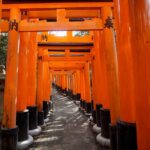
The route from Kodaiji Park to Nene-no-michi
You meet at Kodaiji Park and finish on Nene-no-michi in Shimokawara-cho. This is a useful arrangement for a day in Higashiyama because the activity does not return you to the starting point.
Plan your schedule with that endpoint in mind. Afterward, you will be along Nene-no-michi rather than back at Kodaiji Park. That can work well if you want to continue exploring the area, but it may be less convenient if you have arranged transportation or another appointment near the starting point.
The description says the temple is close to Kodaiji Park, but it does not give a precise walking distance or detailed route. You should arrive at the stated meeting point rather than trying to go directly to the temple. A mobile ticket is provided, and booking confirmation is received at the time of booking.
The activity lasts approximately one hour and 30 minutes. Allow a little extra time around the start if you are planning a tightly timed day, since the exact meeting procedure and walking details are not explained.
Is $98.83 a fair price?
At $98.83 per person, this is not a budget temple stop. You are paying for a small-group session, access to a normally private site, a monk-led introduction, meditation instruction, and matcha with snacks.
The value depends on what you want from Kyoto. If your goal is to see as many temples as possible, this price may feel high for 90 minutes. Public temples offer more visual sightseeing for less money, though they do not provide the same private access or guided meditation.
If you are interested in Zen, the price is easier to justify. The monk’s guidance gives the visit a purpose that you would not get from walking through a temple garden on your own. You also receive practical instruction, including posture advice, rather than only general comments about Japanese culture.
The nine-person cap improves the value. A larger group would make the private setting feel less personal, while a small group allows for a calmer session. Still, you should book this for the teaching and access, not for the snacks alone.
The perfect fit is someone who values a focused cultural activity and is happy to trade several hours of sightseeing for a quieter, more personal encounter. If you are undecided about meditation, this gives you a gentle way to try it without committing to a long retreat.
What the praise tells you about the experience
The strongest positive points are consistency, authenticity, and clarity. The monk is described as genuine and insightful, and the teaching is said to be well translated and educational.
That translation point matters. Meditation instructions can become vague when they pass through language barriers. Clear translation helps you understand both the practical steps and the larger ideas behind them.
The session also receives praise for being accessible. You do not need to be an experienced meditator, and you should not feel that you need to perform meditation in a certain way. The focus is on learning, trying, and paying attention.
The ceremony is another part of the appeal. The available comments describe it as beautiful, but no full ceremony schedule is given. Treat that as a cultural element of the experience rather than expecting a long formal ritual.
The overall tone is educational without being overly technical. That is a good match for a first introduction. You can leave with a better sense of how meditation works and why posture, attention, and stillness matter.
Who should book this Kyoto meditation session?
I would recommend it most strongly to:
- First-time meditators who want clear guidance
- People interested in Zen and Japanese culture
- Visitors looking for private or less-public temple access
- Couples and small groups who prefer a calm activity
- Anyone needing a quiet break from a full Higashiyama sightseeing day
- Repeat visitors who have already seen Kyoto’s major public temples
You may want to skip it if your schedule is packed with major landmarks and you dislike sitting quietly. The activity is not designed as a fast-paced tour, and its value comes from slowing down.
It may also be a poor match if you expect a full tea ceremony, a substantial meal, or a long religious retreat. The supplied details promise matcha and traditional snacks, but not a complete meal or an extended program.
The monk’s instruction is the main reason to go. The temple access adds atmosphere, and the refreshments provide a pleasant ending, but the core experience is learning how to approach Zen meditation in a private setting.
Booking, cancellation, and practical details
The experience costs $98.83 per person and accepts mobile tickets. Confirmation arrives when you book, which is useful if you are arranging several Kyoto activities close together.
Free cancellation is available if you cancel at least 24 hours before the start time. Cancellations made less than 24 hours in advance are not refunded, and changes within that period are not accepted. The cut-off is based on Kyoto local time.
Travel Japan Together provides the experience. The group maximum is nine people, and most people can participate. Since no detailed information is provided about seating, physical access, or special accommodations, contact the provider before booking if those points matter to you.
Meet at Kodaiji Park, then finish on Nene-no-michi. The temple is close to the meeting area, but the exact route is not specified. Bring your booking confirmation on your phone and plan your next stop from the Nene-no-michi endpoint.
Should you book it?
Book this experience if you want more than temple photographs. The private setting, monk-led instruction, small group, and practical posture advice create a focused introduction to Zen that is hard to reproduce with ordinary sightseeing.
The price is the main obstacle. At nearly $100 for 90 minutes, it is best for people who place real value on cultural access and guided learning. If that sounds like you, the chance to enter a normally closed temple and practice meditation with a monk makes the cost reasonable.
If you simply want a low-cost introduction to Kyoto’s temples, choose a public site instead. But if you want a calm, personal activity near Kodaiji Park, this is one of the more distinctive ways to spend part of a Higashiyama day.
FAQ
Where does the Kyoto Zen meditation experience begin?
It begins at Kodaiji Park, 463-28 Shimokawaracho, Higashiyama Ward, Kyoto, 605-0825, Japan.
Where does the experience finish?
The activity finishes on Nene-no-michi in Shimokawaracho, Higashiyama Ward, Kyoto.
How long does the meditation experience last?
The experience lasts approximately one hour and 30 minutes.
How many people can join the session?
The activity has a maximum of nine participants.
Is the temple open to the general public?
The temple visited during this experience is typically closed to the public.
What is included after the meditation?
You receive matcha tea and traditional snacks after the meditation session.
How much does the experience cost?
The listed price is $98.83 per person.
Can I cancel for a full refund?
Yes. You can cancel for a full refund up to 24 hours before the experience starts. Cancellations made less than 24 hours before the start time are not refunded.
More Private Tours in Kyoto
More Golden Pavilion & Temple Tours in Kyoto
More tours in Kyoto we've reviewed


Golden Pavilion & Temple Tours, compared.
 ★ 4.8Kyoto: Fushimi Inari, Kinkakuji, Bamboo Grove 1 Day Bus TourFrom $122510 minutes - 9 hours
 ★ 4.9Kyoto: Tea Ceremony in a Traditional Tea House in KiyomizuFrom $4945 min
 ★ 4.9Kyoto: Tea Ceremony Ju-An at Jotokuji TempleFrom $291h 10m
 ★ 4.1Osaka/Kyoto:Kinkakuji,Arashiyama,FushimiInariShrine,NaraParkFrom $66
 ★ 4.8Arashiyama Bamboo, Temple, Monkeys, or Secret Sake BreweryFrom $875 hours - 330 minutes
 ★ 5.0Kyoto: Nijo, Kinkaku-ji, Arashiyama, Kiyomizu & Fushimi InariFrom $51