
Reviewed · CYCLING TOURS
Kyoto: Higashiyama Slow Cycling Tour along the quiet waterfront
Kyoto’s best cycling can happen away from its famous lanes, along the Kamo River, the Lake Biwa Canal, and quiet streets near its temples. This four-hour tour uses compact BROMPTON bicycles and a local navigator to connect places that are hard to link on foot or by bus.
I like the relaxed pace and the small group size, capped at six people. I also like the route’s mix of waterways, shrines, industrial history, and gardens, rather than a simple parade of famous temples.
The main consideration is fitness. The route covers about 12 kilometers, and you should be comfortable riding a bicycle for several hours. The tour is called slow cycling, but it is still an active morning, and admission to Nanzen-ji and insurance cost extra.
In This Review
- Key points at a glance
- Why cycling works so well in Kyoto
- Starting beside the Kamo River
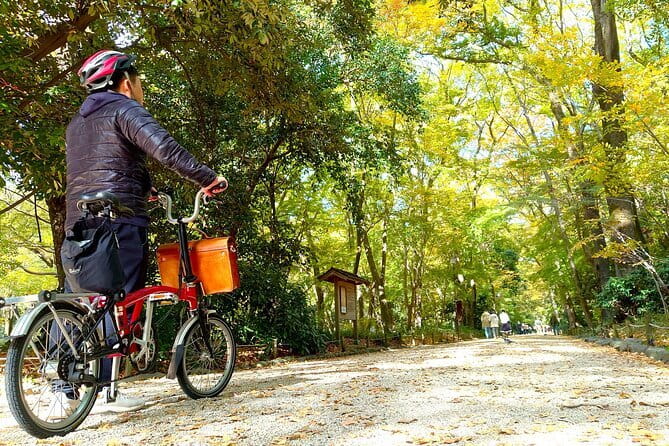
- Shimogamo Shrine and the Tadasunomori forest
- Following the Philosopher’s Walk
- Nanzen-ji, from the Sanmon Gate to the gardens
- The brick aqueduct at Nanzenji Suirokaku
- Keage Incline and the Lake Biwa Canal
- A final hour in Kyoto Gyoen National Garden
- What the $129 price covers
- A gentle ride, not a completely effortless one
- Lunch, snacks, and the flexible route
- Practical details before you book
- Who will enjoy this Kyoto cycling tour
- Should you book the BROMPTON slow cycling tour?
- FAQ
- Where does the Kyoto cycling tour begin?
- What time does the tour start?
- How long is the cycling experience?
- How far do you cycle?
- How many people can join the tour?
- Is bicycle equipment included?
- Is Nanzen-ji admission included?
- Is lunch included?
- What happens if the weather is poor?
Key points at a glance
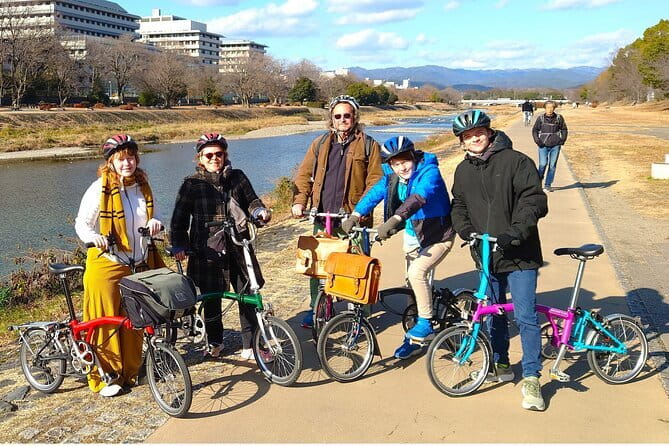
- Compact BROMPTON bicycles: Stylish folding bikes are provided, along with helmets and bags for wheeled transport.
- A 12-kilometer Kyoto route: Ride beside the Kamo River and Lake Biwa Canal, with several temple and garden stops.
- Small groups of up to six: The size allows the navigator to adjust the course to your interests.
- Quiet alternatives to crowded streets: The route favors waterfront paths, small lanes, and peaceful temple grounds.
- Lunch advice is available: Your navigator can suggest a restaurant or specialty shop based on your wishes.
- A 10 a.m. start at Demachiyanagi Station: The tour returns to the same meeting point after about four hours.
Why cycling works so well in Kyoto
Kyoto can be tiring to explore. Buses fill up, major streets carry steady traffic, and walking between districts takes time. A bicycle gives you another option: you can move between separated sights while still noticing the riverbanks, narrow lanes, and smaller corners of the city.
This is not a racing tour or a long-distance ride. The pace is deliberately gentle, and the route covers about 12 kilometers over roughly four hours. That leaves time to stop, listen, take photos, and look around instead of treating each temple as a quick checkpoint.
I especially like the focus on Kyoto as a city shaped by water. The Kamo River and Lake Biwa Canal are not just pleasant scenery. They help explain how the city developed, how people moved goods, and how modern Kyoto grew beyond its older temple districts.
The group limit matters here. With no more than six participants, the navigator can make the ride feel more personal and can arrange the course around your wishes. You should not expect a completely private tour, but this is much more flexible than a large bicycle group.
Other cycling tours in Kyoto
Starting beside the Kamo River
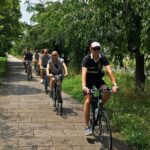
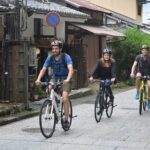
The tour begins at Demachiyanagi Station at 10 a.m. The meeting point is at 32-1 Tanaka Kamiyanagicho in Sakyo Ward, near public transportation. From there, the ride reaches the Kamo River, one of the easiest places in Kyoto to see daily life alongside nature.
You get about 15 minutes at the river. That may sound brief, but it is enough for an introduction to the city’s waterways and a few photographs before continuing. The open river corridor also gives you a calmer start than plunging straight into a crowded temple district.
The river is popular, so do not expect total solitude. The value comes from seeing how close the natural setting is to central Kyoto. On a bike, you can appreciate that connection without spending the morning on foot.
Shimogamo Shrine and the Tadasunomori forest
Next comes Shimogamo Shrine, with about 45 minutes to explore. This UNESCO World Heritage Site sits north of the Kamo River delta and is known for Tadasunomori, a forested area where filtered light and quiet paths create a marked change from the city around it.
This is one of the strongest stops for travelers who want a peaceful introduction to Kyoto’s religious culture. The forest gives the visit a slower rhythm, and the shrine grounds offer more than a quick photograph at a gate.
Your time is limited, so you will not have hours to inspect every feature. Still, 45 minutes is a useful amount for a guided stop, especially when the bicycle carries you onward instead of requiring a long walk back to a station.
The tour’s emphasis on lesser-used streets also matters here. The route is designed to reach places that can be awkward to connect by ordinary sightseeing transport. You get the shrine as part of a wider ride, not as an isolated outing.
Following the Philosopher’s Walk
The route then heads toward the Philosopher’s Walk, a footpath beside the Lake Biwa Canal at the foot of the Higashiyama area. The path takes its name from philosophers who walked here in contemplation.
You spend about 30 minutes in this section. The canal gives the ride a quiet visual thread, and the path is a natural place to slow down and take pictures. The experience is less about checking off a single monument and more about noticing the relationship between water, trees, stone paths, and nearby religious sites.
Because this is a footpath, you should follow the navigator’s instructions about when to ride and when to walk. The tour is called slow cycling for good reason, and respectful riding is important in a place shared with pedestrians.
The route may feel especially appealing if you have already seen Kyoto’s central shopping streets and want a softer change of pace. It is also useful for visitors who prefer scenery and atmosphere over a packed schedule of interiors.
Nanzen-ji, from the Sanmon Gate to the gardens
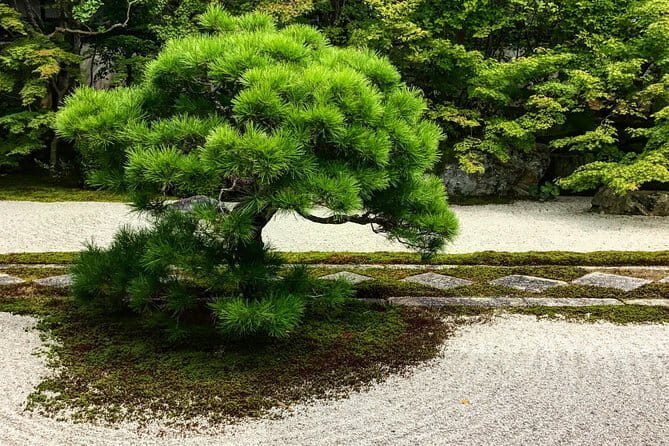
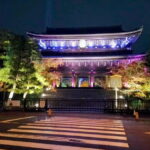
Nanzen-ji receives about 30 minutes. It is one of Japan’s most important Rinzai Zen temples, known for its garden and its large Sanmon Gate, which also appears in Kabuki plays.
This is the stop where admission costs extra, so budget for that separately. The tour includes the bicycle, navigator, riding equipment, and the listed outdoor stops, but Nanzen-ji entry is not included in the $129 price.
Thirty minutes gives you a focused look rather than a full study of the temple complex. I would see this as a useful orientation visit. If Nanzen-ji is high on your personal list, you may want to return later with more time, especially since the cycling tour moves on to the canal structure nearby.
The temple’s importance adds cultural depth to the morning. You are not only passing scenic water routes. You are also seeing how Kyoto’s religious institutions fit into the city’s wider setting.
The brick aqueduct at Nanzenji Suirokaku
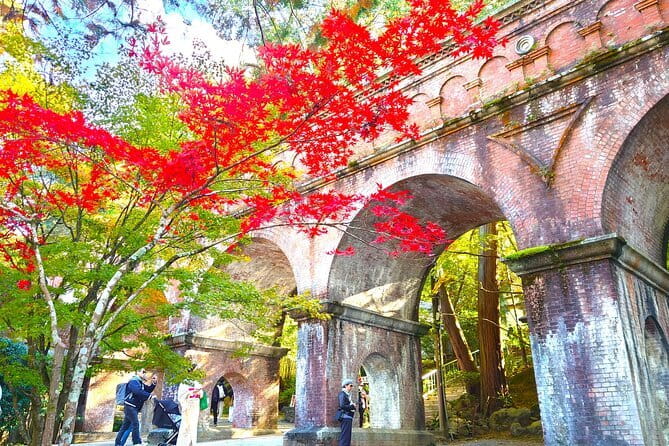
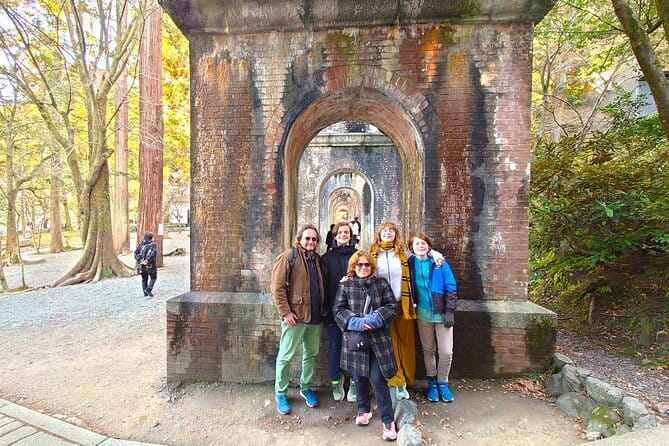
Within the Nanzen-ji grounds, the route reaches Nanzenji Suirokaku for about 30 minutes. This brick aqueduct carried water from the Lake Biwa Canal and played a role in Kyoto’s modernization during the Meiji period.
It is a striking change from the wooden gates, gardens, and traditional temple buildings nearby. The aqueduct shows a practical side of Kyoto’s past: water engineering helped the city develop, transport goods, and adapt to a modern era.
This stop is a strong reason to choose the tour over a standard temple visit. You see religious architecture and public infrastructure in one compact area. The contrast makes the city’s past easier to understand.
The aqueduct itself is free to visit according to the tour details. Its setting inside the Nanzen-ji precinct means you can connect the two stops without another long ride.
Keage Incline and the Lake Biwa Canal
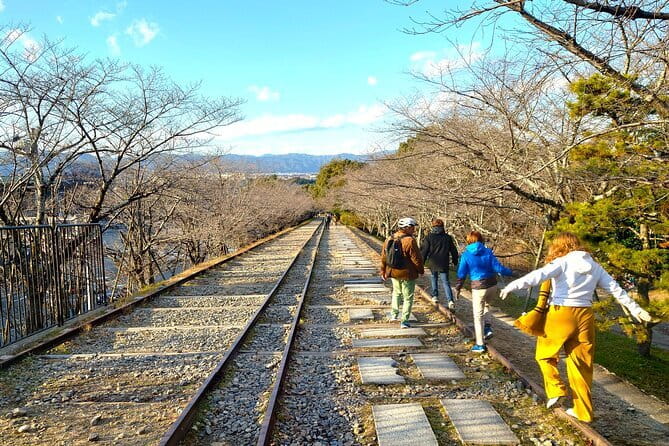
The next 30-minute stop is Keage Incline, a preserved incline railway connected to boat transport on the Lake Biwa Canal. It is now an industrial heritage site and a popular spot for cherry blossoms.
The incline gives you another way to read Kyoto’s water system. The canal was not simply decorative. It supported transport and helped change the city’s economic and physical shape. The preserved railway makes that story visible in a way that a museum display may not.
Season matters here. Cherry blossoms are an especially attractive feature, but the stop remains relevant outside blossom season because of its engineering history and canal setting. The tour information does not promise a particular seasonal view, so plan around the date of your visit rather than assuming peak flowers.
You get time to look around and photograph the area, but the tour keeps moving. If you enjoy industrial history, this may be a stop you wish had more time. If you prefer a broad overview, 30 minutes is enough to understand why the site matters.
A final hour in Kyoto Gyoen National Garden
The longest stop is Kyoto Gyoen National Garden, with about one hour. The garden surrounds the Kyoto Imperial Palace, which served as the emperor’s residence until the middle of the 19th century.
This is a fitting finish because it gives you room to slow down after the temples and canal sites. A garden visit also helps balance the morning: you have seen waterways, forest, religious buildings, and industrial structures, then end in a broad historic park.
The palace itself is an important part of Kyoto’s political story, but the tour details identify Kyoto Gyoen National Garden as the stop. Do not assume the schedule includes a full palace interior visit. The hour is better understood as time in the garden area and an introduction to the former imperial setting.
Cycling makes this stop practical. You can reach the garden without arranging a separate bus connection, and the same bicycle takes you back to Demachiyanagi Station when the activity ends.
What the $129 price covers
At $129 per person, this is not a cheap way to rent a bicycle for half a day. The value comes from the combination of equipment, route planning, and personal guidance.
The price includes:
- Bicycle rental
- Exclusive navigator service
- Helmet and other bicycle equipment
- Bags for wheeled transport
- The guided cycling experience
You do not need to bring riding equipment. That makes the tour easier for visitors arriving in Kyoto with ordinary sightseeing luggage and no cycling gear.
The route also connects several districts and types of sights that would take more planning to combine independently. You could visit many of these places on your own, but you would need to work out the safest and most efficient connections, manage the bicycle, and decide how much time to give each stop.
The price is easier to justify for a first visit, a short stay, or anyone who values local route knowledge. It is less attractive if you already know Kyoto well, own a bicycle, and prefer to set your own pace at every stop.
Group discounts are available, which may improve the value for a small party. The maximum group size is six, so the experience remains relatively compact even when booked by more than one party.
A gentle ride, not a completely effortless one
The tour is designed for people who are not confident about their physical fitness, but the activity still requires a moderate fitness level. You will ride about 12 kilometers, get on and off the bicycle repeatedly, and spend time moving through temple and garden areas.
The slow pace helps. The route includes several stops, and the point is not to cover distance quickly. Even so, you should be comfortable riding a bicycle and able to manage a half-day outdoor activity.
BROMPTON bikes are compact and distinctive. The tour provides the bicycle and equipment, so you avoid the hassle of arranging a rental on your own. The bikes also make for appealing photographs, especially if you enjoy travel pictures with a stylish piece of local transport.
The supplied information does not give bicycle sizes, child policies, or details about electric assistance. If any of those points matter to you, ask the operator before booking rather than assuming the standard bike will fit your needs.
Lunch, snacks, and the flexible route
Snacks are not included. The navigator can suggest restaurants for lunch according to your wishes, and the tour mentions specialty shops as another way to enjoy local food.
That flexibility is useful because food preferences vary widely. You can tell the navigator what kind of stop you want, then see what fits the route and timing. The tour does not promise a meal or tasting, so bring your own expectations accordingly.
The course can also be arranged around your wishes. That does not mean every stop can be replaced or that the entire route is private. It does mean the small group format may allow some discussion about interests, timing, and food.
If you care most about temples, say so. If waterways, photography, or local food matter more, mention that early. A four-hour ride cannot cover everything in Kyoto, but a flexible navigator can help the time fit your priorities.
Practical details before you book
The meeting point is Demachiyanagi Station, and the tour begins at 10 a.m. It ends back at the same meeting point. That makes it easy to plan another Kyoto activity afterward, though you should allow a little breathing room rather than booking a tight connection.
Confirmation is sent within 48 hours of booking, subject to availability. The activity requires good weather. If poor weather causes cancellation, you are offered another date or a full refund.
The insurance fee is 500 yen and is not included. Nanzen-ji admission is also extra, while the other listed stops have no admission charge.
Free cancellation is available up to 24 hours before the start time. If you cancel or request changes less than 24 hours ahead, you will not receive a refund or be able to make changes. The tour also requires a minimum number of participants, so a cancellation for that reason comes with the choice of another date, another experience, or a full refund.
Who will enjoy this Kyoto cycling tour
I would recommend this experience to you if you want to see Kyoto at street level but do not want an intense ride. It suits visitors who enjoy rivers, canals, gardens, shrines, and a mix of old and modern city history.
It is also a good fit if you have limited time and want one organized outing to connect northern Kyoto with Higashiyama-area sights. The navigator saves you from stitching the route together yourself.
You may want a different plan if your top priority is spending several hours inside one temple, shopping, or visiting every major landmark at length. The tour offers breadth and local route knowledge, not long museum-style visits.
I would also think carefully if you dislike riding in any form or need detailed information about bicycle fit, accessibility, or child participation. Those details are not provided, so ask before committing.
Should you book the BROMPTON slow cycling tour?
Book it if you want a calm, active morning that shows Kyoto through its water routes and quieter connections. The best parts are the small group, the flexible course, the easy pace, and the range of stops, from Shimogamo Shrine and Tadasunomori to the canal aqueduct and Keage Incline.
At $129, the tour is priced for guidance and convenience, not basic bicycle hire. Add 500 yen for insurance and extra money for Nanzen-ji admission, then decide if the route planning and equipment make the cost worthwhile for you.
For a first visit or a short Kyoto stay, I think the answer is often yes. You get a useful sense of how the city fits together, and you leave with more than a checklist of temples. You see Kyoto as a place shaped by water, movement, religion, gardens, and everyday streets.
FAQ
Where does the Kyoto cycling tour begin?
The tour begins at Demachiyanagi Station, at 32-1 Tanaka Kamiyanagicho, Sakyo Ward, Kyoto, 606-8205, Japan.
What time does the tour start?
The start time is 10 a.m.
How long is the cycling experience?
The tour lasts approximately four hours.
How far do you cycle?
The course covers approximately 12 kilometers.
How many people can join the tour?
The maximum group size is six travelers.
Is bicycle equipment included?
Yes. The bicycle rental, navigator fee, helmets, and bags for wheeled transport are included.
Is Nanzen-ji admission included?
No. Admission to Nanzen-ji is not included. The tour details list the other stops as free admission.
Is lunch included?
No. Snacks are not included. The navigator can suggest restaurants for lunch based on your wishes.
What happens if the weather is poor?
The tour requires good weather. If it is canceled because of poor weather, you are offered a different date or a full refund.
More Cycling Tours in Kyoto
More tours in Kyoto we've reviewed

Cycling Tours, compared.
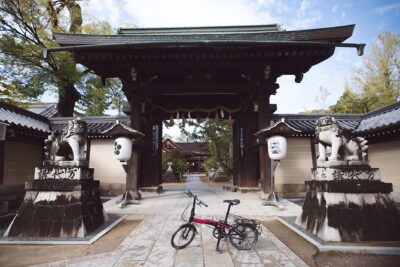 ★ 5.0Hidden Kyoto E-Biking tourFrom $116
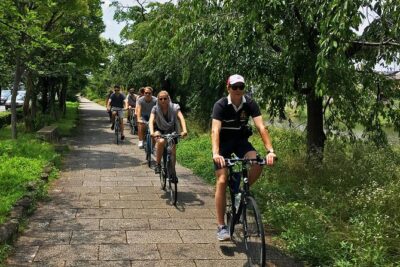 ★ 5.0Bike Tour Exploring North Kyoto plus LunchFrom $106
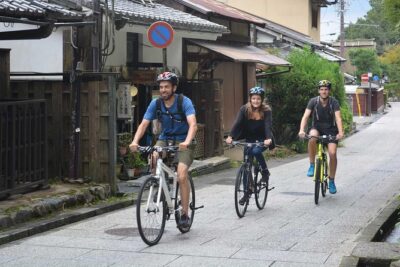 ★ 5.0Arashiyama Bamboo Forest & Hidden Gems Bike Tour (Early Bird)From $106
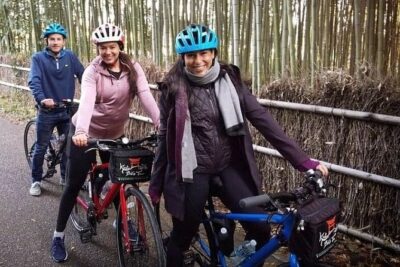 ★ 5.05 Top Highlights of Kyoto Full Day Bike Tour (E-bike option)From $172
 ★ 5.0Full Day Biking Tour Exploring the Best of KyotoFrom $119
 ★ 5.0E-Bike Tours of the highlights of Kyoto!!!From $109