
Reviewed · GION & GEISHA WALKS
Simple Plan with Maiko
A Maiko does more than pose for photos. She represents a living Kyoto tradition, and this 90-minute program lets you see her tea ceremony, watch two dances, ask direct questions, and join a playful game. I especially like the Q&A session, where you can ask about daily life, clothing, training, and customs. The photo opportunity and Senjafuda lucky charm also give you a personal keepsake rather than just a quick stage show.
The main catch is that this is the Simple Plan, not a hands-on tea ceremony. You watch the tea being prepared, but you do not make matcha yourself. Seating can also affect your view, and tea, snacks, and better seats cost extra, so read the options carefully before booking.
In This Review
- Key points at a glance
- Meeting a Maiko near Gojo Station
- What the 90-minute schedule feels like
- The tea ceremony demonstration, not a tea-making lesson
- The Q&A is the most useful part
- Two dances that reward close attention
- A photo, a Senjafuda, and a useful keepsake
- The game brings the room to life
- Is 38 USD good value?
- Who should book this experience?
- Practical timing and cancellation advice
- My verdict: an affordable introduction with clear limits
- FAQ
- Where is the Maiko experience held?
- How long does the activity last?
- Is this held in a traditional Japanese tea house?
- Can I make matcha during the Simple Plan?
- Is English available?
- Are snacks and drinks included?
- Can children under two attend for free?
Key points at a glance
- Direct questions for a Maiko: Ask about her life and customs through the Japanese-speaking host, with English translation provided as much as possible.
- Tea ceremony demonstration: Watch the formal movements without making your own matcha.
- Two traditional dances: See elegant performances linked to seasons, love stories, or daily life.
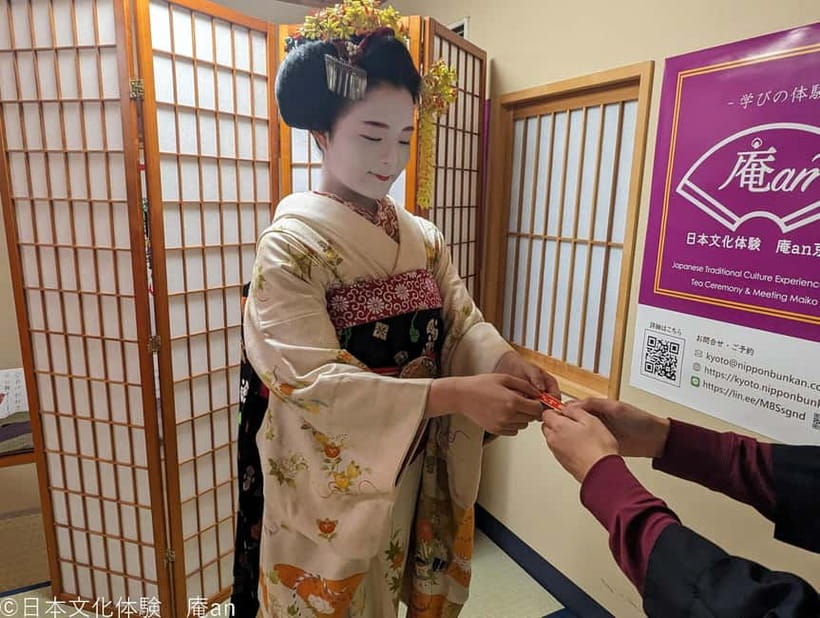
- Photo and Senjafuda: Take a picture beside the Maiko and receive a paper lucky charm.
- Friendly group game: Volunteers can play while everyone else claps and cheers.
- Easy Gojo access: The venue is a one-minute walk from Exit 1 of Gojo Station.
Meeting a Maiko near Gojo Station
This experience takes place in a building one minute from Exit 1 of Kyoto’s Subway Karasuma Line Gojo Station. The entrance faces Gojo-dori, a useful detail because you do not need to search through a maze of side streets.
The venue is not an ochaya, the traditional teahouse setting associated with Geiko and Maiko culture. It is a room in a modern building with a relaxed atmosphere and friendly staff. That makes the program less atmospheric than a private traditional house, but it also makes the experience less formal and easier for first-time visitors.
You do not need special preparation. Arrive ready to watch, listen, ask questions, and possibly volunteer for a game. The program is conducted in Japanese, with English translation provided as much as possible. If you need English support, contact the operator in advance rather than assuming every exchange will be translated word for word.
There is no elevator, and you need to use stairs to reach the venue. The activity is listed as wheelchair accessible, but the stair information is important. If you use a wheelchair or have difficulty with stairs, contact the provider before reserving so you can confirm the practical arrangements.
A few more Kyoto tours and experiences worth a look


What the 90-minute schedule feels like
The program follows a clear sequence:
- Greeting from the Maiko
- Tea ceremony demonstration
- Question and answer session
- Photo with the Maiko
- Senjafuda present
- Two-dance performance
- Interactive game
- Departure of the Maiko
- Informal chatting time
The Maiko leaves at about the 75-minute mark, followed by roughly 15 minutes of chatting before you depart the room. That final timing matters. The main performance is not stretched into a long evening, so you can fit this activity neatly between sightseeing plans.
The experience may sometimes feature a Geiko instead of a Maiko. The two roles are related but not identical, so check the specific program details if seeing a Maiko is essential to your plans.
The tea ceremony demonstration, not a tea-making lesson
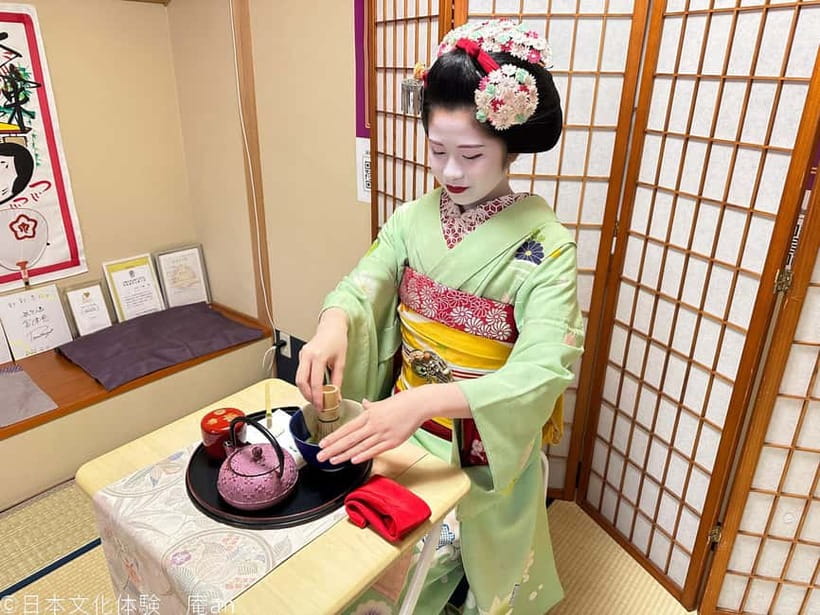
The tea portion gives you a chance to watch the Maiko’s controlled movements and formal etiquette. You see how a traditional ceremony is presented, with attention to gestures, pace, and manners.
Be clear about what you are booking. The Simple Plan does not include making matcha yourself. If you want to prepare your own tea, you need the separate Tea Ceremony with Maiko Premium program.
That distinction caused some confusion for visitors expecting a hands-on activity. I would choose this plan if your main interest is meeting the Maiko, asking questions, and watching a short cultural presentation. If tea preparation is the central reason you are booking, choose the premium option instead.
A snack and drink option costs 500 JPY. Nothing in the basic price promises a tea or sweet, so you should add this option if having refreshments is important to you. At the base price, the focus is the cultural program, not a tea-house meal.
The Q&A is the most useful part
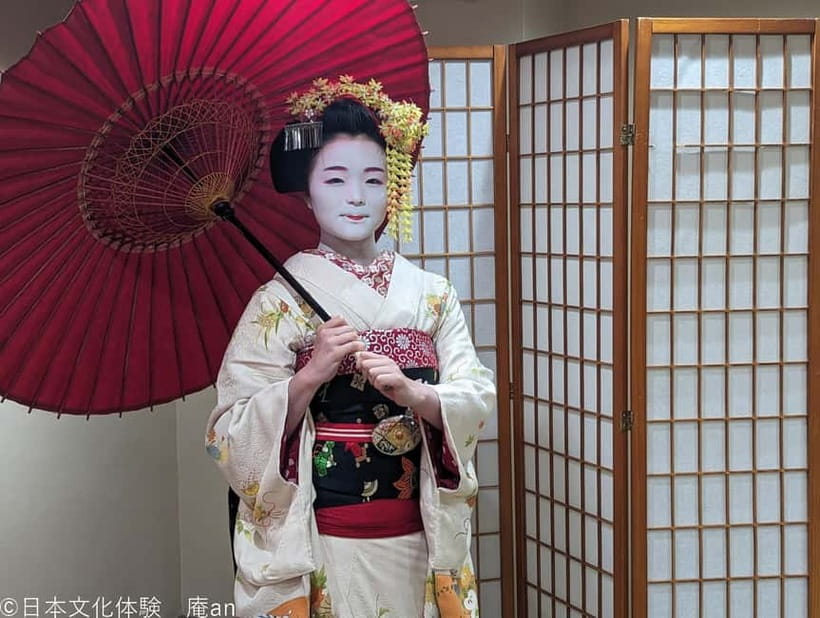
The question session gives this activity more substance than a simple dance performance. You can ask the Maiko directly about her daily routine, traditional clothing, elaborate hairstyle, work, and the discipline behind this lifestyle.
The host helps keep the exchange moving and works to include everyone. Since the instructor language is Japanese, English support depends on the translation provided during the program. Prepare a few short questions in advance, especially if there is something specific you want to understand.
I would not waste this part by asking only general questions. Ask about the differences between Maiko and Geiko, how long traditional preparations take, what a typical day involves, or which parts of the lifestyle are hardest. The exact answers will depend on the Maiko present, but direct questions are what make the program feel personal.
For many visitors, this is the strongest reason to choose the Simple Plan. You are not only watching someone in an ornate kimono. You are learning how a traditional role continues in modern Kyoto.
Two dances that reward close attention
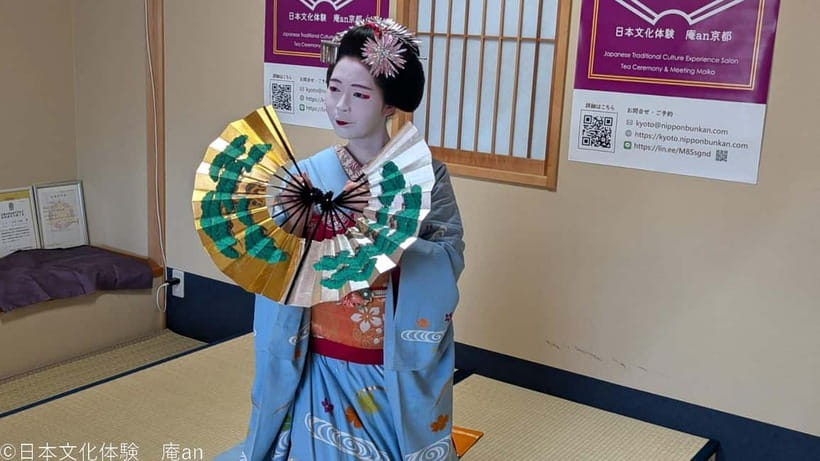
The Maiko performs two traditional dances. The themes may relate to Japan’s seasons, love stories, or ordinary life, and the appeal is in the small details: posture, hand movements, controlled steps, and the way the fan or costume may be used.
This is not a large theatrical production. It is a close cultural presentation, and the room arrangement matters. Tables covered with red cloth can interfere with the sightline, especially for people seated toward the back. If you care strongly about seeing footwork and costume details, consider paying for a better seat.
Seat upgrades cost:
- SS seat, first row: 3,300 JPY
- S2 seat, second row: 2,200 JPY
- S3 seat, third row: 1,100 JPY
These fees are on top of the 38 USD base price. The upgrade may be worthwhile if the dance is your main reason for attending, but it changes the value calculation. The Simple Plan is affordable at its basic rate. Once you add refreshments and a premium seat, compare the total with the Maiko Premium program.
The room is informal, which helps the atmosphere feel friendly, but it does not offer the polished viewing conditions of a dedicated theater. Try to arrive with realistic expectations. You are getting close access and interaction, not a grand stage production.

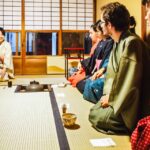

A photo, a Senjafuda, and a useful keepsake
You have a chance to take a commemorative photo beside the Maiko. This is more personal than photographing a performer from a distance, though the exact timing and arrangement depend on the session.
You also receive a Senjafuda, a small paper charm traditionally associated with names and good fortune. It is a modest gift, but it gives the experience a physical reminder beyond the photograph.
If you are traveling with family or friends, decide in advance who will take the picture. The information provided confirms the photo opportunity, but it does not promise a particular number of photos or a special photography service.
The game brings the room to life
After the dance, the Maiko leads a simple interactive game. Volunteers can join, while everyone else claps and cheers. You do not need to be outgoing to enjoy this part, but someone willing to step forward will get the most direct participation.
The game is designed as entertainment rather than a serious cultural lesson. That change of pace helps prevent the 90 minutes from feeling like a lecture. It also gives you a glimpse of the social side of Maiko hospitality, where play and audience participation are part of the welcome.
If you are shy, you can watch. Still, if you want the fullest experience, volunteer early. Waiting to see how the game works may mean that someone else takes the available place.
Is 38 USD good value?
At 38 USD per person, the Simple Plan is a reasonable way to meet a Maiko without paying for a full premium tea ceremony. You receive a demonstration, Q&A, two dances, a photo, a Senjafuda, and a game within 90 minutes.
The value depends on what you want. For direct access and cultural explanation, the price works well. The Q&A is the part that makes the fee feel justified, since it gives you information you cannot get from simply watching a performance in the Gion streets.
The basic price does not include snacks or drinks. A 500 JPY refreshment option is available, and paid seating can add 1,100 to 3,300 JPY. The least expensive ticket is therefore the clearest value. Extras make sense for specific reasons, such as needing a better view or wanting a small refreshment, but they are not minor if you are watching your total budget.
I would also compare this plan with the Tea Ceremony with Maiko Premium option before booking. Choose Simple if you want an introduction and conversation. Choose Premium if preparing matcha yourself is essential.
Who should book this experience?
I would recommend it to first-time visitors who want a clear introduction to Maiko culture without committing to an expensive formal evening. It suits adults, families with older children, and anyone who values conversation as much as performance.
It is also a good choice if you have already taken a tea ceremony and do not need another hands-on lesson. The Simple Plan puts more weight on the Maiko’s life, dance, photo, and game.
You may want a different program if you expect:
- A traditional ochaya or old Japanese house
- A full meal
- Matcha preparation by every participant
- Guaranteed front-row seating
- A long, formal performance
- Constant professional English interpretation
Children under two can attend free when sitting on a parent’s lap. If a separate seat or meal is required, the regular fee applies. Anyone who is not taking part in the activity cannot enter, so do not book a place only for an accompanying spectator.
Practical timing and cancellation advice
The activity runs during operating hours from 10:00 to 17:00, with starting times based on availability. Reservations received after 17:00 are processed the next day.
You can cancel up to eight days in advance for a full refund. After that point, a cancellation fee applies, and changing the date or time after a fee has been incurred can create another specified charge. The operator does not cover transport costs if you cancel, so check your plans before reserving.
Plan to reach the Gojo venue with enough time to find the main-street entrance and climb the stairs. Since the activity begins with a greeting and follows a fixed sequence, arriving late could mean missing the opening context.
My verdict: an affordable introduction with clear limits
Book the Simple Plan with Maiko if you want direct conversation, close viewing, and a short cultural program near a subway station. The Q&A, photo, Senjafuda, and game give it more range than a performance alone.
Skip it if your main goal is to make matcha, sit in a traditional house, or enjoy a full tea-and-sweets service. Also think twice about the basic ticket if a clear view of the dance matters greatly, since seating and red-covered tables can affect what you see.
For the right visitor, this is a friendly and reasonably priced way to understand why Maiko culture still matters in Kyoto. Go in knowing exactly what is included, prepare a few questions, and consider a seat upgrade only if the dance is your top priority.
FAQ
Where is the Maiko experience held?
It is held near Gojo Station in Kyoto, one minute from Exit 1 of the Subway Karasuma Line. The entrance faces Gojo-dori.
How long does the activity last?
The full experience lasts 90 minutes. The Maiko leaves after about 75 minutes, followed by chatting time before you depart.
Is this held in a traditional Japanese tea house?
No. The venue is in a building rather than an ochaya or traditional Japanese house. It has a relaxed atmosphere and friendly staff.
Can I make matcha during the Simple Plan?
No. The Simple Plan includes a tea ceremony demonstration, but not hands-on tea preparation. Choose the Tea Ceremony with Maiko Premium program if you want to make your own tea.
Is English available?
The instructor language is Japanese. English translation is provided as much as possible, and you can contact the operator in advance if you would like English support.
Are snacks and drinks included?
No. A snack and drink option is available for 500 JPY, but it is not included in the base price.
Can children under two attend for free?
Yes. Children under two are free when sitting on a parent’s lap. If a separate seat or meal is needed, the same fee as one person applies.
More Gion & Geisha Walks in Kyoto

More tours in Kyoto we've reviewed






Gion & Geisha Walks, compared.
 ★ 4.7Kyoto Geisha Walking Tour: Gion District & Hidden GemsFrom $252 hours
 ★ 4.7Kyoto: Gion Geisha District Walking Tour – Stories of GeishaFrom $202 hours
 ★ 4.9Best of Kyoto: Gion, Geisha, Pagodas & CobblestonesFrom $242 hours
 ★ 4.5Night Walk in Gion: Kyoto’s Geisha DistrictFrom $211h 40m
 ★ 5.0Kyoto Night Foodie Tour in Gion (9+ dishes + 6 Sake tastings)From $163
 ★ 5.0Kyoto Gion Geisha District Walking Tour – The Stories of GeishaFrom $25