
Reviewed · SHOW
Show Tickets at Non-Verbal Theatre GEAR
Kyoto’s GEAR is a 90-minute wordless stage show where mime, breakdancing, juggling, magic, lighting, and digital effects tell one connected story. It gives you something to do after the temples close, and its lack of dialogue makes the performance easy to follow across language barriers.
I like the close-up setting, where a small theatre puts you near the action, and I like the mix of old and new techniques, from Kabuki-inspired stage effects to projection mapping and remote-controlled LED costumes. The main caution is sensory intensity: strong light, loud sound, and a fully dark scene may not suit everyone.
In This Review
- Key points at a glance
- A different kind of Kyoto evening
- Inside the small GEAR Theatre
- A story told through movement, not speech
- Five performers, five kinds of stage skill
- Projection mapping, LED costumes, and bold color
- Why the 90-minute length works
- The ¥7,000 range price and what you receive
- Who will enjoy GEAR most
- Practical details before you book
- How GEAR compares with traditional Kyoto shows
- Is GEAR worth booking?
- FAQ
- Where is GEAR Theatre located?
- How long does the performance last?
- Is GEAR performed without spoken language?
- What skills are featured in the show?
- Does the show use special effects?
- Are children under four allowed to attend?
- Can young primary-school children attend alone?
- Is the theatre accessible by elevator?
- Could the lighting and sound be difficult for sensitive viewers?
- Can I cancel for a full refund?
Key points at a glance
- Five disciplines in one show: Expect mime, breakdancing, juggling, magic, and theatrical movement.
- No spoken dialogue: The story works without Japanese or English, making it simple to follow.
- Small black-box theatre: Every seat offers a relatively close view of the performers and effects.
- A useful evening plan: The show fills about an hour and a half after Kyoto’s temples and shrines close.
- Modern effects with Japanese influence: Projection mapping, LED costumes, and Kabuki-related techniques share the stage.
- Important age and access rules: Children under four are usually not admitted, and the theatre requires stairs to the third or fourth floor.
A different kind of Kyoto evening
Many Kyoto plans revolve around temples, shrines, gardens, and food. Those are good reasons to visit, but much of the traditional sightseeing day winds down in the evening. GEAR gives you a lively alternative without requiring Japanese language skills or a long trip outside the city center.
The show is set in the future and follows a moving story through physical acting rather than speech. You do not need to understand a script or keep up with subtitles. Instead, the performers communicate through gesture, facial expression, rhythm, comedy, and visual changes on stage.
That makes GEAR especially useful if your Kyoto schedule already contains plenty of temples. It is not a traditional Japanese performance in the usual sense, but it connects Japanese theatrical ideas with circus skills, contemporary dance, technology, and visual storytelling.
The production has earned a 4.9 rating from 133 ratings, with 98 percent recommending it. That high score fits the show’s broad appeal, although the style is quite specific: you need to enjoy physical theatre, visual effects, and a story told in an unusual way.
A few more Kyoto tours and experiences worth a look

Inside the small GEAR Theatre
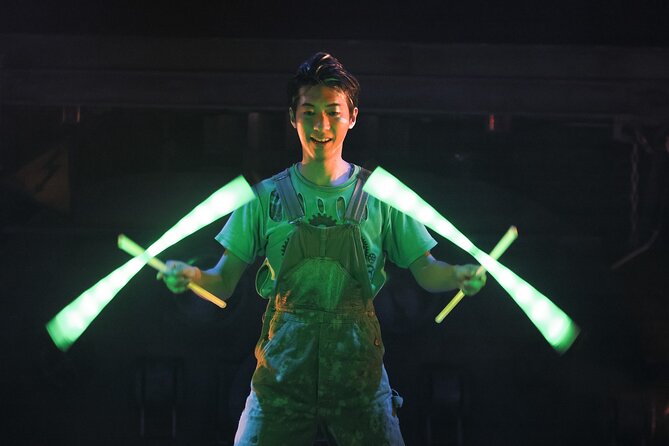
GEAR Theatre is located at 56 Benkeiishicho in Nakagyo Ward, at 1928 Building, on the third floor. The theatre is described as a small black-box space, which changes the feel of the performance.
You are not watching a distant spectacle from the back of a large auditorium. The compact room puts you close to the performers, and the stage action moves quickly. The setting helps the comic gestures and small changes in expression land clearly.
The small size also means that seat location matters less than it might at a major concert hall. The available information describes the theatre as intimate enough that close seats are not essential for a good view. Still, you should check your assigned seating and arrive with enough time to settle in without rushing up the stairs.
The building does not have an elevator. You must use stairs to reach the third or fourth floor, depending on the arrangement. If you use a walking cane or have difficulty with stairs, contact the GEAR ticket office before booking.
A story told through movement, not speech
The central idea is that different kinds of people and skills can connect, much like gears of different sizes, shapes, and colors working together. The performers build this idea through action rather than explaining it with words.
That choice is more than a marketing detail. A spoken play can lose some of its force when you are hearing an unfamiliar language through an interpreter or reading subtitles instead of watching the stage. GEAR removes that barrier. You can concentrate on the movement, timing, music, sound, and visual design.
The story is set in the future, but the emotional beats are direct and easy to recognize. The performance uses humor, surprise, beauty, and moments of tenderness. One of its strengths is its ability to move from a comic bit to a more touching scene without needing a spoken explanation.
I would not expect a complicated plot with detailed character development. This is physical theatre first. The story gives the acts a shared purpose, while the performers’ skills provide the main attraction.
Five performers, five kinds of stage skill
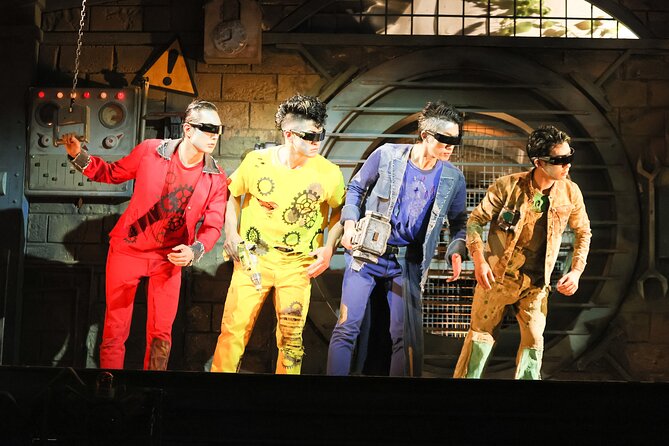
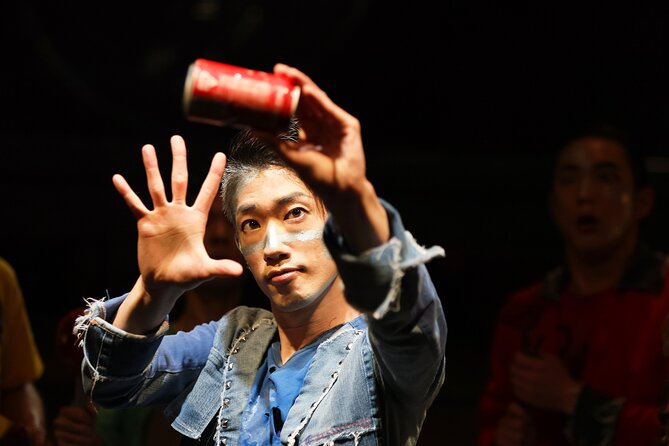
The cast combines several specialist disciplines. The production features a world-class championship break dancer, a mime performer who won gold at a world tournament, a Japanese record-holding juggler, and a magician known through various media. The exact cast can vary, so your performance may not feature the same individual in every role.
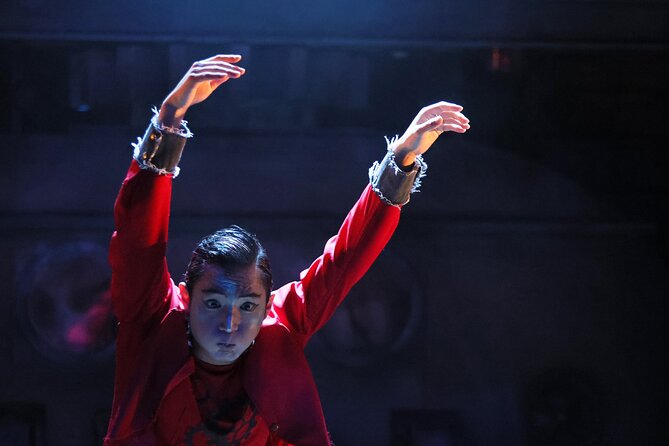
The range keeps the 90 minutes moving. Breakdancing brings speed and athletic force. Mime supplies the clearest emotional storytelling. Juggling adds precision and suspense, while magic introduces surprise and playful misdirection.
The show also uses comic timing. You are not expected to sit through a serious art piece with no laughs. The humor is physical and visual, which helps children and adults respond at the same time.
The cast of five creates a useful balance. Each performer can show a particular talent, but the acts remain connected to the larger story rather than feeling like unrelated demonstrations. If you enjoy seeing the mechanics of a performance, you will have plenty to watch in the performers’ timing and control.
Projection mapping, LED costumes, and bold color
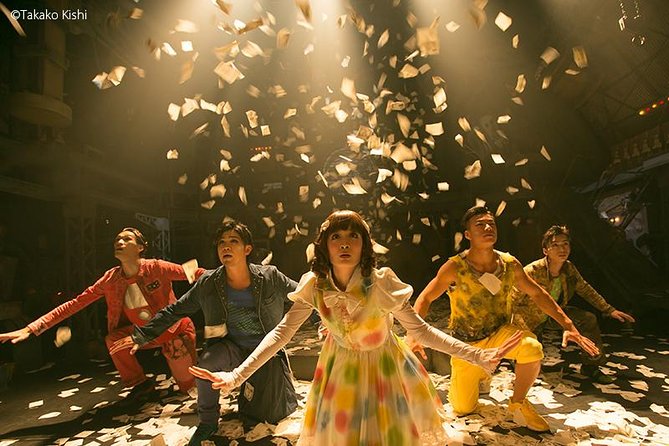
GEAR’s set and costume design are a major part of the experience. Projection mapping changes the stage environment with digital images, while LED costumes can change color by remote control.
These effects give the production a modern look, but they are not the whole point. The technology works alongside the human performers, creating moments where physical movement and digital design respond to each other. That relationship supports the show’s central idea of separate parts working together.
The lighting is bold, and the sound design helps create the mood. You may find the effects delightful, but they can also feel intense. Strong light and loud sound are used as part of the staging. There is also a scene of complete darkness.
If you are sensitive to flashing or powerful lights, loud audio, or enclosed dark spaces, consider that carefully before booking. The darkness is limited to part of the performance, but the warning matters if dark rooms cause serious anxiety.
A few more Kyoto tours and experiences worth a look

Why the 90-minute length works
The advertised duration is about one hour and 30 minutes. That is long enough to feel like a proper theatre outing, but short enough to fit into a Kyoto evening without taking over your day.
The performance moves quickly, with little sense of waiting between acts. That pace suits the format. Juggling, mime, dance, magic, and visual effects each bring a new kind of energy, so the show does not depend on dialogue-heavy scenes.
A 90-minute performance also works well after dinner or between other evening plans, provided your schedule allows time to reach the theatre and climb the stairs. Because exact performance times are not provided here, check the selected show time carefully when booking.
GEAR can be a good reset after a long day of sightseeing. You get to sit down, but the production remains active and visually busy. It is not a quiet or restful concert.
The ¥7,000 range price and what you receive
The listed price is $47.57 per person. That is not a cheap add-on, especially if you are buying several tickets for a family. The value depends on how much you enjoy live performance and whether you want a planned evening attraction rather than another restaurant or casual walk.
For that price, you receive a full 90-minute theatre performance in a purpose-designed venue. The show combines several specialist acts with digital staging, sound, lighting, and costumes. It is also a rare Kyoto activity that does not depend on spoken language.
I consider the price reasonable for a dedicated theatrical experience, especially if you have already seen several temples and want a change of pace. It is less convincing if you are mainly looking for a traditional Japanese art form or if you are unsure about mime and stage spectacle.
The high rating, 4.9 from 133 ratings, suggests that the production delivers well for people who choose it with the right expectations. Go for the combination of skill, humor, and design, not because you expect a conventional play.
Who will enjoy GEAR most
I would recommend this show to:
- Couples wanting an entertaining evening activity
- Families with children old enough to meet the theatre rules
- Adults who enjoy circus arts, dance, mime, or visual theatre
- People who do not speak Japanese and want a performance without language barriers
- Repeat visitors who have already covered many of Kyoto’s major temples
- Anyone curious about modern Japanese entertainment rather than only traditional sights
The show has broad age appeal, but that does not mean every child can attend. Children under four are not admitted for security reasons, except at matinee performances on the first and third Saturday of each month, when children of any age are welcomed.
For younger primary-school children, an adult must accompany them. The rule allows up to two children per adult. If you plan to bring a preschool-aged child, contact the GEAR ticket office before the visit so seating can be arranged properly.
Practical details before you book
The theatre is near public transportation in Kyoto’s Nakagyo Ward. The ticket redemption point is GEAR, Non-Verbal Theatre, at 1928 Building, third floor, 56 Benkeiishicho, postal code 604-8082.
Allow extra time for the building entrance and stairs. The venue is not elevator-accessible, and some people may need to climb to the fourth floor. If you have mobility concerns, ask the ticket office before making a reservation rather than discovering the problem at arrival.
Most people can take part because this is a seated theatre performance rather than a physically demanding activity. The main practical concerns are stairs, age restrictions, sensory effects, and darkness.
Confirmation is sent within 48 hours of booking, subject to availability. The activity is limited to a maximum of 10 travelers in the booking information, though the theatre itself is a larger performance space. Free cancellation is available up to 24 hours before the start time for a full refund. Within 24 hours, refunds are not provided, and changes are not accepted.
The booking information also says the experience requires good weather. If poor weather causes cancellation, you are offered another date or a full refund.
How GEAR compares with traditional Kyoto shows
GEAR is not a tea ceremony, kabuki performance, geisha arts presentation, or folk music concert. You will not get a spoken introduction to Japanese history or a lesson in traditional customs.
Its Japanese character comes through in the production’s blend of old and new. Stage effects associated with Kabuki are used alongside projection mapping, LED clothing, magic, juggling, and contemporary physical performance.
That blend may be the best reason to choose it. You see a modern show shaped for an international audience, but it still reflects Japan’s long interest in precise movement, visual transformation, costume, and theatrical illusion.
If your schedule has room for only one cultural performance in Kyoto, decide what you want to learn or feel. Choose another format if you want historical context or traditional music. Choose GEAR if you want a playful, visually driven production that can be understood without translation.
Is GEAR worth booking?
I would book GEAR if you want a lively evening break from temples, especially if your group includes people with different language backgrounds. The performers’ mix of breakdancing, mime, juggling, magic, and physical comedy gives everyone something to follow, while the projection mapping and LED costumes add a distinctly modern finish.
Think twice if you dislike loud sound, powerful lighting, complete darkness, stairs, or theatre built around visual spectacle. The price is fair for a polished 90-minute performance, but it is not the right purchase for someone seeking a quiet or strictly traditional Japanese experience.
For most visitors who want something unusual and easy to understand, GEAR is a strong Kyoto night out. Book it with the sensory notes and child-entry rules in mind, and you will know exactly what kind of show you are choosing.
FAQ
Where is GEAR Theatre located?
GEAR Theatre is at 1928 Building, third floor, 56 Benkeiishicho, Nakagyo Ward, Kyoto, Japan, postal code 604-8082.
How long does the performance last?
The performance lasts approximately one hour and 30 minutes.
Is GEAR performed without spoken language?
Yes. GEAR is a non-verbal theatre performance, so the performers do not rely on spoken Japanese or English to tell the story.
What skills are featured in the show?
The production features mime, breakdancing, juggling, magic, and other professional performance skills.
Does the show use special effects?
Yes. The production uses projection mapping, strong lighting, sound effects, and LED costumes that can change color by remote control.
Are children under four allowed to attend?
Children under four are not normally admitted for security reasons. Children of any age are welcomed at the matinee on the first and third Saturday of each month.
Can young primary-school children attend alone?
No. Lower primary-school children must be accompanied by an adult, with up to two children per adult.
Is the theatre accessible by elevator?
No. There is no elevator, and you must use stairs to reach the third or fourth floor. People who use a walking cane should contact the GEAR ticket office before booking.
Could the lighting and sound be difficult for sensitive viewers?
Yes. Strong light and loud sound are part of the show. There is also a scene of complete darkness, so the performance may not suit people who are highly sensitive to these effects or very anxious in dark spaces.
Can I cancel for a full refund?
You can cancel at least 24 hours before the start time for a full refund. Cancellations or changes made within 24 hours are not accepted for a refund. If poor weather causes the experience to be canceled, you are offered another date or a full refund.
More Shows & Entertainment in Kyoto
More Tickets in Kyoto
More tours in Kyoto we've reviewed




Show, compared.
 ★ 5.0Kyoto Gion Cultural Walk & Geisha Show with Dining OptionsFrom $121
 ★ 5.01 Hour Geisha Show in KyotoFrom $79
 ★ 4.5Kyoto: Samurai Kenbu Traditional Sword Dancing ShowFrom $321 hour
 ★ 5.0Kyoto: Gion Cultural Walk with Geisha ShowFrom $110
 ★ 4.8Kyoto: Meet-and-Greet, Maiko Show and ExperienceFrom $4445 min
 ★ 4.9Kyoto: Non-Verbal Theatre Show Tickets at GEARFrom $49