
Reviewed · SAMURAI & KENDO EXPERIENCES
Kyoto Sword Experience – includes Museum Ticket/Ninja Experience
The sharpest part of this Kyoto experience is also the part that needs the clearest explanation: you do not use a real sword. Current sessions use a blunt replica in line with Japanese law, with an instructor showing you basic iaido movements in a traditional dojo setting. You also dress in hakama, try ninja-star throwing, and receive museum admission.
I like the mix of hands-on activity and history. Putting on the hakama makes the lesson feel more than a standard museum stop, while the museum tour gives context to the sword, armor, and ninja displays. Multiple start times are useful in a busy Kyoto schedule, and the central location is easy to reach by public transportation.
The main concern is organization. The experience is advertised at about two hours, but the quality can depend on group size and timing. Older sessions became crowded and rushed, and the published capacity information is inconsistent, so I would confirm the current group limit before paying.
In This Review
- Quick facts for deciding
- What the two-hour Kyoto sword experience really is
- Hakama first, then a lesson in iaido basics
- Sword practice without the sharp-blade confusion
- Ninja stars, armor photos, and the lighter side of the visit
- The Samurai Ninja Museum adds useful context
- How long it feels in practice
- Group size can decide the quality
- Who will get the most from this experience
- Location, ticket rules, and cancellation
- Is $83.91 a fair price?
- Should you book the Kyoto Sword Experience?
- FAQ
- Where does the Kyoto Sword Experience begin?
- Where does the activity finish?
- How long does the experience last?
- Is museum admission included?
- Do I use a real sword?
- Can I cut a tatami mat?
- Is ninja-star throwing included?
- Can children join?
- Is transportation included?
- Can I cancel for a full refund?
Quick facts for deciding
- A blunt replica sword is used: This is a safe introductory activity, not a live-blade cutting class.
- Samurai clothing is part of the fun: You put on traditional hakama before the basic sword lesson and photo time.
- The museum ticket is included: You can tour the Samurai Ninja Museum after the practical session.
- Ninja stars add variety: The activity includes a chance to try throwing a ninja star.
- The meeting point is central Kyoto: Start at SAMURAI NINJA MUSEUM Kyoto, 109 Horinouechō, Nakagyo Ward.
- Children under seven cannot enter the dojo: Children must also be accompanied by an adult.
What the two-hour Kyoto sword experience really is
Think of this as a cultural activity with costume, instruction, photos, and a museum visit. It is not formal martial-arts training, and it is not a traditional tameshigiri class involving a live katana or a sharp blade.
That distinction matters. Some older descriptions and accounts refer to real-sword handling or cutting a tatami mat, but the current update is direct: Japanese law now prohibits facilitating or selling activities involving use of a real sword, and this experience uses a blunt replica instead. Book it for the ceremony, the basic movements, and the setting, not for sword cutting.
The session takes place through the Samurai Ninja Museum experience in central Kyoto. You begin at the listed meeting point, and the activity finishes there. Transportation to and from the venue is not included, but the location is near public transportation.
At roughly $83.91 per person, the price is not pocket change. Still, you are paying for several connected parts: instruction, costume use, the ninja-star activity, museum admission, a history tour, and the convenience of one booking with several start times. The value is strongest if you want a family-friendly cultural activity and would otherwise pay separately for a museum and a themed workshop.
If your main goal is serious sword practice, the value is weaker. The lesson covers basic stance and movement, and the practical time can feel short when several people share the instructor and equipment.
A few more Kyoto tours and experiences worth a look
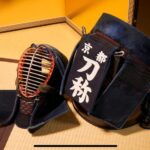

Hakama first, then a lesson in iaido basics
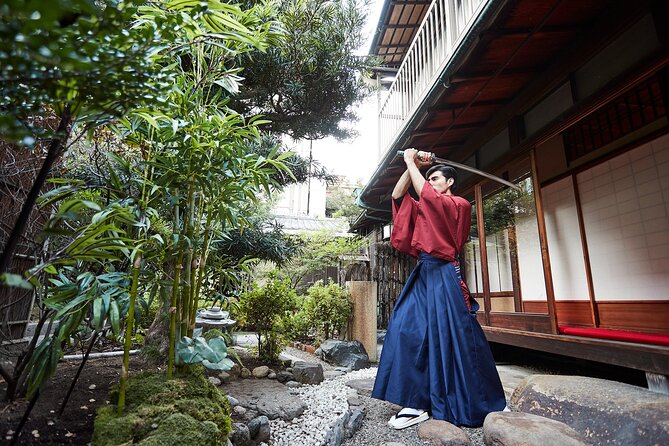
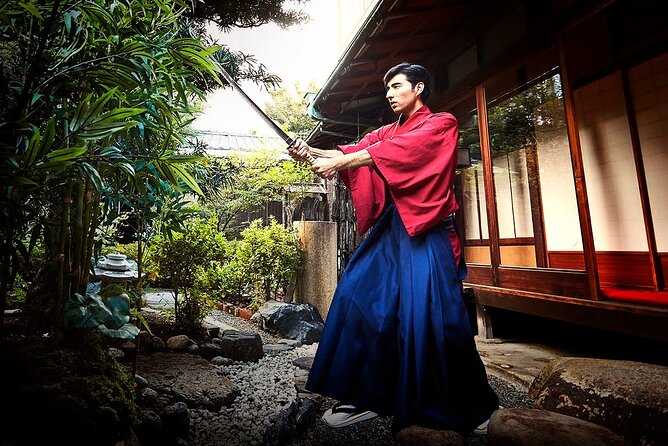
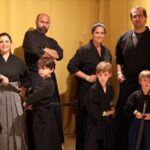
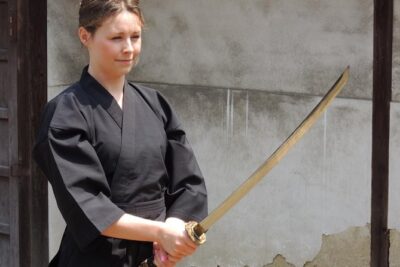
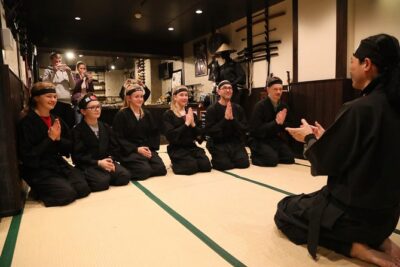
The first stage is getting dressed as a samurai. You put on a traditional hakama, the pleated garment associated with Japanese martial arts and formal wear. This is more than a costume prop. It changes your posture and gives the session a small sense of ritual before the instruction begins.
Allow time for this stage to move at different speeds. In a small group, dressing and photos can be relaxed. In a crowded session, people may wait for help, share limited gear, or feel hurried. Earlier reports describe costumes that were not always in perfect condition, so keep your expectations practical rather than expecting museum-grade clothing.
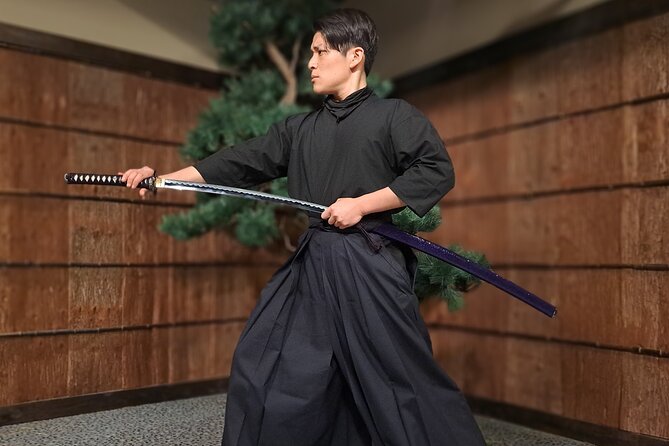
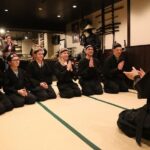
The instructor then introduces basic iaido techniques with a replica sword. You learn how to hold the sword, how to stand, and how to make controlled movements. The lesson is designed for beginners, so you do not need martial-arts experience.
This is the portion I would value most if you want to understand the discipline behind the image of the samurai. The movements are simple, but the emphasis on posture, control, and precision gives the activity more substance than simply posing with a sword.
Several instructors have been praised for making the lesson lively. Names associated with well-received sessions include Riku, Ken, and Takto, while Riu and Nobu have led or supported the museum side. Instructor assignments can change, so treat those names as examples rather than a guarantee.
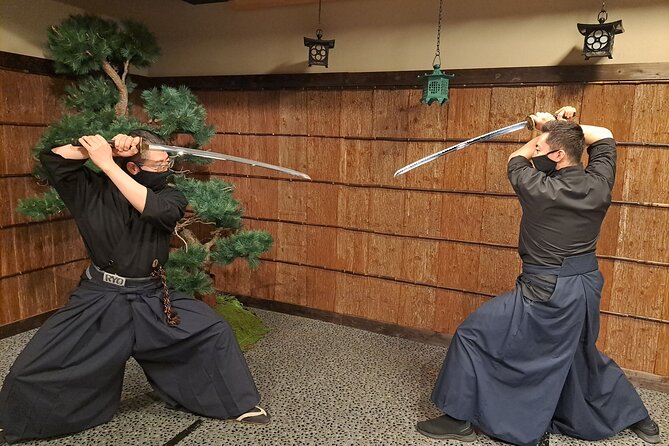
The sword portion is controlled and introductory. You may take part in a simple practice fight or demonstration using safe replicas, but this is not a staged action show and should not be confused with combat training. Listen closely, keep the sword movements within the instructor’s limits, and remember that safety matters more than looking dramatic in a photograph.
Sword practice without the sharp-blade confusion
The experience has changed enough that clear expectations are essential. The current information says you use a blunt, safe replica sword. That means you should not expect to hold or cut with a real katana, even if older promotional images or past descriptions suggest otherwise.
Some earlier accounts describe cutting a tatami mat or handling a real sword. Those details should not guide your booking decision now. The current safety and legal update takes precedence, and the activity does not involve a sharp blade.
That change does not make the session pointless. For many people, the appeal is the instruction, clothing, setting, and chance to perform a few carefully taught movements. You get a physical connection to the subject instead of only looking at displays behind glass.
Still, the hands-on time may be limited. A class with many participants means you spend part of the session watching others take their turns. If the group is small, you are more likely to receive direct attention and enjoy a calmer pace.
The capacity information needs special care. One part of the details says a maximum of 22 people, another says a maximum of four, and the operator has also described sessions capped at 10, with evening groups sometimes around five or six. Because these figures do not agree, contact the provider before booking if a small class is important to you.
That is not a minor point. A sword lesson feels personal when an instructor can correct your stance. In a large room, it can become a line of people waiting for a turn.
Ninja stars, armor photos, and the lighter side of the visit
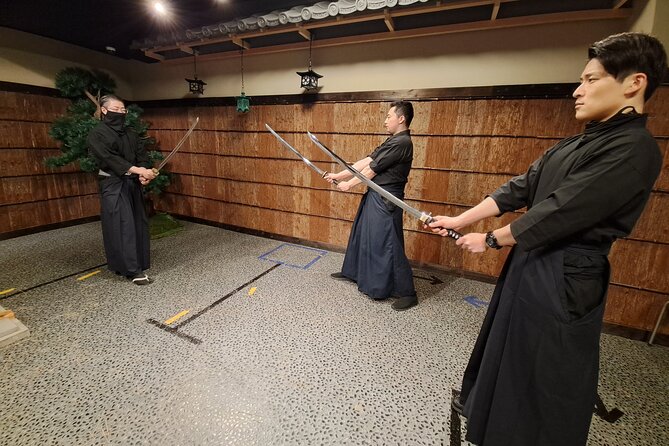
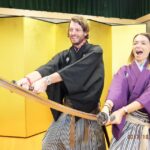
The ninja-star activity breaks up the sword lesson. You get a chance to throw a ninja star in a controlled setting, which is simple, visual, and easy to enjoy even if the sword instruction feels too basic.
It also gives younger family members and spectators something to watch. Children under seven cannot enter the samurai dojo, but a child who is old enough to participate under the venue rules may still enjoy the costume and ninja elements. The supplied details do not give a full minimum age for every activity, so check directly if you are booking for children older than seven.
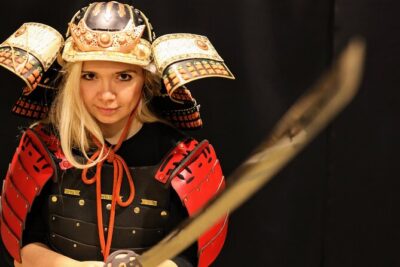
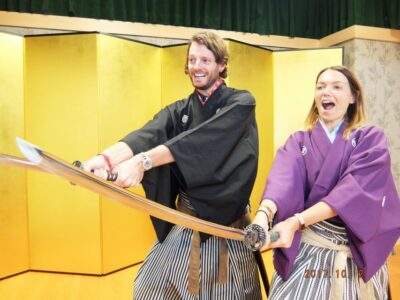
Photo opportunities are another major part of the appeal. You can pose in samurai clothing and, depending on the available equipment, try on helmets or armor for pictures. This works well for families, couples, and groups of friends who want a memorable Kyoto image without committing to a full-day historical program.
There is a tradeoff. Photo areas can become crowded when several groups are changing clothes at once. Two earlier accounts describe hectic dressing areas and limited equipment during unusually busy periods. That may not reflect normal operations, but it shows why a smaller class can make a real difference.
Bring patience and do not treat the photo session as the central event. The best experience comes when you see the photos as a pleasant extra after the instruction and museum visit.
The Samurai Ninja Museum adds useful context
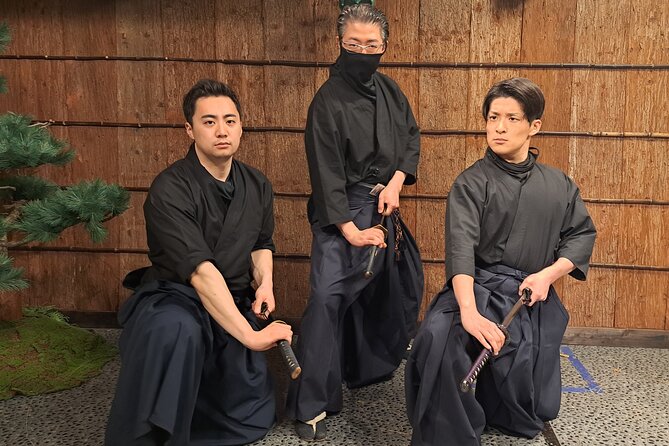
The included museum ticket keeps the activity from being only costume play. The museum tour covers samurai and ninja culture, artifacts, and the influence these figures have had on Japanese history and popular culture.
I would pay attention to the guide here. A good explanation can turn the sword lesson into something more grounded. Riu and Nobu have been associated with engaging museum presentations, and other sessions have included artifact interaction and explanations of samurai actions and equipment.
The museum is not presented as a vast national institution. Expect a compact, themed museum rather than several hours of galleries. One small annex has been described as having only a few posters and models, while the main museum is near the Nishiki Food Market. The precise flow may take you between nearby spaces, so follow staff directions rather than assuming every activity happens in one room.
This movement between spaces has caused confusion before. One version of the activity has involved sword instruction, a short walk to the museum, and then a separate area for ninja stars and photos. That can feel disjointed, especially if you arrive expecting a single continuous tour.
The upside is variety. You are not trapped in one lecture room for two hours. The downside is that transitions and waiting can eat into your active time, particularly when the venue is full.
A few more Kyoto tours and experiences worth a look



How long it feels in practice
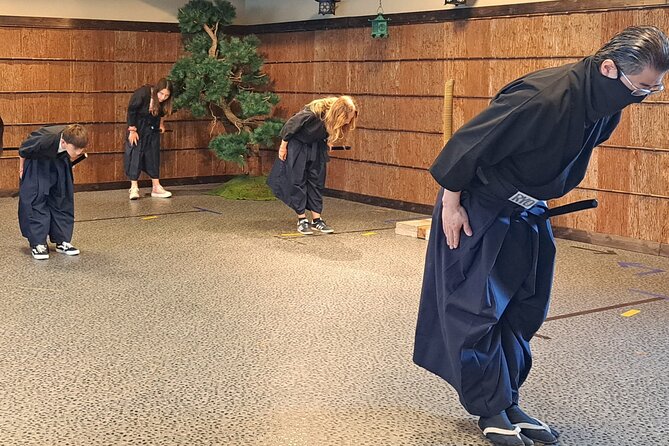
The advertised duration is about two hours. The operator has described a typical schedule that can include around 10 minutes for dressing, 20 to 30 minutes of training, about 15 minutes for the sword activity, a 30-minute historical tour, 15 minutes of ninja-star throwing, and roughly 15 minutes for photos.
That adds up to a full visit when everything runs on schedule. You should not assume that every minute is active sword practice. Some of the time includes dressing, watching other participants, moving between rooms, and waiting for your turn.
Arriving early is sensible, but do not arrive so early that staff place you into a separate early session and you miss the main group flow. One past account describes arriving about 20 minutes early, being rushed through a shortened private-style lesson, and leaving after less than half an hour. The provider attributed that sort of mismatch to a scheduling problem and said it had been addressed.
If you arrive late, tell staff immediately and follow their instructions. One late arrival still received help from a gracious instructor, but missing the opening explanation can make the rest of the class harder to follow.
Start times are offered several times a day. That is useful when you are fitting the experience around Fushimi Inari, Kiyomizu-dera, Nishiki Market, or an evening meal. Leave enough space around the booking, since the timing between the sword, museum, and ninja activities may not be perfectly tight.
Group size can decide the quality
For this experience, group size matters more than the headline duration. A small group gives you more turns, better access to costumes, and a clearer view of the instructor’s demonstrations.
A large group can still be entertaining, but it changes the character of the activity. You may spend more time standing aside while another person practices. The room can feel crowded, and the lesson may seem like a production line rather than a personal introduction to samurai technique.
The operator has acknowledged past scheduling and information-technology problems that produced oversized groups during an especially busy cherry-blossom period. It also says those issues were fixed and that newer sessions are being limited more carefully.
I would still ask one direct question before booking: How many people are scheduled for my exact time slot? Ask again at the venue if the number seems far above what was promised. This is especially important for families, older adults who may not want extended standing, or anyone paying $83.91 for individual attention.
The positive side is that recent operating information points to smaller evening sessions. If your schedule allows, an evening booking may offer a calmer setting, though no specific group size can be guaranteed from the information available.
Who will get the most from this experience
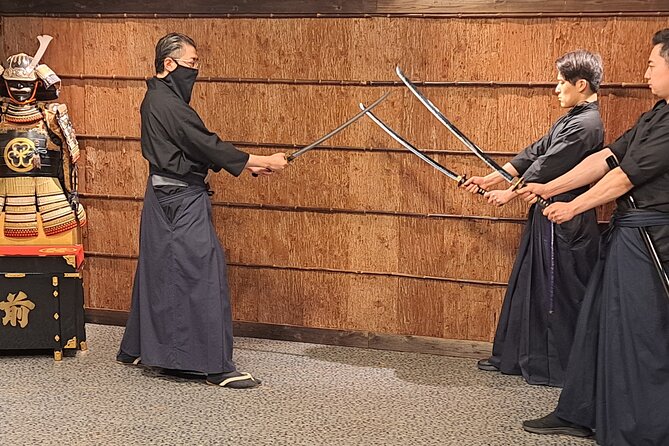
You are a good match if you want a short, hands-on introduction to samurai culture rather than a formal martial-arts course. It suits first-time visitors to Kyoto, families with older children, couples, and friends who enjoy dressing up and taking photos.
It is also useful when you want a rainy-day activity. The museum and dojo provide a structured indoor plan, and the multiple start times make it easier to fit into a packed Kyoto itinerary.
You may want something else if you have trained in iaido or expect advanced instruction. The sword skills are basic. You should also skip it if your main reason for booking is cutting a tatami mat or handling a sharp katana, since the current activity does not include either.
Children under seven are not allowed into the dojo. Children must be accompanied by an adult, and the available information says most participants can take part, but it does not give detailed accessibility guidance. If stairs, costumes, or standing time are concerns, ask the provider before booking.
Location, ticket rules, and cancellation
The listed meeting point is SAMURAI NINJA MUSEUM Kyoto at 109 Horinouechō, Nakagyo Ward, Kyoto, postal code 604-8117. It is near public transportation, but transportation to the attraction is your responsibility.
Use the mobile ticket and keep your booking confirmation available. The activity ends back at the meeting point, which makes planning the next stop easier.
Free cancellation is available if you cancel at least 24 hours before the local start time. Cancellations or changes made less than 24 hours ahead are not accepted for a refund.
An important practical notice concerns the elevator. It is listed as out of service from January 24, 2026, through February 19, 2026. If that period affects your visit, ask the provider how the venue access and activity route will work before you reserve.
Is $83.91 a fair price?
The price is fair for the right kind of day. You receive a museum ticket, a guided history tour, costume use, basic sword instruction, a controlled practice activity, ninja-star throwing, and photo opportunities. Buying a museum visit and a themed activity separately could cost a similar amount, while this booking keeps the plan simple.
The price is less attractive if you measure value by minutes holding the sword. Your active practice may be brief, especially in a large group. The experience is best judged as a two-hour cultural package, not as a two-hour sword lesson.
The 4.6 rating from 149 ratings and 90 percent recommendation rate suggest that the format works well for many people. The lower ratings also point to real risks: rushed instruction, unclear directions, crowded rooms, limited costumes, and confusion over whether ninja-star throwing or mat cutting is included.
The best protection is to verify the current format, group size, and sword rules before paying. Do not rely on older images showing a sharp sword or tatami cutting.
Should you book the Kyoto Sword Experience?
Book it if you want a lively, beginner-friendly activity that combines samurai clothing, simple sword movements, ninja stars, photos, and a compact museum visit. The instructors can make it fun, and the included history tour gives the visit more meaning than a costume photo alone.
I would book an evening slot if possible and confirm the class size first. I would also tell children under seven to stay with an adult outside the dojo area, and I would explain to everyone in your group that the sword is a blunt replica.
Skip it if you are seeking authentic weapons practice, advanced iaido, or a guaranteed small private lesson. For most visitors, this is a playful cultural introduction with some real historical context, provided you accept that the hands-on sword time is limited and the venue may be busy.
FAQ
Where does the Kyoto Sword Experience begin?
It begins at SAMURAI NINJA MUSEUM Kyoto, 109 Horinouechō, Nakagyo Ward, Kyoto, 604-8117, Japan.
Where does the activity finish?
The activity ends back at the meeting point.
How long does the experience last?
The approximate duration is two hours.
Is museum admission included?
Yes. The experience includes a free ticket to the Samurai Ninja Museum and a samurai history tour.
Do I use a real sword?
No. The current activity uses a blunt, safe replica sword and does not involve a real sword or sharp blade.
Can I cut a tatami mat?
The current information does not include real-sword or sharp-blade cutting. Older descriptions of mat cutting should not be treated as part of the current activity.
Is ninja-star throwing included?
Yes. The experience includes an opportunity to throw a ninja star in a controlled setting.
Can children join?
Children under seven are not allowed to enter the samurai dojo venue. Children who do participate must be accompanied by an adult.
Is transportation included?
No. Transportation to and from the attractions is not included, though the meeting point is near public transportation.
Can I cancel for a full refund?
Yes, if you cancel at least 24 hours before the experience start time. Cancellations or changes made less than 24 hours before the start time are not accepted for a refund.
More Museum Experiences in Kyoto

More Tickets in Kyoto
More Samurai & Kendo Experiences in Kyoto
More tours in Kyoto we've reviewed







Samurai & Kendo Experiences, compared.
 ★ 5.0Kyoto Samurai ExperienceFrom $119
 ★ 4.9Kyoto: Kendo and Samurai Experience with Uniform and GearFrom $1032 hours
 ★ 4.5Skip the lines Basic Ticket at SAMURAI NINJA MUSEUM KYOTOFrom $28
 ★ 4.9Kyoto: Samurai Class, Become a Samurai WarriorFrom $70
 ★ 5.0Ninja 1-hour Hands-on Lesson by Japanese master in Kyoto -EntryFrom $80
 ★ 4.8Kyoto: Ninja Weapon Forging ExperienceFrom $1482h 30m