
Reviewed · NIJO CASTLE TOURS
Kyoto Imperial Palace and Nijo Castle Walking Tour
Kyoto’s past comes into focus when you place the shogun’s castle beside the Emperor’s palace on the same day. This private walking tour also adds a major Buddhist temple and Nishiki Market, giving you four different ways to understand the city: religion, food, military power, and court life.
I like the clear contrast between Nijo Castle and Kyoto Imperial Palace, and I like having a private guide who can answer questions as they come up. Guides such as Naoko, Chie, and Fuji have been praised for explaining history in good English, keeping families interested, and sharing useful food advice at Nishiki Market.
The catch is the pace. Seven hours with plenty of walking, local transit, and two large historic sites can leave you tired. The Imperial Palace is also spare compared with a European palace, so you should come for its spaces, traditions, and setting rather than rooms packed with furniture and gold.
In This Review
- Key points to know before booking
- Starting at Hotel Granvia Kyoto at 9:00 a.m.
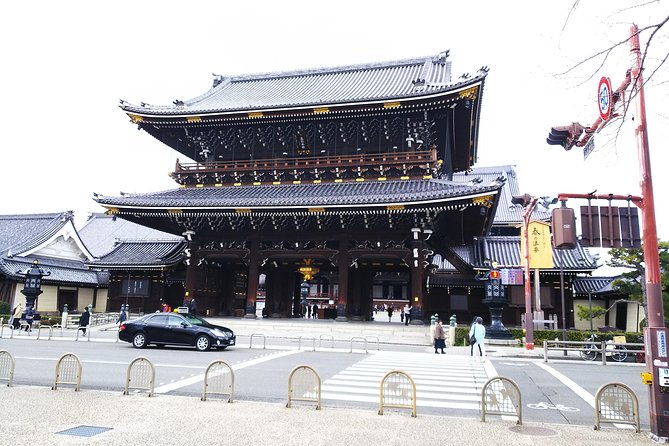
- Higashi Hongan-ji, a calm introduction to Kyoto Buddhism
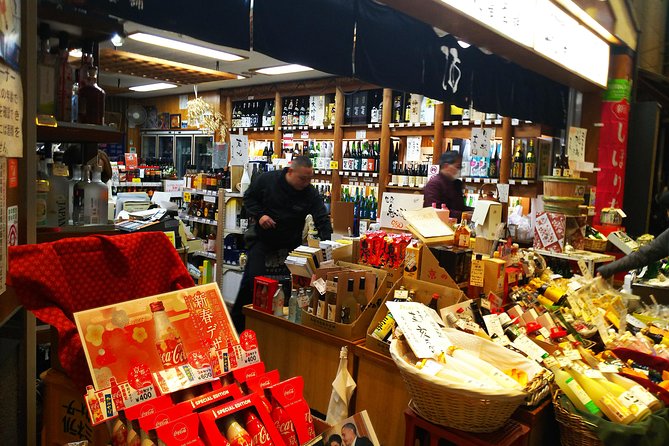
- Nishiki Market brings Kyoto’s food culture close
- Nijo Castle reveals the shogun’s Kyoto
- Kyoto Imperial Palace offers a quieter kind of grandeur
- Why the private guide matters here
- What $111.03 buys you, and what it does not
- Walking demands, weather, and practical planning
- Who should book this Kyoto walking tour?
- Should you book it?
- FAQ
- Where does the Kyoto walking tour begin?
- Where does the tour end?
- How long does the tour last?
- Is this a private tour?
- Which places are included?
- Is admission included?
- Is public transportation included?
- How much walking is involved?
- Are service animals allowed?
- What happens if the tour is canceled because of bad weather?
Key points to know before booking
- Four sides of Kyoto in one day: Visit Higashi Hongan-ji, Nishiki Market, Nijo Castle, and Kyoto Imperial Palace.
- Private guiding: Only your group takes part, so you can ask questions and adjust the conversation to your interests.
- A useful historical contrast: Nijo Castle reflects shogun power, while the Imperial Palace explains the imperial court.
- Good food guidance: Your guide can help you make sense of Nishiki Market and suggest places to eat.
- Plan for extra costs: The tour price is $111.03 per person, with ¥1,300 for admission and about ¥1,000 for public transportation listed separately.
- A full walking day: The tour begins at 9:00 a.m. at Hotel Granvia Kyoto and ends there after about seven hours.
Starting at Hotel Granvia Kyoto at 9:00 a.m.
The meeting point is the Central Entrance of Hotel Granvia Kyoto, beside Kyoto Station. That is a practical start because the station is one of the city’s main transport hubs, and the hotel is easy to identify within the station complex.
From here, your guide leads the day by public transportation and on foot. Transportation is not included, and the listed estimate is ¥1,000 per person. Keep some yen or a usable transit payment method ready, since the tour is not simply a private vehicle outing.
This start also makes the tour useful during a short stay. You do not spend the morning trying to locate each sight or work out the best order. The guide handles the route while you concentrate on what you are seeing.
The activity is private, but that does not mean it is light or leisurely. The total duration is about seven hours, with stops lasting from 30 minutes to 1 hour 15 minutes, plus walking and transfers. Wear comfortable shoes and treat the day as a serious city walk.
A few more Kyoto tours and experiences worth a look
Higashi Hongan-ji, a calm introduction to Kyoto Buddhism
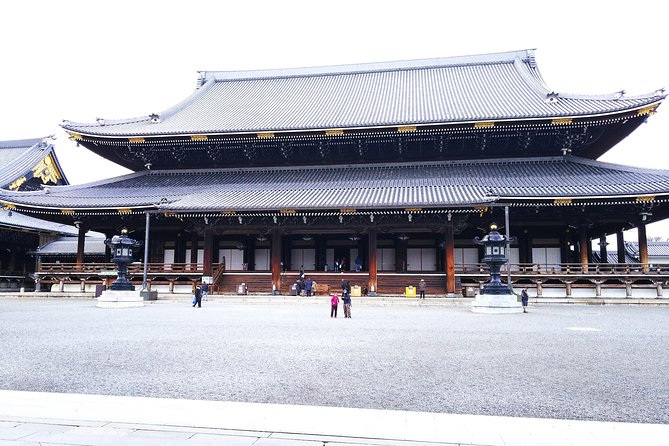
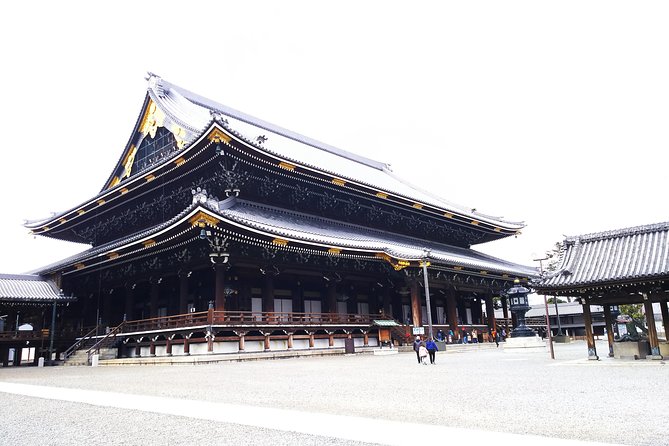
The first stop is Higashi Hongan-ji Temple, with about 30 minutes set aside for the visit. Admission is free.
This is a useful first lesson in Japanese religious life. Buddhism has a large following in Japan and includes several sects. Higashi Hongan-ji is associated with Shinshu Otani, one of the country’s major Buddhist traditions, said in the tour material to have about eight million followers.
You are not simply checking off a temple. Your guide can explain how Buddhism fits into everyday life and how different sects developed their own practices and communities. That context matters because Kyoto’s famous temples can otherwise blur together after a few days of sightseeing.
Thirty minutes is enough for an introduction, not a complete study of the temple. If you want extended quiet time, detailed architectural observation, or personal prayer, you may find this stop short. On a packed day, though, the brief visit gives you a strong cultural foundation without using up the hours needed for the castle and palace.
Nishiki Market brings Kyoto’s food culture close
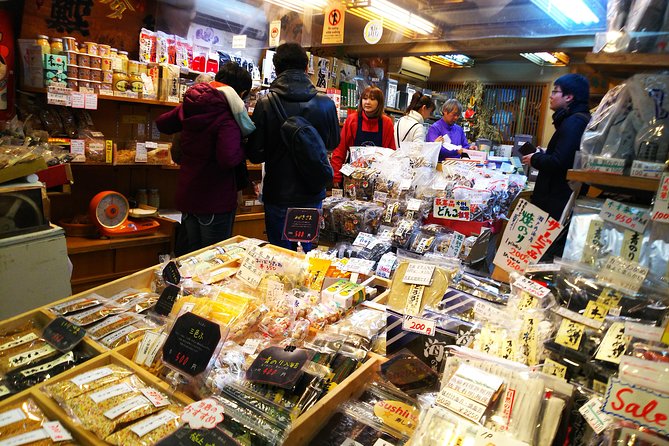
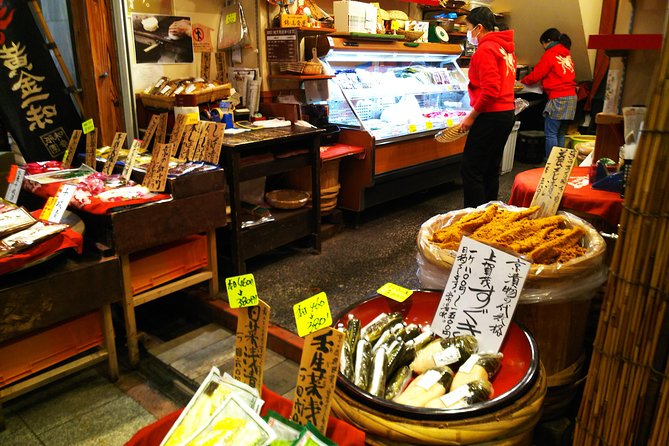
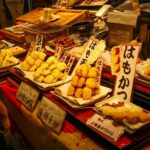
Next comes Nishiki Market, known as Kyoto’s kitchen, with roughly 30 minutes to look around. There is no separate admission fee.
This is where the tour shifts from formal religion to daily life. You get a closer look at the foods and shopping habits that shape Kyoto’s local identity. The market is also a good place to ask practical questions, such as what a certain ingredient is, how a food is prepared, or which items are worth trying.
A guide adds value here because food markets can be confusing when you do not read Japanese. Fuji, one of the guides associated with the tour, has been praised for offering food suggestions at Nishiki and answering questions about culture and history. That kind of help can turn a quick walk into a more useful introduction to Kyoto eating.
The time limit is the main drawback. Thirty minutes gives you a taste of the market, but not a long meal and not a relaxed survey of every stall. If you see something you want to buy or sample, you may need to make quick choices. The tour does allow time for shopping and refreshments, but you should not expect Nishiki to function as a full lunch break unless your guide and schedule allow it.
The market stop also helps balance the grander sites later. You see that Kyoto is not only emperors, shoguns, and temple buildings. It is also water, ingredients, cooking, and ordinary shopping.
Nijo Castle reveals the shogun’s Kyoto
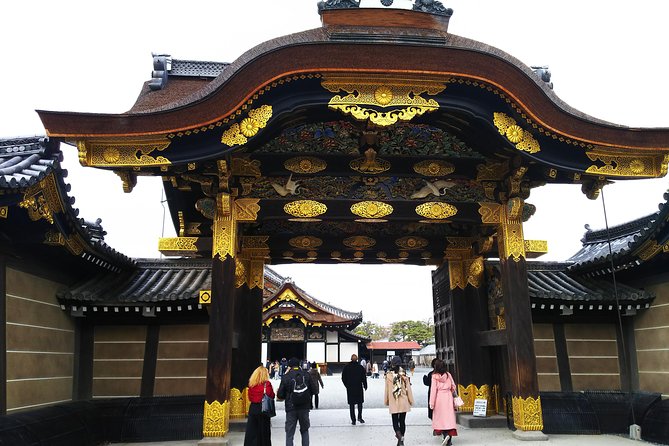
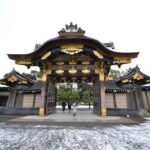
Nijo Castle receives about one hour, and this is the first stop with an admission charge. The listed cost is ¥1,300 per person.
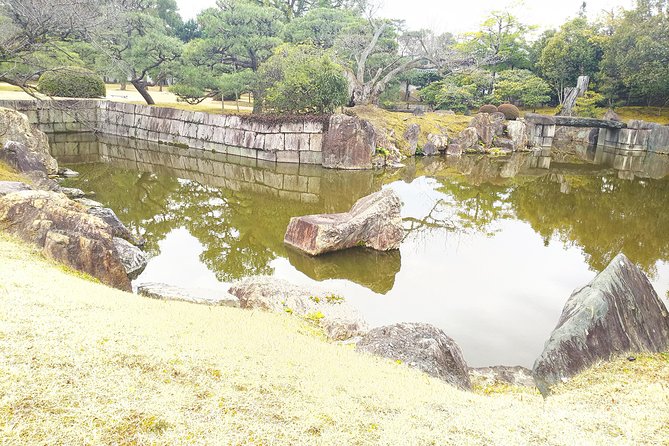
The castle was built in 1603, when the shogun had moved the seat of the shogunate to Edo, now Tokyo. It served as a Kyoto residence for the shogun during visits to the old imperial capital. That role explains why the castle feels different from a defensive fortress or a European royal residence.
Inside, you can expect elaborate painted decoration, with more than 1,000 pictures noted in the tour description. The decoration helps show how authority was displayed through architecture and art. The setting was designed to make power visible, even when the shogun was only visiting Kyoto.
Nijo Castle is often the favorite part of the day for visitors who enjoy interiors and political history. The one-hour allocation lets you see the major areas with an explanation from your guide, rather than wandering without context.
Pay attention to the contrast with the palace that follows. Nijo Castle represents the military government and the shogun’s presence. Kyoto Imperial Palace represents the imperial household and court tradition. Seeing both in one day gives you a much clearer picture of the different forces that shaped Japan.
The castle visit can feel fast if you want to study every painting or garden feature. The tour has to keep moving, and admission is extra. Still, this is an efficient way to see one of Kyoto’s most important historic sites while gaining a framework for the rest of the day.
Kyoto Imperial Palace offers a quieter kind of grandeur
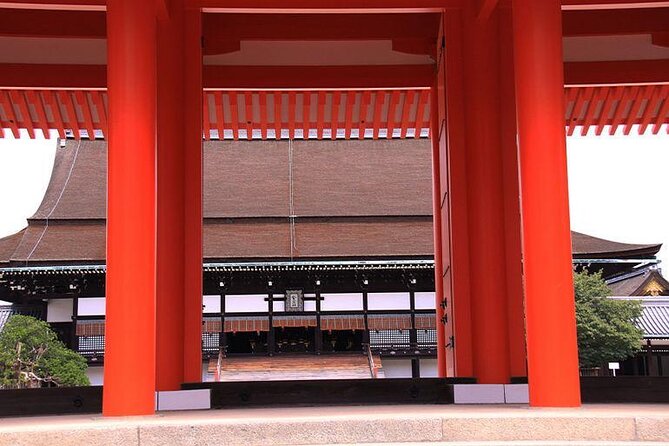
The final major stop is Kyoto Imperial Palace, with about 1 hour 15 minutes devoted to the visit. Admission is free.
The palace occupies a large area in central Kyoto and served as the residence of the Emperor’s family until the capital moved to Tokyo in 1868. The imperial family can also use the palace today, according to the tour description, so this is not just a museum of a vanished court.
You should set the right expectations. The palace is not arranged like a European royal residence, with rooms full of furniture, paintings, and gold. Its meaning comes from the scale of the grounds, the order of the buildings, the court traditions, and the relationship between public ceremony and private imperial life.
That difference is one of the tour’s most useful lessons. If you expect a lavish interior display, you may be disappointed. If you want to understand how imperial space worked in Japan, the palace becomes more rewarding. Your guide can explain the contrast with Nijo Castle and help you notice details that might otherwise seem plain.
The longer stop gives you more breathing room than the temple or market. Even so, the palace grounds are extensive, and the day has already included substantial walking. Keep your pace steady rather than rushing early in the tour.
Other walking tours we've reviewed in Kyoto
Why the private guide matters here
The strongest reason to choose this experience is the guide, not simply the list of sights. A private format means only your group participates. That allows room for questions about history, customs, food, and family interests.
Guides connected with this tour include Naoko, Chie, and Fuji. Naoko has been described as making the subject engaging for children and adding many interesting facts. Chie has been praised for organizing the route well and making good use of the available time. Fuji has been noted for answering detailed questions and helping with food choices.
Your assigned guide may be someone else, so do not book on the assumption that a particular person will lead your group. The useful point is the range of help the guiding service is built to provide: historical explanation, route management, cultural context, and practical suggestions.
This matters most at the two palaces. Without explanation, Nijo Castle and the Imperial Palace can seem like attractive but puzzling collections of buildings. With the right context, you can see why one was tied to the shogun and the other to the Emperor.
The guide can also make the tour work better for a family. Children may respond more readily to stories of shoguns, palace life, and market foods than to a long lecture about dates and dynasties. Adults can ask more detailed questions about religion, politics, and architecture.
What $111.03 buys you, and what it does not
The price is $111.03 per person. The guide’s fee is included, but admission and transportation are not. The listed additional costs are ¥1,300 per person for admission and ¥1,000 per person for public transportation.
That makes the real cost higher than the headline price, so include those extras when comparing this tour with other Kyoto options. The admission charge appears to cover Nijo Castle, while the other listed stops are free. The transport allowance covers the public transit used during the day, but the exact fare can depend on the route and your group’s needs.
I think the value is strongest for a first visit or a short stay. You are paying for a private guide, a planned route, and a day that links four very different parts of Kyoto. If you already know Kyoto well, prefer to move slowly, or want to spend half a day at one palace, doing these sites independently may give you more freedom.
The private format also makes the price easier to justify for a family or small group that wants personal attention. Group discounts are available, though the exact discount is not specified. Ask for the final total before booking so you understand how the discount and extra costs apply.
Walking demands, weather, and practical planning
This is a moderate-fitness activity with quite a bit of walking. You will also use public transportation. Comfortable shoes are essential, and a light day bag is more useful than bulky luggage.
The start time is 9:00 a.m., and the tour lasts about seven hours. Eat enough before meeting your guide, but leave room for the market and any refreshments along the way. Nishiki is included as a food stop, not a guaranteed full meal.
The experience requires good weather. If poor weather cancels the tour, you can receive a different date or a full refund. You can cancel for a full refund up to 24 hours before the start time, but changes or cancellations inside that window are not accepted.
Service animals are allowed, and the meeting point is near public transportation. Still, the walking load means you should think carefully about your group’s fitness and comfort before booking. The activity is private, but the route itself remains a full day around central Kyoto.
Who should book this Kyoto walking tour?
I would choose this tour if you want a strong first look at Kyoto and prefer explanation over simply collecting photographs. It suits families, first-time visitors, and anyone with limited time who wants religion, food, shogun history, and imperial history connected in one day.
It is also a good match if you enjoy asking questions. The guide can adapt the conversation better than an audio guide or a large group tour, and the past experiences with Naoko, Chie, and Fuji show how much the day can benefit from a personable leader.
I would hesitate if you dislike long walks, need a slow schedule, or mainly want to browse Nishiki Market at your own pace. I would also reconsider if your main goal is lavish palace interiors. Kyoto Imperial Palace is valuable for its traditions and layout, not for European-style decoration.
Should you book it?
Book this tour if you have one busy day in Kyoto and want the city’s major political, religious, and food traditions explained by a private guide. The contrast between Nijo Castle and Kyoto Imperial Palace is the day’s central strength, while Higashi Hongan-ji and Nishiki Market add everyday culture.
Skip it if the seven-hour pace sounds tiring or if you want long, independent time at each stop. For most first-time visitors who can handle the walking, the combination of a well-planned route, personal guiding, and four distinctive sights makes the extra cost reasonable.
FAQ
Where does the Kyoto walking tour begin?
The tour begins at 9:00 a.m. at the Central Entrance of Hotel Granvia Kyoto, at Kyoto Station in Shimogyo Ward.
Where does the tour end?
The activity ends back at the meeting point at Hotel Granvia Kyoto.
How long does the tour last?
The tour lasts approximately seven hours.
Is this a private tour?
Yes. Only your group participates in the private activity.
Which places are included?
The route includes Higashi Hongan-ji Temple, Nishiki Market, Nijo Castle, and Kyoto Imperial Palace.
Is admission included?
The guide fare is included, but the listed admission cost is ¥1,300 per person. Higashi Hongan-ji, Nishiki Market, and Kyoto Imperial Palace are listed with free admission.
Is public transportation included?
No. Public transportation is listed separately at approximately ¥1,000 per person.
How much walking is involved?
Quite a bit of walking is involved, and participants should have a moderate level of physical fitness.
Are service animals allowed?
Yes. Service animals are allowed on the activity.
What happens if the tour is canceled because of bad weather?
You will be offered a different date or a full refund if poor weather causes the cancellation.
More Walking Tours in Kyoto
More Nijo Castle Tours in Kyoto
More tours in Kyoto we've reviewed

Nijo Castle Tours, compared.
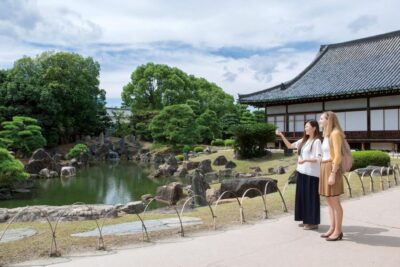 ★ 4.7Kyoto: Nijo-jo Castle and Ninomaru Palace Guided TourFrom $161 hour
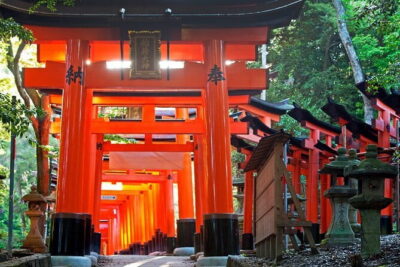 ★ 5.0Kyoto: Nijo, Kinkaku-ji, Arashiyama, Kiyomizu & Fushimi InariFrom $51
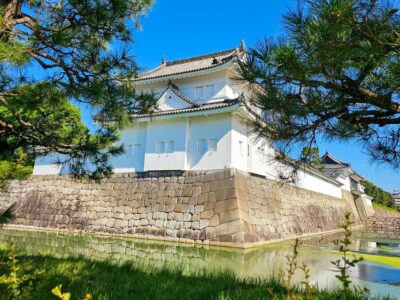 ★ 4.7Kyoto: Imperial Palace & Nijo Castle Guided Walking TourFrom $493 hours
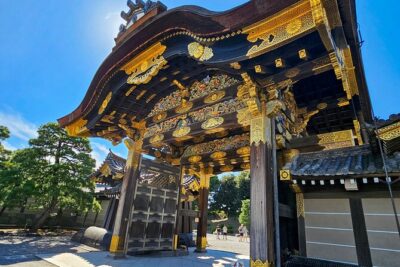 ★ 4.5Kyoto Imperial Palace & Nijo Castle Guided Walking Tour – 3 HoursFrom $55
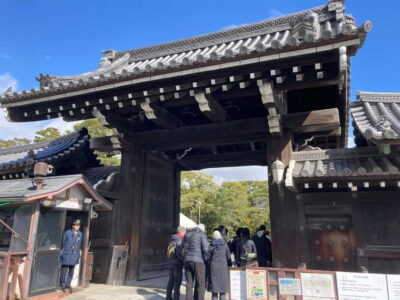 ★ 4.6Kyoto: Nijo Castle and Kyoto Imperial Palace Guided TourFrom $633 hours
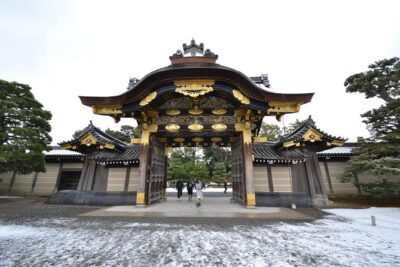 ★ 5.0Nijo Castle and Imperial Palace Visit with GuideFrom $79