
Reviewed · GOLDEN PAVILION & TEMPLE TOURS
Kyoto: Kinkakuji, Golden Pavilion Guided Tour
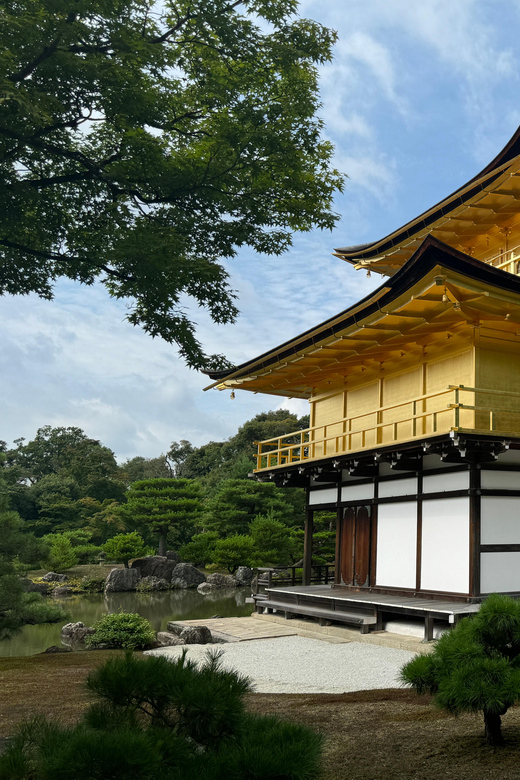
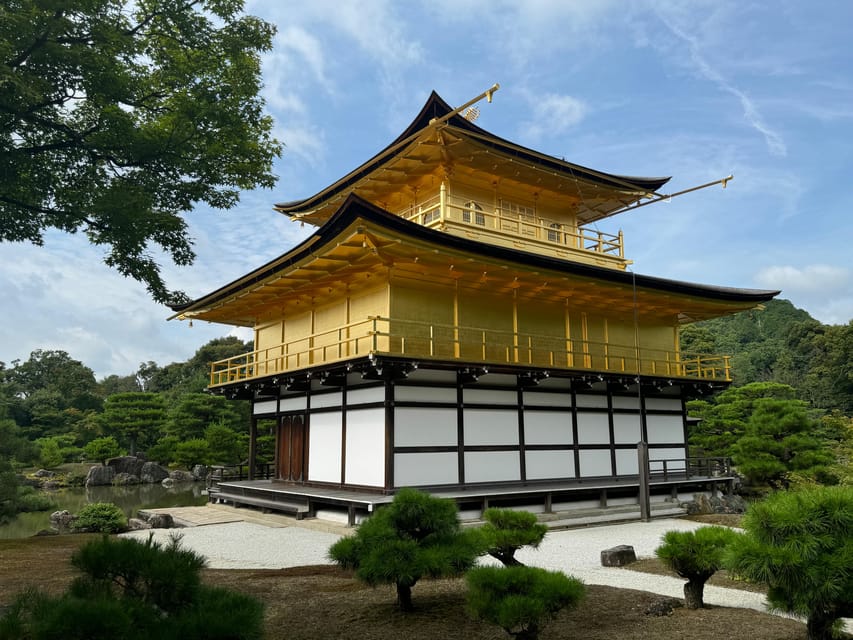
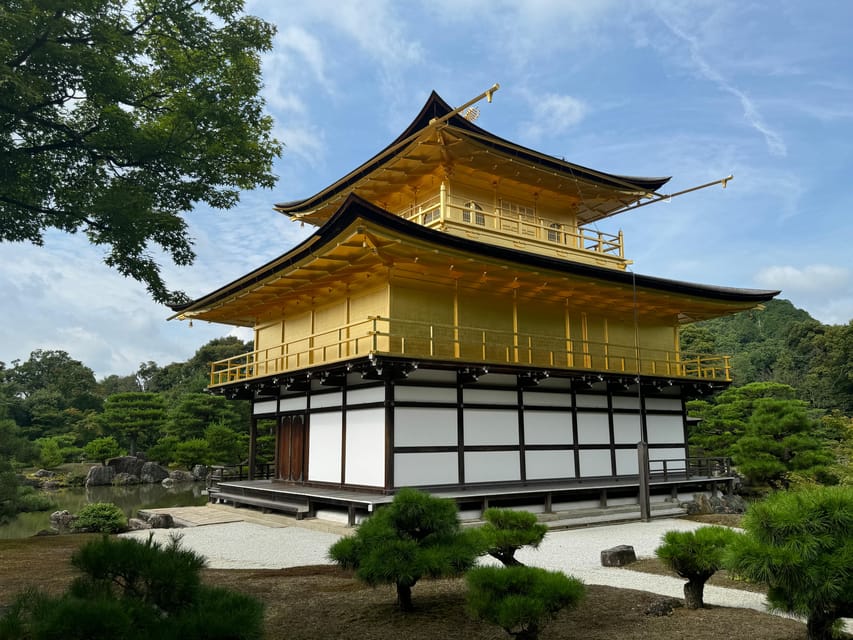
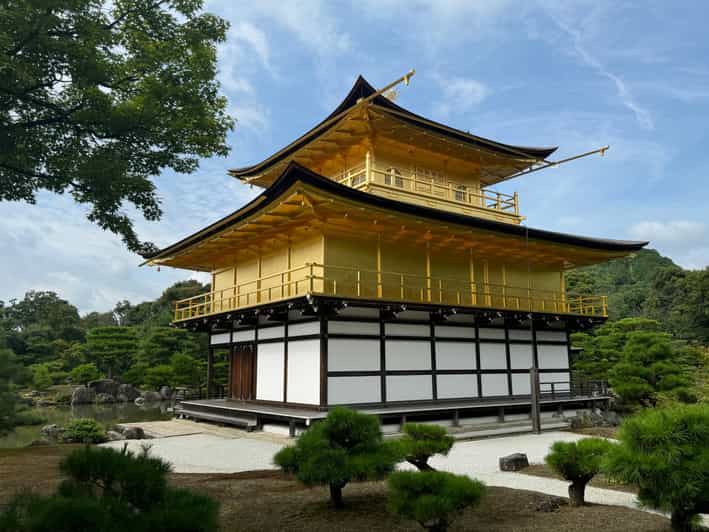
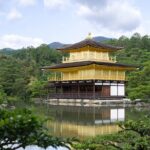
Kinkaku-ji earns its Golden Pavilion nickname honestly. Its upper two floors are covered in gold leaf, and the building glows above a pond that often gives you the tour’s best photograph. A guide helps turn a quick photo stop into a clearer look at the temple’s design, beliefs, and long story.
I like the efficient 90-minute Kinkaku-ji visit, especially if you have limited time in Kyoto. I also like the personal touch: guides such as Teppei, Juraj, Tomoko, Hikari, and Julien have helped visitors understand Buddhist and Shinto ideas, temple upkeep, and even small customs such as writing a wish in Japanese.
The main drawback is the crowd. Kinkaku-ji is one of Kyoto’s headline sights, and the path can feel busy, especially around midday. The tour is also priced at $64 per person, so you are paying for explanation and guidance, not just entry.
In This Review
- Key points to know before you book
- Why Kinkaku-ji is worth seeing
- The 90-minute Kinkaku-ji route
- The optional extra: Ryoan-ji in another 90 minutes
- What a good guide adds
- Crowds, photos, and the pace of the walk
- Is $64 a fair price?
- Who will like this tour most?
- Practical details that matter
- Should you book it?
- FAQ
- How much does the Kinkaku-ji guided tour cost?
- How long does the experience last?
- Does the tour include Ryoan-ji?
- What languages are available?
- Is the tour private or shared?
- Where does the tour begin?
- Where does the tour finish?
- Is admission to Kinkaku-ji included?
- Can I cancel for a refund?
Key points to know before you book
- The Golden Pavilion is the star: Gold leaf, a pond reflection, and carefully kept gardens create the classic Kyoto scene.
- Ryoan-ji may be part of your visit: The longer version includes a guided visit to this nearby temple, giving you a second major Kyoto sight.
- Guides add cultural context: Expect explanations about Buddhism, Shinto, architecture, temple care, and local customs.
- You can choose a private or small group: This matters if you want to ask questions or keep the pace relaxed.
- Midday can be crowded: Go in with realistic expectations, and treat the guide as your way to see more clearly within the crowds.
- The meeting and finishing points vary: Check the option you choose, since the starting and drop-off locations are not identical for every booking.
Why Kinkaku-ji is worth seeing
Kinkaku-ji, also called the Golden Pavilion, is one of those places that can look almost unreal in person. The pavilion sits beside a pond, with its gold-covered upper floors reflected in the water when conditions are right. The setting does much of the work, but a guide can help you notice details you might otherwise pass by.
The gold is not spread over every part of the building. The top two floors carry the gold leaf, making them catch the light while the surrounding gardens keep the scene from feeling like a simple showpiece. You walk along a set route through the grounds rather than entering the pavilion itself, so the experience is mainly about views, architecture, gardens, and the setting around the water.
I like that this is not only a photo stop. Your guide can explain the temple’s place in Kyoto, its religious setting, and the ideas behind the architecture. Guides have also shared practical details about the daily care needed to maintain the temple, which gives the dazzling building a more human side.
You should still keep your expectations in check. Kinkaku-ji is famous for good reason, and fame brings crowds. The route can become slow when people stop for pictures, and you may not get a quiet pond all to yourself. The beauty is real, but the mood is not always silent or private.
A few more Kyoto tours and experiences worth a look

The 90-minute Kinkaku-ji route
The core visit lasts about 1.5 hours. That is enough time to see the pavilion, walk through the main gardens, pause near the pond, and hear the key stories without giving half a day to one temple.
The visit begins from one of two possible starting points, listed as 総門 or やまざき庵. The exact meeting point depends on the option you book, so check your confirmation carefully. This is a small detail, but it matters in Kyoto, where arriving at the wrong gate can cost you time.
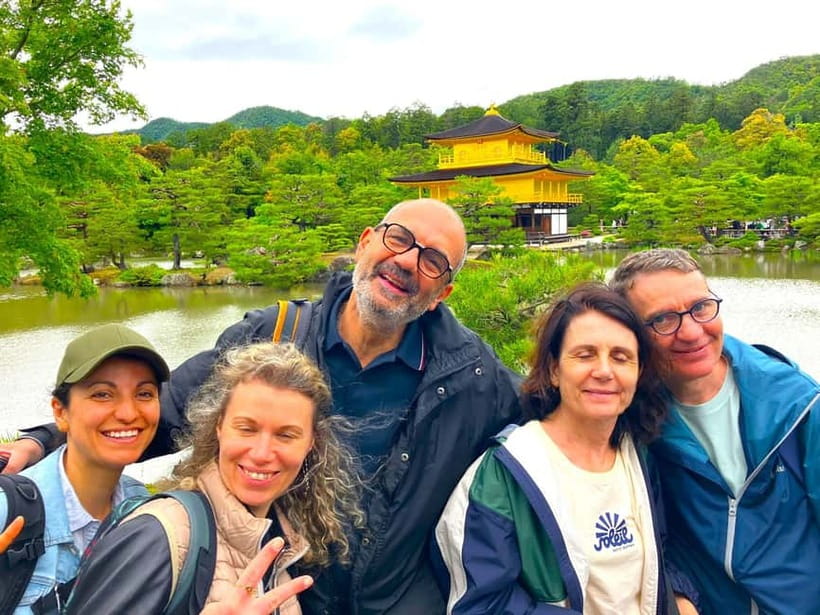
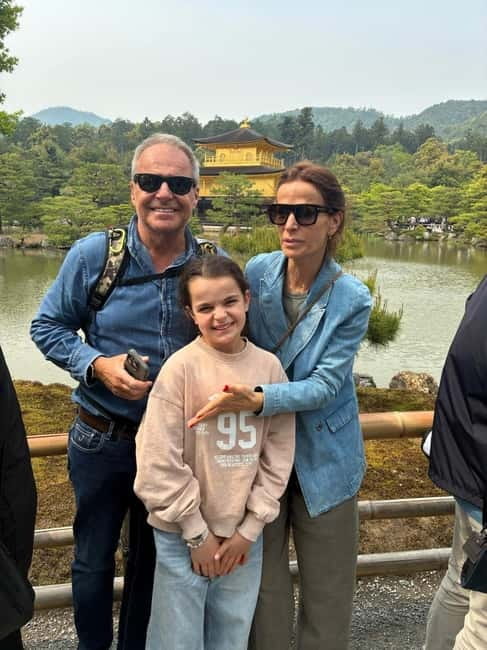
Once inside, your guide leads you through the temple grounds. The Golden Pavilion is the main stop, and you will have time to take photographs of its reflection. If the pond is calm, this is the familiar picture you came to see. If people are gathered along the viewing area, your guide can still help you find a useful angle and explain what you are looking at.
The gardens are part of the visit, not just background scenery. You can enjoy the pond, planted areas, and a small teahouse as you follow the route. The walk gives you a little breathing room after the first bright view of the pavilion, though the path remains shaped by the site’s popularity.
This is where a live guide is most useful. You can ask why the building looks as it does, how Buddhist and Shinto traditions relate to the site, and what features matter beyond the gold. Several guides have been praised for clear English, patient answers, and useful conversation about other parts of Kyoto. Kaito has also guided in German, according to the information provided, which may help German-speaking visitors who prefer that option when available.
The optional extra: Ryoan-ji in another 90 minutes
The longer plan continues to Ryoan-ji, with a guided visit listed at about 1.5 hours. This changes the outing from a focused Golden Pavilion tour into a broader look at Kyoto temple culture.
Ryoan-ji gives you a different type of experience from Kinkaku-ji. Kinkaku-ji catches your eye with gold, water, and formal gardens. Ryoan-ji is better suited to quiet observation and the simple act of looking carefully. The two temples make a sensible pair because they do not offer the same visual experience.
The full duration is listed as 90 to 210 minutes. The shorter version appears to focus on Kinkaku-ji, while the longer version includes both sites. Confirm the exact option before paying, since the length and meeting arrangements can vary.
The available drop-off points are 総門 and 龍安寺山門. This can be useful if you want to continue sightseeing after the tour, but do not assume every option ends at the same place. Pick the version that fits your plans for the rest of the day.
What a good guide adds
The guide quality is the strongest reason to consider this experience instead of visiting Kinkaku-ji alone. The most praised guides have been warm, prepared, patient, and good at adjusting the visit to the people in front of them.
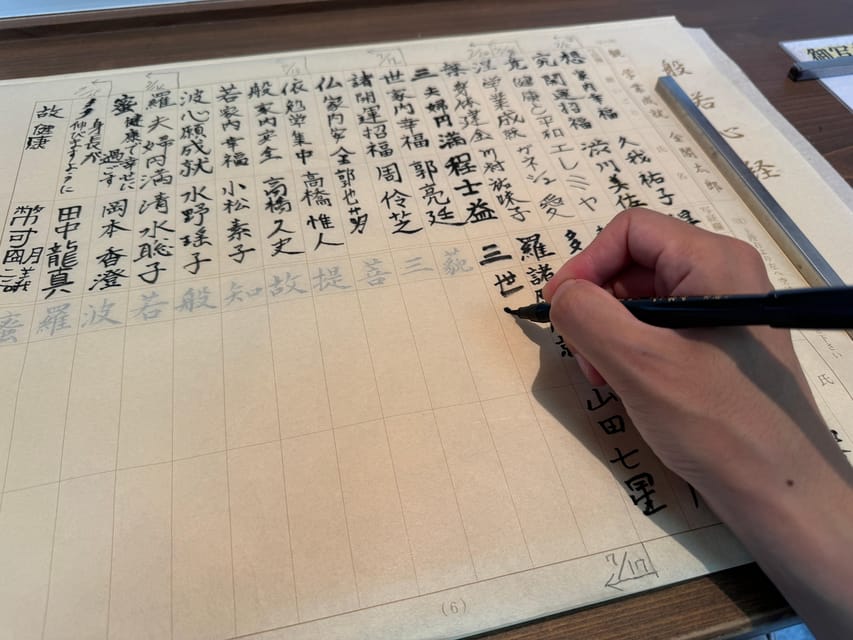
Teppei has helped families keep children interested and has explained temple history, religious beliefs, and daily maintenance in detail. One family visit included a seven-year-old who enjoyed learning about both Kinkaku-ji and Ryoan-ji. Teppei also helped with a traditional way to write a wish in Japanese, a small detail that can make the visit feel more personal.
Juraj has been singled out for lively explanations and strong preparation. Tomoko has been described as especially well-informed about Kinkaku-ji, while Hikari has offered helpful suggestions for other Kyoto plans. Julien has also received praise for explaining the history of everything along the route and sharing his enthusiasm without making the visit feel like a lecture.
These names are useful, but guide assignment is not guaranteed. You should book this for the value of a live English or Japanese guide, not for a promise of one particular person.
The language ability appears to be a real strength. English and Japanese are available, and the guide can answer questions as you go. That matters at a site where the visual details are easy to understand but the religious and historical meaning may not be.
Crowds, photos, and the pace of the walk
Kinkaku-ji can be crowded, particularly in the middle of the day. You will likely share the main viewing areas with people taking the same famous photograph. The guide cannot remove the crowd, but a small group or private format may make the visit easier to manage.
Allow time for photographs, but do not let the first view become the whole experience. Look at the rooflines, the gold-covered floors, the pond, the garden route, and the contrast between the shining pavilion and the quieter surrounding spaces.
Some guides may take pictures for you or help you with a better viewpoint. That kind of assistance has been part of some visits, but it should not be treated as a guaranteed extra. The main benefit is still the explanation and the chance to ask questions as you move.
The pace is fairly manageable for most people who are comfortable walking through temple grounds. The supplied details do not specify accessibility arrangements, so contact the provider before booking if you need particular support.
Other guided tours in Kyoto


Is $64 a fair price?
At $64 per person, this is not the budget way to see Kinkaku-ji. The price includes the guide fee and admission to Kinkaku-ji, but not a meal or other listed extras.
The value depends on how you like to sightsee. If you only want a quick look at the pavilion and a few photographs, visiting independently may make more financial sense. If you want the site explained in clear English or Japanese, prefer a set route, and expect to ask questions, the fee is easier to justify.
The price becomes more attractive when you choose a private or small-group format. You are paying for more than access. You are also paying for help with the temple’s story, religious context, photo opportunities, and the small observations that are easy to miss on your own.
The longer option, which includes Ryoan-ji, offers better value for someone who wants two major temple visits in one organized outing. It also takes up as much as 3.5 hours, so make sure you want a longer temple-focused block in your Kyoto schedule.
Who will like this tour most?
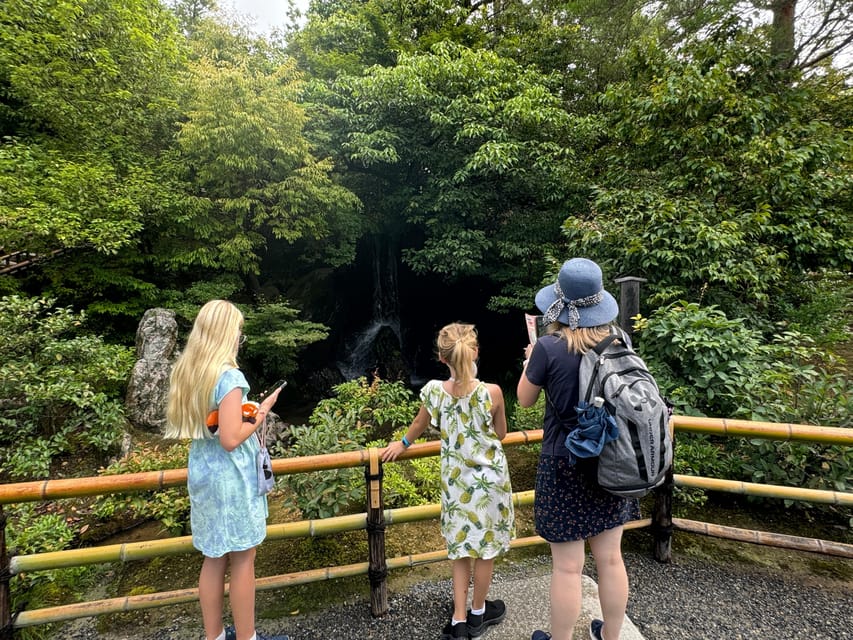
I would recommend it to a first-time Kyoto visitor who wants the Golden Pavilion explained rather than simply photographed. It is also a good fit for families, since guides have adjusted their approach for children and answered questions patiently.
You may also like it if you are curious about Buddhism, Shinto, Japanese temple design, or the everyday work behind maintaining an important religious site. The conversations can go beyond the usual dates and names, which is where the tour gains much of its value.
A private or small group is best if you want a slower pace, more questions, or help taking pictures. The regular group format can work well if you mainly want orientation and background without paying for a fully private guide.
This is less suited to someone who dislikes organized sightseeing or wants complete solitude. Kinkaku-ji is popular, and the route is structured. The guide improves your understanding, but cannot turn one of Kyoto’s busiest attractions into a secluded retreat.
Practical details that matter
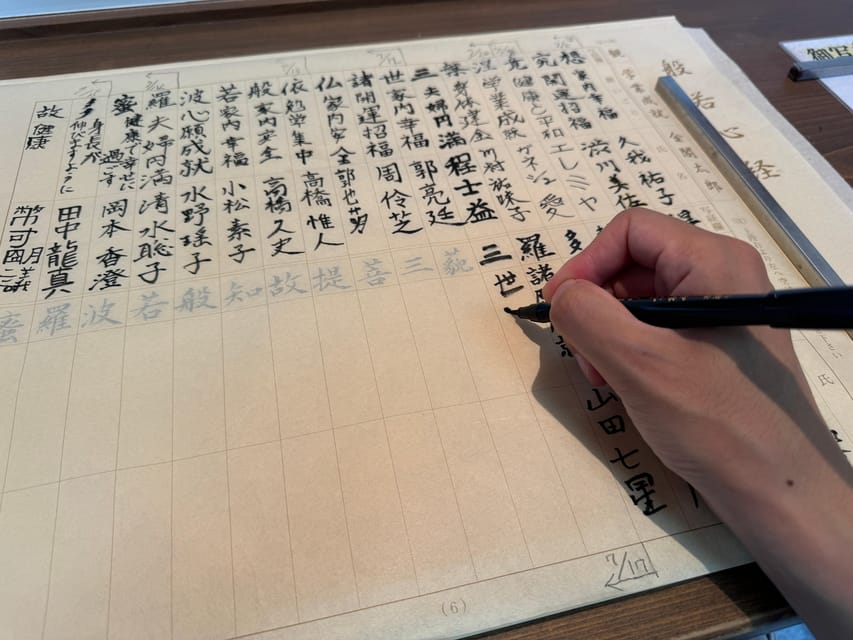
The tour is offered in English and Japanese. Private and small-group formats are available, and the meeting point varies by the option selected. The two listed starting locations are 総門 and やまざき庵.
The shorter experience lasts about 90 minutes and focuses on Kinkaku-ji. The longer option can reach 210 minutes and includes Ryoan-ji. Check the starting time and end point before booking, especially if you have a lunch reservation or another temple planned afterward.
You can cancel up to 24 hours before the activity for a full refund. A reserve-now, pay-later option is also available, which gives you some flexibility while you settle your Kyoto schedule.
Should you book it?
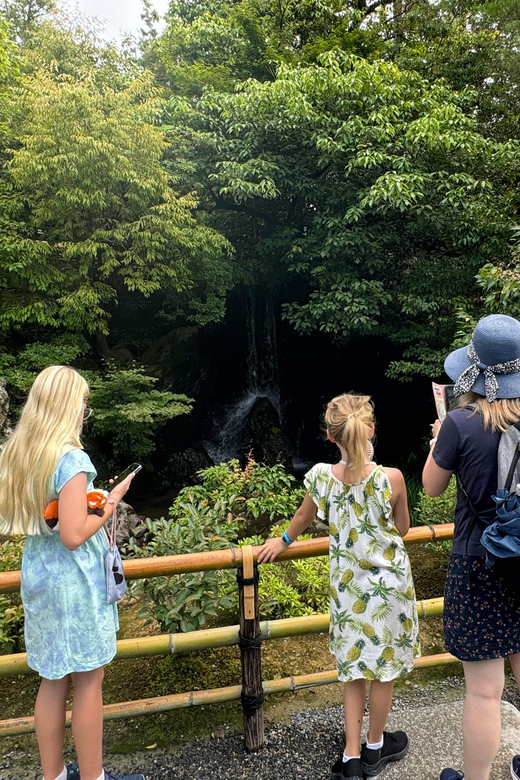
Book this tour if you want the Golden Pavilion to mean more than a bright building beside a pond. The guide’s explanations, personal attention, and ability to answer questions are the main reasons to pay $64.
Choose the Kinkaku-ji-only version if you are short on time. Choose the longer Kinkaku-ji and Ryoan-ji plan if you want a stronger temple day and can spare up to 3.5 hours.
I would book it for a first visit, a family outing, or anyone who enjoys cultural context. I would skip it if your only goal is the cheapest possible entry and a quick photograph. Go early in the day if your schedule allows, keep your crowd expectations realistic, and let the guide show you why the Golden Pavilion is more than a pretty reflection.
FAQ
How much does the Kinkaku-ji guided tour cost?
The tour costs $64 per person. The price includes the guide fee and admission to Kinkaku-ji, Golden Pavilion.
How long does the experience last?
The available duration ranges from 90 to 210 minutes. The shorter option focuses on Kinkaku-ji, while the longer plan can include a guided visit to Ryoan-ji.
Does the tour include Ryoan-ji?
The longer itinerary includes Ryoan-ji with a guided visit lasting about 1.5 hours. Check the option you select to confirm that both temples are included.
What languages are available?
Live guiding is available in English and Japanese. German-language guiding has also been provided by Kaito when available, but guide assignment is not guaranteed.
Is the tour private or shared?
Private and small-group options are available. The exact group type depends on the option you book.
Where does the tour begin?
The possible starting locations are 総門 and やまざき庵. The meeting point may vary depending on the selected option.
Where does the tour finish?
The possible drop-off locations are 総門 and 龍安寺山門. The ending point depends on the option selected.
Is admission to Kinkaku-ji included?
Yes. Admission to Kinkaku-ji, Golden Pavilion, is included in the price.
Can I cancel for a refund?
Yes. You can cancel up to 24 hours in advance for a full refund. A reserve-now, pay-later option is also available.
More Guided Tours in Kyoto
More Golden Pavilion & Temple Tours in Kyoto

More tours in Kyoto we've reviewed


Golden Pavilion & Temple Tours, compared.
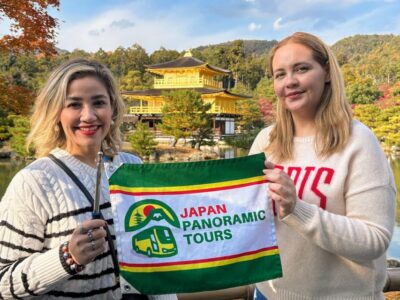 ★ 4.8Kyoto: Fushimi Inari, Kinkakuji, Bamboo Grove 1 Day Bus TourFrom $122510 minutes - 9 hours
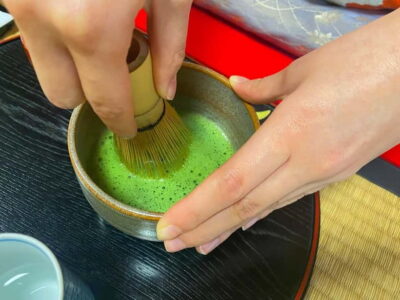 ★ 4.9Kyoto: Tea Ceremony in a Traditional Tea House in KiyomizuFrom $4945 min
 ★ 4.9Kyoto: Tea Ceremony Ju-An at Jotokuji TempleFrom $291h 10m
 ★ 4.1Osaka/Kyoto:Kinkakuji,Arashiyama,FushimiInariShrine,NaraParkFrom $66
 ★ 4.8Arashiyama Bamboo, Temple, Monkeys, or Secret Sake BreweryFrom $875 hours - 330 minutes
 ★ 5.0Kyoto: Nijo, Kinkaku-ji, Arashiyama, Kiyomizu & Fushimi InariFrom $51