
Reviewed · GION & GEISHA WALKS
Kyoto: Meet the Geisha Maiko with Gion Walking Tour
Kyoto’s geisha districts are best understood from the inside, and this tour offers a rare chance to enter a private ochaya, where a maiko performs and a retired geiko helps explain the tradition. I especially like the live question-and-answer session, since you can ask about training and daily life rather than simply watch a staged dance. I also like the Gion walk, which points out quiet lanes and traditional buildings most visitors miss.
The main drawback is the walking portion. Several stops are close together, and the route can feel like a loop through Gion before the strongest part begins. Translation and audibility may also vary by guide, so this is a better choice for visitors who value access and cultural context more than food, drink, or a fast-paced sightseeing route.
In This Review
- Key points to know before booking
- Why this Gion experience feels different
- Beginning among the willow-lined lanes of Gion Shirakawa
- Tatsumi Daimyojin Shrine and Tatsumi Bridge
- Hanamikoji Street and Gion’s public face
- A walk through temple grounds near Gion
- Entering the private ochaya in Miyagawasuji
- The question-and-answer session is the real prize
- Photography rules and respectful behavior
- Is $109.43 a fair price?
- Timing, meeting point, and physical demands
- Who will get the most from this tour?
- Should you book the Gion maiko experience?
- FAQ
- How long does the tour last?
- Where does the tour begin and end?
- What will I see during the walking portion?
- Will I enter a private ochaya?
- Is food or drink included?
- Can I take photographs?
- Do I need to wear socks?
- Is the venue accessible by elevator?
- Are children allowed?
- What happens if it rains?
Key points to know before booking
- Private ochaya access: Enter a traditional entertainment house that is normally closed to casual visitors.
- Live maiko performance: Watch a classical Japanese dance, with shamisen music included in some performances.
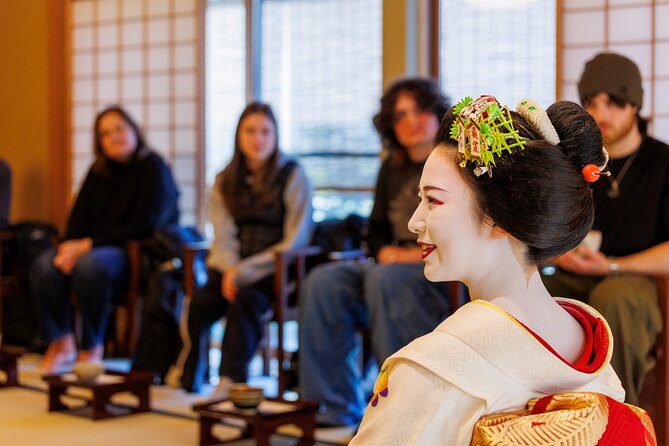
- Personal questions: Speak with a maiko and retired geiko through the guide’s translation.
- Gion from street level: Walk Gion Shirakawa, Tatsumi Bridge, Hanamikoji Street, and nearby temple precincts.
- Small-feeling encounter: The performance portion can be intimate, sometimes with around 10 people, though the full group may reach 30.
- Practical limits: Wear socks, comfortable shoes, and clothing suitable for stairs and rain.
Why this Gion experience feels different
A geisha encounter can easily become a street spectacle. Visitors crowd narrow lanes, raise cameras, and hope to catch a glimpse of a maiko hurrying between appointments. This tour takes a better approach: it gives you a scheduled meeting in a private setting, where the artists can perform and answer questions without being chased through the neighborhood.
In Kyoto, the terms matter. A maiko is an apprentice geisha, still training in dance, music, etiquette, and the arts of conversation. A geiko is a fully trained geisha, the term more commonly used in Kyoto. The experience introduces you to both sides of that tradition: a working maiko and a retired geiko.
The setting is not a public café or a standard tea ceremony venue. An ochaya is a private entertainment house where geiko and maiko traditionally meet clients and perform. The distinction is important because the value of the tour rests largely on access to this type of house, not on having tea or a meal.
Guides such as Haruki, Takuma, Miko, Ayako, Mika, Naomi, Chiko, Yoko, and Ellie have been praised for making the subject understandable to English-speaking visitors. Your guide may vary, but the best guides do more than point at old buildings. They explain how the districts work, why the women dress and move as they do, and how the tradition has changed.
A few more Kyoto tours and experiences worth a look

Beginning among the willow-lined lanes of Gion Shirakawa
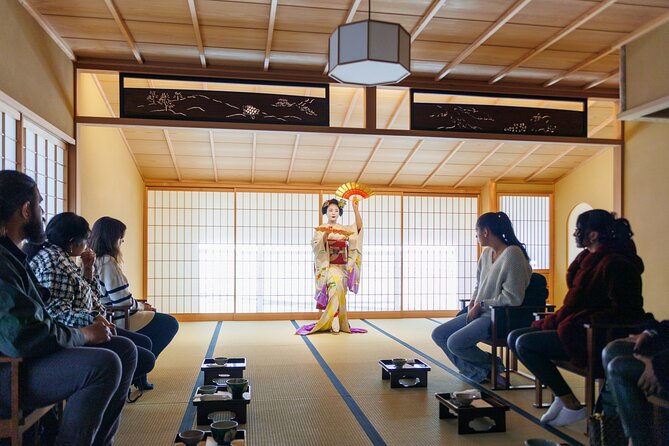
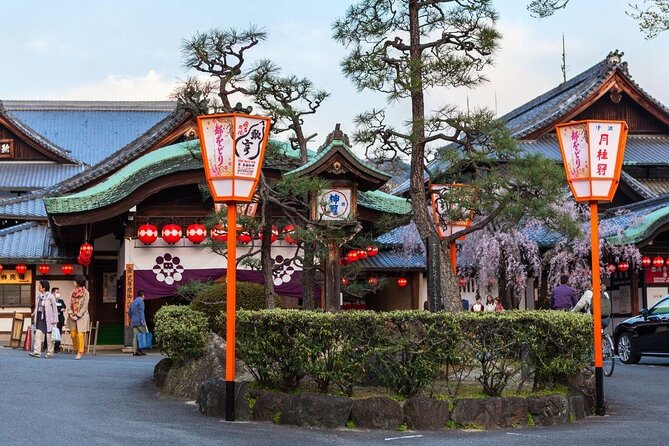
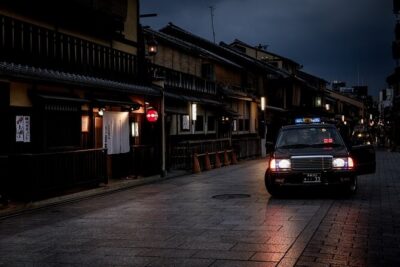
The walk begins around Gion Shirakawa, one of Kyoto’s most attractive geisha-district streets. Water, bridges, wooden machiya houses, and carefully maintained facades create a calm setting that feels far removed from the broad shopping streets elsewhere in the city.
Your guide uses this opening stretch to explain the lives of maiko and geiko. You will hear about the training system, the districts where they work, and the customs that shape public behavior around them. This background helps you read the streets with more care. A plain-looking doorway may belong to a private establishment, while an ornate facade may be a restaurant, shop, or traditional residence.
The scheduled time here is about 30 minutes. That is enough for an introduction and a few photographs, but not enough to cover every detail of Gion. The walk focuses mainly on geisha culture rather than offering a broad survey of Kyoto’s entire past.
That narrow focus is useful if this is your first serious introduction to maiko and geiko. If you already know a great deal about the subject, the street portion may feel repetitive, especially because some information returns later during the conversation at the ochaya.
Tatsumi Daimyojin Shrine and Tatsumi Bridge
The group pauses briefly at Tatsumi Daimyojin, a small Shinto shrine associated with protection, good fortune, and safety. It dates to the Heian period, from 794 to 1185, and gives the walk a religious marker amid Gion’s entertainment district.
The stop lasts only about five minutes, so do not expect a full shrine visit or a detailed religious lecture. Its value is mainly visual and cultural. Gion is not just a collection of teahouses. It is a working neighborhood shaped by shrines, temples, old streets, businesses, and long-standing customs.
Nearby Tatsumi Bridge is one of the prettiest corners of the route. The small traditional bridge and surrounding machiya houses offer the kind of scene many people associate with Kyoto. Your guide may explain how the lanes function and why you should avoid blocking entrances or treating private buildings as stage sets.
This is a good place to practice respectful photography. The district is still a workplace and home, not a theme park. The tour’s emphasis on customs is one of its strongest features, especially for anyone who might otherwise see a maiko only as a photo opportunity.
Hanamikoji Street and Gion’s public face
Hanamikoji Street is the best-known road on the walking route. Traditional wooden buildings line the street, with restaurants, shops, and tea houses occupying many of them. It is more public and more visited than the quiet lanes near Shirakawa, so the atmosphere can change depending on the time of day.
The guide points out the role of the street and the surrounding geisha districts. You may learn which buildings are associated with tea houses and where performers meet clients. The walk is not about entering every building. Most are private or operate by introduction, which makes the later ochaya visit more meaningful.
Hanamikoji receives about 10 minutes in the stated schedule. In practice, the total walk can run longer than planned, and the full experience may stretch beyond three hours. Several people have felt that the group spent too much time circling the same area or looking at building fronts. Keep that in mind if you have dinner reservations, a train to catch, or limited energy.
The route may also pass references to Gion Corner, a venue known for presenting several traditional Japanese arts. The tour does not include a separate Gion Corner show. Treat this as part of the neighborhood orientation rather than an additional performance ticket.
A walk through temple grounds near Gion
The route also passes through the precincts of Kyoto’s oldest Zen Buddhist temple, located beside the Gion district. The group does not enter the temple buildings, but walking through the grounds gives you a short change of mood after the commercial and entertainment streets.
This stop works best as a quiet pause. You can see how religious spaces and pleasure districts sit close together in Kyoto, often separated by only a few streets. The tour does not spend long here, so you should not book it expecting a full temple tour or a guided study of Zen Buddhism.
Still, the contrast helps. Geiko and maiko traditions are often presented as something distant and mysterious. Seeing the district within its ordinary urban setting makes it easier to understand as a living part of Kyoto, connected to local religion, architecture, and neighborhood life.
Other walking tours we've reviewed in Kyoto




Entering the private ochaya in Miyagawasuji
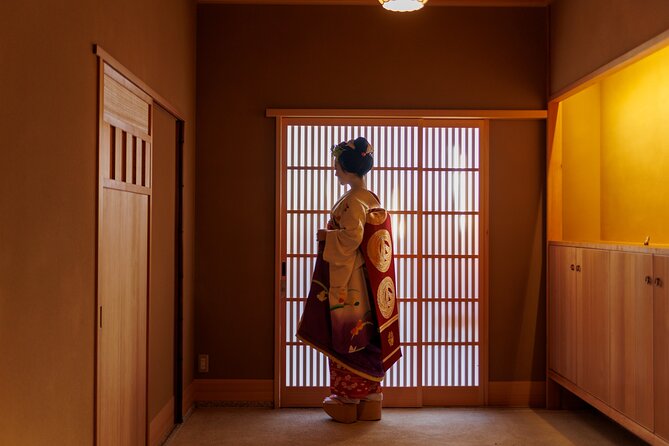
The final major stop is Miyagawasuji, another geisha district in Kyoto. Here the tour enters the private house where the performance and conversation take place. This is the reason to book the experience.
You should expect to remove yourself from the street and enter a traditional interior. Socks are required, and wet clothing or wet socks are not allowed inside on rainy days. Wear dry socks in your day bag if the forecast looks poor, and use an umbrella during the walk rather than arriving damp.
The performance takes place on the second floor, reached by stairs. There is no elevator information provided, so anyone who has difficulty with stairs should consider this before booking. The group may include as many as 30 people, although the room can feel much smaller during the meeting itself.
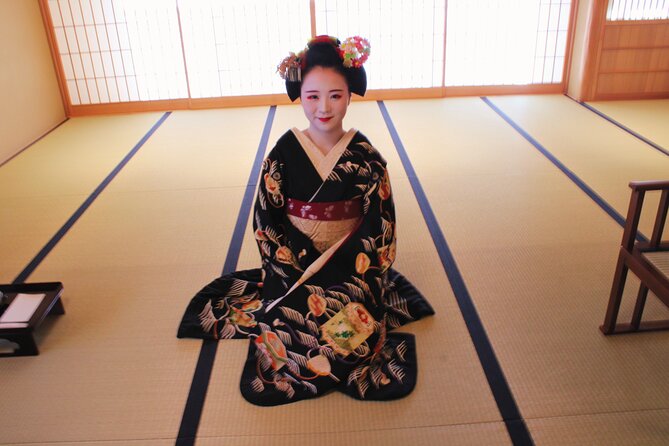
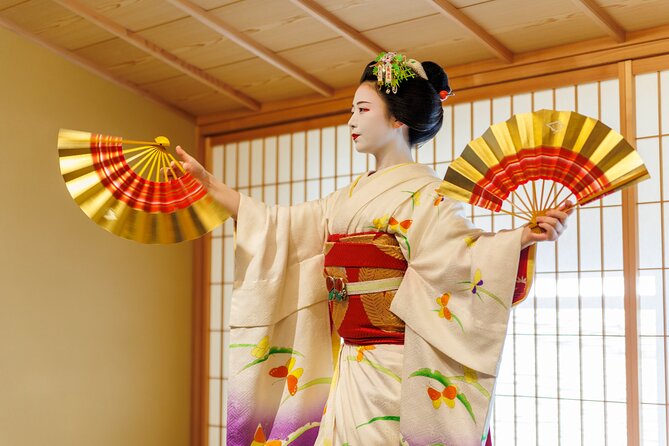
The maiko performs a classical Japanese dance. In some accounts, the ochaya’s mother also plays the shamisen, the traditional three-stringed instrument used in Japanese music. The result is not a large theater production. It is a close-range cultural presentation in a working traditional setting.
That intimacy is both the charm and the limitation. You are close enough to notice the controlled movement, costume, makeup, and musical detail. You are not attending a long stage show with elaborate scenery or a full ensemble.
The question-and-answer session is the real prize
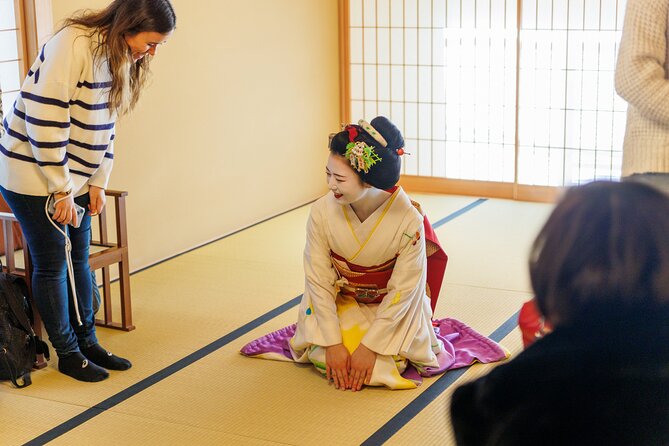
After the dance, you can ask questions. The guide translates, allowing you to speak with the maiko and retired geiko about their work, training, customs, and experiences. This turns the event from a performance into a conversation.
The retired geiko adds a useful sense of time. You are not hearing only a polished explanation of tradition. You can compare the perspective of someone still practicing the art with someone who has completed that chapter of life.
Guides including Miko and Naomi have been especially praised for handling translation and keeping the conversation moving. A good interpreter matters here. Without translation, the encounter would be limited to watching the dance and taking photographs.
There is one practical warning: audibility may not be perfect. At least one account describes soft-spoken guides and difficulty hearing translated remarks. The venue may not use microphones, and a larger group can make questions harder to follow. Sit as close as you reasonably can and ask the guide to repeat anything you miss.
Some questions may overlap with the material covered during the walk. That repetition can be helpful if you are new to the topic, but it can also make the final hour feel long. The experience is advertised at about three hours, with approximately 90 minutes at Miyagawasuji, and it may run longer on some days.
Photography rules and respectful behavior
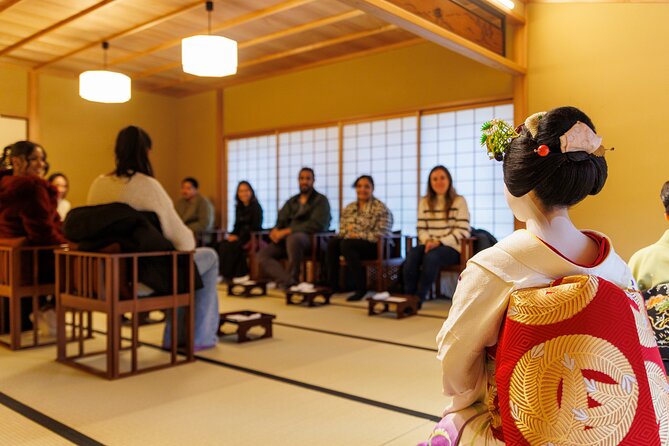
Photography and video are allowed during the performance and designated photo session. You must ask the maiko directly before uploading images to social media. That rule is worth taking seriously. The women are performing a professional role, but they also have personal boundaries and working lives outside the room.
Do not photograph freely during the walking route if it risks intruding on private homes, entrances, or working performers. The tour’s message is clear: meeting a maiko by arrangement is more respectful than pursuing one through the streets.
The photo session is a pleasant extra, but it should not be your only reason for booking. The strongest part is the combination of explanation, performance, and conversation. If you want a fast photo stop with elaborate costumes, this may feel too slow. If you want to understand why the traditions matter, the format makes more sense.
Is $109.43 a fair price?
At $109.43 per person, this is not a cheap walking tour. You are paying for a guide, translation, access to a private ochaya, and a live meeting that would be difficult to arrange independently. No hotel pickup, transportation to the meeting point, food, drink, or personal expenses are included.
The price looks strongest when you think of the ochaya visit as a special access fee rather than a normal sightseeing tour. Most of the Gion walk can be explored for free. The paid value comes from the organized introduction and the opportunity to meet the performers in a controlled setting.
Compared with an evening that includes dinner and drinks, this tour may seem expensive. It does not promise a meal, and the performance lasts only part of the three-hour experience. On the other hand, you receive something more focused than a restaurant show: an explanation of the tradition and a chance to ask direct questions.
I would book it for a first visit to Kyoto if meeting a maiko is high on your list and you want a respectful alternative to street chasing. I would skip it if your priority is food, a full evening of entertainment, or a compact route with little walking.
Timing, meeting point, and physical demands
The meeting and ending point are both in Miyagawasuji, in Kyoto’s Higashiyama Ward. The exact starting location is not a major landmark, so allow time to find it. Confirm the map pin and arrive early rather than relying on a last-minute search through narrow streets.
The walk takes place in rain or shine. Comfortable walking shoes are a must, and an umbrella is useful in wet weather. The traditional house has stairs to the second floor, and the tour requires a moderate level of fitness.
Children under 10 are not accepted. The group can reach 30 people, although the performance may feel more personal when fewer people attend. The tour is near public transportation, but you must arrange your own way to and from the meeting point.
Free cancellation is available if you cancel at least 24 hours before the local start time. Cancellations or changes made later are not refunded or accepted, and incidental hotel or bullet train costs are not covered if plans change.
Who will get the most from this tour?
This experience suits you if you want:
- A clear introduction to Kyoto’s maiko and geiko traditions
- A local guide who can explain what you are seeing in Gion
- A live dance rather than a museum display
- A translated conversation with the performers
- A rare look inside a private ochaya
- A respectful way to meet a maiko without following her through the streets
It is less suitable if you dislike group walks, have trouble hearing soft voices, cannot manage stairs, or want a broad Kyoto history tour. The subject is specifically geisha culture, and the route may feel too repetitive if you have already spent hours exploring Gion.
Guide quality can shape the experience. Names praised for friendly, clear, or engaging service include Haruki, Takuma, Miko, Ayako, Mika, Naomi, Chiko, Yoko, Ellie, and Machiko. Your assigned guide may be different, but strong English and translation are important parts of what you are paying for.
Should you book the Gion maiko experience?
Book this tour if you want a close look at Kyoto’s living geisha tradition and understand that the private-house encounter is the main event. The dance, the conversation, and the chance to hear from a maiko and retired geiko give the experience a level of access that a free walk through Hanamikoji cannot match.
Do not book it expecting a luxurious tea ceremony, a meal, or a polished theater production. The walk can be longer than necessary, the group may be sizable, and translation may be hard to hear. Still, for a respectful first meeting with Kyoto’s geiko culture, the private ochaya visit makes the $109.43 worthwhile for many visitors.
FAQ
How long does the tour last?
The experience lasts approximately three hours. It may run longer than expected depending on the day.
Where does the tour begin and end?
The tour begins in Miyagawasuji, in Kyoto’s Higashiyama Ward, and ends at the special private house used for the experience.
What will I see during the walking portion?
The route includes Gion Shirakawa, Tatsumi Daimyojin Shrine, Tatsumi Bridge, Hanamikoji Street, parts of the Gion area, and the precincts of a nearby Zen Buddhist temple.
Will I enter a private ochaya?
Yes. The experience includes entry to a private ochaya, where a maiko and retired geiko take part in the program.
Is food or drink included?
No. Extra food and drink are not included, and the tour does not include transportation to or from the meeting point.
Can I take photographs?
Photography and video are allowed during the performance and photo session. Ask the maiko directly for permission before posting photographs on social media.
Do I need to wear socks?
Yes. You must wear socks at the performance venue. On rainy days, wet socks and wet clothing are not allowed inside.
Is the venue accessible by elevator?
The performance takes place on the second floor and can only be reached by stairs.
Are children allowed?
Children under 10 years old are not allowed on the tour.
What happens if it rains?
The tour operates in rain or shine. Use an umbrella during the walk and make sure your socks and clothing are dry before entering the venue.
More Walking Tours in Kyoto
More Gion & Geisha Walks in Kyoto
More tours in Kyoto we've reviewed




Gion & Geisha Walks, compared.
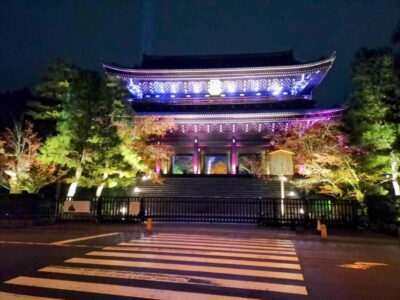 ★ 4.7Kyoto Geisha Walking Tour: Gion District & Hidden GemsFrom $252 hours
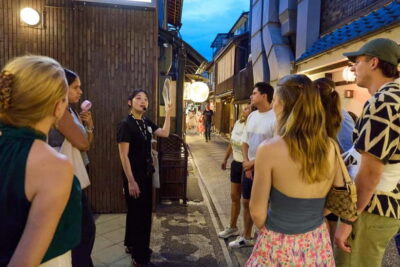 ★ 4.7Kyoto: Gion Geisha District Walking Tour – Stories of GeishaFrom $202 hours
 ★ 4.9Best of Kyoto: Gion, Geisha, Pagodas & CobblestonesFrom $242 hours
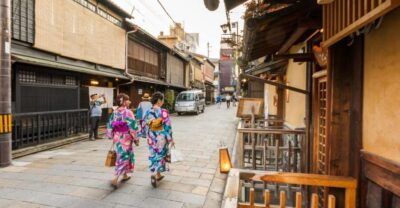 ★ 4.5Night Walk in Gion: Kyoto’s Geisha DistrictFrom $211h 40m
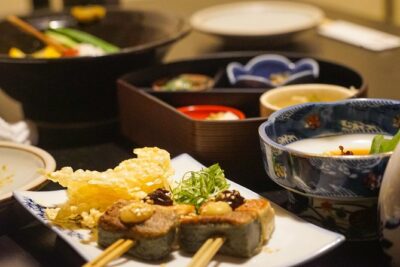 ★ 5.0Kyoto Night Foodie Tour in Gion (9+ dishes + 6 Sake tastings)From $163
 ★ 5.0Kyoto Gion Geisha District Walking Tour – The Stories of GeishaFrom $25