
Reviewed · WORKSHOPS
Kyoto: Mindfulness Origami Workshop, Limited 6/8–6/10
Kyoto offers plenty of grand sights, but this one-hour origami workshop gives you something quieter: time to sit, fold, and pay attention to the small movements of your hands. At GojoParadiso, a professional instructor introduces simple Japanese designs, including cranes, while you work at an easy pace.
I like the calm focus of the class, and I like that you leave with paper creations rather than just a memory. The English and Japanese instruction also helps international visitors follow each step without turning the lesson into a lecture.
The main consideration is its short length. You will learn basic techniques and several designs, but this is an introduction, not a full origami course. If you want complex figures or advanced folding, one hour may feel brief.
In This Review
- Key points to know before you fold
- Arriving at GojoParadiso beside the Takase River
- The first folds: a gentle introduction to origami
- Choosing between colorful and Japanese-patterned paper
- Origami as a mindfulness practice
- Help when the paper goes wrong
- Making the class work for children and adults
- Finishing your creations and taking the group photo
- Is $29 a fair price for one hour?
- Who should book this Kyoto origami workshop?
- Should you book the GojoParadiso workshop?
- FAQ
- How long does the origami workshop last?
- How much does the activity cost?
- Where does the workshop meet?
- Is the workshop taught in English?
- Do I need previous origami experience?
- What is included, and can I keep what I make?
Key points to know before you fold
- A calm break from sightseeing: The class uses the rhythm of folding to encourage concentration and relaxation.
- Small-group setting: The workshop accepts up to 10 people, making it easier to receive help when a fold goes wrong.
- Traditional and colorful paper: You can choose plain colorful sheets or paper with Japanese designs.
- Suitable for families: Children and adults can take part, and no previous origami skill is required.
- A useful Kyoto location: GojoParadiso is beside the Takase River on Kiyamachi Street, about five minutes from Keihan Kiyomizu Gojo Station.
- A keepsake and a photo: You take your finished origami home and join a group photograph at the end.
Arriving at GojoParadiso beside the Takase River
The workshop takes place at GojoParadiso, along the Takase River on Kiyamachi Street. From Keihan Kiyomizu Gojo Station, allow about five minutes on foot. Keihan Shichijo Station is about a 10-minute walk away, and the venue is listed as 386 meters from Kiyomizu Gojo Station.
That location works well in a Kyoto schedule. You can fit the class between major sights without giving up half a day. The short walk from the station also makes this a practical choice if you are carrying shopping bags, traveling with children, or trying to keep your day simple.
I would still give yourself a few extra minutes to find GojoParadiso. The venue is identified by its riverside location and Kiyamachi Street address, but you do not want to arrive flustered and begin a mindfulness class while checking your phone for directions.
The setting beside the Takase River adds a pleasant sense of place, though the workshop itself is the main attraction. You are coming here to fold paper and concentrate, not to join a wider sightseeing tour of the neighborhood.
A few more Kyoto tours and experiences worth a look


The first folds: a gentle introduction to origami
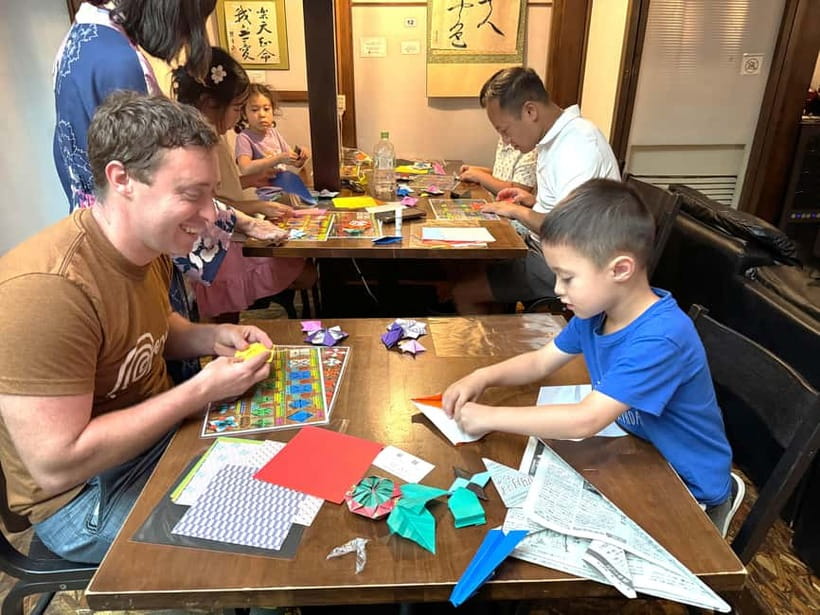
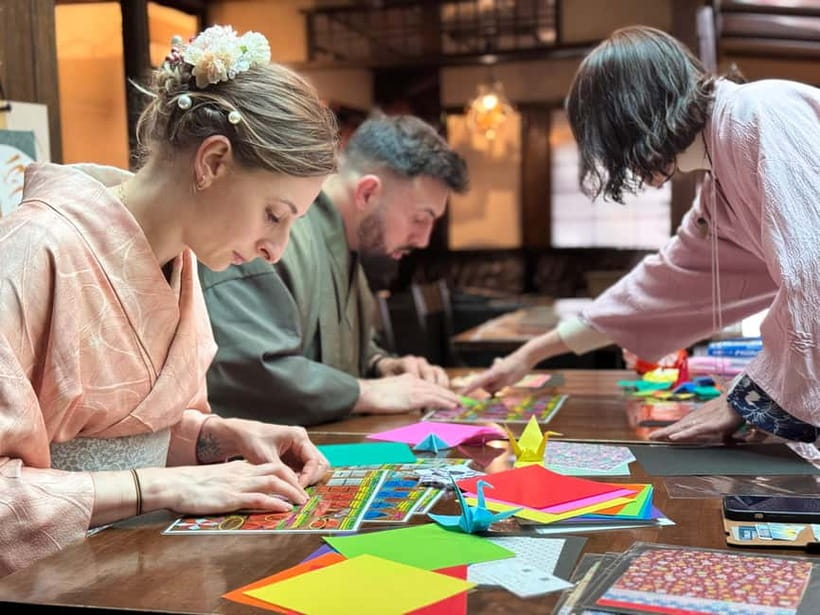
The instructor begins with basic origami techniques and traditional designs. You work with a single sheet of paper, learning how to line up edges, press creases, and move from one step to the next.
That sounds simple, but it is exactly why the class suits beginners. Origami can become confusing when a diagram shows several folds at once. Here, the instructor demonstrates the process and helps you continue when a step does not make sense.
You may work on designs such as cranes, one of Japan’s best-known origami forms. The class also includes fun designs that allow you to interact with your finished pieces. The exact number of figures can vary with the pace of the group, but the goal is to learn several basic skills rather than finish one highly difficult model.
The instructor teaches in English and Japanese. That is useful for visitors who need spoken guidance, especially when the paper begins to look different from the example. You should still expect some visual learning, since origami instructions depend on seeing the direction of each fold.
Choosing between colorful and Japanese-patterned paper
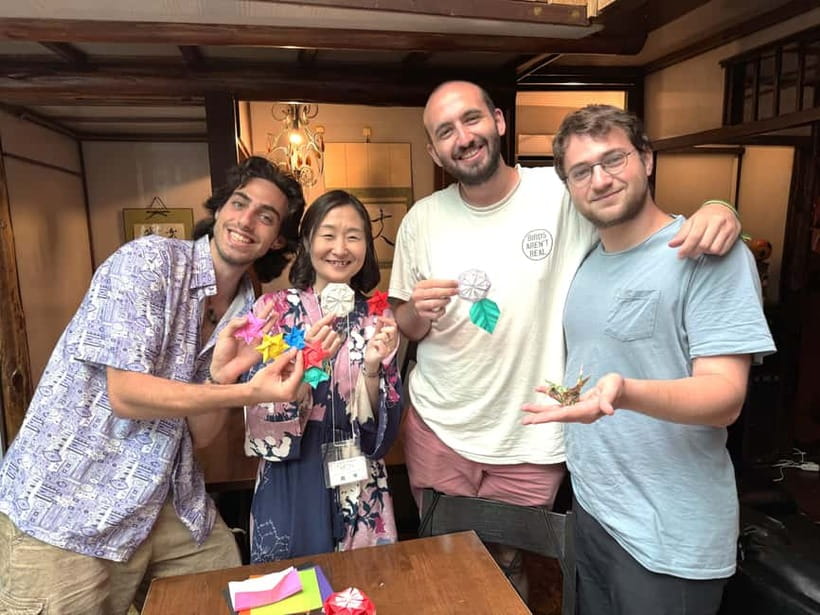
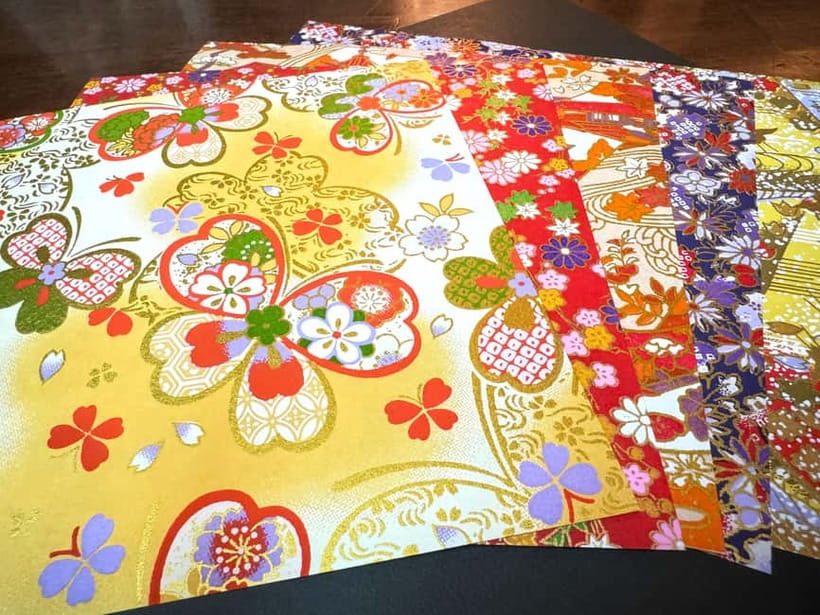
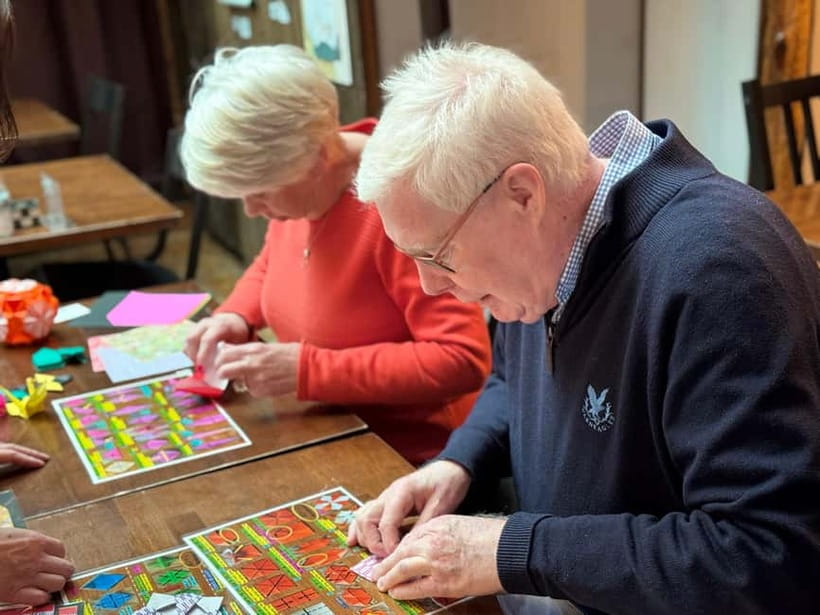
One of the nice details is the choice of paper. You can use colorful sheets or paper decorated with traditional Japanese patterns.
This choice changes the feel of the activity. Bright paper can make the class more playful, especially for children. Japanese-patterned paper gives a finished crane or other figure a stronger connection to local craft traditions. You can choose based on the design you want, or simply pick the sheet that catches your eye first.
The supplies are included, so you do not need to bring paper or tools. That keeps the activity easy to add to a Kyoto itinerary. You arrive, choose your materials, and begin.
Do not expect a specialist paper shop or a formal craft lesson. The information provided describes supplies for use during the class, not a large selection of materials to purchase. The value is in the instruction and the quiet hour, with the paper serving as your working material and souvenir.
Origami as a mindfulness practice
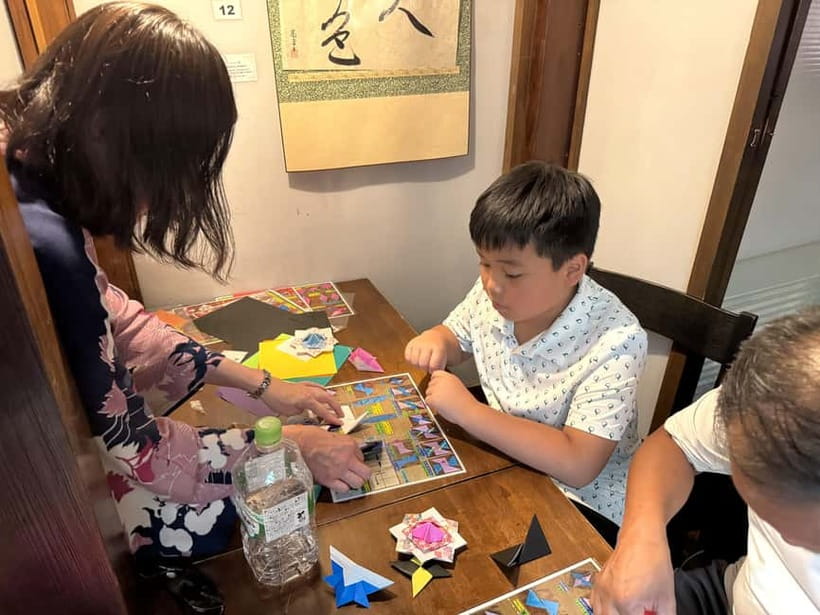
The workshop presents origami as more than a handcraft. You are encouraged to focus on the rhythm of folding, the feel of the crease, and the next simple movement.
This approach can change how you judge the class. You are not being tested on perfect points or sharp corners. If your crane looks a little uneven, the activity has not failed. The point is to stay with the process, build concentration, and give your attention one clear task.
I like this format for a busy Kyoto trip. Temples, gardens, trains, and crowded streets can fill your head with a steady stream of decisions. Folding paper gives you a short pause without asking you to sit through a silent meditation session.
The mindfulness element is also practical for families. Children can take part in a creative activity that does not depend on a long explanation of Japanese culture. Adults can enjoy the calm pace, and experienced folders can focus on improving their technique.
Still, the word mindfulness should not lead you to expect a formal meditation class. The central activity is origami instruction. The calming effect comes from concentrating on the folds, not from a separate program of breathing exercises or guided meditation.
Help when the paper goes wrong
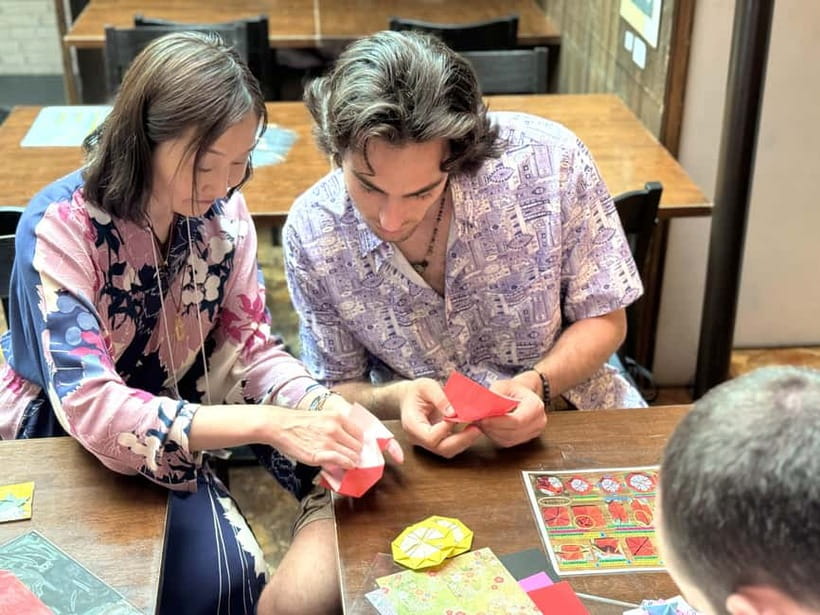
Origami is easy to understand until one fold goes in the wrong direction. Then the entire shape can seem mysterious. The small group size helps here.
The workshop is limited to 10 participants. That is not an intimate private lesson, but it is small enough for the instructor to notice when people need help. Strong praise has focused on the instructor’s patience, kindness, and clear explanations. One participant described receiving patient help after getting stuck on a step, while another praised the guidance through several different skills.
Those details matter more than a long list of designs. A good origami teacher can rescue a class with a simple correction before frustration takes over. If you have never folded paper before, you will benefit from being able to ask for help rather than trying to decode every movement alone.
The class has earned a perfect 5.0 rating from eight reviews, with repeated praise for its relaxing mood and friendly instructor. That is a small sample, so I would not treat it as proof that every session will be identical. It does give you a clear picture of the experience’s main strength: patient, personal instruction in a low-pressure setting.



Making the class work for children and adults
The workshop is designed for children and adults, and no previous origami experience is required. That makes it a good family option, especially if your group includes people with different interests.
An adult who already knows basic folds may find the first section easy. A child who has never made origami may need more time. The class format allows both to enjoy the same activity, but the pace has to serve the whole group.
For families, I would frame the workshop as shared creative time rather than a lesson with a perfect final result. You can help a child line up paper, compare your finished pieces, and enjoy the group photo at the end. The keepsake also gives children something tangible from Kyoto.
It can suit couples, solo visitors, and friends as well. A solo participant may find the small group less awkward than a larger craft event. Couples can work side by side and compare designs. Friends can make a relaxed stop between other activities.
The one-hour duration is a strong point for most people. It is long enough to learn the basics without demanding a major commitment. If you want a slow, extended craft session, you may find the class too short. If you want a taste of Japanese paper folding, the timing is sensible.
Finishing your creations and taking the group photo
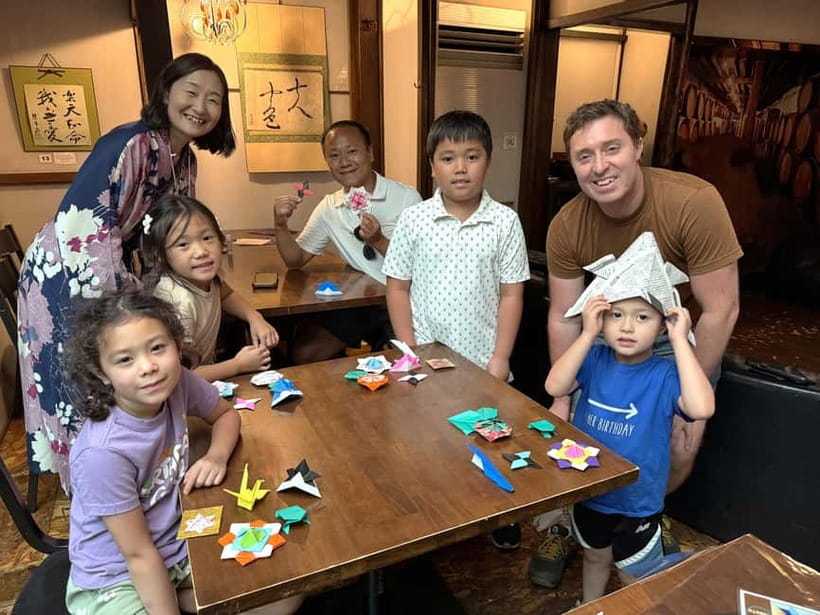
Near the end, you can display your completed pieces or have fun interacting with them. The workshop also includes a commemorative group photo.
The photo gives the session a clear ending. You are not simply putting the paper aside and leaving. You mark the shared activity with a picture that includes the group and its creations.
You can take your origami pieces home as a souvenir. This is a better memento than a generic shop purchase because you made it yourself, even if the folds are not perfect. The paper also takes up almost no room in your luggage.
Keep your expectations realistic about the souvenir. The included origami supplies are for use during the class, and the experience promises that you can take your creations home. It does not state that extra paper or finished models are provided for later projects.
Is $29 a fair price for one hour?
The price is $29 per person. I consider that reasonable if you value instruction, a small group, included materials, and a planned cultural activity in a central Kyoto location.
You are paying more than you would for folding paper on your own. That comparison misses the point. The useful parts are the professional instructor, the step-by-step help, the choice of Japanese-patterned paper, and the structure that turns a simple craft into a focused cultural activity.
The value is strongest for beginners and families. You do not need to buy supplies, learn from a book, or spend time figuring out which designs are suitable. You arrive with an hour available and leave with a skill, a few paper figures, and a photo.
For experienced origami fans, the value depends on your goals. If you want advanced models, specialist paper, or a long technical session, $29 may seem high for an introductory workshop. If you enjoy meeting an instructor and practicing Japanese designs in Kyoto, it can still be worthwhile.
The flexible booking terms also help. You can reserve now and pay later, and cancellation is free up to 24 hours in advance for a full refund. That makes it easier to place the class into a changing Kyoto schedule.
The venue is wheelchair accessible, which is important practical information for anyone planning around mobility needs. The supplied details do not describe the exact seating arrangement or restroom facilities, so you may want to confirm those points directly if they affect your plans.
Who should book this Kyoto origami workshop?

I would recommend it most strongly to:
- Families looking for a calm activity that children and adults can share
- First-time origami folders who want clear help
- Solo visitors who enjoy hands-on cultural activities
- Couples and friends wanting a quiet break from sightseeing
- Visitors who want a small, handmade souvenir
- Anyone curious about mindfulness but not ready for a formal meditation class
You may want to skip it if you dislike seated craft activities or already have advanced origami skills. The workshop focuses on simple techniques and traditional designs, so it is not aimed at specialists seeking difficult figures.
It is also not a substitute for a broad Japanese culture tour. You will learn through origami rather than through a long explanation of Kyoto’s temples, history, or customs. That narrow focus is part of its appeal, but you should book it for the activity itself.
Should you book the GojoParadiso workshop?
Book it if you want a short, friendly, hands-on activity with a clear local connection. The combination of patient instruction, mindful folding, Japanese-patterned paper, and a take-home creation gives the $29 price a fair level of value.
I would place it in the middle of a busy Kyoto day, perhaps after a morning of sightseeing and before an evening meal. The five-minute walk from Keihan Kiyomizu Gojo Station makes it easy to reach, and one hour will not take over your itinerary.
The best reason to book is simple: you get to slow down and make something. The main limitation is just as clear: advanced folders may find the lesson basic, and one hour leaves little room for complex designs.
For most families, beginners, and curious visitors, this is a pleasant way to experience Japanese culture without a formal ceremony or a demanding full-day class.
FAQ
How long does the origami workshop last?
The workshop lasts one hour.
How much does the activity cost?
The price is $29 per person.
Where does the workshop meet?
It meets at GojoParadiso along the Takase River on Kiyamachi Street in Kyoto. The venue is about a five-minute walk from Keihan Kiyomizu Gojo Station and a 10-minute walk from Keihan Shichijo Station.
Is the workshop taught in English?
Yes. The instructor speaks English and Japanese.
Do I need previous origami experience?
No. The workshop teaches basic origami techniques and is designed for beginners as well as experienced participants.
What is included, and can I keep what I make?
Origami supplies for use during the class are included. You can take your completed origami pieces home, and the workshop includes a commemorative group photo.
More Workshops & Classes in Kyoto

More tours in Kyoto we've reviewed










Workshops, compared.
 ★ 4.3Kyoto: 45-Minute Tea Ceremony Lesson ExperienceFrom $2245 min
 ★ 5.0Ramen Cooking Class at Ramen Factory in KyotoFrom $131
 ★ 4.9Kyoto: Ramen Cooking Class at a Ramen Factory with SouvenirFrom $1271h 30m
 ★ 4.9Kyoto: Samurai Class, Become a Samurai WarriorFrom $70
 ★ 5.0Ninja 1-hour Hands-on Lesson by Japanese master in Kyoto -EntryFrom $80
 ★ 5.0Kyoto: Ramen, Gyoza, and Onigiri Cooking ClassFrom $901h 30m