
Reviewed · WORKSHOPS
From Kyoto: Japanese Drum Taiko Workshop(in Osaka)
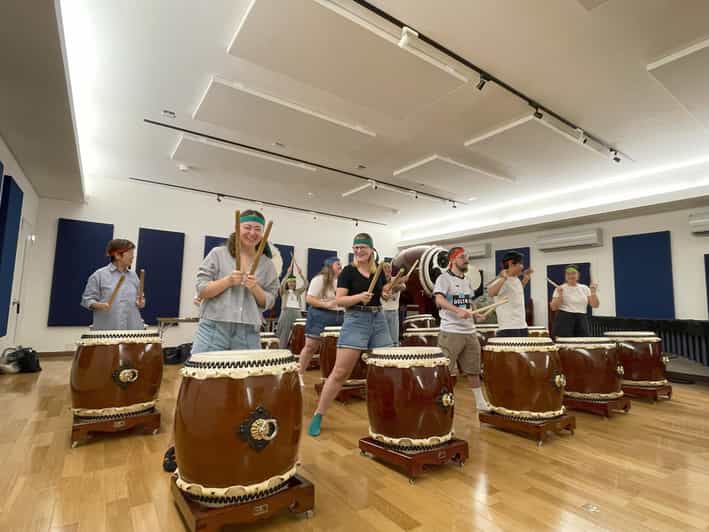
A taiko drum can turn a quiet room into a wall of sound, and this workshop lets you make that sound yourself. You ride from Kyoto to Takatsuki, watch a professional performance, then learn a short piece with an instructor before playing it as a group. The final group performance gives the afternoon a clear purpose.
I like the mix of cultural context and active practice. You learn why taiko matters in Japanese life, write a wish on a hachimaki, and then use your own hands and feet to understand the instrument. I also like the careful transport plan, with an English-speaking guide, a short JR train ride, and a private car to the studio.
The main drawback is the strict timing. You must meet at Kyoto Station 15 minutes early, and the group cannot wait for late arrivals because the train schedule controls the start. The workshop also requires physical participation, is not wheelchair accessible, and does not accept children under seven.
In This Review
- Key points at a glance
- Why this Kyoto to Takatsuki workshop works
- Finding the correct Kyoto Station meeting point
- The short JR ride to Takatsuki
- Learning what taiko means in Japanese life
- Watching a professional taiko performance
- Practicing the basic movements
- Playing the final song together
- The happi and hachimaki photo
- Who will enjoy this most
- Timing, cancellation, and practical value
- Should you book the taiko experience?
- FAQ
- Where does the taiko workshop begin?
- How early should I arrive?
- How do I find the meeting point from the subway?
- How long is the train ride?
- How do I reach the studio from Takatsuki Station?
- Is the workshop taught in English?
- How many people can join?
- Can children participate?
- Is the activity wheelchair accessible?
- What happens during the workshop?
- What is included in the price?
- How much does it cost?
- Can I cancel for a full refund?
- Where does the experience finish?
Key points at a glance
- A real performance before your lesson: A professional taiko player demonstrates the power and rhythm of the drums before you pick up your sticks.
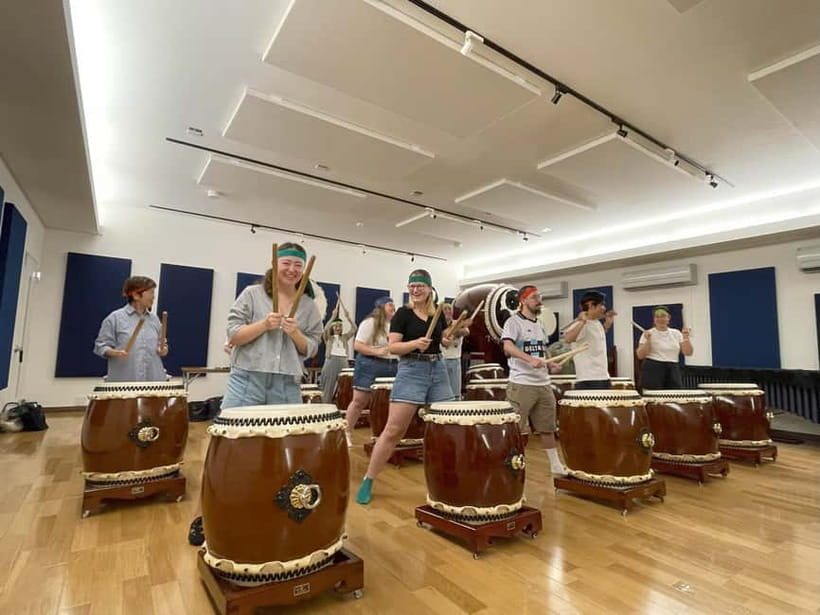
- Small group of up to 15 people: The size gives you a better chance to hear instructions and take part in the final song.
- Simple train and car connection: The route runs from JR Kyoto Station to Takatsuki, followed by about 10 minutes in the studio’s private car.
- More than a drum lesson: You learn about taiko’s place in Japanese culture and write a personal wish on a traditional hachimaki.
- A costume photo at the end: You finish in a happi coat and hachimaki, giving you a keepsake that feels tied to the activity.
- A firm meeting time: Find the correct Central Ticket Gate in advance, not the Shinkansen Central Ticket Gate.
Why this Kyoto to Takatsuki workshop works
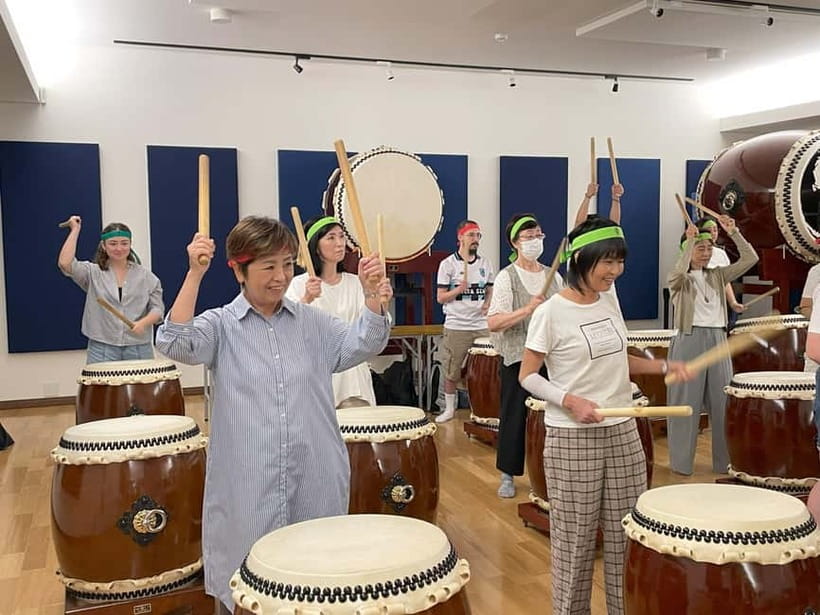
This is not a show where you sit quietly and clap at the end. It is a short cultural lesson built around doing something with your body. Taiko requires a clear stance, strong arm movement, and attention to rhythm. Even a simple piece can feel surprisingly demanding once several drums are playing together.
The structure is sensible. You first learn what taiko means in Japan, then watch an expert, then copy basic movements, and finally play a complete piece with the group. That order matters. You see the standard to aim for before anyone expects you to make music yourself.
The experience costs $123 per person. That is not a cheap way to fill two and a half hours, but the price includes more than studio time. It covers the English guide, taiko instructor, JR one-way ticket to Takatsuki, private car transport between the station and studio, hachimaki, the lesson, performance, and costume photo. If you want a hands-on cultural activity rather than another sightseeing stop, the package has a reasonable case.
You should still compare it with your own priorities. A museum or temple visit costs less, and a casual drumming demonstration may take less time. This activity earns its price through personal instruction, transport coordination, and the chance to perform as part of a group.
A few more Kyoto tours and experiences worth a look


Finding the correct Kyoto Station meeting point
The first challenge is Kyoto Station itself. The meeting point is on the north side of the station, the side facing Kyoto Tower, at ground level. Your guide carries a sign for the Taiko Japanese Drum Experience.
If you arrive by JR, use the Central Exit. Do not use the Shinkansen Central Ticket Gate. Those are different parts of the station, and choosing the wrong one can cost you precious minutes.
If you come by subway, exit through Central 1 Ticket Gate, then take Exit 6 to ground level. Kyoto Tower should be on your right, with the JR Kyoto Station building on your left. Walk along the station building until you find the central ticket gate area.
A taxi driver can be shown this Japanese instruction:
京都駅の北側のタクシーおりばにつけてください。
It asks to be taken to the north-side taxi drop-off area, the side facing Kyoto Tower. I would arrive early enough to locate the meeting point before the day of the activity. The instructions specifically ask you to be there 15 minutes before departure, and this is not a suggestion to treat casually. If you miss the train, calling ahead does not guarantee that you can join later.
The short JR ride to Takatsuki
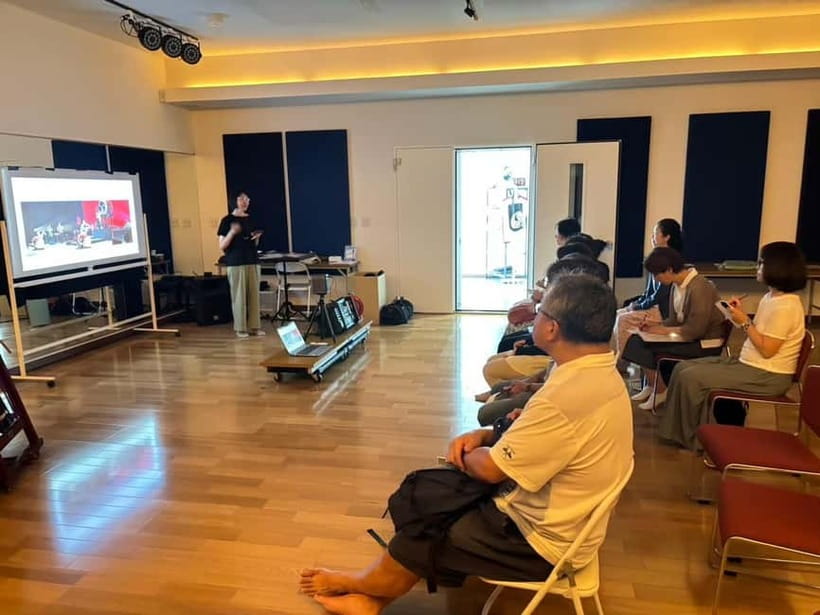
Once the group is together, the guide leads you onto a JR train for the ride to Takatsuki. The trip takes about 10 to 12 minutes from Kyoto Station. That is one of the practical strengths of this activity: you get out of central Kyoto without committing to a long transfer.
At Takatsuki, the studio’s private car picks up the group. The drive to the venue takes about 10 minutes. This connection is far more sensible than taking a taxi directly from Kyoto. Direct taxi travel can take more than an hour, cost a great deal, and become even slower in traffic.
The train transfer also gives the experience a local rhythm. You are not simply dropped at a commercial attraction beside a major station. You travel with the guide to a working studio outside the central sightseeing zone, then return by the same basic route.
The written details contain a small inconsistency about the return. One section says the activity ends back at the Kyoto Station meeting point, while another says it ends at JR Takatsuki Station and that the guide puts you on the train to Kyoto. Confirm the exact return arrangement when you book or meet the guide. In either case, allow time after the activity rather than scheduling a tight connection.
Learning what taiko means in Japanese life
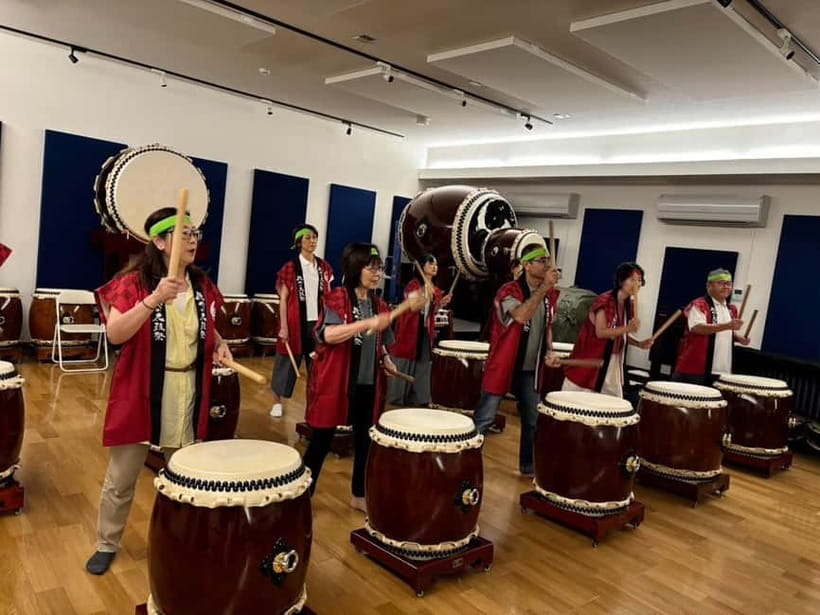
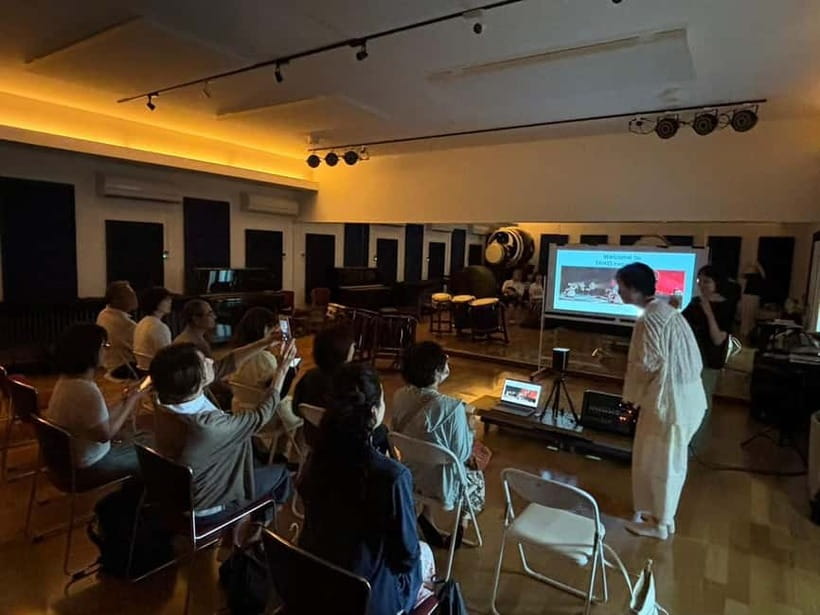
The lesson begins with an explanation of taiko’s cultural background. The drum is not presented as just a loud instrument for entertainment. You learn about its place in Japanese life before beginning the physical work.
The information is kept brief, which suits a 2.5-hour activity. You are not signing up for a lecture. The value comes from connecting the explanation to the instrument in front of you. Once you understand that taiko carries cultural meaning, the performance and lesson feel less like a novelty and more like an introduction to a Japanese art form.
Next comes a simple calligraphy activity. You write your wishes on a hachimaki, the traditional headband used later in the workshop. This is a small detail, but it gives the session a personal touch. You are not just borrowing a costume for a photograph. You create something connected to your own visit.
The organizers do not promise advanced calligraphy instruction, so keep your expectations modest. Think of it as a short cultural activity that helps mark the beginning of the lesson.
Watching a professional taiko performance
Before you play, a professional performer gives a demonstration. This is likely to be the most dramatic part of the session. Taiko has a physical force that is difficult to understand from a written description or a small recording. The sound, movement, and timing work together.
The performance also gives you useful context for the practice that follows. You can watch how the player holds the sticks, uses the whole body, and keeps a strong rhythm. After seeing a polished performance, the basic movements have a clear reference point.
Do not expect to reproduce the demonstration by the end of the afternoon. The point is not to become a professional drummer in one lesson. The point is to learn enough technique to take part in a simple piece with confidence.
This professional performance is one reason the activity feels worthwhile for people who are curious about taiko but have never encountered it before. It gives you both a show and a lesson without separating the two.


Practicing the basic movements
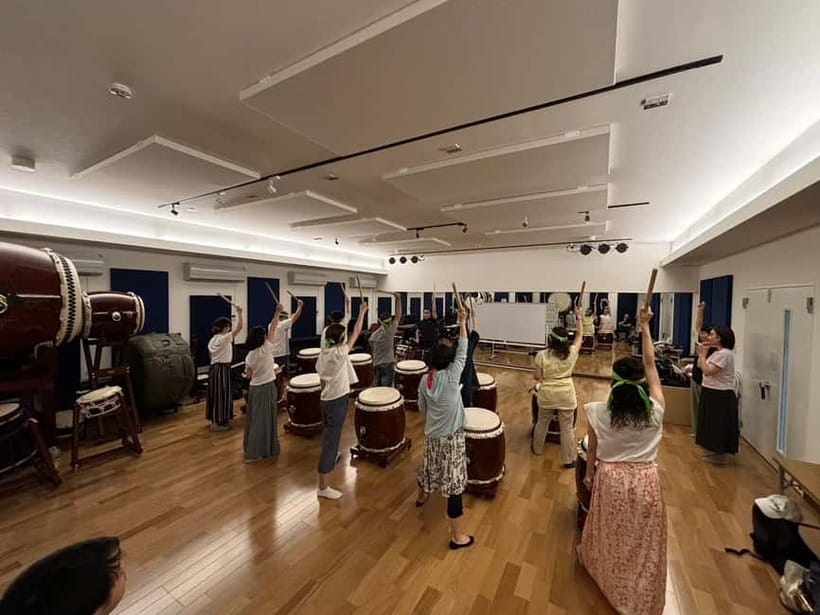
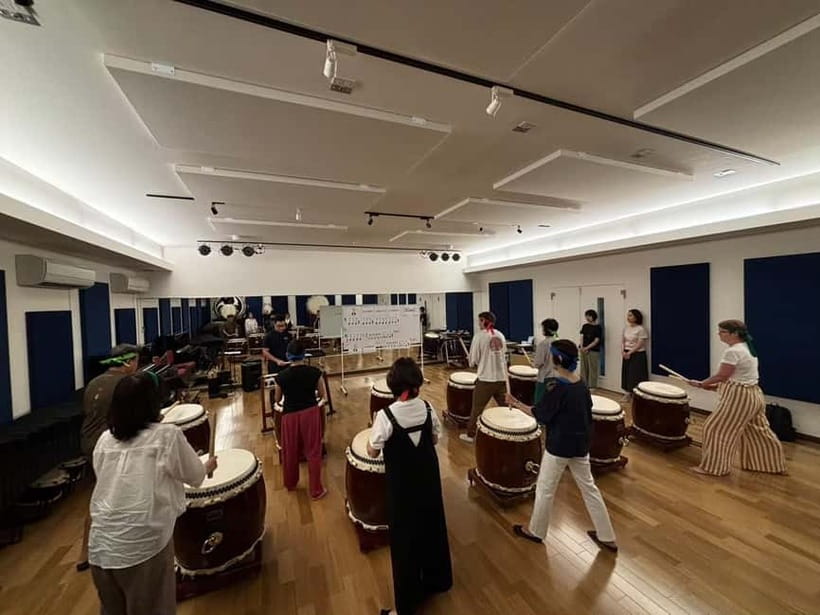
After the demonstration, a friendly instructor introduces the basic taiko movements and techniques. The lesson is designed for beginners, and everyone can take part. You do not need previous musical experience.
Expect repetition. The instructor leads you step by step, and you spend much of the session practicing the new song. This is good news if you want genuine participation. It means you are not rushed through a token turn at the drum.
It also means the activity may feel physically active. Taiko involves repeated arm movements and a firm stance. The supplied information does not list a fitness requirement, but you should be comfortable standing and moving during the lesson. Ask the provider directly about any specific physical concern before booking.
The small-group limit of 15 helps here. A very large class would make individual instruction harder and could leave you waiting. With a smaller group, the instructor can keep everyone working through the same pattern and prepare you for the finale.
Playing the final song together
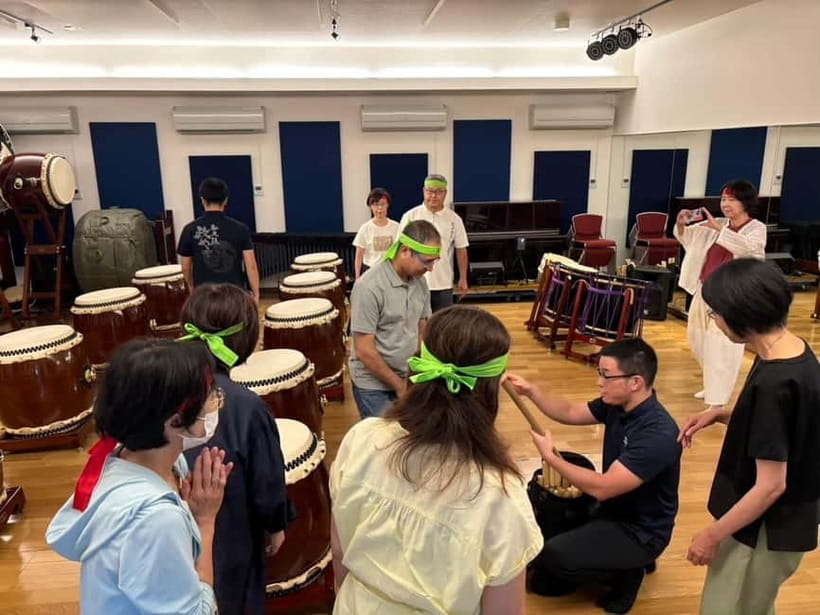
The workshop builds toward a simple group performance. You play the piece with your fellow participants, following the instructor’s rhythm and directions.
This is where the activity becomes a shared memory rather than a private lesson. Group drumming can be forgiving because the sound blends together, but it still asks you to listen carefully. You have to keep your timing while hearing the other drums around you.
The song is described as simple, not advanced. That is an advantage for a mixed group with different ages, musical backgrounds, and confidence levels. You get a real ending without being asked to master difficult material.
The final performance also explains why the session lasts 2.5 hours. A shorter activity could include a demonstration and a few minutes of practice, but this schedule leaves room to learn the movements, repeat the song, and finish together.
The happi and hachimaki photo
The activity ends with a commemorative photo in traditional Japanese clothing. You wear a happi and the hachimaki created during the session.
The photo is a pleasant finish, especially if you want a physical reminder of the experience. It also gives the afternoon a clear closing moment after the group song. The costume is part of the activity rather than a separate photo attraction.
Do not book this solely for the picture. The strongest part is the combination of instruction and performance. The costume adds a visual memory, but it does not replace the cultural explanation or the time spent learning taiko.
Who will enjoy this most
I would recommend this for adults, older children, couples, families with children aged seven or above, and small groups of friends who want to do something more active than sightseeing. It also suits you if you have already seen temples and gardens and want a different way to connect with Japan.
The English-language format makes the lesson accessible to international visitors. The named instructors in the experience include English guide Mie, guide Michiko, and taiko instructor Yusuke. Staff members may vary, but the planned format includes English guidance from the meeting point through the workshop.
This is less suitable if you need a wheelchair-accessible activity, dislike fixed schedules, or want a completely passive cultural show. It may also not suit anyone hoping for an advanced music class. The experience is welcoming to beginners, and that means the lesson is built around simple movements rather than technical mastery.
Timing, cancellation, and practical value
The total duration is 2.5 hours, with starting times shown when you check availability. The fixed meeting time matters because the group travels by train. Arrive early, locate the Central Ticket Gate, and leave room for the size and complexity of Kyoto Station.
You can cancel up to 24 hours before the start for a full refund, and the reserve-now, pay-later option lets you hold a place without paying immediately. Those policies help if your Kyoto schedule is still moving around, but they do not protect against arriving late on the day.
The activity is not wheelchair accessible, and children under seven cannot participate. The language offered is English, and the group is limited to 15 people. These details make the workshop fairly easy to assess before booking.
Should you book the taiko experience?
Book it if you want a hands-on Japanese cultural activity with a strong performance, clear beginner instruction, and organized transport from Kyoto. The professional demonstration, group song, and traditional costume photo give the session variety, while the cultural introduction keeps it from feeling like a random tourist game.
Skip it if you want maximum flexibility, cannot stand and move comfortably, or would rather spend $123 on several lower-cost sightseeing stops. Also check the return details because the supplied meeting information gives two different descriptions of where the activity finishes.
For most people who enjoy music, culture, and a little participation, this is a memorable way to spend an afternoon. You leave with more than a photograph. You have learned a basic piece, felt the force of a taiko drum, and taken part in a Japanese tradition with a group.
FAQ
Where does the taiko workshop begin?
It begins at the Central Ticket Gate of JR Kyoto Station, on the north side facing Kyoto Tower. Do not use the Shinkansen Central Ticket Gate.
How early should I arrive?
You should arrive 15 minutes before the scheduled start time. Late arrival can mean missing the train and losing the chance to participate, even if you call.
How do I find the meeting point from the subway?
Exit through Central 1 Ticket Gate, then take Exit 6 to ground level. Kyoto Tower will be on your right and the JR Kyoto Station building on your left.
How long is the train ride?
The JR train from Kyoto Station to Takatsuki Station takes about 10 to 12 minutes.
How do I reach the studio from Takatsuki Station?
The taiko studio provides a private car between Takatsuki Station and the venue. The drive takes about 10 minutes.
Is the workshop taught in English?
Yes. English guidance is offered, including a live English-speaking guide and a taiko instructor.
How many people can join?
The activity is limited to 15 participants.
Can children participate?
Children under seven years old are not allowed to participate.
Is the activity wheelchair accessible?
No. The experience is not wheelchair accessible.
What happens during the workshop?
You learn about taiko’s cultural background, write a wish on a hachimaki, watch a professional performance, practice basic drumming techniques, play a simple song with the group, and take a commemorative photo wearing a happi and hachimaki.
What is included in the price?
The price includes the taiko experience, English guide, taiko instructor, hachimaki, JR one-way ticket to Takatsuki Station, and car transport between Takatsuki Station and the studio.
How much does it cost?
The listed price is $123 per person.
Can I cancel for a full refund?
Yes. You can cancel up to 24 hours before the activity for a full refund.
Where does the experience finish?
The practical information gives two different descriptions: one says it ends back at the Kyoto Station meeting point, while another says it ends at JR Takatsuki Station with the guide putting you on the train to Kyoto. Confirm the return arrangement when booking.
More Workshops & Classes in Kyoto
More tours in Kyoto we've reviewed





Workshops, compared.
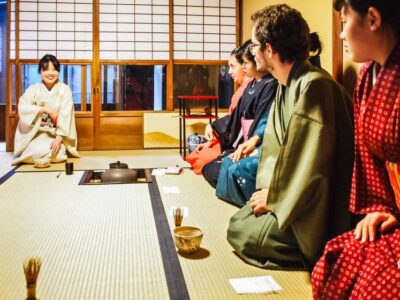 ★ 4.3Kyoto: 45-Minute Tea Ceremony Lesson ExperienceFrom $2245 min
 ★ 5.0Ramen Cooking Class at Ramen Factory in KyotoFrom $131
 ★ 4.9Kyoto: Ramen Cooking Class at a Ramen Factory with SouvenirFrom $1271h 30m
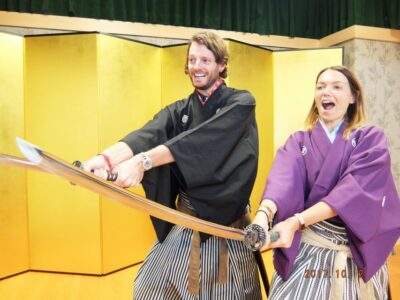 ★ 4.9Kyoto: Samurai Class, Become a Samurai WarriorFrom $70
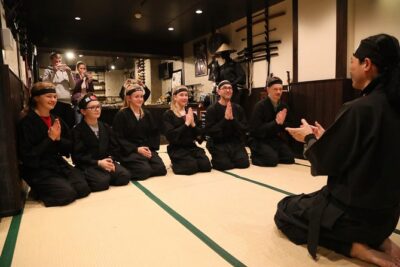 ★ 5.0Ninja 1-hour Hands-on Lesson by Japanese master in Kyoto -EntryFrom $80
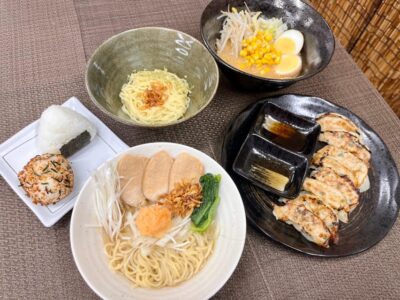 ★ 5.0Kyoto: Ramen, Gyoza, and Onigiri Cooking ClassFrom $901h 30m