
Reviewed · GION & GEISHA WALKS
Kyoto night walk tour (Gion district)
Gion becomes a different place after sunset. Lantern light, narrow lanes, old wooden facades, and quiet stone walls give this private 90-minute walk a calmer feel than a daytime sightseeing circuit. Guide Hiro, also identified as Hero in some tour communications, adds local stories and takes photos along the way.
I like two things here: the small private format, which lets you ask questions and set a comfortable pace, and the guide’s practical help. Hiro has taken family portraits, helped solo visitors with photos, suggested restaurants, and even walked some people onward to dinner or their hotel. The main drawback is that the route covers a lot on foot in a short time, and one stop is intentionally quiet rather than fully explained.
In This Review
- Key points to know before booking
- Why Gion works better at night
- Meeting Hiro in front of Minamiza
- Yasaka Shrine, a useful first stop
- Quiet walls and the rules of Gion
- Yasakanoto Pagoda and the best photo pause
- Yasaka’s famous slope
- Kiyomizu-dera and seasonal illumination
- The value of $35 per person
- Who will enjoy this walk most
- Timing, weather, and practical planning
- Is the Kyoto night walk worth booking?
- FAQ
- How long does the Kyoto night walk last?
- Where does the tour begin?
- Where does the activity end?
- Is the tour private?
- Is admission to Kiyomizu-dera included?
- Can I cancel for a full refund?
Key points to know before booking
- Yasaka Shrine after dark: Begin with about 15 minutes of local background at one of Kyoto’s best-known religious sites.
- Silent stone-wall lanes: Walk through a traditional part of Gion where respect for residents means keeping voices low.
- Yasakanoto photo stop: Spend about 20 minutes near the pagoda, with time for photos.
- Seasonal Kiyomizu-dera views: The final temple stop lasts about 10 minutes, and night illumination depends on the season.
- Private for $35 per person: Only your group joins, making this a good choice for families, couples, and solo visitors who want conversation.
- Free cancellation: Cancel at least 24 hours before the start for a full refund. Poor weather may lead to a new date or full refund.
Why Gion works better at night
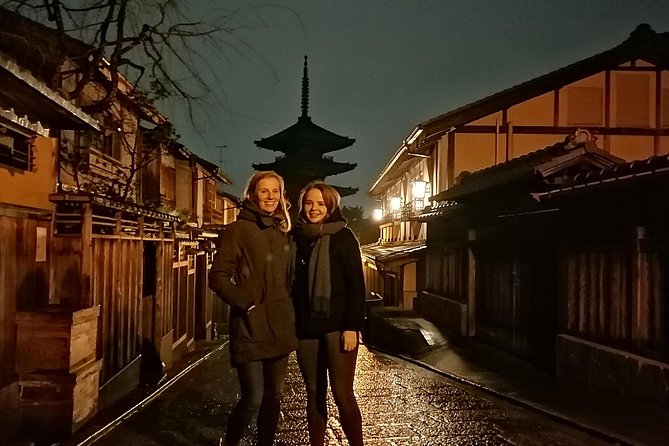
Gion can feel crowded and highly staged during the day. At night, the appeal is more subtle. You notice the glow of lamps on old walls, the shape of a lane turning out of sight, and the contrast between busy Kyoto streets and quiet residential corners.
This is not a formal lecture with a long list of dates. It is a guided walk through an area where the setting does much of the work. Hiro points out places you could easily pass without understanding, then fills in the cultural and historical background.
The quiet matters. Gion is not an open-air theme park. People live and work here, and some lanes call for silence. You may get less commentary in the stone-wall district, but that restraint is part of the experience. You are being shown how to visit respectfully rather than being encouraged to treat every alley as a photo set.
The tour is especially useful on your first evening in Kyoto. You get a basic sense of Gion, Yasaka, and the roads leading toward Kiyomizu-dera. Afterward, the area is easier to navigate on your own, and you have a better idea of where to return for dinner or another evening walk.
A few more Kyoto tours and experiences worth a look
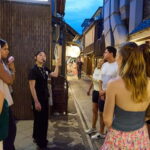

Meeting Hiro in front of Minamiza
The meeting point is in front of the Minamiza Kabuki Theatre at 194 Kawabatacho in Kyoto’s Higashiyama Ward. This is a central, recognizable place near public transportation, but give yourself enough time to find the theatre and identify the exact meeting spot.
Hiro has been praised for sending reminders and meeting information soon after booking. That sort of simple communication is useful in Kyoto, where several major sights sit close together and a few minutes of confusion can eat into a 90-minute tour.
The activity is private, so only your party participates. That changes the tone. A couple can ask about customs without feeling self-conscious. Parents can keep the walk focused for children. A solo visitor can have an evening conversation instead of joining a large group.
The guide’s style seems friendly and flexible. One couple arrived tired after a long day and asked for a shorter version, and Hiro adjusted the walk while still showing them key sights and taking photos. That flexibility is valuable, though you should not assume every timing change is guaranteed.
Yasaka Shrine, a useful first stop
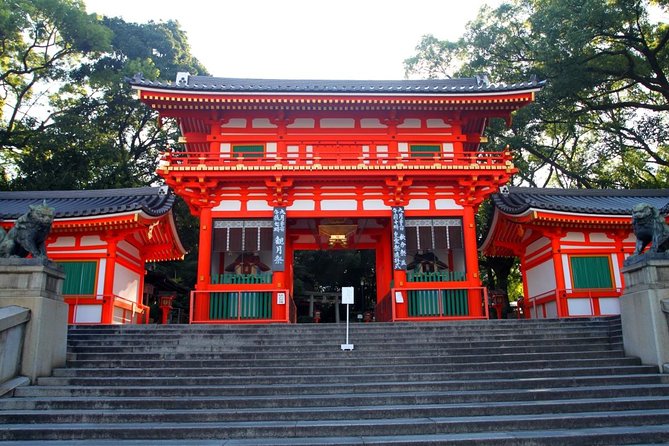
The walk begins at Yasaka Shrine, with about 15 minutes set aside for its background and history. Admission is free, so there is no extra ticket to arrange for this part.
Starting here makes sense. Yasaka Shrine gives you a clear introduction to the religious traditions that shaped this corner of Kyoto. It also helps you place the surrounding Gion streets in context. Instead of seeing the district as a collection of pretty lanes, you begin to understand how shrines, festivals, businesses, and neighborhoods fit together.
Night changes the mood of the shrine grounds. You might find fewer distractions than during a busy daytime visit, with the lighting drawing attention to gates, buildings, and pathways. The stop is short, so expect a focused introduction rather than a full temple tour.
If you want extensive architectural detail, this experience may feel brisk. The purpose is to orient you before moving into Gion, not to spend an hour at Yasaka Shrine. I would treat this stop as a starting point, then return independently if the shrine catches your interest.
Quiet walls and the rules of Gion
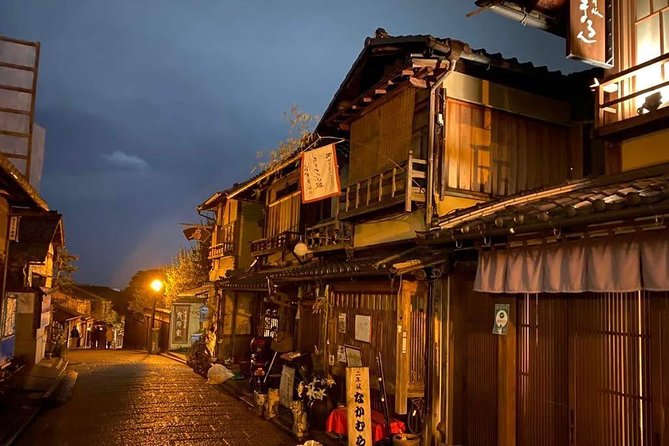
From Yasaka Shrine, the route enters a traditional stone-wall district. The guide does not explain much here because the group is expected to remain quiet.
That may sound like a missing feature, but it is actually a useful lesson. Gion’s old lanes are atmospheric because they are still part of a working neighborhood. Keeping your voice down protects that atmosphere and shows respect to residents.
You should also keep your camera habits in check. The supplied details do not promise access to private streets, geisha sightings, or special performances. The value is in walking through the district with a guide who can indicate what you are seeing without turning the neighborhood into a spectacle.
This is one place where the tour’s short length works in its favor. You get a taste of the quiet lanes, then continue before the walk becomes repetitive. Wear comfortable shoes, since the route includes several streets, slopes, and temple approaches.
Yasakanoto Pagoda and the best photo pause
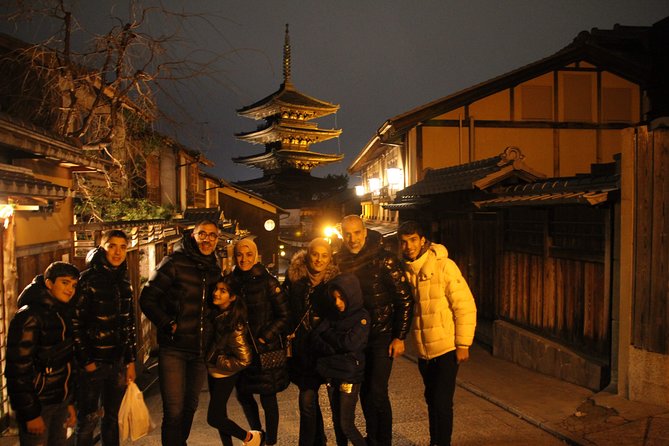
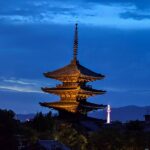
The Yasakanoto stop lasts about 20 minutes and is the visual centerpiece of the walk. Hiro explains the pagoda’s history, then uses the area for photographs.
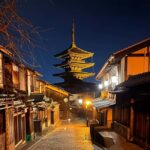
Yasakanoto is one of those Kyoto sights that benefits from a guide’s timing and positioning. The pagoda rises above the surrounding streets, and the combination of traditional buildings, evening light, and the tower creates a strong sense of place. A person who knows the area can help you notice the best angle instead of simply pointing a phone toward the tallest structure.
Photography is a repeated strength of this experience. Hiro has taken photos of families, couples, and solo visitors during the walk, often sending them promptly afterward. That is a real benefit for anyone who wants a record of the evening without asking strangers to take group pictures.
You should still view the photography as a helpful extra, not a guaranteed professional shoot with a set number of edited images. The available information says the guide takes photos, but it does not promise a particular camera, delivery method, or quantity.
For families, this stop may be the highlight. Children can enjoy the strong visual setting, while parents get photographs with everyone included. Solo visitors also gain something practical: you can enjoy the walk without constantly choosing between seeing the street and documenting it.
A few more Kyoto tours and experiences worth a look

Yasaka’s famous slope
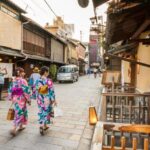
The route continues along a famous slope in the Yasaka area. The details provided do not assign a separate explanation or duration to this section, so think of it as a connecting walk with scenic value rather than a formal stop.
Slopes are part of what makes this part of Kyoto feel layered. You move through changing views, from close walls and lanes to broader glimpses of rooftops and temple structures. At night, lighting can make the route feel more dramatic, but uneven pavement and inclines also make good footwear important.
This section helps turn the outing into a neighborhood walk rather than a checklist of three landmarks. You are not simply transported from Yasaka Shrine to a pagoda and then to a temple. The spaces between the sights are part of the point.
The pace will depend on your group and how often you stop for questions or pictures. Since the entire activity lasts about an hour and a half, you should expect short visits and steady walking.
Kiyomizu-dera and seasonal illumination
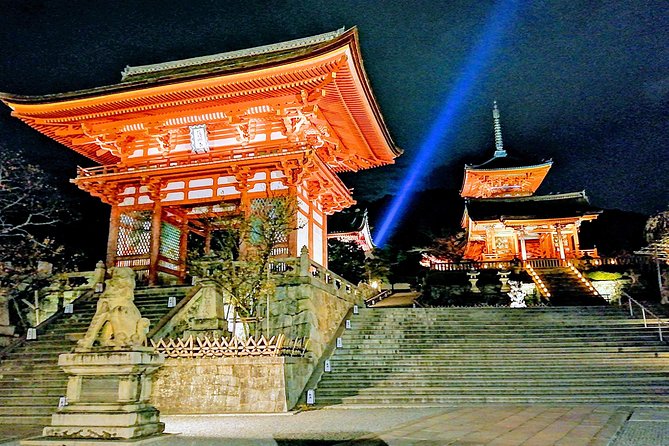
The walk includes about 10 minutes at Kiyomizu-dera Temple. Admission is not included, and the temple’s nighttime illumination depends on the season.
That seasonal detail is important. Do not book this walk expecting a guaranteed lit-up temple every night. On the right date, the illumination can add a memorable final scene. At other times, the temple area may be appreciated mainly for its position, architecture, and evening atmosphere.
The short stop also means you should not expect a full visit to Kiyomizu-dera. Ten minutes is enough for an introduction and a few views, not for exploring the temple grounds at leisure. If Kiyomizu-dera is a major priority, plan a separate daytime visit when you can give it more time.
The stated end point is back at the original meeting point. Because the route includes several well-known locations in the Yasaka and Kiyomizu area, I would confirm the exact return arrangement with the provider before setting a tight dinner reservation. The supplied timing is approximate, and the walk may vary with group pace, weather, and photo stops.
The value of $35 per person
At $35 per person, this is reasonably priced for a private Kyoto walk, especially if you are sharing it with family or friends. You are paying less for admission tickets, since Yasaka Shrine and Yasakanoto are listed as free, and more for the guide’s time, local orientation, flexibility, and photography.
The value improves if you are new to Kyoto. A good first-night walk can prevent wasted time later, help you recognize Gion’s main areas, and provide restaurant suggestions for the rest of your stay. Hiro has recommended ramen, gyoza, barbecue, and Kobe beef restaurants, and has sometimes helped people find or reach dinner afterward.
The price is less compelling if you already know Gion well or want a long, detailed temple tour. The experience is short, and Kiyomizu-dera admission is extra. It is also not designed as a food tour, geisha performance, or photography workshop.
For a private activity, though, the cost is modest. A large group tour may provide more formal commentary, but it will not offer the same easy back-and-forth or the same chance to ask for a family photo, restaurant suggestion, or route adjustment.
Who will enjoy this walk most
I would recommend it to:
- First-time Kyoto visitors who want an easy introduction to Gion after arrival.
- Couples and families who would like photos together and a private pace.
- Solo visitors who want company while exploring at night.
- People interested in local customs who will respect quiet lanes and residential areas.
- Food-focused visitors who value restaurant suggestions after the walk.
- Photographers and photo-conscious visitors who want atmospheric street pictures and portraits.
It may not suit you if you have limited mobility, dislike slopes, or want to avoid walking for 90 minutes. The activity is near public transportation, and most people can participate, but the information does not describe step-free access or a modified route.
It is also a poor fit if you expect every stop to come with a long explanation. The stone-wall area is intentionally quiet, the Yasaka slope is mainly a walking section, and Kiyomizu-dera receives only about 10 minutes.
Timing, weather, and practical planning
The tour is available with a mobile ticket, and confirmation is sent within 48 hours, subject to availability. It is commonly booked well in advance, with an average booking lead time of 32 days, so reserve early if your Kyoto dates are fixed.
The activity requires good weather. If poor weather causes cancellation, you are offered another date or a full refund. For your own comfort, bring shoes suited to sustained walking and slopes, and avoid booking the tour immediately before a reservation you cannot move.
You can cancel for a full refund up to 24 hours before the start time. Changes or cancellations inside that window are not accepted and are not refunded. Service animals are allowed.
The tour is described as suitable for most people and located near public transportation. Those are helpful basics, but they do not answer every accessibility question. If you need a particular accommodation, contact Hero Tour Japan before booking.
Is the Kyoto night walk worth booking?
Book this tour if you want a friendly, private introduction to Gion, especially on your first night in Kyoto. The strongest reasons are the quiet evening route, Hiro’s personal guidance, the Yasakanoto photo stop, and the practical restaurant advice that can make the rest of your stay easier.
Think carefully if your priority is a detailed temple study, guaranteed night illumination at Kiyomizu-dera, or a slow walk with plenty of time at each sight. The route is compact and active, and some of its charm comes from moving steadily through the district.
For $35, I see this as a useful orientation walk with a personal touch rather than a grand all-night sightseeing event. Bring comfortable shoes, leave room for a few questions, and let Gion’s quieter streets do some of the talking.
FAQ
How long does the Kyoto night walk last?
The tour lasts approximately 1 hour and 30 minutes.
Where does the tour begin?
The meeting point is in front of the Minamiza Kabuki Theatre at 194 Kawabatacho, Higashiyama Ward, Kyoto, 605-0075, Japan.
Where does the activity end?
The activity is stated to end back at the meeting point.
Is the tour private?
Yes. Only your group participates in the activity.
Is admission to Kiyomizu-dera included?
No. Admission to Kiyomizu-dera Temple is not included. Yasaka Shrine and Yasakanoto are listed with free admission.
Can I cancel for a full refund?
Yes. You can cancel at least 24 hours before the experience start time for a full refund. If poor weather causes the activity to be canceled, you will be offered a different date or a full refund.
More Walking Tours in Kyoto
More Night Walks & Ghost Tours in Kyoto
More Gion & Geisha Walks in Kyoto
More tours in Kyoto we've reviewed



Gion & Geisha Walks, compared.
 ★ 4.7Kyoto Geisha Walking Tour: Gion District & Hidden GemsFrom $252 hours
 ★ 4.7Kyoto: Gion Geisha District Walking Tour – Stories of GeishaFrom $202 hours
 ★ 4.9Best of Kyoto: Gion, Geisha, Pagodas & CobblestonesFrom $242 hours
 ★ 4.5Night Walk in Gion: Kyoto’s Geisha DistrictFrom $211h 40m
 ★ 5.0Kyoto Night Foodie Tour in Gion (9+ dishes + 6 Sake tastings)From $163
 ★ 5.0Kyoto Gion Geisha District Walking Tour – The Stories of GeishaFrom $25