
Reviewed · COOKING CLASSES
Sushi – Authentic Japanese Cooking Class – the best souvenir from Kyoto!
Sushi is the real souvenir here. At Japanese Cooking Class Roujiya, Kaori guides you through sushi rice, several sushi styles, dashi soup, and pickled ginger, then helps you eat the results with a better sense of Japanese table manners. You do the work yourself, rather than simply watching a chef perform.
I like the home-style setting and the way the lesson connects each recipe to Japanese food culture. The four-page handout, with recipes and notes on manners, umami, and ingredients, gives you something useful after Kyoto. I also like the clear English instruction, which makes the class workable for beginners and families.
The main consideration is finding the address. Kyoto’s street system can confuse taxi and ride-hailing drivers, so use the supplied Google Maps pin and allow extra time. Group-size information also varies, from a small class of about eight to a formal maximum of 12 participants, so the atmosphere may depend on the date.
In This Review
- Key points to know before booking
- What happens at Roujiya in Kyoto
- Making sushi without guessing
- Dashi, umami, and the story behind the meal
- A home setting with useful take-home material
- Why the two-hour length works
- Group size and the feel of the class
- Drinks, etiquette, and what is included
- Getting to the address without a Kyoto scramble
- Is $72.67 a fair price?
- Who should book this class?
- Should you book Japanese Cooking Class Roujiya?
- FAQ
- Where does the sushi cooking class take place?
- What time does the class begin?
- What will I learn to cook?
- Is the class taught in English?
- Are food and drinks included?
- Is hotel pickup provided?
- How many people can join the class?
Key points to know before booking
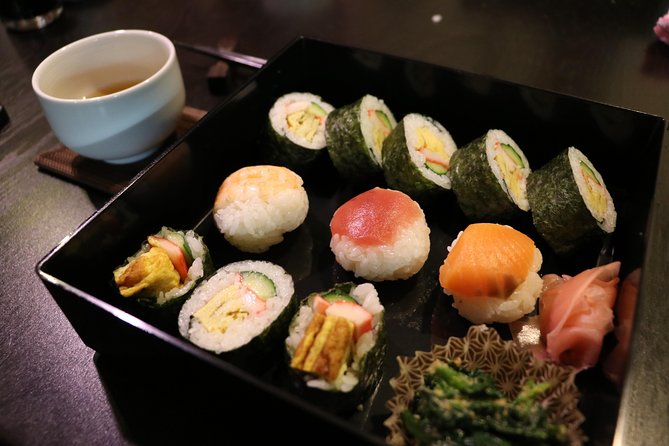
- Make and eat several Japanese dishes: You prepare sushi, soup, pickled ginger, and sushi rice, then sit down to enjoy the meal.
- Learn the why behind the food: Kaori explains umami, dashi made with seaweed and bonito flakes, food history, and dining customs.
- English instruction is included: The class is taught in English by an experienced cooking instructor.
- Recipes go home with you: The handout helps you try the dishes again after your Japan trip.
- A practical two-hour stop: The 11:30 a.m. class fits neatly into a Kyoto sightseeing day and includes the meal.
- Plan your arrival carefully: Roujiya is near public transportation, but the address can be difficult for drivers to locate.
What happens at Roujiya in Kyoto
The class takes place at Japanese Cooking Class Roujiya, at 22-58 Nishinokyo Ikenouchicho in Nakagyo Ward. It begins at 11:30 a.m. and ends back at the same location, with the full activity lasting about two hours.
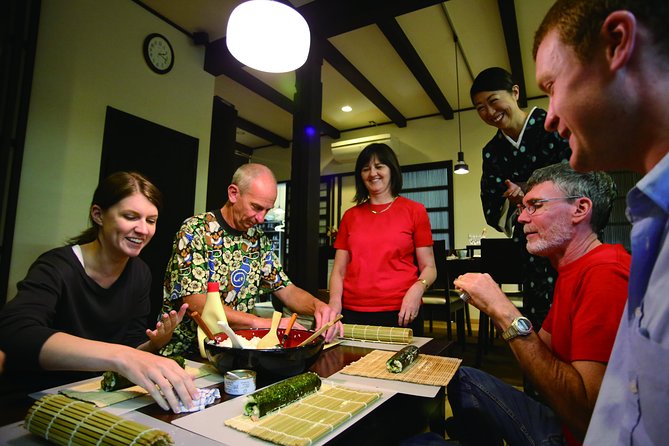
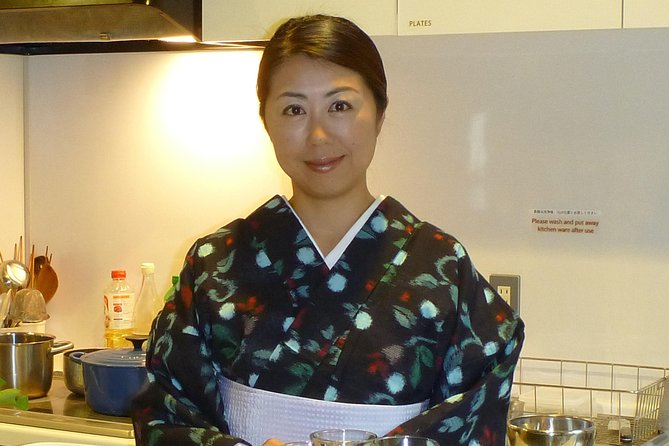
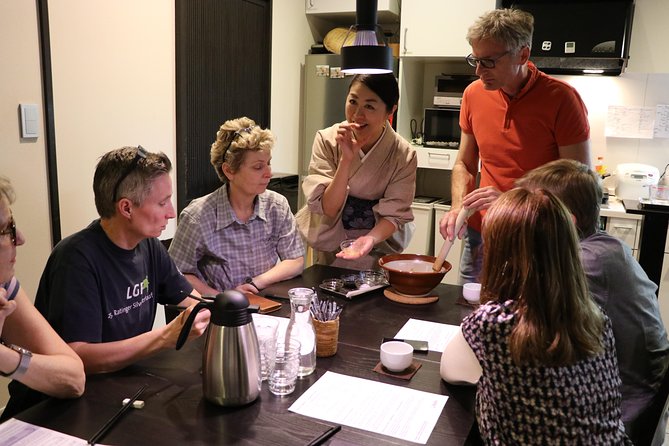
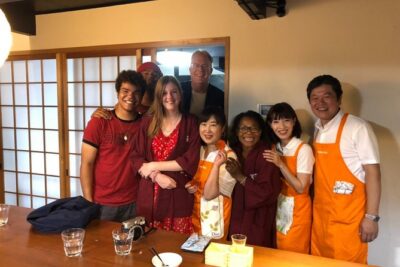
Kaori welcomes you into her kitchen and presents the lesson in a home setting. That changes the feel of the class. You are not being pushed through a large demonstration kitchen or watching from the back of a crowd. You work close to the ingredients and receive guidance as each step comes up.
The exact order can vary, but the lesson generally introduces Japanese flavors before moving into preparation. One class sequence began with soup, then covered sushi rice and different types of sushi. This is a sensible order: you first taste the building blocks, then use them in the dishes you make.
You should expect a mix of demonstration and hands-on work. Kaori explains a step, shows you how it is done, and then gives you time to practice. That balance matters for sushi because the finished pieces can look simple while the rice, shaping, and handling require care.
The meal is included, along with all cooking ingredients. You do not leave with a small tasting plate. Several past participants describe coming away full of sushi, which makes the $72.67 price easier to assess. You are paying for instruction, ingredients, a meal, cultural background, and recipes, not just for a short food sample.
Other cooking classes in Kyoto

Making sushi without guessing
The strongest part of this experience is its practical focus. Internet videos can show you the broad movements, but they cannot correct your hand position or explain why a particular step matters. In this class, you can ask questions as you work and get help before a small mistake becomes a large one.
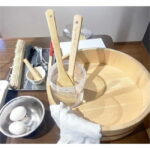
Sushi rice receives special attention. You learn how to prepare it and why it needs to be fanned. That detail is easy to overlook at home, yet it helps explain the texture and finish of the rice. The lesson is not simply a list of instructions. You get the reasoning behind them.
You also make several types of sushi. The available information does not provide a fixed menu of every style, so you should not book expecting a specific fish or exact number of pieces. The useful point is that you practice more than one form, giving you a broader introduction to the craft.
The class also includes pickled ginger. It is a small side dish, but it helps you understand how Japanese meals are balanced. Soup and sushi are taught together, so the experience covers more than the familiar roll-making lesson found in many tourist programs.
I would not expect professional restaurant-level knife training or a full chef qualification from a two-hour class. The value is different. You learn a manageable set of techniques, taste the result, and gain enough confidence to try the recipes again in your own kitchen.
Dashi, umami, and the story behind the meal
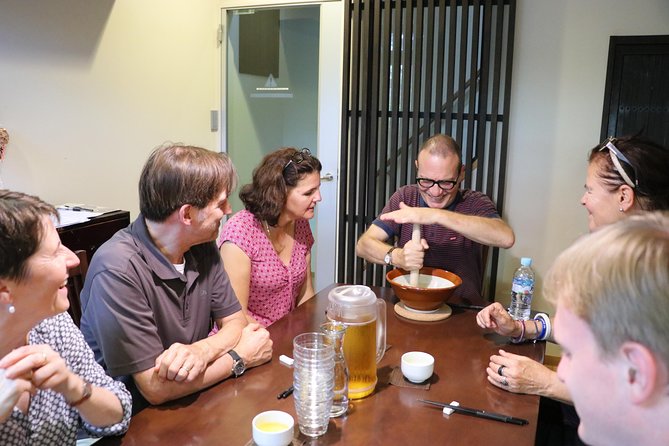
Kaori uses the cooking to explain Japanese flavor. A central lesson is umami, the savory taste associated with ingredients such as seaweed and bonito flakes. You learn how to make dashi, a basic broth, and why it gives Japanese dishes their depth.
This is one of the more useful parts of the experience because dashi appears in many Japanese dishes. Understanding it gives you a better sense of what you are tasting in soup and other foods during the rest of your trip.
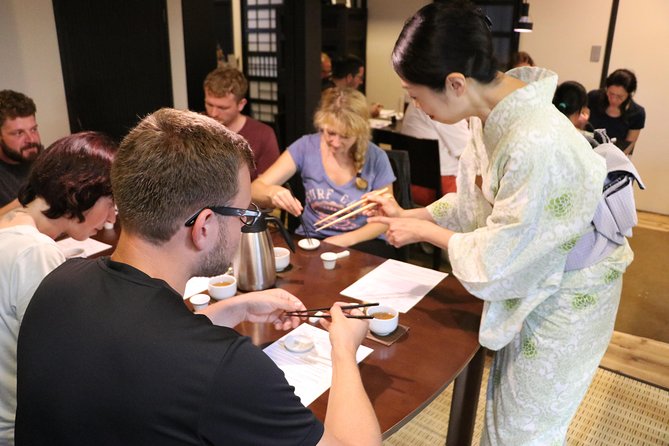
The food explanations also reach into customs and history. You might learn why Japanese chopsticks are shorter than Chinese ones, how table manners work, and how ingredients fit into Japanese cooking. These are not random trivia points. They help you behave more comfortably at restaurants and understand why a meal is presented in a certain way.
Kaori’s English is repeatedly described as clear and strong. That is important here. Food classes can become confusing when instructions involve timing, texture, and small hand movements. Clear explanations make the lesson easier to follow, especially for children or anyone who has never cooked Japanese food before.
The cultural material is also connected to what you are doing. You learn about dashi while making dashi, and table manners while preparing a meal you will soon eat. I prefer that approach to a long lecture that interrupts the cooking.
A home setting with useful take-home material
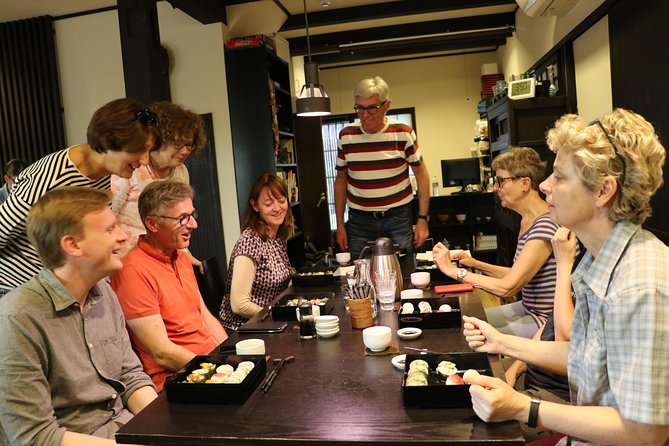
Roujiya’s kitchen setting is part of the appeal. You are welcomed as if visiting someone’s home, and the class is presented in a clean, organized cooking space. The setting feels personal without requiring you to give up structure.
A four-page guide is provided with Japanese manners, food notes, and recipes for sushi rice, soup, and pickled ginger. That handout gives the experience lasting value. You can forget a spoken explanation after a few days in Japan, but a recipe sheet can follow you home.
The recipes are especially useful for couples, families, and friends who want a shared activity after the trip. You can divide the tasks and later try the dishes again. The class does not merely create a pleasant lunch in Kyoto. It gives you a simple project to continue.
Still, you should keep your expectations practical. The handout cannot replace Japanese ingredients, the instructor’s help, or the atmosphere of the class. It does give you a starting point, and the lessons on rice, broth, and pickled ginger are more transferable than a one-off demonstration.
Why the two-hour length works
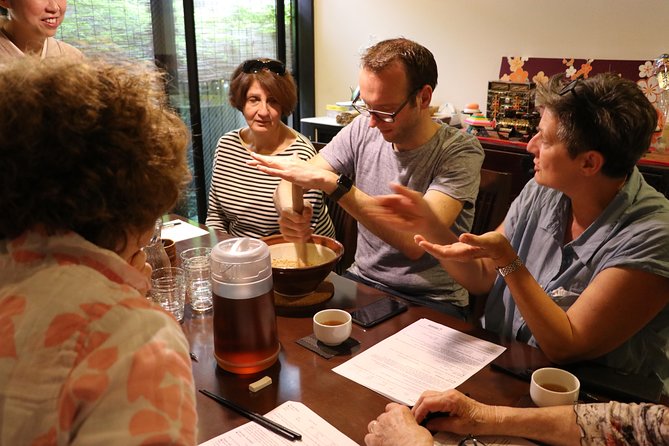
At about two hours, this is short enough to fit into a busy Kyoto schedule. The late-morning start gives you an activity before an afternoon of sightseeing, though you will want to account for the meal when planning lunch elsewhere.
The duration also keeps the lesson focused. You get enough time to cook several items and eat them, but you are unlikely to spend half a day on one basic recipe. For a first introduction to Japanese cooking, that is a good trade.
The short format has a limit. You will not cover every part of Japanese cuisine, and you should not expect a slow, multi-course cooking program. The class concentrates on sushi, soup, pickled ginger, manners, and related food culture.
That focus makes it a better choice for someone seeking a strong first taste of Japanese home cooking than for someone already experienced with sushi who wants advanced technique. Beginners get the most from the step-by-step format.
Other cooking classes in Kyoto
Group size and the feel of the class
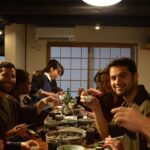
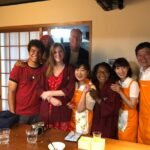
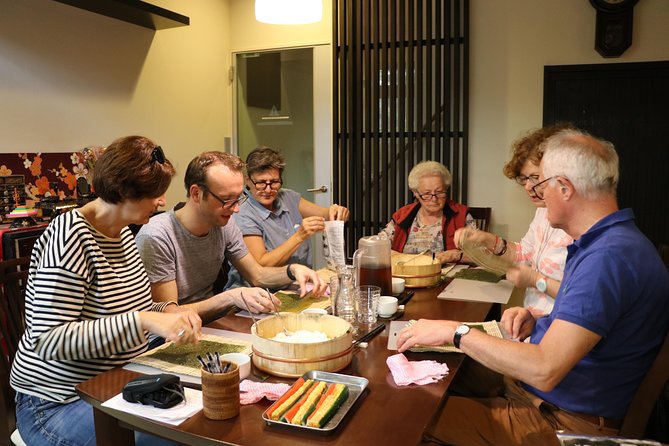
This is presented as a small-group experience, which should allow more contact with Kaori than a large tour. The information gives several group figures: the overview describes a class capped at eight, while the booking details list a maximum of 13 people per booking and 12 participants on the activity.
That inconsistency is worth noting before you pay. The class may feel intimate on one date and less private on another. If a very small group is essential to you, confirm the expected size before booking.
Even with a larger group, the format is hands-on rather than passive. Families with children have been able to follow the instructions, and the class is suitable for adults and younger participants. Children who enjoy assembling food will likely find the activity more engaging than a standard museum visit.
I would choose this for a couple, a family, or a small group of friends. It also works well for a solo visitor who enjoys meeting people through food, though the social feel will depend on the number of bookings that day.
Drinks, etiquette, and what is included
The class includes an aperitif and Japanese green tea. These small touches help turn the lesson into a meal rather than a production line. You learn about manners, then put them into practice while eating what you prepared.
Some class information also notes that tea, sake, and beer may be offered after cooking at an extra cost. Treat the included aperitif and green tea as the confirmed inclusions, and consider alcoholic drinks optional rather than part of the base price.
The meal and ingredients are included, as are the English-speaking instructor and recipes. Hotel pickup and drop-off are not included. You need to make your own way to Roujiya and return from there.
Specific dietary needs should be shared when booking. The class information does not promise a particular substitution, so do not wait until arrival to mention allergies, restrictions, or other food concerns.
Getting to the address without a Kyoto scramble
Roujiya is near public transportation, but the address can be challenging for drivers. Kyoto addresses are not always intuitive, and one failed arrival involved a taxi driver who could not locate the property.
Use the Google Maps location supplied after booking rather than relying only on the written street address. I would also leave a little spare time before 11:30 a.m., especially if you are coming from another neighborhood or carrying luggage.
The meeting point and end point are the same. There is no hotel pickup, so this is not the easiest choice if you want a fully escorted door-to-door outing. It is a straightforward independent arrival once you have the correct map pin.
The experience is mobile-ticketed, which makes the booking easy to carry on your phone. Confirmation is sent within 48 hours, subject to availability. Since the class is often booked about 40 days ahead, reserve early if your Kyoto dates are fixed.
Is $72.67 a fair price?
At $72.67 per person, the class costs more than a casual sushi lunch, but the comparison is not quite fair. You receive the meal plus ingredients, instruction, cultural context, tea, an aperitif, and recipes you can use later.
I see the price as reasonable for a two-hour activity if you value participation. A restaurant can give you excellent sushi, but it cannot give you the skill of preparing sushi rice, making dashi, or handling several sushi styles yourself.
The value is strongest when two people or a family treat it as a shared Kyoto activity. You cook together, eat together, and take home a practical memory. If you only want to sample sushi and have no interest in cooking, spending the money at a good restaurant may suit you better.
The class is also a useful choice on a rainy day or when you want a break from temples and walking. It gives you a cultural activity that is connected to daily life, not just a sightseeing stop.
Who should book this class?
I would recommend it to first-time sushi makers, food-focused visitors, couples, families, and anyone who wants a souvenir that is not fragile or destined for a suitcase. The recipes and manners guide make the experience useful beyond the day itself.
It suits children when they can follow instructions and take part in food preparation. The class has worked well for mixed-age groups, but parents should still consider their child’s patience during explanations and careful cooking steps.
It is less suitable for you if you need hotel transportation, want an advanced sushi apprenticeship, or have strict dietary requirements that were not confirmed in advance. It may also disappoint if you expect a fixed, highly formal restaurant menu rather than a home-style lesson.
Cancellation is free up to 24 hours before the 11:30 a.m. start time. Changes or cancellations inside that window are not refunded, so keep the local cut-off time in mind.
Should you book Japanese Cooking Class Roujiya?
I would book this if you want to understand sushi rather than simply eat it. Kaori’s English instruction, patient step-by-step guidance, cultural explanations, and useful recipes make the class accessible to beginners while still giving food lovers plenty to think about.
Use the map pin, mention dietary needs early, and check the expected group size if intimacy matters to you. With those details handled, this is a practical Kyoto experience that leaves you with lunch in your stomach and a skill you can try at home.
FAQ
Where does the sushi cooking class take place?
The class takes place at Japanese Cooking Class Roujiya, located at 22-58 Nishinokyo Ikenouchicho, Nakagyo Ward, Kyoto, 604-8375, Japan.
What time does the class begin?
The class starts at 11:30 a.m. and lasts approximately two hours.
What will I learn to cook?
You will make several types of sushi, sushi rice, Japanese soup, and pickled ginger. The class also covers dashi broth and Japanese food culture.
Is the class taught in English?
Yes. An English-speaking cooking instructor leads the class, and the available information identifies the instructor as Kaori.
Are food and drinks included?
The meal, all cooking ingredients, an aperitif, and Japanese green tea are included. Some class information says sake and beer may be available afterward at an additional cost.
Is hotel pickup provided?
No. Hotel pickup and drop-off are not included. You meet at Roujiya and return to the same meeting point at the end.
How many people can join the class?
The experience is described as a small-group class. The information refers to a group of about eight in one place, while the formal maximum is 12 participants, with up to 13 people per booking. Check the expected group size for your date if this is important to you.
More Workshops & Classes in Kyoto
More Cooking Classes in Kyoto
More Cooking Classes in Kyoto
More tours in Kyoto we've reviewed




Cooking Classes, compared.
 ★ 5.0Ramen Cooking Class at Ramen Factory in KyotoFrom $131
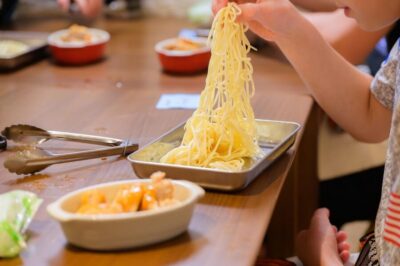 ★ 4.9Kyoto: Ramen Cooking Class at a Ramen Factory with SouvenirFrom $1271h 30m
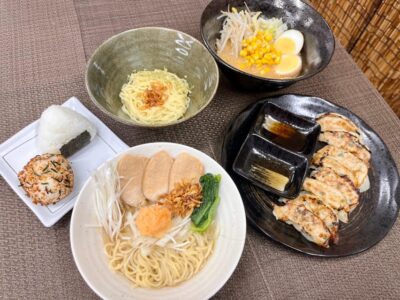 ★ 5.0Kyoto: Ramen, Gyoza, and Onigiri Cooking ClassFrom $901h 30m
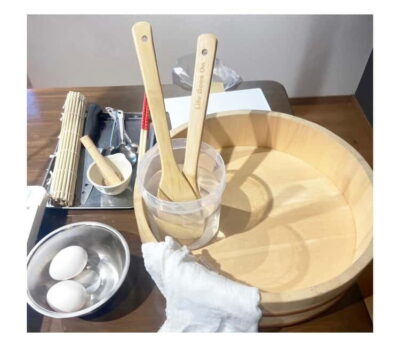 ★ 5.0Kyoto: Japanese Washoku Bento Small Group Cooking ClassFrom $582h 30m
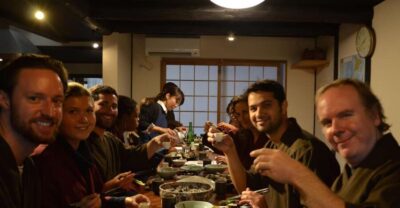 ★ 4.9Kyoto: Afternoon Japanese Izakaya Cooking ClassFrom $673 hours
 ★ 5.0Izakaya Style Cooking ClassFrom $71