
Reviewed · GION & GEISHA WALKS
Kyoto: Night Walking Tour with Geisha Traditions
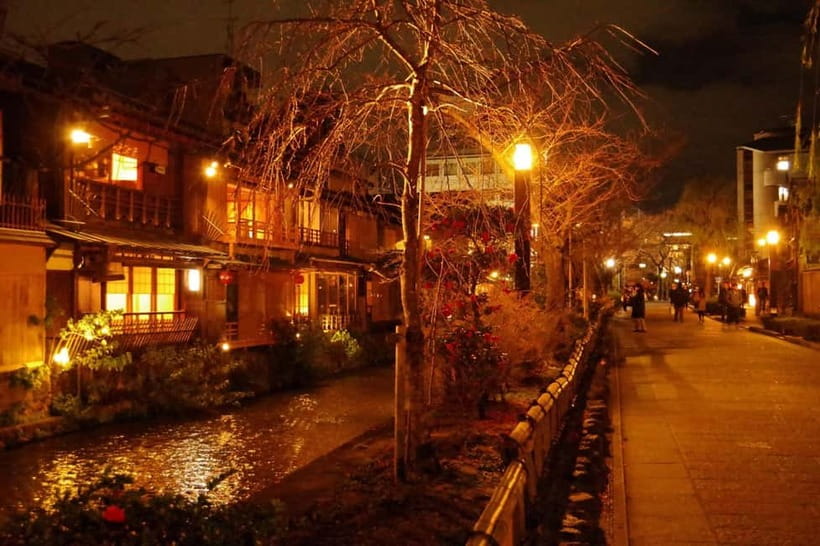
Gion after sunset is the point of this tour. Lanterns glow along narrow lanes, wooden machiya houses frame the streets, and your guide explains how geisha and maiko live, train, work, and pray for success. I especially like the small shrines and the way the walk connects geisha customs with festivals, spiritual life, and even Pokémon-themed manholes. I also like the low $20 price and the personal feel guides such as Yo and Liu bring to the walk.
The main consideration is clear: you do not enter a tea house or attend a geisha show from inside. The geisha performance is viewed from outside, and photography can be restricted in parts of Gion. If you expect a formal stage performance, choose another activity. If you want an affordable introduction to Kyoto’s traditional quarter, this is a strong fit.
In This Review
- Key points about Kyoto’s evening Gion walk
- Why Gion works best after sunset
- Following the geisha trail through Gion
- What the tea-house stop really means
- Small shrines, festivals, and Kyoto’s spiritual side
- A personal walk rather than a grand production
- The $20 price and what you receive
- Who should book this Gion experience?
- Practical advice before meeting at 7-Eleven
- Should you book the Kyoto night walking tour?
- FAQ
- Where does the tour start?
- Where does the tour end?
- Is the tour offered in English?
- Does the tour include entry to a tea house?
- Can I attend a geisha performance during the tour?
- What does the tour cover besides geisha culture?
- Is photography allowed everywhere?
- How much does the tour cost?
- Can I cancel the booking?
Key points about Kyoto’s evening Gion walk
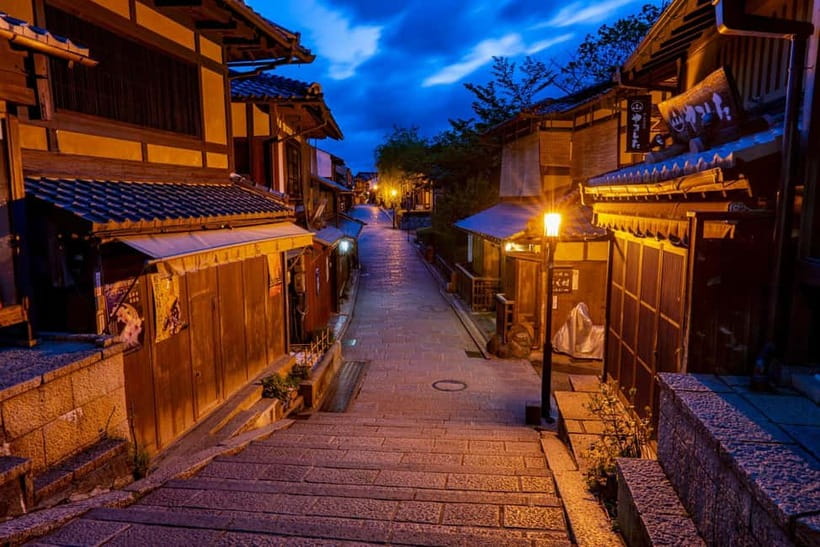
- Lantern-lit Gion: Walk historic lanes and machiya-lined streets after sunset, when the district takes on a quieter, more atmospheric feel.
- Geisha life explained: Learn about the training, work, customs, and pressures facing geisha and maiko, a profession now numbering fewer than 200 practitioners.
- Performance viewed outside: You may view a geisha performance from outside a tea house, but tea-house entry is not included.
- Shrines and local beliefs: Stop at small shrines connected with prayer, festivals, and Kyoto traditions.
- Old and new Kyoto: Edo-era stories sit alongside everyday details and modern touches such as Pokémon-themed manholes.
- Friendly English guidance: Guides including Yo and Liu have led personable walks, with Liu adapting well when heavy rain reduced one booking to a private tour.
Why Gion works best after sunset
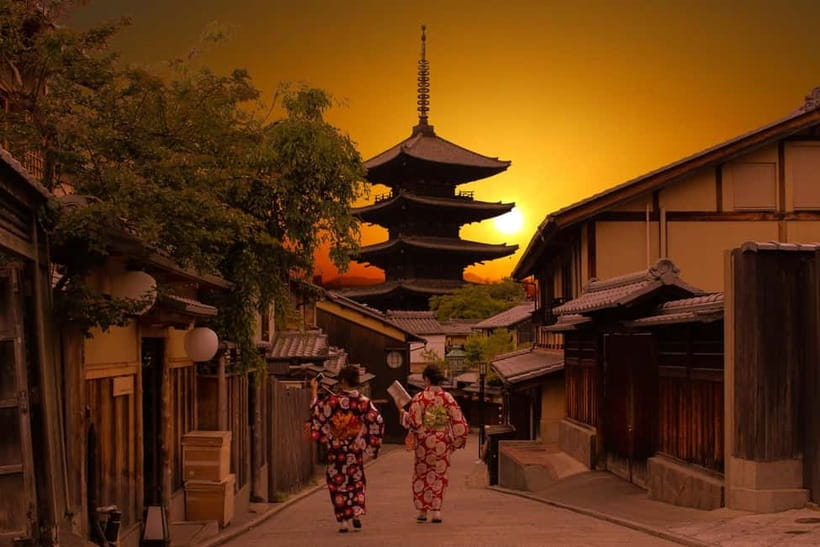
Gion is not simply a district to cross off a sightseeing list. It is a working neighborhood shaped by restaurants, shrines, traditional houses, artistic customs, and the long connection between entertainment and spiritual life.
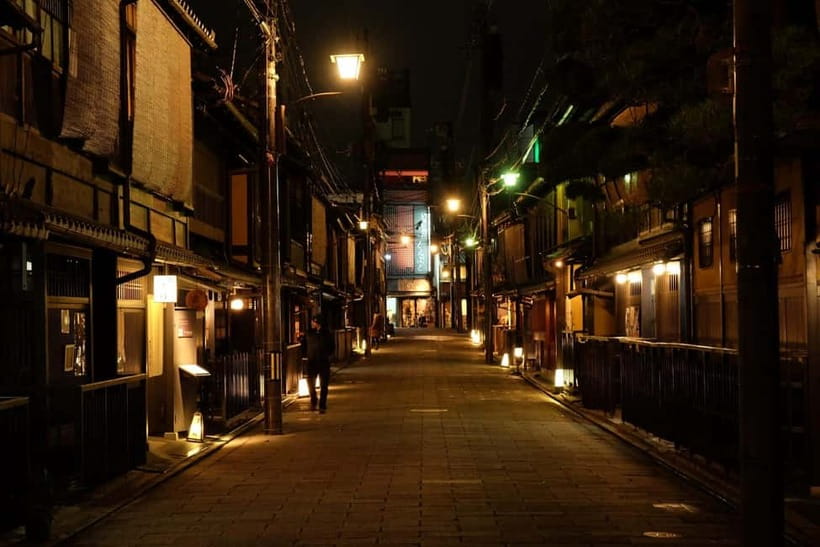
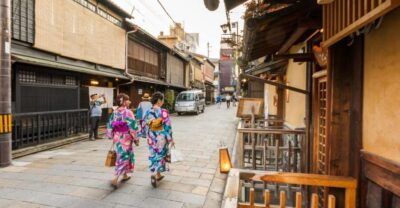
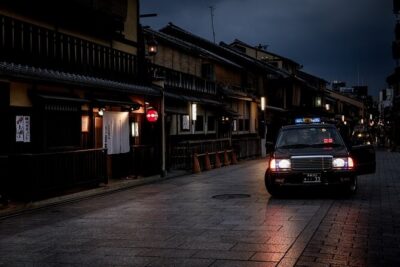
At night, the setting does much of the teaching. Lantern light picks out the dark wood of machiya townhouses. Narrow lanes make the old street plan easy to picture. Your guide fills in what you cannot see at a glance, explaining how Gion developed as a geisha district and how its customs fit into Kyoto’s wider culture.
You should expect a walking tour rather than a staged spectacle. The value comes from learning to read the streets. A doorway, shrine, training location, or quiet lane means more once you know why it matters.
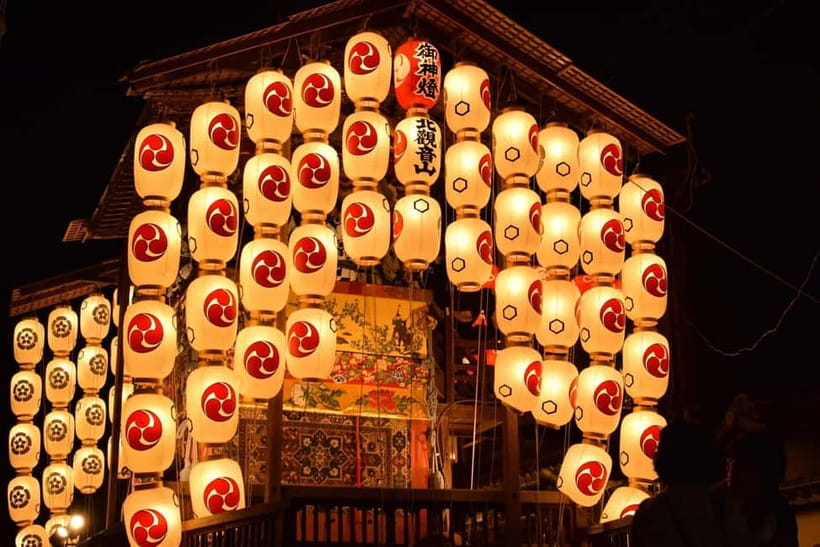
The timing also helps you notice the contrast between old and modern Japan. Historic architecture and incense may appear beside ordinary local life and a playful Pokémon-themed manhole. That mix feels more honest than a perfectly preserved museum district. Kyoto’s traditions continue in a living city, not behind glass.
A few more Kyoto tours and experiences worth a look

Following the geisha trail through Gion
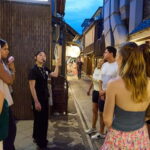
The tour focuses on the world of geisha and maiko without treating it as a costume show. Your guide explains daily routines, rigorous training, professional etiquette, and the demands of a profession that requires years of preparation.
You will learn where members of the geisha community train, where they pray for success, and where they live. These stops matter because they give the subject a practical shape. Instead of hearing only broad ideas about elegance and tradition, you begin to understand the places tied to work, study, and belief.
The distinction between geisha and maiko is part of the cultural lesson. The tour looks at the path into the profession and the discipline involved, while also acknowledging that this is a small and changing community. Fewer than 200 practitioners remain, according to the information provided for the activity. That figure gives you a sense of why respectful behavior matters.
Your guide should also help you understand etiquette. Gion is not a theater set, and people connected with the district are not there for tourist photographs. Photography may be limited in certain areas, so keep your camera ready to put away. Listen to local instructions, avoid blocking lanes, and treat the neighborhood as someone’s workplace and home.
This is where a good guide makes a real difference. Yo has been praised for making the walk friendly and enjoyable while explaining Gion in detail. Liu has also led a personable tour, sharing both Kyoto’s traditions and his affection for Japan. Guide assignments can change, but the experience clearly benefits from someone who can explain the human side of the district rather than simply point out buildings.
What the tea-house stop really means
The tea-house element needs careful explanation because the wording can create an inflated expectation. You do not enter a tea house, and this is not a ticket to a full geisha performance.
The included experience is viewing a geisha performance from outside a tea house. Depending on the evening and the activity on the street, you may get a glimpse of a performance taking place inside. The important point is that the viewing happens from outside, not from a reserved seat in the room.
That limitation is not a small footnote. It should shape your booking decision. If your main goal is to sit close to a geisha performance, eat in a tea house, or speak with performers, this walk will not provide that. Entry fees and personal expenses are not included.
Still, the outside viewing can fit the nature of the tour. You get context before or around the sighting, and your guide can explain why tea houses matter to Gion’s social and artistic life. The evening is about understanding the district, not collecting a guaranteed close-up encounter.
I would treat the performance as a possible bonus within a broader walk. Book it for the stories, streets, shrines, and explanation of geisha traditions. Do not book it solely on the hope of seeing a show.
Small shrines, festivals, and Kyoto’s spiritual side
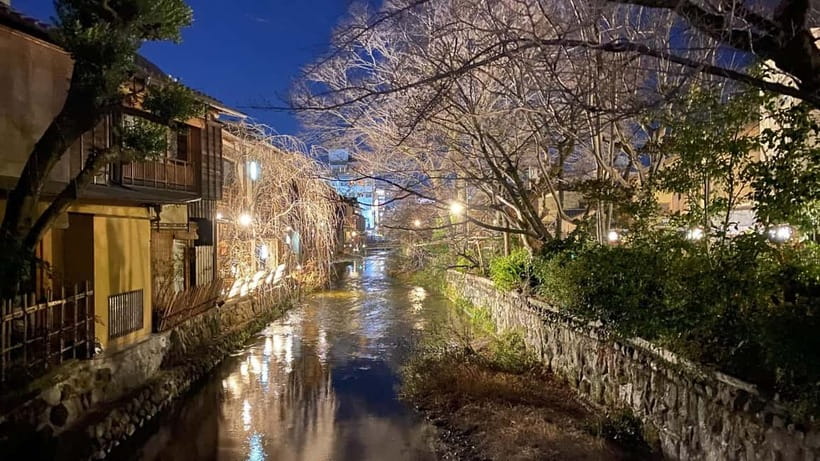
The tour steps away from geisha culture to show how Gion connects with Kyoto’s religious and seasonal customs. Small shrines are easy to miss when you are moving toward a famous temple, but they often reveal how local life works.
At these stops, your guide discusses prayers for success, spiritual rituals, festivals, and traditions that shape the calendar. You are not just looking at a shrine gate. You are learning why people visit, what they ask for, and how these places relate to the district around them.
This part makes the walk useful even if you already know something about geisha. Kyoto’s identity is not built from one tradition alone. Artistic work, neighborhood belief, seasonal celebrations, humor, and daily routines all overlap.
The historical stories also add a lighter touch. The tour includes humorous anecdotes and Edo-era tales, so the evening should not feel like a lecture. Those details help you picture earlier Kyoto while keeping the walk connected to the present.
I like this balance. A tour that talks only about geisha can reduce Gion to one subject. A tour that adds shrines, festivals, and ordinary street details gives you a more useful understanding of the area.
A personal walk rather than a grand production
The available feedback points to a strength in the guiding style: warmth and conversation. Yo is described as friendly and personable, while Liu handled heavy rain with energy and adjusted to a private one-to-one walk.
That matters because Gion rewards questions. You may want to ask about training, clothing, etiquette, local festivals, or the difference between a tourist image and everyday practice. A guide who welcomes conversation can turn a standard route into a more personal introduction to Kyoto.
The heavy-rain example also gives you a practical clue. Weather can affect the atmosphere and the group experience. On one particularly wet outing, Liu led a one-to-one tour and kept the explanation energetic. You should still dress for walking in wet conditions if rain is forecast, since the activity takes place outdoors through historic alleys and streets.
The tour is offered in English. Specific group size and duration are not provided, so you should confirm those details before booking if they matter to your plans. The guide-led format, rather than a recorded audio route, is the main reason to expect a more adaptable experience.
A few more Kyoto tours and experiences worth a look



The $20 price and what you receive
At $20 per person, this is priced as an accessible introduction to Gion. You receive a guided walk, an English-speaking local guide, explanation of geisha culture, stops connected with shrines and traditions, and an outside view of a geisha performance when available.
That is good value if you want orientation and cultural context. A first evening in Kyoto can otherwise become a quiet stroll with little understanding of what you are seeing. Here, the guide helps you notice training places, prayer sites, historic lanes, and the social meaning of the district.
The price does not cover tea-house entry or personal spending. That keeps the cost low, but it also means you should not confuse this activity with a meal, private entertainment booking, or formal performance ticket.
I see the tour as a budget-friendly starting point. It can help you decide which parts of Gion you want to explore again on your own. It is less suitable if you are seeking an expensive, exclusive encounter with geisha culture.
The reserve-now, pay-later option also gives you some flexibility, and cancellation is available up to 24 hours before the activity for a full refund. Those terms are helpful when your Kyoto schedule is still shifting.
Who should book this Gion experience?
I would recommend it to first-time Kyoto visitors who want a clear introduction to Gion without paying for a formal dining experience. The walk also suits repeat visitors who have seen the main sights but want more context for the streets, shrines, and customs around them.
It is a good choice for you if:
- You enjoy walking and listening to local stories.
- You want to understand geisha and maiko beyond photographs and popular myths.
- You prefer a small-scale cultural activity to a large attraction.
- You are interested in festivals, shrines, and daily traditions as well as famous landmarks.
- You want to keep the cost near $20.
- You are comfortable viewing a performance from outside rather than entering a tea house.
I would hesitate if your mobility makes historic alleys and streets difficult, since the activity involves walking and no accessibility details are supplied. I would also look elsewhere if you need a guaranteed indoor performance, a tea-house visit, or a meal.
Practical advice before meeting at 7-Eleven
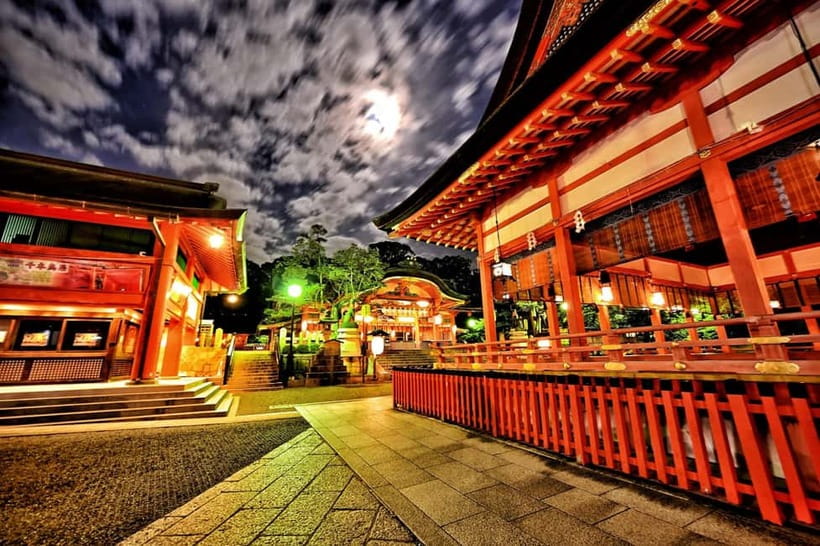
The meeting point is in front of a 7-Eleven, and the tour ends back at the same meeting point. Check the exact meeting instructions when you reserve, since convenience stores can be easy to confuse in a busy urban area.
Wear comfortable shoes. Gion’s lanes and streets are the heart of the experience, and you will get more from the walk if you are not worrying about sore feet.
Bring a light rain layer when the forecast looks poor. The route is outdoors, and a wet evening can change the pace even when the guide remains energetic.
Keep your phone and camera available for permitted moments, but be prepared to stop photographing. Restrictions apply in some areas, and following them is part of being a considerate visitor in a working neighborhood.
You should also arrive ready for a cultural conversation, not just a list of photo stops. Ask questions. The guides have been praised for explaining both local and national Japanese history, and the walk seems strongest when you engage with that side of it.
Should you book the Kyoto night walking tour?
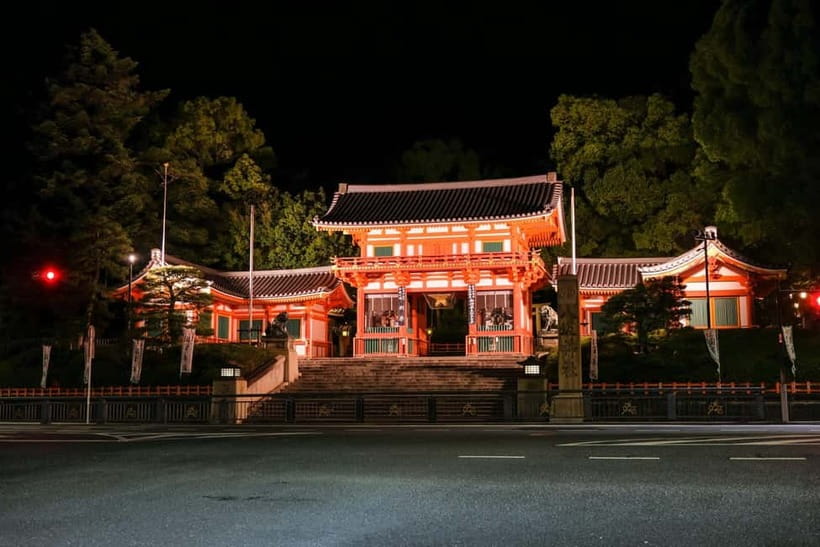
Book this tour if you want an affordable, thoughtful introduction to Gion after dark. The combination of lantern-lit lanes, small shrines, geisha training locations, festival customs, Edo-era stories, and modern street details gives you more than a simple neighborhood stroll.
The strongest reason to choose it is the guide-led context. Yo and Liu have shown the friendly, personal approach that makes this kind of walk work well, though your assigned guide may be different.
Do not book it expecting entry to a tea house or a full indoor geisha performance. The outside viewing is limited, and photography may not be allowed everywhere. With that expectation set correctly, this $20 walk offers a useful first look at one of Kyoto’s most traditional districts without turning the people who live and work there into a spectacle.
FAQ
Where does the tour start?
The tour starts in front of a 7-Eleven. Check your booking details for the exact meeting instructions.
Where does the tour end?
The activity ends back at the meeting point.
Is the tour offered in English?
Yes. English is the listed tour language.
Does the tour include entry to a tea house?
No. Entry into tea houses is not included.
Can I attend a geisha performance during the tour?
The activity includes viewing a geisha performance from outside a tea house. It does not include entry to the tea house.
What does the tour cover besides geisha culture?
The walk covers Gion’s historic streets, small shrines, festivals, spiritual rituals, Edo-era stories, and some modern local details.
Is photography allowed everywhere?
No. Photography may be restricted in certain areas.
How much does the tour cost?
The listed price is $20 per person. Personal expenses are not included.
Can I cancel the booking?
Yes. You can cancel up to 24 hours in advance for a full refund. You can also reserve and pay later.
More Walking Tours in Kyoto


More Night Walks & Ghost Tours in Kyoto
More Gion & Geisha Walks in Kyoto
More tours in Kyoto we've reviewed







Gion & Geisha Walks, compared.
 ★ 4.7Kyoto Geisha Walking Tour: Gion District & Hidden GemsFrom $252 hours
 ★ 4.7Kyoto: Gion Geisha District Walking Tour – Stories of GeishaFrom $202 hours
 ★ 4.9Best of Kyoto: Gion, Geisha, Pagodas & CobblestonesFrom $242 hours
 ★ 4.5Night Walk in Gion: Kyoto’s Geisha DistrictFrom $211h 40m
 ★ 5.0Kyoto Night Foodie Tour in Gion (9+ dishes + 6 Sake tastings)From $163
 ★ 5.0Kyoto Gion Geisha District Walking Tour – The Stories of GeishaFrom $25