
Reviewed · KIMONO EXPERIENCES
Kyoto Portrait Tour with Kimono
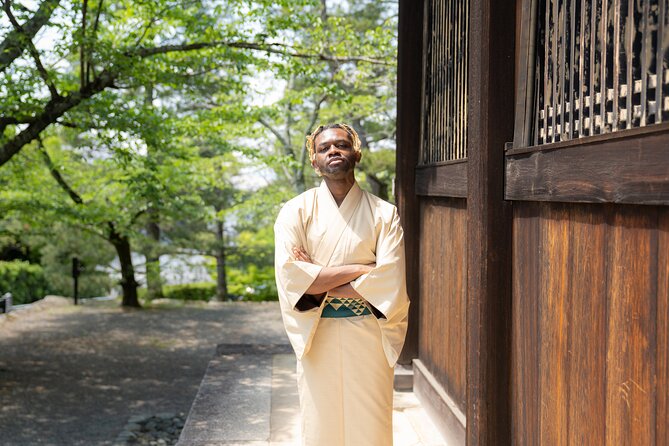
Kyoto’s best souvenir may be a photograph of you in a kimono, not another shop-bought trinket. This 90-minute portrait walk takes you from Yasaka Shrine through Maruyama Park, Chion-in Temple, Ishibe Alley, Nene-no-Michi, and Yasaka Pagoda, with a local photographer directing your poses along the way.
I like the choice of morning or afternoon light, and I like the small maximum of six people. Guides such as Yuta, Takuma, Mina, Cocoro, and Soma have been praised for patient posing help, local tips, and making first-time photo subjects feel at ease.
The main catch is simple but important: your kimono is not included. You must arrange one separately, and the route is short, so anyone wanting a relaxed temple visit as well as a photo session may find the schedule tight.
In This Review
- Key points at a glance
- A Kyoto photo walk, not just a posed studio session
- Yasaka Shrine gives you the traditional opening
- Maruyama Park adds gardens and seasonal color
- Chion-in brings a grand temple backdrop
- Ishibe Alley feels more intimate
- Nene-no-Michi keeps the walk scenic
- Yasaka Pagoda provides the finishing image
- What the photographers do well
- Edited photos are the real value
- Renting the kimono needs planning
- Who will get the most from this tour
- Practical details before you book
- Should you book the Kyoto Portrait Tour with Kimono?
- FAQ
- Is the kimono included in the tour price?
- How long does the experience last?
- How many people can join the tour?
- Where does the tour begin?
- Where does the tour end?
- Which places are visited?
- Are admission tickets included?
- Are edited photographs included?
- Can I choose a morning or afternoon session?
- What is the cancellation policy?
Key points at a glance
- Six people maximum: A small group gives you more time in front of the camera than a large walking tour.
- Six scenic stops: The route links Yasaka Shrine, Maruyama Park, Chion-in, Ishibe Alley, Nene-no-Michi, and Yasaka Pagoda.
- Kimono rental is separate: You choose and pay for your kimono at a shop of your preference.
- Morning or afternoon departure: Pick the light and time of day that best suits your plans.
- Edited photographs included: The fee covers a professional photographer, guide service, and edited images.
- Useful for solo visitors: You do not need a companion to take proper portraits of you in Kyoto.
A Kyoto photo walk, not just a posed studio session
This experience works because the scenery changes as you walk. You begin at one of Kyoto’s best-known shrines, pass through a traditional park and a major temple gate, then move into old stone lanes before ending beneath Yasaka Pagoda.
That gives your photographs several different moods. You can pose beside bright shrine architecture, use garden scenery as a softer background, and finish with old wooden buildings and the unmistakable five-story pagoda.
I also like the walking-tour element. Your photographer is not only there to press the shutter. Guides have explained shrine details, suggested local food, pointed out quieter corners, and shared practical ideas for seeing more of Kyoto after the session.
The tour suits people who want a polished record of their visit but do not want a long formal photo shoot. You get changing backgrounds and a sense of place, while the photographer helps with posture, angles, and timing.
A few more Kyoto tours and experiences worth a look
Yasaka Shrine gives you the traditional opening
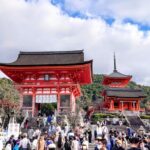
Meet at the Yasaka Jinja Nishiromon Gate, also called the Western Tower Gate, at 625 Gionmachi Kitagawa. This is a sensible starting point because Yasaka Shrine puts you straight into Kyoto’s traditional Higashiyama setting.
The first 20 minutes are spent around the shrine. Expect photographs with classic religious architecture and a distinctly Kyoto backdrop. The shrine admission is free, so there is no extra entrance fee at this part of the route.
This is also where you get used to the camera. If you have never had professional portraits taken, your guide can help you find comfortable poses. Yuta has been especially noted for offering posing tips and waiting for people to clear the background before taking a picture.
Crowds can affect the pace. Yasaka Shrine is a popular place, so your photographer may need to work around other people rather than produce a completely empty scene. That is normal in central Kyoto, and a patient guide can make a large difference.
Maruyama Park adds gardens and seasonal color
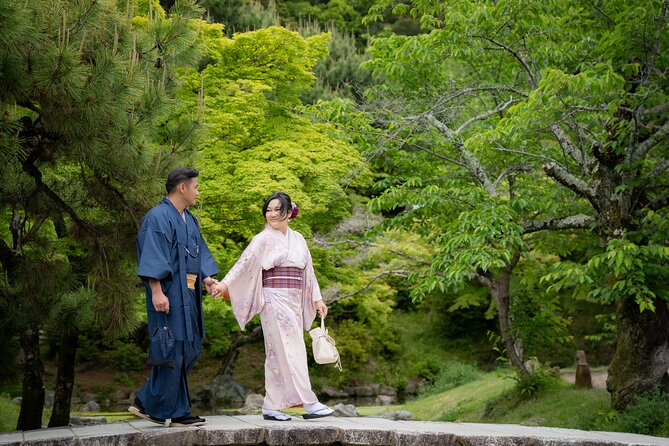
From the shrine, you continue to Maruyama Park for about 20 minutes. It is Kyoto’s oldest park and provides a change from shrine buildings to trees, paths, and a traditional Japanese garden setting.
This section should appeal to couples and solo visitors who want photographs that feel less formal. The park gives you room for walking portraits and softer compositions, especially when the trees are looking their best.
Early April is noted as a particularly attractive period because of the cherry blossoms. Autumn can also bring strong color elsewhere on the route, especially around Nene-no-Michi. The exact appearance depends on the season, so you should not book solely on the promise of blossoms or autumn leaves.
The park portion is free. It is worth wearing a kimono that you can walk in comfortably, since the route uses several outdoor paths and continues through multiple locations.
Chion-in brings a grand temple backdrop
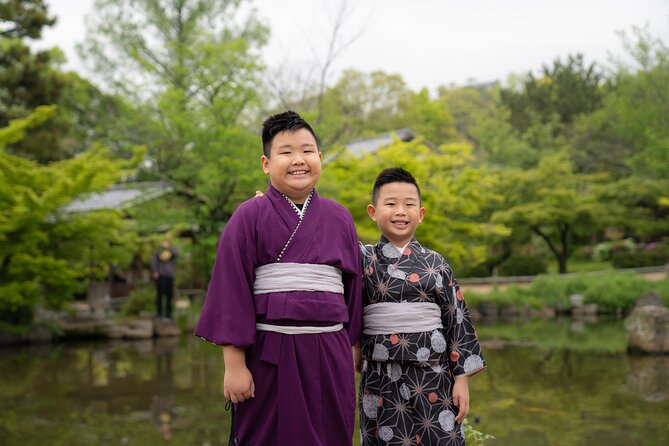
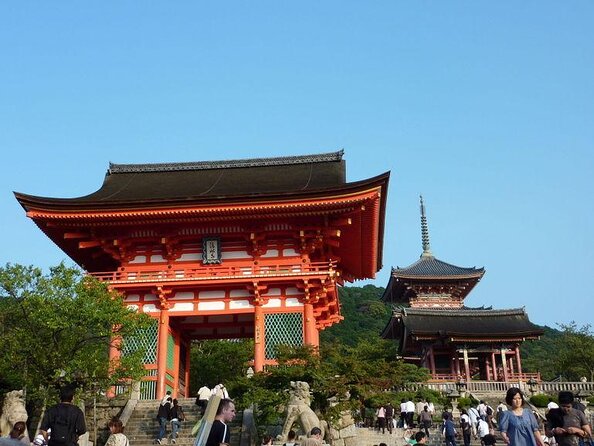
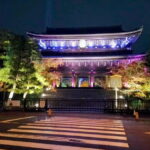
The next 20 minutes focus on Chion-in Temple and its enormous Sanmon Gate. The gate is about 24 meters high and 50 meters wide, making it the largest wooden temple gate in Japan.
For photographs, scale is the point. A person in a kimono set against this gate gives the image a strong sense of place, while the architecture provides a more dramatic background than a small garden or narrow street.
Your guide may also explain some of the site’s history as you take photographs. This is one reason the experience works better than simply asking a stranger to take a quick picture on your phone.
The time is still limited. You are visiting the area as part of a portrait walk, not taking a full temple tour. If Chion-in is high on your sightseeing list, plan a separate visit so you can explore at your own pace.
Ishibe Alley feels more intimate
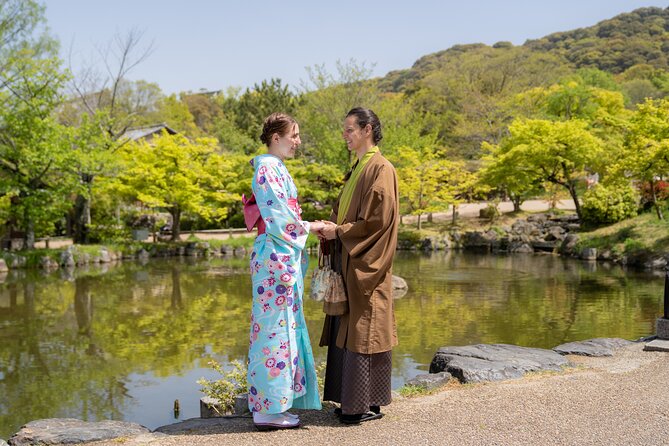
Ishibe Alley receives about 10 minutes, but it may be one of the most atmospheric stops. This narrow lane is lined with traditional architecture and gives you the old Kyoto setting many people picture before arriving in Japan.
The tighter space changes the style of the photographs. Instead of a broad temple gate, you get close views, wooden facades, stone paving, and a more private-looking scene.
The route information lists admission as not included at this stop. Since the tour does not provide a separate admission allowance here, check with the operator if you want to clarify any current access charge before booking.
Keep your pace in mind. A kimono can make steps feel shorter and movement more careful, and the alley is only a brief part of the session. Your photographer will need to work efficiently.

Nene-no-Michi keeps the walk scenic
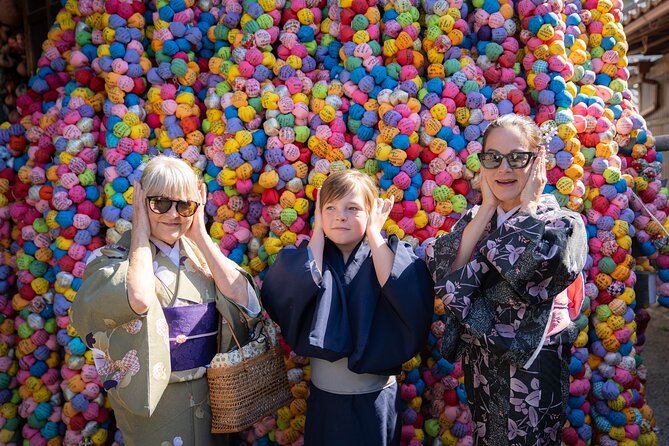
Nene-no-Michi is a flagstone walkway near Kodaiji. The route allows about 10 minutes here, enough for a few photographs and a short look at the surrounding atmosphere.
This is a useful connecting section because it keeps the tour from feeling like a series of disconnected camera stops. You continue walking through a traditional part of Higashiyama, with old-style buildings and a route used by people heading between nearby sights.
Autumn can bring red leaves in this area. At other times of year, the stone path and surrounding architecture carry the scene. The walkway can be busy, so your photographer may need to time each shot carefully.
If you want a longer visit to Kodaiji, remember that it is close by but not listed as a dedicated stop. The tour gives you a taste of the area rather than a full temple admission and visit.
Yasaka Pagoda provides the finishing image
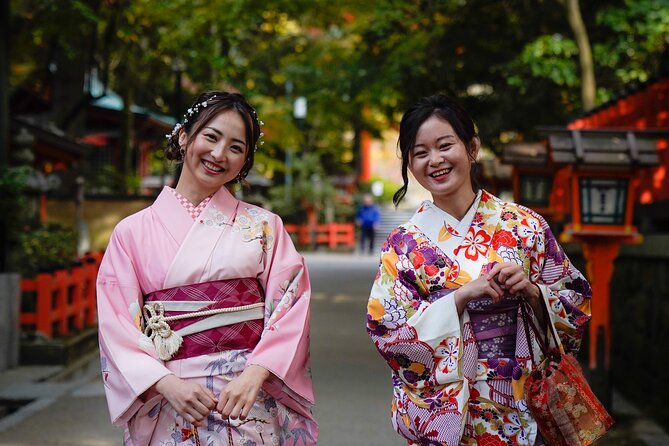
The tour ends at Hokan-ji Temple, better known as Yasaka Pagoda, in the Yasaka Pagoda area. The pagoda is one of Kyoto’s most recognizable sights, and the final 10 minutes are used for photographs with this landmark.
This is a strong ending because the pagoda instantly identifies the city. The route finishes in front of Yasaka Pagoda, where your guide also gives travel tips for the surrounding area.
The end point differs from the starting point, so you should not expect to return to Yasaka Shrine. That is helpful if you plan to continue toward the nearby Higashiyama sights, but you need to account for the walk when arranging your next activity.
The itinerary totals about 90 minutes. In practice, that includes walking, settling into poses, waiting for clear backgrounds, and moving between locations. You will get variety, but not an unhurried visit at each stop.
What the photographers do well
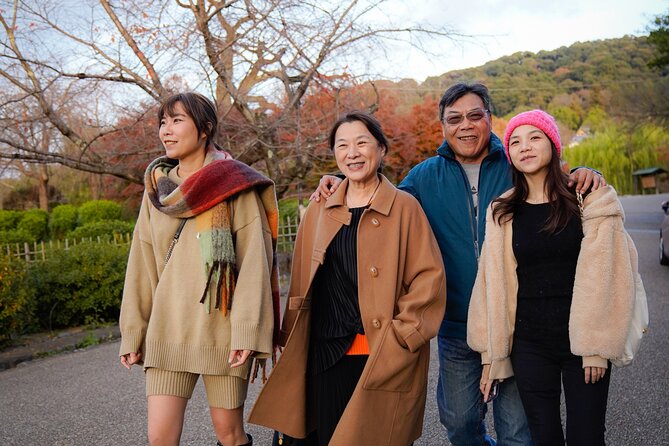
The strongest part of the experience is the human guidance. First-time portrait subjects often need more help than they expect, and the photographers have been praised for giving clear posing direction without making people uncomfortable.
Takuma is described as friendly and patient, including with groups working against a tight train schedule. Mina has been praised for finding good angles and following up with edited photographs. Yuta has helped people pose and shared advice about other places to visit in Kyoto.
Soma is noted for finding less crowded places, explaining local details in good English, and taking photographs that make busy surroundings feel calmer. Cocoro has been described as punctual, efficient, personable, and able to provide more than 60 photographs on one booking.
These names do not guarantee a particular photographer for your date. Your guide is assigned by the provider, so ask at booking if a specific person matters to you.
The guides also appear comfortable with solo portraits, couples, and small groups. That matters because taking good photographs in a kimono is difficult when you are relying on a phone held at arm’s length.
Edited photos are the real value
At $85.87 per person, the price is reasonable if you place real value on professional photographs. The fee includes the photographer, guide, and edited images, not merely a walk around famous sights.
You are paying for several things at once: someone who knows the route, someone who can suggest poses, someone who can work around crowds, and someone who edits the final images. For a solo visitor, the value is easier to see because hiring a photographer solves a practical problem that a travel companion might otherwise handle.
The cost becomes less attractive if you mainly want a casual stroll or already have a friend who takes photographs well. You also need to add the cost of renting a kimono, since that is separate.
The number of final photographs is not fixed in the supplied details. One session with Cocoro produced more than 60 images, but you should not treat that as a guaranteed amount. Ask about delivery timing and the expected number of edited files before the session if those details affect your decision.
Renting the kimono needs planning
The tour gives you the freedom to choose a kimono from your preferred store. That is useful because you can select a color and style that suits you rather than accept a package chosen by the photographer.
It also creates an extra job. The tour price does not include the kimono, so arrange the rental before you meet at the western gate of Yasaka Shrine. Leave enough time to change and reach the meeting point without rushing.
Your clothing choice should take the walking route seriously. You will move through a park, lanes, stone walkways, and temple surroundings. A beautiful outfit is less useful if it makes walking uncomfortable or leaves you worried about every step.
Morning and afternoon sessions let you choose the light that fits your plans. Morning may suit you if you want to continue sightseeing afterward, while an afternoon session can fit a slower start. The exact feel of the photographs will depend on the season, weather, and crowd levels.
Who will get the most from this tour
This is a strong choice for solo visitors, couples, families, and friends who want professional photographs in a recognizable Kyoto setting. It is especially useful if you are wearing a kimono and want more than hurried snapshots.
It also suits first-time portrait subjects. Guides such as Yuta, Takuma, Mina, and Soma have been praised for patience, humor, posing help, and making people feel relaxed.
You may want something else if your main aim is temple study, extensive sightseeing, or a long cultural lesson. The route is designed around photography, and each stop is brief.
The maximum group size is six. That is small enough to keep the session personal, but a shared tour still means you may wait while other participants take their turns. A private booking would be worth asking about if you want complete control over the pace, though private availability is not specified here.
Practical details before you book
The meeting point is the Yasaka Jinja Nishiromon Gate, 625 Gionmachi Kitagawa, Higashiyama Ward, Kyoto. The end point is Hokan-ji Temple, at Yasaka Pagoda, so plan your onward route from there.
A mobile ticket is provided, and booking confirmation arrives at the time of booking. The meeting area is near public transportation, and most people can participate. Service animals are allowed.
Free cancellation is available if you cancel at least 24 hours before the local start time. Changes or cancellations made inside that 24-hour window are not accepted for a refund.
The experience has a 4.9 rating from 48 reviews, with 96 percent recommended. That is a strong record, but the low ratings point to one practical warning: the photography service is not a kimono rental shop.
Make sure you understand that distinction. Complaints about rental arrangements, shop communication, or payment at a kimono store may not concern the photography tour itself. Confirm what your kimono booking includes before you pay for it.
Should you book the Kyoto Portrait Tour with Kimono?
Book it if you want polished photographs, a small group, and a short guided walk through Gion and Higashiyama. The route offers a useful mix of shrine, park, temple, alley, stone path, and pagoda backdrops, while the photographers provide the posing help many people need.
I would book early if your dates are fixed. The experience is commonly reserved about 52 days ahead, which suggests that popular seasons and convenient time slots can fill up.
Skip it if you do not want to arrange a kimono separately or if you prefer a full sightseeing tour with long visits inside each temple. For everyone else, $85.87 is a fair price for a guided portrait session that solves the solo-photo problem and leaves you with edited memories of Kyoto.
FAQ
Is the kimono included in the tour price?
No. The kimono is not included. You choose and arrange one separately from a rental store of your preference.
How long does the experience last?
The experience lasts approximately 1 hour and 30 minutes.
How many people can join the tour?
The maximum group size is six people.
Where does the tour begin?
The tour begins at Yasaka Jinja Nishiromon Gate, also called the Western Tower Gate, at 625 Gionmachi Kitagawa in Kyoto’s Higashiyama Ward.
Where does the tour end?
The tour ends in front of Hokan-ji Temple, also known as Yasaka Pagoda.
Which places are visited?
The route includes Yasaka Shrine, Maruyama Park, Chion-in Temple, Ishibe Alley, Nene-no-Michi, and Yasaka Pagoda.
Are admission tickets included?
The listed stops at Yasaka Shrine, Maruyama Park, Chion-in Temple, Nene-no-Michi, and Yasaka Pagoda have no admission charge listed. Ishibe Alley is marked as not included, so confirm any current access requirements before booking.
Are edited photographs included?
Yes. The experience includes professional edited photos and a guide.
Can I choose a morning or afternoon session?
Yes. You can select a morning or afternoon session to suit your preferred timing and lighting.
What is the cancellation policy?
You can cancel at least 24 hours before the local start time for a full refund. Cancellations or changes made less than 24 hours before the start time are not accepted for a refund.
More Kimono Experiences in Kyoto
More tours in Kyoto we've reviewed

Kimono Experiences, compared.
 ★ 5.0Kimono Tea Ceremony at Kyoto Maikoya, NISHIKIFrom $65
 ★ 4.8Kyoto: Kimono Rental with Hairstyling and AccessoriesFrom $211 day
 ★ 5.0KYOTO Tea Ceremony with kimono near by Imamiya Jinjya ShrineFrom $99
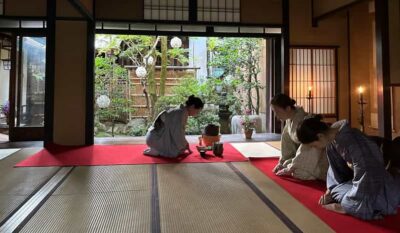 ★ 4.2Kimono & Tea Ceremony Experience in a Kyoto Cultural AssetFrom $126
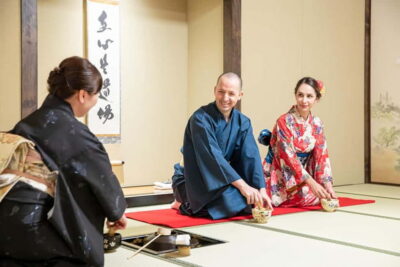 ★ 4.9Kyoto: Kimono Tea Ceremony with Matcha and SweetFrom $661h 30m
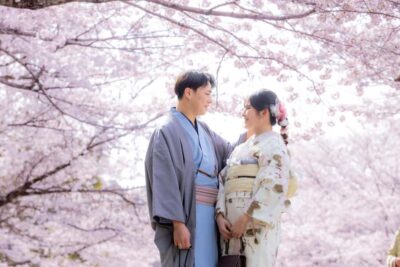 ★ 4.7Enjoy Kyoto Summer in Traditional Kimono / YukataFrom $29