
Reviewed · NIGHT WALKS & GHOST TOURS
Kyoto Private Night Tour with a Local – Bars, Bites & Culture
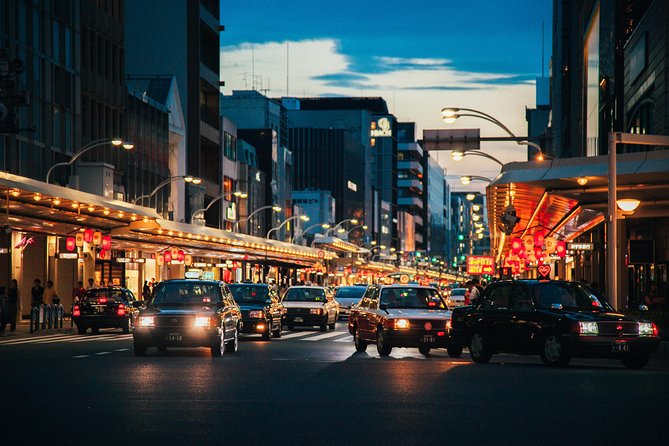
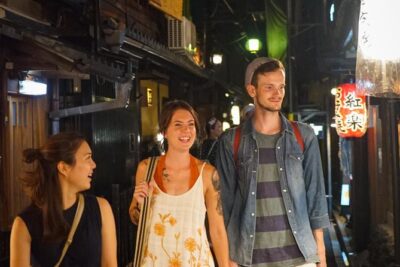
Kyoto changes character after sunset. The crowds thin, paper lanterns glow along Gion’s wooden lanes, and Pontocho’s narrow passage fills with the quiet clink of glasses and dishes. This private evening walk gives you a local host rather than a fixed group script, so your night can lean toward shrines, food, bars, photography, or old Kyoto stories.
I like the chance to see Gion and Pontocho at their most atmospheric, especially around Tatsumi Bridge and Shimbashi. I also like the built-in flexibility: guides such as Taiga, Kenya, Miki, and Hanako have adjusted plans for requests ranging from okonomiyaki and sparkling sake to speakeasy bars and family-friendly pacing.
The main caution is consistency. Most feedback is glowing, but one serious complaint described a guide with limited local knowledge and a weak food stop. Also, the details list both a 2 to 3 hour duration and a 4-hour experience, so confirm the expected length before you set your evening plans.
In This Review
- Key points to know before booking
- Why Kyoto feels different after sunset
- Starting near Shijo Kawaramachi
- Gion’s lantern-lit entertainment lanes
- Tatsumi Bridge and Shimbashi
- Pontocho for small bars and izakaya
- Yasaka Shrine under evening lights
- A quieter shrine and a slower final stretch
- What the $150.35 price really covers
- Duration, walking, and timing concerns
- Which kind of evening suits this tour?
- Should you book the Kyoto private night tour?
- FAQ
- Where does the Kyoto private night tour begin?
- Where does the tour end?
- How long does the tour last?
- Is this a private tour?
- Can the itinerary be customized?
- Are drinks included?
- Is food included?
- Is transportation included?
- Are attraction tickets included?
- Can I cancel for a full refund?
Key points to know before booking
- Gion after dark: Lantern-lit lanes, wooden townhouses, teahouses, shrines, and quieter streets give you a different view of Kyoto.
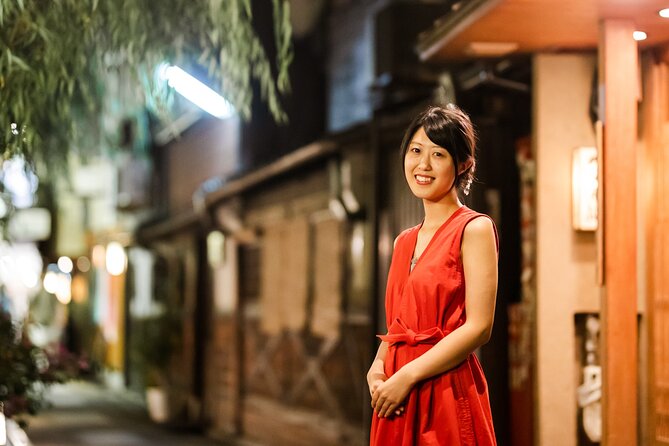
- A genuinely private format: Only your party joins the host, making questions, photo stops, and itinerary changes easy.
- Two drinks included: You receive two local beers or non-alcoholic drinks, while extra food, drinks, and attraction tickets cost more.
- Flexible food and bar plans: Hosts have taken people to local izakayas, helped find okonomiyaki, and arranged stops for cocktails or small bites.
- Walking first: The tour begins and ends near Matsumoto Kiyoshi Kyoto Shijo Kawaramachi. Public transport or taxis may add cost if you move between areas.
- Strong overall record, with a caveat: The experience is rated 4.8 out of 5 and recommended by 96 percent of customers, though the guide assigned to you matters greatly.
Why Kyoto feels different after sunset
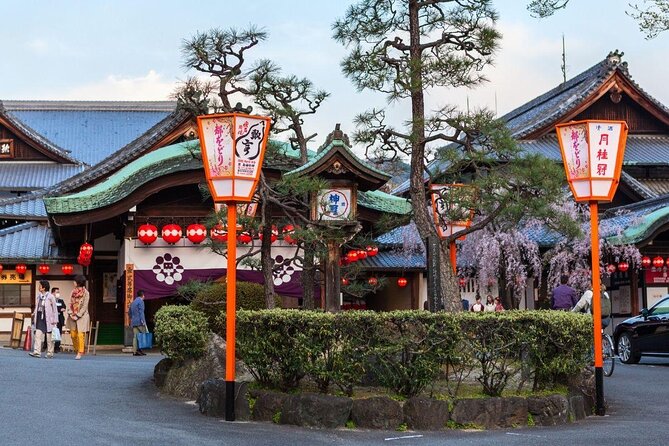
Daytime Kyoto can be a game of dodging crowds, tour groups, bicycles, and photo stops. At night, Gion’s old lanes become easier to appreciate. You can look up at dark wooden facades, notice the soft light from traditional lanterns, and hear the city settle into its evening rhythm.
This is not mainly a landmark checklist. It is a walking conversation through places that are easy to pass without understanding. Your host can explain how a shrine differs from a temple, what certain customs mean, and how old entertainment districts function today.
The private setup matters here. In a group of strangers, you may hesitate to stop for a photograph or ask a basic question about Shinto practice. With your own host, you can slow down, change direction, or spend more time on the part of Kyoto that interests you most.
The experience has earned a 4.8 rating from 48 pieces of customer feedback, with 96 percent recommending it. That is a strong record, but it does not mean every guide delivers the same evening. The company assigns different hosts, and the quality depends on how well your host matches your interests and how clearly the plan is discussed beforehand.
A few more Kyoto tours and experiences worth a look
Starting near Shijo Kawaramachi
The meeting point is Matsumoto Kiyoshi Kyoto Shijo Kawaramachi, at 103-2 Hashimotōchō in Shimogyo Ward. This puts you near one of central Kyoto’s busiest evening areas, close to shops, restaurants, and transport links.
You will meet your host there and finish back at the same meeting point. The walk is primarily on foot, though public transport or a local taxi may be used if your custom plan moves between areas. Those fares are not included, so ask your host about likely transport costs after booking.
Before the tour, you receive a short questionnaire. Use it carefully. This is your best chance to say that you want history rather than bar-hopping, local food rather than cocktails, a gentle route for older family members, or a particular request such as a speakeasy or okonomiyaki.
The hosts who received especially warm praise were flexible and communicative. Amy built a custom plan and kept the evening organized. Miki asked detailed questions before the outing. Toga responded quickly and included a specific bar request. That sort of preparation can make the difference between a personal night out and a generic walk.
Gion’s lantern-lit entertainment lanes
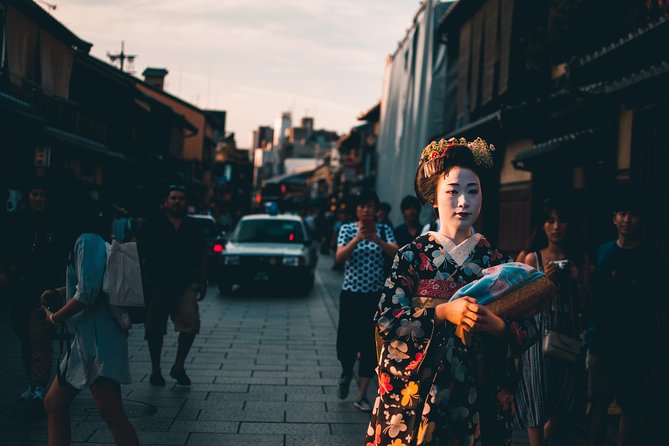
Gion is the natural heart of the route. Your host can lead you through its old entertainment district, pointing out tucked-away teahouses and lanes that look entirely different once the lanterns are lit.
The appeal is not simply visual. Gion is a place where Kyoto’s older customs still sit beside modern restaurants and bars. Your host can explain the area’s role in the city and help you read details that you might otherwise miss, from the style of the wooden buildings to the difference between public streets and more private establishments.
You may be lucky enough to spot a geisha or maiko, but this should never be treated as the purpose of the tour. They are working, and respectful distance matters. A good host can help you understand what you are seeing without turning the encounter into a spectacle.
Taiga received repeated praise for taking people through back streets and explaining the area’s past in a way that matched their interests. Chai was also singled out for making the walk engaging and for taking excellent nighttime photographs. If photographs matter to you, mention that in your questionnaire.
Tatsumi Bridge and Shimbashi
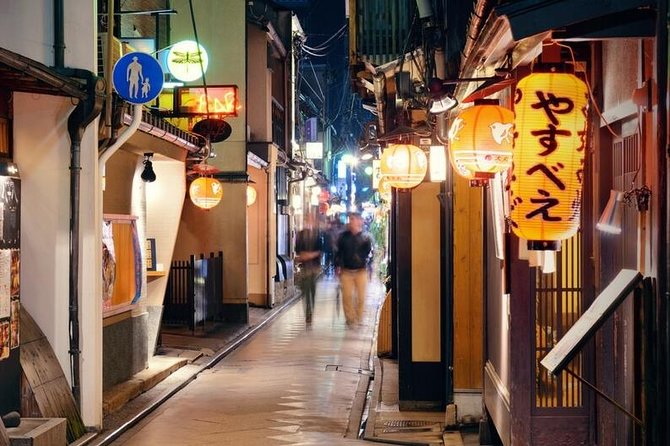
Crossing Tatsumi Bridge brings you into Shimbashi, often considered one of the prettiest parts of Gion. The street is lined with elegant wooden townhouses, refined restaurants, cafes, and teahouses.
This is one of the strongest visual sections of the evening. Shimbashi feels polished without needing grand monuments. The narrow street, traditional buildings, and evening light create the sort of Kyoto scene that rewards a slow pace.
Your host can stop to explain how the district works today and how it connects to Kyoto’s older social life. This is also a useful place to ask questions about dining etiquette, local customs, or the difference between places aimed at residents and those designed mainly for sightseeing.
There is a practical limitation: the tour does not include entry to attractions, and not every teahouse or restaurant is open to casual walk-ins. The value comes from having someone help you understand the area and suggest suitable places, not from guaranteed access to every door.
Pontocho for small bars and izakaya
Pontocho is a narrow nightlife street running beside the Kamo River. It is packed with intimate bars, small izakayas, and restaurants, with very little room to spare between one entrance and the next.
This is where the bars and bites part of the tour can become most useful. Your host may help you choose a small place for a drink or snack, explain what is on offer, and guide you through a setting where menus may not have English translations.
Brenda took one person to a local izakaya with no English menu, where the drink and snack became a memorable part of the night. Kenya searched for a place serving okonomiyaki and introduced sparkling sake. These details show what the private format can do well: turn a broad request into a practical local choice.
Still, food and drinks beyond the two included beverages are extra. The two included drinks are described as a choice of local beer or a non-alcoholic drink. If you want a full dinner, several bar stops, or specialty cocktails, plan to pay separately.
The tour is best viewed as a guided introduction to Kyoto nightlife, not an all-inclusive pub crawl. You get help choosing and ordering, plus context about the drinking culture. You do not get unlimited food, drinks, or reserved tables.
Other private tours in Kyoto
Yasaka Shrine under evening lights
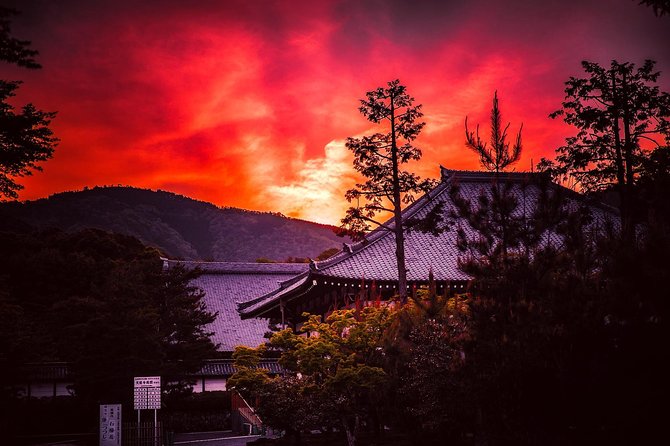
Yasaka Shrine offers a welcome change of pace. After the restaurant lanes and bars, its illuminated grounds feel spacious and calm.
Your host can explain Shinto customs, the role of shrines, and the legends connected with Yasaka. This stop gives the evening more depth than a simple walk between drinking spots. It also helps explain why Kyoto’s nightlife cannot be separated from its religious traditions and neighborhood life.
Going after dark has a clear advantage. You avoid the daytime heat and some of the heaviest crowds, while the shrine’s atmosphere becomes quieter. The tradeoff is that nighttime visits may offer less access to certain facilities than a daytime visit, and the experience focuses on the grounds rather than a formal attraction program.
Several guides have used shrine visits to tailor the cultural side of the walk. Hanako explained Japanese religious traditions with care and respect, including how visitors of different faiths might approach shrine customs. That is the sort of conversation worth requesting if you want more than a quick photo stop.
A quieter shrine and a slower final stretch
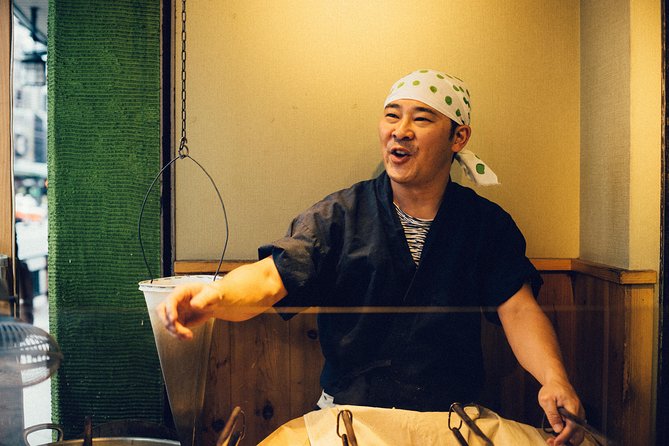
The route may also include a smaller shrine in the Gion area. Its value is its modest scale. Rather than another major sight, it gives you a quiet pause where you can slow down and take in the neighborhood without a long queue or a large crowd.
Exact stops are not guaranteed because this is a personalized experience. Your host may adjust the route based on opening hours, your pace, mobility, weather, or your stated interests. If a particular shrine matters to you, put it in the pre-tour questionnaire and discuss it directly.
The itinerary can also stretch beyond the core Gion route. One group took a train, ate a local meal, and saw a different part of Kyoto after explaining what they wanted. Another person asked for Fushimi Inari and received a plan built around that request.
That flexibility is a major advantage, but it also creates the tour’s biggest risk. A fixed itinerary promises a known product. A custom walk depends on the host preparing well and understanding what you asked for. Be specific, and ask for a rough plan before the evening begins.
What the $150.35 price really covers
At $150.35 per person, this is not a cheap orientation walk. You are paying for a private host, planning before the tour, two included drinks, and the ability to shape the evening around your party.
The value improves with two or more people. A private tour lets your group split the cost of the host while keeping the conversation focused on your own interests. Group discounts may also be available, though the exact savings are not stated.
The price makes less sense if you mainly want a low-cost stroll through Gion or if you already know where you want to eat and drink. You could walk many of these streets independently. What you cannot easily reproduce is the host’s local advice, cultural explanation, help with an unfamiliar izakaya, and ability to change the plan in real time.
Remember the extra costs. Additional meals and drinks are not included. Attraction tickets are not included. Transport is not included if your route uses a train, bus, or taxi. Gratuities are optional.
Duration, walking, and timing concerns
The information gives two different lengths: approximately 2 to 3 hours in one place and a 4-hour walking experience elsewhere. That is important if you have a dinner reservation, evening train, or another booking.
The safest move is to confirm the expected duration with the host before the tour. The route is primarily on foot, so comfortable shoes are sensible, even though the supplied details do not specify a distance.
Most people can participate, and service animals are allowed. The route can be adjusted for older people, as Nehal did for one family, but this is still a walking experience. Tell the host about mobility limits before the start, not halfway through Gion.
The booking confirmation arrives immediately, and free cancellation is available if you cancel at least 24 hours before the local start time. Changes made within 24 hours are not accepted, and the full amount is not refunded for a late cancellation.
One customer had the start time changed twice shortly before the tour, which disrupted a tightly planned four-day visit. That was an isolated but important warning. If your Kyoto schedule is packed, confirm the time and keep a little space around it.
Which kind of evening suits this tour?
I would choose this experience for a first evening in Kyoto when you want orientation with atmosphere. It can show you where Gion and Pontocho are, explain how the districts work, and leave you with ideas for later independent nights.
It also suits couples, families, and small groups who want privacy. Families appreciated guides such as Nehal for adapting the pace, while larger parties found hosts such as Goku patient and willing to answer many questions.
Food-focused visitors should state exactly what they want. Ask for izakaya dishes, okonomiyaki, local sake, or a place with a certain mood. Bar lovers can request cocktails or speakeasy-style venues, though no particular bar is guaranteed.
History-minded visitors should say so plainly. The experience can include Gion’s past, shrine customs, temple and shrine distinctions, and stories about Kyoto from earlier centuries to modern city life. But one poor experience showed that cultural detail is not automatic with every host.
Photography fans may enjoy the lanterns, bridges, townhouses, and nighttime shrine grounds. Chai and Oulan were praised for taking strong photographs, but you should still bring your own phone or camera and ask for pauses.
Should you book the Kyoto private night tour?
Book it if you value a flexible evening with a personal host more than a fixed list of sights. The best version combines a thoughtful Gion walk, a quiet shrine, a local drink, and one well-chosen food stop. Guides such as Taiga, Kenya, Miki, Hanako, Toga, and Chai show how rewarding that format can be.
I would be more cautious if you need a formal, licensed historical tour with guaranteed depth or a locked schedule. The uneven feedback means you should use the questionnaire well, ask who your host is, confirm the timing, and restate your priorities at the meeting point.
For many people, the price is justified by access to local context and the freedom to shape the night. Just remember that two drinks are included, not a full dinner, and that the evening may last anywhere from roughly 2 to 4 hours according to the booking details. With those limits clear, this can be a fine way to meet Kyoto after dark.
FAQ
Where does the Kyoto private night tour begin?
The tour begins at Matsumoto Kiyoshi Kyoto Shijo Kawaramachi, 103-2 Hashimotōchō, Shimogyo Ward, Kyoto 600-8011, Japan.
Where does the tour end?
The activity ends back at the meeting point.
How long does the tour last?
The duration is listed as approximately 2 to 3 hours, while the included details describe a 4-hour walking experience. Confirm the expected length with your host.
Is this a private tour?
Yes. Only your party participates in the activity.
Can the itinerary be customized?
Yes. After booking, you receive a questionnaire about your interests, preferences, and must-see places. Your host then contacts you to plan a personalized route.
Are drinks included?
Two drinks are included. You can choose local beer or a non-alcoholic beverage.
Is food included?
No. Additional food and drinks are not included in the price.
Is transportation included?
No. The experience is mainly a walking tour. Public transportation or local taxis may be used at an additional cost.
Are attraction tickets included?
No. Tickets to attractions are not included.
Can I cancel for a full refund?
Yes, if you cancel at least 24 hours before the experience’s local start time. Cancellations made less than 24 hours in advance are not refunded.
More Evening Experiences in Kyoto

More Private Tours in Kyoto
More Night Walks & Ghost Tours in Kyoto
More tours in Kyoto we've reviewed


Night Walks & Ghost Tours, compared.
 ★ 4.5Night Walk in Gion: Kyoto’s Geisha DistrictFrom $211h 40m
 ★ 5.0Kyoto Night Foodie Tour in Gion (9+ dishes + 6 Sake tastings)From $163
 ★ 4.9Kyoto: Gion Magical Night Walking Tour with Geisha InsightsFrom $34
 ★ 5.0Kyoto Gion Night Walk & Geisha District Guided TourFrom $18
 ★ 5.0Kyoto Ghost Tour: Dark Tales, Urban Legends, Bamboo Forest NightFrom $43
 ★ 5.0Kyoto Bar Hopping Night TourFrom $105