
Reviewed · PHOTOGRAPHY SESSIONS
Kyoto: Private Photoshoot Service
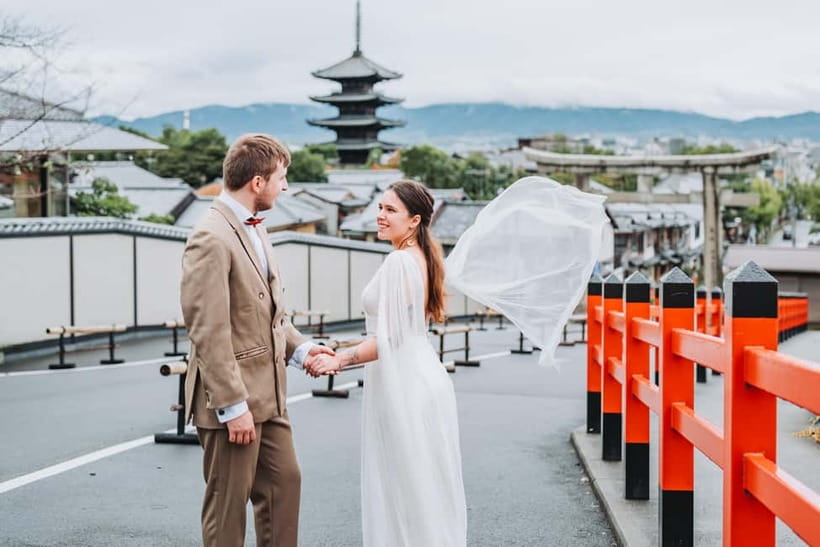
Kyoto’s best souvenir may be the one you can frame. This private session takes you through photogenic corners of old Kyoto with local photographer Micky, who works quickly around crowds and gives clear, low-pressure posing help. You are not simply standing in front of a landmark. The aim is to look relaxed, natural, and connected to the place.
I like two things right away: you receive every picture from the session, not just a small handpicked set, and you can choose which images receive professional editing. The candid shots are especially useful for couples, families, and anyone who freezes when a camera appears. The main consideration is that this is a photo session, not a full sightseeing tour, and the one-hour to 90-minute format means you must choose your area carefully.
In This Review
- Key points to know before booking
- What this Kyoto photoshoot really offers
- Choosing between Gion, Pontocho, and old Kyoto lanes
- Maruyama Park and the Higashiyama backdrop
- Nanzenji and Keage Incline for a quieter look
- Arashiyama’s bamboo, bridge, and Kimono Forest
- Fushimi Inari for torii gates and movement
- How the one-hour to 90-minute session works
- What you receive after the shoot
- Price, group size, and what makes the value work
- Seasonal timing, weather, and comfort
- Who should book this experience
- Should you book Micky’s Kyoto photoshoot?
- FAQ
- How long does the Kyoto private photoshoot last?
- How much does the photoshoot cost?
- Is the photoshoot private?
- Which languages are available?
- Which Kyoto locations can I choose?
- Is kimono rental included?
- Can the photographer take pictures at Yasaka Shrine and Kiyomizu-dera?
- How many photographs will I receive?
- How quickly are the photographs delivered?
Key points to know before booking
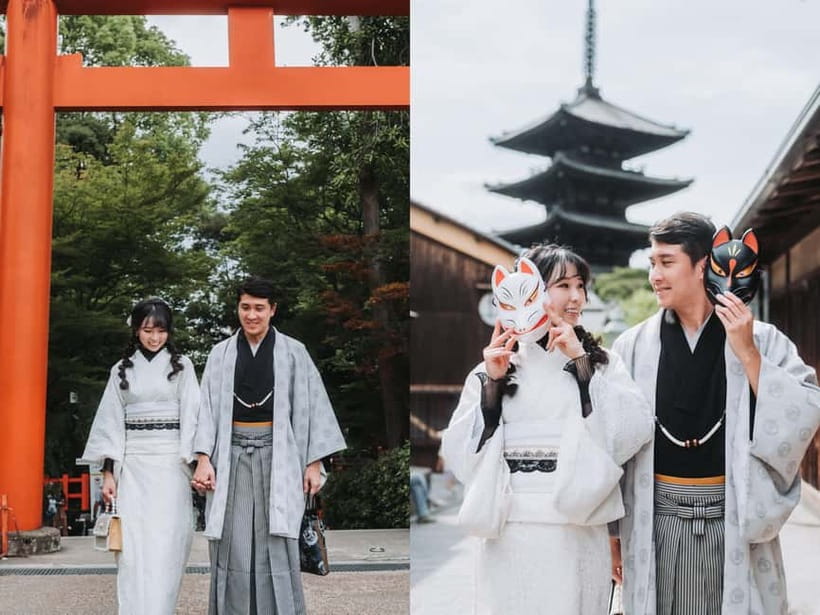
- Micky’s local eye: He knows quieter corners, useful angles, and ways to frame Kyoto landmarks even when streets are crowded.
- Around 200 images or more: You receive the full JPEG set from the session, giving you plenty of choices.
- Choose your edited photos: Selectable retouched images include natural skin adjustments, lighting fixes, and other professional finishing.
- Several Kyoto settings: Pick from Gion, Pontocho, Nanzenji, Arashiyama, Fushimi Inari, or other listed meeting options.
- Fast delivery: The edited and original files are promised within two to three days, with some sessions delivered within hours.
- Private and flexible: Solo visitors, couples, and families can book a private outdoor shoot in English, Thai, or Japanese.
What this Kyoto photoshoot really offers
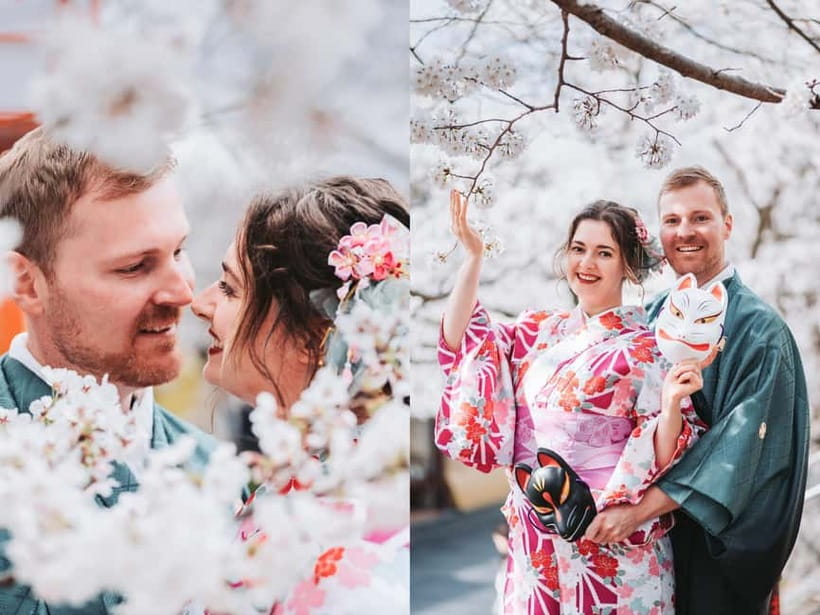
A private Kyoto photoshoot fills a common gap in a Japan trip. You may take hundreds of phone pictures, but someone in your group is usually missing from them. You may also want a proper portrait in a kimono, a record of a proposal, or family pictures that do not look like rushed snapshots.
The session uses natural outdoor light and Kyoto itself as the backdrop. That means old lanes, wooden buildings, stone paths, bridges, temple gates, bamboo, and seasonal scenery do most of the visual work. Micky adds the camera skill, timing, composition, and gentle direction.
You do not need to know how to pose. Several people who had never done a professional shoot found the instructions clear and easy to follow. Micky may show you a few images during the session, which helps you understand what is working and adjust without guesswork.
I also like the relaxed tone. The best portraits often come between formal poses: walking, looking at one another, adjusting a sleeve, or simply reacting to the surroundings. Micky’s style aims to catch those moments as well as the polished shots.
Other private tours in Kyoto
Choosing between Gion, Pontocho, and old Kyoto lanes
The Shirakawa Canal area gives you the classic old Kyoto look: narrow lanes, traditional façades, a canal, and the atmosphere of the historic geisha district. Nearby locations include Shirakawa Lane, Gion Shinbashi Bridge, Pontocho Street, and Kiritoshi Street.
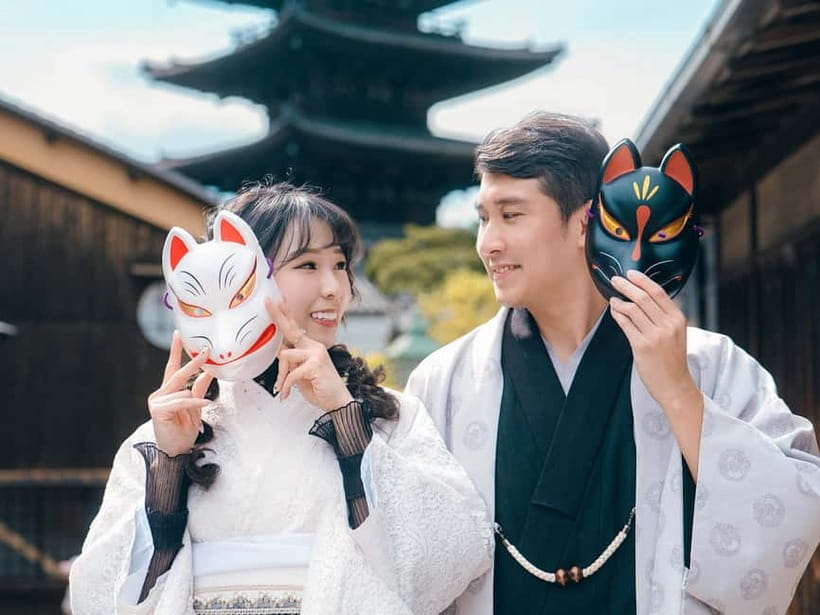
This is a strong choice for couples and visitors wearing kimono. The streets provide several backgrounds close together, so you can change the look of the photographs without spending the whole session walking between distant sites. The drawback is popularity. Gion can become crowded, especially during spring and autumn.
Pontocho Alley is another good option for a more intimate, urban Kyoto mood. Its narrow passage and traditional buildings create a different feel from the wider temple grounds. You can expect a mixture of posed portraits and walking images, though the tight space means you should be comfortable working around other people.
For the calmest possible session in a busy season, ask about an early start. The recommended window is roughly 8:00 to 11:00 in spring and autumn. Early light also gives you a more relaxed shoot before the streets fill up.
Maruyama Park and the Higashiyama backdrop
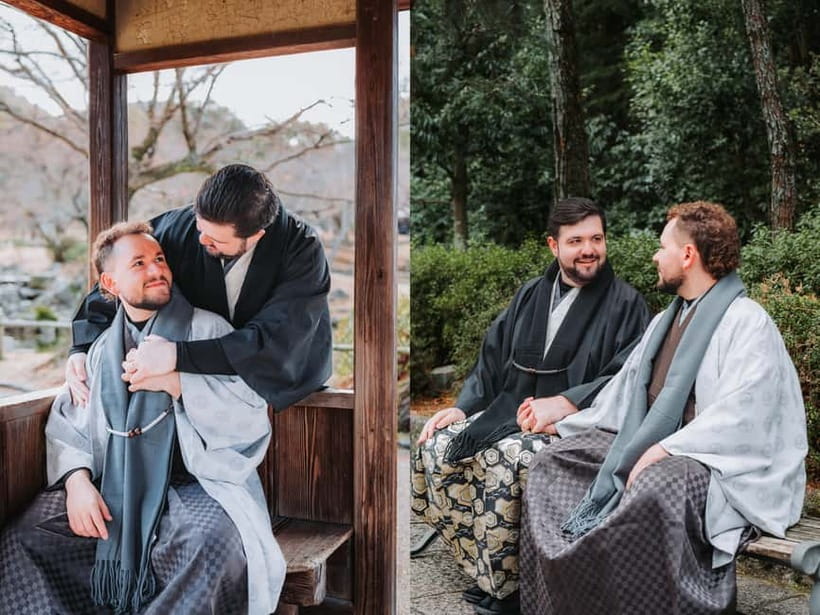
Maruyama Park is useful when you want greenery, open space, and a little more room to move. It works well for family pictures, solo portraits, and couples who want a softer setting after photographing Kyoto’s narrow streets.
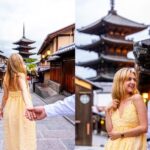
The wider Higashiyama area adds several recognizable sights, including Nene no Michi, Yasaka Koshin-do Temple, and Hokan-ji Temple, often called Yasaka Pagoda. These locations give your gallery a clear Kyoto identity without relying on one single background.
There is an important restriction here. Photography at Kiyomizu-dera and Yasaka Shrine is not permitted as part of this service. The itinerary includes Yasaka Shrine as a photo stop, but the stated rules make clear that photography there is not allowed. Confirm the exact route and shooting points before you book, and expect the photographer to work in permitted public areas nearby rather than inside prohibited spaces.
Hokan-ji and the surrounding lanes can produce striking images, but they are also popular. Micky’s value is not just having a camera at a famous place. It is knowing how to use side streets, timing, and framing to reduce the visual clutter.
Nanzenji and Keage Incline for a quieter look
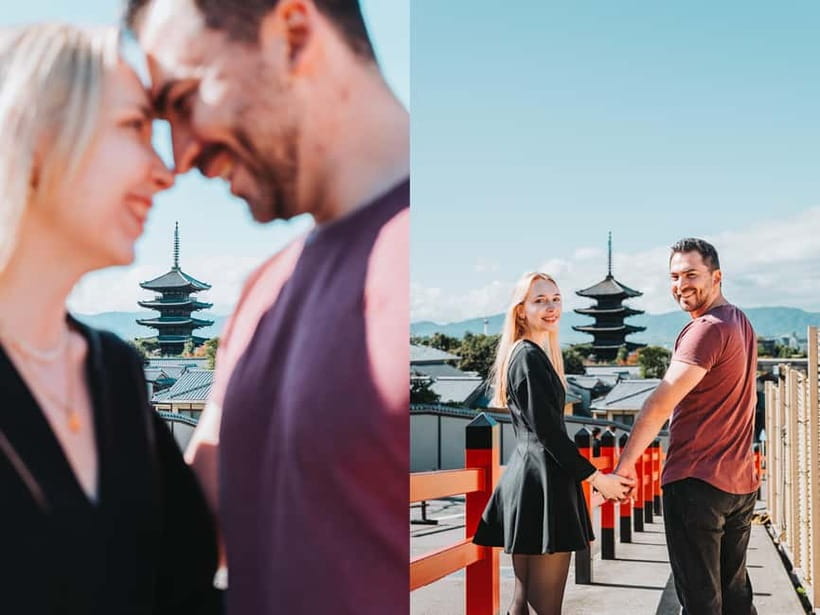
The Nanzenji area, in northern Higashiyama, offers a more spacious and architectural setting. Nanzenji Temple has strong lines, broad walkways, and large structures that work well for full-length portraits and formal family compositions.
Nearby Keage Incline gives the session another visual change. Depending on the season and conditions, you might find rails, trees, and a long perspective that feels quite different from Gion’s close lanes. This option suits visitors who want temple scenery but prefer not to spend the entire shoot in the most crowded old-town streets.
Nanzenji is also a sensible pick if you want your pictures to feel less like standard tourist snapshots. The area has enough variety for a one-hour session, but it is still wise to ask exactly which points are planned. A one-hour booking cannot realistically cover every Kyoto district listed in the full location menu.
Arashiyama’s bamboo, bridge, and Kimono Forest
Arashiyama gives you three distinct settings in one broad district. The Bamboo Forest supplies the instantly recognizable vertical lines, while Nonomiya Shrine adds a traditional religious setting. Togetsukyo Bridge brings a wider view and a sense of space.
The Kimono Forest at Arashiyama Station is more modern and colorful. Its patterned cylinders create a graphic background that can break up a gallery otherwise filled with temples and wooden streets. Togetsukyo Bridge, by contrast, works well for walking shots, wider portraits, and group pictures.
The tradeoff is distance. Arashiyama is not a quick add-on to Gion, Pontocho, or Fushimi Inari during a short session. Choose Arashiyama as your main area rather than expecting to combine it with several locations elsewhere in Kyoto.
The Bamboo Forest is also a busy choice. A skilled photographer can find useful angles and moments with fewer people in the frame, but no photographer can guarantee an empty path. Book early if this is your priority, particularly during the high seasons.
Other photography tours in Kyoto
Fushimi Inari for torii gates and movement
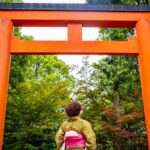
Fushimi Inari Taisha offers a very different visual language from the rest of the choices. Its torii gates create long repeating lines, rich color, and a strong sense of depth. The setting is particularly effective for walking photographs and portraits that use the path as a natural frame.
You should allow your photographer to guide you on where to stop. The site extends well beyond the first gates, and a 60 to 90-minute shoot needs sensible pacing. Comfortable shoes matter here, as the service is outdoors and involves walking.
Fushimi Inari is one of Kyoto’s best known photo locations, so crowd control remains a factor. Early scheduling can help. Bring water and be ready for weather, since the session takes place in natural light rather than a studio.
How the one-hour to 90-minute session works
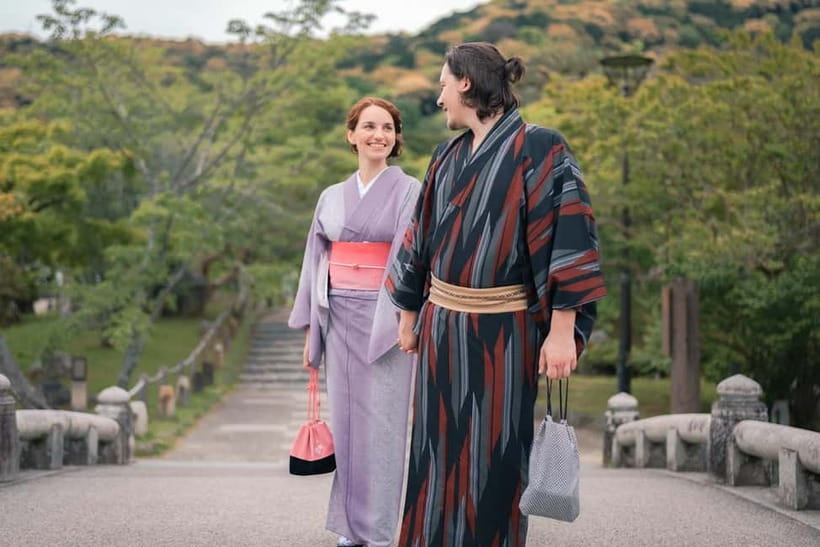
The booking offers five possible starting points, including Inari Station, the Gion Weeping Cherry Tree, and meeting points identified by Japanese names and addresses. Your exact meeting place depends on the option you select, so check it closely before setting out.
The published route includes many possible sights: Yasaka Shrine, Maruyama Park, Kimono Forest, Togetsukyo Bridge, Pontocho, Pontocho Alley, Fushimi Inari, Arashiyama Bamboo Forest, Hokan-ji, and Nanzenji. These are best understood as a menu of location choices, not a promise that you will visit them all in one short booking.
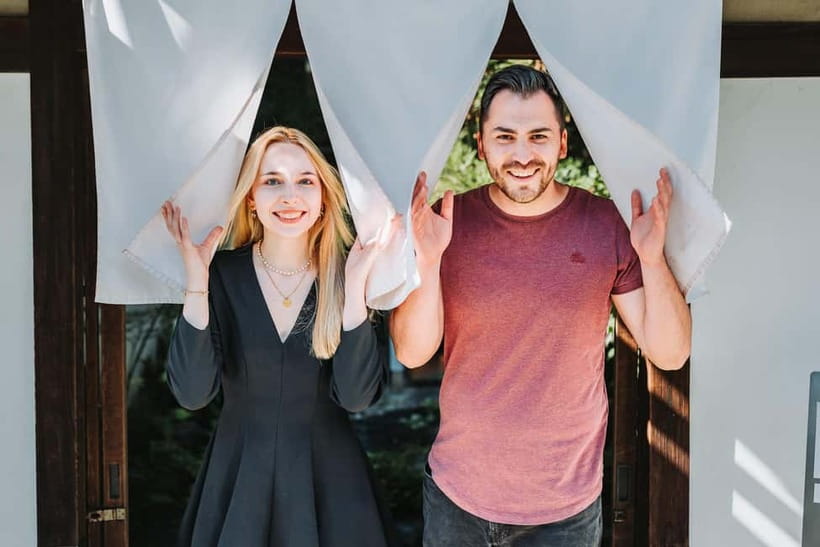
At the start, Micky can help you settle into the camera experience. You can expect pose direction, suggestions about where to stand, and adjustments based on light and background. The session also leaves room for candid moments, which is helpful if you want pictures that feel less formal.
The private format is a real advantage. You do not need to match the pace or style of another group. A couple can request romantic images, a family can work through combinations of parents and children, and a solo visitor can focus on portraits without feeling rushed by strangers.
What you receive after the shoot
The package includes 200 or more high-resolution pictures in JPEG format, with all images from the session available through an online album. The exact number can be higher. One session produced 456 pictures, according to the supplied booking information.
This is an unusually generous approach compared with packages that deliver only a small fixed number of files. It also means you will need to sort through a large gallery. That is a pleasant problem if you enjoy choosing images, but it takes time.
Edited and retouched images are selectable. The included finishing focuses on natural skin retouching, cleanup, lighting, and angle adjustments rather than an artificial makeover. One package example allowed a couple to choose 35 favorites for professional retouching, but confirm the exact number of edited images attached to your selected option.
Original JPEG files are included. Raw files for your own editing are available as an add-on, as are extra edited pictures. Printed photographs and permanent data storage are not included, so download everything from the online album and keep your own backup.
Delivery is promised within two to three days. Some sessions have been sent within hours, but I would plan around the stated two to three-day window, especially if you need the images before leaving Kyoto.
Price, group size, and what makes the value work
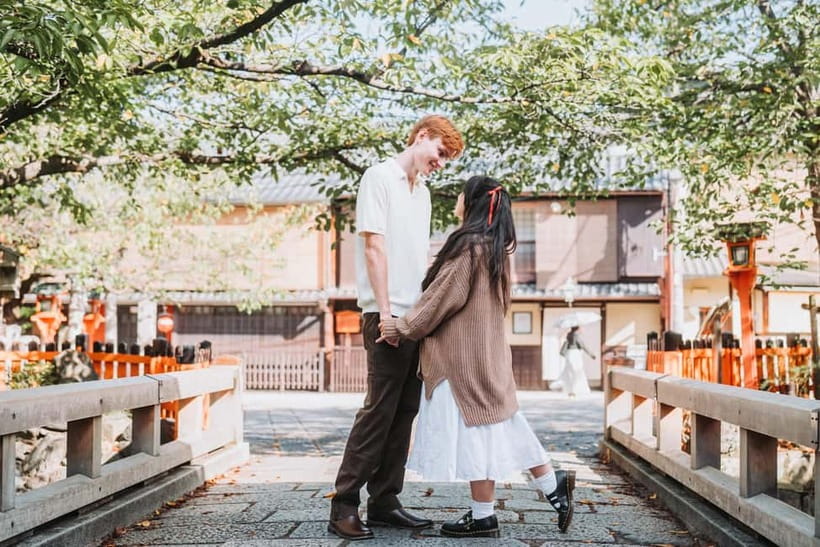
At $78 per person, this is not a group tour price. You must enter the correct number of participants when booking. The cost is calculated per person, not per private group.
The value depends on what you want. If you only need one quick phone portrait, this service may be more than necessary. If you want a large set of professionally composed images, pose guidance, local location planning, and selected retouching, the price is easier to justify.
The private format also matters. You are paying for personal attention rather than sharing a photographer with other visitors. The full gallery gives you more than a handful of polished portraits, including candid frames and different combinations for couples or families.
Kimono rental is not included. You can arrange that separately, and the photographer can recommend a nearby rental shop if needed. Build in enough time before the shoot if you plan to dress traditionally, since a late arrival cuts into your camera time.
Seasonal timing, weather, and comfort
Spring and autumn are the most demanding periods for popular Kyoto locations. The early morning recommendation is practical, not a minor detail. Fewer people make it easier to get clean backgrounds and keep the session relaxed.
Summer can be hot. One family session continued in high heat, and the photographer adjusted with care, but you should still bring drinks, sunscreen, and comfortable shoes. Winter can be cold and snowy. A February session took place in snow, showing that unusual weather can create beautiful pictures, but you should dress for the conditions.
The service uses natural light outdoors, so weather affects the look and comfort of the shoot. One booking was rescheduled because conditions would have weakened the experience. If the forecast looks poor, contact the photographer rather than assuming the session must go ahead unchanged.
Oversize luggage is not allowed. Climbing, touching plants or exhibits, making noise, and other disruptive behavior are also prohibited. These rules fit the setting: many shooting locations are temples, shrines, public paths, or protected cultural areas.
Who should book this experience
I would recommend it most strongly for:
- Couples marking a honeymoon, anniversary, or proposal
- Solo visitors who want proper portraits in Kyoto
- Families who rarely manage a complete group picture
- Visitors wearing a rented kimono
- Anyone who feels awkward posing and wants clear direction
- People who value receiving a large set of original files
Micky has also helped with proposals by suggesting a location and guiding the timing. If you are planning one, contact him in advance and explain the plan clearly. The private structure gives you room to arrange the moment, but the photographer needs to know what you want before the session begins.
Babies under one year old are not considered suitable for this activity. Families with older children can book, though the outdoor format and walking time should be considered.
Should you book Micky’s Kyoto photoshoot?
Book it if you want more than a quick landmark snapshot and you like the idea of a relaxed, directed session with a large gallery afterward. The strongest points are Micky’s eye for less crowded angles, his easy manner, the amount of imagery delivered, and the ability to select your favorite edited pictures.
Skip it if your priority is a guided cultural tour, temple interpretation, kimono rental, or a full-day route across Kyoto. This is a photography service first. Choose one district, schedule early when possible, wear comfortable shoes, and check the exact meeting point and permitted shooting areas.
For a proposal, couple session, family record, or solo portrait set, $78 per person offers solid value. Just remember that Kyoto’s famous spots are busy, the weather is part of the deal, and the best results come when you treat the session as a focused visit to one area rather than a race across the city.
FAQ
How long does the Kyoto private photoshoot last?
The session lasts between one hour and 90 minutes. Starting times vary, so check availability for the date you want.
How much does the photoshoot cost?
The listed price is $78 per person. The price is calculated per participant, not per private group.
Is the photoshoot private?
Yes. The activity is offered as a private group experience.
Which languages are available?
The host or greeter can communicate in English, Thai, and Japanese.
Which Kyoto locations can I choose?
Possible areas include Shirakawa Canal, Pontocho, Gion, Nanzenji, Keage Incline, Arashiyama, Kimono Forest, Togetsukyo Bridge, and Fushimi Inari. The exact route depends on the option booked.
Is kimono rental included?
No. Kimono rental is not included. A nearby rental shop can be recommended if you need one.
Can the photographer take pictures at Yasaka Shrine and Kiyomizu-dera?
Photography at Kiyomizu-dera and Yasaka Shrine is not permitted for this service. Confirm the exact permitted shooting points for your selected area.
How many photographs will I receive?
You receive around 200 pictures or more from one session, including all original JPEG images through an online album.
How quickly are the photographs delivered?
Delivery is guaranteed within two to three days. Original files and selected edited pictures are provided digitally. Raw files and extra edited images are available as add-ons.
More Photography Tours in Kyoto
More Private Tours in Kyoto
More tours in Kyoto we've reviewed
Photography Sessions, compared.
 ★ 4.7Kyoto: Maiko Makeover and Photoshoot ExperienceFrom $1402h 30m
 ★ 5.0Your Private Vacation Photography Session In KyotoFrom $297
 ★ 4.9Kyoto: Tea Ceremony with Kimono and PhotoshootFrom $1271h 30m
 ★ 5.0Kyoto: Private Gion District Photoshoot ExperienceFrom $10990 minutes - 7 hours
 ★ 5.0Private Photoshoot Experience in Kyoto ( Gion )From $132
 ★ 4.9Kyoto Gion Kiyomizudera Kimono Yukata Hairstyle | PhotoshootFrom $2120 minutes - 1 day