
Reviewed · GION & GEISHA WALKS
Kyoto: Private Walking Tour with Kiyomizu Temple & Gion
Kiyomizu Temple is the star here, especially the great wooden observatory that looks across Kyoto. From there, this private tour threads downhill through old lanes, Yasaka Shrine, Gion’s teahouse district, and Nishiki Market, giving you a useful first look at several central sights in one morning or afternoon.
I like the private format, since your guide can explain temple customs at your pace instead of giving a speech to a crowd. I also like the food stop at Nishiki Market, where you can choose small bites such as pickles, takoyaki, karaage, green tea, and tamagoyaki rather than being locked into one set meal.
The catch is the distance. You will walk more than 3 miles, or 5 kilometers, and the tour does not include Kiyomizu Temple admission or the taxi or public transport needed to reach it. It is listed as wheelchair accessible, yet it is not recommended for people with mobility impairments, so ask for clarification before booking.
In This Review
- Key points to know before booking
- Why this route works well for a first day in Kyoto
- Kiyomizu Temple and the famous wooden observatory
- Ninenzaka and Sannenzaka, Kyoto’s shop-lined approach
- Yasaka Shrine and a hands-on lesson in shrine customs
- Gion, from Minamiza Theatre to Hanamikoji Street
- Optional downtown streets before Nishiki Market
- Nishiki Market and the best place to make your own food plan
- The guide makes the private format worthwhile
- Walking distance, accessibility, and what to bring
- Who will get the most from this Kyoto walk
- Is the $174 price fair?
- Should you book this private Kyoto tour?
- FAQ
- How long is the tour?
- What sights are included?
- Is the tour private?
- What language does the guide speak?
- Is Kiyomizu Temple admission included?
- Is transport to Kiyomizu Temple included?
- Does the tour include food?
- How much walking is involved?
- Can I bring luggage?
- Is the tour suitable for people with mobility impairments?
Key points to know before booking
- Kiyomizu Temple begins the day: See the main gate, temple building, and famous observatory with a private English-speaking guide.
- The route links Kyoto’s classic districts: Walk through Ninenzaka, Sannenzaka, Yasaka Shrine, Gion, and downtown Kyoto.
- You learn how to pray at a shrine: Yasaka Shrine offers a practical lesson in Japanese worship customs.
- Gion is seen from its quieter lanes: Hanamikoji Street, Minamiza Kabuki theatre, and backstreets lined with ochaya teahouses are part of the route.
- Nishiki Market works as a flexible food stop: Taste or buy local foods, Japanese kitchen knives, teacups, and plates.
- Expect a long walk: Comfortable shoes matter, and large bags or luggage are not allowed.
Why this route works well for a first day in Kyoto
Kyoto can feel scattered on a map. Its temples sit among residential streets, shopping arcades, shrines, markets, and neighborhoods with very different characters. This 210-minute tour gives you a clear east-to-downtown progression instead of asking you to piece the sights together on your own.
The route begins at Kiyomizu Temple, moves through the preserved streets around the temple, reaches Yasaka Shrine at the eastern edge of Gion, then continues through the Gion district before finishing at Nishiki Market. That sequence makes practical sense. You start with a major cultural sight, then spend the rest of the outing walking through streets where daily shopping, food, theater, and traditional entertainment meet.
I see the private guide as the main reason to choose this experience. Kyoto’s rituals and historic buildings are not always self-explanatory. A guide can tell you what the main stage at Yasaka Shrine is for, how to pray, and why a particular street or building matters.
The tour costs $174 for a group of up to two people. That is not a cheap walking tour, but it can be fair value for a couple or two friends who want one guide rather than joining a large group. The price covers the guide’s service, not temple admission, local transport, food, or shopping. Plan for those extras.
A few more Kyoto tours and experiences worth a look

Kiyomizu Temple and the famous wooden observatory
Kiyomizu Temple is a strong opening stop because it gives you both a major religious site and one of Kyoto’s best-known views. The tour takes you through the main gate, into the main building, and out to the large observatory.
The observatory is the visual payoff. From its broad wooden platform, you look across Kyoto and get a sense of the city’s scale. The guide also provides the setting: this is not just a photo stop, but a place where the building, worship, and view are tied together.
A guided visit helps you notice details you might otherwise pass without a second thought. You can ask questions as you go, and a private guide has room to explain the temple’s background in more detail than a short audio description.
There is one practical point to settle before the day begins. Entrance to Kiyomizu Temple is not included. The cost is not provided here, so bring a little extra money and confirm the current admission charge when you book or meet your guide.
Transport to Kiyomizu Temple is also separate. Pickup is included from your hotel lobby, but the tour information says the taxi or public transport cost for Kiyomizu Temple is not covered. You should clarify exactly where the walking portion starts and how you will reach the temple.
Ninenzaka and Sannenzaka, Kyoto’s shop-lined approach
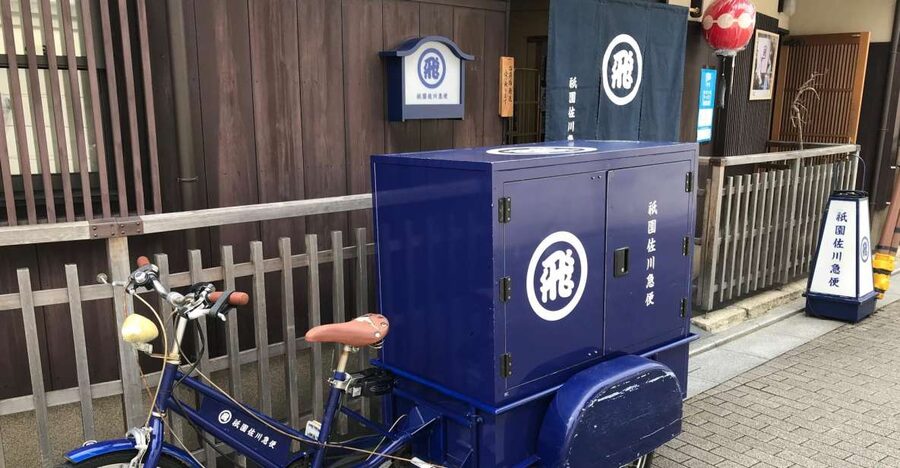
After Kiyomizu Temple, the route continues along Ninenzaka and Sannenzaka. These sloping streets are lined with food shops, souvenir stores, and traditional-looking buildings. They are part of the pleasure of visiting Kiyomizu, not merely a passage between attractions.
You will find plenty to browse, from snacks to small gifts. This is a good place to pause and decide how much shopping you really want to carry for the rest of a 5-kilometer walk. Large bags and luggage are not allowed on the tour, which makes sense on narrow streets, but you should avoid buying anything bulky early in the route.
The old lanes can be crowded, and the slopes and steps add effort. Take your time and wear shoes with good support. The route is more pleasant when you can look at the shopfronts instead of concentrating on sore feet.
This section also gives the tour a useful change of pace. Kiyomizu Temple is formal and monumental. Ninenzaka and Sannenzaka are more casual, with the chance to see how a historic setting now functions as a shopping area.
Yasaka Shrine and a hands-on lesson in shrine customs
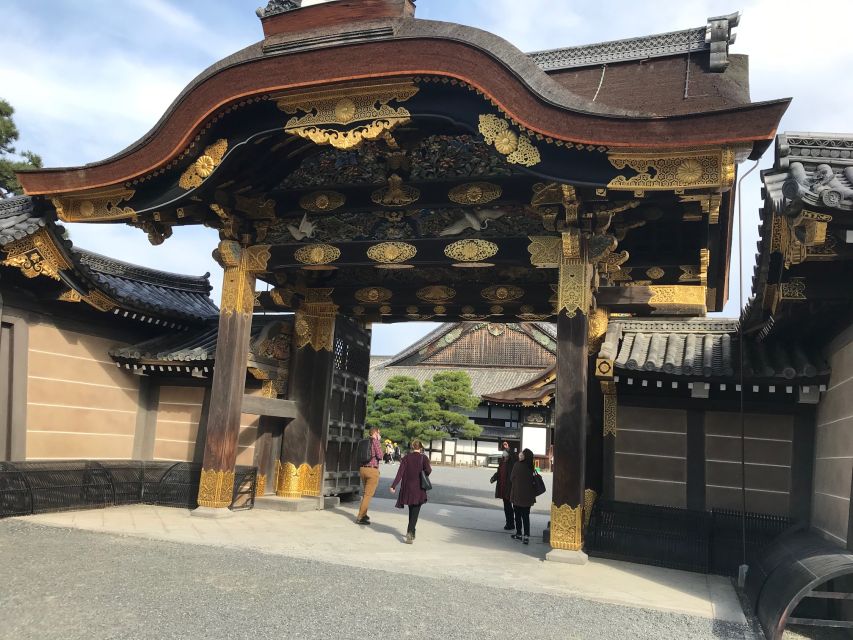
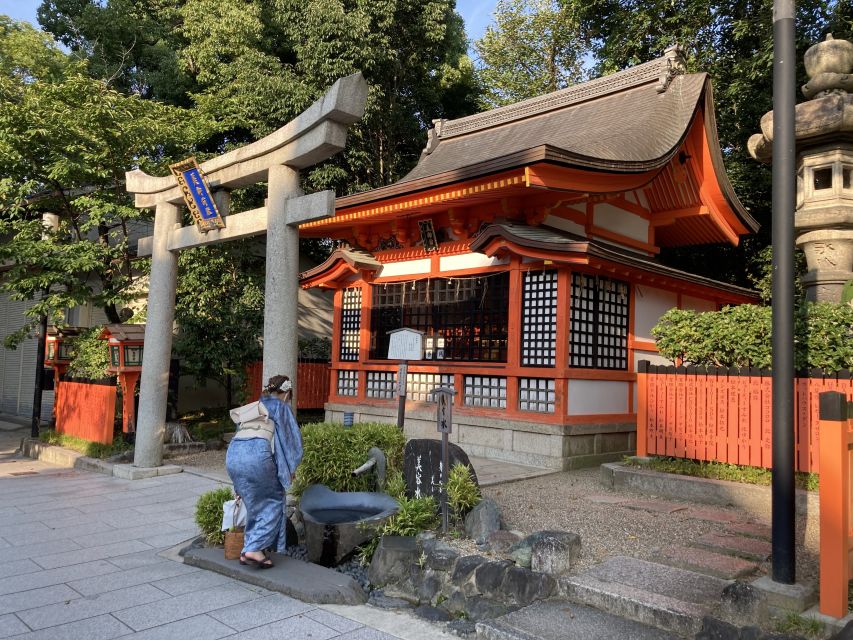
Yasaka Shrine sits at the eastern end of Gion. The visit includes the main stage and an explanation of what it was set up for, along with instruction on how to pray properly at a Japanese shrine.
That practical guidance is valuable. Shrine etiquette can seem simple, but visitors often wonder when to bow, how to use the purification fountain, and what to do at the offering area. A private guide can explain the sequence without making you feel awkward for asking basic questions.
The tour also includes a stop involving underground water said to enhance the beauty of body and mind. Treat this as a local belief and a cultural detail, not as a promise of physical change. Its appeal is the connection between water, worship, and the everyday hopes people bring to a shrine.
Yasaka Shrine also helps you understand the geography of Gion. You are not simply moving from one famous name to another. The shrine marks the point where the temple district gives way to Kyoto’s traditional entertainment quarter.
Gion, from Minamiza Theatre to Hanamikoji Street
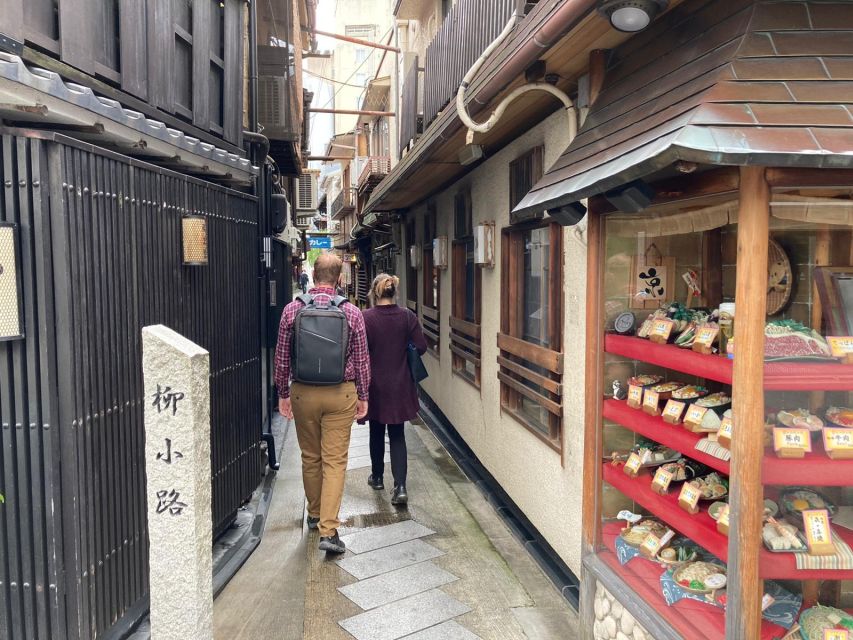
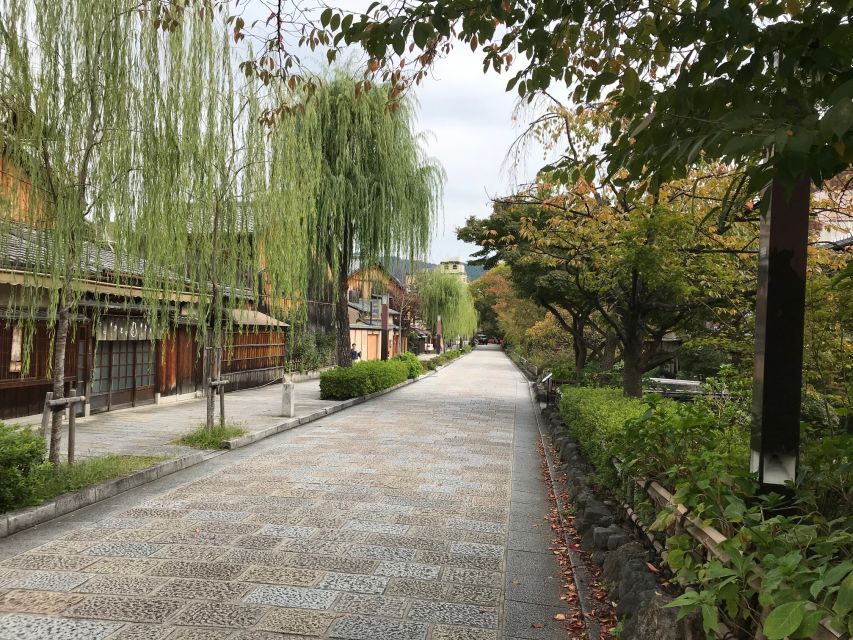
Gion is best understood on foot. The tour includes Minamiza Kabuki theatre and Hanamikoji Street, then moves into some of the backstreets where ochaya teahouses are found.
Minamiza gives you a link to kabuki, one of Japan’s best-known forms of traditional theater. Even if you are not attending a performance, seeing the theater helps explain why this part of Kyoto has long been connected with stage arts and formal entertainment.
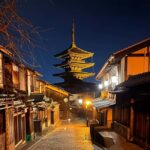
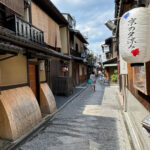
Hanamikoji Street is the more famous walk. Its traditional architecture makes it one of the most recognizable parts of Gion, but the backstreets are just as useful. They show a quieter side of the district and help you understand that the area is not a theme park built for sightseeing. It is a working neighborhood with businesses that serve a specialized form of entertainment.
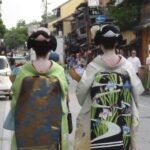
The tour makes an important point about timing. You should not expect to meet a maiko or geisha during the daytime walk. You may see one if you return to Gion in the evening, but that is not guaranteed, and you should never treat people working in the district as photo props.
This is one place where a guide can help you behave well. Listen to local instructions, keep your distance, and do not block narrow lanes. The most rewarding part of Gion is often the atmosphere of the streets and buildings, not checking off a sighting.
A few more Kyoto tours and experiences worth a look
Optional downtown streets before Nishiki Market
If time allows, the route may include Shin Kyogoku Street, Sanjo Street, Kiyamachi Street, and Ponto Street before reaching Nishiki Market. The wording matters: these streets are an extra possibility, not a guaranteed full portion of the tour.
This downtown stretch gives you a different view of Kyoto. Instead of temple grounds and teahouses, you see shops, cafes, and restaurants. It is a useful transition from old districts to the city center, and it may be the right time to stop for coffee or lunch.
Because the tour lasts only 210 minutes, time spent at each stop will depend on your pace. A long meal or extended shopping could mean less time elsewhere. Tell your guide early if you care most about temple details, Gion, or food tasting.
Ponto Street is another appealing finish to this part of the route. The street is associated with restaurants and traditional entertainment, and it sits close to the modern downtown area. You will not get a full evening in the district on this tour, but you can return later if it catches your interest.
Nishiki Market and the best place to make your own food plan
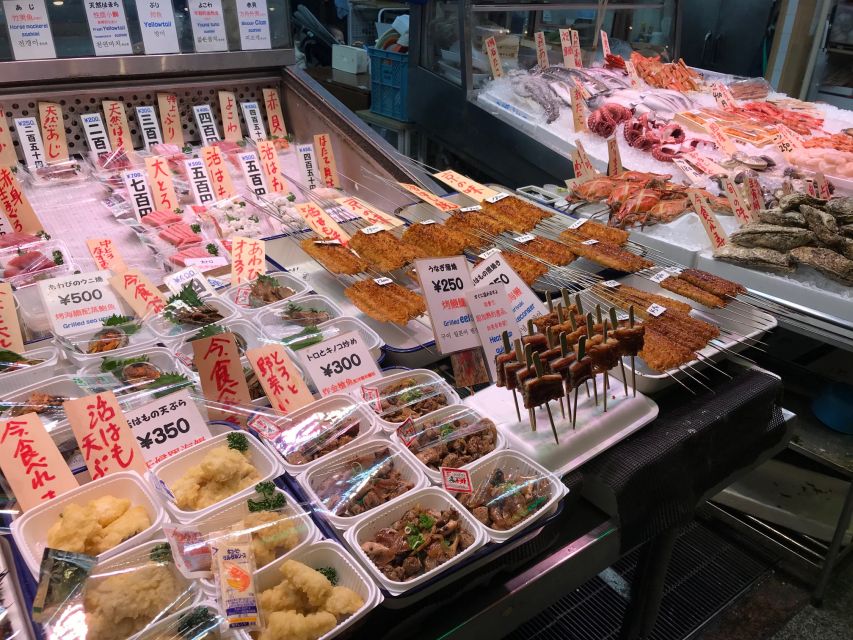
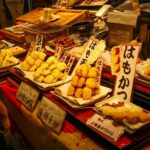
Nishiki Market is the final major stop, and it is the most flexible part of the experience. You can look at seafood, Japanese pickles, deep-fried foods, karaage, takoyaki, spices, ice cream, green tea, and egg rolls.
The tour does not provide a set tasting menu. That is a plus if you like choosing your own food, but it also means the final cost depends on what you buy. Carry some Japanese yen if possible, and ask your guide which items are worth trying if you are unsure.
Small bites work best here. You can sample several flavors without committing to a large meal, though the market can be crowded and some food is easier to eat while standing than walking. Keep your hands free and take care around hot or messy items.
Nishiki is also useful for shopping. Japanese knives, teacups, and plates are among the items available. A knife or ceramic piece may be difficult to carry safely for the rest of your trip, so think about packing and transport before buying. The guide can help you understand what you are seeing, but shopping costs are yours.
Ending at Nishiki Market gives you flexibility. You can stop the tour with food, continue shopping, or use the central location to make your own plans afterward. It is a practical finish rather than a ceremonial one.
The guide makes the private format worthwhile
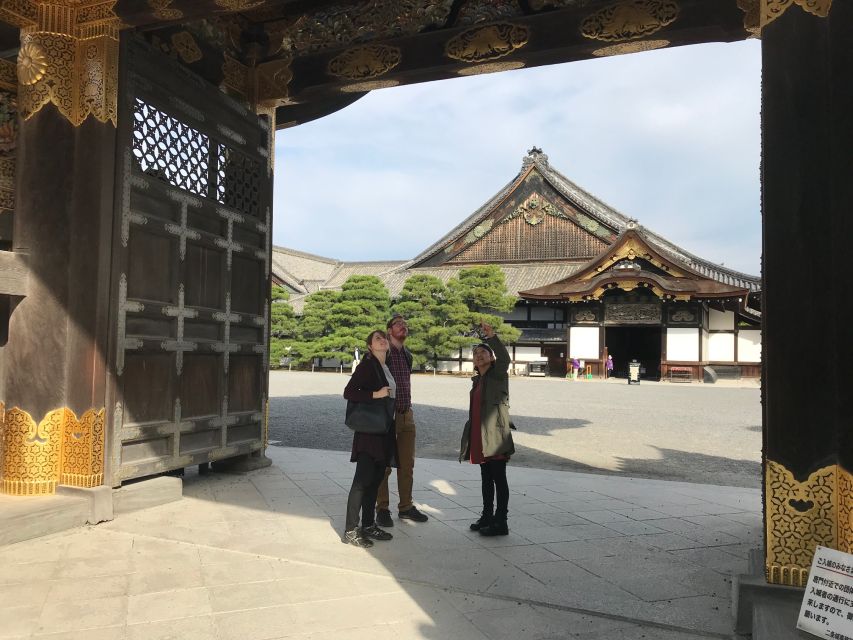
The guide speaks English, and the experience is private. That combination suits you if you want to ask questions freely or adjust the emphasis along the way.
Phillip has received particularly warm praise for detailed explanations, an interesting presentation, friendliness, and flexibility. If Phillip is available for your date, you may wish to request him, though guide assignment is not guaranteed by the information provided.
The best use of a private guide is not simply walking faster. It is choosing what deserves your attention. You might spend more time learning shrine etiquette, move quickly through souvenir shops, or focus on food at Nishiki Market.
The tour is also a good choice for first-time visitors who want a cultural framework before exploring Kyoto alone. After learning the basics of temple and shrine behavior, Gion’s layout, and the relationship between traditional districts and downtown streets, you can return later with more confidence.
Walking distance, accessibility, and what to bring
This is an active walking tour. You will cover more than 3 miles, or 5 kilometers, and the route includes slopes and historic streets. Comfortable shoes are essential, not optional.
The tour information says wheelchair access is available but also lists the experience as unsuitable for people with mobility impairments. Those statements do not fully match. If you use a wheelchair, have difficulty with slopes, or need frequent seating, contact the provider before paying and ask which parts of the route can be adapted.
Do not bring luggage or large bags. A small day bag is more practical, but even that should be light because you will carry it for several hours and through busy market streets.
Pickup is included. Wait in your hotel lobby five minutes before the scheduled time. The activity lasts 210 minutes, but the exact start times depend on availability, so choose a time that leaves room for transport and any temple admission arrangements.
Who will get the most from this Kyoto walk
I would recommend this tour to a couple or two friends who want a private introduction to Kyoto’s best-known eastern and central districts. It is especially useful if you value explanation over simply taking pictures.
Food-minded visitors will like the freedom at Nishiki Market. You can taste several local items, then buy souvenirs for the kitchen or tea table. People who prefer a fixed meal or a formal tasting experience should know that this is not that kind of food tour.
The route also suits visitors with only part of a day available. In three and a half hours, you cover a temple, shrine, historic lanes, Gion, downtown streets if time permits, and a major market. You will not explore each place in great depth, but you will see how they fit together.
I would hesitate to recommend it if you dislike walking, need a fully step-free route, or want a slow visit with long meals. The private format gives you flexibility, but it does not remove the distance.
Is the $174 price fair?
For up to two people, $174 works out to $87 per person before admission, transport, food, and shopping. That is a reasonable price if you would otherwise hire a private guide or if you want an efficient introduction without joining a larger group.
It is less attractive if you are traveling alone, since the full group price still applies. It is also less attractive if you already know Kyoto well and mainly want directions to Nishiki Market or Gion.
The value comes from the route design and the guide’s explanations. You are paying for context, private attention, and help navigating several districts, not for included meals or entry tickets. Keep that distinction clear when comparing it with other tours.
Free cancellation up to 24 hours before the start and the option to reserve now and pay later reduce the risk of committing too early. Still, check the final booking terms and confirm the extra transport and temple costs before you leave.
Should you book this private Kyoto tour?
Book it if you want a well-planned first look at Kiyomizu Temple, Yasaka Shrine, Gion, and Nishiki Market, and you like being able to ask a guide questions as you walk. The strongest reasons are the private format, the practical shrine lesson, and the broad mix of culture, neighborhoods, shopping, and food.
Skip it if you want a short, easy stroll or a food tour with tastings included. The route is long, some time is spent moving between districts, and the largest costs beyond the guide fee are yours.
For two active people with limited Kyoto time, this is a solid way to get oriented. Wear good shoes, pack light, budget for admission and snacks, and ask about accessibility and the starting transport before booking.
FAQ
How long is the tour?
The tour lasts 210 minutes, or three and a half hours.
What sights are included?
The route includes Kiyomizu Temple, Ninenzaka and Sannenzaka streets, Yasaka Shrine, Gion, Minamiza Kabuki theatre, Hanamikoji Street, and Nishiki Market. Shin Kyogoku Street, Sanjo Street, Kiyamachi Street, and Ponto Street may be included if time allows.
Is the tour private?
Yes. It is a private group experience for up to two people at the listed price.
What language does the guide speak?
The live tour is conducted in English.
Is Kiyomizu Temple admission included?
No. The entrance fee to Kiyomizu Temple is separate.
Is transport to Kiyomizu Temple included?
No. The taxi or public transportation cost for reaching Kiyomizu Temple is not included.
Does the tour include food?
No set food service is included. At Nishiki Market, you can stop to taste or buy items such as seafood, pickles, takoyaki, karaage, green tea, and egg rolls.
How much walking is involved?
You will walk more than 3 miles, or 5 kilometers. Comfortable shoes are recommended.
Can I bring luggage?
No. Luggage and large bags are not allowed.
Is the tour suitable for people with mobility impairments?
The activity is listed as wheelchair accessible but is also marked as unsuitable for people with mobility impairments. Contact the provider before booking to clarify how the route can be handled for your needs.
More Walking Tours in Kyoto
More Golden Pavilion & Temple Tours in Kyoto
More Gion & Geisha Walks in Kyoto
More tours in Kyoto we've reviewed
Gion & Geisha Walks, compared.
 ★ 4.7Kyoto Geisha Walking Tour: Gion District & Hidden GemsFrom $252 hours
 ★ 4.7Kyoto: Gion Geisha District Walking Tour – Stories of GeishaFrom $202 hours
 ★ 4.9Best of Kyoto: Gion, Geisha, Pagodas & CobblestonesFrom $242 hours
 ★ 4.5Night Walk in Gion: Kyoto’s Geisha DistrictFrom $211h 40m
 ★ 5.0Kyoto Night Foodie Tour in Gion (9+ dishes + 6 Sake tastings)From $163
 ★ 5.0Kyoto Gion Geisha District Walking Tour – The Stories of GeishaFrom $25