
Reviewed · WORKSHOPS
Kyoto Ramen Noodle Making Class
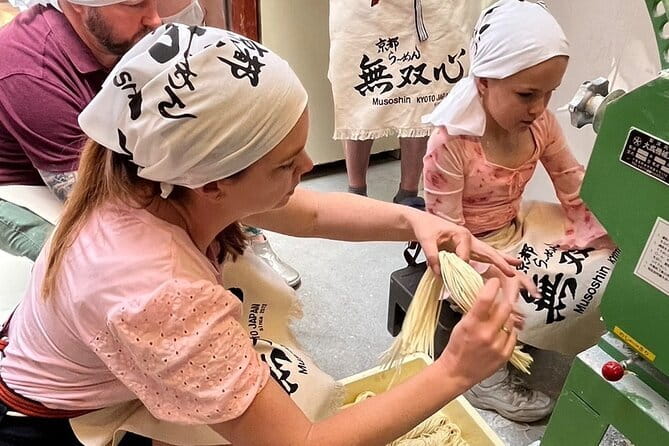
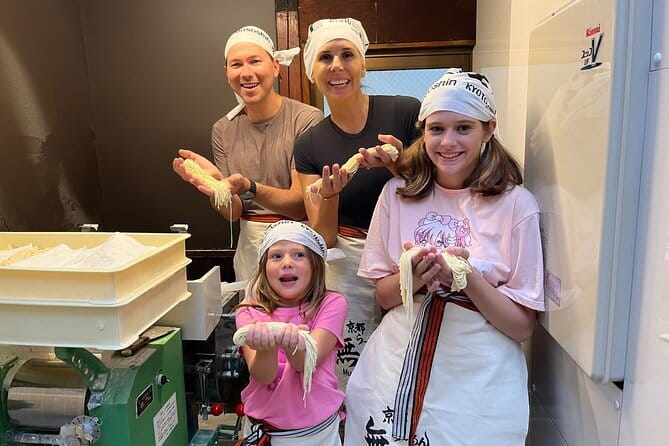
Making ramen is not just about watching a chef work. At Musoshin Gion, you mix, knead, roll, and cut your own noodles with a professional noodle-making machine, then sit down to a bowl prepared by the restaurant’s chef. It is a tidy one-hour lesson with a very tasty finish.
I like two things right away: the class stays small, with no more than six people, and it is genuinely hands-on. I also like the clear split between noodle making and cooking, since you learn the part most diners never see. The main thing to consider is that this is not a full ramen cooking class. You make the noodles, while the chef prepares the broth and final bowl.
In This Review
- Key points to know before booking
- What happens inside Musoshin Gion
- Mixing flour and building the dough
- Rolling and cutting with a professional machine
- The bowl at the end is part of the lesson
- Vegetarian and vegan choices
- Why the small group size matters
- The setting in Gion and how to plan your day
- Is $48.27 a fair price?
- What the strong feedback tells you
- Who should book this Kyoto ramen class?
- Should you book it?
- FAQ
- Where does the Kyoto ramen noodle-making class take place?
- How long does the experience last?
- What will I make during the class?
- Is a meal included?
- Are vegetarian or vegan options available?
- How many people can join the class?
- What is included besides the ramen?
Key points to know before booking
- You make noodles from two types of wheat flour, starting with the water and dough before using the machine to roll and cut them.
- The class takes place at Musoshin Gion, not at Musoshin Ramen Academy, so check the exact meeting address.
- English-speaking instructors guide the session, with Kaz, Azu, and Amiru praised for clear demonstrations and friendly help.
- Your meal comes at the end, including a chef-prepared bowl of ramen and one soft drink.
- Vegetarian, vegan, and pescetarian tasting options are available, but you need to share dietary restrictions in advance.
- The price is $48.27 per person, and the small group size makes it a reasonable choice for hands-on instruction rather than a quick demonstration.
What happens inside Musoshin Gion
The experience begins at 558-2 Komatsuchō in Kyoto’s Higashiyama Ward, in the central Gion area. You return to the same place when the workshop ends, so there is no second meeting point to manage.
The class lasts about one hour. That makes it easy to fit between visits to Gion, though you should allow a little extra time around the lesson if you have a tight sightseeing schedule. The activity is near public transportation, and a mobile ticket keeps the admission details on your phone.
Musoshin is not an unknown neighborhood shop. The restaurant has three locations across Kyoto and a Michelin Guide recognized location in Toronto, Canada. That background matters because you are learning in a working ramen restaurant, not in a generic craft studio. The focus stays on the noodles, but the setting gives the lesson a useful connection to the food you eat afterward.
You receive an apron to wear during the workshop. The bandana used during the session is yours to keep, which is a nice practical souvenir rather than another fragile trinket for your suitcase.
A few more Kyoto tours and experiences worth a look

Mixing flour and building the dough
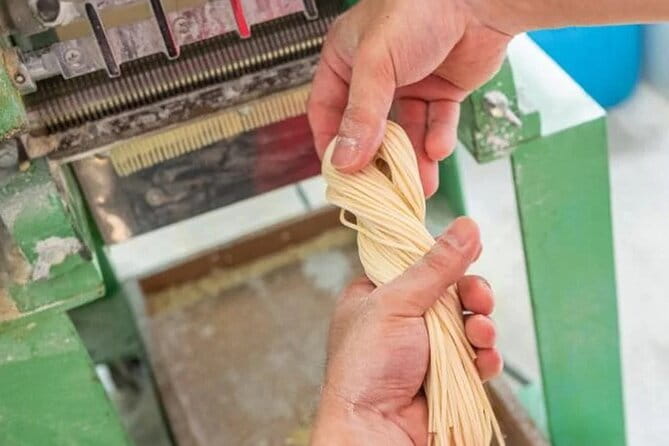
The first important step is mixing the dough. You work with two types of wheat flour, add the water, and begin forming the mixture under the instructor’s direction.
This is where the class earns its keep. Ramen noodles can look simple in a bowl, but their texture depends on careful handling. The dough must become firm enough to roll and cut, yet workable enough to pass through the machine. The instructor shows you the process instead of handing you a finished piece and asking you to admire it.
You then knead the dough. The task is physical, but not difficult in the sense of requiring special skill. You are learning by doing, and the small group limit gives the instructor room to watch each person’s progress.
Kaz is one of the instructors associated with the class, and Azu and Amiru have also led sessions. The teaching style described for them is friendly and clear, with detailed demonstrations of the full noodle-making process. English is used during the workshop, so you can follow the steps and ask questions without relying only on gestures.
If you are traveling with children, this stage gives them something useful to do. The work is active, and the finished noodles provide a clear reward. Still, very young children may need help with the dough and machine, and the experience is best approached as a shared family activity rather than a drop-off lesson.
Rolling and cutting with a professional machine
Once the dough is ready, you roll and cut it with a professional noodle-making machine. This is the most distinctive part of the workshop because it shows how a rough piece of dough becomes the springy noodles you recognize in a ramen bowl.
The machine brings a little theater to the process. You can see the dough change shape and thickness, then emerge as strands. The instructor controls the pace and demonstrates how the equipment works, so you are not left guessing at each stage.
The class is about making noodles, not preparing every part of a bowl. That distinction is worth keeping in mind when you compare it with other food activities in Kyoto. You will not be making the broth from scratch or cooking a complete ramen recipe from beginning to end.
That limitation is also part of the appeal. Ramen broth can take far longer than an hour, and a full kitchen lesson would require a different setup. Here, you get a focused look at the noodle craft, followed by a proper serving from the restaurant kitchen.
The bowl at the end is part of the lesson
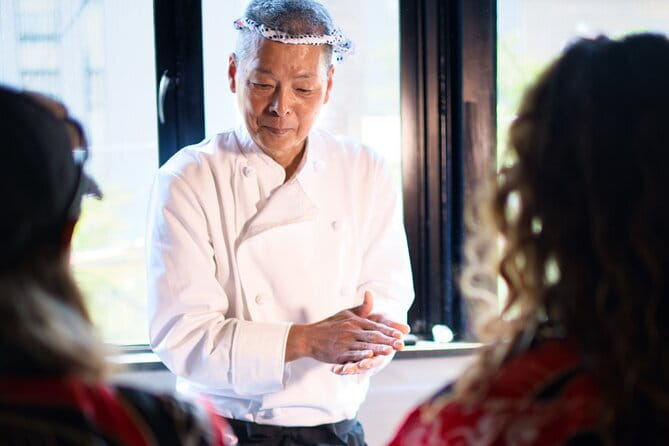
After the hands-on work, the chef prepares a bowl of ramen for you. The broth is made from a blend of vegetables, and the Kyoto location uses Kyotamba rice and condiments from local makers.
The meal gives you a useful comparison. You have just handled the noodles at their earliest stage, and now you can taste them in a finished bowl. The class therefore has a clean rhythm: make the noodles, learn what goes into the bowl, then eat.
A soft drink is included with the ramen. Other personal expenses are not included, so you should not expect additional food or drinks beyond the stated meal.
The bowl is not simply a snack tacked onto the end of a workshop. It is the reason the lesson feels complete. Several parts of the class would be interesting on their own, but the meal lets you connect the texture and shape of the noodles with the finished dish.
Vegetarian and vegan choices
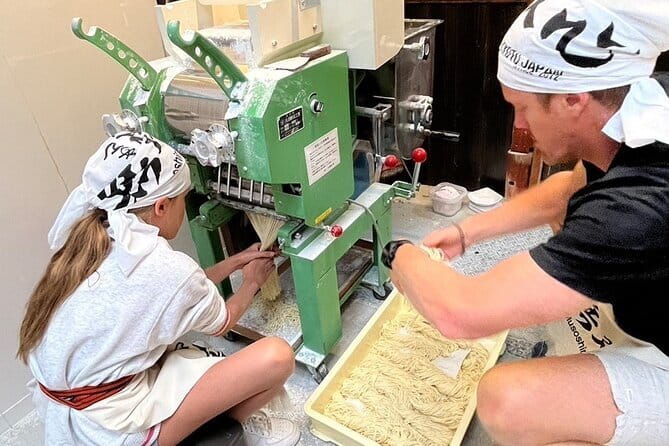
Dietary information is handled more generously than you might expect from a ramen activity. Vegetarian, vegan, and pescetarian options are available for the tasting session, and no meat or fish options can be arranged.
You must tell the provider about your needs in advance. Do not wait until you sit down for the meal, since the chef needs to prepare the appropriate tasting option.
The noodles themselves are made from wheat flour. That is important for anyone avoiding wheat or gluten, since the stated dietary choices do not include a wheat-free option. The provided information also does not promise an egg-free noodle, so ask directly if that matters to you.



Why the small group size matters
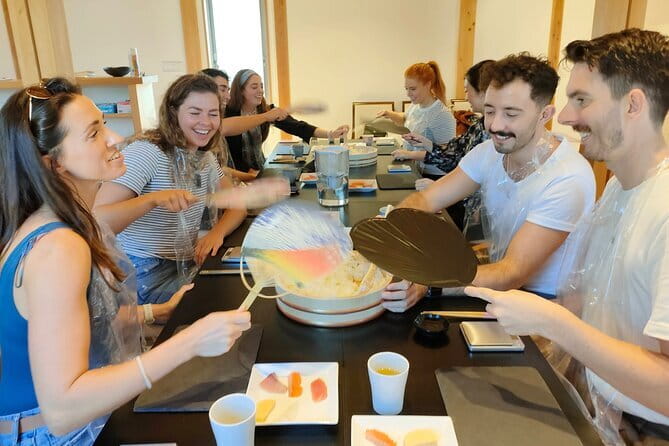
The class accepts a maximum of six people. That is a strong feature for a practical lesson because everyone gets a turn with the dough and machine.
A large demonstration can show you the idea, but it can leave you standing at the back while someone else does the useful part. Here, the limited group size should make it easier to follow the instructor and get help during mixing, kneading, rolling, and cutting.
It also suits families and small groups of friends. You can work through the steps together, compare the noodles you make, and share the meal afterward. Solo visitors should also find the format manageable, since the class does not depend on arriving with a large party.
The trade-off is availability. Confirmation is sent within 48 hours of booking and depends on space, so you should not treat the class as a last-minute certainty during a busy Kyoto visit.
The setting in Gion and how to plan your day
The meeting point is in Gion, one of Kyoto’s best-known central districts. That location makes the workshop easy to pair with other sightseeing in Higashiyama, but the activity itself remains food-focused. You are not taking a walking tour or receiving a broad lecture about the district.
Plan to arrive at the exact Musoshin Gion shop. The cooking venue is specifically the Gion restaurant, not Musoshin Ramen Academy. Confusing the two could turn a simple one-hour class into a rushed search across town.
The mobile ticket is convenient for a phone-based Kyoto itinerary. You should still keep the address available and check your booking confirmation, especially if you are moving between several Gion sights.
Because the lesson lasts about an hour, it works well as a compact activity. You can schedule it before or after a longer visit in the area. The exact class timing is not supplied here, so do not assume the workshop will fit a particular meal hour until your booking confirms it.
Is $48.27 a fair price?
At $48.27 per person, this is more than the cost of simply ordering ramen. That comparison misses the point, since the price covers instruction, ingredients, tools, apron rental, the noodle-making session, a chef-prepared bowl, one soft drink, and the souvenir bandana.
I consider it fair value if you want an activity rather than just lunch. The small group and machine-based noodle work make it more personal than a standard restaurant visit, while the meal prevents the class from feeling like a short demonstration with no satisfying finish.
The value is weaker if your only goal is to eat inexpensive ramen. You are paying for the lesson and the time with an instructor. You should also note that the activity lasts only about one hour, so it is a compact food experience rather than a long half-day course.
For families, couples, and first-time visitors who want an easy introduction to ramen making, the price includes nearly everything needed. You do not need to buy special tools or ingredients, and the apron is supplied.
What the strong feedback tells you
The most consistent praise centers on the hands-on format. That matches the structure of the class: you do not merely watch a chef prepare noodles, you pour the water, knead the dough, and run it through the rolling and cutting process.
The instructors also receive repeated praise for being friendly and clear. Kaz is singled out as a good instructor, while Azu and Amiru are praised for making the process comfortable and showing each stage in detail. That matters for a technical food activity, since a rushed explanation could leave you unsure about what you are doing.
The finished ramen is another major strength. The class gives you a bowl made by the chef, with a vegetable-based broth and regional ingredients at the Kyoto location. You get the fun of making noodles without being asked to prepare a complete restaurant-quality broth in a one-hour slot.
The one point you should keep straight is the difference between noodle making and cooking. If you want to learn how to season and simmer broth, assemble toppings, and cook the entire bowl yourself, this is not that class. If you want to understand the noodle process and eat ramen afterward, it is better suited to you.
Who should book this Kyoto ramen class?
I would recommend it to anyone who enjoys food and wants a short activity with a clear result. You do not need advanced cooking skills, and the instructor guides the process from the first addition of water to the final cut noodles.
It is particularly good for:
- Families looking for an activity that keeps children involved
- Couples who want something more active than a restaurant meal
- Solo visitors who enjoy small-group instruction
- Ramen fans curious about noodle texture and production
- Visitors with only one free hour in the Gion area
- Vegetarians, vegans, or pescetarians who provide notice before arrival
I would be more cautious if you dislike wheat, need a gluten-free meal, or expect to cook every part of the ramen yourself. The provided options cover vegetarian, vegan, and pescetarian diets, but wheat is central to the noodles and no wheat-free version is stated.
Free cancellation is available if you cancel at least 24 hours before the start time. Cancellations or changes made later are not accepted for a refund, so keep the local Kyoto cut-off time in mind when your plans are still shifting.
Should you book it?
Book this Musoshin Gion workshop if you want to make ramen noodles with your own hands, enjoy a chef-prepared bowl afterward, and keep the activity short and simple. The maximum group size of six, English-speaking instruction, included tools, and souvenir bandana add real value to the $48.27 price.
Skip it if you are looking for a full cooking course or a long kitchen session. For everyone else, this is a focused way to turn a ramen meal into a practical Kyoto memory, with enough instruction to understand what makes the noodles special and enough eating at the end to make the effort worthwhile.
FAQ
Where does the Kyoto ramen noodle-making class take place?
The activity takes place at Musoshin Gion, located at 558-2 Komatsuchō, Higashiyama Ward, Kyoto, 605-0811, Japan. It does not take place at Musoshin Ramen Academy.
How long does the experience last?
The workshop lasts approximately one hour and ends back at the meeting point.
What will I make during the class?
You will make ramen noodles from scratch using dough made with two types of wheat flour. The instructor guides you through adding water, kneading, rolling, and cutting the dough with a professional noodle-making machine.
Is a meal included?
Yes. A bowl of ramen prepared by the chef and one soft drink are included.
Are vegetarian or vegan options available?
Yes. Vegetarian, vegan, and pescetarian tasting options are available, including no meat or fish options. You must provide your dietary requirements in advance.
How many people can join the class?
The activity has a maximum group size of six people.
What is included besides the ramen?
The price includes an English-speaking noodle-making instructor, ingredients and tools, a rental apron, the ramen bowl, one soft drink, and the bandana used during the workshop as a souvenir.
More Workshops & Classes in Kyoto
More tours in Kyoto we've reviewed





Workshops, compared.
 ★ 4.3Kyoto: 45-Minute Tea Ceremony Lesson ExperienceFrom $2245 min
 ★ 5.0Ramen Cooking Class at Ramen Factory in KyotoFrom $131
 ★ 4.9Kyoto: Ramen Cooking Class at a Ramen Factory with SouvenirFrom $1271h 30m
 ★ 4.9Kyoto: Samurai Class, Become a Samurai WarriorFrom $70
 ★ 5.0Ninja 1-hour Hands-on Lesson by Japanese master in Kyoto -EntryFrom $80
 ★ 5.0Kyoto: Ramen, Gyoza, and Onigiri Cooking ClassFrom $901h 30m