
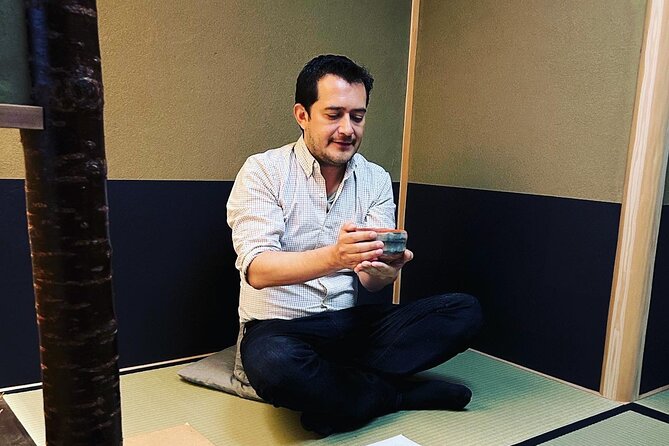
Reviewed · TEA CEREMONY EXPERIENCES
Kyoto Private Tea Ceremony with Tea Master at Home
In a quiet home near Nijo Castle, tea master Aya Ito turns a one-hour lesson into a careful look at one of Japan’s most refined traditions. You sit in a real tea room, watch the ritual unfold, then prepare matcha yourself with a bamboo whisk.
I like the small private setting, where your questions do not get lost in a large class. I also like the thoughtful food: three seasonal wagashi from a long-established Kyoto confectioner, all gluten-free and vegan. The main drawback is the short one-hour format, which gives you a strong introduction but not a full study of tea ceremony.
In This Review
- Key points to know before booking
- Entering a Kyoto home near Nijo Castle
- What happens during the one-hour ceremony
- Uji matcha, handmade bowls, and seasonal sweets
- A teacher who makes formal etiquette feel manageable
- The private format and its real value
- What to wear, and why the rules are strict
- A souvenir that continues the lesson
- Timing, cancellation, and planning your visit
- Who should book this tea ceremony
- Should you book the Kyoto home tea ceremony?
- FAQ
- Where does the tea ceremony take place?
- How long is the activity?
- Is the tea ceremony private?
- How many bowls of matcha are included?
- Are sweets included?
- Are children allowed to join?
- What should I wear?
- Is kimono rental included?
Key points to know before booking
- A private home near Nijo Castle: Your group is the only group in the session, in traditional rooms called Koma and Hiroma.
- Aya Ito leads the class: She is a certified tea ceremony instructor who teaches in clear English and guides you through both etiquette and preparation.
- Two bowls of matcha are included: One is prepared for you, and you also take part in making tea with a bamboo whisk.
- Three seasonal wagashi come with the tea: The sweets are handmade by a long-established Kyoto shop and suit many dietary needs.
- Traditional dress rules matter: Wear socks, long pants or a long skirt, and a sleeved top. Kimono rental is not included.
- Plan your arrival carefully: The home is near public transportation, but arriving more than 15 minutes late means you cannot join and will not receive a refund.
Entering a Kyoto home near Nijo Castle
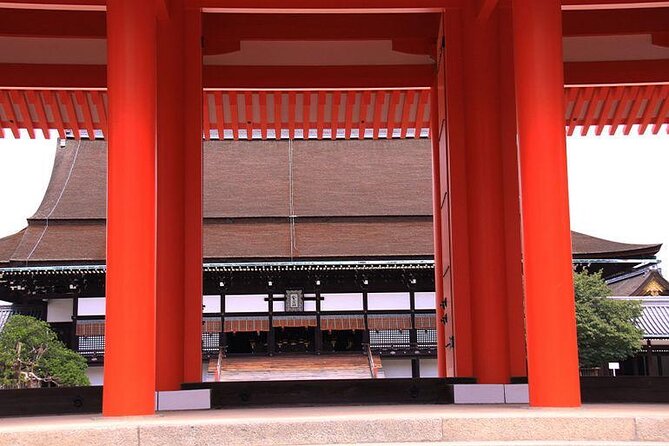
The meeting point is Sakura Experience Japanese Culture Nijo Home at 660 Izumicho in Nakagyo Ward. It is near Nijo Castle and public transportation, making it easy to pair the class with sightseeing in this part of Kyoto.
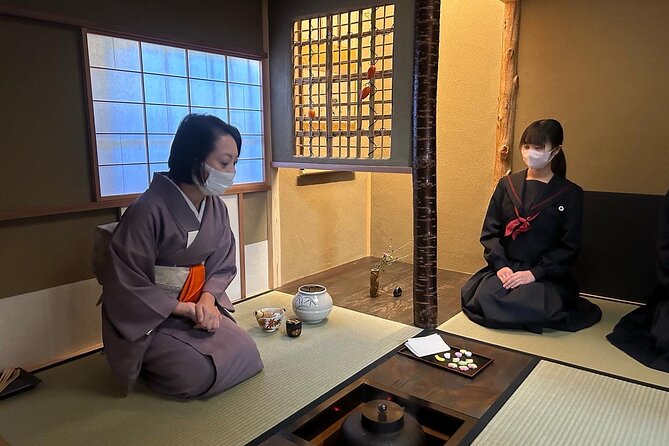
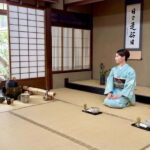
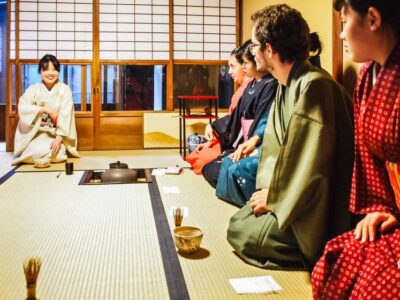
The setting shapes the whole experience. This is not a large hall with rows of seats or a quick demonstration designed for a crowd. You enter a private home and sit in a traditional tea room, where the surroundings are part of the lesson. The rooms, Koma and Hiroma, are used for tea ceremony, ikebana, and calligraphy sessions.
Aya and her husband have welcomed cultural figures, museum professionals, and other visitors interested in Japanese arts. That background helps explain the tone of the class: quiet, formal, and attentive to small details. You are not simply handed a bowl of green tea. You are shown how the room, tools, sweets, gestures, and guest all fit together.
Expect a calm atmosphere. This is a good choice if you enjoy listening, asking questions, and noticing small movements. If you want a lively group activity with plenty of chatter, it may feel too restrained.
A few more Kyoto tours and experiences worth a look
What happens during the one-hour ceremony
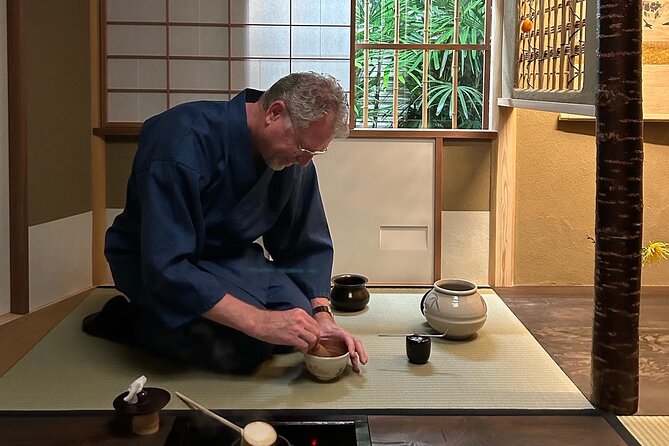
The exact order can vary with the group, but the class combines explanation, demonstration, and hands-on preparation. Aya first introduces the purpose and etiquette of tea ceremony, then demonstrates how matcha is prepared and served.
You learn that the ritual is not only about drinking tea. Attention is given to how you enter the room, how you handle the bowl, how you receive the sweets, and how you show respect to the host and the objects. Each part has a reason, and Aya explains those details in a patient, approachable way.
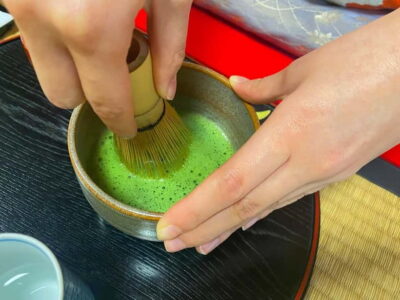
Then comes the practical part. You use a bamboo whisk to prepare matcha in the traditional way. This is where the lesson becomes more than a performance. You can feel how much control is needed to create a smooth bowl, and you get a better sense of the care behind the host’s movements.
Two bowls of matcha are included. One is prepared with the home’s original blend from Uji, and the other forms part of your own tea-making experience. The class does not assume you already understand Japanese etiquette, so you can ask questions without feeling out of place.
At only about an hour, the session moves at a steady pace. You will not cover every school, historical period, or regional variation in Japanese tea ceremony. You will, however, leave with a practical grasp of the ritual and a better appreciation of why the actions are so precise.
Uji matcha, handmade bowls, and seasonal sweets
The tea comes from historic gardens in Uji, the Kyoto area best known for high-quality matcha. The original blend used here gives the tasting a clear connection to the region rather than treating matcha as a generic green drink.
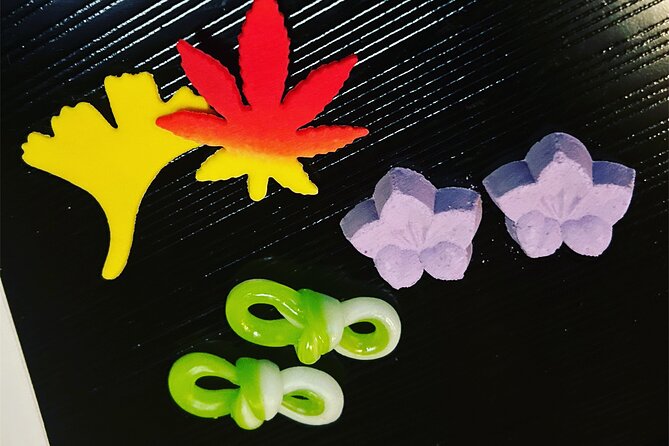
You also receive three different seasonal wagashi. These Japanese sweets are made by a long-established Kyoto confectioner, and their changing forms reflect the season. They are not just a sugary snack placed beside the tea. In tea ceremony, the sweet prepares your palate for the bitter matcha and adds another visual and cultural element to the presentation.
The sweets are gluten-free and vegan, which makes this activity easier for many people with dietary restrictions. You should still communicate any serious allergy or concern when booking, since the supplied details confirm the dietary style but do not promise an allergen-free kitchen.
The tea bowls are another part of the appeal. The home uses custom-made bowls commissioned from Kiyomizu and Raku potters. You might find that the bowl itself receives as much attention as the tea. Its shape, glaze, weight, and seasonal suitability all help create the mood of the ceremony.
That attention to craft is valuable for anyone who has seen matcha served casually in a café and wants to understand the older tradition behind it. It also gives the hour a distinctly Kyoto character. You are learning about tea through pottery, sweets, architecture, etiquette, and hospitality at the same time.
A teacher who makes formal etiquette feel manageable
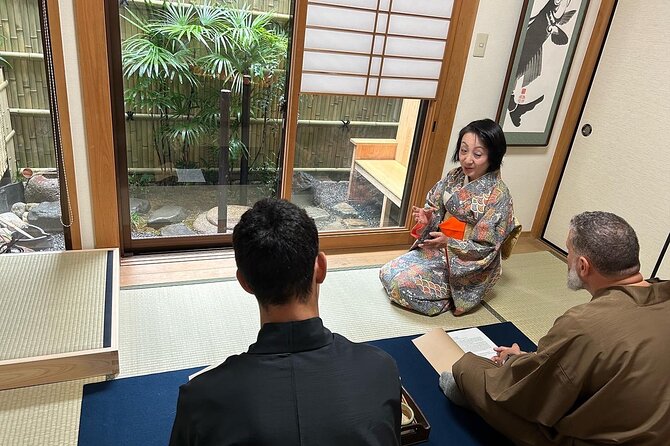
Aya Ito receives especially strong praise for her warmth, clear English, and calm instruction. Those qualities matter because tea ceremony can seem intimidating at first. There are rules for sitting, turning the bowl, receiving sweets, and responding to the host, but Aya guides you gently rather than expecting perfect form from the start.
Her teaching style appears to balance respect for tradition with awareness of international visitors. You can ask why a gesture is done instead of merely copying it. That turns the session into a cultural lesson rather than a set of movements to memorize.
Several people describe the class as both informative and hands-on. That combination is important. A demonstration alone can be beautiful, but you remain an observer. Making your own tea gives you a physical connection to the process and helps the etiquette make sense.
Aya’s husband has also helped create a welcoming atmosphere. On some sessions, he has taken photos during the ceremony and shared them before the class ended. Photography is not listed as a formal inclusion, so do not book this activity solely for that benefit, but you can ask the hosts what is available on your date.
The home also offers other cultural classes, including flower arrangement. Those classes are separate from this booking, but the range of arts taught here gives you a sense of the hosts’ wider interest in traditional Kyoto culture.
The private format and its real value
The price is about $99.08 per person. That is more than you would pay for a bowl of matcha and a sweet at a tea shop, but the comparison is not quite fair. You are paying for a private class, a certified instructor, two bowls of matcha, three handmade sweets, a booklet, and the chance to prepare tea yourself.
The private format is the main reason the price can make sense. Your group gets direct time with Aya, and the pace can follow your questions. A large demonstration may show you the basic motions, but it cannot offer the same level of personal guidance.
Group discounts may improve the value for families with older children or friends booking together. Keep in mind that children aged 13 and under are not permitted. If a young child arrives without prior notice, the group cannot take part and no refund is given.
The session is also a useful choice for a busy Kyoto schedule. At roughly one hour, it will not take an entire morning or afternoon. You can reasonably combine it with Nijo Castle or nearby sightseeing, though you should allow enough time to arrive early and settle in.
The cost is harder to justify if your main goal is simply to taste matcha. Kyoto has many less formal options for that. Choose this class for the personal instruction, the home setting, the craft details, and the chance to understand the meaning behind the ceremony.
Other private tours in Kyoto



What to wear, and why the rules are strict
The clothing instructions are practical rather than decorative. Wear socks because the tea rooms have tatami mats, and bare feet are not permitted. If you forget, socks can be purchased on site.
Choose long pants or a long skirt and a top with sleeves. Shorts, mini skirts, and sleeveless tops are not allowed. Loose, comfortable clothing will make it easier to sit and move respectfully in the room.
Do not wear perfume or other strong fragrance, including musk-based scents. Tea ceremony depends on the senses, and perfume can interfere with the scent of the tea, sweets, wood, and tatami. You may be asked to remove fragrance before entering.
Small chairs are available for people who need them, but you should tell the provider in advance. The supplied information does not promise every type of mobility accommodation, so contact the hosts before booking if sitting on the floor is a concern.
Kimono rental is not included. One person expected kimono based on an earlier description, but the provider explains that kimono was offered before the pandemic and is no longer part of the program. The focus now is on learning the culture in a traditional home setting, not dressing up for photographs.
A souvenir that continues the lesson
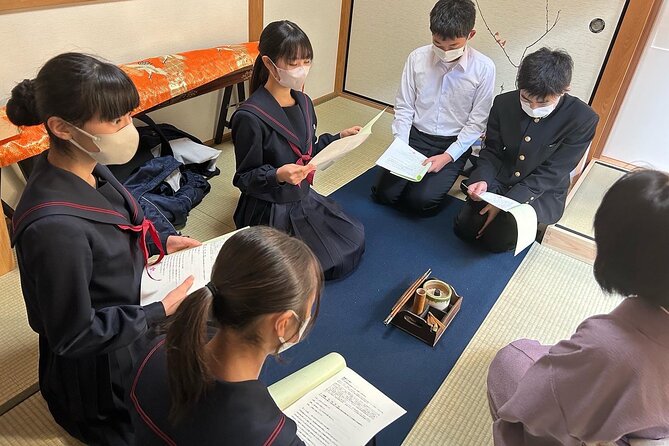
You take home an original tea ceremony booklet. It is described as a concise guide to the spirit and etiquette of tea, so it is not a long academic book. That is a good fit for a short class. You can use it to remember the basic ideas and gestures after you leave.
The booklet also adds value because the ceremony can pass quickly. In the moment, you are watching Aya, tasting sweets, handling the bowl, and trying to whisk the matcha correctly. A short written guide gives you something to revisit later.
If you become interested in tea ware, the home may also have bowls available for purchase. This is not listed as an included feature, and availability can vary. Still, a tea bowl can be a more meaningful souvenir than a standard Kyoto trinket because it connects to the objects used in the class.
Timing, cancellation, and planning your visit
Confirmation is provided when you book, and the activity ends back at the meeting point. The experience is often booked well ahead, with an average lead time of about 48 days, so reserve early if your Kyoto dates are fixed.
Arrive on time. The late-arrival rule is firm: more than 15 minutes late means you cannot participate, with no refund. A private home can be harder to locate than a major hotel or station, so allow extra time for finding 660 Izumicho and removing shoes or preparing before entering.
Free cancellation is available up to 24 hours before the start time. Canceling or changing the booking less than 24 hours ahead is not accepted and is not refunded. The cut-off follows Kyoto local time.
The class is private, so only your own group participates. That makes it especially suitable for couples, families with teenagers, or friends who want to ask personal questions. It is not suitable for children 13 and under, and it may not suit anyone hoping for a casual drop-in activity.
Who should book this tea ceremony
I would choose this experience if you want a serious but friendly introduction to Japanese culture. It works particularly well for first-time visitors who have seen tea ceremony in films or at public demonstrations but want to understand what the gestures mean.
It also suits people who enjoy craft and design. The Uji matcha, Kyoto sweets, handmade tea bowls, seasonal presentation, and tatami room all matter here. You do not need prior knowledge, but curiosity helps.
The class is a strong fit for couples and small private groups. The quiet setting gives you space to notice details and speak directly with Aya. Teenagers aged 14 and older can join, and the hands-on section gives the hour enough activity to hold their attention.
You should think twice if you dislike formal etiquette, cannot follow the clothing rules, or want kimono rental included. You should also consider another activity if you need a long class with extensive historical background. This is an elegant introduction, not a full course in tea ceremony.
Should you book the Kyoto home tea ceremony?
For about $99.08 per person, this is good value if you want personal instruction rather than a quick cup of matcha. Aya Ito’s clear English, gentle guidance, and attention to detail make the formal ritual easier to understand, while the private home gives the experience a sense of place that a large venue cannot match.
Book it if you want to prepare tea yourself, taste seasonal wagashi, and learn why each part of the ceremony matters. Skip it if you mainly want a kimono photo session, a child-friendly activity for young children, or a casual café stop.
For the right visitor, this one hour can influence how you see tea, pottery, sweets, and hospitality throughout the rest of your time in Japan.
FAQ
Where does the tea ceremony take place?
It takes place at Sakura Experience Japanese Culture Nijo Home, 660 Izumicho, Nakagyo Ward, Kyoto, 604-0015, Japan. The home is near Nijo Castle and public transportation.
How long is the activity?
The tea ceremony lasts approximately one hour.
Is the tea ceremony private?
Yes. Only your group participates in the activity.
How many bowls of matcha are included?
Two bowls of matcha are included. The tea uses the provider’s original blend from Uji.
Are sweets included?
Yes. You receive three seasonal types of handmade wagashi from a long-established Kyoto confectioner. They are gluten-free and vegan.
Are children allowed to join?
Children aged 13 and under are not permitted to join the class. Participants must be at least 14 years old.
What should I wear?
Wear socks, long pants or a long skirt, and a top with sleeves. Shorts, mini skirts, sleeveless tops, and bare feet are not permitted. Perfume and strong fragrance should also be avoided.
Is kimono rental included?
No. Kimono rental is not included in this experience.
More Private Tours in Kyoto
More Tea Ceremony Experiences in Kyoto
More tours in Kyoto we've reviewed






Tea Ceremony Experiences, compared.
 ★ 4.9Kyoto: Tea Ceremony in a Traditional Tea House in KiyomizuFrom $4945 min
 ★ 4.9Kyoto: Tea Ceremony Ju-An at Jotokuji TempleFrom $291h 10m
 ★ 4.3Kyoto: 45-Minute Tea Ceremony Lesson ExperienceFrom $2245 min
 ★ 5.0World Heritage Kyoto & Nara Uji Authentic Matcha ExperienceFrom $129
 ★ 4.9Kyoto: Table-Style Tea Ceremony at a Kyo-MachiyaFrom $451h 30m
 ★ 5.0Kimono Tea Ceremony at Kyoto Maikoya, NISHIKIFrom $65