
Reviewed · TEA CEREMONY EXPERIENCES
Kyoto Tea ceremony with Japanese Flower Arrangement Ikebana
The unusual part of this Kyoto outing comes first: you choose flowers in a working flower shop, then turn them into your own Ikebana arrangement. Your finished piece is placed in the tokonoma, the decorative alcove of a traditional Japanese room, before the tea ceremony begins.
I like the small group limit of six and the warm, family-style setting in a renovated townhouse about 100 years old. I also like that the workshop respects the natural shape of each plant instead of forcing every arrangement into a strict classical mold. The main consideration is time: at about 90 minutes, this is a focused introduction, not a long formal course in either art.
In This Review
- Key points
- A flower shop with a Kyoto address
- Choosing flowers for your own arrangement
- Making Ikebana without forcing the flowers
- Placing your work in the tokonoma
- Tea ceremony in a traditional room
- Why the two arts belong together
- The setting and group size
- Is $61 a fair price?
- Planning it with Kinkaku-ji and Daitoku-ji
- Who should book this Kyoto class?
- Booking and cancellation details
- Should you book this Ikebana and tea ceremony?
- FAQ
- Where does the Kyoto Ikebana and tea ceremony take place?
- How long does the activity last?
- How many people can join?
- Do I need previous Ikebana experience?
- Can I take my Ikebana arrangement with me?
- Is the activity near public transportation?
- What is the cancellation policy?
Key points
- Choose your own seasonal flowers at the flower shop before starting the arrangement.
- Work in a century-old Kyoto townhouse near Kinkaku-ji and Daitoku-ji.
- Learn a relaxed, nature-focused form of Ikebana inspired by wabi-sabi.
- Display your arrangement in the tea room’s tokonoma as part of the ceremony.
- Try the role of tea master after watching the instructor demonstrate the ritual.
- Take your flowers with you afterward if you want a reminder of the afternoon.
A flower shop with a Kyoto address
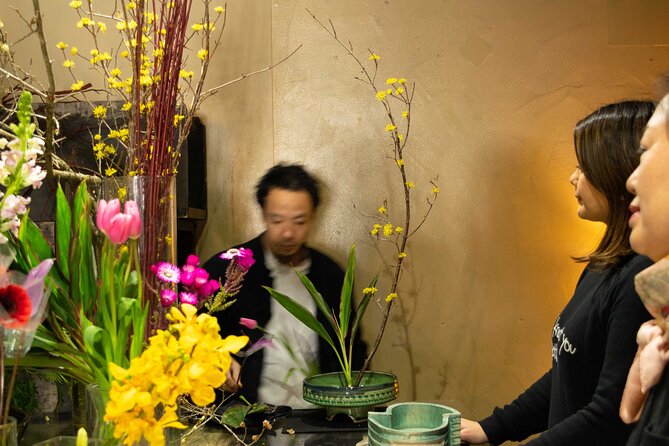
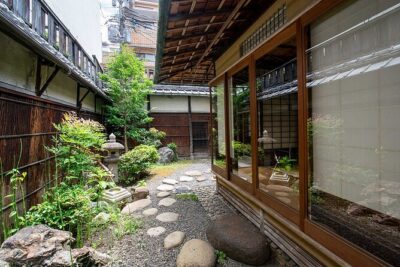
The meeting point is at 44-4 Murasakino Kamimonzencho in Kita Ward, northwest Kyoto. The activity takes place in a flower shop set inside a renovated traditional townhouse, roughly 100 years old.
That setting matters. You are not entering a large performance space built only for tourists. You begin in a place connected to flowers and everyday work, then move into a traditional Japanese room for the tea ceremony. The change from shop to room gives the session a natural rhythm.
The location is near Kinkaku-ji Temple and Daitoku-ji Temple, two useful landmarks when planning your day. You can pair this class with temple visits, but be careful with timing. The workshop lasts about an hour and a half, and the nearby temples deserve more than a rushed glance.
The meeting point is also near public transportation. Your mobile ticket should make arrival simple, though you will still want to check the exact route and allow time to find the townhouse. Kyoto addresses can be easy to miss when you are walking through a quiet neighborhood.
A few more Kyoto tours and experiences worth a look
Choosing flowers for your own arrangement
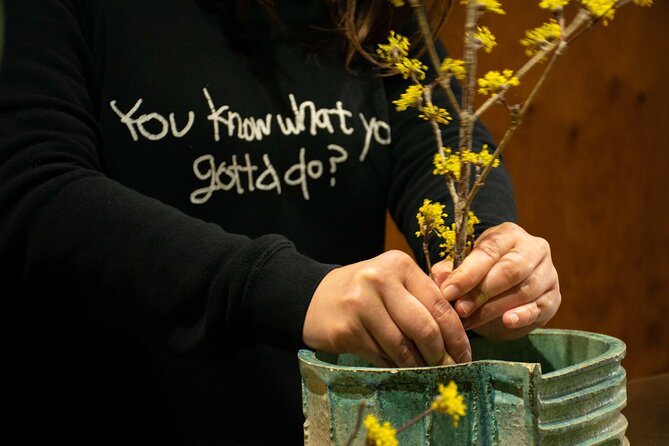
The first step is choosing your favorite flowers from the shop. The selection changes with the seasons, so the flowers on your table will depend on the date of your visit.
This is more than a quick shopping stop. Your choice gives the arrangement a personal starting point. You are not simply copying a finished example with a fixed set of stems. You begin by looking at color, shape, and the natural character of the plants in front of you.
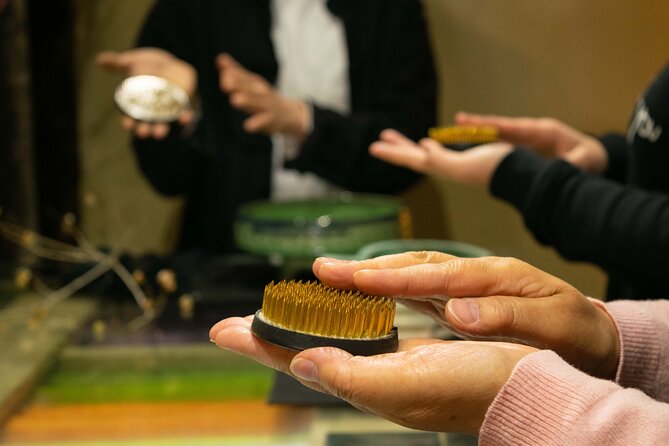
That approach fits the style taught here. The owner moves somewhat away from rigid classical forms and pays close attention to the way each stem already grows. The result may feel more primitive and informal, with a clear connection to wabi-sabi, the Japanese appreciation of simplicity, age, irregularity, and imperfection.
You do not need previous flower-arranging skills. Beginners are welcome, and the instructors guide you through the process. The class is best understood as a lesson in looking. You learn to notice the line of a branch, the direction of a flower, and the space around the arrangement.
Making Ikebana without forcing the flowers
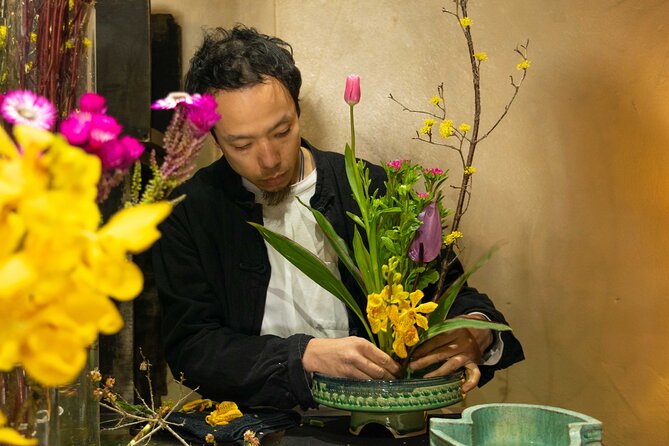
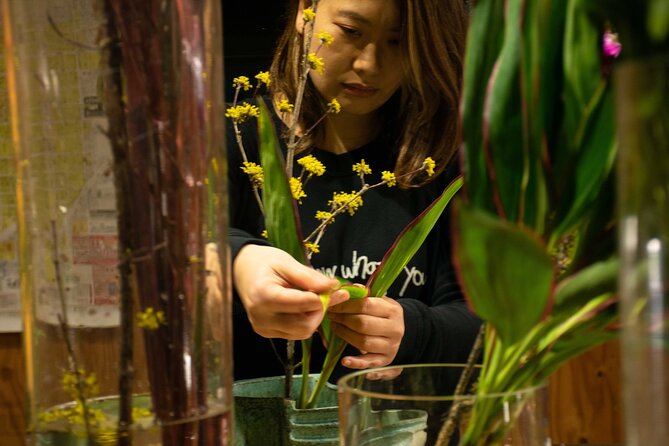
During the workshop, you create your own piece with help from the instructors. The goal is not to pack a container with as many flowers as possible. Japanese flower arrangement often depends on open space, balance, and the relationship between the stems.
The instruction here seems designed to help you bring out the beauty that is already present in the plant. That makes the class approachable. You are given structure, but you are not asked to produce a stiff, flawless display.
The activity describes Ikebana as a time for attention, respect for nature, and self-dialogue. That may sound lofty, but the practical meaning is clear. You spend part of the session working quietly with your hands and making choices at your own pace.
I would not book this if you want a fast craft project with a guaranteed identical result. The pleasure comes from the process and from seeing how your own arrangement takes shape. Your piece will reflect the flowers you choose and the way you respond to their natural form.
The instructors are described as patient and informative, which is especially useful if you have never studied Japanese arts. The intimate group size should also make it easier to ask questions and receive personal guidance. With no more than six people, the class has a better chance of feeling like a lesson rather than a demonstration viewed from the back of a room.
Placing your work in the tokonoma
After the Ikebana workshop, you move into the traditional Japanese room. Your arrangement is displayed in the tokonoma, the alcove traditionally used for an important scroll, flower arrangement, or other carefully chosen object.
This small act gives your work a proper place in the room. You are not finished, taking a quick photograph, and moving on. Your flowers become part of the setting for the tea ceremony.
The tokonoma also helps explain a key idea in Japanese aesthetics: a single arrangement can shape the feeling of an entire room. The flowers are not just decoration. Their placement, shape, and season connect the room to the natural world outside.
You may take your arrangement back to your hotel afterward. That is a useful feature if you want a physical souvenir rather than another shop-bought object. You will need to consider how to carry it safely, since the details of wrapping and transport are not specified, but the option adds value to the class.
Tea ceremony in a traditional room
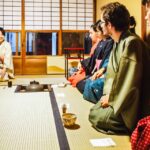
Once your flowers are in place, the tea ceremony begins. You watch the master prepare tea and learn about the customs behind the movements.
The ceremony is not presented as a stage show. You are invited to take a role as tea master yourself, which gives you a chance to do more than watch. The wording does not promise a full professional training session, so think of this as a guided introduction to the gestures and spirit of the ceremony.
Tea ceremony asks you to pay attention to small actions: preparation, presentation, posture, and the order of events. The quiet pace works well after the creative work of the flower workshop. You shift from shaping branches and flowers to noticing the care given to a bowl of tea.
The women who lead the Ikebana and tea lessons are described as lovely, informative, and patient. No individual guide names are provided, but the teaching style is clear from the description: personal, gentle, and suitable for people who may be completely new to both traditions.
If you are hoping for a large historical lecture, this may feel light. If you want to try the customs yourself and ask questions in a calm setting, the format is a better match.


Why the two arts belong together
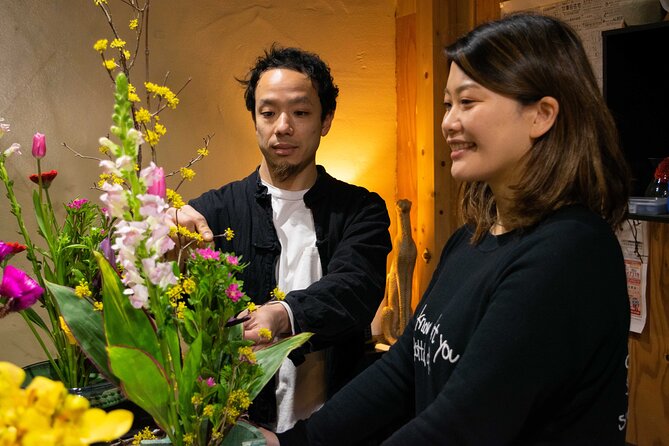
Ikebana and tea ceremony are different arts, but they share an interest in attention and restraint. The flower arrangement gives you a way to work with nature. The tea ceremony gives you a way to focus on a set of actions and the atmosphere around them.
Together, they offer a wider look at Japanese culture than either activity alone. You see how a seasonal flower can be selected, shaped, and displayed. You also see how a room, its objects, and the actions of the host can work together.
The class presents Ikebana as a kind of meditation. You should not expect a formal meditation session or a silent retreat. Instead, the meditative quality comes from concentrating on the flowers, making deliberate choices, and stepping away from the normal rush of sightseeing.
That makes this a good choice for a quieter day in Kyoto. It gives you a break from temple crowds, long walks, and packed schedules. The setting on a less touristy street also adds to that sense of calm.
The setting and group size
A maximum of six people is one of the strongest practical features. Small groups can ask questions, see the instructor’s work, and receive help without waiting through a long line of participants.
The small scale also supports the family-like mood described by the people who booked it. If you are traveling alone, this is a particularly sensible option. You can join a shared activity without being placed in a large crowd or a noisy classroom.
The townhouse setting adds character, but it may not suit someone seeking a polished, modern studio. The appeal is the older building, the traditional room, and the close contact with the instructors. Expect a personal cultural lesson, not a luxury wellness treatment.
Most people can take part, and service animals are allowed. The available information does not give details about step-free access, seating, or specific mobility arrangements, so contact the operator if those points matter to you.
Is $61 a fair price?
At $61, the value depends on what you want from a Kyoto activity. You receive two connected cultural lessons, a flower arrangement you may be able to take with you, instruction from a small group of teachers, and access to a traditional townhouse setting.
That is a reasonable price for a private-feeling activity capped at six people. You are paying not only for materials, but also for the time and attention needed to guide a beginner through Ikebana and tea ceremony.
The value is strongest if you enjoy hands-on activities. A person who wants to make something, learn a little context, and take part in the tea ritual will likely find the price sound. If you only want to watch a brief tea demonstration, you may find a cheaper option elsewhere.
Remember that the listed duration is approximate. At about 90 minutes, the class fits neatly into a half-day plan, but you should not expect a full-day study of either art. The limited time is also part of the appeal: you can add it to a temple-focused day without giving up an entire afternoon.
Planning it with Kinkaku-ji and Daitoku-ji
The location near Kinkaku-ji and Daitoku-ji makes this activity easy to combine with sightseeing in northern Kyoto. Plan the order around your confirmed start time rather than assuming you can arrive whenever you like.
Kinkaku-ji is one of Kyoto’s best-known sights, while Daitoku-ji is a major temple complex with a different atmosphere. The class can provide a calmer counterpoint to both. You may prefer to visit a temple first, then attend the workshop as a slower, more personal part of the day.
Do not build a tight chain of reservations around it. The flower selection, arrangement, display, and tea ceremony all have a natural pace. Give yourself enough time to reach the address and avoid turning a peaceful class into a race across the city.
The activity ends back at the meeting point. That makes it easier to continue your day in the same area or return to your hotel, especially if you carry your finished flowers with you.
Who should book this Kyoto class?
I would recommend it to you if you want a small-scale activity with real participation. It suits solo visitors, couples, and anyone interested in Japanese arts but unsure where to begin.
It is also a strong choice for people who enjoy flowers, quiet creative work, and cultural customs explained through practice. You do not need to know Ikebana or tea ceremony in advance.
Families and mixed-age groups may also find it appealing, provided everyone can take part in the workshop and sit through the tea ceremony. The available information says most people can participate, but it does not list a minimum age or detailed physical requirements.
I would be more cautious if you want a highly formal, historically detailed lesson or a large selection of tea sweets and food. Those details are not included. The focus is on the flower arrangement, the tea ceremony, and the calm setting.
You should also know that only three ratings are currently available. They are all five-star assessments, and the praise centers on the warm atmosphere, patient instruction, peaceful mood, and personal nature of the class. That is encouraging, but it is still a small sample, so judge the activity by its format and your own interests.
Booking and cancellation details
Confirmation is sent within 48 hours of booking, subject to availability. Since the group is limited to six, booking ahead is sensible if your Kyoto dates are fixed.
You can cancel for a full refund up to 24 hours before the local start time. Cancellations or changes made within 24 hours are not refunded or accepted, so check your schedule before booking.
Should you book this Ikebana and tea ceremony?
Book it if you want to slow down and take part in something personal. The best reasons are the small group, the old townhouse, the choice of seasonal flowers, and the chance to place your own work in the tea room before learning the ceremony.
It is not the right pick for a long academic course, a food-focused tea visit, or a major sightseeing tour. But for $61, it offers a thoughtful pair of activities in a peaceful setting, with enough guidance for a beginner and enough freedom to make the result your own.
If the idea of finding beauty in an imperfect branch appeals to you, this could become one of the more memorable hours and a half in Kyoto.
FAQ
Where does the Kyoto Ikebana and tea ceremony take place?
It takes place at 44-4 Murasakino Kamimonzencho, Kita Ward, Kyoto, Japan. The venue is a flower shop in a renovated traditional townhouse about 100 years old.
How long does the activity last?
The activity lasts approximately 1 hour and 30 minutes.
How many people can join?
The activity has a maximum group size of six people.
Do I need previous Ikebana experience?
No. Beginners are welcome, and instructors guide you through creating your own flower arrangement.
Can I take my Ikebana arrangement with me?
Yes. You are welcome to take your floral creation back to your hotel if you wish.
Is the activity near public transportation?
Yes. The meeting point is near public transportation and is located near Kinkaku-ji Temple and Daitoku-ji Temple.
What is the cancellation policy?
You can cancel up to 24 hours before the local start time for a full refund. Cancellations or changes made less than 24 hours before the start time are not accepted and are not refunded.
More Tea Ceremony Experiences in Kyoto
More tours in Kyoto we've reviewed





Tea Ceremony Experiences, compared.
 ★ 4.9Kyoto: Tea Ceremony in a Traditional Tea House in KiyomizuFrom $4945 min
 ★ 4.9Kyoto: Tea Ceremony Ju-An at Jotokuji TempleFrom $291h 10m
 ★ 4.3Kyoto: 45-Minute Tea Ceremony Lesson ExperienceFrom $2245 min
 ★ 5.0World Heritage Kyoto & Nara Uji Authentic Matcha ExperienceFrom $129
 ★ 4.9Kyoto: Table-Style Tea Ceremony at a Kyo-MachiyaFrom $451h 30m
 ★ 5.0Kimono Tea Ceremony at Kyoto Maikoya, NISHIKIFrom $65