
Reviewed · GION & GEISHA WALKS
Kyoto: Half-Day Private Guided Tour to the Old Town of Gion
Gion is best understood on foot, one quiet lane and old wooden house at a time. This private walking tour links the Kamo River, Yasaka Shrine, Sannenzaka, Ninenzaka, Maruyama Park, Hanamikoji Street, and Pontocho in one compact outing.
I like the route’s variety: you get a refreshing riverside start and a strong dose of Kyoto’s old town, not just one famous street. I also like the flexibility of a private guide, with English, French, and Japanese available. The main consideration is pace. Three to four hours on foot, with several old stone streets, may feel tiring, and the tour does not include lunch or snacks.
I would book this for a first look at Gion, especially if you want help making sense of the district rather than simply taking photographs. Mouloud received especially warm comments for being friendly and showing guests many parts of Gion, though one three-star review found the guiding less interesting. That mixed note is worth keeping in mind: the route is strong, but your enjoyment may depend on how much historical explanation your guide provides.
In This Review
- Key points at a glance
- Starting beside the Kamo River
- Gion Tatsumi Bridge and Shirakawa Street
- Yasaka Shrine, the route’s cultural anchor
- Sannenzaka and Ninenzaka on foot
- Maruyama Park through the seasons
- Hanamikoji Street and Kyoto’s wooden houses
- Pontocho closes the loop
- What $96 per person buys you
- Timing, walking, and practical comfort
- Who should book this Gion walk?
- Should you book it?
- FAQ
- How long does the Gion walking tour last?
- Where does the tour begin and end?
- Is the tour private?
- Which languages are available?
- What places are included?
- Is food included?
- Is the tour wheelchair accessible?
- Can I cancel the booking?
Key points at a glance
- A full Gion circuit on foot: Start and finish near Starbucks Coffee at Kyoto Sanjo-ohashi Bridge, with the Kamo River and Pontocho included.
- Traditional Kyoto streets: Sannenzaka, Ninenzaka, and Hanamikoji Street bring you close to old kyomachiya houses and preserved streetscapes.
- A major Shinto shrine: Yasaka Shrine gives the walk a cultural and religious center, not just a pretty backdrop.
- Seasonal appeal: Maruyama Park is especially appealing during spring cherry blossoms and autumn foliage.
- Private format: You walk with your own group, with guiding available in English, French, or Japanese.
- Good value for a guided introduction: At $96 per person, the cost makes the most sense if you value context, route planning, and a private experience.
Starting beside the Kamo River
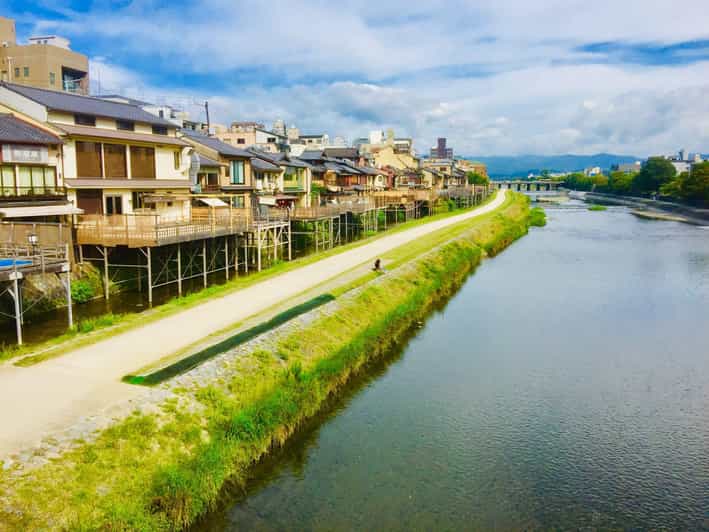
The meeting point is Starbucks Coffee at Kyoto Sanjo-ohashi Bridge. That is a practical place to begin because the tour immediately puts you near the Kamo River, one of Kyoto’s most familiar local gathering places.
The opening walk is a gentle way to get your bearings. Instead of starting inside a crowded sightseeing site, you begin with open views along the water and then move toward Gion. I like this transition because it gives the tour a sense of place. You are not dropped into a shrine with no idea how the neighborhood fits together.
The first listed guided section lasts about 30 minutes. Since the total outing is described as three to four hours, timing may vary slightly from the planned half-hour blocks. Ask your guide at the start how much time will be spent at each stop if you have a later reservation or dinner plan.
The route returns to the same Starbucks meeting point at the end. That is useful in Kyoto, where a walking tour can otherwise leave you on the wrong side of town. The tour does not include food, so bring water and plan a meal separately.
A few more Kyoto tours and experiences worth a look

Gion Tatsumi Bridge and Shirakawa Street
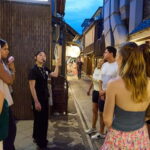
Gion Tatsumi Bridge marks the move from the river area into one of Kyoto’s best-known traditional districts. The nearby Shirakawa Street is described as the entrance to the neighborhood, and this is where the old-town character becomes more pronounced.
This portion is about atmosphere and orientation. You will see traditional houses and narrow streets rather than a single large monument. That makes a guide helpful. A good explanation can show you what you are looking at, how the district developed, and why the streets are protected and carefully maintained.
The tour promises traditional Kyoto houses throughout, and this section is a good early introduction to that visual style. Keep your expectations sensible, though. The walk is through a working historic district, not a museum arranged only for sightseeing. Your guide can point out details, but the experience depends on walking respectfully and allowing space for local life.
Yasaka Shrine, the route’s cultural anchor
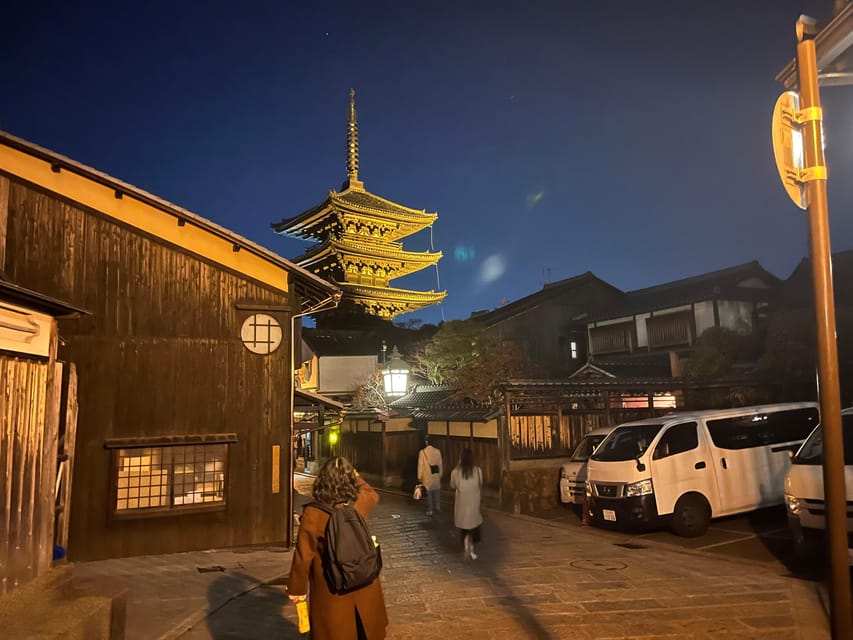
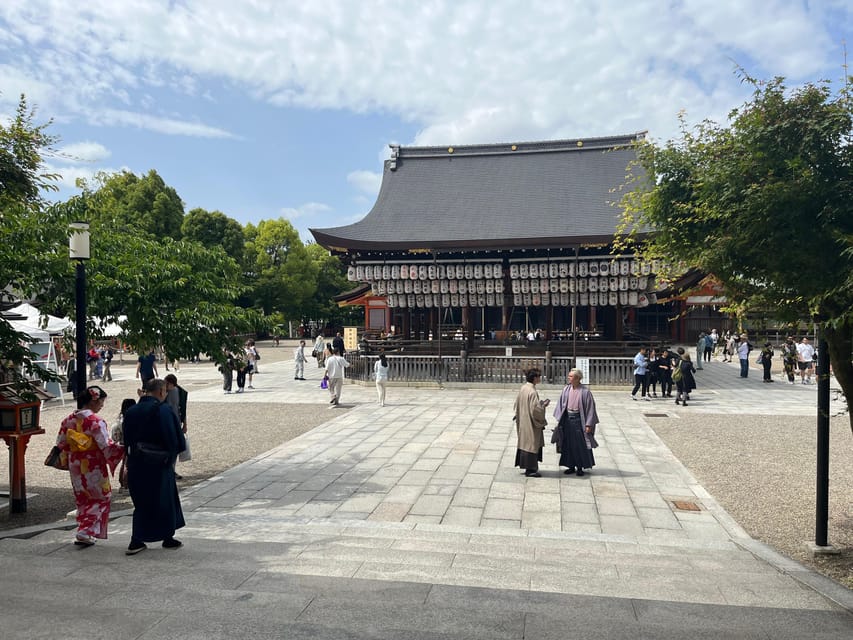
Yasaka Shrine dates from the seventh century and is one of the most important stops on the walk. It gives the tour a clear cultural center after the more atmospheric river and street sections.
You have about 30 minutes here for a visit, guiding, and walking. That is enough time for an introduction and a look around, though not a lengthy study of every building or ritual feature. If you want a detailed lesson in Shinto practice, ask questions. The available guides speak English, French, or Japanese, so this is a good place to make use of the private format.
I like having Yasaka Shrine in the middle of the route because it breaks up the street walking. It also helps you see Kyoto as more than old houses and attractive lanes. The city’s traditional appearance is tied to active religious sites, seasonal customs, and daily visits to shrines.
Sannenzaka and Ninenzaka on foot
From Yasaka Shrine, the route continues through Sannenzaka and Ninenzaka. These streets are among the clearest examples of the old Kyoto cityscape included in the tour.
Expect traditional architecture, sloping lanes, and plenty of visual detail. The appeal is not one isolated attraction. It is the steady feeling of moving through a preserved part of the city, with wooden houses and classic Kyoto forms close around you.
The drawback is also clear: these streets can require careful walking. The tour is entirely on foot, and the route includes old lanes rather than flat modern sidewalks throughout. The activity is listed as wheelchair accessible, but anyone with mobility concerns should confirm the exact route and surfaces before booking. Accessibility may be possible while still requiring attention to slopes and crowded sections.
Thirty minutes is assigned to each of Sannenzaka and Ninenzaka. That makes the schedule easy to follow, but the actual time may feel brief if you want many photographs or longer stops. I would treat these as guided passages, not extended shopping or museum visits.
Maruyama Park through the seasons
Maruyama Park offers a change of mood. After the shrine and old streets, you enter a green public park where nature becomes part of the experience.
The park is especially attractive during cherry blossom season and again when autumn leaves appear. The tour description places particular emphasis on these seasons, and that makes sense. Spring can bring a memorable floral setting, while autumn gives the walk warm color and a quieter seasonal feel.
That said, the park is not only a spring stop. The route includes it in all seasons, and its value is the break from close-packed streets. You can pause, walk, and take in a more open setting before returning to the old-town lanes.
The 30-minute visit is enough for a guided stroll, but do not expect a long park outing. If cherry blossoms or autumn color are your main reason for booking, check the season carefully. The tour is attractive year-round, but the strongest visual payoff may come during those periods.
Other guided tours in Kyoto


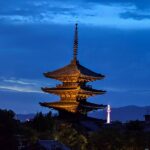
Hanamikoji Street and Kyoto’s wooden houses
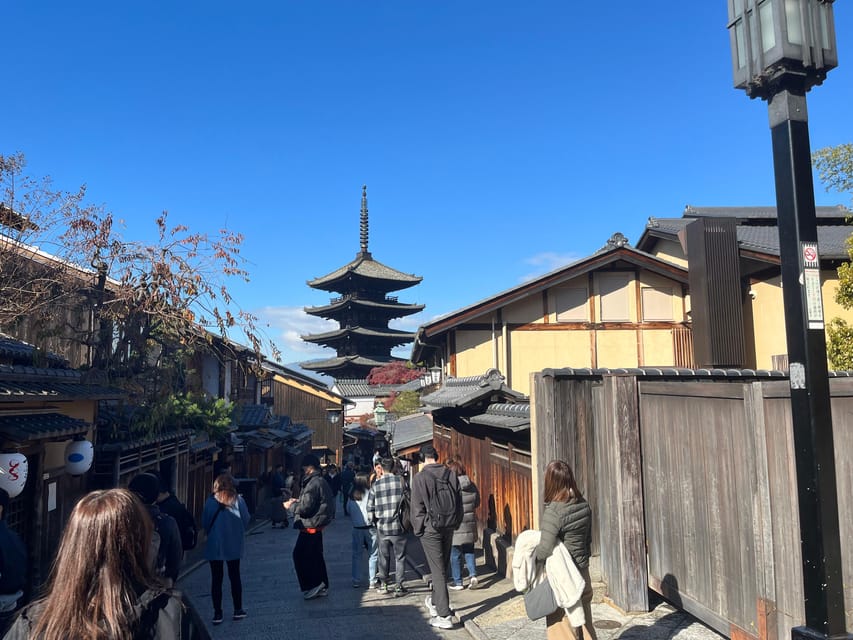
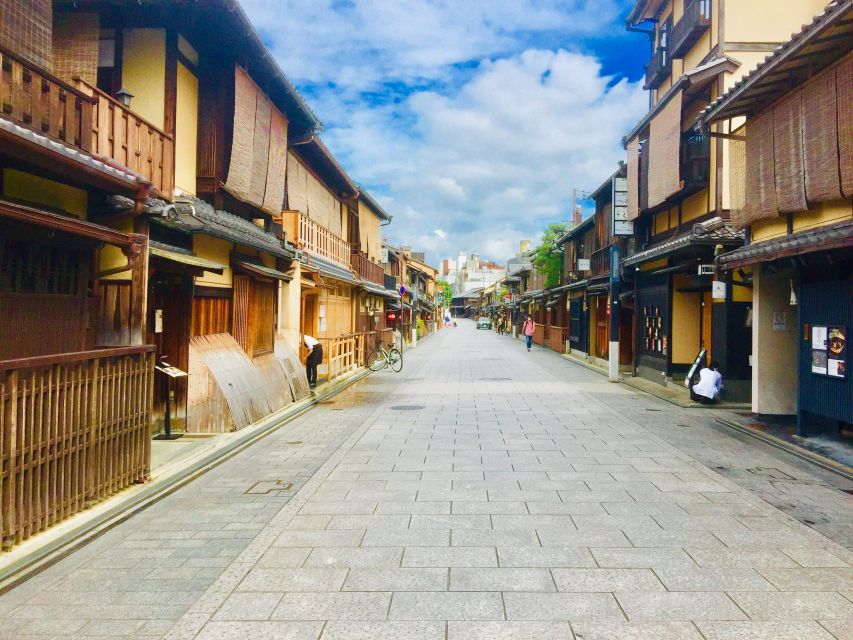
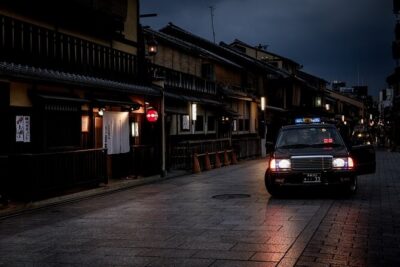
Hanamikoji Street is one of the tour’s most important stops. Here, the traditional kyomachiya houses create the old Kyoto image many people hope to see.
Kyomachiya are traditional Kyoto townhouses, and their narrow façades help explain the distinctive look of the district. Walking down Hanamikoji with a private guide can add useful context to details you might otherwise pass without noticing.
This is also a place where respectful behavior matters. The street is part of a living neighborhood, not a theatrical set. Keep voices low, follow local instructions, and avoid blocking entrances or photographing people without permission.
The tour lists a 30-minute visit and guided walk here. That is enough to take in the street’s character and ask questions about the houses. If you are hoping to enter traditional buildings, the provided details do not promise interior visits. Plan on seeing the architecture from the street unless your guide tells you otherwise.
Pontocho closes the loop
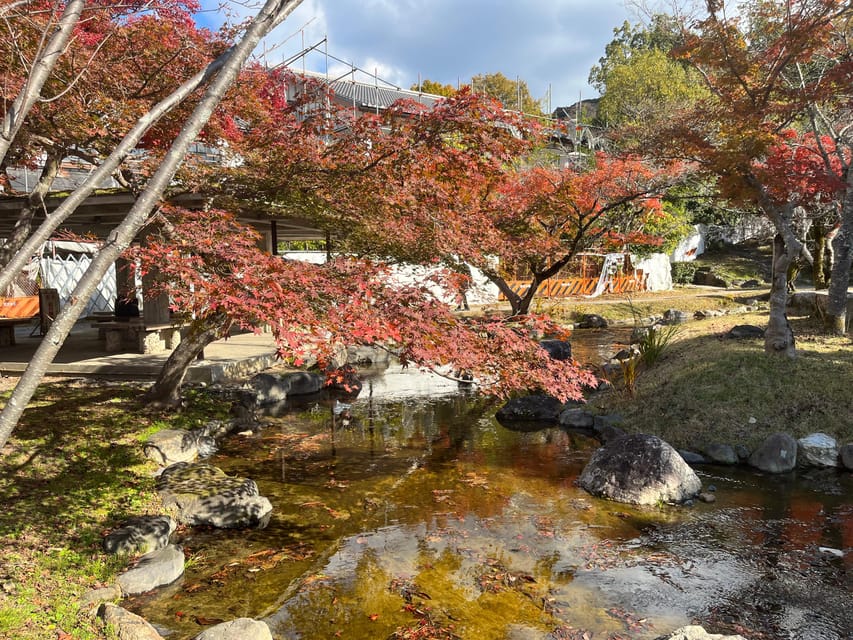
Pontocho is the final listed stop before you return to the starting point. The route therefore ends with another well-known old Kyoto street rather than finishing at a major temple or train station.
Pontocho helps complete the contrast between the river, shrine, park, and traditional lanes. You have seen several different sides of central Kyoto, all connected by walking. The final section also brings you back toward the Kamo River and Sanjo area, making the ending practical for the rest of your day.
The route lists 30 minutes for Pontocho. Since food is not included, this can be a useful place to continue independently if you want a meal afterward, though the tour itself does not promise restaurant stops or recommendations. The guide’s role here is sightseeing and explanation, not dining arrangements.
What $96 per person buys you
The price is $96 per person. For a private group lasting three to four hours, that can be fair value if you want a dedicated guide and a planned route through several major parts of Gion.
You are paying for the guide and guide fees. There are no stated admissions, meals, or snacks included, so the price is mainly for personal guiding rather than a package of extras. That is a strength for visitors who want a focused introduction without being tied to a group schedule.
Value depends on your travel style. If you are comfortable finding Yasaka Shrine, Hanamikoji, Sannenzaka, and Ninenzaka on your own, you may prefer a self-guided walk. If you want someone to connect the locations and explain Kyoto’s history and culture as you go, the private format is more useful.
The private group is particularly appealing for families, couples, and small groups who want to ask questions without competing with a large crowd. It also allows you to communicate your interests more directly. The available languages are English, French, and Japanese.
The rating is 4.4 from three reviews, which is a positive but small sample. Two reviews gave five stars and specifically praised Mouloud’s friendly manner and the number of sights covered. One three-star review found the guide less interesting. I would read this as a reminder to set your expectations clearly: the route reliably offers many sights, while the depth and style of commentary may vary.
Timing, walking, and practical comfort
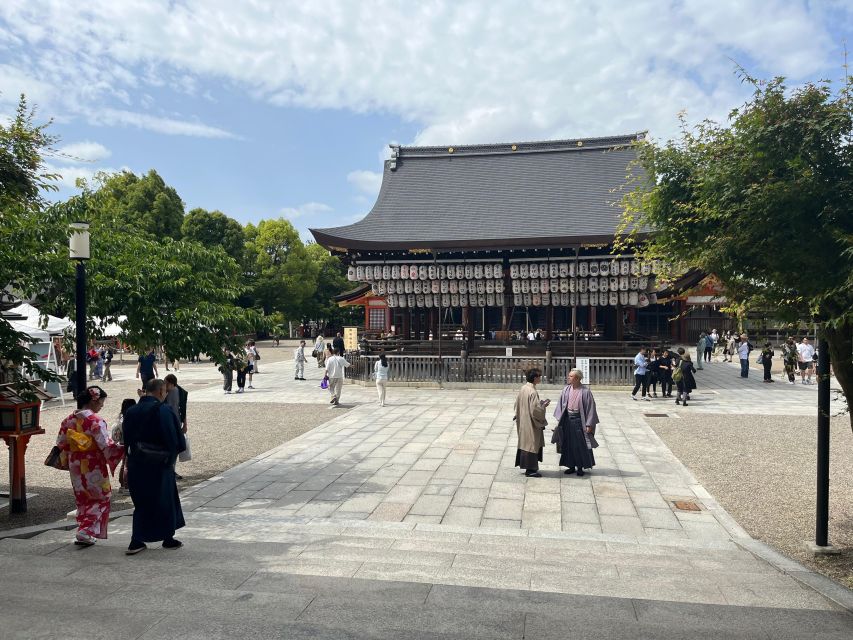
The experience lasts three to four hours, with starting times available according to the booking calendar. It begins and ends at Starbucks Coffee near Kyoto Sanjo-ohashi Bridge, so allow enough time to locate the meeting point before departure.
This is a walking tour, and the route covers the river, shrine grounds, old streets, park paths, and traditional districts. Wear comfortable shoes. That is basic Kyoto advice, but it matters here because there is no vehicle transfer between the stops.
The activity is listed as wheelchair accessible. If you use a wheelchair, contact the provider before booking to confirm the exact route, since Sannenzaka and Ninenzaka include traditional sloping streets. The available details do not specify the type of accessible vehicle or any alternative route.
You will need to arrange your own lunch or snacks. A midday tour can end at a convenient time for eating, but food is not part of the booking. The reserve-now-and-pay-later option and cancellation up to 24 hours before the tour give you some flexibility when your Kyoto schedule is still changing.
Who should book this Gion walk?
I would recommend it to a first-time Kyoto visitor who wants a clear introduction to Gion in half a day. It suits you if you want traditional houses, a major shrine, a riverside stroll, a park, and several classic streets without planning the route yourself.
It is also a good match for a private group that wants guiding in French, English, or Japanese. The tour’s strongest feature is the range of places covered in a single walk. You get more than one postcard view, and the route returns you to its starting area.
I would hesitate if you dislike walking, need a slow pace, or want a highly specialized art, food, or geisha-focused tour. No meal, tasting, performance, or interior house visit is included in the supplied details. The guiding may also feel basic if you are already well read on Kyoto and mainly want independent time.
Should you book it?
Book this tour if you want an efficient, private introduction to Gion and value having the old streets explained as you walk. The route is strongest in spring and autumn, but the Kamo River, Yasaka Shrine, Hanamikoji Street, and traditional houses give it appeal in every season.
Before paying, ask your guide how much historical detail you can expect and confirm the walking route if accessibility is important. If Mouloud is your guide, the available feedback points to a friendly experience with broad coverage, though one review found the commentary less engaging. At $96 per person, this is a sensible choice for personal guiding and route convenience, not for included food or premium admissions.
FAQ
How long does the Gion walking tour last?
The tour lasts approximately three to four hours. Starting times vary, so check availability when booking.
Where does the tour begin and end?
It starts and finishes at Starbucks Coffee near Kyoto Sanjo-ohashi Bridge.
Is the tour private?
Yes. The activity is offered for a private group.
Which languages are available?
Guiding is available in English, French, and Japanese.
What places are included?
The route includes the Kamo River area, Gion Tatsumi Bridge, Yasaka Shrine, Sannenzaka, Ninenzaka, Maruyama Park, Hanamikoji Street, and Pontocho.
Is food included?
No. Lunch and snacks are not included.
Is the tour wheelchair accessible?
The activity is listed as wheelchair accessible. Because the route includes traditional streets such as Sannenzaka and Ninenzaka, confirm the practical route details with the provider before booking.
Can I cancel the booking?
Yes. You can cancel up to 24 hours in advance for a full refund. You can also reserve now and pay later.
More Private Tours in Kyoto

More Guided Tours in Kyoto
More Gion & Geisha Walks in Kyoto
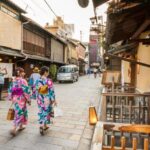


More tours in Kyoto we've reviewed
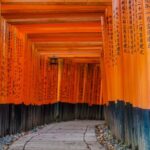
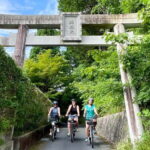




Gion & Geisha Walks, compared.
 ★ 4.7Kyoto Geisha Walking Tour: Gion District & Hidden GemsFrom $252 hours
 ★ 4.7Kyoto: Gion Geisha District Walking Tour – Stories of GeishaFrom $202 hours
 ★ 4.9Best of Kyoto: Gion, Geisha, Pagodas & CobblestonesFrom $242 hours
 ★ 4.5Night Walk in Gion: Kyoto’s Geisha DistrictFrom $211h 40m
 ★ 5.0Kyoto Night Foodie Tour in Gion (9+ dishes + 6 Sake tastings)From $163
 ★ 5.0Kyoto Gion Geisha District Walking Tour – The Stories of GeishaFrom $25