
Reviewed · NARA DAY TRIPS
Kyoto and Nara 2-Day Tour: Golden Pavilion, Todaiji, Deer Park
Kyoto’s Golden Pavilion, bamboo groves, samurai castle, geisha quarter, and vermilion torii gates all appear on this busy two-day tour. The second day crosses into Nara for Todaiji’s giant Buddha, Kasuga Grand Shrine, and the famous deer. It is a lot of Japan in a short time, but a private guide helps keep the day moving.
I especially like the private format, since your group can ask questions and adjust the pace within the planned route. I also like that public transportation and admission fees are included, which removes some of the small decisions that can slow down a first visit. The main catch is the schedule: with eight major stops over two days, you should expect walking, transfers, and limited time at each place.
In This Review
- Key points at a glance
- Why this two-day route works
- Kinkakuji: Kyoto’s golden opening scene
- Arashiyama’s bamboo and the sound of the grove
- Nijo Castle and the sound beneath your feet
- Gion after the temple grounds
- Fushimi Inari: a strong start to Day 2
- Todaiji and Nara’s giant Buddha
- Nara’s deer and Kasuga’s lanterns
- What the guides add to the experience
- The $321.93 price and what it covers
- Pace, walking, and practical limits
- Who should book this Kyoto and Nara tour?
- Should you book it?
- FAQ
- How long does the tour last?
- Where does the tour begin?
- What time does the tour start?
- Where does the tour end?
- Is this a private tour?
- What is included in the price?
- Are meals and accommodation included?
- How much does the tour cost?
- What happens if I cancel?
Key points at a glance
- The Golden Pavilion opens the tour: Kinkakuji gives you one of Kyoto’s most instantly recognizable views, with its gold-covered hall reflected in a pond.
- The route covers Kyoto’s essential sights: You visit Arashiyama’s bamboo forest, Nijo Castle, Gion, and Fushimi Inari Shrine.
- Nara adds scale and wildlife: Todaiji’s huge wooden Buddha Hall and Nara’s free-roaming deer make the second day quite different from Kyoto.
- You travel with your own group: This is a private activity, not a bus tour with strangers.
- Guides bring different strengths: Naoko is described as organized and thoughtful, Nick as patient and flexible, Ryusuke as strong on site history, and Tomoko as an expert, warm guide.
- The price covers key basics: At $321.93 per person, the fee includes guiding, public transport, and entrance fees, but not meals or lodging.
Why this two-day route works
Kyoto and Nara are close in spirit but different in feel. Kyoto gives you polished temple grounds, old wooden streets, imperial and shogunal landmarks, and famous religious sites. Nara feels more open and spacious, with deer moving around the shrine and temple grounds.
You could arrange these visits yourself, but the connections take planning. This tour puts the main sights into a private two-day plan and begins at Kyoto Station at 9:30 a.m. That start gives you a clear meeting point in a major transport hub. At the end of each day, the activity returns to the meeting point, according to the stated plan.
The route is not built around long free periods. Each stop lasts from about 40 minutes to 90 minutes, and the travel between sites is handled by public transportation. That is useful if you want a broad first look at the old capitals. It is less suitable if you prefer to linger quietly at one temple, browse shops, or spend half a day taking photographs in one district.
A few more Kyoto tours and experiences worth a look
Kinkakuji: Kyoto’s golden opening scene
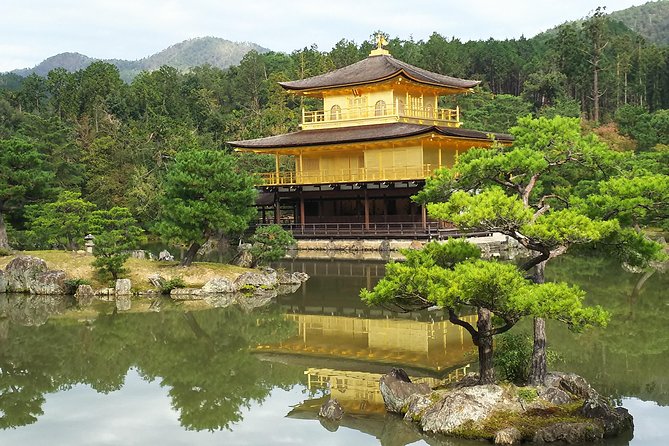
Kinkakuji, also called the Golden Pavilion, is one of those sights that needs little introduction. The upper hall is covered in gold leaf, and the building reflects across the pond in front of it. The setting is carefully composed, with water, trees, and the temple arranged for a strong first impression.
You have about 45 minutes here, with admission included. That is enough to follow the visitor route and take in the main view. It is not a long temple visit, so do not expect time for a slow study of every garden corner.
The value of a guide here is context. Kinkakuji was built by a shogun and is tied to the culture of Japan’s warrior rulers. A guide can help you see it as more than a pretty gold building, especially if you want to understand how political power, Zen Buddhism, and architecture met in Kyoto.
Arashiyama’s bamboo and the sound of the grove
The bamboo forest offers a change of pace. The path runs between tall bamboo trunks, and the narrow view upward can make the grove feel removed from the city. You are encouraged to pause and listen as the stalks and leaves move against each other.
The visit lasts about 90 minutes and has no separate admission fee. That longer stop is welcome, since the bamboo path is best appreciated without rushing through it in a few minutes. You may also have time to enjoy the surrounding area, though the stated plan does not specify additional stops or free time.
This is one place where expectations matter. The bamboo grove is famous and can feel busy, so the experience depends on the conditions when you visit. The tour gives you access to the setting, but it cannot guarantee a quiet path. Still, the guide can help you use the allotted time well and explain why Arashiyama has become such an important part of the Kyoto visit.
Nijo Castle and the sound beneath your feet
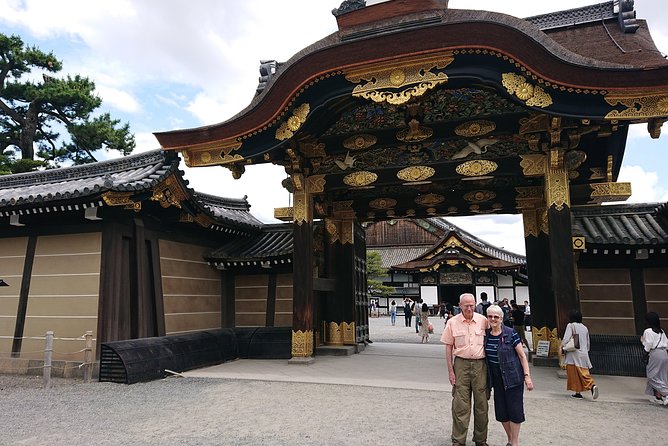
Nijo Castle brings you back to political Kyoto. The shogun established his government in Edo, now Tokyo, in 1603, but Nijo Castle served as a Kyoto residence when the shogun came to the old capital.
The interior is known for its many decorated rooms and more than 1,000 artworks. You have around 50 minutes, with admission covered. That makes this a focused visit rather than a full museum-style examination of the castle.
Nijo Castle is valuable because it shows how the shogunate presented power. The temples on this route speak of faith and ceremony, while Nijo speaks of authority, residence, and official life. I would pay close attention to the castle’s interior details and the famous floor design, but the tour’s tight timing means you should keep moving with the guide.
Gion after the temple grounds
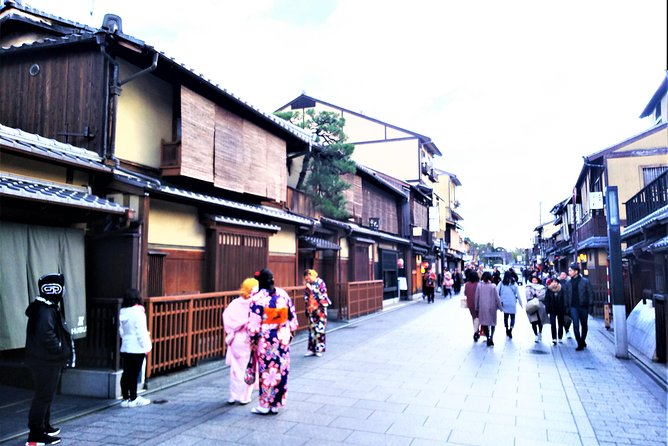
Gion gives Day 1 a more urban finish. Kyoto has five traditional geisha districts, and Gion is the largest. Its old-style houses and narrow streets offer a look at a living cultural quarter rather than a single monument behind a gate.
The visit lasts about 40 minutes and does not include an admission fee. That short walk is enough to see the character of the district, but not enough for an extensive exploration of side streets, restaurants, or shops.
Your guide can also help you approach the area with care. Gion is a working neighborhood, not a stage set. A respectful walk, quiet conversation, and attention to local rules matter. The tour gives you an introduction, while a longer independent visit would suit you better if traditional entertainment districts are a main reason for your trip.

Fushimi Inari: a strong start to Day 2
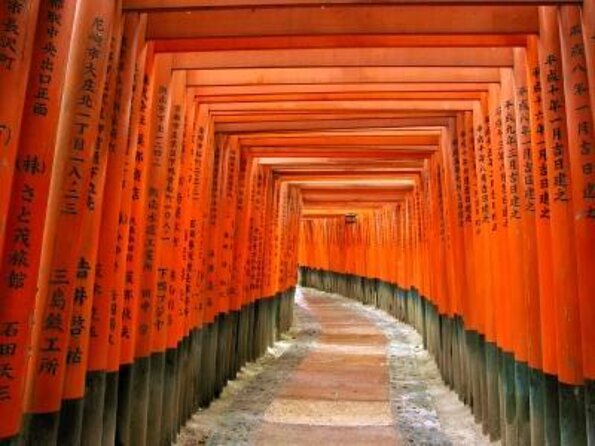
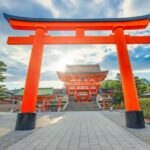
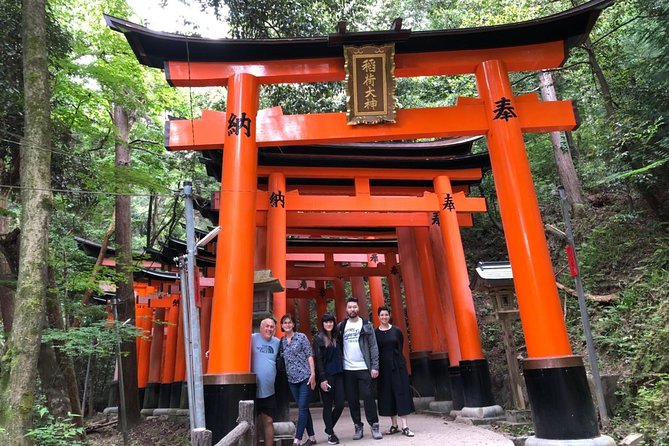
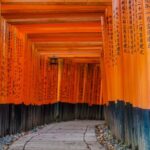
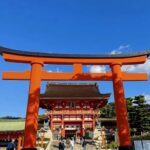
Day 2 begins with Fushimi Inari Taisha, famous for its tunnel of thousands of vermilion torii gates. Worshippers donated the gates to thank the shrine’s deities for good fortune, creating one of Kyoto’s most recognizable paths.
The scheduled visit is about 45 minutes and admission is free. That timing lets you enter the gate-lined route and experience the visual effect, but it does not suggest a long climb through the entire mountain shrine complex. If you want to walk much farther, you should ask your guide how the day’s timing allows for it.
The bright gates are only part of the appeal. Fushimi Inari is a functioning shrine, and the repeated gates show how individual acts of devotion have shaped the site. A guide can explain the meaning behind what you are seeing instead of leaving you with photographs alone.
Todaiji and Nara’s giant Buddha
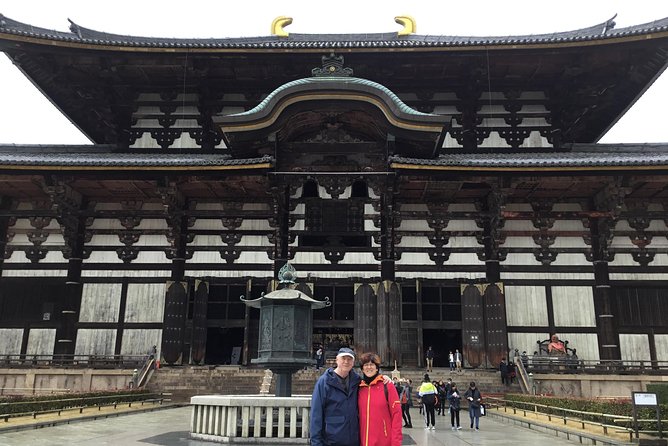
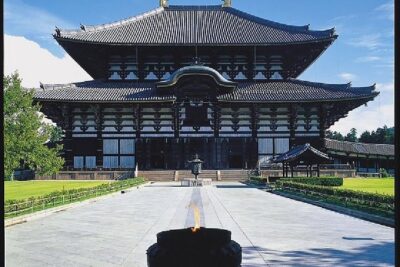
The move from Kyoto to Nara changes the scale of the tour. Todaiji’s Buddha Hall is renowned as one of the world’s largest wooden buildings, and the approach gives you a sense of its size before you even enter.
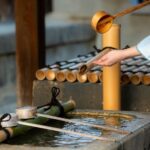
You have about 50 minutes at the temple, with admission included. The Buddha Hall is the main event, and its proportions can be overwhelming in the best way. The purification ritual at the entrance also introduces an important part of Japanese temple etiquette.
Todaiji is one of the stops where a guide’s explanation adds real value. Without context, you see a vast wooden hall and a monumental Buddha. With context, you can better understand why Nara became such an important early capital and why the temple still carries such weight in Japanese religious culture.
Nara’s deer and Kasuga’s lanterns
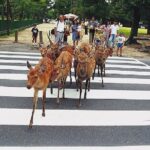
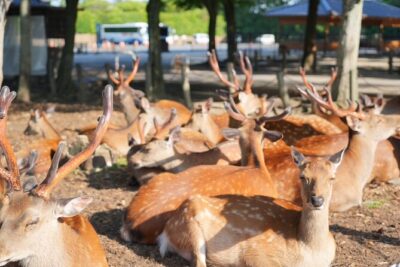
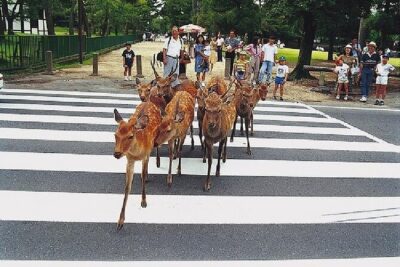
Nara’s deer are the lighter, more playful part of the second day. The animals move through the park and around the historic sites, creating an experience you cannot reproduce in Kyoto. The tour description calls the deer a must-see, and I agree that they give Nara a distinct character.
The itinerary lists Nara Park through the Todaiji and Kasuga visits rather than as a separate timed stop. That means your deer encounters fit around the temple route. Keep your attention on the guide and the schedule, since the animals may tempt you to stop often.
Kasuga Grand Shrine dates back about 1,300 years and has around 1,000 branch shrines across Japan. Its grounds contain more than 3,000 lanterns, said to be the largest collection in Japan. The contrast between the vermilion shrine buildings and the lantern-filled precinct gives this stop a different mood from Todaiji’s massive wooden hall.
You have about 40 minutes at Kasuga, with no separate admission fee listed. That is enough for an introduction and photographs, but not a lingering exploration of every path. The shrine works well at the end of the Nara portion because it brings you back to ritual, color, and quiet after the energy of the deer park.
What the guides add to the experience
The guide is the heart of this tour. Four guide names connected with the experience are Naoko, Nick, Ryusuke, and Tomoko, and each has been praised for a different quality.
Naoko is described as detailed, insightful, well organized, and funny. That combination would suit you if you want clear explanations without a stiff lecture. Nick is described as patient and flexible, useful qualities when a private group needs a little adjustment during a long sightseeing day.
Ryusuke is especially praised for explaining the historical background of the sites. If you want the temples and shrines placed into a larger story, that strength matters. Tomoko is described as an expert and wise guide with a warm manner, which may appeal if personal attention and thoughtful conversation are important to you.
The assigned guide is not specified in advance here, so you should not book expecting a particular person unless the provider confirms it. Still, the consistently strong guide feedback points to the central benefit of booking privately: you get a human explanation of the places, not just a route between photo stops.
The $321.93 price and what it covers
At $321.93 per person, this is not a bargain-basement sightseeing outing. The price needs to be judged against what is included and how much planning it removes.
Your fee includes the guide, public transportation, and admission fees. That means you are not paying extra for the listed entries to Kinkakuji, Nijo Castle, or Todaiji, and you do not have to manage every transit payment during the two days.
Food, drinks, and accommodation are not included. You also need to budget for your own meals and lodging in Kyoto. Since the tour begins and ends at Kyoto Station, you remain responsible for getting to the starting point each morning and handling any transport outside the activity.
For a private two-day experience, the cost can make sense if you are sharing it with family or friends and value a guide’s time. Group discounts are available, so the per-person price may become more attractive as your group grows. A solo visitor paying the full rate should compare the convenience of private guiding against arranging temple visits independently.
Pace, walking, and practical limits
The tour asks for moderate physical fitness. That is a fair warning. You will walk through temple and shrine grounds, stand during explanations, navigate public transportation, and move between several major sites.
The schedule is efficient, but efficiency has a price. You will not have unlimited time at the Golden Pavilion, Fushimi Inari, Todaiji, or Kasuga Shrine. You should choose this tour if you would rather see a broad range of landmarks with a guide than spend a whole morning in one garden.
Wear comfortable shoes and keep your day flexible. The published information does not provide exact travel times between stops, meal arrangements, or a detailed end time, so you should avoid booking evening plans that depend on a precise return hour.
This is a private activity, which gives your group a better chance to ask questions and manage short pauses. It does not mean the route is leisurely. The start time is fixed at 9:30 a.m., and the full two-day plan is designed to cover a great deal.
Who should book this Kyoto and Nara tour?
I would recommend it to first-time visitors who want the major sights explained in person and who have only two days for Kyoto and Nara. It also suits families or small groups that want a private guide rather than a large coach tour.
The tour is a good fit if you care about:
- Seeing Kyoto’s best-known landmarks in a planned order
- Understanding the link between temples, shrines, shogunal power, and old capitals
- Visiting Nara without arranging every public transport connection yourself
- Having a guide who can answer questions during the day
- Combining famous sights with cultural districts and outdoor spaces
I would hesitate if you dislike fixed schedules or want long periods for shopping, photography, meals, or quiet contemplation. You should also think twice if you need a low-walking itinerary, since moderate fitness is required.
Free cancellation is available when you cancel at least 24 hours before the start time. Changes made inside that window are not accepted, and poor weather can lead to a different date or a full refund.
Should you book it?
Book this tour if your priority is a well-guided introduction to Kyoto and Nara, especially when you have just two days. The strongest reason to choose it is not simply the number of sights. It is the combination of private guiding, public transport, included admissions, and explanations from guides such as Naoko, Nick, Ryusuke, or Tomoko.
Skip it if you want to set your own pace. The route is packed, and the short visits leave little room for wandering. For most first-time visitors with limited time, though, this is a practical way to connect Kyoto’s temples and historic districts with Nara’s giant Buddha and deer in one focused trip.
FAQ
How long does the tour last?
The experience lasts approximately two days.
Where does the tour begin?
It begins at Kyoto Station Building, 901 Higashishiokōjichō, Shimogyo Ward, Kyoto, 600-8216, Japan.
What time does the tour start?
The stated start time is 9:30 a.m.
Where does the tour end?
The activity ends back at the meeting point at Kyoto Station.
Is this a private tour?
Yes. Only your group participates in the private activity.
What is included in the price?
The price includes the guide fare, public transportation fare, and admission fees.
Are meals and accommodation included?
No. Food, drinks, and accommodation are not included.
How much does the tour cost?
The listed price is $321.93 per person. Group discounts are available.
What happens if I cancel?
You can receive a full refund if you cancel at least 24 hours before the experience start time. Cancellations or changes made less than 24 hours before the start are not accepted for a refund. If poor weather cancels the experience, you are offered another date or a full refund.
More Nara Day Trips in Kyoto

More tours in Kyoto we've reviewed



Nara Day Trips, compared.
 ★ 5.0World Heritage Kyoto & Nara Uji Authentic Matcha ExperienceFrom $129
 ★ 4.7Kyoto/Osaka: Nara, Fushimi Inari Taisha, Arashiyama Bus TourFrom $529 - 10 hours
 ★ 4.4Osaka/Kyoto: Arashiyama, Nara & Fushimi Inari Shrine w/LunchFrom $61
 ★ 5.0Nara Early Morning Tour (Kyoto or Osaka Departure Available)From $61
 ★ 4.5Kyoto and Nara Day Trip from KyotoFrom $194
 ★ 4.5Nara Afternoon Tour from Kyoto or OsakaFrom $102