
Reviewed · TOURS
KYOTO: Tour guidato tra i tesori della città (in italiano)
Kyoto’s great sights are spread across the city, and this tour links them by public transport without leaving you to decode every train, bus, and temple entrance. You’ll see the Golden Pagoda, walk through Sagano’s bamboo, and finish among Gion’s traditional streets and Pontocho’s restaurants.
I like two things here: the guide speaks Italian and brings Kyoto’s past down to daily life, and the price includes transportation and monument entries. The main consideration is pace. You cover a lot in one day, with several walks and transfers, so this suits you best if you want a broad first look rather than long, quiet temple visits.
- A full Kyoto sweep: Northern and eastern sights are joined in one carefully packed day.
- Italian-speaking local guide: The guide explains Kyoto’s history, culture, and ordinary life in Italian.
- Three major cultural areas: Sagano, Kinkaku-ji, and the Kiyomizu-Gion district each show a different side of the city.
- Public transport included: Trains, buses, subway travel, and admission fees are covered.
- Pontocho finish: You end near one of Kyoto’s best-known dining streets, with freedom to leave partway through.
- Strong language support: The available ratings give the tour five stars, with special praise for clear Italian and detailed explanations.
In This Review
- Kyoto Station to Sagano by Train
- One Hour in Sagano’s Bamboo Forest
- Kinkaku-ji, Kyoto’s Golden Pavilion
- A One-Hour Break at Kyoto Station
- Kiyomizu-dera and the Hillside Approach
- Sannenzaka and Ninenzaka on Foot
- Gion and Kyoto’s Traditional Arts
- Minami-za and the Walk to Pontocho
- What the $153 Price Covers
- Who Will Get the Most From This Kyoto Tour
- Should You Book This Italian-Language Kyoto Day?
- FAQ
- Where does the Kyoto tour start?
- Where does the tour finish?
- Is the tour conducted in Italian?
- Which sights are included?
- Are transportation and entrance fees included?
- Can I cancel the booking?
Kyoto Station to Sagano by Train
The day begins at Kyoto Station’s north side, at the Karasuma-guchi entrance. Look for the space between the two escalators in front of the taxi terminal, not the bus terminal. Kyoto Tower should be ahead and slightly to your upper left. That detail matters because Kyoto Station is large, and the wrong side of the building can cost you valuable time.
From here, you take a train for about 20 minutes toward Sagano. The change from central Kyoto to the city’s northwestern edge is part of the experience. You are leaving the modern transport hub for an area associated with temples, wooded hills, noble retreats, and literary life.
Your Italian-speaking guide accompanies you throughout the planned route. The guide’s role is more than pointing at famous buildings. The tour is designed to explain how aristocrats, members of the imperial family, samurai, artists, and ordinary people fit into Kyoto’s long story.
The tour has earned a perfect rating from the five available ratings. The strongest praise focuses on the guide’s Italian, patience, humor, and detailed explanations of each temple and place. No guide name is provided, but you can expect a native Kyoto guide who speaks Italian fluently.
One Hour in Sagano’s Bamboo Forest
The Sagano Bamboo Forest is the first major stop, with about an hour for a guided visit and walk. Tall bamboo lines the path, creating one of Kyoto’s most recognizable scenes. It is a beautiful start, but it is also a place where timing helps.
You will not have unlimited time to wander. The hour gives you enough room for the walk and the guide’s explanation, but this is not a slow photographic study of every path. The value comes from seeing Sagano as part of a larger area shaped by Kyoto’s former nobles and literati, not simply as a backdrop for pictures.
The tour’s description places emphasis on the preserved natural and cultural setting around the ancient capital. That context is useful here. Bamboo is visually striking, but the wider Sagano area has long been tied to retreats, religious sites, and refined country life outside the central city.
Wear comfortable shoes. The route includes walking here and later around Kiyomizu-dera, Sannenzaka, Ninenzaka, and Gion. The schedule also continues by train, bus, and subway, so shoes that handle both pavement and temple approaches will make the day easier.
If you're still narrowing it down, here are other tours in Kyoto we've reviewed.

Kinkaku-ji, Kyoto’s Golden Pavilion
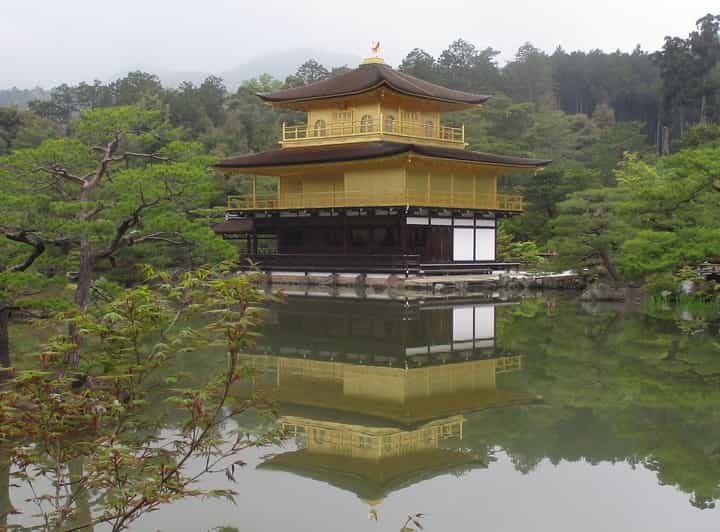
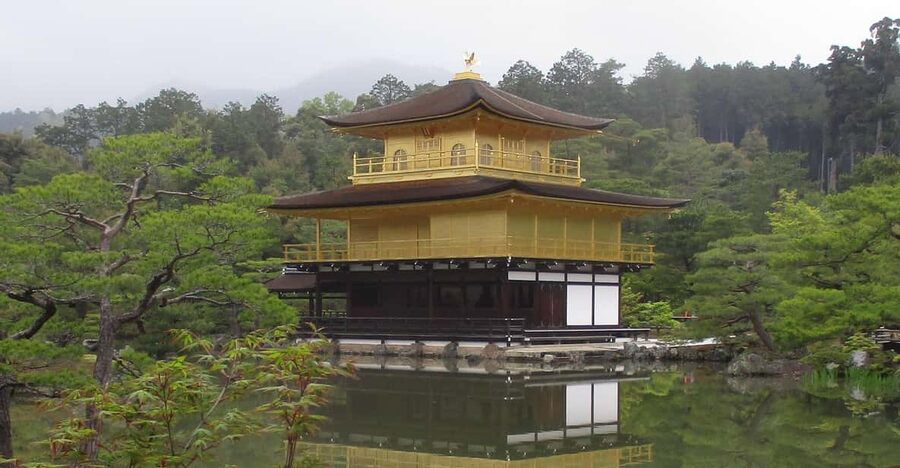
After another train ride of about 20 minutes, you continue by bus for roughly 15 minutes to Kinkaku-ji, the Golden Pavilion. The temple visit lasts about an hour and includes guided sightseeing.
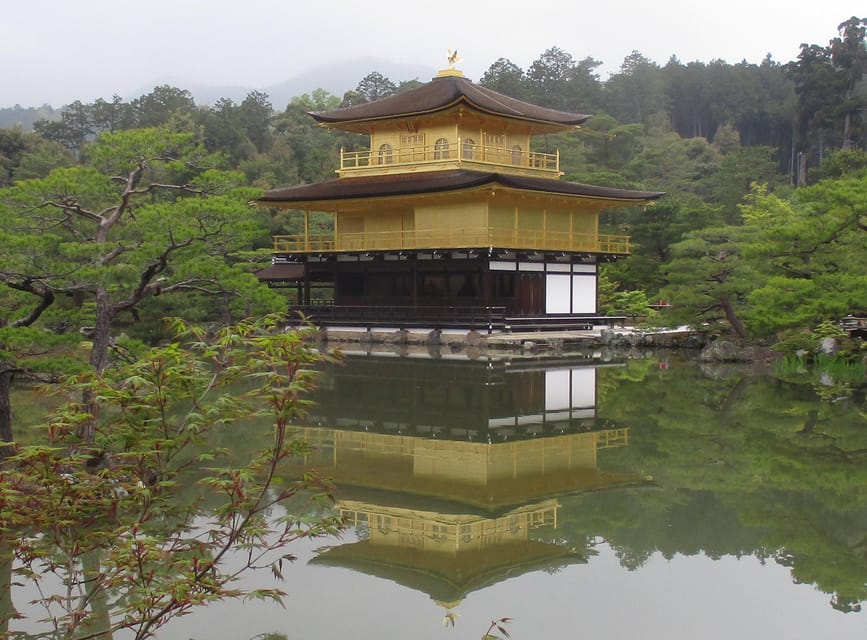
Kinkaku-ji is one of Kyoto’s most instantly recognizable sights. Its gold-covered exterior reflects in the pond, creating the image most people associate with the temple. The setting also helps explain why Kyoto’s powerful families chose this part of the city for retreat and retirement residences.
A guide adds value at Kinkaku-ji because the building is easy to admire but harder to understand without context. You can learn why the site mattered to political and religious life, how aristocratic taste shaped temple grounds, and how the building fits into the story of Kyoto rather than treating it as an isolated monument.
The drawback is the same as at Sagano: one hour goes quickly. You will see the key areas and hear the explanation, but you should not expect a long independent visit. If Kinkaku-ji is your main reason for coming to Kyoto, a separate return visit could give you more time.
Admission is included, which makes the stop simple. You do not need to budget separately for the listed monument entries, and the guide can keep the group moving through a busy sightseeing day.
A One-Hour Break at Kyoto Station
After Kinkaku-ji, the route uses a bus for about 15 minutes and then the subway for about 15 minutes before returning to Kyoto Station. A one-hour break follows.
This pause is important. The first half includes a train, a walk, another train, a bus, temple sightseeing, and more city transport. The station break gives you time to rest before the afternoon section.
The supplied schedule describes the experience as lasting one day, while the description also uses the phrase half-day. The detailed route clearly includes morning and afternoon visits, plus a one-hour break, so you should plan for a full sightseeing day rather than a short half-day outing.
The break is also a practical chance to handle lunch or refreshments, although the tour information does not specify that food is included. Plan your own meal arrangements around this stop rather than expecting a provided lunch.
Kiyomizu-dera and the Hillside Approach
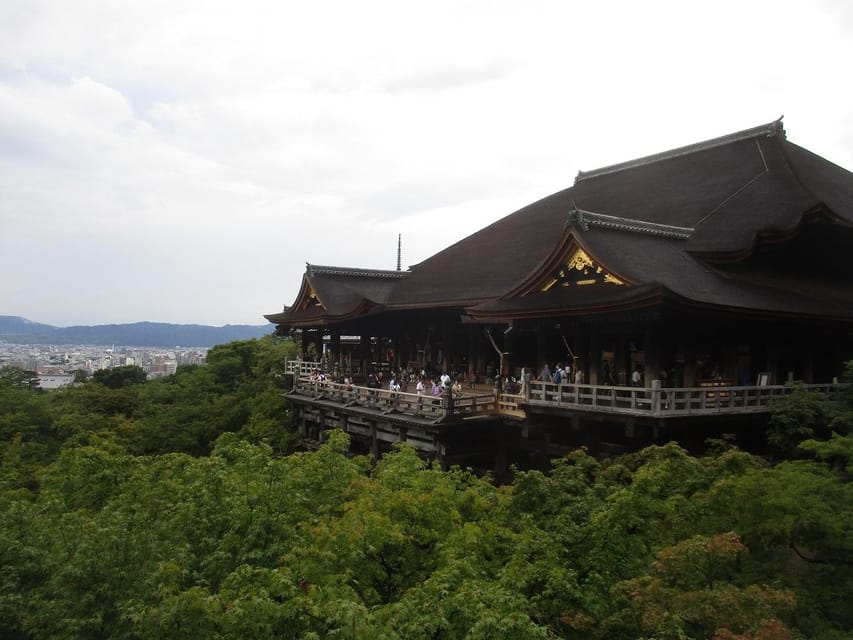
After the break, a coach or city bus takes about 15 minutes to Kiyomizu-dera. The guided visit lasts around an hour.
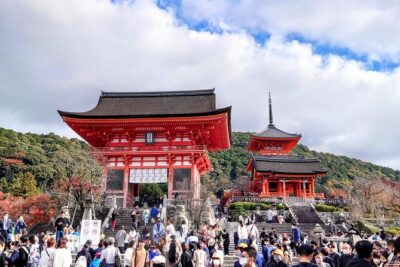
Kiyomizu-dera is one of Kyoto’s essential temples, but the approach is part of the attraction. The area rises through traditional streets and historic lanes, giving you a clear sense of how temple visits once formed part of city life. The temple itself is tied to religious practice, pilgrimage, and Kyoto’s long cultural identity.
Your guide can help connect the site’s architecture with the people who used it. That is one of the most useful features of this tour. The stated focus is not only imperial history or famous monuments, but also daily life, old customs, and the way ancient Japanese society developed.
Kiyomizu-dera can be demanding for anyone who dislikes hills or extended walking. The schedule allows an hour for the temple, followed by more time on foot through nearby streets. The tour is marked wheelchair accessible, but you should still confirm how the full route works for your particular mobility needs, since it combines buses, walking, historic areas, and temple grounds.
Sannenzaka and Ninenzaka on Foot
From Kiyomizu-dera, you walk about five minutes to Sannenzaka. The guided sightseeing and walk here are listed as about three minutes, followed by another five-minute walk to Ninenzaka and a short visit.
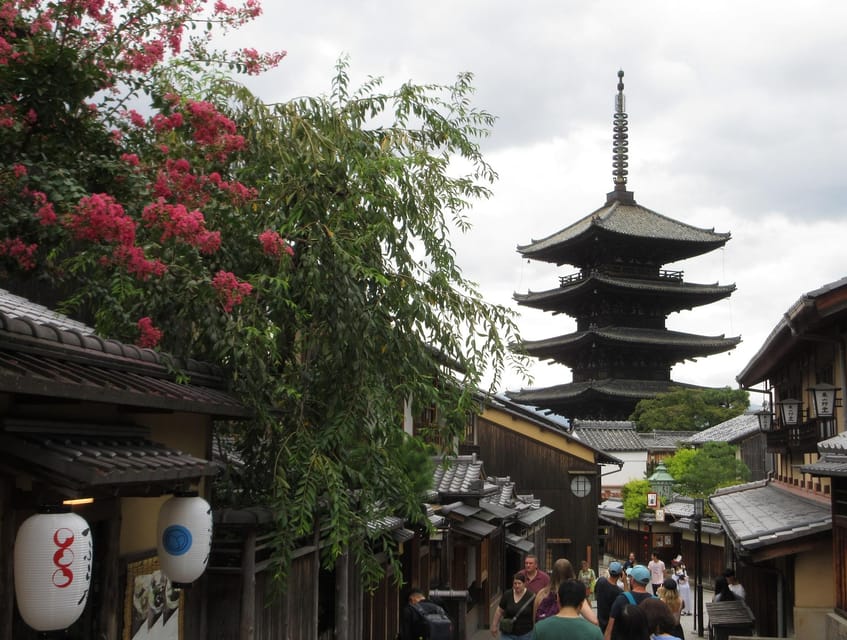
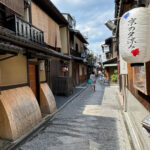
These timings are brief, so think of Sannenzaka and Ninenzaka as a connected route rather than separate, leisurely stops. The lanes are known for their traditional appearance, sloping streets, and old-style buildings. They form a visual bridge between Kiyomizu-dera and Gion.
This section is valuable because it shows Kyoto outside its temple gates. You see the setting where shops, homes, visitors, and old buildings meet. It is also one of the places where a guide can point out details you might otherwise pass without understanding.
The short schedule means you will not have much independent shopping time here. If you want to browse carefully or take many photographs, note the route and return later on your own. The tour gives you orientation and explanation, then keeps moving.

Gion and Kyoto’s Traditional Arts
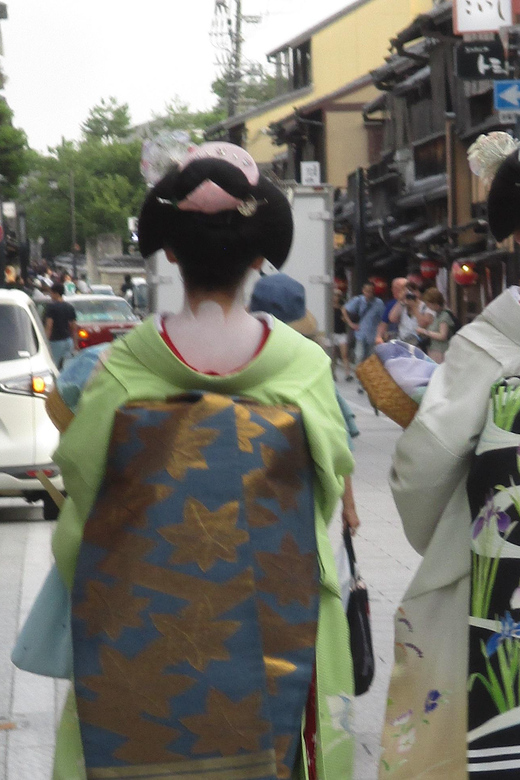
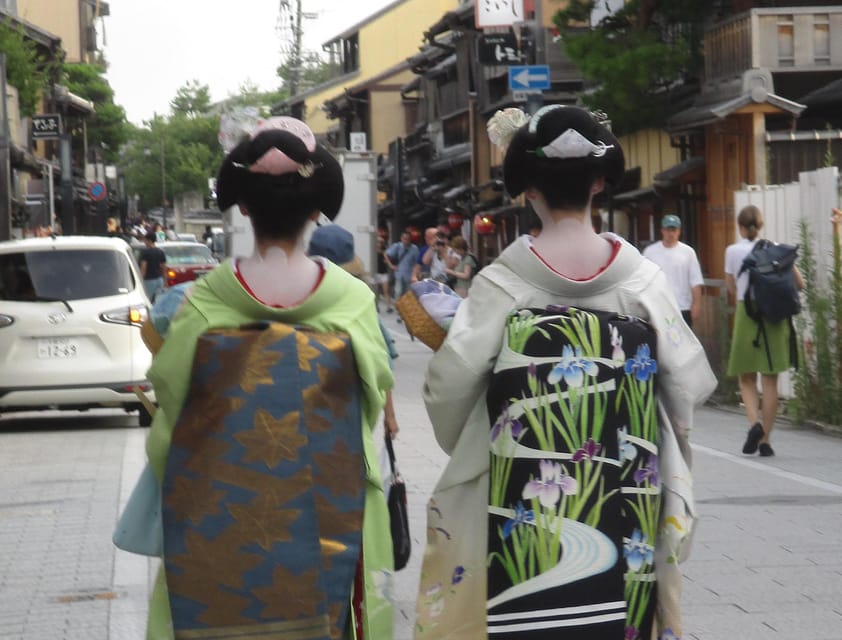
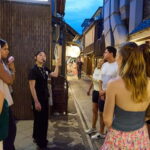
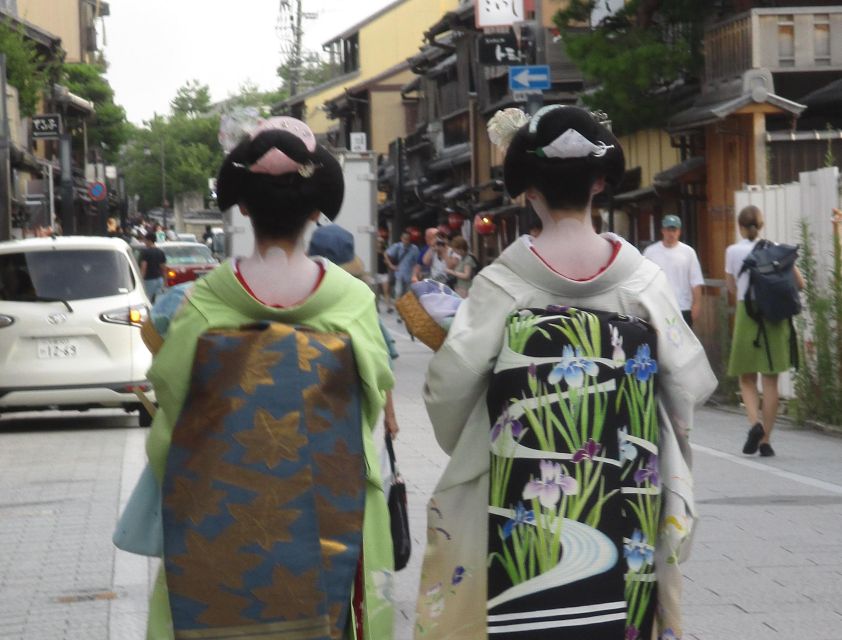
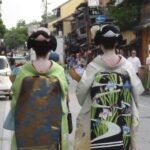
The walk continues for about 15 minutes to Gion, where guided sightseeing lasts around 30 minutes. Gion-kobu is associated with professional artists known as Maiko and Geiko. They are often called Geisha by people outside Japan, but the local terms matter, and an Italian-speaking Kyoto guide can explain the distinction and the traditions behind it.
This is one of the tour’s most culturally useful stops. Gion is not simply an old street for photographs. It is a working district connected to performance, hospitality, music, dance, and formal training. The tour presents it as a workplace for professional artists, which gives you a more accurate view than treating the area as a costume display.
Please keep expectations realistic. The schedule does not promise a private performance or a meeting with Maiko or Geiko. You are visiting the district and learning about its role in Kyoto life.
A half-hour guided walk is enough to establish the setting and explain its customs, but not enough for a full exploration of every lane. The guide’s commentary is especially valuable here because local etiquette and photography manners are important, even when the tour details do not set out specific rules.
Minami-za and the Walk to Pontocho
The route includes a short guided sightseeing stop outside or around Kyoto Minami-za, the famous theater associated with traditional Japanese performance. The listed visit lasts about three minutes, followed by a short walk.
This is a compact stop, but it adds an arts connection to the day. After temples, imperial associations, old residential lanes, and Gion’s professional artists, Minami-za helps complete the picture of Kyoto as a center for stage traditions as well as religion and court culture.
The tour finishes in Pontocho. That is a useful ending because Pontocho is close to many evening dining choices, although no meal is included. You can leave the tour at the finish, continue your own evening, or use the central location to explore further.
The tour information also says you are free to leave partway through. That flexibility may help if you have dinner plans, tired children, or another evening booking. Still, if you leave early, you will miss the later sections and should not expect a partial refund unless the provider separately confirms one.
What the $153 Price Covers
At $153 per person, this is not a cheap independent day of sightseeing. Its value depends on how much you want the structure, transport help, and Italian commentary.
You are paying for:
- An Italian-speaking guide throughout the route
- Train, bus, and subway transportation listed in the itinerary
- Admission fees for the monuments visited
- A route that connects distant parts of Kyoto in one day
- Explanations about history, culture, daily life, and traditional arts
Buying individual transport and entry tickets would cost less in some cases, especially if you already understand Kyoto’s transit system and can visit only one or two places. But the comparison changes if you value an Italian guide and want to see Sagano, Kinkaku-ji, Kiyomizu-dera, Gion, and Pontocho in a single organized day.
The strongest reason to pay the price is language. The available ratings specifically praise the guide’s perfect Italian, willingness to help, detailed explanations, and friendly personality. If you want history explained in Italian rather than read from signs or translated later, that service can justify the extra cost.
Who Will Get the Most From This Kyoto Tour
I would recommend this experience to you if you are visiting Kyoto for the first time and want the major sights placed in a sensible order. It also works well if you prefer a local guide to explain how temples, aristocratic retreats, samurai culture, traditional arts, and ordinary life connect.
It is a good fit for Italian-speaking visitors who want to ask questions as they go. The guide is there to answer questions about both ancient and modern Kyoto, not just recite dates.
You may want another kind of day if you prefer slow travel. The schedule is full, and the transfers add up. You will use trains, buses, the subway, and your own feet. The brief Sannenzaka, Ninenzaka, and Minami-za stops are useful introductions, but they leave little room for lingering.
The tour is marked wheelchair accessible. Because the route includes historic temple areas, hills, several transport changes, and walking between districts, check the practical details with the provider if you need specific assistance.
Free cancellation is available up to 24 hours before the tour for a full refund, and you can reserve now and pay later. That flexibility is useful when Kyoto plans are still shifting. Starting times vary, so check availability before booking.
Should You Book This Italian-Language Kyoto Day?
Book it if you want many of Kyoto’s signature sights in one organized day, with transport and admission fees handled and a guide who can explain the city in Italian. The detailed route, clear commentary, and friendly guide style make it especially useful for first-time visitors.
Skip it if your ideal Kyoto day means sitting quietly in one temple garden, shopping at length in old lanes, or setting your own pace. The $153 price buys convenience and interpretation, not solitude.
For most Italian-speaking visitors with limited time, I see the value. You get bamboo, the Golden Pavilion, Kiyomizu-dera, Gion, traditional streets, and a Pontocho finish. Just arrive ready for a full day, comfortable shoes, and a brisk rhythm.
FAQ
Where does the Kyoto tour start?
It starts at Kyoto Station’s north entrance, known as Karasuma-guchi. Meet in the space between the two escalators in front of the taxi terminal, not the bus terminal. Kyoto Tower should be visible ahead and to the upper left.
Where does the tour finish?
The tour finishes in Pontocho. You are free to leave there or leave the tour earlier.
Is the tour conducted in Italian?
Yes. The tour includes a live Italian-speaking guide, described as a native Kyoto guide.
Which sights are included?
The route includes Sagano Bamboo Forest, Kinkaku-ji, Kiyomizu-dera, Sannenzaka, Ninenzaka, Gion, Kyoto Minami-za, and a finish in Pontocho.
Are transportation and entrance fees included?
Yes. Transportation used during the itinerary and entrance fees for the monuments visited are included.
Can I cancel the booking?
Yes. You can cancel up to 24 hours in advance for a full refund. Reserve now and pay later is also available.
More tours in Kyoto we've reviewed





Tours, compared.
 ★ 5.0PERFECT KYOTO 1-Day Bus TourFrom $129
 ★ 4.8Kyoto: Fushimi Inari, Kinkakuji, Bamboo Grove 1 Day Bus TourFrom $122510 minutes - 9 hours
 ★ 4.7Kyoto Geisha Walking Tour: Gion District & Hidden GemsFrom $252 hours
 ★ 4.7Kyoto: Gion Geisha District Walking Tour – Stories of GeishaFrom $202 hours
 ★ 5.0Hidden Kyoto E-Biking tourFrom $116
 ★ 5.0Kyoto Night Foodie Tour in Gion (9+ dishes + 6 Sake tastings)From $163