
Reviewed · GION & GEISHA WALKS
Kyoto: Try Nishijin Weaving in the Oldest Geisha District
The unusual heart of this Kyoto experience is a hands-on lesson in Nishijin weaving, held in the old geisha district of Kamishichiken. You visit Kitano Tenmangu Shrine first, then work with a traditional craftsman to make your own textile piece using Tsuzure-ori, an ancient patterned-weaving technique.
I like the pairing of a major shrine with a quieter neighborhood walk, and I like that your payment supports the crafts and culture connected with Kamishichiken. The main drawback is the price, $131 per person, which is a serious spend for three hours, especially if you are not interested in handmade textiles.
In This Review
- Key points
- Why the weaving lesson is the real draw
- Starting at Kitano Tenmangu’s first torii
- A quiet walk through Kamishichiken
- The guide makes the difference
- Is $131 a fair price?
- What the three hours feel like
- Who should book this experience?
- Practical booking notes for Kitano Tenmangu
- Should you book the Kamishichiken weaving tour?
- FAQ
- Where does the tour begin?
- How long does the experience last?
- What languages are available?
- Is the tour private or shared?
- What is included in the price?
- Do I need weaving experience?
- Is the dango tasting guaranteed?
- Can I cancel the booking?
Key points
- Weaving with a traditional craftsman: Learn the basics of Tsuzure-ori in a real Nishijin workshop and create a one-of-a-kind item.
- Kyoto’s oldest Hanamachi: Walk through Kamishichiken, a preserved 400-meter street lined with traditional townhouses and latticework.
- Kitano Tenmangu first: See the shrine’s main worship hall, cultural assets, seasonal grounds, and role in the district’s creation.
- Personal guiding: English and Japanese guides lead the tour, with guides such as Kanako, Yayoi, and Juraj named in past bookings.
- A quieter side of Kyoto: The route offers a calm stroll away from the city’s most crowded sightseeing areas.
- Flexible booking: You can cancel up to 24 hours before the start for a full refund and reserve without paying immediately.
Why the weaving lesson is the real draw
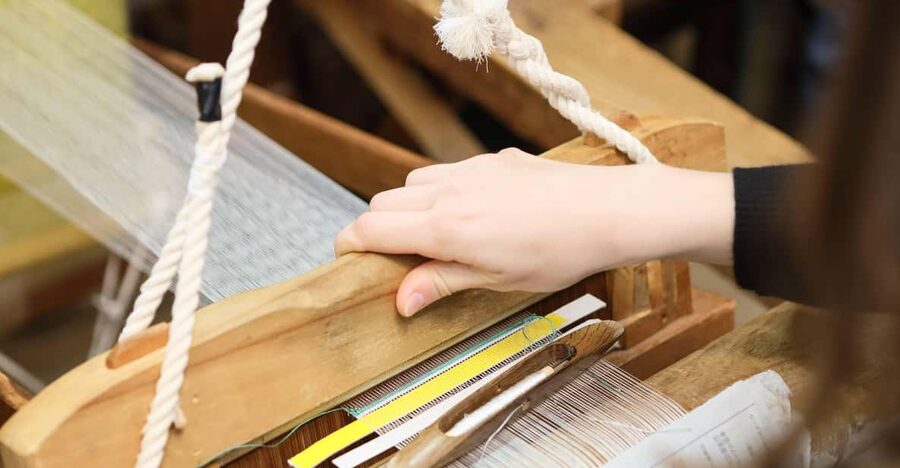
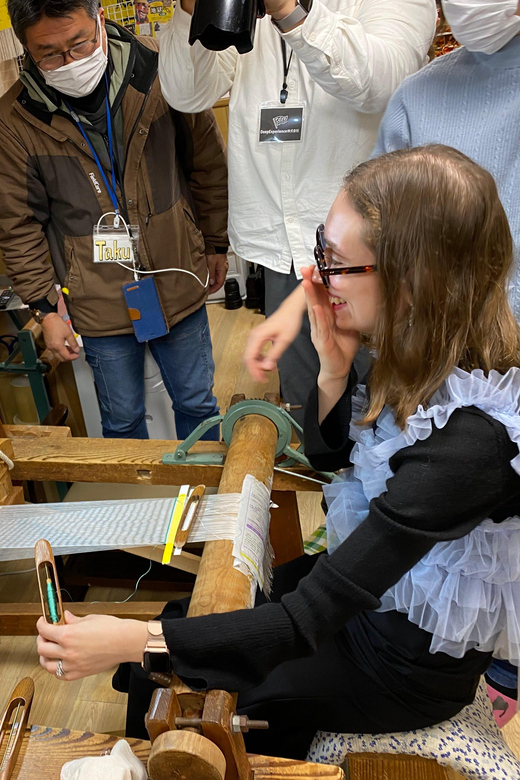
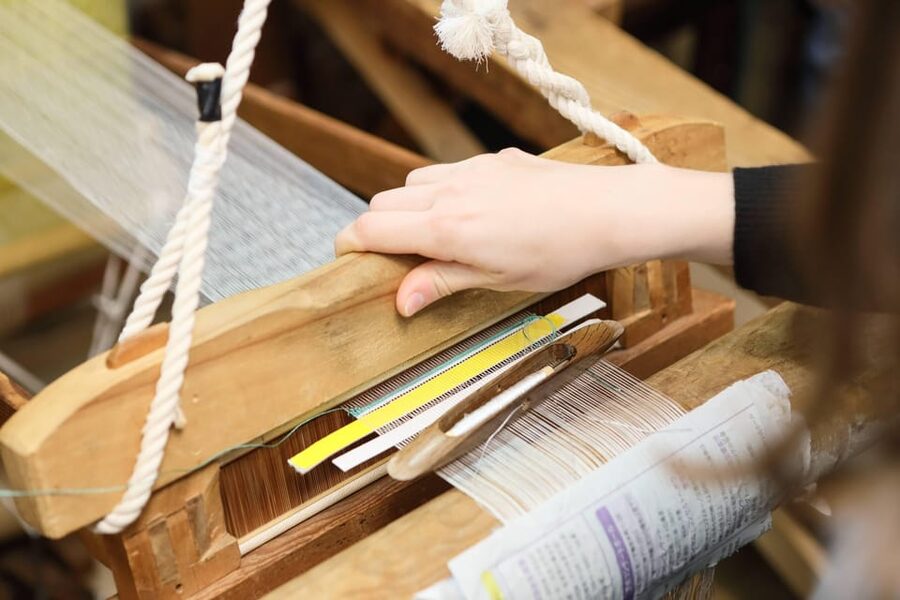
Many Kyoto activities let you watch a craft demonstration. This one asks you to take part. After visiting Kitano Tenmangu, you spend about an hour and a half learning the basics of Tsuzure-ori, then use the traditional method to make your own piece.
Tsuzure-ori is described as a 4,000-year-old weaving technique and the oldest Nishijin textile method. You do not need previous sewing or weaving experience. The point is not to produce a flawless work of art in one afternoon. The value is in seeing how much care, coordination, and patience go into a textile that may look simple at first glance.
You choose from the available items and work under the direction of a traditional craftsman. Hirano Sensei led one recent session, and his patient, humorous teaching style made a strong impression. That matters here. Handicrafts can feel intimidating when the instructor moves too quickly, but a calm teacher gives you room to try, make small mistakes, and understand the method.
I would book this mainly for the workshop, not as a quick souvenir stop. The item you make gives the day a useful focus, and you leave with something tied to the neighborhood rather than a generic Kyoto purchase. If you are interested in fiber arts, textiles, design, or traditional skills, this may become one of the most memorable parts of your time in the city.
A few more Kyoto tours and experiences worth a look



Starting at Kitano Tenmangu’s first torii
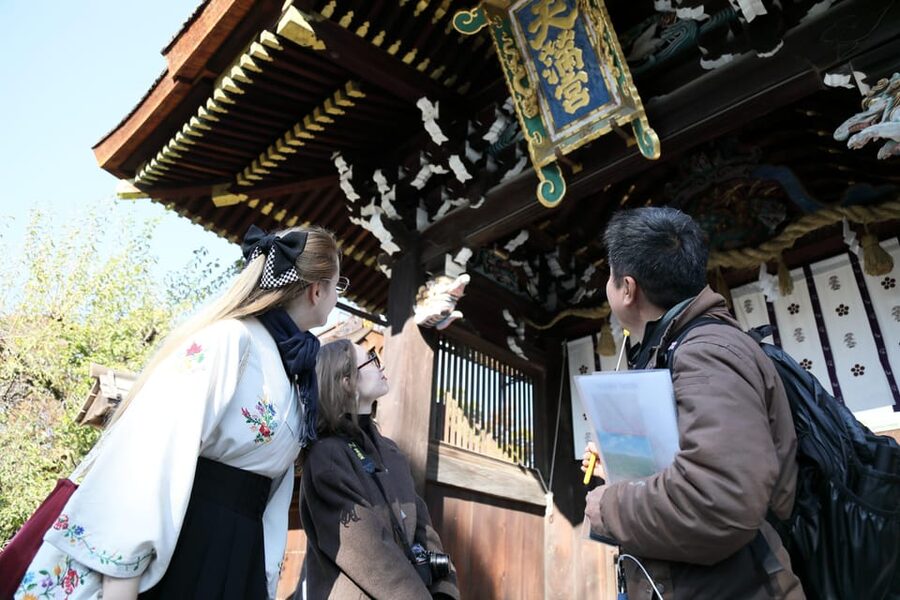
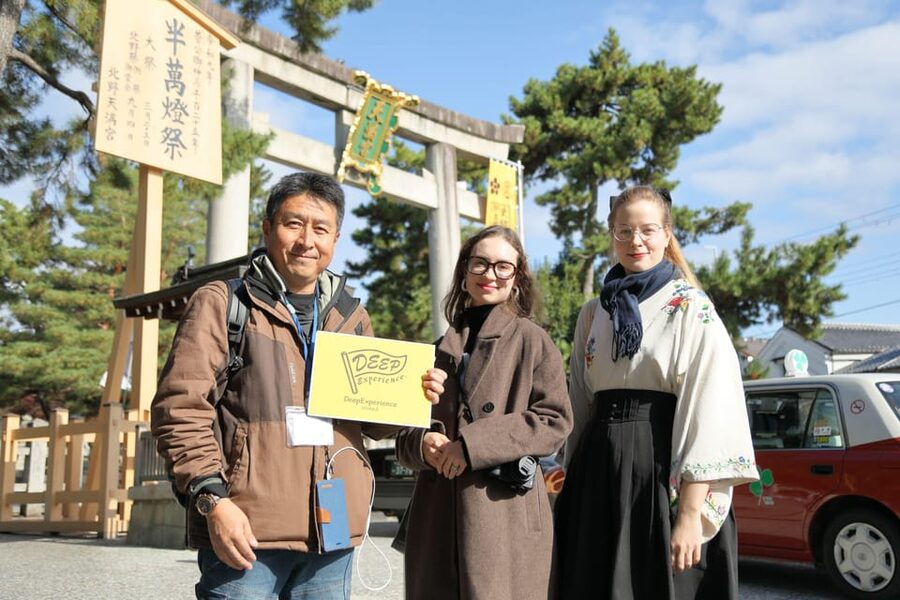
The meeting point is in front of the first grand torii gate of Kitano Tenmangu Shrine. Look for a guide holding a yellow sign with the DeepExperience logo. This detail is worth noting because Kitano Tenmangu has a large approach, and meeting at the first torii is different from meeting beside the main worship hall.
Your three-hour visit begins with roughly 30 minutes at the shrine. Kitano Tenmangu is not just a convenient starting point. It is presented as the guardian shrine of the local area and played a role in the creation of Kamishichiken, Kyoto’s oldest Hanamachi district.
A Hanamachi is a traditional entertainment quarter associated with geiko and maiko, Kyoto’s professional entertainers. The shrine visit gives you a better frame for the neighborhood that follows. Instead of walking into Kamishichiken with no context, you first learn why this area developed and how religious, commercial, and performing-arts traditions became linked.
The main worship hall is one of the important cultural assets you see during the visit. Your guide also points out national treasures and explains the shrine’s place in local life. The grounds change with the seasons, so the visual character of this first section depends partly on when you visit.
I like this opening because it avoids treating the shrine as a quick photo stop. Thirty minutes is enough to get your bearings and hear the key background without turning the entire activity into a long temple lecture. If you have already spent a full morning visiting major shrines, though, this portion may feel familiar. The weaving session is where the experience becomes more distinctive.
A quiet walk through Kamishichiken
After the workshop, you stroll through Kamishichiken with your guide for about 30 minutes. The district retains a traditional townscape, with old townhouses, wooden details, and latticework along a street about 400 meters long.
This is a compact area, but its small size is part of the appeal. You are not trying to cover half of Kyoto. You are looking closely at one historic quarter and learning how its streets connect with local geiko and maiko culture.
The route is designed to show you places tied to Kamishichiken’s traditional entertainment life. Your guide explains what you are seeing and helps you notice details you could easily pass without context. The district is known for a slower, more peaceful feel than Kyoto’s busiest sightseeing zones, so the walk adds breathing room to a day that might otherwise involve crowded temples and shopping streets.
Do not expect a performance or a guaranteed sighting of a geiko or maiko. The activity promises an exploration of places associated with them, not a show. That is a useful distinction. You are learning about the district as a living cultural quarter rather than being promised a staged encounter.
A dango tasting may also be available, depending on the store. It is not guaranteed, so treat it as a pleasant extra rather than a reason to book. If the shop is unavailable, the main value of the walk remains the preserved streets and the guide’s explanation.
The guide makes the difference
The tour is offered in English and Japanese, with private or small-group options. That format suits Kamishichiken well. The district is not huge, and a large crowd would make the walk less comfortable and could work against the quiet character of the area.
The guides named in past bookings include Kanako, Yayoi, and Juraj. Kanako was described as warm and natural in conversation, while Yayoi provided clear explanations during a cold, rainy visit. Juraj worked as an interpreter during a workshop and brought strong interest in Japanese culture and daily life.
Guide quality matters more here than on a simple sightseeing walk. You need someone who can explain shrine customs, local history, geiko and maiko culture, and the craft lesson without making the afternoon feel like a string of unrelated facts.
The workshop instructor matters just as much. Hirano Sensei is a traditional weaver, and the session depends on his ability to show the process in a way beginners can follow. The combination of an interpreter and a craftsman is especially useful if you do not speak Japanese, since it lets you focus on the work instead of worrying about missing technical explanations.
Because guides can vary, I would not book this expecting one particular person unless the operator confirms that detail. The named guides give you a sense of the tone: personal, patient, and interested in more than basic directions.
Is $131 a fair price?
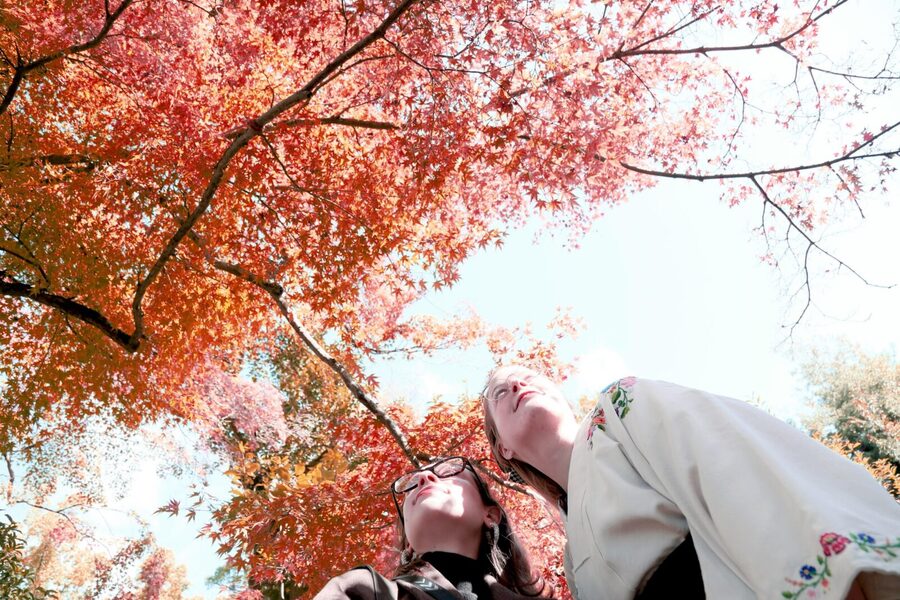
At $131 per person, this is not a budget activity. You are paying for three hours, a guide, the shrine visit, the weaving session, and access to a real workshop with a traditional craftsman. The price makes more sense if you value instruction and cultural context, not simply admission to a place.
A self-guided visit to Kitano Tenmangu and Kamishichiken would cost far less. You could walk the district on your own, take photographs, and perhaps visit a fabric shop. What you would not get is the structured introduction to the Hanamachi district or the chance to make a textile piece under expert direction.
The workshop is the key value test. If you are genuinely curious about Japanese textiles, the fee buys more than a souvenir. You get an explanation of a traditional technique, guided practice, and a finished object connected to the place where you learned it.
If your main goal is to see famous Kyoto sights at the lowest possible cost, I would choose another activity. If you have already visited the headline temples and want something smaller and more personal, the price is easier to justify.
The group format also affects value. A private or small-group tour generally gives you more time to ask questions and more direct attention during the weaving lesson. Since this is a practical class, that personal contact is more useful than it would be on a basic bus tour.



What the three hours feel like
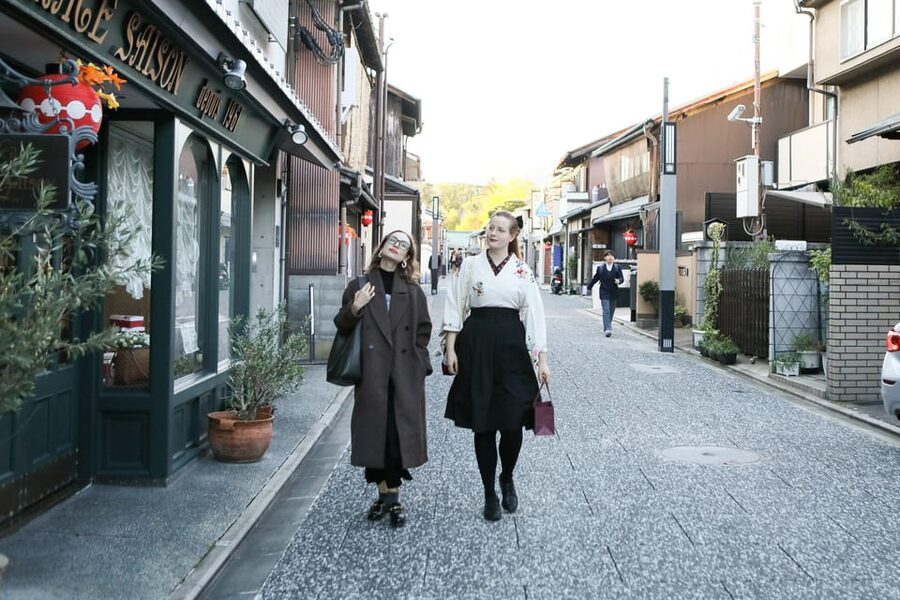
The timing is well balanced:
- About 30 minutes at Kitano Tenmangu Shrine
- About 90 minutes in the weaving class
- About 30 minutes walking through Kamishichiken
The remaining time allows for moving between the stops and settling into the class. This is not a rushed checklist. The workshop gets the largest share of the afternoon, which is right for an activity built around making something.
The shrine section starts the story. The class gives you direct contact with a living craft. The neighborhood walk brings the setting back into focus and shows how the weaving tradition fits within a wider local culture.
You should wear comfortable clothing and shoes suitable for a short walk, though no special equipment is listed as necessary. The most important preparation is mental: allow yourself to be a beginner. The goal is not to match a master weaver after one lesson.
Weather can affect the atmosphere of the first and last sections. A rainy or cold day may make the shrine and streets feel more subdued, but it can also make the preserved architecture seem more removed from modern Kyoto. The weaving workshop provides a warm indoor focus if the weather is poor.
Who should book this experience?
I would recommend it most strongly to:
- People interested in textiles, weaving, fashion, or Japanese design
- Visitors who prefer small cultural experiences to large group sightseeing
- Repeat visitors who have already seen Kyoto’s best-known temples
- Anyone who wants a handmade keepsake with a clear connection to its place of origin
- Families or couples looking for a shared activity rather than another photo stop
It can also work well for someone visiting Kyoto for the first time, especially if you want to understand a neighborhood beyond its surface appearance. The shrine and district provide solid cultural context, while the class gives the afternoon a practical purpose.
I would think twice if you dislike hands-on activities or have little interest in traditional crafts. The shrine walk is pleasant, but it is not enough on its own to justify the cost. Also consider your schedule. Three hours is manageable, but the starting point is Kitano Tenmangu, so you need to plan your route to the shrine rather than assuming the activity begins near Kyoto Station.
Practical booking notes for Kitano Tenmangu
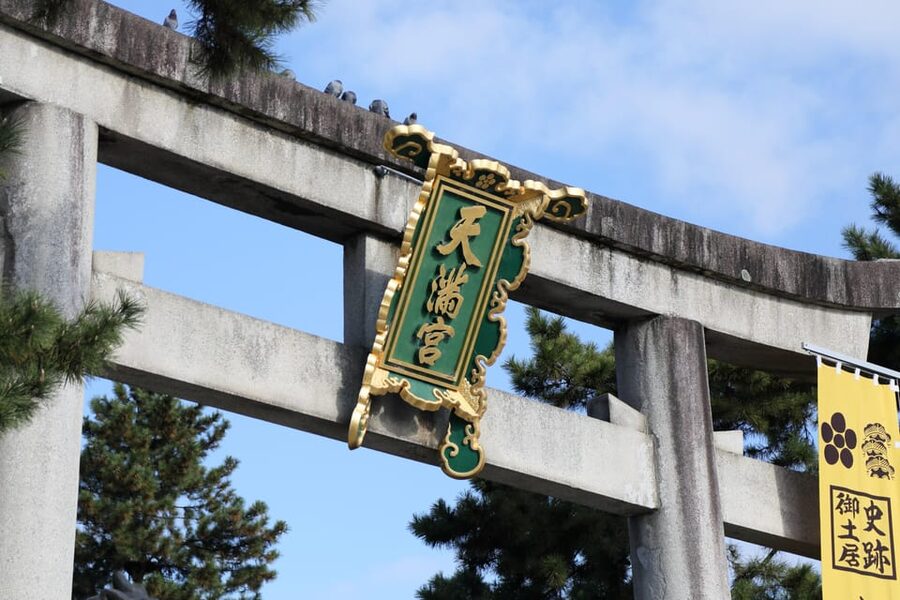
Meet at the first grand torii, not at the shrine’s main worship hall. The guide carries the yellow DeepExperience sign. Check the available start times when booking, since the activity runs for three hours and the schedule can affect the rest of your day.
English and Japanese guiding are available. Private and small-group formats can be selected, giving you some control over how much personal attention you want.
The tour allows free cancellation up to 24 hours before the start, and you can reserve now and pay later. Those terms are helpful if your Kyoto plans may shift, though I would still confirm the exact start time and group format before booking.
The dango tasting depends on store availability. Do not count on it as part of the core experience. The reliable elements are the shrine visit, weaving lesson, and Kamishichiken walk.
Should you book the Kamishichiken weaving tour?
Book it if you want Kyoto to be more than temples, food, and photographs. The strongest part is the time spent with the weaver, especially for anyone who enjoys making things by hand. The shrine and quiet Hanamachi walk add context without taking over the afternoon.
Skip it if $131 feels too high for a three-hour activity or if you would rather spend your time at major monuments. You can see Kitano Tenmangu and walk through Kamishichiken independently for much less.
For the right person, though, this is a thoughtful choice. You leave with a small piece of your own work, a clearer sense of how Kamishichiken developed, and a closer look at a traditional craft that is easy to miss when you only follow Kyoto’s major tourist routes.
FAQ
Where does the tour begin?
The tour begins in front of the first grand torii gate of Kitano Tenmangu Shrine. Your guide will hold a yellow sign with the DeepExperience logo.
How long does the experience last?
The experience lasts three hours. It includes about 30 minutes at Kitano Tenmangu, 1.5 hours for the weaving class, and about 30 minutes exploring Kamishichiken.
What languages are available?
The tour is available in English and Japanese.
Is the tour private or shared?
Private and small-group options are available.
What is included in the price?
The price includes an expert guide, a visit to Kitano Tenmangu Shrine, and the Nishijin weaving experience.
Do I need weaving experience?
No previous weaving experience is stated as a requirement. The class teaches the basics of Tsuzure-ori and guides you as you make your selected item.
Is the dango tasting guaranteed?
No. The dango tasting depends on the store’s availability.
Can I cancel the booking?
You can cancel up to 24 hours in advance for a full refund. You can also reserve now and pay later.
More Gion & Geisha Walks in Kyoto



More tours in Kyoto we've reviewed








Gion & Geisha Walks, compared.
 ★ 4.7Kyoto Geisha Walking Tour: Gion District & Hidden GemsFrom $252 hours
 ★ 4.7Kyoto: Gion Geisha District Walking Tour – Stories of GeishaFrom $202 hours
 ★ 4.9Best of Kyoto: Gion, Geisha, Pagodas & CobblestonesFrom $242 hours
 ★ 4.5Night Walk in Gion: Kyoto’s Geisha DistrictFrom $211h 40m
 ★ 5.0Kyoto Night Foodie Tour in Gion (9+ dishes + 6 Sake tastings)From $163
 ★ 5.0Kyoto Gion Geisha District Walking Tour – The Stories of GeishaFrom $25