
Reviewed · SAKE BREWERY TOURS
Nishiki Market, Private Sushi class & Sake Tasting in Townhouse
Kyoto’s food culture comes together neatly here: a market walk, a sake lesson, and a hands-on cooking class in a traditional townhouse. I especially like the chance to see ingredients at Nishiki Market before using similar flavors yourself, and the private setting keeps the cooking session personal. The main consideration is pace: two to three hours passes quickly, and the market can feel crowded.
I like that you do more than simply eat. You prepare rolled sushi, miso soup, and seasonal side dishes, then leave with a recipe booklet. I also like the cultural range, from Nishiki Shrine and local vendors to sake customs and the quiet rooms of a Kyomachiya. Advance notice is needed for vegetarian or vegan food.
In This Review
- Key points at a glance
- Starting with Kyoto’s Kitchen at Nishiki Market
- From the market to a restored Kyomachiya
- Making rolled sushi without restaurant pressure
- Dashi, miso soup, side dishes, and dessert
- A small sake tasting in an old Kyoto house
- What the $121.84 price gets you
- Dietary needs and who will enjoy this most
- Timing, comfort, and small practical matters
- What the experience does especially well
- Should you book the Nishiki Market and sushi class?
- FAQ
- How long does the Nishiki Market and cooking experience last?
- Is the cooking class private?
- Is the experience offered in English?
- What food will I prepare?
- Is sake included?
- Are vegetarian and vegan options available?
- Where does the experience end?
- Can I cancel for a refund?
Key points at a glance
- Nishiki Market comes first: Spend about an hour exploring Kyoto’s five-block food street and sampling traditional items.
- A private Kyomachiya setting: Your group cooks in a restored Kyoto townhouse rather than a busy commercial classroom.
- More than sushi: You prepare rolled sushi, dashi-based miso soup, seasonal side dishes, and a simple Japanese dessert.
- Sake is part of the lesson: A mini tasting introduces Japanese sake culture alongside the cooking.
- English instruction and recipes: The experience is offered in English and includes a recipe booklet for home use.
- Easy ending point: The tour finishes about five minutes from Gojo Subway Station, with help available for a taxi or other transport.
Starting with Kyoto’s Kitchen at Nishiki Market
Nishiki Market is a long, covered shopping street in central Kyoto, running for about five blocks and lined with more than 100 shops and restaurants. Its nickname, Kyoto’s Kitchen, makes sense once you see the range of seafood, vegetables, pickles, dried foods, and other ingredients used in Japanese cooking.
The market walk lasts about an hour. Rather than treating the street as a place to rush through with a snack in hand, your guide explains how the market fits into Kyoto’s food traditions and points out ingredients that can be easy to miss on your own.
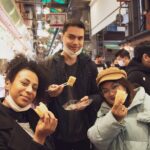
You might see stalls handling whole tuna, fresh seafood, local vegetables, and small prepared foods. One review describes the striking sight of stalls carving through whole tuna, which gives you a good idea of the market’s working-food-market character. This is not only a polished souvenir street. It is also a place where food is displayed, prepared, and sold in a very direct way.
The sampling is an important part of the visit. Seasonal treats help you connect the market to the cooking class that follows, though snacks are listed separately as not included. That means you should not assume every food item you see or want to purchase is covered in the tour price.
Nishiki can be crowded, especially in the narrow central passage. Keep your expectations practical. This is a guided introduction, not a slow, empty-market photo walk. You will get more from it if you listen for the guide’s explanations and treat the crowds as part of the setting.
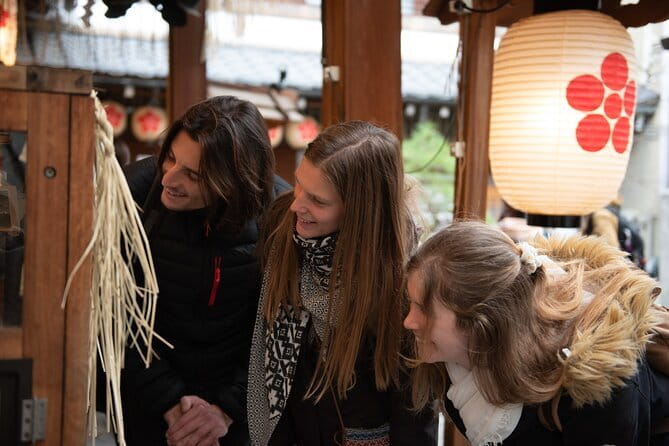
The guide also takes you to Nishiki Shrine, tucked behind the market’s lantern-lit lanes. This brief stop adds a quieter note to a busy morning or afternoon and shows how food, commerce, and local religious life sit close together in Kyoto.
Other sake brewery and tasting tours in Kyoto

From the market to a restored Kyomachiya
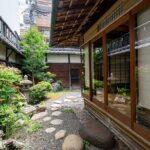
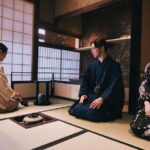
After Nishiki Market, you move to a Kyomachiya, a traditional Kyoto townhouse restored for use as a private cooking space. The change in mood is part of the experience. You leave the tight market passage and enter a calmer setting with the feel of old Kyoto architecture.
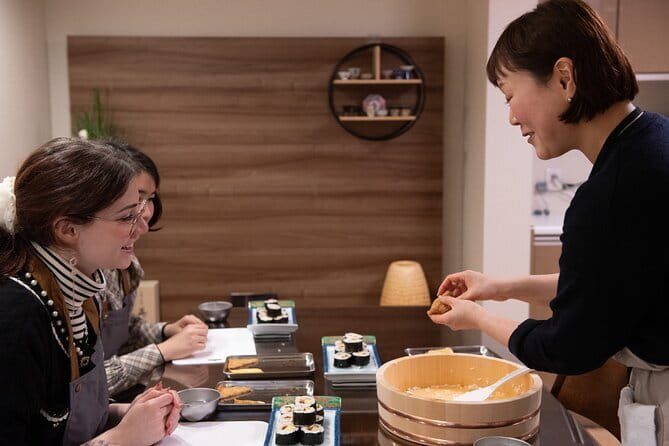
The townhouse is reserved for your group, so you are not cooking beside a large class of strangers. That matters if you want time to ask questions, need help with a technique, or simply prefer a quieter introduction to Japanese food.
The class is led in English, and the host explains not just what to do but why the dishes matter. The available information names Sunny as one of the staff members, and one particularly attentive experience involved Sunny helping make the market walk more personal. Staff members are described as tailoring explanations to the group, which is useful for both first-time visitors and people already familiar with Japan.
The private format also suits families. Children or adults who do not cook often can try each stage at their own pace, though the experience still requires participation. One account describes the pleasure of making the food step by step, even for someone who rarely cooks. You should expect to work, not sit back while an instructor performs everything.
Making rolled sushi without restaurant pressure
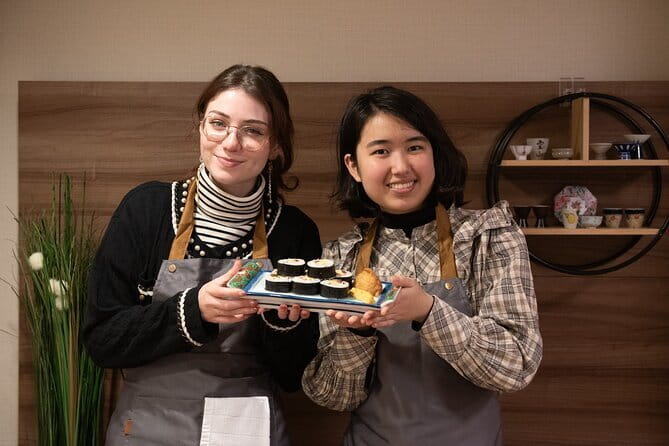
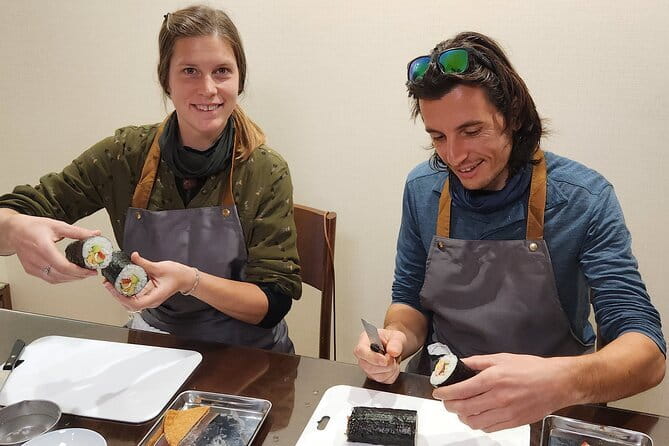
Rolled sushi is the main cooking activity. The instructor guides you through the process, from handling the ingredients to shaping and cutting the roll. If this is your first attempt, the private class gives you a better chance to get help before small mistakes become large ones.
The goal is not professional sushi-chef training. It is a practical introduction that lets you make a Japanese dish with your own hands. You may find that the rolling itself is the trickiest part, since neat shape and even pressure matter, but the point is to learn the method and enjoy the result.
This activity works especially well after the market visit. You have already seen the kinds of ingredients that form the base of Japanese cooking, and you can ask questions while preparing your own meal. The connection between shopping street and kitchen gives the afternoon a clear shape.
A useful detail is that the experience is not limited to sushi. The class also includes other dishes, so you get a broader look at a Japanese meal rather than a single recipe repeated for the sake of the activity.
Dashi, miso soup, side dishes, and dessert
You also prepare homemade miso soup from scratch with dashi. Dashi is a basic Japanese soup stock, and learning how it fits into the dish gives you a better sense of why Japanese cooking can taste full and layered even when the ingredient list looks short.
Seasonal Japanese side dishes are included as well. The supplied examples mention egg and spinach omelets with sesame sauce, giving you a sense of the cooking style: simple components, careful preparation, and flavors that support rather than overpower one another.
A simple Japanese-style dessert finishes the meal. It is not presented as a separate pastry class, so keep your expectations modest. The dessert provides a sweet ending after the savory cooking rather than becoming the focus of the session.
Lunch is included, along with alcoholic beverages. The meal is therefore part of the class, not an extra restaurant stop. If you have a large appetite, remember that the experience also lists snacks as not included, so any extra market food is your own expense.
A small sake tasting in an old Kyoto house
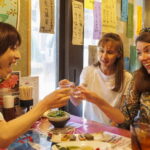
The sake tasting gives the cooking class a cultural layer. You sample sake while learning about Japan’s sake customs and drinking culture, rather than simply receiving a glass with no explanation.
The tasting is described as mini, so this is an introduction rather than a full brewery visit or a long comparative tasting. That is a good fit if you want to understand the role of sake in a meal without giving up most of the afternoon.
Alcohol is included, but this part may not suit every member of a family or group. The cooking itself remains the main event, and the experience includes food, so you are not attending only for drinks.
The traditional townhouse makes the tasting feel more connected to Kyoto than it would in a generic classroom. You can enjoy the food, the architecture, and the sake lesson in one setting. The result is a compact cultural experience rather than a narrowly technical cooking course.
A few more Kyoto tours and experiences worth a look
What the $121.84 price gets you
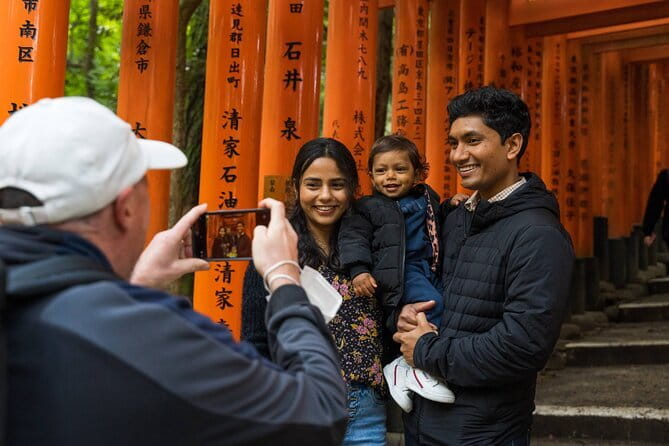
At $121.84 per person, this is not the cheapest way to eat around Nishiki Market. You can walk through the market on your own for free, buy individual snacks, and find an inexpensive meal nearby.
The value comes from the combination. Your fee covers a guided market introduction, a private townhouse session, lunch, alcoholic beverages, instruction, and several prepared dishes. You also receive a recipe booklet, which gives the experience some use after your Kyoto visit.
I would consider the price reasonable for someone who wants a planned food-and-culture activity rather than a self-guided market stop. A private class typically offers more personal attention than a large group lesson, and the market walk gives you context before you start cooking.
The value is weaker if you mainly want to sample as much market food as possible. Since snacks are not included, a food-focused visitor may spend extra money at the stalls. The class is best judged as a combined cultural activity and meal, not as an all-you-can-eat market tour.
The experience is often booked about 98 days ahead. That is useful planning information if your Kyoto dates are fixed. Group discounts are available, so larger parties should compare the per-person total before booking separately.
Dietary needs and who will enjoy this most
Vegetarian and vegan options are available with advance notice. Tell the operator when you book, since the class depends on ingredients being prepared for your group.
This experience suits you best if you want:
- A private activity for your own group
- A first introduction to Japanese cooking
- A market visit with explanation rather than a self-guided stroll
- A meal that you help prepare
- A mix of food, local customs, architecture, and sake
- An English-language class with recipes to take home
It may be less suitable if you dislike alcohol, want a long professional cooking course, or prefer to spend the full afternoon shopping and tasting at Nishiki Market. The market portion lasts about an hour, while the townhouse class takes about two hours, so cooking is clearly the larger part of the experience.
Most people can participate, and the tour is near public transportation. The starting point is at 79 Nishiuoyacho in Kyoto. The endpoint is 96-13 Asazumacho in Shimogyo Ward, about a five-minute walk from Gojo Subway Station. The provider can help arrange a taxi or other transportation if needed.
Timing, comfort, and small practical matters
Plan for roughly two to three hours. The first hour is spent at Nishiki Market, followed by about two hours at the townhouse. Since the schedule includes walking, instruction, cooking, tasting, and a meal, avoid placing a tight appointment immediately afterward.
The experience is private, meaning only your group participates. That is one of its strongest practical features. You can ask about ingredients, repeat a technique, or request more explanation without worrying about holding up a large class.
A mobile ticket is provided, and confirmation arrives at booking. The meeting location is close to public transportation, which makes it straightforward to reach from central Kyoto.
Free cancellation is available up to 24 hours before the start time for a full refund. Changes or cancellations inside that 24-hour window are not accepted, and the cut-off follows local Kyoto time. If your plans are uncertain, keep that deadline in mind.
What the experience does especially well
The most praised part is the personal attention. The cooking is organized step by step, and the guides are described as attentive and helpful. That is especially valuable if you do not cook often or feel unsure about rolling sushi for the first time.
The market explanations also add real value. Even people who have visited Nishiki before can learn more about its history, ingredients, and role in Kyoto’s food culture when they have a guide pointing out details.
Another strength is the range of food. You are not limited to one sushi roll. Miso soup, dashi, side dishes, dessert, and sake give you a fuller picture of how a Japanese meal is built.
The atmosphere earns praise as well. The welcome is warm, the townhouse setting is relaxed, and the class feels private rather than hurried. Those details matter when you are spending more than you would on a simple market lunch.
There are limits. The overall review record is small, and the activity is not designed as a serious culinary qualification. You should book it for contact with Kyoto’s food culture and for the pleasure of making a meal, not for advanced knife skills or a detailed study of sake production.
Should you book the Nishiki Market and sushi class?
I would book this if you want one well-shaped Kyoto activity that combines a food market, local customs, a traditional house, cooking, and lunch. It is particularly strong for families, couples, and private groups who value patient instruction and a calmer setting after the market walk.
I would skip it if your main goal is independent grazing through Nishiki Market or a long sake tasting. For everyone else, the combination of guided food shopping, rolled sushi, dashi-based miso soup, seasonal dishes, and a recipe booklet gives the $121.84 price a fair practical return.
Reserve ahead if your schedule is fixed, give advance notice for vegetarian or vegan needs, and leave room around the two to three-hour session. That will let you enjoy the market at its own pace and arrive at the townhouse ready to cook.
FAQ
How long does the Nishiki Market and cooking experience last?
The experience lasts approximately two to three hours. About one hour is spent at Nishiki Market, followed by about two hours in the Kyomachiya townhouse.
Is the cooking class private?
Yes. This is a private activity, so only your group participates.
Is the experience offered in English?
Yes. The experience is offered in English.
What food will I prepare?
You will prepare rolled sushi, homemade miso soup made with dashi, seasonal Japanese side dishes, and a simple Japanese-style dessert.
Is sake included?
Yes. A mini sake tasting is included, and alcoholic beverages are part of the experience.
Are vegetarian and vegan options available?
Yes. Vegetarian and vegan options are available when requested in advance.
Where does the experience end?
The endpoint is 96-13 Asazumacho in Kyoto’s Shimogyo Ward. It is about a five-minute walk from Gojo Subway Station.
Can I cancel for a refund?
Yes. You can cancel at least 24 hours before the start time for a full refund. Cancellations or changes made less than 24 hours before the experience are not accepted.
More Sake Brewery Tours in Kyoto
More Nishiki Market Tours in Kyoto
More Sake Brewery Tours in Kyoto
More tours in Kyoto we've reviewed
Sake Brewery Tours, compared.
 ★ 5.0Kyoto Night Foodie Tour in Gion (9+ dishes + 6 Sake tastings)From $163
 ★ 5.03-Hour Kyoto Insider Sake Brewery Tour with Tastings & PairingsFrom $84
 ★ 4.8Arashiyama Bamboo, Temple, Monkeys, or Secret Sake BreweryFrom $875 hours - 330 minutes
 ★ 5.0Kyoto: Insider Sake Brewery Tour with Sake and Food PairingFrom $873 hours
 ★ 5.0Kyoto Sake Brewery & Tasting Walking TourFrom $98
 ★ 5.01.5-Hour Kyoto Insider Sake Experience with 7 Tastings & PairingsFrom $68