
Reviewed · GUIDED
Private Kyoto with Exceptional Guide Tailored to Your Needs
Kyoto is best seen with a plan that leaves room to change course. This private tour lets you choose two or three major stops in four hours, or four to five in eight hours, then shape the day around temples, food, shopping, culture, or a very specific goal. I especially like the one-party-only format and the chance to use Kyoto’s public transport with a local guide instead of following a fixed bus route.
I also like the practical help. Guide Yumi, who led one full-day outing, helped a mother and son find yukata, locate a Japanese Giants baseball cap, and take part in a tea ceremony. The main caution is that entrance fees, transport, and lunch are extra, and ambitious sightseeing can mean a lot of walking.
In This Review
- Key points to know before booking
- A Kyoto day built around your interests
- Fushimi Inari and the climb beneath 10,000 red gates
- Kinkaku-ji, the Golden Pavilion
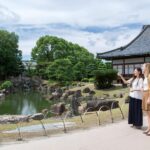
- Nijo Castle and the old power of Kyoto
- Gardens for quiet thought
- Kiyomizu-dera and the eastern temple district
- Arashiyama, Togetsu-kyo Bridge, and the bamboo paths
- Gion and the Shirakawa River
- Kannon temples, old halls, and Kyoto’s religious variety
- The special value of a private guide
- What the $149.85 price really buys
- Who should book this Kyoto tour?
- Should you book it?
- FAQ
- How long is the private Kyoto tour?
- How many places can I visit?
- Which Kyoto sights can I request?
- Is transportation included?
- Are meals and entrance fees included?
- Can I cancel for a full refund?
Key points to know before booking
- You set the agenda: Pick two or three places for four hours, or four to five for eight hours.
- Yumi can handle unusual requests: Her day included yukata shopping, a Giants cap search, and a tea ceremony.
- Choose your transport style: Walk and use Kyoto’s public transit, or select the private-car option.
- The famous sights are all possible options: Fushimi Inari, Kinkaku-ji, Nijo Castle, Kiyomizu-dera, Arashiyama, and Gion are among the choices.
- Budget beyond the advertised price: Lunch, public transport, entrance fees, and guide admission costs are not included.
- Cash is useful: Many Japanese shops and restaurants accept cash only, so bring Japanese yen.
A Kyoto day built around your interests
This is not a standard route with a guide trying to rush you from one famous site to the next. You start by deciding what matters most to you. That could mean major temples, Japanese gardens, local food, shopping, historical sites, or a personal mission such as finding a particular item.
For a four-hour outing, the practical limit is two or three places. For eight hours, four or five places are more realistic. That limit matters. Kyoto’s sights are spread across the city, and a day that looks easy on paper can become a chain of train rides, bus waits, crowded lanes, and long walks.
I would tell you to choose a broad theme and a short priority list. For example, Fushimi Inari plus Kiyomizu-dera and Gion makes more sense than trying to combine those with Arashiyama and Kinkaku-ji. Your guide can help turn your wish list into a route that works.
You can travel by Kyoto’s public transport system with your guide, or choose a private vehicle for a smoother day. The private-car choice may be appealing if your group includes older relatives, children, or anyone who finds long transfers tiring. The tour information does not give a separate vehicle surcharge, so confirm the exact price before booking.
Other guided tours in Kyoto
Fushimi Inari and the climb beneath 10,000 red gates
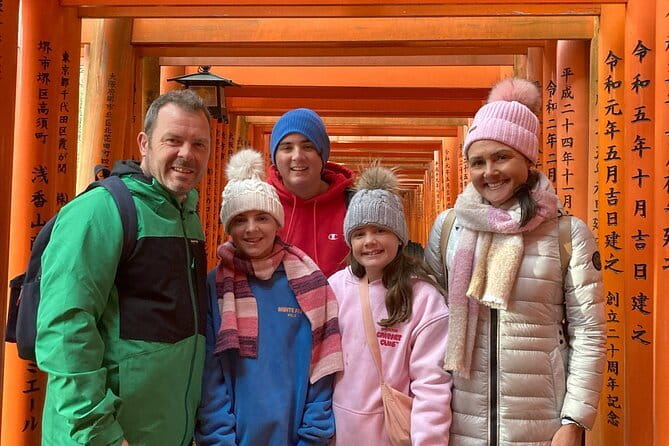
Fushimi Inari is one of Kyoto’s most recognizable sights. Its long tunnel of red torii gates climbs from the shrine toward the top of Mount Inari, and the shrine serves as the center of roughly 30,000 Inari shrines across Japan.
The first gates are the most photographed and can be crowded. The route continues uphill, so you do not need to walk to the summit to appreciate it. A guide can help you decide how far to go within your available time and explain the meaning of the shrine’s fox imagery and donated gates.
This is a strong choice for a four-hour tour if you want one major sight with a clear visual identity. It is less suitable if steep walking is difficult. The tour requires a moderate level of physical fitness, and Fushimi Inari is one of the places where comfortable shoes matter most.
Kinkaku-ji, the Golden Pavilion
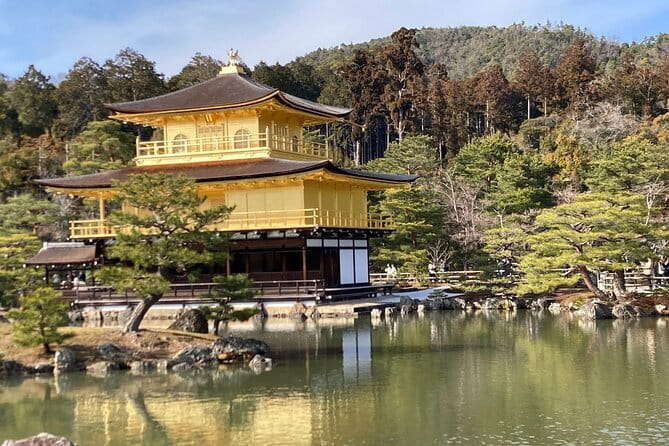
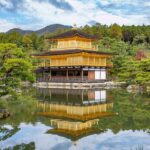
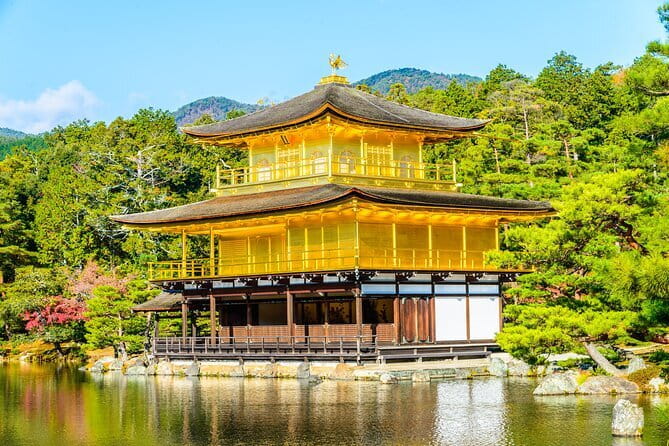
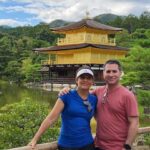
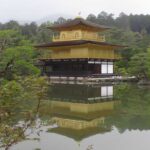
Kinkaku-ji, the Golden Pavilion, is a quick visual hit. The building’s gold-covered exterior reflects in the pond, making it one of Kyoto’s most immediately memorable temple visits. The complex also contains relics associated with Buddha’s ashes and bones.
The route through the grounds is controlled, so this is not a temple where you wander freely into every building. The value here comes from the view, the setting, and the context your guide adds around the pavilion and its religious role.
Kinkaku-ji works well in a day focused on classic Kyoto. The drawback is distance. Pairing it with southern Kyoto sights can take more time than expected, particularly if you rely on public transport. Ask the guide to group it with nearby choices rather than treating the city as one compact sightseeing zone.
Nijo Castle and the old power of Kyoto
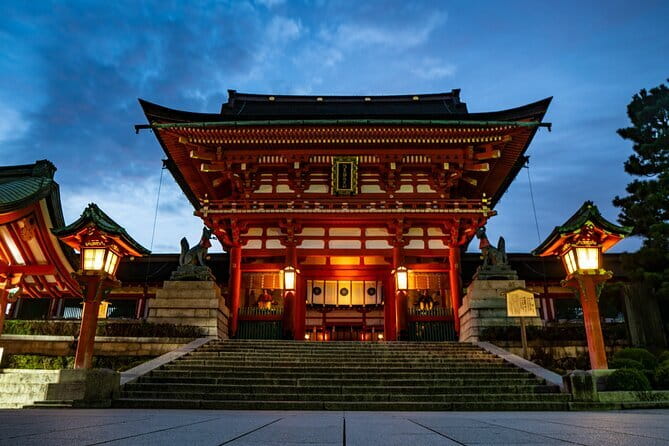
Nijo Castle began as a military complex and was later adapted as a meeting point between the military government in Edo, now Tokyo, and the Imperial Palace in Kyoto. Its decoration reflects that political purpose.
The castle offers a useful counterpoint to Kyoto’s temples. Here, you are looking at authority, ceremony, defensive design, and the relationship between the shogun’s government and the imperial court. It is a good pick if you want more than gardens and Buddhist buildings.
Nijo Castle can fit into a four-hour history-focused outing. Allow time to appreciate the interiors and grounds rather than treating it as a quick photo stop. Your entrance fee is extra, and if you want the guide to enter the facility with you, you may also need to pay the guide’s admission.
Gardens for quiet thought
Several garden and temple choices on the route offer a slower side of Kyoto. One pond garden has served as a Zen training setting for about 600 years. Another temple is known for its 15-rock garden, designed in the fifteenth century. Its arrangement encourages you to sit, look, and think rather than collect a dozen hurried photographs.
These places are valuable because they change the pace of your day. After a busy street or a major shrine, a garden gives you time to notice small details: the placement of stones, the shape of a pond, the balance between empty space and planted areas.
The 15-rock garden is especially easy to misunderstand if you rush through it. You will not see all the rocks from every angle at once, which is part of its design. A guide can give you the basic context, then let you have a quiet moment instead of filling every second with commentary.
Another temple, designed with moon viewing in mind, offers a different kind of garden experience. Night access is not allowed, so you visit by day and imagine how the setting was meant to work under the old calendar’s August 15 moon.
Other private tours in Kyoto
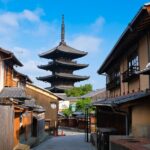
Kiyomizu-dera and the eastern temple district
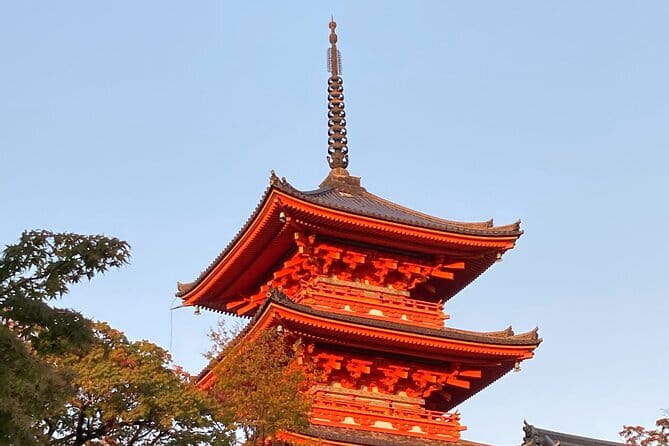
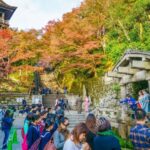
Kiyomizu-dera has served commoners in eastern Kyoto for about 1,200 years. People prayed there to Kannon, the bodhisattva of compassion, including for loved ones who had died. The approaches to the temple became popular routes long before modern sightseeing.
This is a useful choice if you want a famous temple combined with lively shopping streets and traditional Kyoto atmosphere. The approach can be crowded, and the area involves slopes and walking. That makes it rewarding but not restful.
The temple also pairs naturally with Gion. You can move from the historic temple district toward traditional streets, small shrines, and the Shirakawa River area. The route works especially well for visitors who want a mix of spiritual sites, old architecture, and street-level Kyoto.
Arashiyama, Togetsu-kyo Bridge, and the bamboo paths
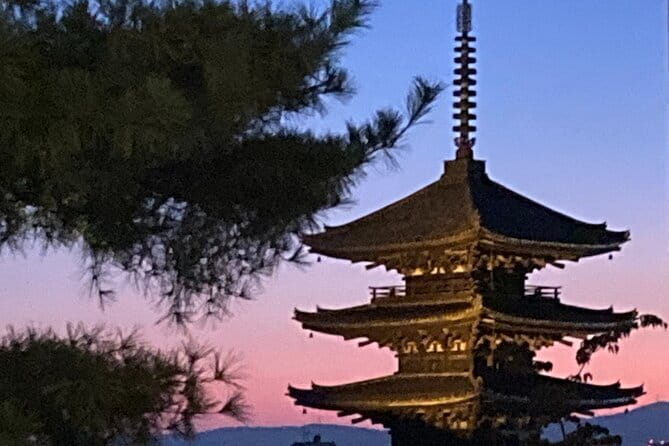
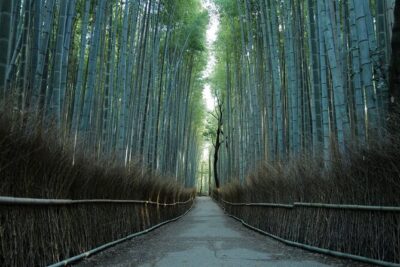
Arashiyama gives you two of Kyoto’s most recognizable photo settings: Togetsu-kyo Bridge over the Katsura River and the bamboo trails. The area is easy to recognize and visually rewarding, particularly if you want a day with outdoor scenery.
The tradeoff is time. Arashiyama sits away from many central and eastern Kyoto sights. Combining it with Fushimi Inari, Kiyomizu-dera, or Gion may leave you spending much of the day in transit. For an eight-hour tour, Arashiyama can serve as the main area, with one or two additional stops nearby.
The bamboo paths are not a private wilderness. Keep expectations sensible. You are visiting a popular public route, not entering an untouched forest. Still, the bridge and bamboo trails offer the kind of photographs many people hope to take in Kyoto.
Gion and the Shirakawa River
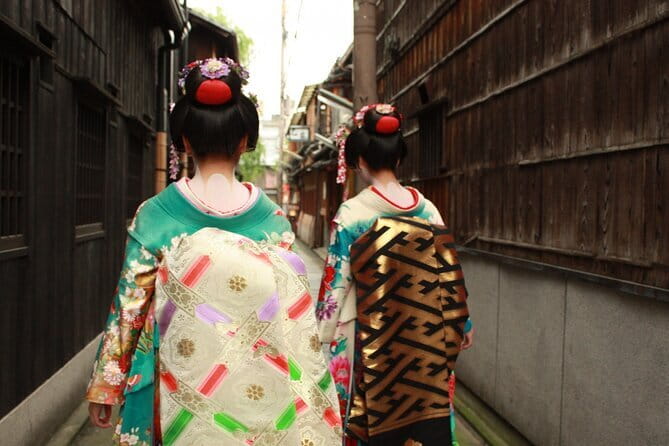
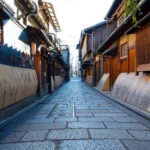
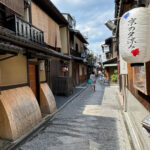
Gion is the natural choice for a first look at Kyoto’s entertainment district. The suggested route includes Tatsumi Daimyo-jin Shrine and Tatsumi-bashi bridge along the Shirakawa River, two photogenic places with traditional surroundings.
This area is best enjoyed at a walking pace. Look beyond the most famous lanes and notice the relationship between the water, bridges, shrines, and older buildings. A guide can help you understand the district without reducing it to a search for geisha sightings.
Gion is also a sensible place to add a food or culture goal, though lunch is not included. If you eat with the guide, you pay for the guide’s portion as well. Bring yen, since many restaurants and shops in Japan accept cash only.
Kannon temples, old halls, and Kyoto’s religious variety
The choices include a temple filled with statues of Kannon and guardian figures derived from ancient Indian deities. Its rear area has also hosted Japanese archery competitions. This kind of stop adds detail that can be missed when you visit only the most famous buildings.
Another temple was created to represent the Buddhist Pure Land for the dead about 900 years ago. Its principal Buddha image survived repeated fires, giving the site a strong sense of continuity despite Kyoto’s many disasters.
A further temple was founded by emperors about 1,100 years ago, then repeatedly damaged by fire and war. Some of its buildings were moved from other locations, including an imperial connection. These sites are useful for showing you that Kyoto’s history is not a straight line of original buildings untouched by time. Fire, conflict, rebuilding, and relocation are part of the city’s story.
The special value of a private guide
The best reason to book this tour is not simply the list of temples. It is the ability to ask for help with something specific. A full-day outing led by Yumi included a search for yukata, a Japanese Giants MLB hat, and a tea ceremony. That is a very different day from a standard shrine circuit.
A guide can also give you advice for the rest of your stay. If you are in Kyoto for several days, use the final part of the tour to ask what to do next, which areas to save for another day, and how to use public transport.
The private format means only your group participates. You can set the pace, ask questions, pause for shopping, or change direction more easily than you could with a large group. The guide speaks English, and bottled water is included.
The guide’s contact details matter. Download WhatsApp or provide an email address so the guide can reach you. This is a small step, but it avoids confusion when arranging the meeting and discussing your priorities.
What the $149.85 price really buys
At $149.85 per person, the tour makes the most sense for people who value personal planning and local help. The cost is easier to justify for a family or small group with a clear goal, especially if you would otherwise lose time working out transport and the order of sights.
The price does not cover everything. You pay separately for lunch, public transportation, entrance fees, and the guide’s entrance fee if you want the guide to accompany you inside a facility. Private-car pricing should also be confirmed if you choose that option.
That means the advertised rate is a guide fee, not an all-inclusive day budget. Make a rough allowance for trains or buses, admissions, food, and shopping. The tour is likely less attractive if you only want a cheap walk past a few free sights.
Who should book this Kyoto tour?
I would recommend it to first-time visitors who feel overwhelmed by Kyoto’s spread-out sights, families with mixed interests, and anyone with a very particular plan. It is also a good match if you want a tea ceremony, shopping help, local food suggestions, or a day shaped around temples and gardens rather than a fixed sightseeing list.
It suits people who can walk at a moderate level and accept that famous places can be busy. If you want a silent, slow garden day, say so when planning. If you want to cover as much as possible, accept that the day will include more transport and less lingering.
You should think twice if you want every cost included in one price, dislike planning before arrival, or need a fully accessible route. The available information calls for moderate physical fitness and does not promise a specific accessibility arrangement.
Should you book it?
Book this tour if you want Kyoto to fit your interests instead of forcing your day into a preset route. The strongest feature is the guide’s flexibility, illustrated by Yumi helping with yukata, a baseball cap, and a tea ceremony in one personal outing.
Choose the four-hour version for two or three nearby priorities. Choose eight hours for a wider mix of temples, gardens, shopping, and food. Send a clear wish list before the day, carry yen, and budget for the extras. If that approach suits you, this private Kyoto tour offers useful structure without taking away your freedom.
FAQ
How long is the private Kyoto tour?
You can choose an approximately four-hour half-day tour or an approximately eight-hour full-day tour.
How many places can I visit?
For four hours, you can choose two to three places. For eight hours, you can choose four to five places, with recommendations from your guide.
Which Kyoto sights can I request?
Possible destinations include Fushimi Inari, Kinkaku-ji, Nijo Castle, Kyoto gardens and temples, Kiyomizu-dera, Arashiyama, and Gion. You can also request food, culture, shopping, or another personal interest.
Is transportation included?
No. Public transportation is not included. A private car is available if you choose that option, and the tour includes a private car only with that selection.
Are meals and entrance fees included?
No. Lunch and entrance fees are extra. If you want the guide to enter a facility with you, you must also pay the guide’s entrance fee.
Can I cancel for a full refund?
Yes. You can cancel at least 24 hours before the local start time for a full refund. Changes or cancellations made less than 24 hours before the start time are not accepted for a refund.
More Private Tours in Kyoto
More Guided Tours in Kyoto

More tours in Kyoto we've reviewed
Guided, compared.
 ★ 5.0Kyoto Early Morning Tour with English-Speaking GuideFrom $68
 ★ 5.0Kyoto 6hr Private Tour with Government-Licensed GuideFrom $155
★ 4.9Kyoto: Early Morning Tour with English-Speaking GuideFrom $1015h 30m
★ 5.0Kyoto 6hr Private Tour with Government-Licensed GuideFrom $155
★ 4.9Kyoto: Early Morning Tour with English-Speaking GuideFrom $1015h 30m
 ★ 4.7Kyoto: Nijo-jo Castle and Ninomaru Palace Guided TourFrom $161 hour
 ★ 4.9Kyoto: Izakaya Bars Guided Walking TourFrom $253 hours
 ★ 5.0Kyoto Gion Night Walk & Geisha District Guided TourFrom $18