
Reviewed · WORKSHOPS
Pure Silver Spoon Making Workshop in Kyoto
A small sheet of pure silver becomes your own teaspoon in this hands-on Kyoto workshop. You stamp or chisel a pattern, hammer the metal into a spoon shape, smooth the edges, and give the finished piece its final polish. It is an unusual souvenir because you make it yourself, rather than simply buying it.
I like the quiet setting, just an 8-minute walk from Shugakuin Imperial Villa, and the warm welcome of the hosting couple, who serve tea and snacks. I also like that the finished spoon goes into a paulownia box, making it ready to keep or give as a gift.
The main consideration is the price: $141.22 per person is a serious sum for a 2.5-hour activity and a teaspoon-sized object. You are paying for pure silver, instruction, tools, craftsmanship, and the memory of making it, not just for cutlery.
In This Review
- Key points at a glance
- Turning a silver sheet into a personal spoon
- Filing, burnishing, and the final polish
- A friendly workshop with tea and clear guidance
- Why the Shugakuin location changes the mood
- What the $141.22 price really buys
- A meaningful link to Japanese custom
- Who will enjoy this most
- Timing, access, and what to plan
- How this fits into a Kyoto day
- Final verdict: should you book it?
- FAQ
- How long does the pure silver spoon workshop last?
- How much does the experience cost?
- Where does the workshop take place?
- What do I make during the activity?
- What is included in the price?
- Is transportation included?
- Can I cancel the booking?
Key points at a glance
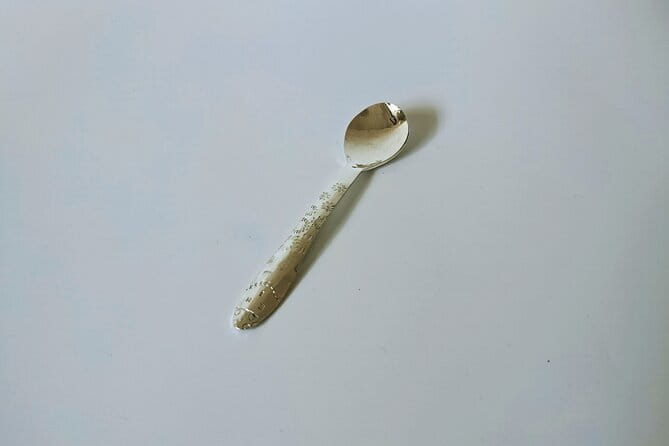
- Make a real pure silver teaspoon: The finished spoon is about 12 centimeters long and 2.7 centimeters wide.
- Add your own design: Use a chisel or stamp to mark the silver before shaping it.
- Work with a patient local couple: English instructions are prepared, and the hosts assist carefully throughout.
- Enjoy a calm break near Shugakuin Imperial Villa: The workshop is an 8-minute walk from the villa.
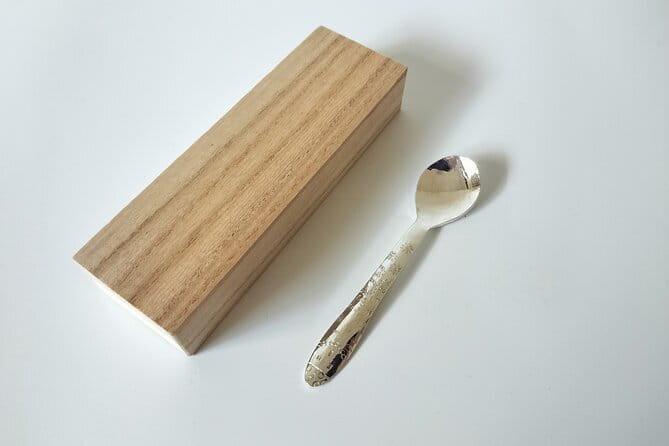
- Take home a gift-ready keepsake: Your spoon comes in a paulownia box with a metal polishing cloth.
- Join privately: Only your own group participates, rather than sharing the session with strangers.
Turning a silver sheet into a personal spoon
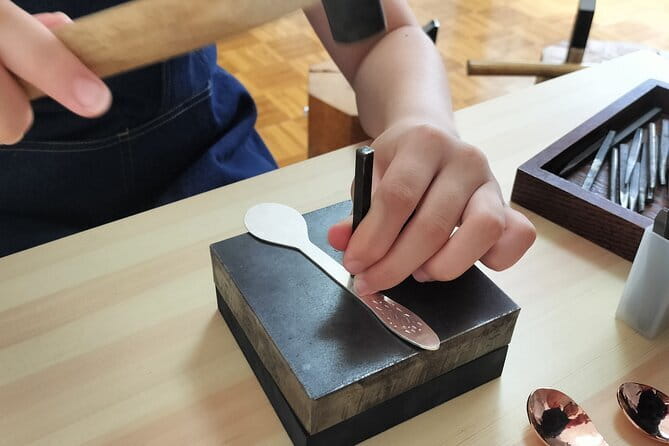
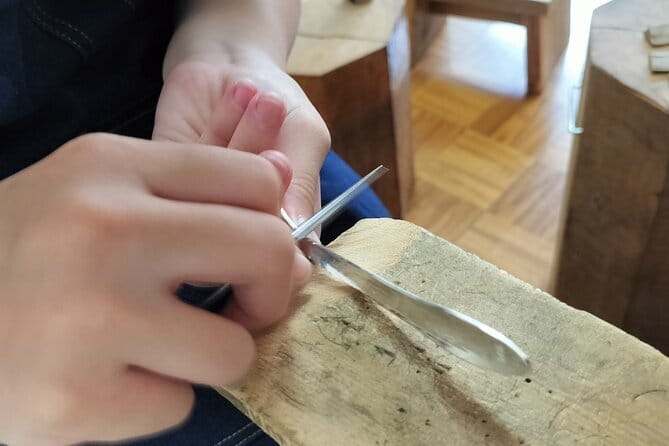
The appeal here is the clear physical change from flat material to finished object. You begin with a piece of silver prepared for the activity, then add a pattern with the chisel or stamp of your choice.
This first stage gives you a little control over the character of the spoon. You might mark a simple design, repeat a stamp, or create something less formal. The details of the available patterns are not specified, so you should think of this as a guided craft session rather than a completely open design studio.
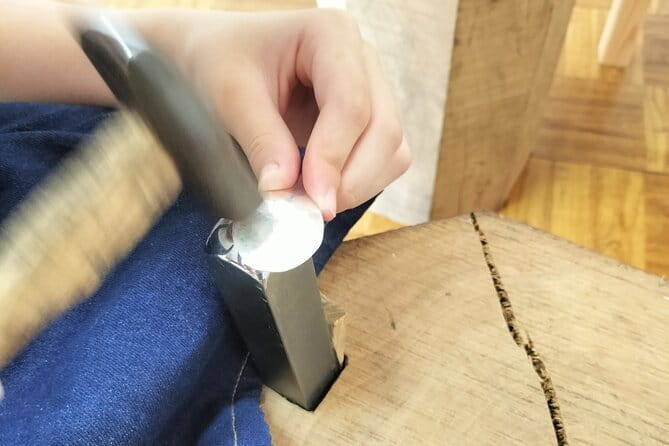
Next comes the hammer work. You strike the silver to form the bowl and curve it into a spoon. This is the part that makes the workshop feel like a real craft lesson. You are not merely assembling a souvenir from prepared pieces. You help shape the metal yourself.
The approximate final size is 12 centimeters long and 2.7 centimeters wide. That makes it suitable as a teaspoon and easy to pack, but it is not a large serving spoon or a decorative piece for a display case. Its small size is useful: you get a practical object without having to carry a bulky souvenir around Japan.
A few more Kyoto tours and experiences worth a look

Filing, burnishing, and the final polish
Once the spoon has its basic shape, you smooth the sides with a file and burnisher. These steps matter because hammering can leave rough edges and uneven surfaces. They also slow the process down in a good way. You get to see how a metal object is refined, not just formed.
A craftsman handles the machine polishing. This is a sensible division of work. Machine polishing requires care, and having a professional manage that stage keeps the activity safer while giving the spoon a cleaner finish.
You then polish the spoon yourself with an abrasive. That final hands-on step lets you take part in the finishing work without asking you to operate the powered equipment. Expect some care and repetition here. The last shine comes from attention, not from pressing a button.
The finished piece will not have the exact look of a factory-made spoon. Small marks from your work may remain, and that is part of its value. The spoon records the pattern you selected and the shaping you helped carry out. If you want a perfectly uniform piece of cutlery, buy one in a shop. If you want something tied to your time in Kyoto, make this one.
A friendly workshop with tea and clear guidance
The hosting couple is one of the strongest reasons to consider this experience. They welcome you with tea and snacks, then guide you through the stages with patience. English instructions are prepared, so the language difference should not prevent you from following the work.
That does not mean the session is a lecture in English. Craft demonstrations often rely on watching, copying, and receiving simple corrections. The hosts’ patience is useful when you are unsure how hard to strike the silver or how much pressure to use while filing.
The activity is private, with only your group taking part. That gives the session a more personal pace than a large class. You can ask for help without waiting behind a room full of other participants, and the hosts can focus on your spoon.
The available information does not give the hosts’ names, so you should not expect a named master craftsman presentation. The strength here is the direct help from the couple and the practical nature of the work.
Why the Shugakuin location changes the mood
The workshop sits about an 8-minute walk from Shugakuin Imperial Villa in Kyoto’s Sakyo Ward. That location makes it a useful addition to a day in the northeastern part of the city.
You get a change of pace from Kyoto’s most crowded sightseeing areas. Instead of moving from one famous temple entrance to another, you spend two and a half hours seated at a workbench, handling silver and talking with local hosts.
The experience begins and ends at 1-15 Shugakuin Yamanohanacho, Sakyo Ward, Kyoto, postal code 606-8025. Private transportation is not included, so you need to arrange your own way to the meeting point. The workshop is near public transportation, but the exact route or nearest station is not provided. Check the address and allow time to find the entrance before your start time.
Because the activity ends back at the meeting point, you do not need to plan for a separate departure location. That is handy if you intend to visit Shugakuin Imperial Villa before or after the class.
What the $141.22 price really buys
At $141.22 per person, this is not a low-cost craft activity. The price makes more sense if you value the material and the personal instruction. It includes the silver material, tool rental, the paulownia box, and a metal polishing cloth.
You are also paying for private participation and the professional polishing stage. A finished silver teaspoon bought in a shop might cost less, depending on its design and workmanship. That comparison is fair, but it misses the central point: the object is part souvenir and part record of an activity.
The paulownia box adds practical value. It protects the spoon and gives it a distinctly Japanese presentation. If you plan to give the piece to someone at home, the box means you do not have to find separate gift packaging.
The included polishing cloth is useful after you return home. Silver can need care over time, and having a cloth gives you a simple way to keep the spoon bright. The provided details do not explain cleaning instructions, so ask the hosts how they recommend caring for the finished piece if that matters to you.
I would call the price worthwhile for a couple, a small private group, or someone who places a high value on handmade objects. It is harder to justify if you are collecting inexpensive souvenirs or trying to keep your Kyoto activities under a tight budget.


A meaningful link to Japanese custom
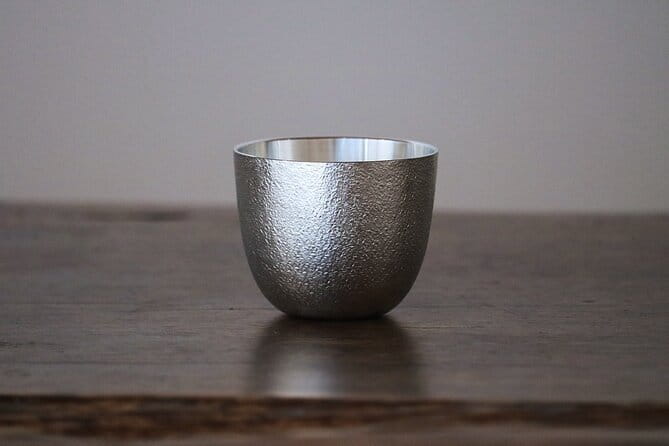
Silver has long been viewed as a charm against misfortune and evil spirits in Japan. There is also a custom of giving a silver spoon to a baby as a wish for happiness.
That background gives the object more meaning than a generic souvenir. You can use the spoon as a personal reminder of Kyoto, or give it to someone as a small wish for good fortune. The workshop does not turn the activity into a formal cultural lecture, but the silver tradition adds a useful layer to the finished piece.
The size also suits this purpose. At teaspoon scale, the item feels personal and manageable. It can be used at home, placed in a keepsake box, or given as a small gift without the awkwardness of transporting a large handmade object.
Who will enjoy this most
I would recommend this workshop to people who prefer making over simply buying. It suits anyone interested in Japanese craft, metalwork, or unusual souvenirs that carry a story.
It is also a good choice for couples and families with older children who can follow tool instructions. The information says most people can participate, but it does not give a minimum age or child-specific guidance. Ask the provider if you are booking for young children.
The private format works well for a special occasion or a quieter afternoon. The tea and snacks make the welcome feel personal, while the spoon gives you a clear result to take home.
This may be less suitable if you dislike repetitive handwork, want a fast activity, or expect to produce a large object. The process includes hammering, filing, burnishing, machine polishing, and hand polishing. The point is the process as much as the final teaspoon.
Timing, access, and what to plan
The activity lasts about 2 hours and 30 minutes. That is long enough to feel substantial, but short enough to fit beside other plans in Kyoto.
Allow extra time to reach the address. The workshop is an 8-minute walk from Shugakuin Imperial Villa, but the total journey depends on your starting point and the public transportation route you choose. Since transportation is not provided, confirm your route before leaving.
A mobile ticket is available, and booking confirmation is received at the time of booking. Service animals are allowed, and the activity is described as suitable for most participants. The practical details do not specify wheelchair access, seating arrangements, or the exact tool setup, so contact the provider if you have mobility or other access needs.
Wear clothes you can work in comfortably. The supplied information does not state that protective clothing is provided. The hosts handle machine polishing with safety in mind, but you will still be using a hammer, file, burnisher, and abrasive during the session.
Cancellation is flexible up to 24 hours before the start time, with a full refund. Cancellations or changes made less than 24 hours before the activity are not accepted for a refund, and cut-off times follow local Kyoto time.
How this fits into a Kyoto day
The workshop pairs naturally with a visit to Shugakuin Imperial Villa because the villa is nearby. You can plan the craft session as a break from sightseeing, though you should make sure your villa plans and workshop start time do not overlap.
It also works well on a day when you want something more personal than another major landmark. Kyoto offers plenty of temples and gardens, but a handmade spoon gives you a different kind of memory. You leave with an object connected to your own hands, not only a photograph.
The activity ends where it starts, so it does not function as transportation between sights. Think of it as a fixed two-and-a-half-hour appointment in Sakyo Ward. That is helpful for planning, but it means you should not book it if you need a flexible schedule that day.
Final verdict: should you book it?
Book this workshop if you want a private, hands-on Kyoto experience and are comfortable paying $141.22 for the material, instruction, and finished keepsake. The patient hosting couple, tea and snacks, English instructions, and gift-ready paulownia box give the session a warm and practical feel.
Skip it if you are mainly looking for a bargain or if a teaspoon does not justify a long activity. The object is small, and the work requires patience.
For the right person, though, the spoon is the point. You mark it, shape it, smooth it, and polish it. Years later, it can still remind you not only that you visited Kyoto, but that you made something there.
FAQ
How long does the pure silver spoon workshop last?
The workshop lasts approximately 2 hours and 30 minutes.
How much does the experience cost?
The listed price is $141.22 per person.
Where does the workshop take place?
It starts at 1-15 Shugakuin Yamanohanacho, Sakyo Ward, Kyoto, 606-8025, Japan. The workshop is about an 8-minute walk from Shugakuin Imperial Villa.
What do I make during the activity?
You make a pure silver spoon, approximately 12 centimeters long and 2.7 centimeters wide. It is recommended for use as a teaspoon.
What is included in the price?
The price includes the material, tool rental, a paulownia box, and a metal polishing cloth.
Is transportation included?
No. Private transportation is not included. The workshop is near public transportation, and you need to make your own way to the meeting point.
Can I cancel the booking?
You can cancel for a full refund if you do so at least 24 hours before the experience start time. Cancellations or changes made less than 24 hours before the start time are not accepted for a refund.
More Workshops & Classes in Kyoto
More tours in Kyoto we've reviewed










Workshops, compared.
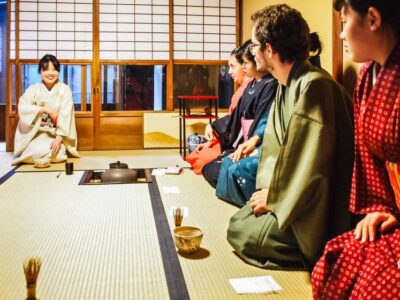 ★ 4.3Kyoto: 45-Minute Tea Ceremony Lesson ExperienceFrom $2245 min
 ★ 5.0Ramen Cooking Class at Ramen Factory in KyotoFrom $131
 ★ 4.9Kyoto: Ramen Cooking Class at a Ramen Factory with SouvenirFrom $1271h 30m
 ★ 4.9Kyoto: Samurai Class, Become a Samurai WarriorFrom $70
 ★ 5.0Ninja 1-hour Hands-on Lesson by Japanese master in Kyoto -EntryFrom $80
 ★ 5.0Kyoto: Ramen, Gyoza, and Onigiri Cooking ClassFrom $901h 30m