
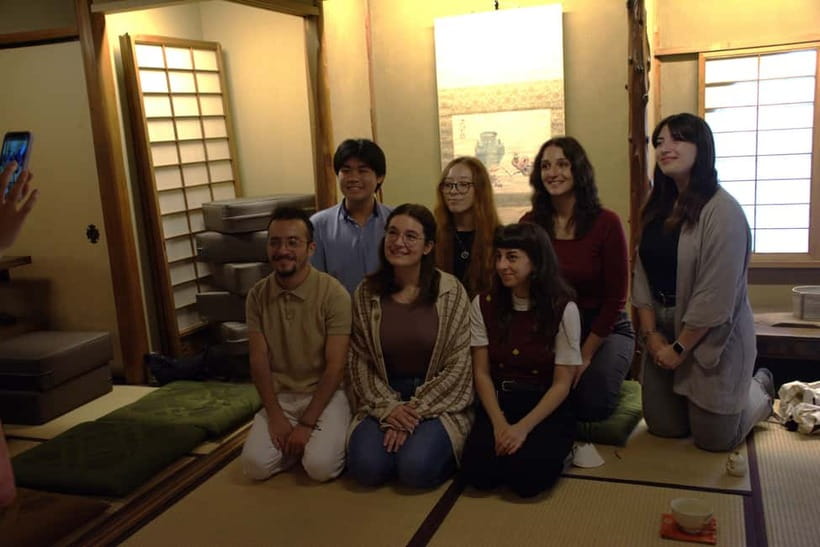
Reviewed · TEA CEREMONY EXPERIENCES
Whisk Your Own Matcha: A Zen Matcha Experience at Temple
The best part of this 45-minute session is that you do not simply watch a tea ceremony. You make your own bowl of matcha, using traditional tools while an English-speaking host explains the meaning behind the movements. Sakura is the named host, and her warm, question-friendly approach is a big reason this experience works well.
I like the small, personal format and the chance to taste matcha with a traditional Kyoto sweet rather than treating the ceremony as a silent performance. I also like the setting: a temple atmosphere gives the ritual more weight than a quick café demonstration. The main concern is practical, not cultural: directions and venue details appear unclear, and one booking resulted in a guide who never arrived. Confirm the meeting point before you set out.
In This Review
- Key points to know before booking
- What this matcha session is really about
- Entering the Kyoto setting
- The 45-minute flow
- Why Sakura makes a difference
- Tea, sweets, and the taste of matcha
- A private feel, with a few limits
- The value of $32
- Who should book this experience
- Booking, cancellation, and the location check
- Should you book it?
- FAQ
- Where does the matcha experience take place?
- How do I reach the meeting point from Kyoto Station?
- How long does the experience last?
- What language is the experience conducted in?
- What is included in the price?
- Is transportation included?
- Can I cancel for a refund?
- Do I have to pay when I book?
- Is the activity wheelchair accessible?
- Who should not take part?
Key points to know before booking
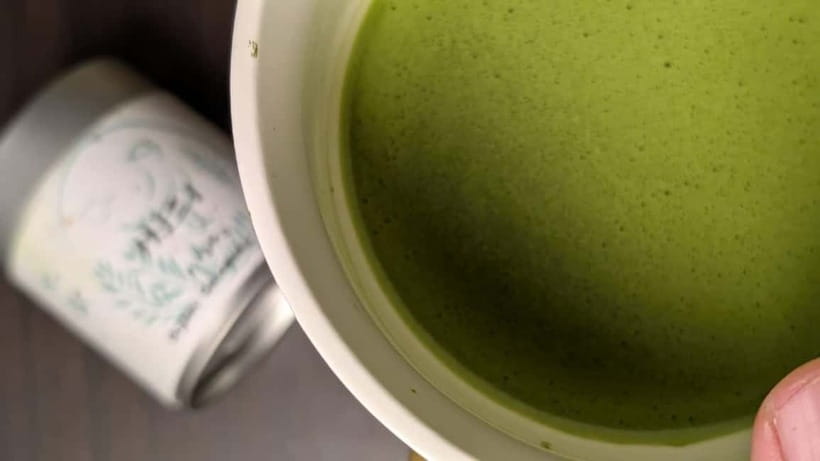
- You whisk your own matcha: This is a hands-on lesson, not only a demonstration.
- Sakura leads the session: She explains tea ceremony customs in English and leaves time for questions.
- The setting may need confirmation: Instructions name Shokoji Temple, while some booking details direct you toward the Grapevine Cafe near Ichinen-Zaka and Ninen-Zaka.
- Tea comes with a Kyoto sweet: Expect matcha and a traditional sweet, such as mochi, as part of the tasting.
- The session is private or very small: Several bookings describe a personal ceremony rather than a large group event.
- Allow extra time to find the entrance: One location has been described as a vine-covered café entrance that may require knocking.
What this matcha session is really about
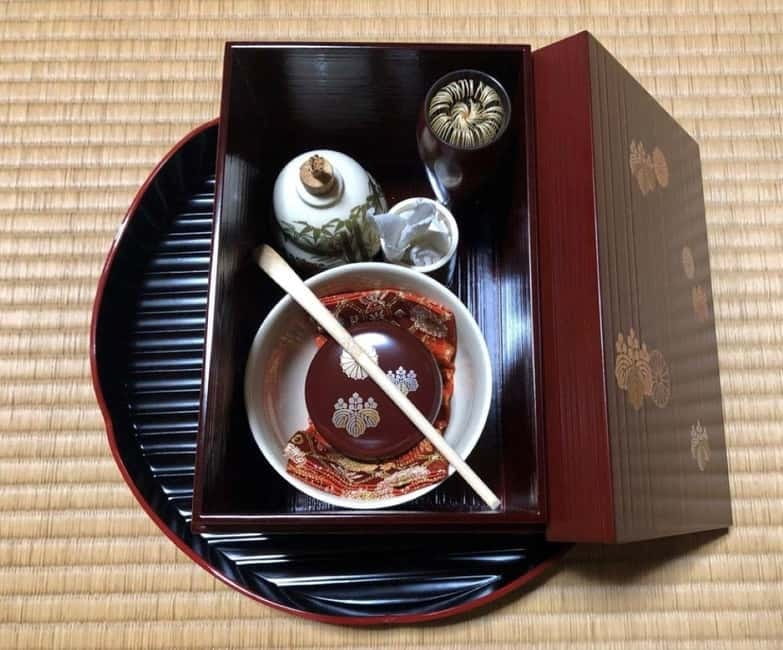
Japanese tea ceremony is not just a method for making powdered green tea. It is a set of careful actions that give attention to the bowl, the tools, the guest, and the moment. This session gives you a short, approachable introduction without requiring you to already know the rules.
You learn why matcha has a connection with Zen practice and how the ceremony developed over centuries. The host explains the meaning behind the gestures, so the movements do not feel like empty choreography. That context matters. Without it, whisking tea can seem like a neat trick. With it, you begin to see how preparation, hospitality, and quiet focus fit together.
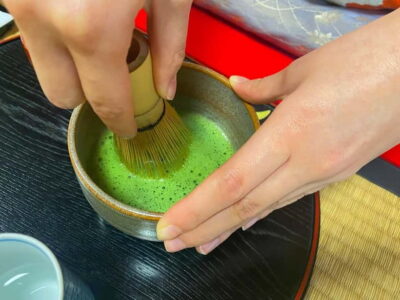
You also take part. After the explanation, you whisk your own bowl with traditional tea tools. The action is simple enough for a first-timer, though the texture and foam may take a little practice. That is part of the fun. You are not expected to perform like a tea master.
The session includes time for questions, and Sakura has been described as especially open to them. She also gives matcha-buying advice, which is useful if you plan to take tea home from Japan.
A few more Kyoto tours and experiences worth a look
Entering the Kyoto setting
The experience is presented as taking place in a serene Japanese temple atmosphere, with Shokoji Temple given as the meeting point. From Kyoto Station, use the north central exit and walk north along Karasuma Street for about 10 minutes. The temple is described as being on the right after several intersections.
That sounds easy on paper, but the entrance may not be obvious. One booking had trouble finding the tea ceremony, and local people were unable to point the way. Another set of directions places the entrance at the Grapevine Cafe near the corner of Ichinen-Zaka Street and Ninen-Zaka Path, marked by vines near the top of the building. You may need to knock.
This is the single biggest weakness in the arrangement. The different location clues do not give you the confidence you want before a timed appointment. Contact the provider at 080-5259-3796 or by email before leaving your hotel, especially if your confirmation uses a different address from the temple directions.
Do not build your schedule around arriving at the last minute. The session lasts only 45 minutes, so losing 10 minutes to a missed entrance can spoil a large part of it. Save the phone number, keep your booking details handy, and allow extra walking time.
The 45-minute flow
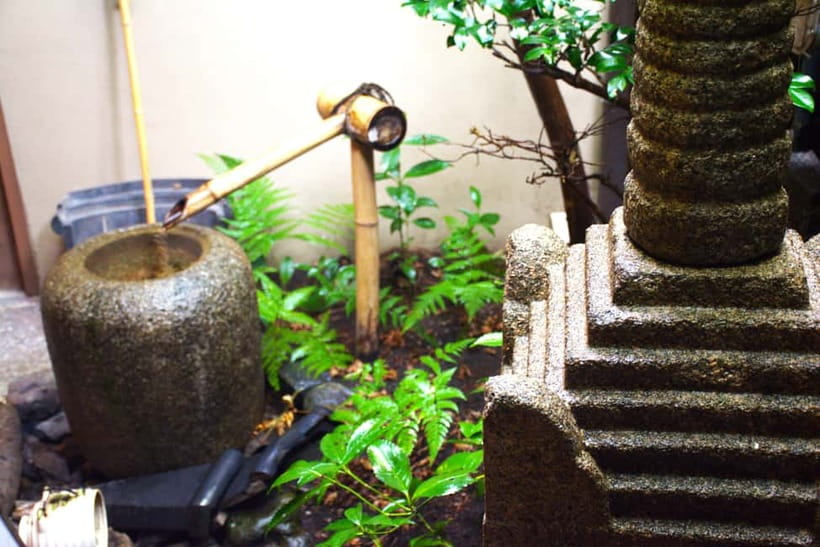
The exact minute-by-minute schedule is not supplied, but the session follows a clear pattern. You begin with an introduction to the tea ceremony and its place in Japanese culture. The host then explains the tools and gestures before guiding you through your own preparation.
The first part gives you the background needed to understand the ritual. You hear how matcha has been valued as part of Zen practice and why the ceremony places importance on calm, order, and attention. This is a useful short lesson for anyone who has seen tea ceremonies but never understood what was happening.
Next comes the practical part. You use the traditional whisk and other tea tools to prepare your bowl. The host guides you through the process rather than leaving you to guess. You can expect an English explanation and the chance to ask questions along the way.
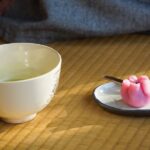
The final part is the tasting. You savor the matcha with a traditional Kyoto sweet, with mochi specifically enjoyed during at least one session. The sweet offers a pleasant contrast to matcha’s grassy, bitter edge. A photo shoot is included, so you should have an opportunity to record the occasion.
Because the whole visit is short, the session is best viewed as an introduction rather than a full formal tea ceremony. You get a taste of the ideas, tools, and manners involved. You do not receive a long ceremonial performance or an extensive lesson in tea schools and etiquette.
Why Sakura makes a difference
Sakura is the host named in the booking information, and the strongest part of the experience is the personal teaching style associated with her sessions. She explains the subject in English, answers questions, and keeps the mood friendly rather than stiff.
Several bookings describe her as warm and well prepared. One session was praised for making the ceremony both informative and amusing, with plenty of room for questions. Another described a private ceremony for just the booked party. That matters if you feel nervous about making a mistake in front of a room full of people.
A good host also helps you understand what not to worry about. Matcha preparation can look precise, but a short introductory class should let you focus on the feel of the whisk, the color of the tea, and the taste in the bowl. Sakura’s role is to explain the customs while keeping the experience comfortable for beginners.
You should still confirm that Sakura or another English-speaking instructor is scheduled for your date. One serious booking problem involved a guide who did not appear, with the person at the location saying the service was no longer offered at that time. That incident appears to be an exception among otherwise positive experiences, but it is too important to ignore.
Tea, sweets, and the taste of matcha
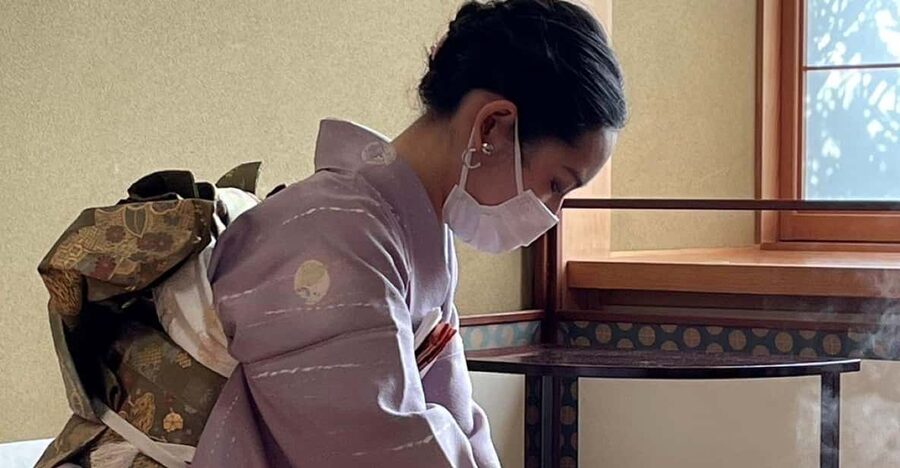
The food portion is modest but well chosen. Tea and one traditional Kyoto sweet are included. The sweet may be mochi, based on the described experience, though the exact item is not guaranteed in the supplied details.
The order matters. Japanese sweets are often served with matcha because their sweetness balances the tea’s sharp, vegetal taste. If you normally drink sweetened tea, your first sip may surprise you. Matcha is whisked powder, not a clear infusion, so the drink has a fuller texture and a more direct flavor.
You are not coming here for a meal. Think of the sweet as part of the ceremony and a small taste of Kyoto food culture. If you are hungry, eat beforehand or plan lunch afterward.
The hands-on preparation also gives you a better sense of matcha than a ready-made cup. You see the powder, work the whisk, and watch the surface change as air is incorporated. That small physical act turns an abstract cultural lesson into something you can remember.
A few more Kyoto tours and experiences worth a look

A private feel, with a few limits
The available descriptions point to a private or very small-group format. One booking specifically describes the ceremony as being for one party rather than a group. That is a strong advantage for couples, solo visitors, and anyone who wants to ask questions without interrupting a formal presentation.
A small setting also makes the activity feel less commercial. You can take your time with the tools, ask about tea purchases, and discuss gestures that might otherwise pass too quickly.
Still, the group size is not clearly guaranteed for every booking. If having a private ceremony is important to you, ask before paying or send a message through the provider. Do not assume every time slot has the same arrangement.
The atmosphere is also not described in enough detail to promise a grand temple hall or elaborate garden. You receive a temple-based cultural setting, but the actual entrance may be connected with the Grapevine Cafe. Keep your expectations focused on the instruction and ritual, not on a large sightseeing attraction.
The value of $32
At $32 per person, this is reasonably priced for a guided cultural activity in Kyoto, provided the appointment runs as planned. The fee covers the 45-minute lesson, matcha, a Kyoto sweet, traditional tools, English instruction, and a photo opportunity.
The value comes from participation. You are paying for guidance and cultural explanation, not merely a drink. A café matcha costs less, but it will not teach you why the tools are used or let you prepare the tea yourself.
The short duration keeps the price from becoming a major budget decision. It also makes the activity easy to fit between sightseeing stops. You can place it in a morning or afternoon without sacrificing half a day.
The value drops sharply if you have trouble locating the venue or the session is not properly confirmed. The conflicting directions are worth treating as part of the cost calculation. A cheap activity is not good value if you spend time and taxi money searching for it.
Transportation is not included, and tips are not included. You will need to pay your own way to the meeting point. Tipping is not required in the listed price, and you should not assume it is part of the booking.
Who should book this experience
I would recommend it to first-time visitors who want a simple introduction to Japanese tea culture. You do not need prior knowledge, and the English instruction makes the ceremony easier to follow.
It also suits tea fans who want to understand matcha preparation rather than just drink it. Sakura’s tea-purchasing advice can be useful if you plan to visit specialty shops afterward.
Couples and small parties may appreciate the private feel. The photo shoot adds a keepsake without changing the session into a long photography activity.
This is less suitable for children under 10, who are not allowed to take part. It is also not suitable for people with back problems, since the ceremony may involve sitting or maintaining a fixed posture, though the supplied information does not specify the exact seating arrangement.
Party groups should choose another activity. Alcohol and drugs are not allowed, and the tone is quiet and respectful.
The experience is wheelchair accessible, which makes it a more practical option for many visitors. You should still confirm the specific entrance if the temple and café directions differ, since accessibility at the meeting point may depend on which entrance is used.
Booking, cancellation, and the location check
You can cancel up to 24 hours in advance for a full refund. The reserve-now, pay-later option lets you hold a place without paying at the time of booking, which is useful when your Kyoto schedule is still changing.
Those flexible terms are helpful, but they do not solve the meeting-point problem. Before the day, confirm the exact address, the name of the venue, and the arrival instructions. Ask specifically if the appointment is at Shokoji Temple or at the Grapevine Cafe entrance near Ichinen-Zaka and Ninen-Zaka.
On the day, carry the provider’s contact details. If you cannot find the entrance, call 080-5259-3796 rather than wandering through the neighborhood. The directions describe the temple as small and distinctive, but the entrance may not have a large sign.
The activity is conducted in English. Check the available starting times before booking, and allow enough time from Kyoto Station for walking and possible confusion at the entrance.
Should you book it?
Book this experience if you want a short, hands-on introduction to matcha, especially if you value personal teaching over a large staged ceremony. The combination of whisking your own tea, tasting a Kyoto sweet, and learning from Sakura gives you more substance than a simple tea stop.
I would be cautious if your schedule is tight or if you dislike unclear directions. The mixed record includes one serious no-show and at least one difficult search for the venue, while the other recorded bookings describe a friendly, informative, and very personal session. Confirm the location and instructor before you go.
At $32, it is a fair buy when the arrangements are in order. Treat it as a compact cultural lesson with a tasting, not as a grand temple tour. For the right visitor, that modest scale is exactly the appeal.
FAQ
Where does the matcha experience take place?
The meeting instructions name Shokoji Temple in Kyoto. Some directions connected with the experience point to the Grapevine Cafe near the corner of Ichinen-Zaka Street and Ninen-Zaka Path, so confirm the exact entrance before attending.
How do I reach the meeting point from Kyoto Station?
Take the north central exit and walk straight north along Karasuma Street for about 10 minutes. Shokoji Temple is described as being on the right after several intersections.
How long does the experience last?
The session lasts 45 minutes.
What language is the experience conducted in?
The instructor and activity are listed as English-language.
What is included in the price?
The price includes tea, a traditional Kyoto sweet, and a photo shoot.
Is transportation included?
No. Transportation to the location is not included in the $32 price.
Can I cancel for a refund?
You can cancel up to 24 hours before the activity for a full refund.
Do I have to pay when I book?
No. The reserve-now, pay-later option allows you to reserve a place without paying immediately.
Is the activity wheelchair accessible?
Yes, the activity is listed as wheelchair accessible.
Who should not take part?
Children under 10, people with back problems, and party groups are not suitable for this activity. Alcohol and drugs are not allowed.
More Golden Pavilion & Temple Tours in Kyoto
More Tea Ceremony Experiences in Kyoto
More tours in Kyoto we've reviewed
Tea Ceremony Experiences, compared.
 ★ 4.9Kyoto: Tea Ceremony in a Traditional Tea House in KiyomizuFrom $4945 min
 ★ 4.9Kyoto: Tea Ceremony Ju-An at Jotokuji TempleFrom $291h 10m
 ★ 4.3Kyoto: 45-Minute Tea Ceremony Lesson ExperienceFrom $2245 min
 ★ 5.0World Heritage Kyoto & Nara Uji Authentic Matcha ExperienceFrom $129
 ★ 4.9Kyoto: Table-Style Tea Ceremony at a Kyo-MachiyaFrom $451h 30m
 ★ 5.0Kimono Tea Ceremony at Kyoto Maikoya, NISHIKIFrom $65