
Reviewed · SAMURAI & KENDO EXPERIENCES
Authentic Ninja Weapon Forging Experience in Kyoto
The striking thing here is that you do not merely pose with a plastic ninja prop. At Atelier NIN, you heat steel in an 800°C furnace, hammer it while sparks fly, then shape, blacken, and polish the finished tool. You choose from three shuriken styles or a kunai, and the result comes boxed for the trip home.
I like the way the workshop mixes real metalwork with stories about ninja tools, and I like that the staff keep the mood lively while helping with the harder jobs. The main caution is value: at $151.92 per person, this is a costly two-and-a-half-hour activity, and one unhappy participant felt the hands-on forging was shorter than expected.
In This Review
- Key points to know before you book
- Forging steel instead of buying a souvenir
- Dressing the part at Atelier NIN
- Choosing between shuriken and kunai
- The 800°C furnace and the hammering stage
- Shaping the weapon with files and a belt sander
- Kanji engraving and the personal touch
- Blackening, polishing, and packing the finished piece
- The ninja knowledge session
- Getting to the northern Kyoto studio
- Is $151.92 a fair price?
- Who will enjoy this most?
- Should you book the Kyoto ninja weapon workshop?
- FAQ
- How long does the ninja weapon-making experience last?
- Where does the experience begin and end?
- What weapons can I choose?
- Do I need previous blacksmithing experience?
- What is included in the activity?
- Can I cancel for a full refund?
Key points to know before you book
- You make a real metal souvenir: The process includes heating, hammering, sanding, engraving, blackening, and polishing.
- The kunai costs extra: Choosing the kunai requires an additional 3,000 yen.
- Taka and the workshop team keep things lively: Their energy helps first-timers relax around hot steel and unfamiliar tools.
- You dress for the part: Samue uniforms and head-wrapped tenugui create a proper blacksmith setting.
- The studio is outside central Kyoto: It is near public transportation, but the directions can feel vague, so a taxi app may be useful.
- Allow moderate physical effort: Hammering and sharpening take work, though easier sharpening options are available.
Forging steel instead of buying a souvenir
Kyoto has no shortage of beautiful keepsakes. You can buy ceramics, sweets, textiles, fans, and wooden crafts on almost every busy shopping street. This workshop offers something different: a souvenir you help form with your own hands.
The finished item is a shuriken or kunai, made from steel and personalized with a kanji character. You are not expected to arrive with blacksmithing skills. The instructors supply the tools, explain each stage, and step in when your shape needs correction.
That last point matters. Metalwork is not as forgiving as folding paper or painting a dish. A little extra help can turn a lopsided edge into a balanced one. One participant specifically appreciated assistance making a kunai more symmetrical, which is a useful reminder that the staff are not simply watching from across the room.
The experience lasts about 2 hours and 30 minutes. That gives you enough time to move through several stages without turning the session into an all-day commitment. Still, the pace can feel brisk, especially if you hoped to do every step from raw metal to finished weapon without much instructor help.
A few more Kyoto tours and experiences worth a look

Dressing the part at Atelier NIN
You begin by changing into samue, the traditional work clothes associated with Japanese craftspeople. A tenugui is wrapped around your head, completing the look. It is a small touch, but it changes the mood immediately. You are not just standing in ordinary travel clothes beside a furnace.
The uniform also makes the activity feel like a workshop rather than a short photo stop. Bring an attitude suited to practical work. You will be handling tools, standing for parts of the session, and paying attention to instructions around hot metal.
The group can include up to 25 people. That is a fairly large maximum for an activity involving individual shaping and engraving, so the quality of your session may depend partly on the day’s group size. The staff are described as friendly, energetic, and helpful, with Taka receiving special praise for keeping people engaged.
English support is available. One participant found the instructor’s English fine, while another felt the directions could be vague at times. My advice is simple: watch the demonstration closely and ask before making a cut or sanding pass. You are not being graded, and the team expects beginners, but clear questions will save time.
Choosing between shuriken and kunai
Your first major choice is the weapon itself. You can select one of three shuriken styles, or choose a kunai. Each has a different outline and feel in the hand.
The shuriken is the simpler-looking option and tends to appeal to visitors who picture the classic star-shaped ninja tool. The choice of three styles adds a bit of personality. You are not all leaving with identical souvenirs.
The kunai has a more elongated form and gives you a different shaping job. It also costs an additional 3,000 yen. That extra charge is worth noting before you arrive, especially since the advertised price does not include it. If you are booking for a family or group, those add-ons can change the total quickly.
The weapon choice can also shape the physical part of the workshop. If you want a more distinctive display piece, the kunai may appeal more. If your main goal is to try the hot-steel process and take home something compact, a shuriken may be enough.
The 800°C furnace and the hammering stage
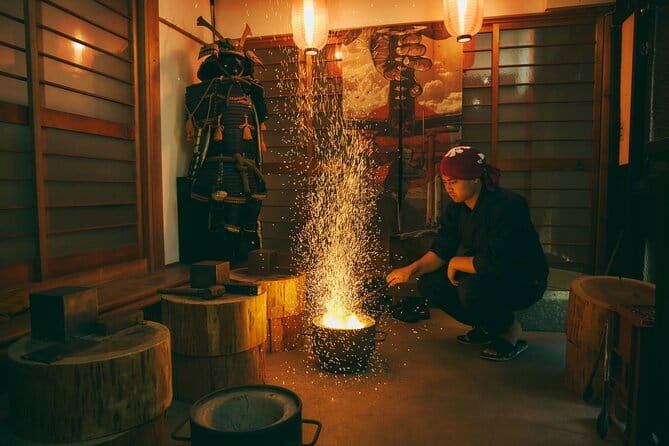
The core of the experience begins when your metal is heated in a furnace reaching about 800°C. At the right temperature, the steel glows and becomes workable. You then use a hammer to shape it under guidance.
This is the part that gives the workshop its genuine craft feel. The heat, sound, sparks, and repeated hammer blows are more memorable than simply being told how ninja weapons were made. You get a physical sense of how much force and control are needed to change metal.
The staff manage the safety side and guide you through the steps. You should still treat the furnace, steel, hammer, and other equipment with care. Moderate physical fitness is recommended, and hammering can become tiring if you are not used to repetitive work.
There is an important expectation to set here. The experience is hands-on, but it is not a full apprenticeship in traditional Japanese swordsmithing. One critical account described the activity as feeling somewhat like a conveyor belt and said the participant only hammered several times for a photograph. Most of the available feedback is strongly positive, but this criticism identifies the main risk: some of the heavier or more technical work may be done or closely controlled by the staff.
If you want a long, slow blacksmithing lesson, this may feel limited. If you want a guided chance to handle hot steel, make visible changes, and leave with a finished item in one session, the format makes more sense.
Shaping the weapon with files and a belt sander
Once the metal has been forged, you refine its form. Files are available for sharpening and shaping, and a professional belt sander helps smooth and sharpen the surface.
This stage is where your souvenir begins to look less like a rough piece of steel and more like a finished tool. The belt sander can speed up the work, but it also means the process is not purely traditional hand-forging. You are combining old-style hammering with modern workshop equipment.
That mix is practical. A short tourist activity needs to produce a finished object within a few hours. The powered sander helps make that possible, while the hand tools let you take part in the detail work.
The physical demand varies. One particularly useful detail is that easier sharpening options are available for people with less stamina. Families can therefore take part together, though everyone should expect some standing, gripping, filing, or hammering.
Pay attention to symmetry. A slightly uneven edge may be part of the charm of a handmade piece, but the instructors can help correct the shape. Ask for assistance early rather than waiting until the final polish.

Kanji engraving and the personal touch
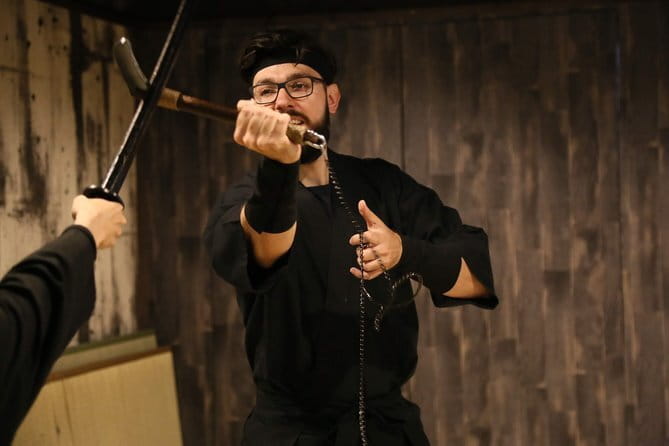
After the metal has been shaped, you choose a kanji character for engraving. A staff member engraves it onto the weapon, giving the finished piece a personal mark.
This is one of the strongest parts of the souvenir. A purchased ninja replica may look impressive, but a kanji character chosen during the workshop connects it to your time in Kyoto. It also makes the item easier to identify later if several people in your group are making weapons at once.
The engraving is handled by the staff, so this is not another technical task you must master. That is sensible. Precise engraving takes skill, and the character should look clean on the final surface.
If you are booking as a family, the engraving gives younger participants a clear decision to make even if the hot-metal stages feel demanding. It also adds a moment of calm after the louder work with the furnace and hammer.
Blackening, polishing, and packing the finished piece
The weapon is treated with a special solution to protect the metal and give it a dark finish associated with ninja tools. It is then polished to bring out the surface and complete the look.
The blackening stage is more than decoration. It helps protect the steel, while the polish makes the object feel finished rather than workshop rough. You can see the full change from plain metal to a dark, personalized keepsake.
At the end, the staff provide a clean box and bag. This is an excellent practical detail. You do not need to wrap the weapon in hotel clothing or find a souvenir shop box before heading home.
Several people successfully placed the boxed weapon in checked luggage. You should still check the current airline and airport rules before flying, since transport requirements can vary. The important point is that the experience provides packaging designed to make carrying the finished piece easier.
The ninja knowledge session
The workshop also includes a session about ninja history, weapons, and secret techniques. This gives the activity more context than a simple craft class.
The stories help explain why different shapes were used and make your chosen weapon feel less random. The educational side is not the main event, but it adds meaning to the hammering, shaping, and finishing stages.
The exact balance between instruction and making may vary with the group and the pace. Some people found the explanations informative and the activity well organized. One person wanted more explanation during the practical work. If you are curious about metallurgy, traditional tools, or the historical use of each weapon, ask questions as you go.
The staff’s enthusiasm is a major asset. Taka and the wider team are described as friendly, high-energy, and eager to keep the room involved. That energy suits a group activity, particularly when people are nervous about making mistakes.
Getting to the northern Kyoto studio
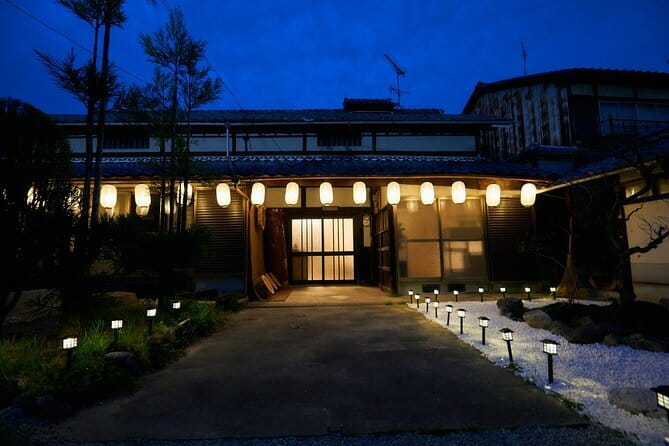
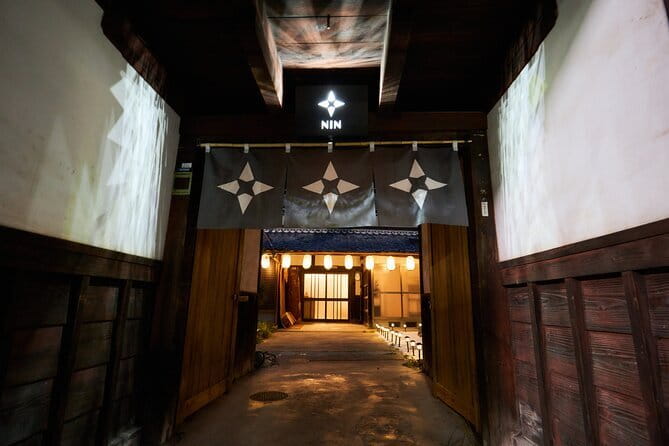
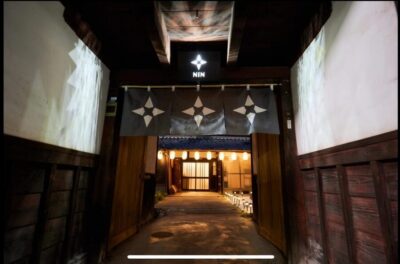
The meeting point is studio NIN at Yase 168-1, Yasenosechō, in Sakyo Ward. The activity finishes at the same place.
The studio is near public transportation, but it is not in the middle of the usual central Kyoto sightseeing circuit. Several people found the location off the beaten path, and the written directions were not always detailed enough. Plan your route before leaving your hotel and keep a taxi app ready as a backup.
This setting can be an advantage. You are leaving the most crowded sightseeing areas and heading to a working studio, which suits an activity built around tools and craft. The trade-off is time and transport. Add the journey to the 2.5-hour workshop when planning your day, and avoid placing a tightly timed temple visit immediately afterward.
Private transportation is not included. You make your own way to the studio and return from the same meeting point.
Is $151.92 a fair price?
At $151.92 per person, this is not a cheap casual activity. The price covers the instruction, use of specialized tools, uniform rental, engraving, finishing treatment, box, bag, and the completed weapon.
The value depends on what you want from Kyoto. If you are looking for the lowest-cost souvenir, buying a finished ninja item will be cheaper. If you want a guided activity with a real physical result, the price becomes easier to justify. You are paying for workshop time, equipment, staff attention, safety oversight, and a personal keepsake, not just the metal object itself.
The extra 3,000 yen for a kunai should be included in your budget. A group of four choosing kunai would add 12,000 yen to the base cost.
The strong overall score of 4.9 from 43 ratings and a 98 percent recommendation rate suggests that the experience works very well for most people. I would still read the format honestly: it is a structured tourist workshop, not an open-ended blacksmith course. The more you value novelty, participation, and a boxed souvenir, the better the price looks.
Who will enjoy this most?
I would recommend it to families, couples, and friends who want a break from temples and museums. It suits teenagers particularly well, and an experience for two 18-year-olds was described as a success. A family with children aged 12 and 15 also found it enjoyable.
It is a good match for you if:
- You like making things with your hands.
- You want a souvenir with a story behind it.
- You enjoy pop-culture links to ninja culture but also want historical context.
- You are comfortable with moderate physical work.
- You can spare half a day once transport is included.
It may be less suitable if you dislike heat, noise, repetitive hammering, or group instruction. It is also not the best choice if you expect to independently forge every part of the weapon from start to finish.
Free cancellation is available up to 24 hours before the start time. Cancellations or changes made inside that window are not refunded, so keep your Kyoto plans reasonably firm.
Should you book the Kyoto ninja weapon workshop?
Book it if you want an unusual Kyoto memory that you can hold, display, and explain when you get home. The furnace, sparks, kanji engraving, dark finish, and enthusiastic staff create a much more active afternoon than simply buying a replica.
Before booking, accept three facts: the studio takes extra planning to reach, the kunai costs more, and the practical work is guided and structured. If those limits sound fair, this is a strong pick for families and groups seeking something different from the standard Kyoto route.
I would choose the shuriken for a first visit if keeping the cost down matters. I would choose the kunai if the shape appeals to you and you want the most distinctive keepsake. Either way, arrive ready to listen, ask questions, and enjoy the sparks.
FAQ
How long does the ninja weapon-making experience last?
The activity lasts approximately 2 hours and 30 minutes.
Where does the experience begin and end?
It begins at studio NIN, Yase 168-1, Yasenosechō, Sakyo Ward, Kyoto, 601-1254, Japan. It ends back at the same meeting point.
What weapons can I choose?
You can choose from three shuriken styles or one kunai. The kunai requires an additional 3,000 yen.
Do I need previous blacksmithing experience?
No. Skilled staff guide you through the process, and no previous experience is required.
What is included in the activity?
Specialized tools such as hammers and files are provided, along with a samue uniform for the workshop. A clean box and bag are also provided for taking the finished weapon home.
Can I cancel for a full refund?
Yes. You can cancel at least 24 hours before the experience start time for a full refund. Cancellations or changes made less than 24 hours before the start time are not refunded.
More Samurai & Kendo Experiences in Kyoto
More tours in Kyoto we've reviewed







Samurai & Kendo Experiences, compared.
 ★ 5.0Kyoto Samurai ExperienceFrom $119
 ★ 4.9Kyoto: Kendo and Samurai Experience with Uniform and GearFrom $1032 hours
 ★ 4.5Skip the lines Basic Ticket at SAMURAI NINJA MUSEUM KYOTOFrom $28
 ★ 4.9Kyoto: Samurai Class, Become a Samurai WarriorFrom $70
 ★ 5.0Ninja 1-hour Hands-on Lesson by Japanese master in Kyoto -EntryFrom $80
 ★ 4.8Kyoto: Ninja Weapon Forging ExperienceFrom $1482h 30m