
Reviewed · GION & GEISHA WALKS
Kyoto Gion Private Tour with a Local Guide – Geisha District
Gion is best understood on foot, and this private tour puts a local guide beside you as you pass lantern-lit lanes, wooden machiya houses, teahouses, shrines, and old nightlife streets. The focus is not a staged geisha show. It is a closer look at how this part of Kyoto works, with the chance to ask questions as you go.
I like the one-on-one format, which lets your host adjust the pace and explain the details that catch your eye. I also like the route’s mix of Gion, Yasaka Shrine, Shinbashi Dori, Tatsumi Bridge, and Pontocho Alley, giving you more than a quick walk down one famous street.
The main caution is simple: seeing a geiko or maiko is never promised, and the district can be crowded. A few poor experiences also point to the importance of confirming your meeting details and telling the company exactly what you want to learn before arrival.
In This Review
- Key points to know before you book
- Why a private walk makes sense in Gion
- Gion’s lanes and the world of the ochaya
- Hanamikoji and the character of old Kyoto
- Yasaka Shrine and 1,300 years of worship
- Shinbashi Dori and Tatsumi Bridge
- Pontocho Alley, Kyoto’s narrow nightlife quarter
- What the $101.57 price buys you
- Day or night, and where to meet
- Who will get the most from this experience
- Should you book the Gion private tour?
- FAQ
- How long does the Kyoto Gion private tour last?
- Is this a private tour?
- Will I see a geisha, geiko, or maiko?
- Is transportation included?
- What is included in the price?
- Where does the tour start and end?
Key points to know before you book
- Private and flexible: Only your group joins the walk, and the route can be shaped around food, culture, history, photography, or less familiar corners.
- A practical Gion route: You visit Gion, Yasaka Shrine, Shinbashi Dori, Tatsumi Bridge, and Pontocho Alley in roughly two to three hours.
- Geisha culture needs realistic expectations: The tour explains geiko and maiko traditions, but an encounter is a matter of chance.
- Strong guide reports: Emi, Alexis, Olan, Nisa, Milo, Toga, Brenda, Ai, Michael, Ada, and others are praised for clear explanations, humor, flexibility, and local suggestions.
- Walking is the main event: No private vehicle is included. Public transport or taxis may be used between sites at an extra cost.
- Best for a first Kyoto evening or morning: You get orientation, cultural context, and ideas for places to eat or explore later.
Why a private walk makes sense in Gion
Gion is not a single attraction with a gate and a sign. It is a working district made up of narrow streets, restaurants, teahouses, shrines, small shops, and old wooden buildings. Without context, you may see a handsome street and a few lanterns, then move on. With a good guide, the same walk becomes much easier to read.
The private setup matters here. You can stop to ask why a particular building looks different, what happens inside an ochaya, or how geiko and maiko fit into Kyoto’s entertainment culture. If your group cares more about food than architecture, your host can shift the conversation and route accordingly.
Before the tour, you receive a short questionnaire about your interests and must-see places. Use it properly. If you hope to learn about geisha culture, see a particular shrine, find a good restaurant, or finish near an evening show, write that down clearly. The strongest experiences come from guides who have something specific to work with.
The guides named in the feedback include Emi, Alexis, Olan, Nisa, Milo, Toga, Kenta, Takaya, Brenda, Kenya, Kokoro, Tess, Michael, and Ada. Their styles vary, but the most praised qualities are consistent: clear English, warmth, humor, cultural explanation, and a willingness to adjust the route. Alexis was especially appreciated for storytelling and photography, while Milo was praised for including all five people in his group.
That personal attention is the main reason to pay for this experience instead of simply walking through Gion with a map.
A few more Kyoto tours and experiences worth a look

Gion’s lanes and the world of the ochaya
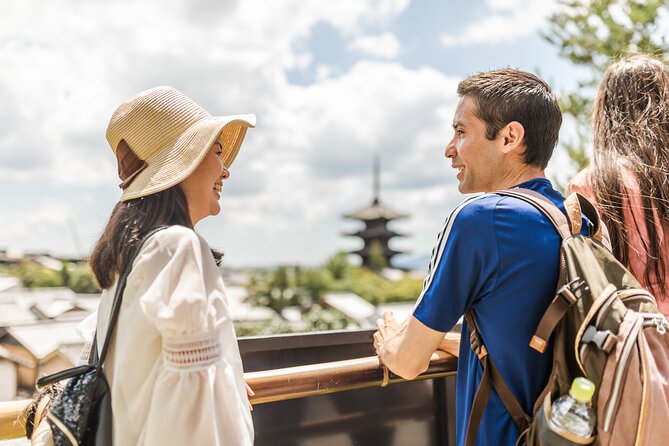
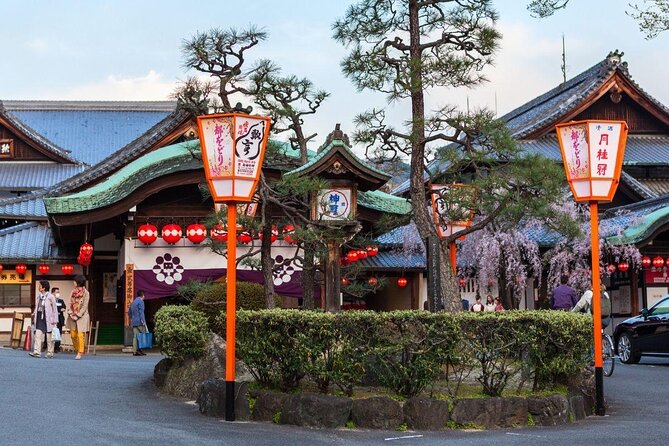
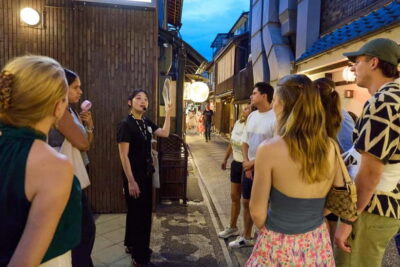
The walk begins in or around Gion, Kyoto’s best-known traditional entertainment district. You can expect narrow streets, paper lanterns, wooden facades, and the occasional view into a quiet side lane. The setting is photogenic, but it is also easy to treat it like a film set. Your guide’s job is to remind you that it remains a real neighborhood and workplace.
The route passes traditional teahouses, known as ochaya. These are not ordinary cafés where you wander in for a quick cup of tea. They are linked to formal entertainment and geiko and maiko culture, so the guide can help explain the difference between the public image of geisha and the actual customs of the district.
This is also where you need to keep your expectations in check. A geiko or maiko sighting can happen, but it is not arranged or guaranteed. One visitor did see a maiko, while another left disappointed after expecting a direct encounter. The fair way to view the tour is as an explanation of the district, not as a geisha-spotting appointment.
Your guide can also point out subtle cultural markers that are easy to miss, such as the character of a street, the style of a building, or how the entertainment area differs from ordinary Kyoto neighborhoods. Those small observations are where a private walk earns its keep.
Photography requires good manners. Do not block narrow lanes, follow anyone, or treat people who work in Gion as a public performance. The tour is far better when you look carefully and behave quietly.
Hanamikoji and the character of old Kyoto
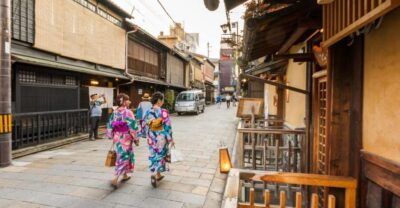
One of Gion’s most famous streets is included in the route. It is known for ochaya and well-preserved Edo-period architecture, with wooden buildings that give the area its distinct look. Your host points out the features that make the street special and offers advice on finding an authentic local experience.
The value here is not simply taking another photograph. You learn how the street connects to Kyoto’s older customs and entertainment traditions. The buildings are attractive, but the explanation helps you understand why they have been preserved and how they function within the district.
This portion can be crowded, particularly at popular times. One person specifically found a nighttime visit less enjoyable than a daytime walk. I would choose the start time based on your priorities: daylight is better for seeing architectural details and taking photographs, while later hours may give you a stronger sense of Gion as an evening entertainment quarter.
Do not assume that a private booking means an empty street. Your guide can help you move with more purpose, but the district remains public and popular.
Yasaka Shrine and 1,300 years of worship
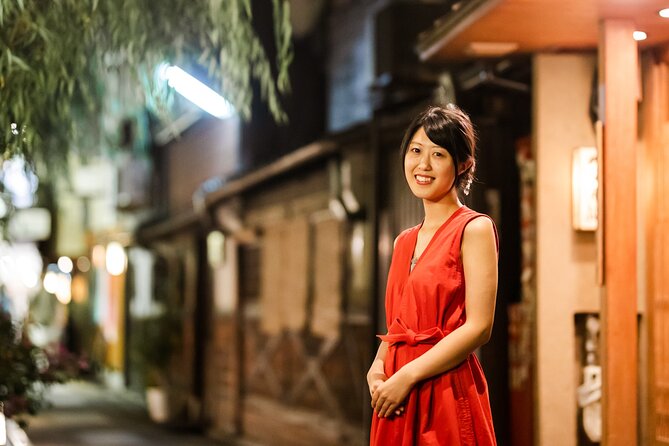
The route continues to Yasaka Shrine, a major Shinto site between Gion and Higashiyama. Its history reaches back more than 1,300 years, and it plays a central role in Kyoto festivals.
This stop gives the walk a useful change of pace. Gion is associated with restaurants, teahouses, and evening culture. Yasaka Shrine shows the religious side of the same part of the city. You can ask your guide about shrine customs, the meaning of the space, and how it connects with local celebrations.
A guide is particularly useful at a shrine because basic etiquette may not be obvious to first-time visitors. You can learn how to behave respectfully without turning the visit into a lecture. The best hosts keep the explanation clear and short, then let you look around.
The shrine is also a practical landmark. If you return to Gion on your own, Yasaka helps you understand how the district connects with the wider Higashiyama area.
Shinbashi Dori and Tatsumi Bridge
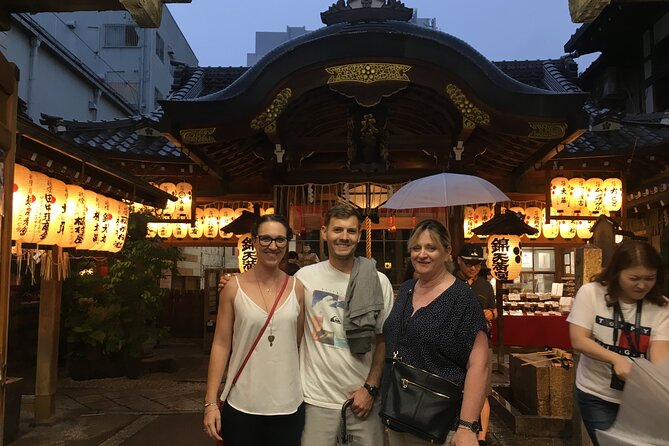
Shinbashi Dori is one of the most scenic sections of the walk. Willow trees and traditional facades frame the street, giving it a quieter feel than some of Gion’s better-known lanes. The route pauses near Tatsumi Bridge, a favorite photo spot with local importance.
This is likely to be one of the prettiest parts of the tour, but your guide adds more than directions to a viewpoint. You can ask why this street has a different mood from the busier lanes, how the old facades fit into the district, and which details are worth noticing before you lift your camera.
Tatsumi Bridge is a good place to slow down. You may find other people taking photographs, so patience helps. A private guide can also suggest a better angle or timing, though the experience is not built around a formal photography session.
The walk’s repeated shifts between busy and quiet streets are useful. You see that Gion is not only one famous road. It is a collection of connected spaces with different moods and uses.
Other guided tours in Kyoto


Pontocho Alley, Kyoto’s narrow nightlife quarter
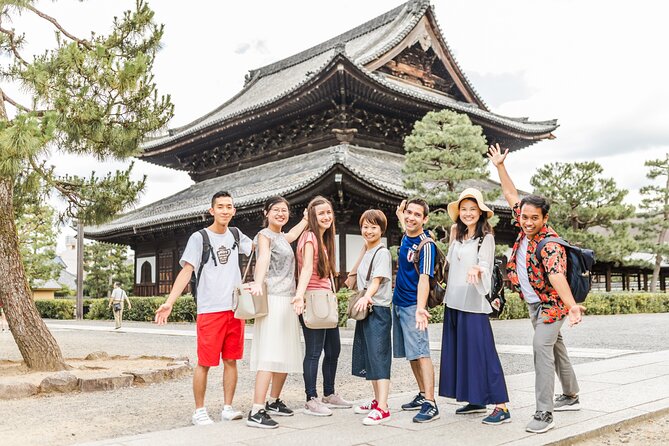
The tour ends at Pontocho Alley, one of Kyoto’s oldest nightlife areas. This narrow passage is lined with small bars and restaurants, and its traditional appearance makes it a natural final stop after Gion.
Pontocho is valuable because it gives you practical ideas for the rest of your evening. Your host can explain the character of the area and point out places to eat. Several guides were praised for restaurant help, including Brenda, who assisted with a dinner reservation after a late arrival, and another guide who showed a group suitable local restaurants.
Food and drinks are not included, so you pay separately if you stop somewhere. That is a sensible arrangement for a private walk because it keeps the price clear, but you should not expect a meal to be part of the $101.57 fee.
One group enjoyed sitting in a very small coffee shop in Gion and speaking with the owner. That sort of detour may be possible if you tell your host that you want local conversation or a café stop. It is not guaranteed, and any purchases are your responsibility.
Some tours finish near Gion Corner, a venue known for a geisha-related cultural show. Kenta was able to end a tour there for a group with existing bookings. If you have tickets for a show or dinner, mention them in advance and confirm the final meeting point rather than assuming the walk will end exactly where you need it.
What the $101.57 price buys you
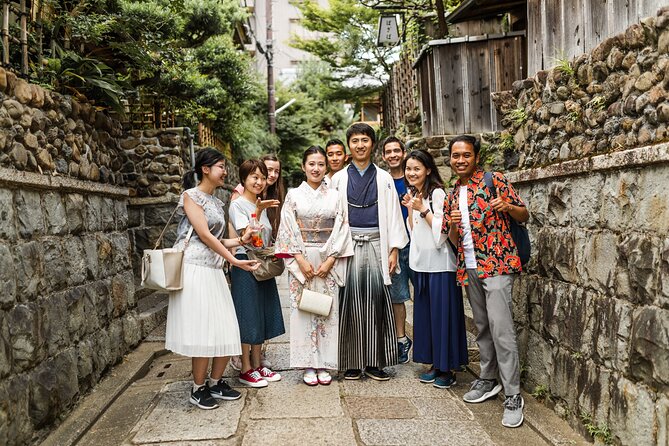
At $101.57 per person, this is not a bargain if you only want to see Gion’s main street. You can walk through the district without paying an admission fee. The price makes more sense when you value a private guide, a tailored route, cultural explanation, and local suggestions.
For two people, the cost is easier to justify if the guide gives you a useful introduction to Kyoto and helps shape the rest of your stay. For a larger family or group, ask about group discounts. The private format also means you are not sharing the guide’s attention with strangers, which can be especially useful when different people in your party have different interests.
There are no attraction tickets, meals, drinks, or transport costs included. The experience is mainly on foot. Public transport or local taxis may be used if the route requires a transfer, with those costs discussed separately with your host.
The walk lasts about two to three hours. That is enough time for a good orientation, but not enough for every street, shrine, garden, and restaurant in the area. A guide may personalize the route, so the exact balance between stops can vary.
This tour is booked about 75 days ahead on average, which suggests you should not leave it until the last moment if your Kyoto dates are fixed. Confirmation is provided at booking, and free cancellation is available up to 24 hours before the start time. Changes or cancellations inside that window are not accepted.
Day or night, and where to meet
The listed meeting point is Matsumoto Kiyoshi Kyoto Shijo Kawaramachi at 103-2 Hashimotocho, Shimogyo Ward. The stated end point is back at the meeting point, although individual arrangements may be discussed with the host.
Pickup is offered, and one guide met a visitor at a hotel. Still, confirm this directly because the standard details identify a meeting point and the activity is primarily a walking tour. If a hotel pickup matters to you, include the hotel name in your booking conversation.
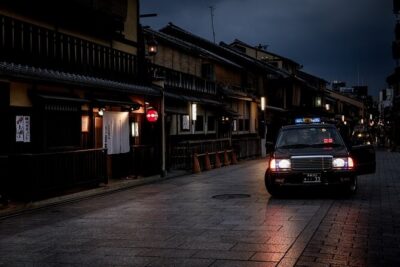
Daytime is the safer choice if you care most about architecture, shrine details, and clear photographs. Evening can suit you if you want to see Gion and Pontocho in their lantern-lit setting, but crowds and low light may make some parts less comfortable.
Wear shoes you can walk in for two to three hours. The route includes narrow streets and may involve public transport or a short taxi transfer. Most people can take part, and service animals are allowed.
Who will get the most from this experience
I would recommend this tour to a first-time Kyoto visitor who wants an introduction without joining a large group. It also suits families, couples, and small groups that want to ask their own questions and set the pace.
It is a good match if you care about:
- The meaning behind Gion’s old streets and teahouses
- Japanese shrine customs and local culture
- Finding restaurants or cafés after the walk
- A private route adjusted to your interests
- Combining sightseeing with practical orientation
I would be more cautious if your only goal is to see a geisha. No guide can promise that. I would also think twice if you prefer independent wandering and do not want to pay for interpretation.
Guide quality is important. The overall rating is 4.3 from 43 ratings, with many strong reports about Emi, Brenda, Ai, Michael, Ada, Olan, Milo, Toga, Nisa, and others. At the same time, there are serious complaints about a guide not appearing and about one host offering too little historical or cultural information. Confirm the appointment shortly before the tour and use the questionnaire to set clear goals.
Should you book the Gion private tour?
Book it if you want Gion explained by a local person rather than simply photographed. The route covers the right mix of traditional streets, Yasaka Shrine, a scenic bridge, teahouses, and Pontocho, while the private format gives you room to shape the experience.
I would book a daytime start for architecture and shrine visits, or an evening start for lanterns and nightlife atmosphere. Tell your host if geiko culture is your main interest, but treat an actual sighting as luck. If your budget allows $101.57 per person and you value personal guidance, this is a useful Kyoto introduction. If you only need a self-guided stroll, save the money and explore at your own pace.
FAQ
How long does the Kyoto Gion private tour last?
The experience lasts approximately two to three hours. The exact pace and route can vary because the walk is personalized for your group.
Is this a private tour?
Yes. Only your group participates, and the private format gives you the guide’s full attention.
Will I see a geisha, geiko, or maiko?
A sighting is possible but not guaranteed. The tour explains Gion’s geiko and maiko culture, but meeting one should not be the sole reason you book.
Is transportation included?
No private vehicle is included. The experience is mainly on foot, and public transportation or local taxis may be used between sites at an additional cost.
What is included in the price?
The price includes a private, personalized walking experience with a local guide, itinerary planning, direct communication with your host, and a pre-tour questionnaire. Food, drinks, attraction tickets, transport costs, and gratuities are not included.
Where does the tour start and end?
The listed start point is Matsumoto Kiyoshi Kyoto Shijo Kawaramachi at 103-2 Hashimotocho, Shimogyo Ward, Kyoto. The activity is scheduled to end back at the meeting point, though pickup and other arrangements should be confirmed with the host.
More Private Tours in Kyoto

More Guided Tours in Kyoto
More Gion & Geisha Walks in Kyoto
More tours in Kyoto we've reviewed



Gion & Geisha Walks, compared.
 ★ 4.7Kyoto Geisha Walking Tour: Gion District & Hidden GemsFrom $252 hours
 ★ 4.7Kyoto: Gion Geisha District Walking Tour – Stories of GeishaFrom $202 hours
 ★ 4.9Best of Kyoto: Gion, Geisha, Pagodas & CobblestonesFrom $242 hours
 ★ 4.5Night Walk in Gion: Kyoto’s Geisha DistrictFrom $211h 40m
 ★ 5.0Kyoto Night Foodie Tour in Gion (9+ dishes + 6 Sake tastings)From $163
 ★ 5.0Kyoto Gion Geisha District Walking Tour – The Stories of GeishaFrom $25