
Reviewed · TEA CEREMONY EXPERIENCES
Tea Ceremony Experience in Traditional Kyoto Townhouse
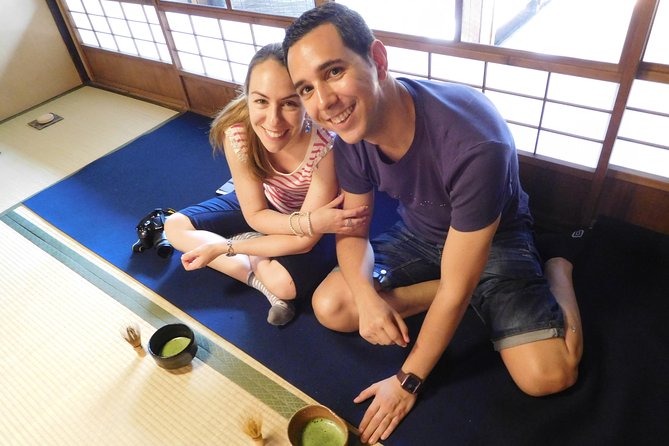
A quiet wooden machiya, a bowl of Uji matcha, and a host who explains every movement: that is the heart of this Kyoto tea ceremony. You watch a formal demonstration, learn why the gestures matter, then prepare and drink your own tea.
I like the small six-person limit, which gives you room to ask questions without turning the lesson into a stage show. I also like the excellent value: at $27.74, you get a cultural lesson, quality matcha, and a traditional sweet in an old Kyoto home. The main drawback is finding the townhouse, since the address sits in a residential area where English street signs and numbers may be limited.
In This Review
- Key points at a glance
- A tea lesson inside an old Kyoto townhouse
- What happens during the one-hour session
- Why the machiya setting matters
- The best part: you make your own matcha
- The etiquette is explained, not left mysterious
- Small group size makes a real difference
- Is $27.74 a fair price?
- Who will enjoy this Kyoto experience most?
- Timing, transport, and finding the door
- What to expect from the hosts
- A few limits to keep in mind
- Should you book the Ami Kyoto tea ceremony?
- FAQ
- How long does the Kyoto tea ceremony experience last?
- Where does the tea ceremony take place?
- Does the activity include matcha and Japanese sweets?
- What kind of matcha is served?
- Can I make my own matcha?
- How many people can join the experience?
- Is hotel pickup included?
- Can I cancel for a full refund?
Key points at a glance
- An old Kyoto machiya: Spend the hour inside a traditional wooden townhouse rather than a modern visitor center.
- A hands-on lesson: Watch the ceremony, then make your own bowl of matcha with guidance from the hosts.
- Uji matcha and Kyoto sweets: The tea comes from Uji City, while the accompanying confectionery is supplied by a well-known Kyoto maker.
- Groups capped at six: The small format allows for direct instruction and questions.
- A focused one-hour visit: The session fits neatly into a sightseeing day without taking over your schedule.
- A central meeting point with one practical catch: The townhouse is near public transportation, but you should allow extra time to locate it.
A tea lesson inside an old Kyoto townhouse
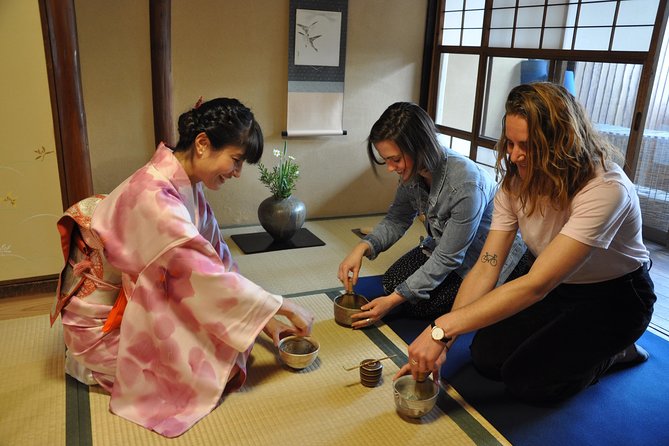
Tea ceremony is easy to misunderstand. It is not simply a matter of whisking green tea and drinking it. The movements, pauses, placement of utensils, greeting, and way of receiving the bowl all carry meaning.
This experience gives you a compact introduction without asking you to commit half a day to formal study. The hosts at Ami Kyoto explain the basic ideas behind the tea ceremony, show you the proper etiquette, and help you take part yourself.
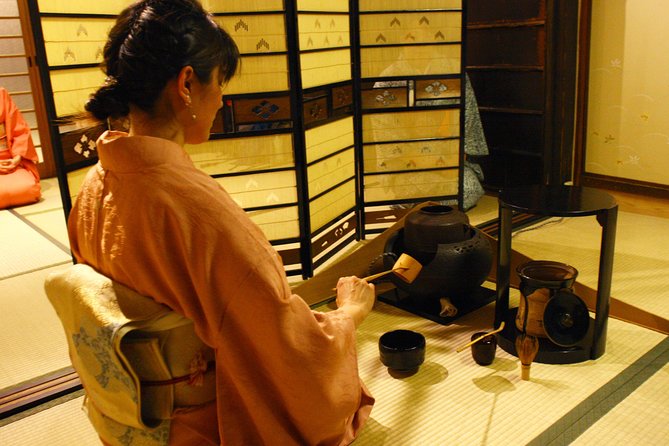
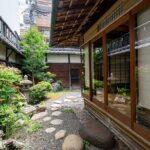
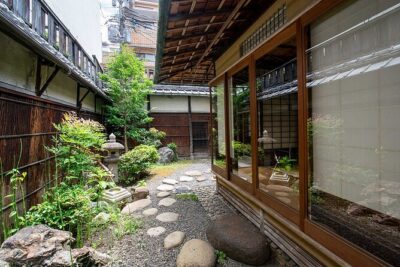
The setting does much of the work. Kyoto once had many wooden machiya, or townhouses, built around narrow streets and modest working homes. The building used for this activity is an old machiya, described as roughly 80 years old, with the simple wood-and-room character that makes these houses special.
You are not just watching a presentation about Japanese culture from a distance. You are sitting in a space built for everyday life in Kyoto and learning a ritual that still has a place in modern Japan.
A few more Kyoto tours and experiences worth a look
What happens during the one-hour session
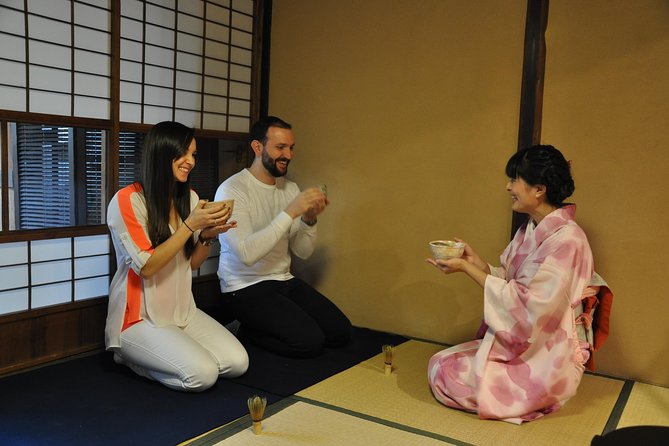
The visit takes place at Ami Kyoto, at 605 Nishidacho in Kyoto’s Shimogyo Ward. The activity begins and ends at this meeting point, and the scheduled duration is about one hour.
The session starts with an explanation of tea ceremony customs and the ideas behind them. You learn how to approach the tea room, how to behave around the utensils, and how to receive the tea and sweet.
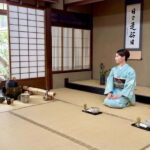
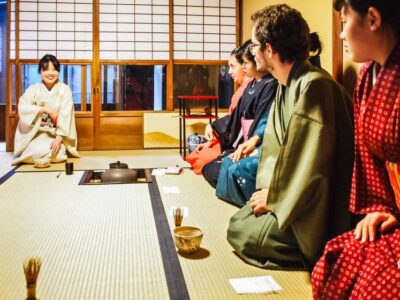
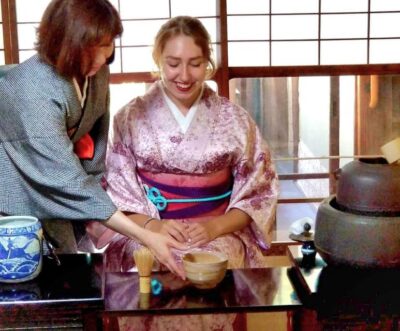
The hosts then perform a demonstration. This is the part to watch closely. Tea ceremony can look slow at first, but the deliberate pace lets you see how each action fits into the larger sequence. A cup is not simply placed in front of you. Its position, the way it is turned, and the order of the gestures all have a purpose.
Kimi is named as one of the hosts, and the instruction is presented in a warm, clear way. The session is designed for first-time participants, so you do not need prior knowledge of tea ceremony or Japanese etiquette.
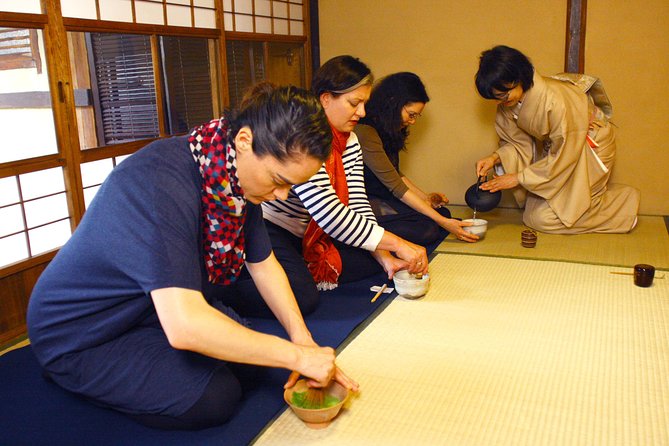
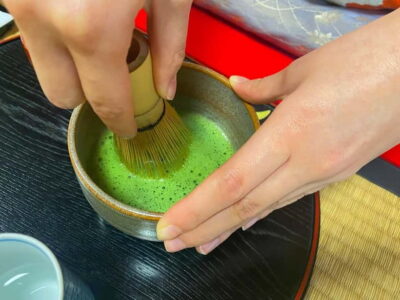
After the demonstration, you prepare your own matcha. You receive help with the process rather than being left to guess what to do. This hands-on portion is important because it changes the experience from a performance into a lesson you can remember.
You also learn how to drink the tea properly and are served a traditional Japanese sweet. The confectionery has included treats such as suhama, a Kyoto-style sweet with a pleasant matcha pairing. The sweetness is not an afterthought. In tea ceremony, the confection helps prepare your palate for the bitter, grassy flavor of powdered green tea.
Why the machiya setting matters
A tea ceremony in a hotel meeting room could teach you the same basic steps, but it would lose much of the atmosphere. Here, the wooden townhouse gives the session a sense of place before the tea is even prepared.
The room is described as comfortable and quaint, with a quiet, elegant feel. You should expect a small venue rather than a grand tea hall. That is part of the appeal, though it also means the setting may feel compact if your ideal ceremony involves a large historic garden or elaborate architecture.
The house blends into its residential surroundings. One useful detail to keep in mind is that the building may be easy to pass at first. There is a sign outside, but the street itself may not have clear English numbers or names.
I would save the full address before leaving your hotel and open the supplied map link in advance. Do not treat the meeting point as a place you can locate casually after arriving in the neighborhood. Give yourself a little extra time, especially if you are coming directly from a temple visit or train station.
The best part: you make your own matcha
The demonstration offers the visual lesson, but making the tea gives you the practical memory.
You are shown how to prepare the matcha and then guided through the process. The point is not to produce a perfect bowl on your first attempt. It is to understand the care involved and to feel the rhythm of the preparation.
The matcha comes from a tea farm in Uji City, the area near Kyoto known for high-quality green tea. This matters because matcha varies greatly in flavor and freshness. The powdered tea served here has been singled out for its quality, and several participants particularly enjoyed the taste.
If you already drink matcha, you will appreciate the chance to try a well-selected tea in the setting where it is traditionally used. If you are new to it, expect a strong, vegetal flavor with some bitterness. The sweet served alongside it helps balance that intensity.
The hosts also answer questions about the ceremony and the tea itself. That makes this a good choice for someone who wants more than a photo opportunity. You leave with a better idea of what you are drinking and why the preparation follows such a careful order.
The etiquette is explained, not left mysterious
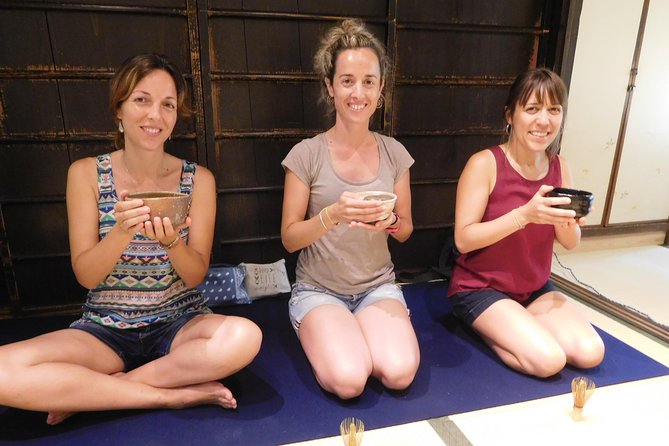
Japanese etiquette can feel intimidating when you do not know the rules. This experience handles that well by explaining the practical steps before asking you to take part.
You learn about entering the tea room, the proper way to approach the ceremony, and how to receive the bowl. The hosts also explain the symbolic and practical reasons behind the actions.
That explanation is useful. Without it, a formal tea ceremony can seem like a string of beautiful but unrelated gestures. With the background, you begin to see the ceremony as a conversation between host, participant, room, utensils, tea, and sweet.
The presentation also touches on the more reflective side of the tradition. Tea ceremony can be understood as a way of slowing down and giving full attention to a shared moment. You do not need to approach it as a spiritual practice, but the calm pace and repeated movements make the hour feel different from ordinary sightseeing.
The hosts are described as gracious, friendly, and patient. Their manner matters because the session asks you to participate in a tradition that may feel unfamiliar. Clear instruction keeps the experience relaxed instead of formal in an uncomfortable way.


Small group size makes a real difference
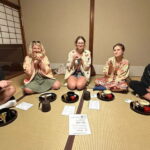
The activity is limited to six participants. That is a strong feature for this type of lesson.
In a large group, you might spend most of the hour watching someone else prepare tea while trying to hear the explanation from the back of the room. Here, the compact format gives you a better chance to follow the demonstration and receive help when you make your own bowl.
The small group also leaves space for questions. You can ask about the tea, the sweets, the utensils, or the meaning of a gesture without interrupting a large public show.
The venue is not designed for a crowd, so the six-person limit suits the room. It also helps preserve the quiet tone of the ceremony. If you prefer lively group entertainment, this may feel restrained. If you want a personal introduction to Japanese culture, the size is just right.
Is $27.74 a fair price?
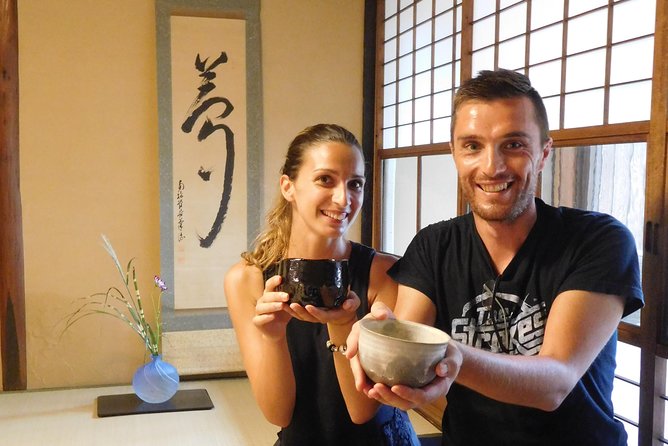
At $27.74 per person, this is one of the more accessible cultural activities in Kyoto. You receive about an hour of instruction, a bowl of matcha, a traditional sweet, use of an old townhouse setting, and the chance to prepare tea yourself.
The value is strongest if you are curious about Japanese customs but do not want to spend a large amount on a longer or more formal ceremony. You are paying for access, teaching, ingredients, and a setting that would be difficult to experience as part of an ordinary sightseeing day.
It is not a full tea-school apprenticeship, and the short duration limits how much history or technique can be covered. You should think of it as a well-focused introduction rather than a complete study of chanoyu, the Japanese way of tea.
The price also compares well with the personal attention offered by the small group. A cheaper demonstration with many participants might give you less time to practice. A more expensive private experience may offer greater depth, but this session makes a sensible middle choice.
Selected matcha can also be purchased afterward. That is useful if you want to repeat the preparation at home, though any additional purchases are separate from the activity price.
Who will enjoy this Kyoto experience most?
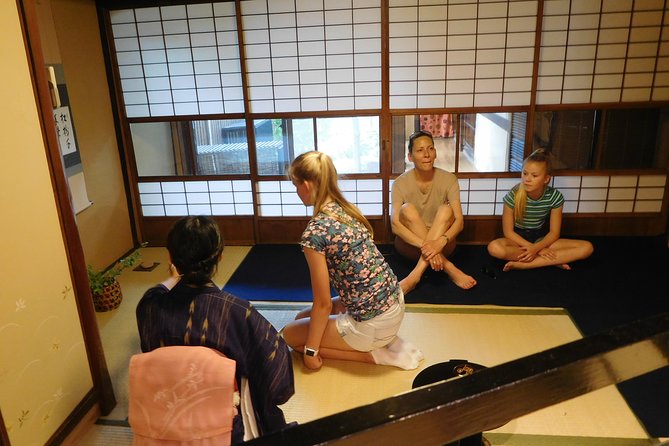
I would recommend this for first-time visitors who want a direct cultural activity between temple visits, shopping, and meals. The one-hour length is easy to fit into a busy Kyoto itinerary.
It suits couples, families, and small groups of friends. Families in particular may like the balance of watching, listening, and doing. The activity has also worked well for an Australian family of four, with the one-hour format proving long enough to learn something without becoming tiring.
Matcha fans will have an obvious reason to book, but you do not need to like matcha already. The instruction and sweet make the tasting approachable, and the main reward is understanding the tradition.
It is also a good fit if you value local settings over polished tourist facilities. The townhouse is modest and residential, not theatrical. That gives the experience a more everyday Kyoto feeling, though it also means you should not expect a grand tea garden or a lavish interior.
One participant was unable to attend for health reasons, while the rest of the family took part. Another group included someone using a wheelchair and received helpful accommodation. These details suggest a considerate approach, but the supplied information does not spell out the building’s exact accessibility features. If you need step-free access or special seating, contact Ami Kyoto before booking.
Timing, transport, and finding the door
You can choose from multiple start times, which helps you fit the activity around Kyoto’s temples and markets. Since the lesson lasts about an hour, it works well in the morning or afternoon, with enough time afterward to continue exploring.
The meeting point is near public transportation. The address is 605 Nishidacho, Shimogyo Ward, Kyoto, 600-8397, Japan. The activity ends back at that same location, so there is no hotel pickup or drop-off.
The practical issue is navigation. The townhouse is in a traditional residential area, and English street signs or numbers may not be easy to spot. Save the address, check the map before setting out, and avoid arriving at the last second.
The mobile ticket is convenient, but it does not replace good directions. Kyoto’s older streets can be confusing, especially when several lanes look alike. A few extra minutes here can prevent a rushed arrival.
Confirmation is issued within 48 hours of booking, subject to availability. The activity is often reserved about 25 days ahead, so booking early is sensible if you need a particular time during a busy Kyoto visit.
What to expect from the hosts
The hosts are the strongest part of the teaching. Kimi and the other women at Ami Kyoto guide the demonstration, explain the etiquette, and help participants prepare the tea.
The tone is friendly rather than stern. You are introduced to a formal tradition, but you are not expected to know the rules before you arrive. The hosts explain the process carefully and create a comfortable room for questions.
That balance is important. Tea ceremony has a serious and reflective side, yet the session remains accessible. You can appreciate the precision without feeling that you are being tested.
Several participants found the explanation both informative and entertaining. That combination is worth noting. A detailed explanation can become dry, while a light presentation can skim over the meaning. This experience aims for enough context to make the gestures understandable while keeping the hour moving.
A few limits to keep in mind
The biggest limitation is duration. One hour is enough for a demonstration, explanation, sweet, and hands-on tea preparation, but it does not allow for a long discussion of tea schools, utensils, seasonal customs, or the history of chanoyu.
The venue can also be difficult to find. This is not a serious flaw, but it is a real one. Plan the approach rather than relying on a quick glance at street signs.
Finally, the experience is focused on tea ceremony, not on broader Kyoto sightseeing. There is no hotel transportation, extended neighborhood tour, or additional attraction included. You should book it because you want this particular cultural lesson, not because you expect a general city tour.
Those limits are reasonable at this price and duration. In fact, the compact format is part of the appeal for many people. You get a clear introduction without sacrificing an entire day.
Should you book the Ami Kyoto tea ceremony?
Book it if you want an affordable, hands-on introduction to Japanese tea ceremony in a genuine old townhouse. The combination of a small group, Uji matcha, traditional sweets, and patient instruction gives the hour real substance.
I would especially choose it for a first visit to Kyoto, for anyone interested in Japanese customs, or for a matcha drinker who wants to learn the proper way to prepare and receive the tea.
Skip it if you are seeking a grand tea garden, a long formal ceremony, or a full-day cultural workshop. Also allow extra time to find the address. For most people, though, $27.74 buys a thoughtful and memorable pause in the middle of Kyoto sightseeing.
Free cancellation is available up to 24 hours before the start time. Changes or cancellations made inside that window are not accepted for a refund.
FAQ
How long does the Kyoto tea ceremony experience last?
The activity lasts approximately one hour.
Where does the tea ceremony take place?
It takes place at Ami Kyoto, 605 Nishidacho, Shimogyo Ward, Kyoto, 600-8397, Japan.
Does the activity include matcha and Japanese sweets?
Yes. The experience includes one bowl of matcha green tea and Japanese sweets.
What kind of matcha is served?
The matcha comes from a tea farm in Uji City, an area known for its green tea.
Can I make my own matcha?
Yes. You watch a demonstration and then receive guidance while making your own bowl of tea.
How many people can join the experience?
The activity has a maximum of six participants.
Is hotel pickup included?
No. Hotel pickup and drop-off are not included. The activity begins and ends at the Ami Kyoto meeting point.
Can I cancel for a full refund?
Yes. You can cancel at least 24 hours before the local start time for a full refund. Cancellations or changes made less than 24 hours before the start time are not accepted for a refund.
More Tea Ceremony Experiences in Kyoto
More tours in Kyoto we've reviewed





Tea Ceremony Experiences, compared.
 ★ 4.9Kyoto: Tea Ceremony in a Traditional Tea House in KiyomizuFrom $4945 min
 ★ 4.9Kyoto: Tea Ceremony Ju-An at Jotokuji TempleFrom $291h 10m
 ★ 4.3Kyoto: 45-Minute Tea Ceremony Lesson ExperienceFrom $2245 min
 ★ 5.0World Heritage Kyoto & Nara Uji Authentic Matcha ExperienceFrom $129
 ★ 4.9Kyoto: Table-Style Tea Ceremony at a Kyo-MachiyaFrom $451h 30m
 ★ 5.0Kimono Tea Ceremony at Kyoto Maikoya, NISHIKIFrom $65