
Reviewed · GION & GEISHA WALKS
Dance and Game with Maiko
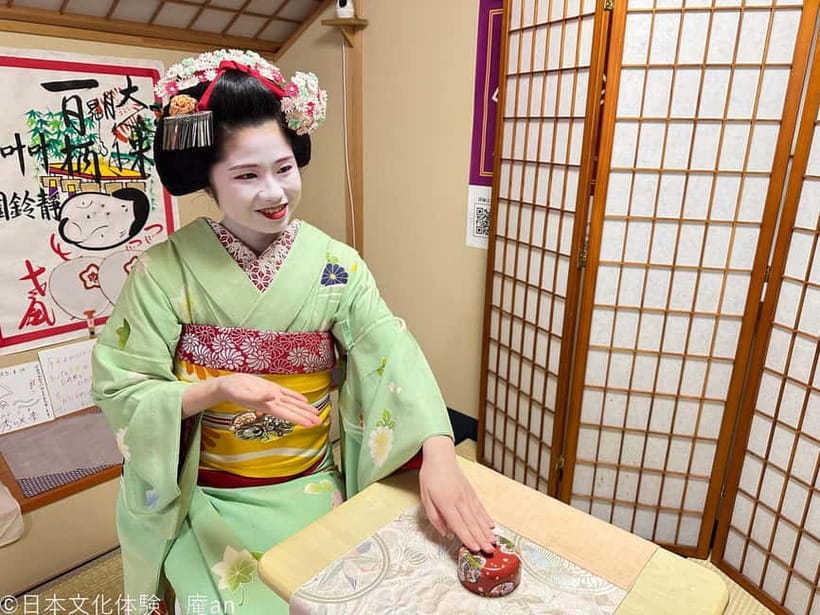
Kyoto’s maiko are usually tied to formal evening entertainment, but this 45-minute program gives you a short, friendly way to see one during a packed sightseeing day. You watch two traditional dances, join a playful game if chosen, and finish with a photo and a small Senjafuda paper charm.
I like the low $28 price and the compact schedule. I also like the chance to see the maiko at close range rather than only across a stage. The main drawback is that the event may last closer to 30 minutes than 45, and the building is not a historic ochaya or Japanese house.
In This Review
- Key points to know before booking
- A quick way to meet a maiko in Kyoto
- What the two dances show you
- The traditional game is the liveliest part
- The close-up photo and Senjafuda gift
- Location near Gojo Station
- Language and the style of the presentation
- What the $28 price really buys
- Who will enjoy this most
- Timing, cancellations, and practical planning
- Should you book Dance and Game with Maiko?
- FAQ
- Where does Dance and Game with Maiko take place?
- How long does the activity last?
- How much does the experience cost?
- Is a maiko guaranteed to appear?
- Is the activity held in a traditional Japanese house?
- Is English provided?
- Can children attend for free?
- Can I cancel for a full refund?
Key points to know before booking
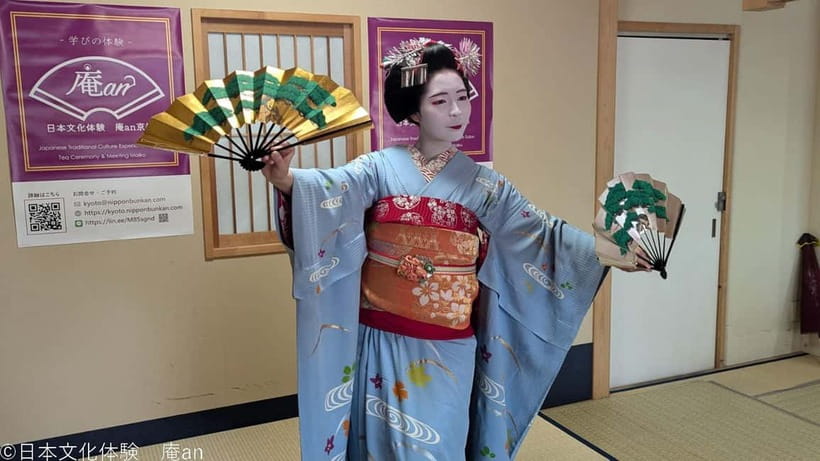
- Two maiko dances: Graceful performances portray seasons, romance, and daily life through music and movement.
- Audience game: Volunteers may play a traditional game with the maiko, while everyone else claps and enjoys the fun.
- Photo opportunity: You can take a commemorative picture right beside a maiko after the program.
- Senjafuda keepsake: Each participant receives a small lucky charm to remember the visit.
- Easy Gojo location: The venue is about one minute from Exit 1 of Gojo Station on the Karasuma Subway Line.
- Short and simple: No special preparation is needed, but the building has stairs and no elevator.
A quick way to meet a maiko in Kyoto
A maiko is an apprentice geisha, trained in traditional dance, music, manners, and performance. Seeing one in Kyoto can take planning, money, and luck, especially if you have only a few days in the city.
This program makes the meeting much simpler. You arrive at a building near Gojo Station, take your seat, and watch the presentation unfold without needing a formal meal or evening booking. The setting is relaxed and friendly, but it is important to set your expectations correctly. This is not an ochaya, and it does not take place in a traditional Japanese house.
That tradeoff is fair for the price. At $28 per person, you are paying for a brief cultural performance and a personal encounter, not a full evening of geisha entertainment. I see it as a practical introduction for someone who wants a taste of Kyoto’s maiko culture without spending several hours at dinner.
The program is listed as 45 minutes, though the performance portion can finish in about 30 minutes. The remaining time is used for photos, the Senjafuda gift, and departure. If you need a precisely timed 45-minute activity, leave a little flexibility in your schedule.
A few more Kyoto tours and experiences worth a look

What the two dances show you
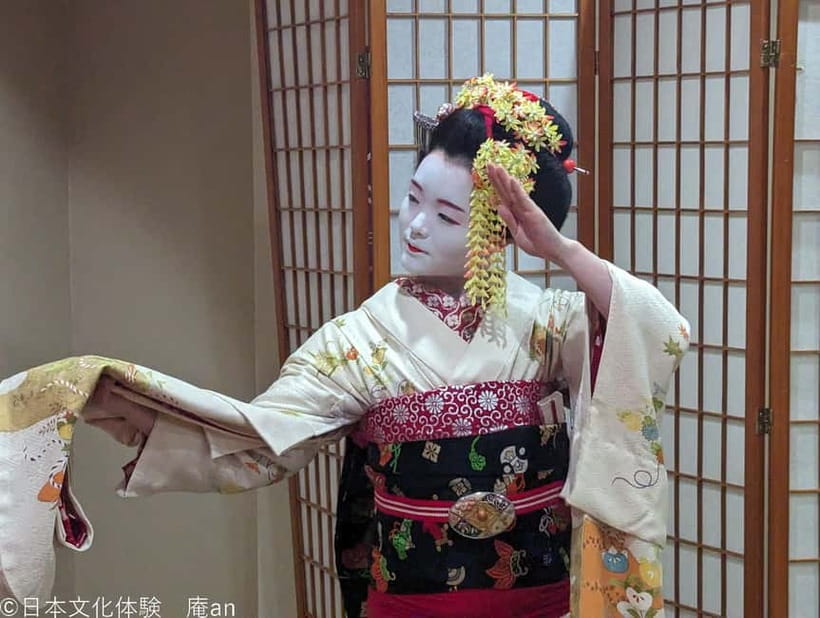
The program begins with two maiko dances. These are not simply demonstrations of movement. Traditional maiko dance uses controlled steps, hand gestures, posture, fans, and facial expression to suggest a scene or feeling.
The subjects can include the changing seasons, love stories, and ordinary moments from Japanese life. You may not understand every detail of the story, especially since the main language is Japanese, but the visual style is easy to appreciate. The slow pace and careful gestures make the dances feel very different from a modern stage show.
I like that you get two dances rather than one quick appearance. The first lets you settle into the style, while the second gives you another chance to notice the costume, music, and small movements. Keep your camera ready, but also watch with your own eyes. The dances are short enough that constantly checking your screen can make you miss the best parts.
Photography is encouraged during the dance portion, according to the activity information. Be considerate with flash and follow any directions from the staff. The maiko’s appearance is the central point of the program, so respectful behavior matters more than getting a perfect shot.
The traditional game is the liveliest part
After the dances, the mood shifts. A traditional game is played between the maiko and people from the audience. Volunteers may be invited to take part, but you can enjoy the activity without leaving your seat.
This is where the program feels less like a performance and more like a shared social event. The game is described as simple but exciting, with clapping and cheering encouraged. You do not need prior knowledge of Japanese customs to follow the basic fun.
If you are shy, you can watch. If you are traveling with children, you may want to prepare them for the possibility of being invited to participate. A useful point is that the game may not involve everyone. One family found that children were too embarrassed to volunteer in front of the room. If your children are hesitant, do not pressure them. The activity is still enjoyable from the audience.
The room can be small, with only a few people taking part directly. That can make the game feel personal, but it also means the group may not have a large stage-show energy. Think of it as a friendly cultural gathering, not a polished theater production.
The close-up photo and Senjafuda gift
After the dance and game, you have the chance to take a commemorative photo beside the maiko. This is one of the strongest reasons to choose this activity over a standard dance performance. You are not only watching from a distance. You get a brief personal moment and a photograph to take home.
The exact photo arrangement can depend on the room and staff instructions, so follow their lead. Have your camera or phone ready before the photo time begins. If someone in your party is taking the picture, make sure that person is prepared, since the schedule continues afterward.
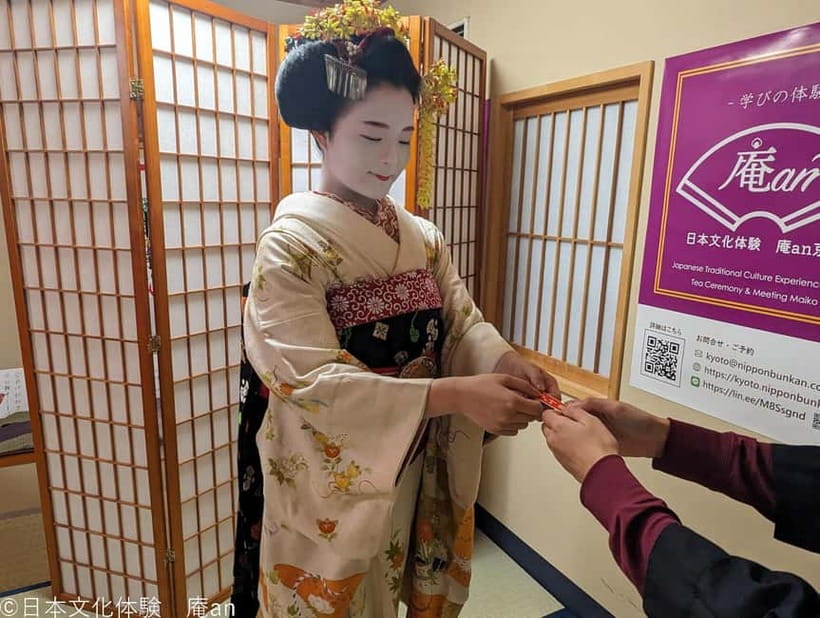
You also receive a Senjafuda. This is a small paper charm traditionally associated with a person’s name or mark, and here it serves as a lucky keepsake from Kyoto. It is modest, but it adds a personal touch to a low-cost experience. I would tuck it somewhere safe rather than leave it loose in a day bag.
The listed sequence places the photo and gift near the 30-minute mark, followed by the maiko’s departure and a little chatting time before you leave at about 45 minutes. This explains why the main entertainment may seem shorter than the advertised duration.
Location near Gojo Station
The venue is about one minute on foot from Exit 1 of Gojo Station on the Karasuma Line. The entrance faces Gojo-dori, the main street, which should make it fairly easy to find once you are above ground.
This is a useful location for a Kyoto itinerary. Gojo sits between Kyoto Station and central Kyoto, so you can fit the activity around other plans without crossing the whole city. Check the exact starting time when booking, since several time slots may be available.
Plan to arrive early. The event cannot be held for people delayed on the way, and a late arrival may mean missing part of the presentation. Also remember that the building has no elevator. You will need to use stairs to reach the venue, so this activity may not suit anyone who cannot comfortably manage them.
The operation hours are 10:00 to 17:00. Reservations received after 17:00 are processed the next day, so do not expect a late-evening program through this booking.

Language and the style of the presentation
The operating language is Japanese. English translation can be provided as much as possible if requested, but you need to contact the provider about adding it.
That language point matters. The dances are visual, and the game is described as simple, so you can still follow the main action without Japanese. However, explanations about the maiko, the dance stories, or the game may be less clear if no translation is available.
I would contact the provider before booking if English explanation is important to you. Do not assume that every part will be translated automatically. The staff are described as friendly, but this remains a Japanese-led activity.
Depending on the situation, a geiko may appear instead of a maiko. A geiko is an established entertainer rather than an apprentice. That change does not cancel the cultural value of the program, but it means you should not treat the exact performer as guaranteed.
What the $28 price really buys
At $28, the value is strongest if you want three things in one short sitting: live dance, a cultural game, and a close-up photo. The Senjafuda adds a small souvenir without requiring you to shop for one.
The price is less compelling if you expect an elaborate traditional setting, a long performance, or a full explanation in English. The venue is inside a building rather than an ochaya, and the core entertainment may take only about 30 minutes.
Still, Kyoto experiences involving maiko can be difficult to arrange independently. This option removes much of the uncertainty. You have a scheduled time, a clear meeting point, and a planned chance to see the performer up close.
For a first visit to Kyoto, I think the cost makes sense as a compact cultural stop. It is particularly useful on a day when you are already near Gojo and do not want to give up half an afternoon. If you are comparing it with a tea ceremony program, note that tea ceremony is not included. You need to book the separate tea ceremony with Maiko or Tea ceremony with Maiko premium activity.
Who will enjoy this most
This program suits you if you want an approachable introduction to maiko culture without a formal meal. It works well for solo visitors, couples, families with older children, and anyone with a tight Kyoto schedule.
You may also like it if you enjoy seeing traditional arts in a direct, personal setting. The photo opportunity gives the event a clear memory to take home, while the game adds some energy to what could otherwise be a quiet performance.
Families should think about participation before arriving. Children under two can attend free if they sit on a parent’s lap, but a separate seat or meal requires the full individual fee. Children who are old enough to volunteer may still feel shy in front of the room, so watching is perfectly acceptable.
This is not the best match if you need step-free access, guaranteed English interpretation, or a full 45 minutes of dance and games. It may also disappoint you if the building setting feels too ordinary for your idea of Kyoto tradition.
Timing, cancellations, and practical planning
The activity offers free cancellation up to eight days in advance for a full refund. After that point, a cancellation fee applies regardless of the reason. If you change the date or time after a fee has been incurred, another specified fee may apply.
Do not book this with a tight connection to a train, flight, or paid attraction. The program cannot wait for delays, and travel costs to the venue are not compensated if you cancel. I would allow extra time to find the entrance, climb the stairs, and settle in.
Only people taking part in the activity may enter. Someone who is simply accompanying you cannot wait inside without participating. This is worth checking if one member of your party plans to sit out.
The overall rating is 3.9 out of 5 from 46 ratings. The strongest reactions praise the beautiful maiko, the fun game, and the memorable nature of the meeting. The main caution is the timing: some people expected 45 minutes but found the main portion closer to 30. Book it for the experience itself, not for a long performance.
Should you book Dance and Game with Maiko?
Book it if you want a short, affordable Kyoto experience with real cultural content and a personal photo opportunity. The two dances give you a glimpse of a highly disciplined art form, while the game keeps the room from feeling stiff or formal.
I would especially recommend it for a packed itinerary, a first visit to Kyoto, or anyone curious about maiko but not ready to pay for a full dinner experience. Go in expecting a simple building, Japanese-led explanations, stairs, and a program that may finish its main portion early.
Skip it if the setting matters as much as the performer, if you require guaranteed English translation, or if accessibility is a concern. For everyone else, $28 is a reasonable price for a brief meeting, two dances, a traditional game, a photo, and a Senjafuda to carry home.
FAQ
Where does Dance and Game with Maiko take place?
The venue is about a one-minute walk from Exit 1 of Gojo Station on Kyoto’s Karasuma Subway Line. The entrance faces Gojo-dori.
How long does the activity last?
The scheduled duration is 45 minutes. The dance and game portion may finish in about 30 minutes, followed by photos, the Senjafuda gift, and departure.
How much does the experience cost?
The listed price is $28 per person.
Is a maiko guaranteed to appear?
The program may feature a geiko instead of a maiko, depending on the situation.
Is the activity held in a traditional Japanese house?
No. The venue is in a building and is not an ochaya or traditional Japanese house.
Is English provided?
The operating language is Japanese. English translation may be provided as much as possible if you contact the provider to request it.
Can children attend for free?
Children under two are free when sitting on a parent’s lap. If a child under two needs a seat or meal, the same fee as one person applies.
Can I cancel for a full refund?
You can cancel up to eight days in advance for a full refund. Cancellation fees apply after that point.
More Gion & Geisha Walks in Kyoto

More tours in Kyoto we've reviewed










Gion & Geisha Walks, compared.
 ★ 4.7Kyoto Geisha Walking Tour: Gion District & Hidden GemsFrom $252 hours
 ★ 4.7Kyoto: Gion Geisha District Walking Tour – Stories of GeishaFrom $202 hours
 ★ 4.9Best of Kyoto: Gion, Geisha, Pagodas & CobblestonesFrom $242 hours
 ★ 4.5Night Walk in Gion: Kyoto’s Geisha DistrictFrom $211h 40m
 ★ 5.0Kyoto Night Foodie Tour in Gion (9+ dishes + 6 Sake tastings)From $163
 ★ 5.0Kyoto Gion Geisha District Walking Tour – The Stories of GeishaFrom $25