
Reviewed · NIGHT WALKS & GHOST TOURS
Discover Kyoto at Night by Bike
Kyoto changes after sunset. Lanterns replace daylight, temple roofs take on a softer outline, and the narrow streets around Gion and Ninenzaka feel calmer than they do in the afternoon. This 3-hour-45-minute bike tour links several famous sights without asking you to spend the whole evening on foot.
I like the small maximum of nine people, which keeps the ride more personal, and I like that your bilingual guide can add context as you move between shrines, tea-house streets, and old wooden neighborhoods. Juan has also led this route, taking care to help riders feel safe.
The main thing to consider is the balance between riding and talking. One rider found that only about 1 hour 45 minutes was spent cycling, with much of the rest used for explanations and stops. If you want a fast-paced ride, this may feel slow. If you enjoy stories and photo breaks, that same pace may suit you.
In This Review
- Key details before you book
- Why Kyoto works so well after sunset
- Starting at Fushimi Inari’s orange gates
- Miyagawa-cho and the quieter side of Gion
- Gion’s lantern-lit lanes
- Yasui-Konpiragu and its unusual purpose
- Yasaka Pagoda and Ninenzaka after dark
- The Higashiyama park stop
- How much riding should you expect?
- The $80 price and what it covers
- Who will enjoy this evening ride?
- Should you book Discover Kyoto at Night by Bike?
- FAQ
- How long does Discover Kyoto at Night by Bike last?
- What time does the tour start?
- Where does the tour meet?
- Where does the tour finish?
- What is included in the price?
- How many people can join the tour?
- Can I cancel for a full refund?
Key details before you book
- Fushimi Inari after dark: Spend about 40 minutes at Kyoto’s famous rows of orange torii gates, with no entrance fee.
- Six major Kyoto sights: The route includes Miyagawa-cho, Gion, Yasui-Konpiragu, Yasaka Pagoda, Ninenzaka, and a park in Higashiyama.
- Small evening group: The tour accepts no more than nine people, which helps with street riding and guide access.
- A real bike ride, not a first lesson: You should already be comfortable riding a bicycle, especially in city streets and around other people.
- Useful inclusions: The bicycle, bottled water, and entrance fees are covered in the $80 price.
- Weather matters: Poor weather can cancel the tour, with a different date or full refund offered.
Why Kyoto works so well after sunset
Kyoto is often at its hardest to enjoy in the middle of the day. Famous lanes fill quickly, popular shrine approaches become crowded, and the heat can make a walking route feel longer than it looks on a map. A bicycle gives you a practical way to connect distant areas while the evening light changes the mood of the city.
This is not a tour built around one grand attraction. Its appeal comes from the sequence: a shrine with thousands of torii gates, a traditional entertainment district, a small unusual shrine, and the old lanes below Yasaka Pagoda. You keep moving, but you also stop often enough to hear what makes each place distinct.
The meeting point is at 7-Eleven, 44-1 Higashikujō Kamitonodachō, in Minami Ward. The start time is 5:00 pm, and the tour finishes back at that same meeting point. Since hotel transport is not included, you need to make your own way there and back. The mobile ticket is convenient, but I would still arrive with enough time to locate the meeting spot and adjust to the bicycle before departure.
A few more Kyoto tours and experiences worth a look
Starting at Fushimi Inari’s orange gates
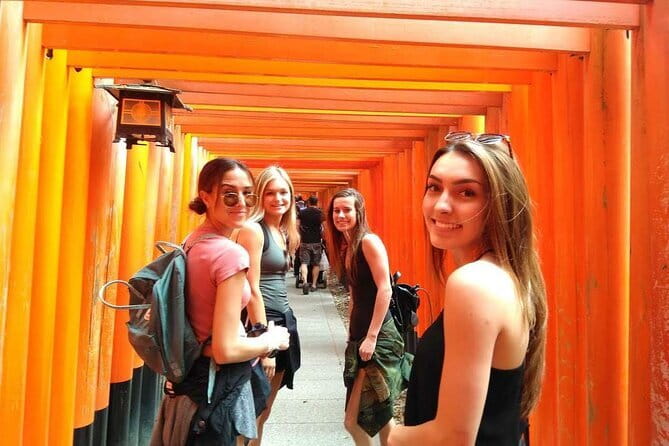
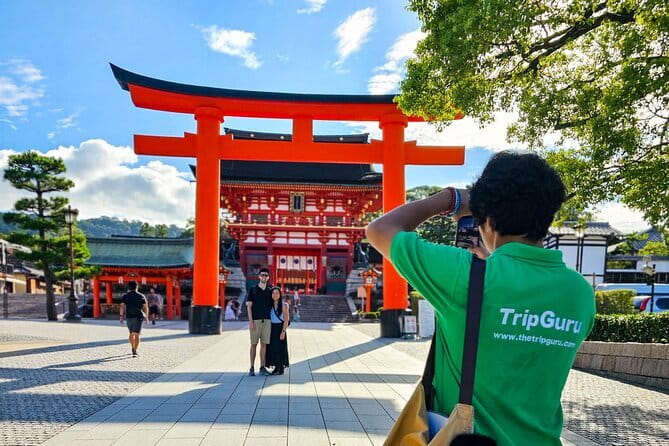
Fushimi Inari-taisha is the most famous stop on the route, and it receives about 40 minutes. The shrine is known for its thousands of torii gates, which create long, repeating passages up the wooded hillside.
You will not be cycling through the entire shrine complex. Instead, the bicycle gets you to one of Kyoto’s best-known sights, where you can walk among the gates and take photographs. After dark, the familiar scene feels different from the bright daytime version. The orange gates and lantern light create a quieter, more dramatic setting.
There is no admission fee here, which is useful when you are comparing the tour price with the cost of a self-guided evening. The value comes from transport, timing, and interpretation rather than a paid ticket.
Forty minutes is enough to get a clear impression and take photos, but not enough for a long climb through the full torii route. That is worth knowing if Fushimi Inari is your main reason for booking. You will see the shrine, not complete every path on the mountain.
Miyagawa-cho and the quieter side of Gion
The next stop is Miyakawa-cho Dori, also known as Miyagawa-cho, for about 15 minutes. This district runs south of Gion and parallel to the Kamogawa River. At night, lanterns bring out the traditional character of the street.
The short stop works well as part of a larger route. You can see the old buildings and get a feel for the district without spending a full evening here. The guide can also explain the connection between the street, Kyoto’s traditional entertainment culture, and the nearby geisha districts.
You should keep your expectations in check. Fifteen minutes is a viewing stop, not a full neighborhood visit. The point is to notice the atmosphere and the architecture, then continue by bike before the route becomes repetitive.
Riding beside the river is one of the pleasant parts of the experience. The bicycle makes the transition between Fushimi Inari and central Kyoto feel like part of the tour rather than dead time on public transport.
Gion’s lantern-lit lanes
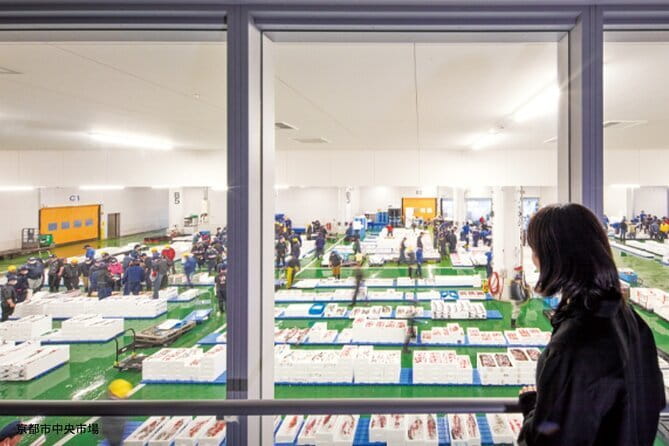
Gion receives about 10 minutes, with admission included. That is a brief stop, but it puts you in the heart of Kyoto’s best-known traditional district.
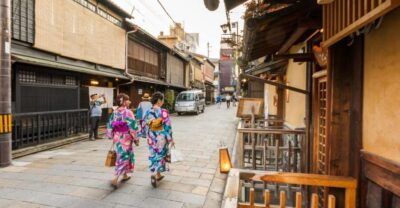
Hanamikoji Street, lined with historic tea houses, is especially attractive after sunset. The wooden façades and subdued lights make it easy to understand why this area is so closely tied to Kyoto’s old entertainment culture.
The important etiquette point is simple: look, listen, and keep a respectful distance. Gion is a working neighborhood, not a stage set. A guide can help you understand what you are seeing without encouraging intrusive behavior.
The short visit is both a strength and a limitation. You get a compact introduction and avoid spending too long in a narrow, heavily visited area. But if you want a slow walk through Gion, time for dinner, or a longer look at the tea-house streets, you will need to return on your own.
Yasui-Konpiragu and its unusual purpose
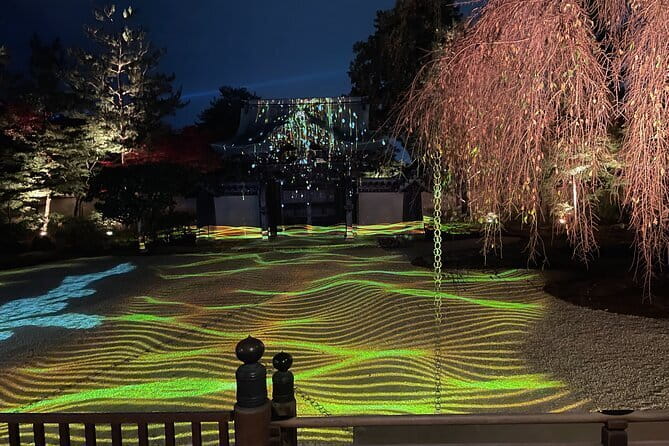
Yasui-Konpiragu is a small but memorable stop, lasting about 10 minutes. The shrine is associated with cutting ties to bad relationships or unwanted habits and forming stronger ties to better ones.
That purpose gives the visit a different tone from the grander shrines. You are not simply looking at a famous building. You are seeing a place connected to personal hopes and everyday concerns, with a tradition that many people find immediately understandable.
The stop comes after a ride through maiko and geisha alleyways. Because the visit is short, the guide’s explanation matters. Without context, Yasui-Konpiragu could be easy to pass by. With a few clear details, it becomes one of the more distinctive places on the route.
There is no admission fee. As with the other brief stops, you should treat it as an introduction rather than a complete religious or cultural visit.
Other cycling tours in Kyoto


Yasaka Pagoda and Ninenzaka after dark

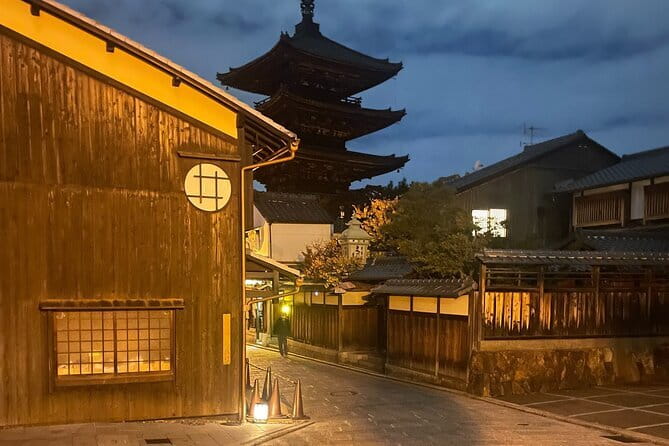
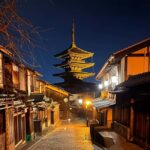
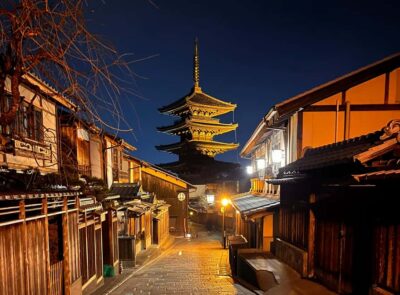
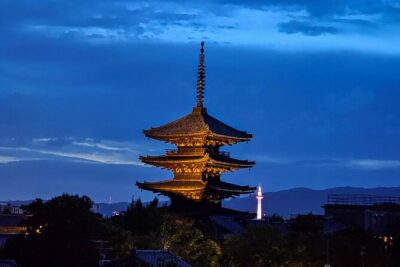
Hōkan-ji Temple, better known as Yasaka Pagoda, is one of Kyoto’s most photographed sights. The five-story pagoda rises above narrow cobblestoned streets and old machiya townhouses, creating the classic Higashiyama scene you may have seen in photographs.
The tour allows about 15 minutes here. That gives you time to stop, look up, and take pictures, especially when the evening light softens the streets. The bicycle is useful for reaching the area, but you will likely walk the final short stretches because the lanes are narrow and crowded with pedestrians.
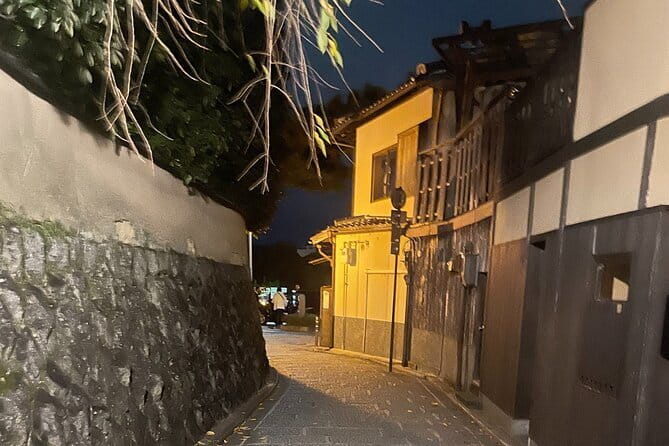
Ninenzaka follows for another 15 minutes. The slope is known for its traditional buildings and strong night views. This is one of the best photo sections of the route, but it is also where bike handling matters most. Cobblestones, slopes, pedestrians, and tight corners are not ideal conditions for someone still learning to ride.
You may find that the bicycles are parked while you explore these lanes. That is normal for a route through historic streets. The cycling gets you between districts, while walking lets you properly see the oldest sections.
The Higashiyama park stop
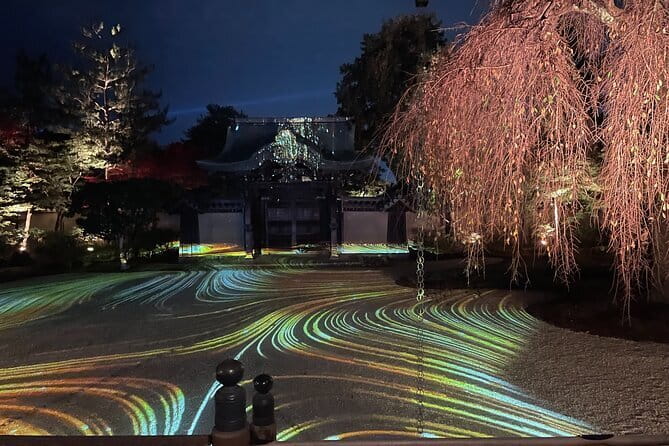
The final listed stop is a park in Higashiyama, described as the area’s most famous park, with cherry trees, ponds, and wooden bridges. The supplied details do not name the park, so you should not book this tour expecting a specific park unless the guide confirms it at the start.
This stop adds a softer change of pace after the tight lanes around Gion and Ninenzaka. Ponds, bridges, and trees give you a chance to pause before returning to the meeting point. Its appeal will vary with the season and the amount of evening light, but it helps round out the route with more open space.
Because the full tour lasts about 3 hours 45 minutes, the park is part of a longer evening rather than a stand-alone attraction. The route is designed to show you several sides of Kyoto: religious sites, traditional streets, old homes, river scenery, and a public park.
How much riding should you expect?
This is the most important point to settle before booking. The tour is sold as a bicycle experience, but it is also a guided sightseeing tour with regular stops and explanations.
One past rider felt the guide talked too much and estimated that only about 1 hour 45 minutes was spent riding. The tour also ran about 45 minutes beyond the scheduled finish because of the extended discussion. The guide acknowledged the concern and said finding a better balance would be a priority.
That feedback gives you a useful way to choose. If you want continuous cycling and a strong physical workout, ask about the expected riding time before you commit. If you prefer a moderate ride broken up by cultural stops, the format may be a good match.
The tour requires a moderate fitness level. You do not need to be an athlete, but you should be able to ride confidently for several hours with stops. A separate review praised Juan for helping with bike safety, while also advising that this is not a ride for first-time cyclists.
The $80 price and what it covers
At $80 per person, the price is reasonable if you value a guide, a bicycle, and a structured route through several parts of Kyoto. You also receive bottled water, and all entrance fees are included. Since the major shrine stops listed here are free, the main value is the equipment, local direction, evening timing, and time saved planning connections between districts.
The small group limit of nine improves the value. A guide can keep a closer eye on the group, explain details without shouting, and help you manage stops in narrow streets. On a night when few people book, the experience may become almost private. One rider reported being the only person on the tour, and appreciated that it still operated.
You should budget separately for transport to the meeting point and a gratuity for the guide. Hotel pickup and drop-off are not included. The tour ends where it starts, so you can plan dinner or an onward trip from that area after returning.
Who will enjoy this evening ride?
I would recommend this tour to you if you have limited time in Kyoto and want a broad first look at the city after sunset. It is also a good fit if you enjoy hearing local stories and prefer moving between sights rather than walking the entire distance.
It suits confident cyclists who are comfortable with a moderate physical effort and city riding. Couples, solo visitors, and small groups may appreciate the nine-person limit, especially if Juan is guiding and the group stays small.
I would hesitate to recommend it if you are a first-time cyclist, dislike riding near pedestrians, or want a nonstop athletic route. I would also think twice if you want long visits at Fushimi Inari or Gion. The schedule gives you snapshots of many places, not hours at one shrine or district.
Wear clothing suited to the weather and remember that the tour can be canceled in poor weather. If that happens, you are offered another date or a full refund. You can cancel for a full refund up to 24 hours before the 5:00 pm start time. Inside that window, the payment is not refunded, and changes are not accepted.
Should you book Discover Kyoto at Night by Bike?
Book it if you want Kyoto’s best-known evening sights connected by bicycle, with a bilingual guide, bottled water, entrance fees, and a small group. The lantern-lit streets around Miyagawa-cho, Gion, Yasaka Pagoda, and Ninenzaka are the strongest reason to go.
Skip it if your priority is nonstop riding or a slow, detailed visit at each stop. The route includes plenty of explanations, and the balance may lean toward sightseeing rather than cycling. For a confident rider who likes culture, photographs, and a well-planned evening, $80 is fair value. For a beginner on a bike, choose a walking tour instead.
FAQ
How long does Discover Kyoto at Night by Bike last?
The tour lasts approximately 3 hours and 45 minutes.
What time does the tour start?
The tour starts at 5:00 pm.
Where does the tour meet?
You meet at 7-Eleven, 44-1 Higashikujō Kamitonodachō, Minami Ward, Kyoto, 601-8002, Japan.
Where does the tour finish?
The activity ends back at the original meeting point.
What is included in the price?
The price includes use of a bicycle, bottled water, and all entrance fees.
How many people can join the tour?
The tour has a maximum group size of nine people.
Can I cancel for a full refund?
Yes. You can cancel at least 24 hours before the start time for a full refund. Cancellations or changes made within 24 hours are not refunded or accepted. If poor weather or an insufficient number of bookings cancels the tour, you are offered another date or a full refund.
More Evening Experiences in Kyoto

More Cycling Tours in Kyoto
More Night Walks & Ghost Tours in Kyoto
More tours in Kyoto we've reviewed




Night Walks & Ghost Tours, compared.
 ★ 4.5Night Walk in Gion: Kyoto’s Geisha DistrictFrom $211h 40m
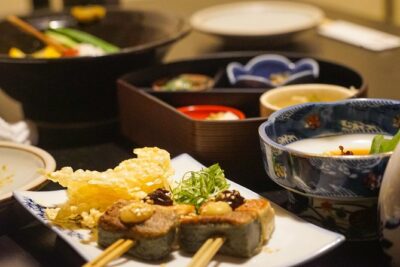 ★ 5.0Kyoto Night Foodie Tour in Gion (9+ dishes + 6 Sake tastings)From $163
 ★ 4.9Kyoto: Gion Magical Night Walking Tour with Geisha InsightsFrom $34
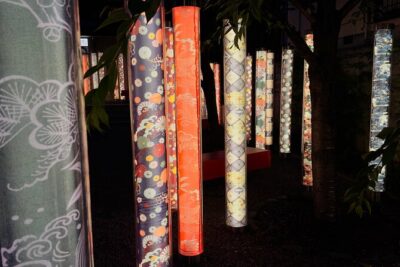
 ★ 5.0Kyoto Gion Night Walk & Geisha District Guided TourFrom $18
 ★ 5.0Kyoto Ghost Tour: Dark Tales, Urban Legends, Bamboo Forest NightFrom $43
 ★ 5.0Kyoto Bar Hopping Night TourFrom $105