
Reviewed · E-BIKES
Historical Kyoto E-Bike Tour
Kyoto’s famous sights are spread across the city, and this small-group e-bike tour links several of the best in one long morning and early afternoon. You ride through ordinary neighborhoods, then stop at Kitano Tenmangu, Kinkaku-ji, the Arashiyama Bamboo Grove, and Tenryu-ji with a guide to explain what you are seeing.
I like the way the electric bikes make a demanding route manageable, and I like the mix of major sights and quieter streets. Guides such as Jody, Pohan, Diego, Jorge, and George are praised for clear explanations, patience, humor, and careful road guidance. The trade-off is that you share Kyoto’s streets with cars, buses, mopeds, pedestrians, and other cyclists, so this suits confident city riders better than complete beginners.
In This Review
- Key points to know before you book
- Why an e-bike works so well in Kyoto
- Starting near central Kyoto
- Kitano Tenmangu and the plum-tree season
- Kinkaku-ji, the Golden Pavilion
- The ride west toward Arashiyama
- Walking beneath the Arashiyama Bamboo Grove
- Tenryu-ji and its garden
- The guides make the history easier to follow
- Is the $99.49 price good value?
- Who should book this Kyoto bike tour?
- Should you book it?
- FAQ
- How long does the Historical Kyoto E-Bike Tour last?
- Which sights are included?
- Is an electric bike provided?
- How large is the group?
- Is lunch included in the price?
- Where does the tour start and finish?
Key points to know before you book
- Four major Kyoto stops in one outing: See Kitano Tenmangu, Kinkaku-ji, Arashiyama Bamboo Grove, and Tenryu-ji.
- E-bikes reduce the strain: You still pedal, but the electric assistance helps with a long route.
- A maximum of eight people: The small group gives the guide room to answer questions and keep the ride together.
- A useful mix of cycling and walking: Expect temple visits, a bamboo-forest walk, road riding, and lunch time.
- Bring Japanese yen: Lunch may be at a cash-only ramen restaurant, and small coins are useful for shrine and temple customs.
- Plan extra time to find the start: The meeting point is at Memory Kyoto Bike Tour in Nakagyo Ward, and one rider found it tucked down a back road with little signage.
Why an e-bike works so well in Kyoto
Kyoto is compact on a map but wide in practice. Kinkaku-ji sits northwest of the central area, while Arashiyama is farther west. Reaching both by public transportation takes planning and often means switching between buses, trains, and crowded streets.
A bicycle gives you a better feel for the city. You pass narrow residential roads, ordinary shops, river routes, and local traffic rather than seeing Kyoto only through train windows. The electric motor matters because this is not a short sightseeing spin. The ride lasts about five to six hours, with substantial time spent on foot at the sights and time set aside for lunch.
You receive a bike, helmet, and bottle of water. The e-bikes have been described as comfortable and easy to pedal, and some groups have used newer models in good condition. You still need to know how to control a bicycle, stop at signs, and ride in traffic. The motor does not remove the need for attention.
This is best understood as a sightseeing tour with cycling between stops, not a pure bike ride. One account estimated the day at about 75 percent walking and 25 percent riding. That ratio may vary, but it gives you the right idea: the bike helps you cover distance, while the temples and gardens require walking.
Other cycling tours in Kyoto
Starting near central Kyoto
The tour begins at Memory Kyoto Bike Tour, at 8-6 Umaryo-cho in Nishikyo Nakagyo-ku, Kyoto. The meeting point is near public transportation, but allow time to locate it. The start has been described as being down a back road and not heavily marked, so do not arrive at the last minute.
Two morning start options give you some flexibility. The exact start time matters because the tour is long and ends back at the same meeting point. A mobile ticket is provided, and booking confirmation is sent at the time of reservation.
At the beginning, expect the practical basics: bike assignment, helmet, and guidance for riding in Kyoto. A good guide will explain how the group handles crossings and city streets. George, for example, was praised for explaining road rules and calling out streets and crossings clearly. Guides have also used a lead-and-follow arrangement, with one person at the front and another at the back, to help keep the group together.
That attention is important. Kyoto has few dedicated bike paths on parts of this route. You may share the road or path with vehicles, buses, mopeds, pedestrians, and other cyclists. If you are comfortable riding in a city, the route should feel like an active way to sightsee. If you have not ridden for years, or you are nervous around traffic, this may not be the relaxing outing you imagine.
Kitano Tenmangu and the plum-tree season
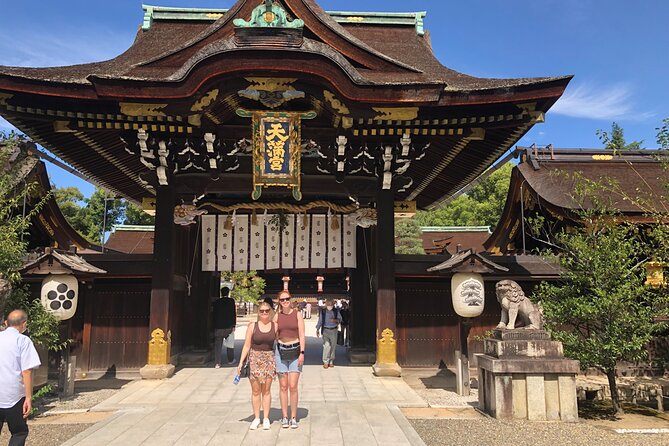
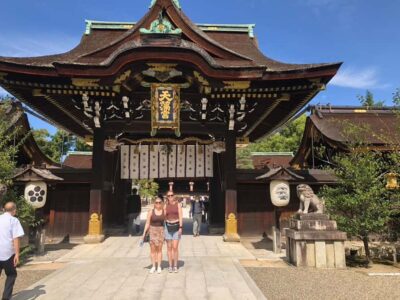
The first listed stop is Kitano Tenmangu Shrine, where you learn about Sugawara no Michizane and the shrine’s connection with learning. This gives the day a useful start because the guide can explain not only the buildings, but also the beliefs and customs connected with the site.
The shrine is especially appealing in early spring, when roughly 1,000 plum trees bloom. If your visit falls during that season, the setting can be one of the prettiest portions of the route. Outside the flowering period, the shrine remains important for its religious and cultural meaning, but you should not expect the same seasonal display.
The stop lasts about 30 minutes, and admission is included. That is enough time for a guided look and photographs, though not an unhurried exploration of every corner. The guide may also help you understand traditional actions at shrines and temples. Bring a few low-value coins if you want to take part in customs, make a wish, or purchase a small prayer item. Those extras are not included in the tour price.
The appeal here is the explanation. Kyoto’s religious sites can blur together when you visit several in a single day. A guide who explains the difference between shrine and temple practices, and connects the site to Japanese culture, gives you a clearer framework for the rest of the tour.
Kinkaku-ji, the Golden Pavilion
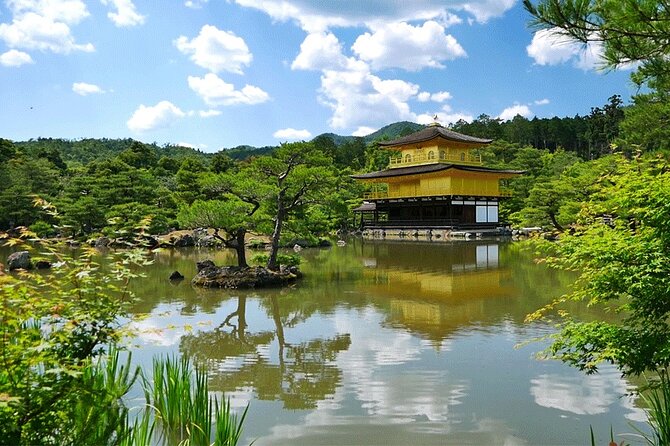
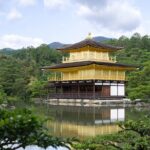
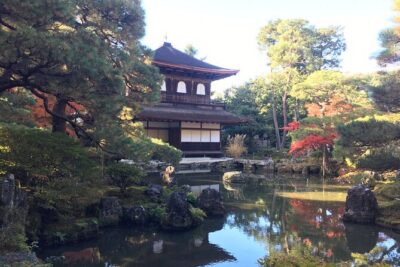
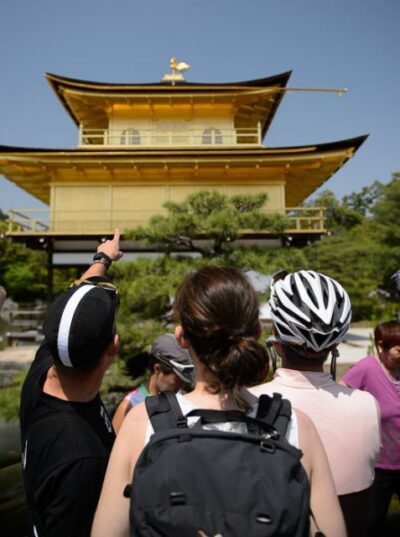
Kinkaku-ji, also called the Golden Pavilion, is the visual showpiece of the route. Its gold-leaf exterior reflects in the pond, creating the classic Kyoto image you probably have in mind before arriving.
The visit lasts about 45 minutes, with admission included. Your guide explains the temple’s origins and significance, then you have time to enjoy the pond and take photographs. The setting is carefully arranged for viewing, but it is also one of Kyoto’s most popular attractions. Crowds can be heavy, particularly at busy times and in popular seasons.
That crowd is the main limitation. The e-bike gets you between districts efficiently, but it does not make Kinkaku-ji quiet. You may need patience around the viewing area, and the walk through the grounds is part of the experience. Still, seeing the pavilion as one stop in a larger day works well. You do not spend half a day arranging transport to reach it, then lose the rest of your schedule.
Snow can transform the scene. One winter outing continued in difficult snowy conditions, with the guide rearranging parts of the day. The Golden Pavilion in snow was described as an unexpected highlight. Weather can also be a disadvantage, of course, so dress for the season and understand that route changes may be needed in rain or snow.
The ride west toward Arashiyama
The time between the listed stops is spent riding and stopping for lunch. This is where the tour earns its keep. Instead of treating each attraction as an isolated photo stop, you cross a large part of western Kyoto by bicycle.
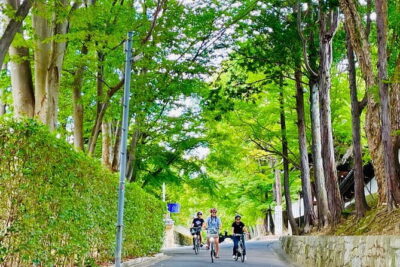
The route includes back streets and scenic stretches, giving you a look at the city beyond the main tourist corridors. You might pass through quiet neighborhoods and along routes that would be awkward to cover by foot. The e-bike lets the group move at a useful pace without turning the day into a race.
The cycling is not always effortless. Stop signs, local drivers, and mixed traffic can feel uncomfortable if you are not used to urban riding. Parents should consider this carefully for younger children. A family with 12- and 14-year-old riders found the tour suitable because the children were proficient and street-aware, but recommended it more strongly for teenagers and older riders who can manage city roads.
Lunch is part of the day, but the meal is not clearly fixed to one restaurant. Groups have eaten at a local ramen place, a food court with many street-food choices, and a Japanese restaurant with a broad menu. One ramen stop was cash only, and another experience specifically advised bringing yen for food purchases. Ask your guide where the group is stopping, but arrive with cash rather than assuming cards will be accepted.
The food break is more than fuel. It gives you a chance to sit down after the morning riding and walking, and it adds a local eating experience to a day otherwise focused on temples. One group particularly enjoyed lunch beside the river. Dietary needs have been accommodated in some groups, but you should still tell the provider in advance rather than relying on an informal adjustment.
Other historical tours in Kyoto
Walking beneath the Arashiyama Bamboo Grove
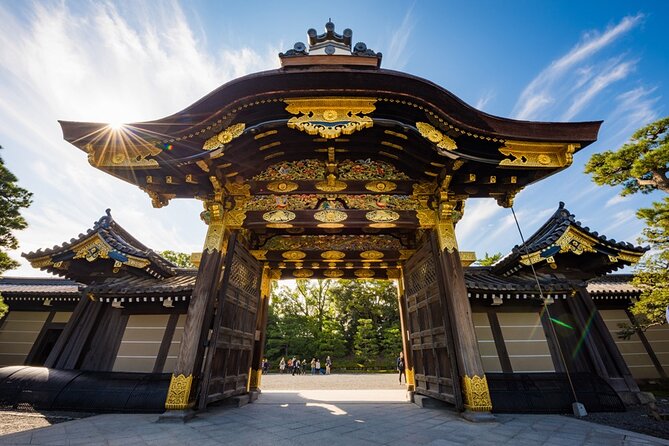
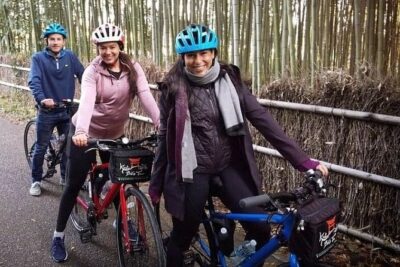
The Bamboo Forest Trail is one of Kyoto’s most recognizable sights. Tall bamboo rises on both sides of the path, creating a narrow green corridor that feels unlike the city streets you have just left.
The scheduled visit lasts about 45 minutes, and the main activity is walking, not cycling. The grove is famous and can be crowded, so your experience depends heavily on the time and day. Do not expect complete solitude or unlimited time for photographs. The narrow path also means you need to stay aware of other people.
Even with crowds, this is a worthwhile stop because the scale of the bamboo is difficult to understand from a picture. Your guide can help place the area within the wider Arashiyama district and may offer choices about where to finish the walk. Some outings have also included time for the Kimono Garden near the end of the route, though you should treat that as a possible extra rather than a guaranteed stop.
The bike is left behind while you walk. This is a good point to remember when deciding what to carry. Wear shoes that are comfortable for temple grounds and paths, and keep your belongings manageable for a full day of moving around.
Tenryu-ji and its garden
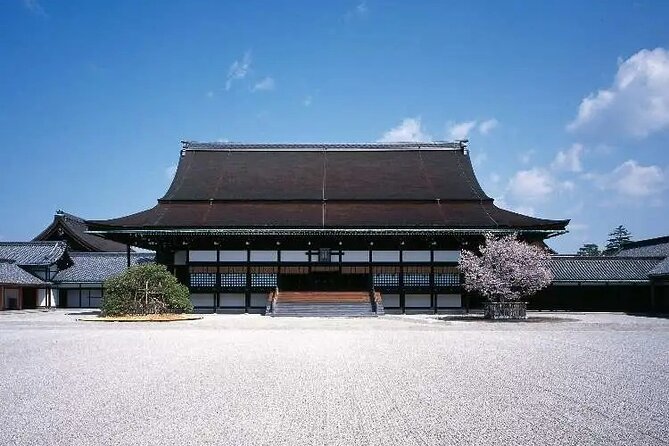
Tenryu-ji provides a calmer counterpoint to the bamboo grove. The temple is known for its garden, and the tour allows about 45 minutes to walk through it. It has been a UNESCO World Heritage Site since 1994.
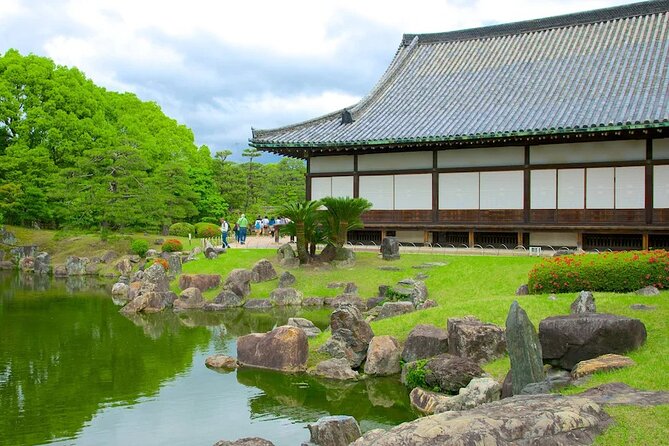
The garden is the reason to slow down here. After the shine of Kinkaku-ji and the tall bamboo at Arashiyama, Tenryu-ji offers a more composed view of ponds, rocks, trees, and carefully arranged scenery. Your guide can explain the temple’s place in Japanese religious and artistic tradition while you walk.
There is still some practical compromise. Forty-five minutes is enough for an introduction, but not for every building, garden path, and nearby Arashiyama sight. The tour is designed to sample several important places, not give you a full day at any one temple. If Tenryu-ji is a personal priority, you may want to return on your own for a slower visit.
After the final stop, the activity ends back at the original bike-tour meeting point. That return makes the tour easier to fit into a Kyoto schedule, since you are not left across town trying to collect belongings or find your way back.
The guides make the history easier to follow
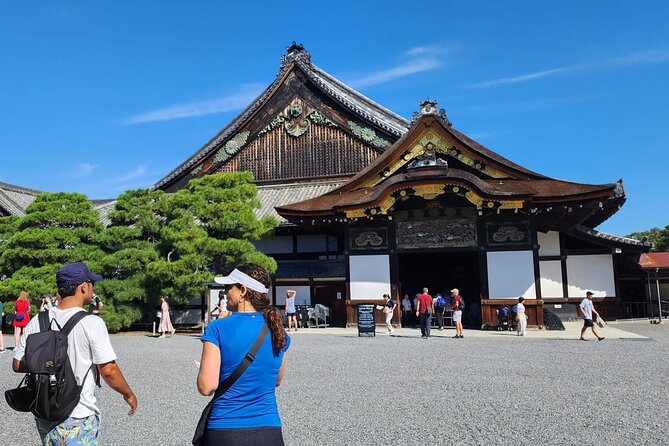
The strongest part of this experience is the guiding. Jody has been praised for explaining Japanese customs and religion in clear terms, drawing on more than two decades of life in Japan and previous teaching experience. Pohan is described as friendly, patient, and good at explaining traditions. Diego, Jorge, George, and Benjamin have also received strong praise for humor, safety, cultural context, and personal attention.
That range of guide styles matters because this is not simply a bicycle rental with a route map. You are moving through shrines and temples where small details can be hard to interpret on your own. A guide can explain why people behave in certain ways, what you are looking at, and how the sites fit into Kyoto’s past and present.
Guides have also adapted when conditions changed. Rain led one guide to alter the timing for group comfort, while heavy snow prompted another to rearrange the day. That flexibility is useful, though weather changes may mean that the exact order or amount of time at a stop is adjusted.
The group limit is eight people. That is large enough to meet other visitors from different countries, but small enough for questions and requests to be heard. It also makes road management more practical than a large cycling convoy.
Is the $99.49 price good value?
At $99.49 per person, this is not the cheapest way to see Kyoto’s temples. You could use trains and buses for less, then pay individual admission fees. You would also have more control over how long you stay at each place.
The price makes more sense when you count what is bundled together: an e-bike, helmet, guide, water, admission to the four listed stops, route planning, and a full five to six hours of transport between widely separated parts of Kyoto. You are also paying for the guide’s explanations and for not having to work out the most efficient order yourself.
I see it as good value if you have limited time, want an active day, or find Kyoto’s transport system tiring. It is less compelling if you already plan to visit these sites independently, dislike road cycling, or want long, quiet visits inside each temple.
Lunch is not presented as included, so budget separately and bring yen. You may also want small coins for religious customs or optional purchases.
Who should book this Kyoto bike tour?
I would choose this tour if you want to cover western Kyoto efficiently and see more than you could comfortably reach on foot. It is especially useful early in a Kyoto visit because the guides provide context that can improve your later temple visits.
It suits adults, active families with capable teenage riders, and anyone who enjoys seeing a city from street level. The e-bike helps, but you still need basic bike control and comfort around traffic. It also suits people who prefer a small group rather than a private tour price.
I would skip it if cycling in city traffic makes you uneasy, if you need a fully accessible vehicle-based tour, or if you want a slow, detailed visit at only one or two sites. The day involves riding, walking, weather exposure, crowds, and a fixed route.
Should you book it?
Book this Historical Kyoto E-Bike Tour if your priority is seeing a lot of Kyoto in one organized day while still passing through ordinary streets. The combination of Kinkaku-ji, Arashiyama, Tenryu-ji, and Kitano Tenmangu is strong, and the guides add real value by explaining customs rather than simply naming buildings.
Before booking, be honest about your cycling ability. Bring water beyond the included bottle if you prefer to drink often, comfortable walking shoes, yen for lunch, and small coins for optional temple customs. Also allow extra time to locate the start.
With a 4.9 rating from 181 reviews and a 98 percent recommendation rate, the experience has a strong record. The best reason to choose it, though, is practical: you get a guided look at Kyoto’s major western sights, a taste of its back streets, and an efficient way to cross a city that is too spread out for a comfortable walking tour.
FAQ
How long does the Historical Kyoto E-Bike Tour last?
The tour lasts approximately five to six hours. The remaining time is used for cycling between locations and lunch.
Which sights are included?
The route includes Kitano Tenmangu Shrine, Kinkaku-ji Temple, the Arashiyama Bamboo Grove, and Tenryu-ji Temple. Admission tickets for the listed stops are included.
Is an electric bike provided?
Yes. An e-bike and helmet are provided for the tour. The electric assistance reduces physical effort, but you still need to be able to ride a bicycle in city conditions.
How large is the group?
The tour has a maximum of eight travelers. The small group size allows for a more personal experience and easier communication with the guide.
Is lunch included in the price?
Lunch time is part of the tour, but the provided information does not state that food is included. Bring Japanese yen, since at least one ramen lunch location has been cash only.
Where does the tour start and finish?
The tour starts at Memory Kyoto Bike Tour, 8-6 Umaryo-cho, Nishikyo Nakagyo-ku, Kyoto. It ends back at the same meeting point. Free cancellation is available up to 24 hours before the start time for a full refund.
More E-Bikes in Kyoto

More Historical Tours in Kyoto
More Cycling Tours in Kyoto
More tours in Kyoto we've reviewed




E-Bikes, compared.
 ★ 5.0Hidden Kyoto E-Biking tourFrom $116
 ★ 5.05 Top Highlights of Kyoto Full Day Bike Tour (E-bike option)From $172
 ★ 5.0E-Bike Tours of the highlights of Kyoto!!!From $109
 ★ 4.9Kyoto: Memory Kyoto E-Bike TourFrom $105
 ★ 4.9Kyoto: City Secrets eBike TourFrom $1273h 45m
 ★ 5.0Pedal Adventure Kyoto’s iconic landmarks on an e-bike tourFrom $86