
Reviewed · ARASHIYAMA & BAMBOO TOURS
Explore Arashiyama Bamboo Forest with Authentic Zen Experience
The best part of this Arashiyama outing is not the famous bamboo path. It is the climb to Daihikaku Senkoji, where a Buddhist monk leads about an hour of meditation and chanting in a quiet temple setting. You also get broad views over Kyoto, Arashiyama, and the Hozu River valley.
I like the mix of real Zen practice and outdoor walking, rather than a quick photo stop. I also like the gentle finish at Randen Arashiyama Station, with Japanese snacks, the Kimono Forest, and a foot bath. The catch is clear: you spend time walking through town before the climb, and the uphill route requires moderate fitness.
In This Review
- Key points to know before booking
- Why the temple matters more than the bamboo photos
- Starting at Saga-Arashiyama Station at noon
- Main Street, Togetsukyo Bridge, and the Bamboo Forest
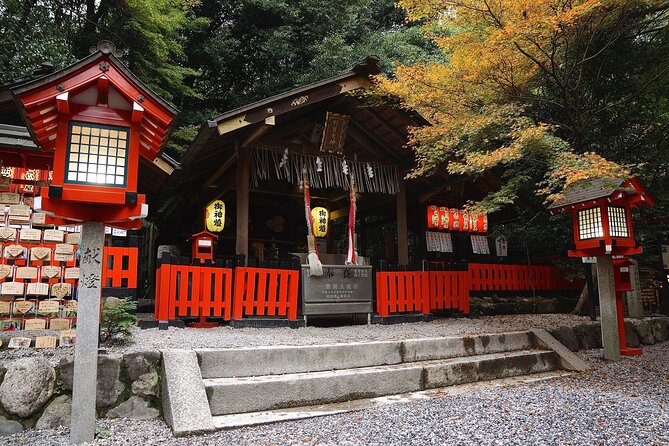
- Nonomiya Shrine and the shift from sightseeing to Zen
- Kameyama Park and the uphill route
- Senkoji Temple and the one-hour meditation lesson
- The descent to Kimono Forest and the Randen station
- Is $114 a fair price?
- Who will enjoy this Arashiyama outing?
- Practical details that affect your day
- Should you book it?
- FAQ
- Where does the tour start?
- Where does the tour end?
- How long does the experience last?
- Is the tour private?
- Does the tour require much walking?
- What is included in the price?
Key points to know before booking
- An hour with a Buddhist monk: Learn meditation and sacred chants at Senkoji Temple, with English interpretation from your guide.
- A proper uphill walk: The route includes city streets, an old bamboo grove, Kameyama Park, and a climb to the mountaintop temple.
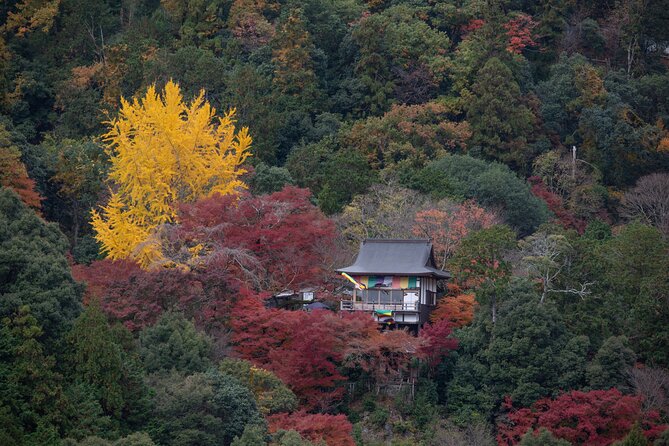
- Big views reward the effort: Look across Kyoto, Arashiyama, and the Hozu River valley from the temple.
- A private four-hour outing: Only your group takes part, which allows a more personal pace and conversation.
- A calm finish: End at Randen Keifuku Arashiyama Station with snacks, patterned kimono panels, and a foot bath.
- Start at noon: Meet at Saga-Arashiyama Station, not at your hotel. Check the correct train line before setting out.
Why the temple matters more than the bamboo photos
Arashiyama’s Bamboo Forest is one of Kyoto’s best-known sights, but it can feel crowded and hurried. This tour uses the bamboo as a starting point, then takes you toward a quieter religious setting that gives the afternoon more substance.
The Zen portion takes place at Daihikaku Senkoji, a mountaintop temple also called Senkoji Temple in the tour details. You spend about 90 minutes at the temple stop, with roughly an hour devoted to Buddhist teaching, meditation, and sacred chants.
That time matters. You are not simply being shown a temple courtyard and given a few facts. A qualified monk teaches the practice, while your English-speaking guide translates the steps and explanations. The setting makes the lesson feel connected to place, not like a classroom session dropped into a sightseeing route.
I particularly like this approach for anyone who wants more than a quick look at Kyoto’s religious buildings. You get a direct introduction to Zen practice, with room for questions and conversation. The session is also the part most likely to stay with you after the photos have faded.
A few more Kyoto tours and experiences worth a look
Starting at Saga-Arashiyama Station at noon
The meeting point is Saga-Arashiyama Station, at 11-1 Sagatenryuji Kurumamichicho, in Kyoto’s Ukyo Ward. The tour starts at 12:00 pm and lasts about four hours.
You need to arrange your own way to the station. Hotel pickup and drop-off are not included, so allow time to reach western Kyoto before noon. One useful warning from the practical side of this outing: make sure you take the correct train line to Saga-Arashiyama. The route has several rail options, and a wrong choice can make a simple meeting time stressful.
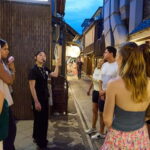
Starting at midday has two effects. You avoid an early morning departure, which is welcome after a late night in Kyoto. On the other hand, you are walking during the busiest part of the day in a popular sightseeing district, especially around the main street and Bamboo Forest.
Your guide, identified in the tour information as Miya or Miyake, leads the route in English. The tour is private, so only your group participates. That is a useful advantage here. The day includes a meditation lesson, a climb, and several stops, and a private format gives you a better chance to ask questions without holding up a large group.
Main Street, Togetsukyo Bridge, and the Bamboo Forest
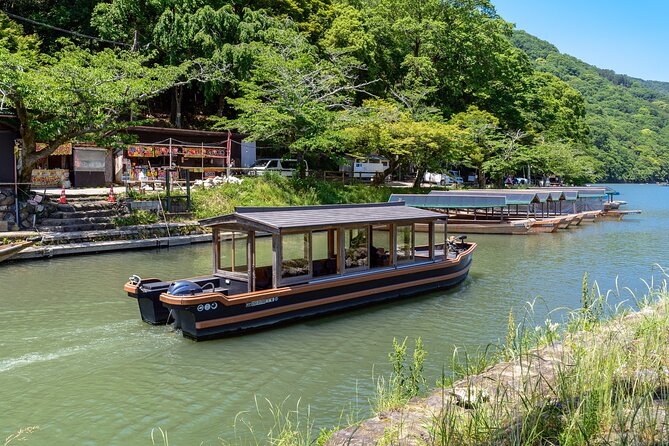
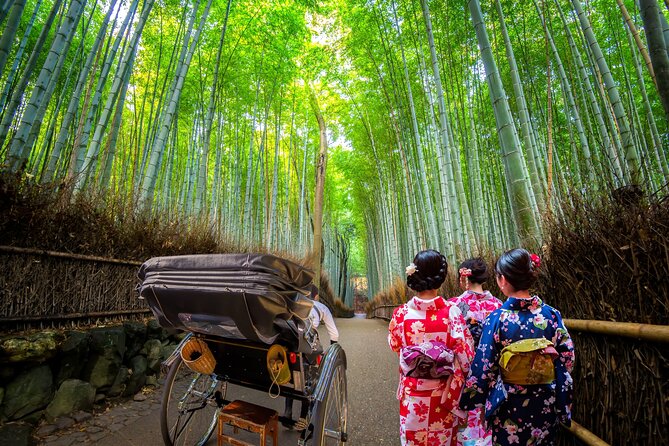
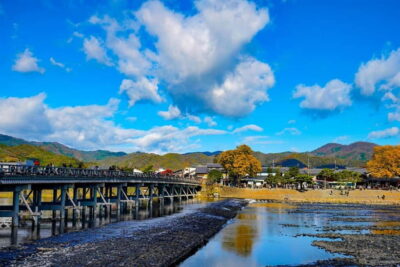
The outing begins around Arashiyama’s main street and the historic Togetsukyo Bridge before moving into the Bamboo Forest. This opening section gives you a quick sense of Arashiyama as both a scenic district and a former retreat for Kyoto’s imperial court.
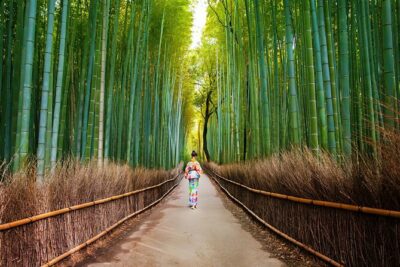
Expect about 30 minutes at the Bamboo Forest stop. Admission is free, but the time is short. You will see the well-known bamboo path, take photographs, and hear some context from the guide, but this is not a long, unstructured visit.
That limited time is worth noting if the Bamboo Forest is your main reason for booking. You will not get a full morning to wander every path at your own pace. The reward is that the tour does not spend the entire afternoon in the most crowded section of Arashiyama.
The first stretch can involve more town walking than you might expect. One past participant found the city walking excessive before reaching the temple, and that is a fair concern if you pictured a quiet forest walk from the first minute. Wear shoes that can handle pavement as well as uphill paths, and keep water close at hand.
Nonomiya Shrine and the shift from sightseeing to Zen
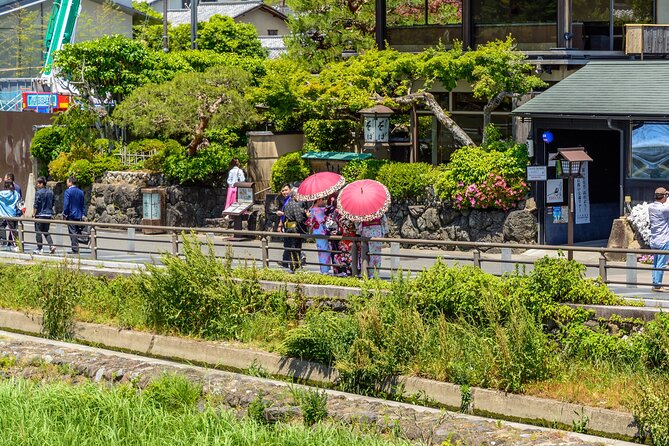
Nonomiya Shrine is the next named stop, with about 30 minutes set aside. The shrine is closely tied to the Bamboo Forest area, so it fits naturally into the route rather than feeling like a distant detour.
Here the focus turns toward Buddhism and the questions that lead into the temple visit. You can speak with the guide about Buddhist teachings before the climb, which helps frame the meditation session as part of a wider practice.
The itinerary information connects this stop with conversation and the later ascent to Senkoji. In practical terms, this is where the afternoon changes tone. The early route is familiar Kyoto sightseeing. After Nonomiya Shrine, the guide begins leading you toward the less obvious part of Arashiyama.
Kameyama Park and the uphill route
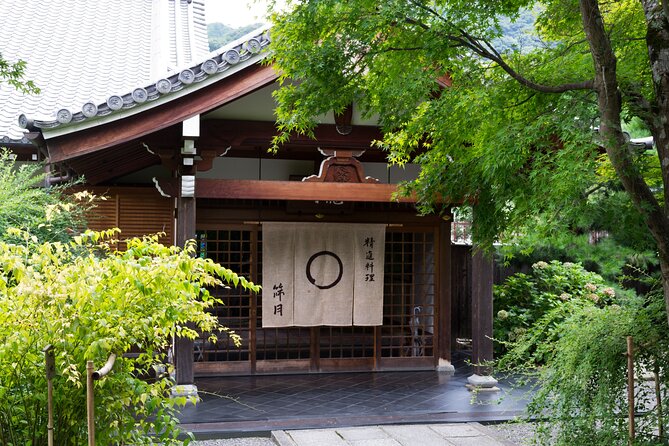
At Arashiyama Park’s Kameyama Area, you continue through an older bamboo grove and toward the park’s higher ground. This section is more physical than the opening walk.
The route includes an uphill trek to the temple, and the total walking effort should not be underestimated. Two of the strongest accounts of the outing praised the views and the temple lesson, while also pointing out that the climb takes energy and endurance. The activity calls for moderate physical fitness, and that description is important.
You do not need to be an expert hiker based on the supplied information, but you should be comfortable walking for several hours and climbing uphill. Anyone managing mobility limits, fatigue, or discomfort on uneven routes should consider the demands carefully before booking.
The payoff is a more scenic approach than simply arriving at a temple entrance by vehicle. You pass through bamboo and parkland, then reach a place with wide views over Kyoto, Arashiyama, and the Hozu River valley. I like that the climb gives the temple visit a sense of arrival. It asks something of you, then rewards you with space and views.
Senkoji Temple and the one-hour meditation lesson
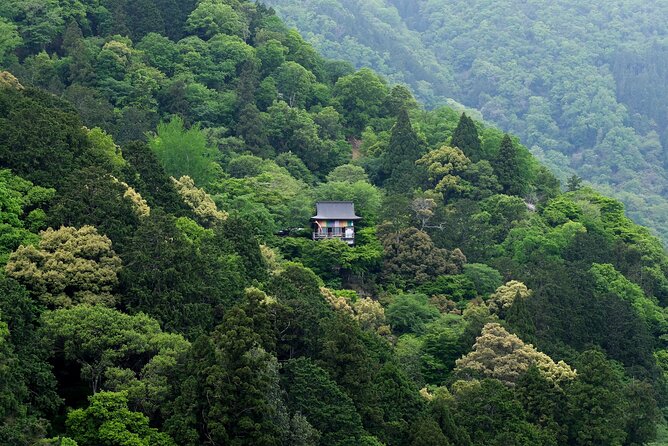
The Senkoji Temple stop lasts about 90 minutes and is the heart of the outing. This is the unique Zen mountain temple visit promised by the tour, with admission included.
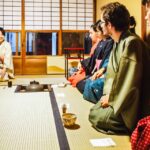
A Buddhist monk teaches meditation and sacred chants for about an hour. Your guide translates the instructions and explanations into English, so you are not left guessing what to do or why a practice matters.
The experience is described as taking place in an isolated Buddhist temple. That setting is a major part of its value. Kyoto has plenty of temples, but a guided lesson with a monk gives you a more direct connection to the religious life behind the architecture.
The monk is described as gracious and informative, while the guides Miya and Miyake receive strong praise for their handling of the visit and translation. I would treat the names as guide possibilities rather than a guarantee of who will lead your date, but the English support is included.
The temple setting is not guaranteed to be perfectly silent. Other people can sometimes behave carelessly or interrupt the atmosphere, especially at popular places. Still, the lesson itself remains the main reason to choose this outing, and the combination of meditation, chanting, and a hilltop setting is unusual for a short Kyoto tour.
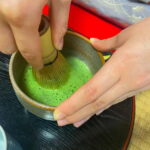
A traditional tea ceremony is also part of the advertised program, set amid the quiet surroundings. The supplied schedule places this around the Kameyama Park section, though the exact order may depend on the guide and the day. It adds another hands-on cultural element to an afternoon already built around Japanese religious practice.
The descent to Kimono Forest and the Randen station
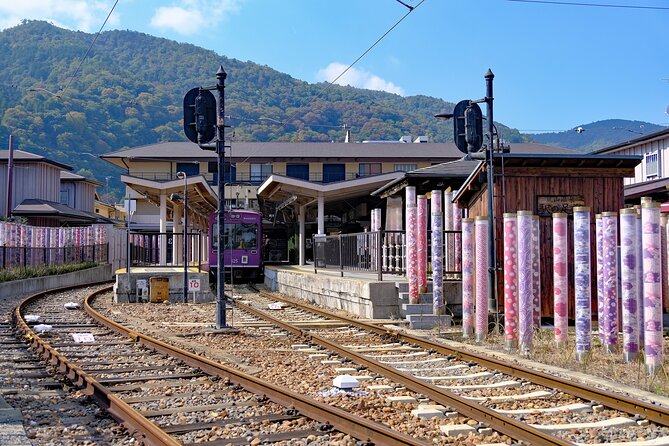
The final stop is Randen Keifuku Arashiyama Station, also called Arashiyama Station in the end point details. The tour ends here rather than returning you to Saga-Arashiyama Station or your hotel.
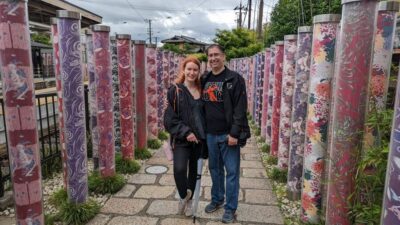
The station is known for the Kimono Forest, a display of cylinders decorated with traditional kimono patterns. After the uphill portion and temple session, this is an easygoing place to slow down.
The ending also includes traditional Japanese snacks and a foot bath. These details may sound small, but they make sense after several hours on foot. You can rest, look at the textile patterns, and let your legs recover before continuing your Kyoto plans.
Because the end point is different from the start, think about what comes next. If you are staying in another part of Kyoto, you will need to arrange your own onward travel. The end at the Randen station is convenient for continuing around Arashiyama, but it is not a hotel transfer.
Is $114 a fair price?
At $114, this is not a cheap way to see the Bamboo Forest. You could walk through the public areas of Arashiyama and visit the shrine without paying for a tour.
The value comes from the parts you cannot easily reproduce on your own: a private English-led route, a monk-guided meditation session, translated instruction, the Senkoji visit, a tea ceremony, snacks, and the structure of a scenic uphill walk. Admission to the temple is included, while personal spending is not.
I would not book this simply for the bamboo. The Bamboo Forest portion is about 30 minutes, and the main street walking may feel long if you only want photographs. I would consider the price more reasonable if you specifically want the Zen lesson and a guide to connect the religious and scenic parts of Arashiyama.
The private format also improves the value for a small group. You are not sharing the activity with strangers, and group discounts may be available. The information provided does not specify the discount amount, so check the final price before counting on savings.
Who will enjoy this Arashiyama outing?
You are a good match if you want a half-day activity that combines culture, walking, and quiet reflection. It suits people who prefer a meaningful temple visit to a checklist of famous sights.
You should also be comfortable with:
- About four hours of activity
- Walking through town before reaching the hill
- An uphill route to Senkoji Temple
- A moderate level of physical effort
- Meeting at a station and arranging your own transport
- Finishing at a different station from where you began
Families or groups with mixed fitness levels should think carefully about the climb. The private setup helps, but it does not remove the physical demand.
This may be less suitable if you want a slow, unstructured day or if the Bamboo Forest is your only priority. In that case, visiting independently gives you more control over timing. If you want a monk-led Zen lesson with English translation, the tour offers something far more specific than a standard Arashiyama walk.
Practical details that affect your day
Confirmation arrives when you book, and mobile tickets are supported. Free cancellation is available if you cancel at least 24 hours before the local start time. Cancellations or changes inside that window are not refunded or accepted.
Snacks are included, but personal expenses are not. Plan for your own transport to Saga-Arashiyama Station and from Randen Keifuku Arashiyama Station at the end.
The tour has a five-star rating from five listed reviews, with praise focused on the unforgettable Zen lesson, the guides’ translation, the spectacular views, and the scenic trek. Those strengths are believable from the structure of the day, but the small number of ratings means I would still judge the tour by its physical demands and special focus rather than by the score alone.
Should you book it?
Book this tour if you want a real introduction to Zen practice, not just another pass through the Bamboo Forest. The monk-led meditation, English translation, hilltop setting, and views make the day distinctive.
Skip it if you dislike uphill walking, want a relaxed photo tour, or need hotel pickup. For the right person, the $114 price buys access to a memorable temple lesson and a well-shaped route through Arashiyama. For everyone else, the climb and city walking may feel like too much effort for a short bamboo visit.
FAQ
Where does the tour start?
It starts at Saga-Arashiyama Station, at 11-1 Sagatenryuji Kurumamichicho, Ukyo Ward, Kyoto. The scheduled start time is 12:00 pm.
Where does the tour end?
It ends at Randen Keifuku Arashiyama Station, also referred to as Arashiyama Station in the end point details.
How long does the experience last?
The tour lasts approximately four hours.
Is the tour private?
Yes. Only your group participates in the activity.
Does the tour require much walking?
Yes. You walk through Arashiyama, the Bamboo Forest, Nonomiya Shrine, and Kameyama Park, then climb uphill to Senkoji Temple. A moderate level of physical fitness is recommended.
What is included in the price?
The price includes an English-speaking guide, the Daihikaku Senkoji Zen mountain temple experience, and snacks. Hotel transfers and personal expenses are not included.
More Arashiyama & Bamboo Tours in Kyoto
More tours in Kyoto we've reviewed


Arashiyama & Bamboo Tours, compared.
 ★ 4.8Kyoto: Fushimi Inari, Kinkakuji, Bamboo Grove 1 Day Bus TourFrom $122510 minutes - 9 hours
 ★ 4.1Osaka/Kyoto:Kinkakuji,Arashiyama,FushimiInariShrine,NaraParkFrom $66
 ★ 4.7Kyoto/Osaka: Nara, Fushimi Inari Taisha, Arashiyama Bus TourFrom $529 - 10 hours
 ★ 5.0Kyoto Arashiyama Walking Tour: Bamboo, Monkeys, Gardens & SecretsFrom $65
 ★ 4.8Arashiyama Bamboo, Temple, Monkeys, or Secret Sake BreweryFrom $875 hours - 330 minutes
 ★ 4.4Osaka/Kyoto: Arashiyama, Nara & Fushimi Inari Shrine w/LunchFrom $61