
Reviewed · TEA CEREMONY EXPERIENCES
Kyoto: Tea Ceremony Experience
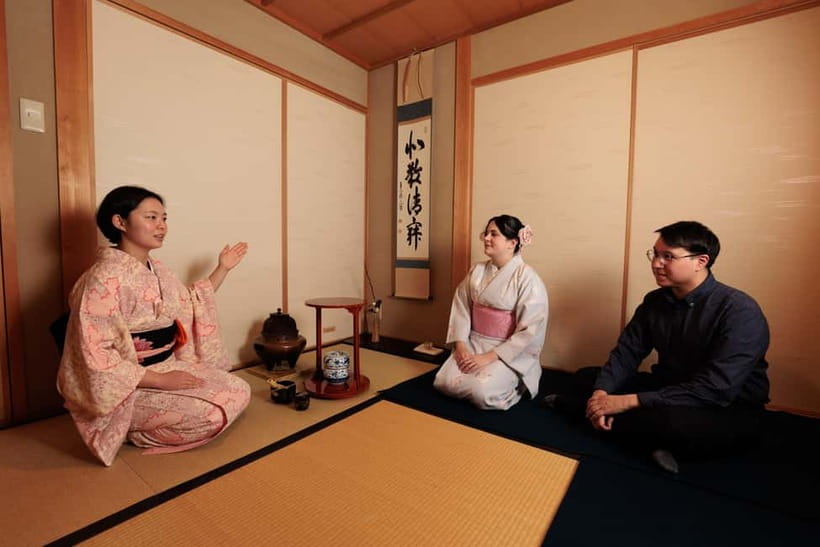
Kyoto’s tea ceremony is less about drinking a cup of green tea than noticing every small choice around it. In this 45-minute experience, you learn why the utensils, room decorations, guest movements, and seasonal sweet all matter before watching a formal demonstration and making your own matcha.
I like the clear, friendly teaching and the excellent location down a quiet alley near Ninenzaka and Kiyomizu-dera. I also like that you do not only sit and watch: you whisk your own bowl of matcha with help from the host. The main consideration is floor seating, which can become uncomfortable during the session, though chairs and tables are available if needed.
- A hands-on matcha lesson: Whisk your own frothy bowl after watching the host perform the ceremony.
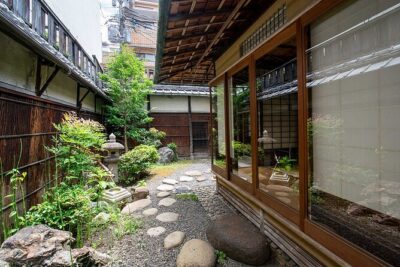
- A traditional machiya setting: Learn inside a Kyoto tearoom in the Higashiyama district.
- Seasonal sweets included: Taste a locally produced sweet alongside Kyoto-grown matcha.
- Useful cultural context: Hear about utensils, room layout, decorations, symbolism, and the three tea schools.
- Easy sightseeing pairing: Walk to Kiyomizu-dera, Kodai-ji, Yasaka-jinja, Maruyama Park, Chion-in, or Gion afterward.
- Flexible format: Book a private or small-group session, with English instruction throughout.
In This Review
- Why This Short Tea Ceremony Is Worth Your Time
- Finding the Tearoom Near Ninenzaka
- What Happens During the 45 Minutes
- Making Your Own Bowl of Matcha
- The Meaning Behind the Utensils and Room
- Sitting Comfortably in the Tearoom
- Is $32 a Good Price?
- How to Fit It Into a Higashiyama Day
- Who Will Enjoy This Most?
- Should You Book the Camellia Tea Ceremony?
- FAQ
- How long does the Kyoto tea ceremony experience last?
- How much does the experience cost?
- Is the tea ceremony conducted in English?
- What is included in the price?
- Can I make my own matcha?
- Where is the meeting point?
- Can I take photographs during the ceremony?
- Are chairs available if I cannot sit on the floor?
- Is the tearoom wheelchair accessible?
- Can I bring an interpreter or a baby under three?
Why This Short Tea Ceremony Is Worth Your Time
A Kyoto tea ceremony can seem mysterious if you only see it from the outside. The gestures are precise, the objects look carefully placed, and the host may appear to move at a slow, deliberate pace. This session gives you the basic keys to read what is happening.
You begin with an introduction to matcha and the ceremony itself. The host explains the utensils, the order of events, and the role of the room. That preparation makes the demonstration far more meaningful. Instead of watching someone whisk tea and wondering why each movement takes so long, you can follow the purpose behind it.
The session is conducted in English, and the teaching style is designed for first-time participants. Several experiences have been led by Ikuko, whose explanations are clear and patient. The hosts also make time for questions about Japanese culture, the history of matcha, and the three main schools of tea ceremony.
This is not a full education in becoming a tea master. In 45 minutes, you learn the basic ideas and take part in a simplified hands-on portion. That is a strength for most visitors. Kyoto offers plenty of formal cultural activities that can feel difficult to enter, while this one gives you a friendly starting point without requiring prior knowledge.
Finding the Tearoom Near Ninenzaka
The meeting point is in Higashiyama, one of Kyoto’s best areas for historic streets and major temples. The tearoom is down an alley branching from Ninenzaka, so you should not expect to see it directly on the main thoroughfare.
The easiest landmark is the Park Hyatt hotel. Opposite the hotel is a Studio Ghibli store. Look for the alley just to the left of that store. Clear directions are important here, and the entrance can be easy to miss if you are focused on the crowds and shops along Ninenzaka.
Once you find the alley, a sign and staff member help direct you inside. Allow a little extra time for finding the entrance, especially if you are arriving during a busy sightseeing period. You are in one of Kyoto’s most visited districts, where narrow lanes, souvenir shops, and temple traffic can slow your progress.
The location is one of the strongest parts of the booking. You can combine the tea ceremony with Kiyomizu-dera and the streets around it, then walk toward Kodai-ji, Yasaka-jinja, Maruyama Park, Chion-in, or Gion. The famous sites are close enough to make this a sensible midday pause rather than a separate cross-city trip.
A few more Kyoto tours and experiences worth a look
What Happens During the 45 Minutes
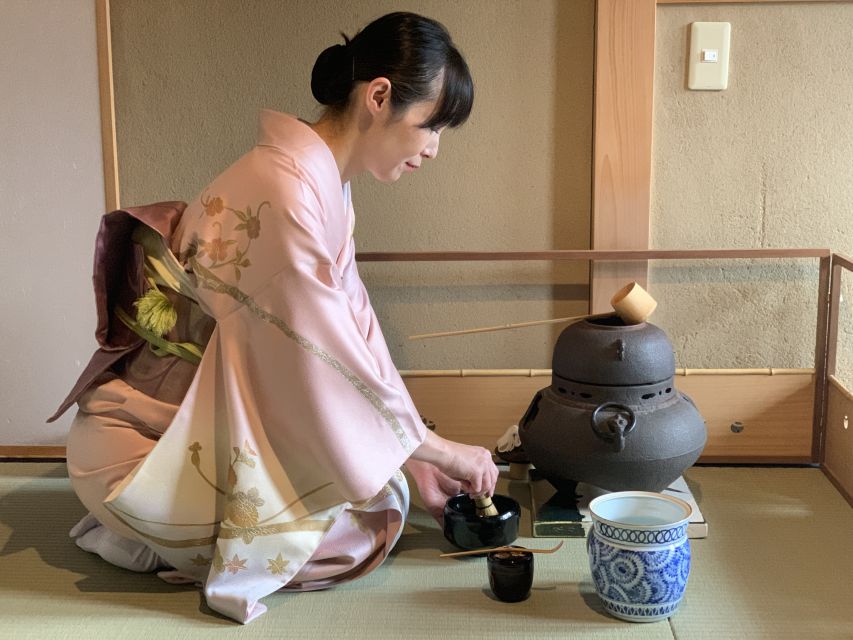
The experience starts with a short introduction. Your host places matcha within its Kyoto setting and explains what you are about to see. You learn about the tea-making tools, the sequence of the ceremony, and the meaning of the room’s decoration.
Pay attention to the room before the demonstration begins. The layout is not random. The arrangement of objects and decorations helps create the mood of the gathering and reflects the idea that each meeting has its own character. Even a brief explanation gives you a better sense of why the tearoom feels so controlled and quiet.
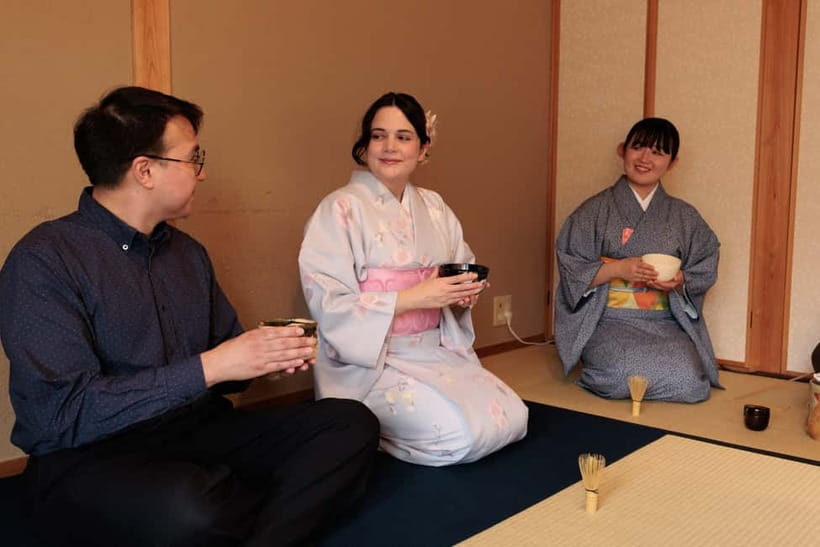
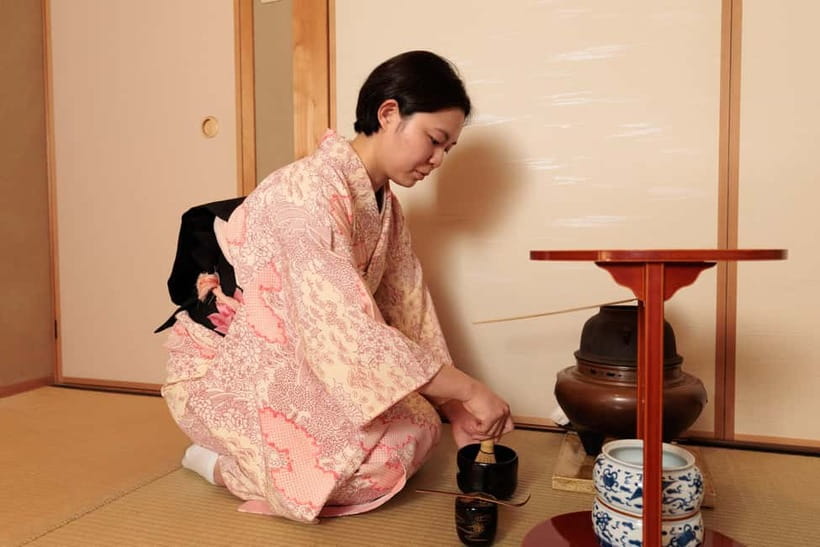
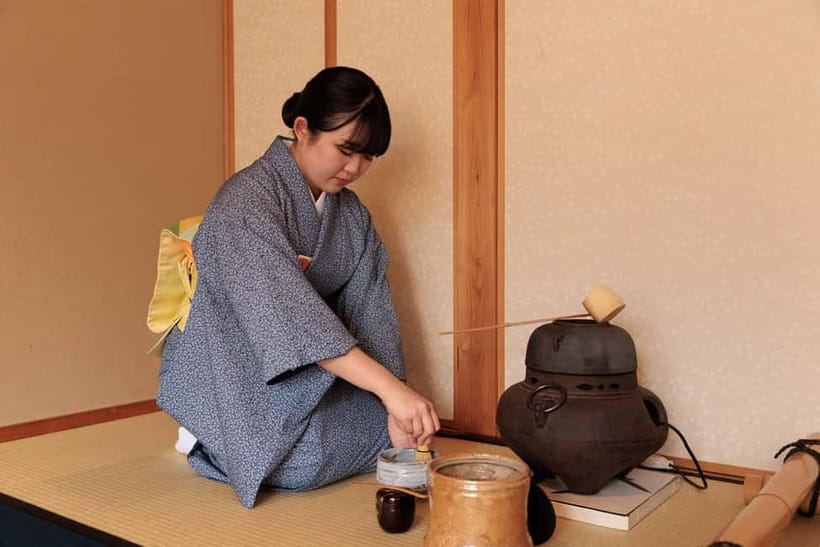
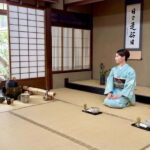
The host then performs the ceremony. The demonstration lasts about 10 minutes, according to the timing described by participants, and is the calm center of the session. Watch the handling of the bowl, whisk, scoop, and other utensils. The movements can look simple, but their order and care are the point.
You are also served a traditional seasonal sweet with matcha. The sweet gives you a small taste of the way tea is traditionally enjoyed, balancing the sharp, grassy bitterness of the drink. If this is your first matcha, do not expect it to taste like sweetened green tea. It is more concentrated and earthy, and the contrast with the confection is part of the experience.
The host keeps the atmosphere informal enough for questions. You can ask about the history of matcha in Kyoto, the tea schools, or the cultural ideas behind the ceremony. The best part of this section is the chance to connect the objects and gestures to daily life and Japanese customs rather than treating the event as a silent performance.
Making Your Own Bowl of Matcha
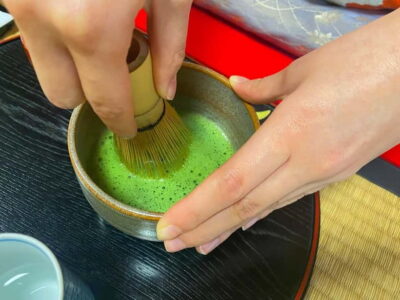
After watching the host, you get to try the basic tea-making process yourself. The instructor guides you as you place matcha in the bowl, add water, and whisk it into a foam. You are not expected to produce a tea master’s perfect bowl on the first attempt. The point is to feel the method in your own hands.
This hands-on step makes the session more memorable. You notice how the bamboo whisk works, how much effort is needed, and how different the texture feels when the powder and water are properly combined. It also removes some of the distance between you and the formal ceremony.
The hosts are patient with beginners. One participant described needing a little help to create a good foam, which is exactly what you should expect. Making matcha is easy to understand but not necessarily easy to do neatly on the first try.
You then drink the tea you prepared. For tea lovers, this is a satisfying finish because you have seen the care behind the drink and handled the tools yourself. For anyone new to matcha, it is a low-pressure way to decide how much you enjoy its naturally bitter flavor.
The Meaning Behind the Utensils and Room
The tea ceremony’s appeal comes from its attention to detail. This session explains enough of that detail to make the ritual readable without turning the 45 minutes into a lecture.
The utensils are not simply kitchen equipment. Each one has a purpose and is handled with care. The host explains the steps and shows how the objects fit into the flow of the ceremony. You begin to see that the tea is only one part of a larger exchange between host, visitor, room, season, and objects.
The room itself also teaches you something. Its decoration and layout help set the tone before a single sip is taken. This is where the session offers more than a matcha tasting. You get an introduction to hospitality, restraint, courtesy, and the value placed on being present.
The discussion of the three tea schools adds useful context. You will not master their differences in a short session, but hearing that more than one tradition exists helps you avoid treating the ceremony as one fixed national script. The host can also answer questions about Japanese culture that come up along the way.
I especially like this approach for first-time visitors. A less careful demonstration might leave you with attractive photographs but little understanding. Here, the explanation gives meaning to what you see.
Sitting Comfortably in the Tearoom
Traditional floor seating is part of the setting, but it is also the clearest practical drawback. You may spend much of the session seated on the floor, and knees or hips can become uncomfortable after a while.
You are not required to sit formally on your knees. The hosts encourage you to make yourself comfortable, and chairs and tables are available for people who have difficulty sitting on the floor. Mention your needs when booking or arriving so the staff can arrange the best option.
The tearooms are upstairs. The Garden Teahouse is wheelchair accessible, making it the better choice for anyone with mobility limitations. If you plan to bring an interpreter, a private ceremony is required so the translation does not interrupt a shared session.
Families should also note the age guidance. If you are bringing a baby or child under three, book a private ceremony at the Garden Teahouse. These details are easy to overlook, but they can make the difference between a relaxed cultural stop and an awkward one.
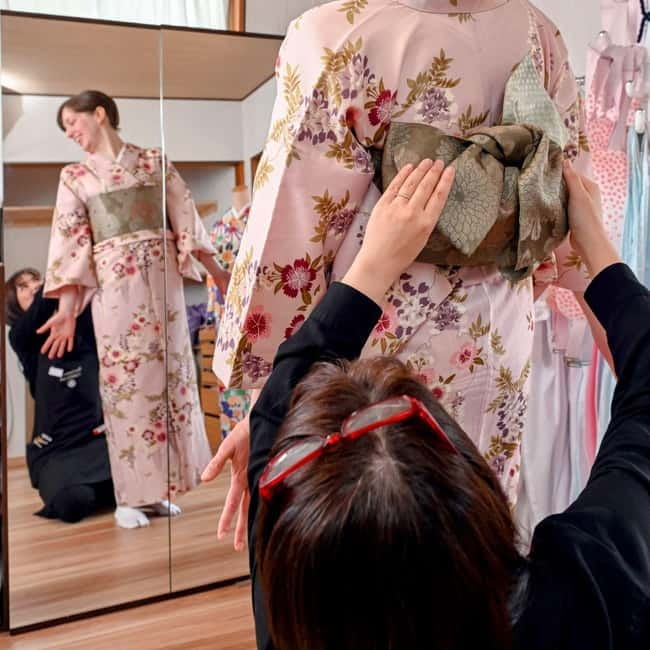
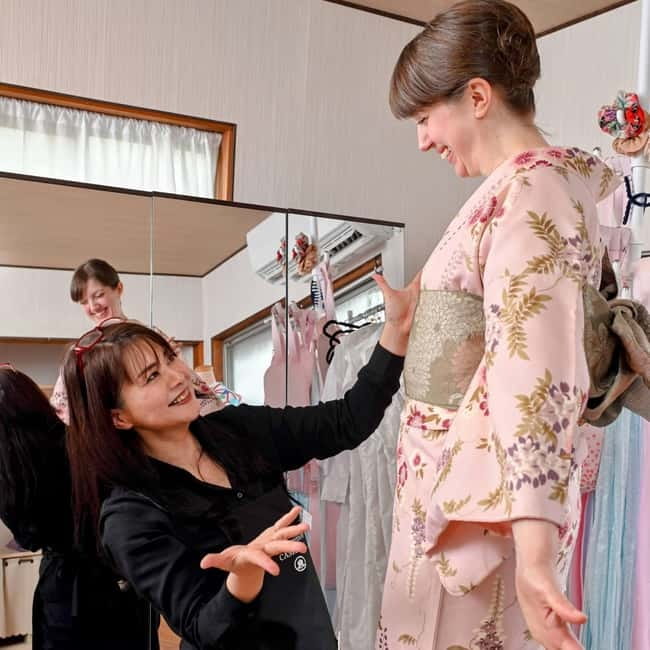
Still photography without flash is allowed. Video recording is not. The restriction makes sense in a quiet ceremony, but you should know it before you arrive. If you want photographs in a kimono, a rental shop is located next door or around the corner, depending on the arrangement. Arrange the kimono before the tea session, since changing afterward will not help with pictures during the ceremony.


Is $32 a Good Price?
At $32 per person, this is a fair price for a short cultural activity in one of Kyoto’s most popular districts. The fee includes matcha, a traditional seasonal sweet, tea-making utensils, and a personal English-speaking instructor or host.
You are paying for more than a drink. The value comes from the explanation, the formal demonstration, and the chance to prepare your own bowl. A café serving matcha would cost less, but it would not explain the room, the utensils, the sequence, or the cultural meaning behind the ritual.
The 45-minute length also works well in a packed Kyoto schedule. You do not have to give up half a day, and the setting makes it easy to continue sightseeing afterward. The session is long enough to feel like a real activity while remaining manageable for children, first-time cultural participants, and anyone with limited time.
The price does not include transportation, meals, a kimono rental, or hotel pickup and drop-off. That is not a serious problem because the tearoom is in a sightseeing area, but you should budget separately if you want the full costume-and-tea experience.
Private sessions cost more in many booking situations, though the supplied price is listed per person and does not specify a private-session surcharge. A private booking is worth considering for families, interpreters, babies, or anyone who wants more time for personal questions.
How to Fit It Into a Higashiyama Day
This tea ceremony works best as part of a larger walk through eastern Kyoto. You can visit Kiyomizu-dera first, move down through the Ninenzaka area, and arrive at the tearoom near the Park Hyatt and Studio Ghibli store.
Afterward, continue toward Kodai-ji and Yasaka-jinja. Maruyama Park and Chion-in are also within walking distance, and Gion is close enough for a continued stroll through its historic streets. The city center is reachable by bus from Higashi Oji, about 10 minutes from the tearoom, or by walking through Gion in roughly 25 minutes.
Do not treat the tea ceremony as a rushed add-on between two distant attractions. The calm setting is most useful after a morning among Kyoto’s crowded temple lanes. It gives you a chance to slow down, sit, listen, and notice details before returning to the streets.
The activity is also a good rainy-day choice, since the main portion takes place indoors. You will still need to walk through Higashiyama to reach it, and the narrow alley can be less convenient with luggage or a stroller.
Who Will Enjoy This Most?
I would recommend this experience to first-time visitors who want a clear introduction to Japanese tea culture. It suits people who enjoy history, food, design, crafts, and small cultural rituals more than high-energy sightseeing.
It is also a good choice for couples, families with older children, solo visitors, and small groups. The hosts make the event welcoming rather than stiff, and the English explanations remove the worry that you will miss the meaning of the ceremony.
Tea lovers will appreciate the focus on preparation and tools. Even if you already drink matcha, making it yourself gives you a different connection to the ingredient.
You should think twice if you dislike sitting on the floor, have very little patience for a quiet demonstration, or expect to learn the entire formal ceremony in detail. This is an introduction, not professional tea training. The ceremony itself is demonstrated, while your hands-on practice focuses on making and whisking the tea.
The experience has earned a 4.8 rating from 511 bookings, and the praise centers on the same useful qualities: calm presentation, clear English, welcoming hosts, a beautiful setting, and the chance to make matcha. Those are the reasons I would choose it over a generic tea tasting.
Should You Book the Camellia Tea Ceremony?
Book it if you want a short, well-located cultural experience that explains what you are seeing and lets you take part. The combination of seasonal sweets, Kyoto matcha, a formal demonstration, and hands-on whisking gives you a fuller experience than simply ordering green tea at a café.
I would especially choose it during a Higashiyama day, before or after Kiyomizu-dera. Book a private session if you need an interpreter, are bringing an infant under three, or want a more personal format. Otherwise, the small-group option should provide a friendly introduction at a reasonable price.
Skip it only if floor seating is a serious issue and you cannot arrange the accessible Garden Teahouse, or if you want a long, highly formal study of tea ceremony. For most visitors, this is an approachable way to understand one of Kyoto’s most distinctive traditions without giving up a large part of the day.
FAQ
How long does the Kyoto tea ceremony experience last?
The experience lasts 45 minutes.
How much does the experience cost?
The listed price is $32 per person.
Is the tea ceremony conducted in English?
Yes. The instructor and host provide the experience in English.
What is included in the price?
Matcha, traditional seasonal sweets, tea-making utensils, and a personal instructor or host are included.
Can I make my own matcha?
Yes. After the host demonstrates the ceremony, you receive guidance while making and whisking your own bowl of matcha.
Where is the meeting point?
The tearoom is down an alley branching from Ninenzaka in Kyoto’s Higashiyama district. The easiest landmark is the Park Hyatt hotel. Opposite it is a Studio Ghibli store, and the alley is just to the left of the store.
Can I take photographs during the ceremony?
Non-flash still photography is permitted. Video recording is not allowed.
Are chairs available if I cannot sit on the floor?
Yes. Chairs and tables are available for people who find floor seating difficult.
Is the tearoom wheelchair accessible?
The Garden Teahouse is wheelchair accessible. The tearooms are located upstairs, so specify your accessibility needs when arranging the experience.
Can I bring an interpreter or a baby under three?
If you are bringing an interpreter, you must book a private ceremony. If you are traveling with a baby or infant under three, book a private ceremony at the Garden Teahouse.
More Tea Ceremony Experiences in Kyoto
More tours in Kyoto we've reviewed





Tea Ceremony Experiences, compared.
 ★ 4.9Kyoto: Tea Ceremony in a Traditional Tea House in KiyomizuFrom $4945 min
 ★ 4.9Kyoto: Tea Ceremony Ju-An at Jotokuji TempleFrom $291h 10m
 ★ 4.3Kyoto: 45-Minute Tea Ceremony Lesson ExperienceFrom $2245 min
 ★ 5.0World Heritage Kyoto & Nara Uji Authentic Matcha ExperienceFrom $129
 ★ 4.9Kyoto: Table-Style Tea Ceremony at a Kyo-MachiyaFrom $451h 30m
 ★ 5.0Kimono Tea Ceremony at Kyoto Maikoya, NISHIKIFrom $65