
Reviewed · FULL-DAY
Full-Day Kyoto Group Tour with an Expert Local Guide
Kyoto’s best-known sights are spread across the city, and this six-hour route links many of them in one well-packed day. You’ll pass through vermillion torii gates, old wooden lanes, temple grounds, a geisha district, and a covered shopping street without having to build the plan yourself.
I like the small maximum group of 10, which gives you a better chance to hear the guide and ask questions. I also like the practical side of the experience: Paren helped one past participant understand train tickets and platforms, and the day included a local-style okonomiyaki lunch suggestion. The main drawback is the pace. Seven stops in six hours means you’ll get an introduction to each area, not a long, quiet visit at every one.
In This Review
- Key points to know before booking
- Why this route works for a first Kyoto day
- Meeting near Kyoto Station at 10 a.m.
- Fushimi Inari, beyond the first torii gates
- Kiyomizu-dera and the Higashiyama view
- Sannenzaka and Ninenzaka, Kyoto’s old lanes
- Gion, with context beyond the postcards
- Yasaka Shrine and the center of Gion
- Pontocho, a narrow lane by the Kamogawa River
- Sanjo Shopping Street and the finish
- Walking, transport, and the pace of six hours
- What the guide adds to the price
- Who should book this Kyoto tour?
- FAQ
- How long is the Kyoto group tour?
- What time does the tour begin?
- Where does the tour meet?
- Where does the tour end?
- How many people can join the tour?
- What happens if fewer than three people book?
- Is Kiyomizu-dera admission included?
- Is lunch included?
- Is public transportation included?
- Can I cancel for a full refund?
- Should you book it?
Key points to know before booking
- Seven central Kyoto stops: The route covers Fushimi Inari, Kiyomizu-dera, Higashiyama’s old streets, Gion, Yasaka Shrine, Pontocho, and Sanjo Shopping Street.
- A maximum of 10 people: This is a small group rather than a large coach outing, with an English-speaking local guide.
- A useful first-day orientation: The guide can offer suggestions and practical assistance, including help with Kyoto train travel.
- Kiyomizu-dera costs extra: Admission is listed at $3 per person, and public transportation is about $5 per person.
- The tour begins at 10 a.m.: Meet outside the LAWSON Kyoto Station Front Store and finish at Kyoto Sanjo Shopping Street.
- A compact but active day: Plan on walking through temple grounds, streets, shopping areas, and shrine precincts for roughly six hours.
Why this route works for a first Kyoto day
Kyoto can feel scattered at first. Fushimi Inari is southeast of the main station, Kiyomizu-dera and Gion sit farther north in the Higashiyama area, and Pontocho and Sanjo are in central Kyoto. This tour connects those areas in a single outing, saving you the work of figuring out which trains, buses, and walking routes fit together.
You will not see every important place in Kyoto. That is not the point. The route gives you a broad first look at the city’s religious sites, traditional streets, food districts, and shopping culture. Afterward, you can decide which area deserves a slower return visit.
The group size matters here. With no more than 10 people, the guide can keep the walk personal and explain details that are easy to miss when you are moving alone. The experience is also designed for connection with fellow visitors, so it suits people who want company without joining a large tour bus.
At $74.93 per person, the price is reasonable if you value planning help and context. You will still pay about $3 for Kiyomizu-dera and around $5 for public transportation, plus lunch. That puts the known cost near $82 before food. If you were already comfortable planning this route on your own, the savings would be smaller. The value comes from having the day arranged and getting local guidance along the way.
Other guided tours in Kyoto

Meeting near Kyoto Station at 10 a.m.
The tour starts at the LAWSON Kyoto Station Front Store, at 843-2 Higashishiokōjichō in Shimogyo Ward. Kyoto Station is a practical starting area, but give yourself enough time to locate the exact store and meeting point. The advertised start time is 10 a.m.
The mobile ticket makes it easy to keep your booking on your phone. Confirmation is provided at booking, and the tour runs near public transportation. Since transport is not included, you should have a way to pay the roughly $5 transit cost listed for the experience.
The day ends at Kyoto Sanjo Shopping Street, not back at Kyoto Station. That is useful if you plan to continue exploring central Kyoto, eat nearby, or shop after the walk. It also means you should not leave luggage or other items at the starting point unless your own plans allow you to retrieve them later.
Fushimi Inari, beyond the first torii gates
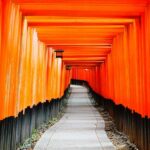
The first stop is Fushimi Inari-taisha Shrine, with about one hour allotted. Its famous vermillion torii tunnels are the obvious draw, but the guide aims to explain more than the standard photo stop.
Fushimi Inari is a Shinto shrine dedicated to Inari, a deity associated with rice, prosperity, and business. The rows of gates lead uphill through a wooded area, and even a short visit gives you a sense of how the shrine extends beyond its entrance.
One hour is enough for a meaningful introduction and photographs, but not for a full climb through the mountain trails. If you hoped to walk all the way to the upper shrine areas, this schedule may feel brief. Still, having a guide explain the symbols and stories can make the place more memorable than simply passing through the gates alone.
Admission is free. Wear shoes suitable for walking, since this stop involves shrine paths and uneven sections rather than a flat indoor visit.
Kiyomizu-dera and the Higashiyama view
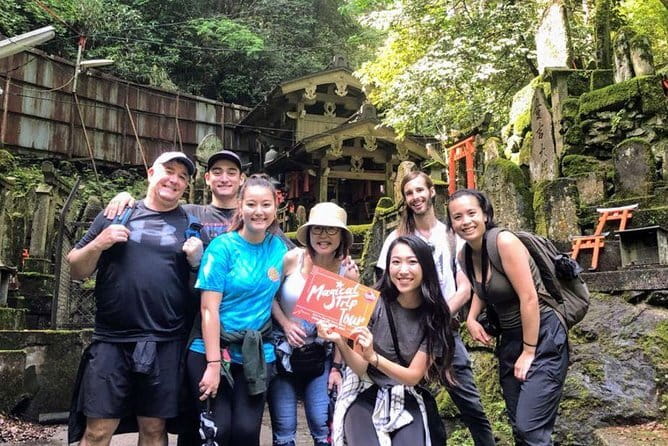
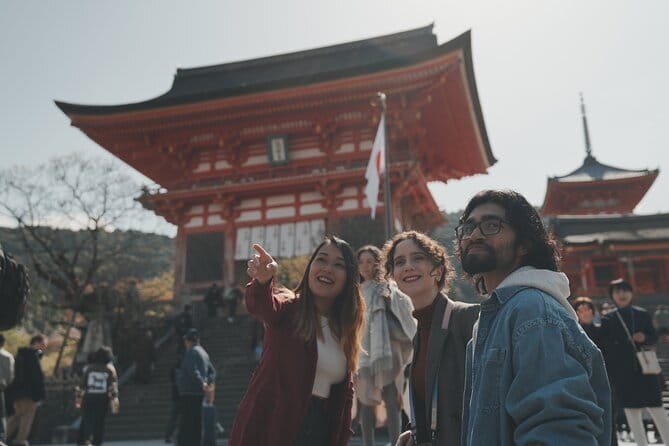
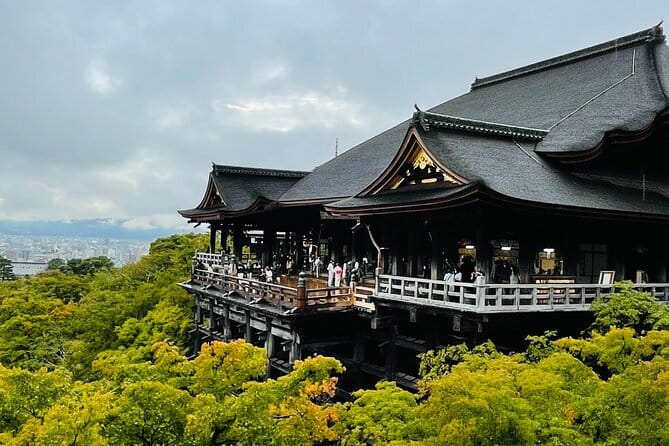
The tour allows one hour at Kiyomizu-dera, one of Kyoto’s major temples and a World Heritage Site. The temple is famous for its broad wooden balcony, which looks out over Kyoto and gives the visit its signature view.
The temple grounds provide more than a single viewpoint. You can expect a mix of large buildings, sacred spaces, and busy approach routes. A guide can help explain what you are seeing and keep the visit from becoming a quick circuit of photo locations.
Kiyomizu-dera admission is not included. The listed fee is $3 per person, so carry a small amount or be ready to pay separately. One hour should give you time to see the main areas, but the temple can feel crowded, and the schedule does not allow for a leisurely exploration of every corner.
This is one of the tour’s most worthwhile stops for first-time visitors. You get an important Kyoto landmark, a strong city view, and a clear sense of the city’s religious architecture without having to work out the route yourself.
Sannenzaka and Ninenzaka, Kyoto’s old lanes
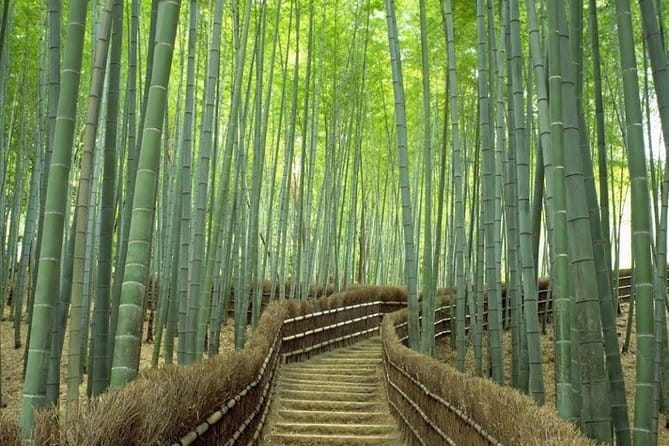
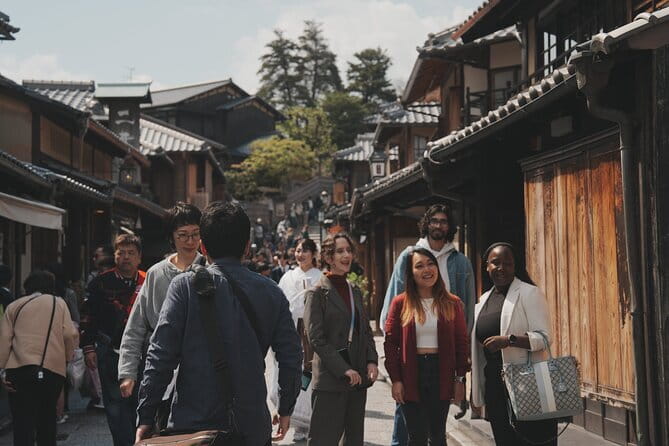
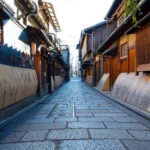
From Kiyomizu-dera, the route continues to Sannenzaka and Ninenzaka for about 30 minutes. These gently sloping streets are lined with preserved wooden buildings, small shops, and food stops. They offer the traditional Kyoto setting many people picture before arriving.
The short visit works well as a walking connection between the temple and Gion. You can take photographs, look into shops, and enjoy the old street design. I would not count on enough time for serious shopping, though. If a particular craft store or sweet shop catches your eye, you may need to return later.
These lanes can be crowded and the sloping surfaces require care. The reward is atmosphere and visual detail, while the tradeoff is that the area is not a quiet backstreet experience. The guide’s local suggestions are useful here, especially if you want to know which parts deserve a return visit.
A few more Kyoto tours and experiences worth a look

Gion, with context beyond the postcards
Gion receives about one hour, making it one of the longer stops. This is Kyoto’s well-known geisha district, marked by wooden machiya houses and traditional tea houses. The guide can help you understand the difference between the area’s architecture, entertainment traditions, and everyday streets.
The district rewards respectful observation. You may see people moving between appointments, but there is no guarantee of a geiko or maiko sighting. Treat the neighborhood as a living community rather than a stage set, and follow any guidance about photography and personal space.
An hour gives you time to walk through the main areas and notice the contrast between quiet wooden facades and modern Kyoto just beyond them. Gion is also a useful place to ask your guide about local customs, evening dining, and other places to visit later.
The tour does not promise entry into a tea house or a performance. That keeps the cost down, but it also means the experience is about seeing the district and learning its setting rather than attending a formal cultural program.
Yasaka Shrine and the center of Gion
Yasaka Shrine follows Gion, with about 30 minutes allotted. Also called Gion Shrine, it is known for its vermillion gates and spiritual atmosphere. It is closely connected with Kyoto’s annual Gion Matsuri festival, one of the city’s major traditional events.
Half an hour is enough to see the main shrine area and understand its place in the district. You may find this stop feels more relaxed than Kiyomizu-dera because the focus is on a shrine precinct rather than a large temple visit with an admission line.
Yasaka Shrine also helps connect the city’s religious life with Gion’s cultural identity. You are not simply moving from one attraction to the next. The route shows how shrines, streets, festivals, and traditional businesses fit together in the same part of Kyoto.
Admission is free. As with Fushimi Inari, respectful behavior matters, especially around worship areas.
Pontocho, a narrow lane by the Kamogawa River
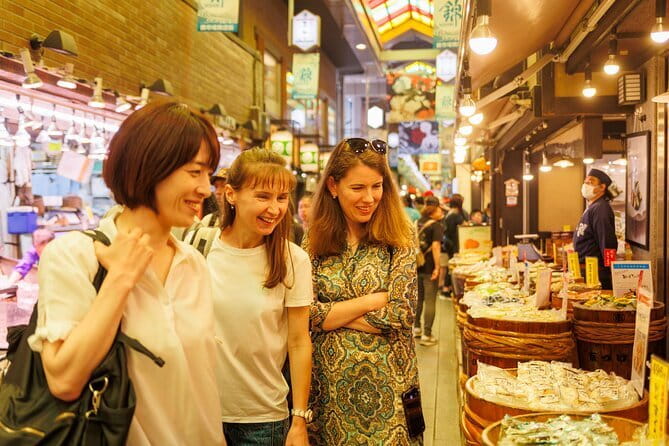
The next 30-minute stop is Pontocho District, a narrow alley beside the Kamogawa River. Pontocho is known for traditional buildings, dining, and tea houses, with a stronger evening feel than the daytime temple stops.
The short visit gives you a look at one of Kyoto’s classic dining districts. You may see restaurants and compact tea houses rather than major monuments. That change of mood is valuable. After several shrines and temple grounds, Pontocho shows another side of the city, one tied to food, nightlife, and traditional architecture.
Do not expect lunch to be included. The tour specifically excludes it, though one past day with Paren included a recommendation for tasty okonomiyaki. If you want to eat during the outing, ask your guide for suggestions and allow for the fact that the schedule remains fairly tight.
Pontocho is also a good place to note options for a later evening. A 30-minute daytime walk cannot capture the district’s full dining character, but it can help you decide if you want to return after dark.
Sanjo Shopping Street and the finish
The final stop is Kyoto Sanjo Shopping Street, with another 30 minutes. This covered arcade combines everyday shops, Kyoto crafts, vintage clothing, and modern conveniences. It is a useful counterpoint to the temples and preserved lanes earlier in the day.
A covered street can be especially helpful if the weather shifts, though the tour itself requires good weather and may be canceled if conditions are poor. The street also makes a practical ending point. You can continue browsing, find food, or head elsewhere in central Kyoto without returning to the station.
Because the tour finishes here, think of Sanjo as part of your afternoon plan rather than a simple endpoint. The guide’s suggestions can help you decide where to go next, and the location gives you more flexibility than ending at the original meeting point.
Walking, transport, and the pace of six hours
This is a walking tour with public transportation used between parts of the route. The advertised duration is about six hours, and the stops add up to five hours of scheduled sightseeing before allowing time for transfers, explanations, and movement between areas.
You should expect an active day. The route includes shrine paths, temple grounds, sloping historic streets, shopping arcades, and urban sidewalks. Most people can participate, but comfortable shoes will make the experience easier.
The schedule is efficient rather than slow. You will see a lot, but you may occasionally wish for another 20 minutes at a favorite spot. I would book this for an orientation day, then return independently to Fushimi Inari, Kiyomizu-dera, Gion, or Pontocho if one captures your interest.
The tour has a minimum of three participants. If that minimum is not met, the provider may offer a different date or experience, or a more private arrangement may be available after an extra-person fee. The maximum is 10, so the group should remain fairly manageable.
What the guide adds to the price
The English-speaking guide is the central reason to choose this experience instead of copying the route into a map app. The sites are easy to recognize, but their meaning is less obvious. A guide can connect the torii gates, shrine rituals, temple design, old streets, geisha culture, festivals, food districts, and shopping traditions.
The practical help may be just as useful as the cultural explanation. Paren and Riane are named in the available experience details, and one particularly useful day included help with buying train tickets and identifying platforms. That kind of support can save time for anyone still learning Kyoto’s transport system.
The guide can also offer suggestions for later meals and sightseeing. That matters because the tour ends in central Kyoto, where you can continue on your own. Just remember that the exact guide may vary, so do not book solely on the expectation of meeting one named person.
Who should book this Kyoto tour?
I would recommend it to a first-time Kyoto visitor who wants a solid overview without spending hours planning routes. It also suits solo visitors and couples who like having a guide and a small social group around them.
It is a good match if you want:
- Major temples and shrines in one day
- Traditional streets and Gion context
- Help with Kyoto public transportation
- A maximum group of 10 people
- Local suggestions for food and later sightseeing
- A mix of famous sights and everyday shopping areas
I would hesitate if you want long visits at each temple, a formal tea ceremony, a full mountain walk at Fushimi Inari, or included meals and entrance fees. The tour gives you range, not complete depth.
The free cancellation policy is generous if you cancel at least 24 hours before the start time. Changes or cancellations inside that window are not refunded, and poor weather or failure to reach the minimum group size can lead to a rescheduled experience, an alternative, or a full refund.
FAQ
How long is the Kyoto group tour?
The tour lasts approximately six hours.
What time does the tour begin?
It starts at 10 a.m.
Where does the tour meet?
The meeting point is the LAWSON Kyoto Station Front Store at 843-2 Higashishiokōjichō, Shimogyo Ward, Kyoto, 600-8216, Japan.
Where does the tour end?
The tour ends at Kyoto Sanjo Shopping Street at 1-1 Imashinzaikenishichō, Nakagyo Ward, Kyoto, 604-8801, Japan.
How many people can join the tour?
The maximum group size is 10 people.
What happens if fewer than three people book?
The tour requires at least three participants in total. If that minimum is not reached, you may be offered another date or experience, or a more private experience may be available after paying an extra-person fee.
Is Kiyomizu-dera admission included?
No. Admission to Kiyomizu-dera is listed at $3 per person and must be paid separately.
Is lunch included?
No. Lunch is not included in the tour price.
Is public transportation included?
No. Public transportation is listed as an additional cost of about $5 per person.
Can I cancel for a full refund?
Yes, if you cancel at least 24 hours before the experience start time. Cancellations or changes made less than 24 hours in advance are not refunded or accepted. If poor weather cancels the tour, you will be offered another date or a full refund.
Should you book it?
Book this tour if you want Kyoto’s main sights arranged into one manageable day, with a local English-speaking guide and a small group. The best value comes from the connections between stops, the transport help, and the practical suggestions for what to do after the tour.
Skip it if you prefer to set your own pace or already know Kyoto well. For a first visit, though, the route offers a useful introduction: Fushimi Inari’s gates, Kiyomizu-dera’s view, Higashiyama’s old streets, Gion’s traditional setting, and central Kyoto’s food and shopping districts. Just budget for transport, the Kiyomizu-dera fee, lunch, and a fair amount of walking.
More Full-Day in Kyoto
More Guided Tours in Kyoto

More tours in Kyoto we've reviewed



Full-Day, compared.
 ★ 4.5Kyoto: Full-Day English Guided Tour of Kyoto’s HighlightsFrom $88
 ★ 4.6Kyoto: Full-Day Guided Bus Tour to Top Highlights & TicketsFrom $50
 ★ 5.05 Top Highlights of Kyoto Full Day Bike Tour (E-bike option)From $172
 ★ 5.0Full Day Biking Tour Exploring the Best of KyotoFrom $119
 ★ 5.0Kyoto Private Car Tour – Full Day with Local Guide & Nara OptionFrom $170
 ★ 5.0Full Day Guided Tour to Kyoto and Nara from Osaka by VanFrom $96